
整理一下 System.Linq.Enumerable 类中的那些比较少用的方法
Linq 虽然用得多,但是里面有一些方法比较少用,因此整理一下。Enumerable 类的所有方法可以在 MSDN 上查阅到:https://msdn.microsoft.com/zh-cn/library/system.linq.enumerable.aspx
Aggregate
这个方法有三个重载,先看第一个
Aggregate<TSource>(IEnumerable<TSource>, Func<TSource, TSource, TSource>)
参数是接受两个 TSource 类型的输入,返回一个 TSource 类型的输出。
按照 MSDN 上的说明,输入的第一个参数是累加的值,第二个参数是元素。
{

    int[] array = new[] { , , , ,  };

    int result = array.Aggregate((sum, i) => sum + i);

    Console.WriteLine(result);

}

{

    string[] array = new string[] { "hello", "world", "!" };

    string result = array.Aggregate((combine, str) =>

    {

        return combine + " " + str;

    });

    Console.WriteLine(result);

}
则会输出 15 和 hello world !
在第一次进入 Aggregate 的 Func 时,combine 的值为第一个元素的值,str 为第二个元素的值。
当输入的序列的元素个数为 0 时,则抛出 InvalidOperationException 异常。

而当元素的个数只有一个的时候,则不会执行 Func。
接下来看第二个重载
Aggregate<TSource, TAccumulate>(IEnumerable<TSource>, TAccumulate, Func<TAccumulate, TSource, TAccumulate>)
比起第一个重载,多了一个参数输入参数 TAccumulate,泛型参数也变成了两个。
{

    int[] array = new[] { , , , ,  };

    long result = array.Aggregate(-1L, (sum, i) =>

    {

        return sum + i;

    });

    Console.WriteLine(result);

}
那么这段代码的输出则会是 14。第一次进入 Func 的时候,sum 的值为 -1L,i 的值是 1,这个行为跟第一个重载稍微有点区别。
而且当元素只有一个的时候,也是会进入 Func 的
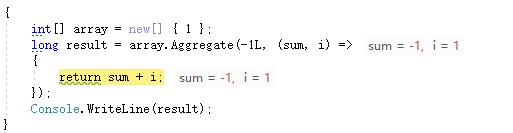
当序列为空的时候,也不会触发到异常
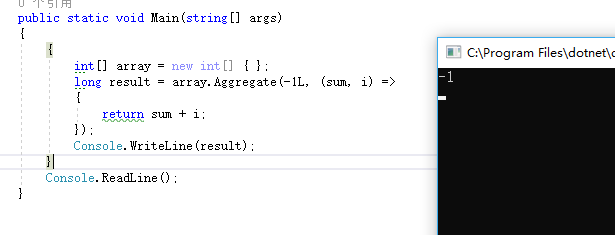
直接等于输入参数的值。
第三个重载
Aggregate<TSource, TAccumulate, TResult>(IEnumerable<TSource>, TAccumulate, Func<TAccumulate, TSource, TAccumulate>, Func<TAccumulate, TResult>)
这个其实就是相当与第二个重载增加了最后一个参数
{

    string[] array = new string[] { "hello", "world", "!" };

    string result = array.Aggregate("start", (combine, str) =>

    {

        return combine + " " + str;

    }, end => end.ToUpperInvariant());

    Console.WriteLine(result);

}
执行后会输出 START HELLO WORLD !。
最后的那个参数相对于对最终结果进行了一下处理,跟下面的代码是等价的。
{

    string[] array = new string[] { "hello", "world", "!" };

    string result = array.Aggregate("start", (combine, str) =>

    {

        return combine + " " + str;

    }).ToUpperInvariant();

    Console.WriteLine(result);

}
DefaultIfEmpty
第一个重载
DefaultIfEmpty<TSource>(IEnumerable<TSource>)
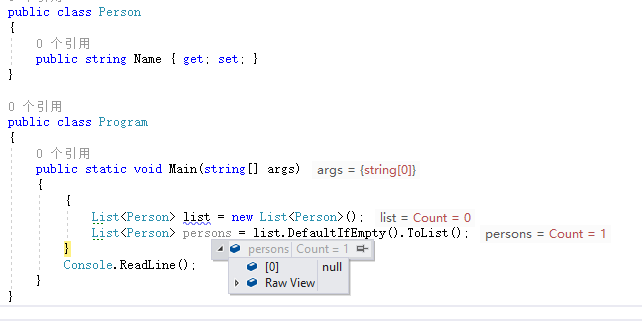
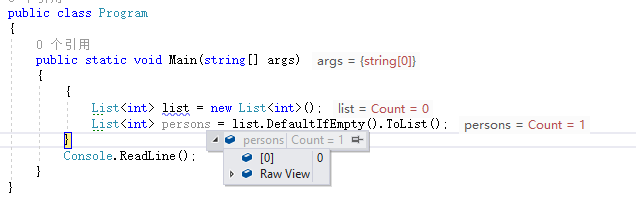
就是说,如果一个序列的元素个数是零个的话,那就返回一个只有一个 default(TSource) 元素的序列。感觉这没啥用(lll¬ω¬)
看另一个重载
DefaultIfEmpty<TSource>(IEnumerable<TSource>, TSource)
多了个参数,猜也猜得出来了
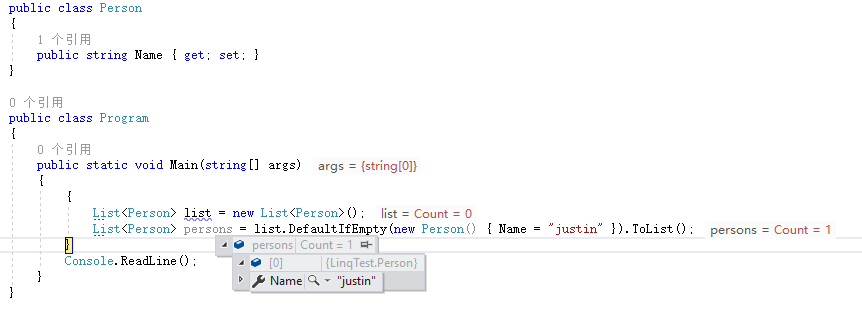
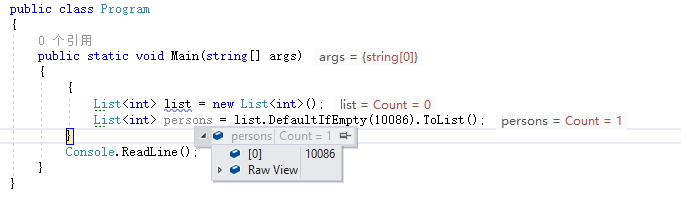
唔,好像还是没啥实用意义…………
Except
Except<TSource>(IEnumerable<TSource>, IEnumerable<TSource>)
求差集
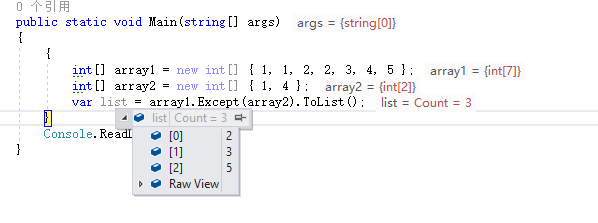
A 序列减去 B 序列,并且去重了。
另一重载
Except<TSource>(IEnumerable<TSource>, IEnumerable<TSource>, IEqualityComparer<TSource>)
多了一个比较器
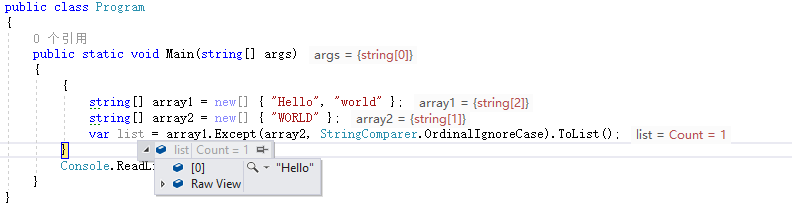
最后只会输出 Hello,因为在 IgnoreCase 比较器下,world 和 WORLD 是一样的。
GroupBy
虽然用得还是比较多,但是重载比较多,还是写一下吧。
GroupBy<TSource, TKey>(IEnumerable<TSource>, Func<TSource, TKey>)
这个是最简单的重载了。
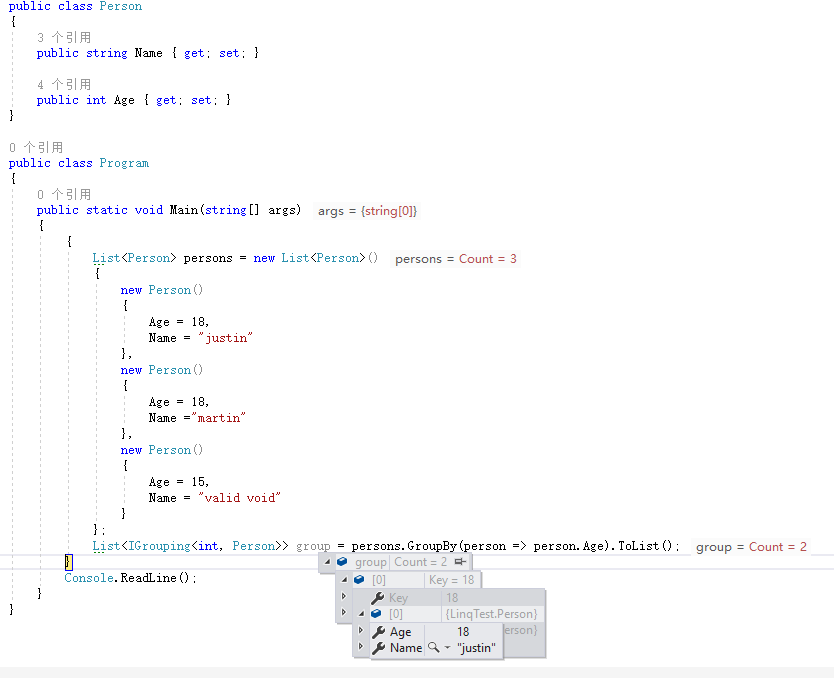
根据 Age 分组,这个重载很简单,也是最常用的。
GroupBy<TSource, TKey>(IEnumerable<TSource>, Func<TSource, TKey>, IEqualityComparer<TKey>)
多了一个比较器,不难
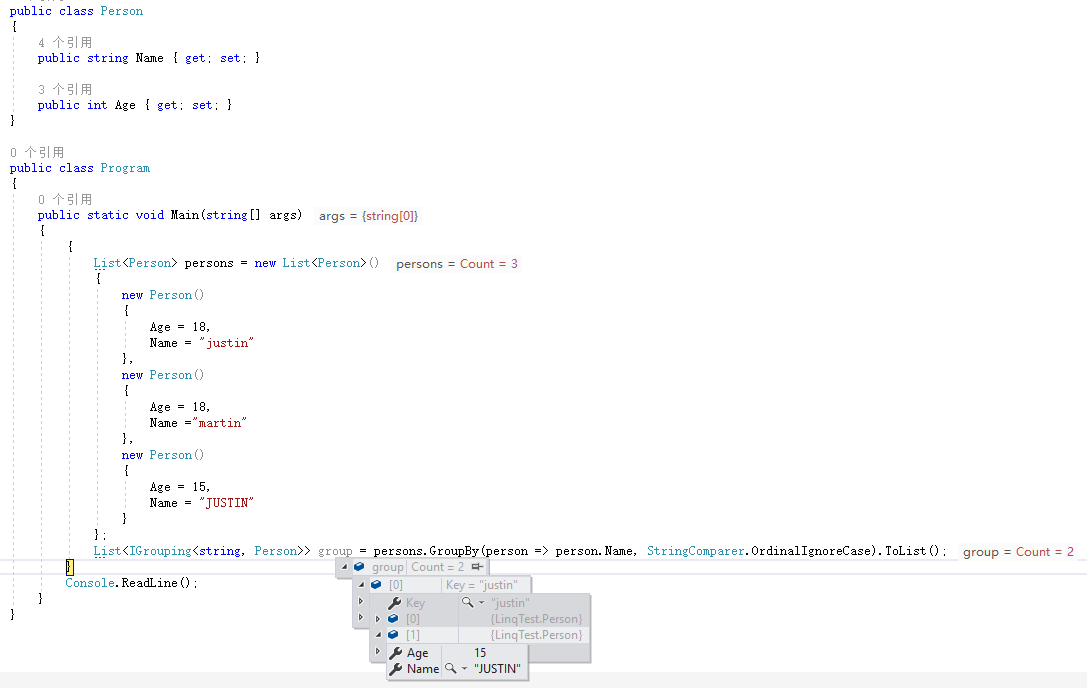
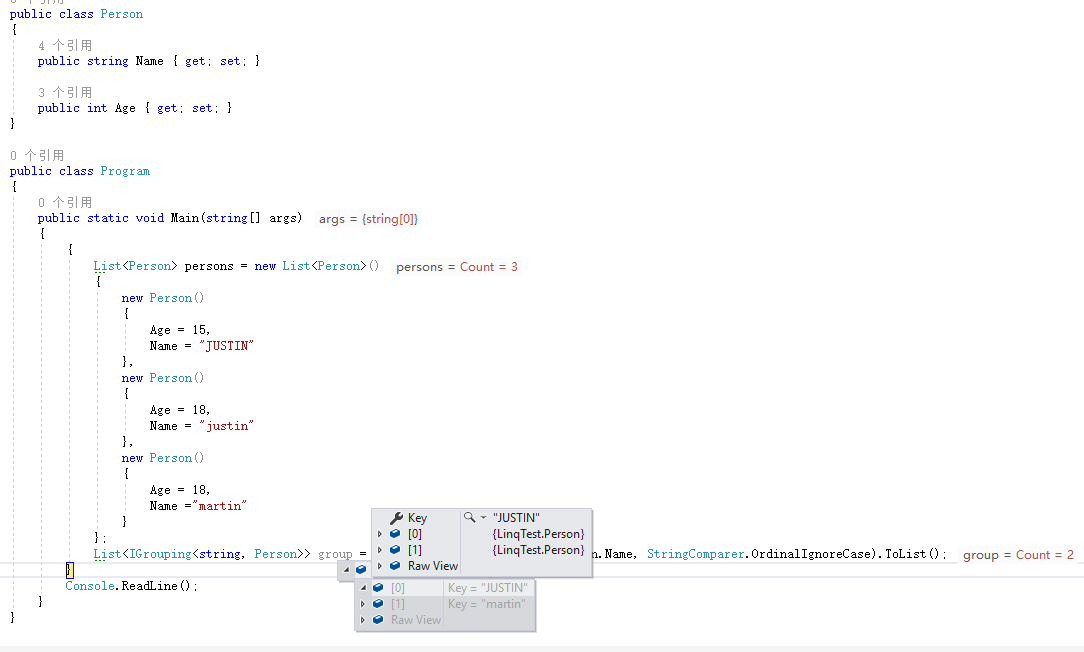
Key 会根据第一次匹配到的值。
GroupBy<TSource, TKey, TElement>(IEnumerable<TSource>, Func<TSource, TKey>, Func<TSource, TElement>)
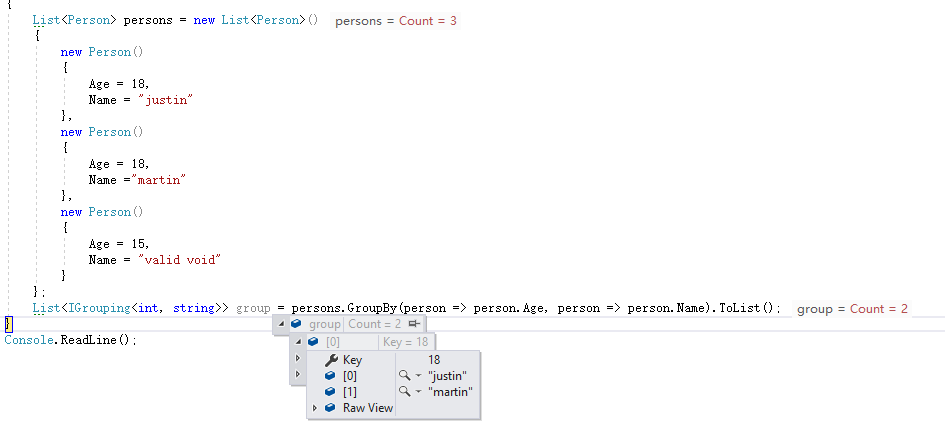
第一个重载的改版而且,如果将上面的 person => person.Name 改为 person => person,那跟第一个重载没区别。
GroupBy<TSource, TKey, TElement>(IEnumerable<TSource>, Func<TSource, TKey>, Func<TSource, TElement>, IEqualityComparer<TKey>)
多了一个比较器而已,不说了。
GroupBy<TSource, TKey, TResult>(IEnumerable<TSource>, Func<TSource, TKey>, Func<TKey, IEnumerable<TSource>, TResult>)
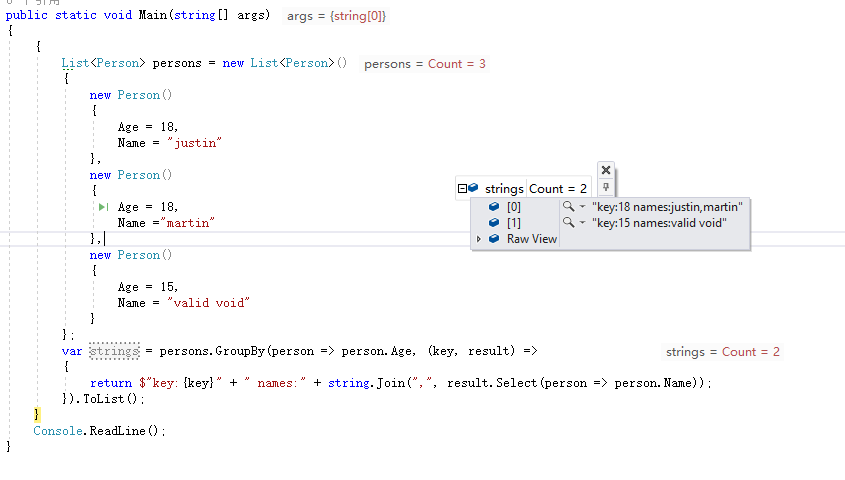
分完组后对每一组进行了一下处理。
GroupBy<TSource, TKey, TResult>(IEnumerable<TSource>, Func<TSource, TKey>, Func<TKey, IEnumerable<TSource>, TResult>, IEqualityComparer<TKey>)
比上面多了一个比较器,不说了。
GroupBy<TSource, TKey, TElement, TResult>(IEnumerable<TSource>, Func<TSource, TKey>, Func<TSource, TElement>, Func<TKey, IEnumerable<TElement>, TResult>)
多了元素选择的参数重载,参考上面。
GroupBy<TSource, TKey, TElement, TResult>(IEnumerable<TSource>, Func<TSource, TKey>, Func<TSource, TElement>, Func<TKey, IEnumerable<TElement>, TResult>, IEqualityComparer<TKey>)
多了选择器,不说。
Join
Join<TOuter, TInner, TKey, TResult>(IEnumerable<TOuter>, IEnumerable<TInner>, Func<TOuter, TKey>, Func<TInner, TKey>, Func<TOuter, TInner, TResult>)
这个其实不难,只要参考一下 SQL 中的 inner join 的话。
先初始化测试数据
List<Person> list1 = new List<Person>()

{

    new Person()

    {

        Id = ,

        Gender = "M"

    },

    new Person()

    {

        Id =  ,

        Gender = "F"

    },

    new Person()

    {

        Id = ,

        Gender = "M"

    }

};

List<Student> list2 = new List<Student>()

{

    new Student()

    {

        Id = ,

        Name = "martin"

    },

    new Student()

    {

        Id = ,

        Name = "valid void"

    },

    new Student()

    {

        Id = ,

        Name = "justin"

    }

};
然后测试代码走起
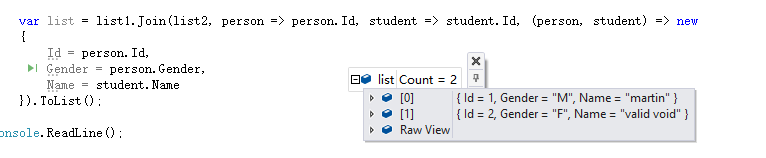
没啥难的,等价于以下的 linq 写法

Join<TOuter, TInner, TKey, TResult>(IEnumerable<TOuter>, IEnumerable<TInner>, Func<TOuter, TKey>, Func<TInner, TKey>, Func<TOuter, TInner, TResult>, IEqualityComparer<TKey>)
多了个比较器,用于比较 key,不说了。
GroupJoin
GroupJoin<TOuter, TInner, TKey, TResult>(IEnumerable<TOuter>, IEnumerable<TInner>, Func<TOuter, TKey>, Func<TInner, TKey>, Func<TOuter, IEnumerable<TInner>, TResult>)
看上去很复杂,但其实可以参考 Join 的输入进行对比。
测试数据我们还是沿用 Join 的。执行测试代码

对等的 linq 写法如下
var result = (from person in list1

              join student in list2 on person.Id equals student.Id into studentGroup

              select new

              {

                  Id = person.Id,

                  Gender = person.Gender,

                  Students = studentGroup.ToList()

              }).ToList();
GroupJoin<TOuter, TInner, TKey, TResult>(IEnumerable<TOuter>, IEnumerable<TInner>, Func<TOuter, TKey>, Func<TInner, TKey>, Func<TOuter, IEnumerable<TInner>, TResult>, IEqualityComparer<TKey>)
多了一个比较器,不说了。
SelectMany
这个最近这段时间用得比较多,也记录一下吧
SelectMany<TSource, TResult>(IEnumerable<TSource>, Func<TSource, IEnumerable<TResult>>)
测试代码
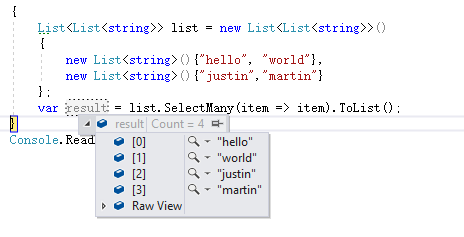
简单的来说就是将一个 IEnumerable<IEnumerable<T>> 的序列变成一个 IEnumerable<T> 的序列。
对等的 linq 写法
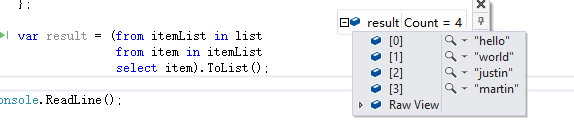
感觉 linq 写法会相对比较好理解的说。
SelectMany<TSource, TResult>(IEnumerable<TSource>, Func<TSource, Int32, IEnumerable<TResult>>)
Func 多了个 Int32 的参数,看测试代码
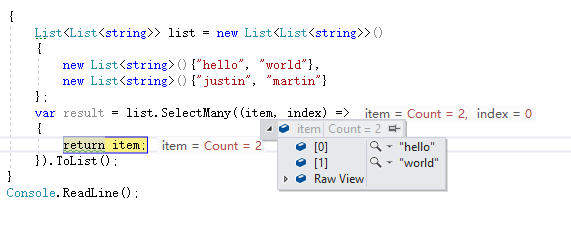
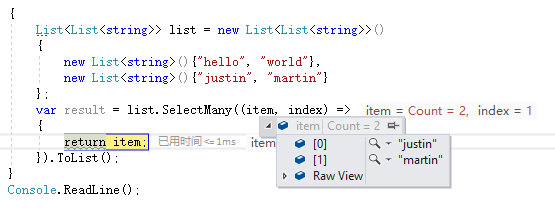
很好理解,就是当前的索引。
SelectMany<TSource, TCollection, TResult>(IEnumerable<TSource>, Func<TSource, IEnumerable<TCollection>>, Func<TSource, TCollection, TResult>)
比起第一个就是多了个结果执行而已
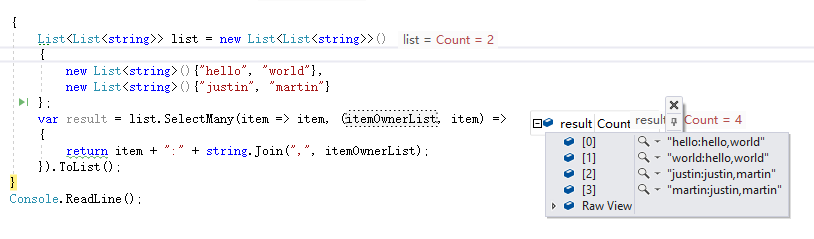
会进入这个 Func 四次,前两次是 helloword 那个 List,后两次是 justin martin 那个 List。
SelectMany<TSource, TCollection, TResult>(IEnumerable<TSource>, Func<TSource, Int32, IEnumerable<TCollection>>, Func<TSource, TCollection, TResult>)
多了索引,参考上面。
SequenceEqual
序列比较,知道有这个东西,但平时好像没有怎么用过。
SequenceEqual<TSource>(IEnumerable<TSource>, IEnumerable<TSource>)
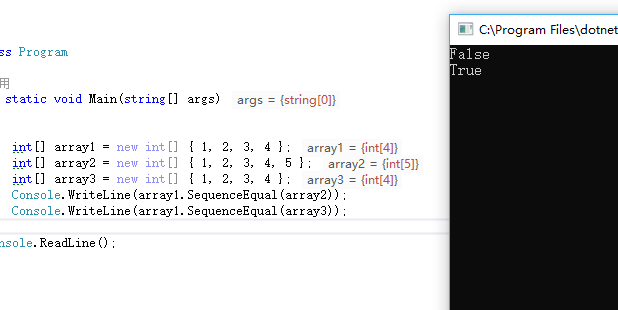
很好理解,首要前提肯定是元素个数相等,其次要每一个元素相等。
SequenceEqual<TSource>(IEnumerable<TSource>, IEnumerable<TSource>, IEqualityComparer<TSource>)
多了个比较器,不说了。
SkipWhile
Skip 倒是一直在用,SkipWhile 就用得比较少,也记录一下吧。
SkipWhile<TSource>(IEnumerable<TSource>, Func<TSource, Boolean>)
不难,就是当 Func 返回 false 时停止。
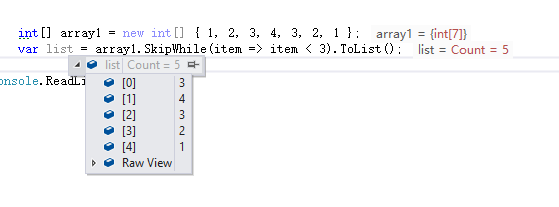
因为当去到 3 的时候为 false,因此返回 3 和剩下的元素。
SkipWhile<TSource>(IEnumerable<TSource>, Func<TSource, Int32, Boolean>)
多了个索引而已,没啥好说的。
ToDictionary
先看第一个重载
ToDictionary<TSource, TKey>(IEnumerable<TSource>, Func<TSource, TKey>)
不难,Func 就是获取按照什么来生成 Key。
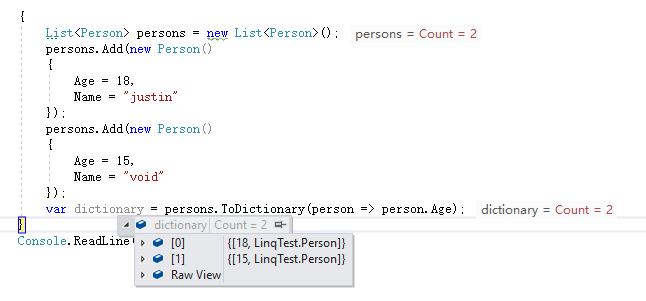
另外使用这个方法是要注意,Key 是不能重复的。
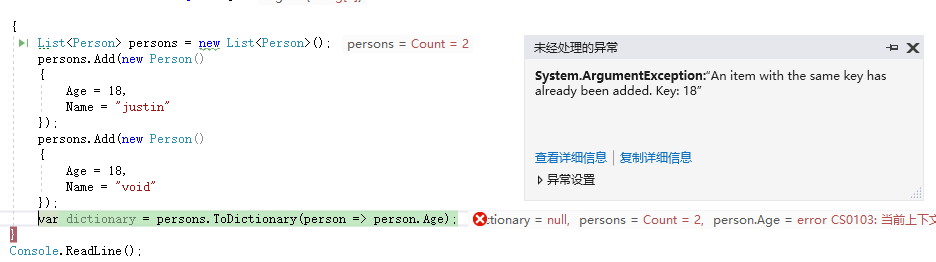
所以说实话,这方法平时比较少用。。。
ToDictionary<TSource, TKey>(IEnumerable<TSource>, Func<TSource, TKey>, IEqualityComparer<TKey>)
多了一个比较器,没啥好说的。
ToDictionary<TSource, TKey, TElement>(IEnumerable<TSource>, Func<TSource, TKey>, Func<TSource, TElement>)
比起第一个重载,多了一个如何生成字典的值的 Func,也没啥好说的。
ToDictionary<TSource, TKey, TElement>(IEnumerable<TSource>, Func<TSource, TKey>, Func<TSource, TElement>, IEqualityComparer<TKey>)
多了比较器,不说了。
ToLookup
这个有点像上面的 ToDictionary 的。
ToLookup<TSource, TKey>(IEnumerable<TSource>, Func<TSource, TKey>)
跟 ToDictionary 的第一个重载的输入参数是一样的。
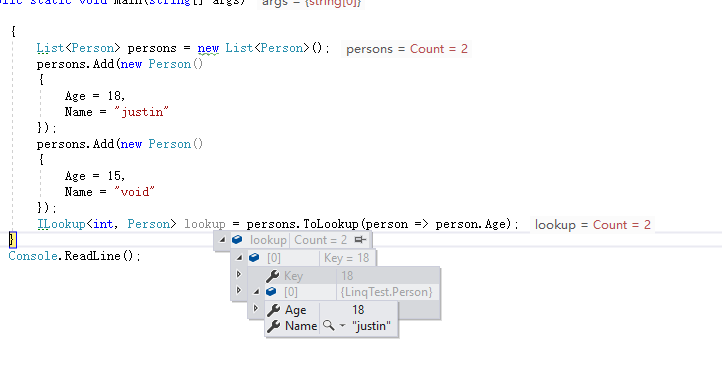
ILookup<int, Person> 这个的结构类似于一个数组,然后每个数组的元素是一个 Group。
当元素的 Key 重复的时候:
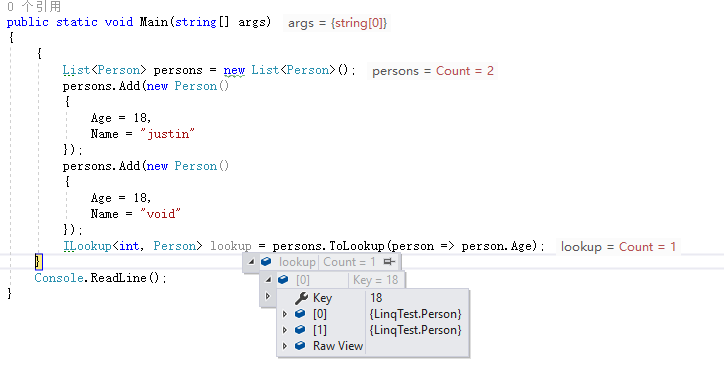
那么这个 lookup 就只有一个 group 了,但这个 group 就会有多个元素。
ToLookup<TSource, TKey>(IEnumerable<TSource>, Func<TSource, TKey>, IEqualityComparer<TKey>)
ToLookup<TSource, TKey, TElement>(IEnumerable<TSource>, Func<TSource, TKey>, Func<TSource, TElement>)
ToLookup<TSource, TKey, TElement>(IEnumerable<TSource>, Func<TSource, TKey>, Func<TSource, TElement>, IEqualityComparer<TKey>)
这三个重载可以参考一下 ToDictionary 的重载,一样的说。
Zip
这个方法就只有一个,没别的重载
Zip<TFirst, TSecond, TResult>(IEnumerable<TFirst>, IEnumerable<TSecond>, Func<TFirst, TSecond, TResult>)
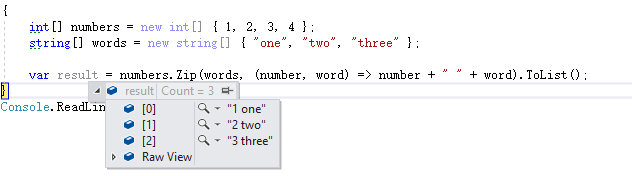
这里就借用 MSDN 上的示例代码了,看结果也看得出 Zip 这个操作的逻辑了。遍历两个序列进行操作,直到其中一个到达尾部。
另外像 TakeWhile 可以参考上面的 SkipWhile 就不说了。Distinct、Union 和 Intersect 平时也用得比较多,因此也不说了。
整理一下 System.Linq.Enumerable 类中的那些比较少用的方法的更多相关文章
- System.ExecutionEngineException: Attempting to JIT compile method System.Linq.Enumerable
关于JIT编译和AOT编译的问题.IOS下是不支持JIT动态编译的,所以如果程序有涉及JIT编译的都会无法执行. 在google查过说unity是不支持部分的Linq功能,如Sort方法. 但我在un ...
- 编写一个ComputerAverage抽象类,类中有一个抽象方法求平均分average,可以有参数。定义 Gymnastics 类和 School 类,它们都是 ComputerAverage 的子类。Gymnastics 类中计算选手的平均成绩的方法是去掉一个最低分,去掉一个最高分,然后求平均分;School 中计算平均分的方法是所有科目的分数之和除以总科目数。 要求:定义ComputerAv
题目: 编写一个ComputerAverage抽象类,类中有一个抽象方法求平均分average,可以有参数. 定义 Gymnastics 类和 School 类,它们都是 ComputerAverag ...
- Object类中wait代餐方法和notifyAll方法和线程间通信
Object类中wait代餐方法和notifyAll方法 package com.yang.Test.ThreadStudy; import lombok.SneakyThrows; /** * 进入 ...
- 使用Visual Studio进行单元测试-Shim类中无法找到参数包含CancellationTokenSource的方法
Shim类中无法找到参数包含CancellationTokenSource的方法,这句话有点绕口,看例子. 一.代码 public class CancellationDemo { public in ...
- 在Action类中获得HttpServletResponse对象的四种方法
在struts1.xAction类的execute方法中,有四个参数,其中两个就是response和request.而在Struts2中,并没有任何参数,因此,就不能简单地从execute方法获得Ht ...
- 关于在C#中对类中的隐藏基类方法和重写方法的理解
最近在学习C#,在C#中的类看到重写和隐藏基类的方法这些概念.才开始感觉自己不是很理解这些概念.也区分不开这些概念.通过自己的查找资料和练习后.慢慢的理解了类中的隐藏和重写这个概念.在C#中只有在基类 ...
- 谈谈Runtime类中的freeMemory,totalMemory,maxMemory几个方法
最近在网上看到一些人讨论到java.lang.Runtime类中的freeMemory(),totalMemory(),maxMemory ()这几个方法的一些问题,很多人感到很疑惑,为什么,在jav ...
- 简述 Python 类中的 __init__、__new__、__call__ 方法
任何事物都有一个从创建,被使用,再到消亡的过程,在程序语言面向对象编程模型中,对象也有相似的命运:创建.初始化.使用.垃圾回收,不同的阶段由不同的方法(角色)负责执行. 定义一个类时,大家用得最多的就 ...
- Appium java-client库更新到6.x ,TouchAction类中弃用的函数及替代方法
新版本的java-client已经取消swipe方法,很多TouchAction类中的很多老方法也都已经弃用,具体可以参考这边的官方说明文档: https://static.javadoc.io/io ...
随机推荐
- 【Unity与23种设计模式】访问者模式(Visitor)
GoF中定义: "定义一个能够在一个对象结构中对于所有元素执行的操作.访问者让你可以定义一个新的操作,而不必更改到被操作元素的类接口." 暂时没有完全搞明白 直接上代码 //访问者 ...
- python解决图的最短路径问题
在hihoCoder上遇到一个算法题目,描述如下: 对图结构有了解的不难发现,这是经典的求图的最短路径问题.以下是python代码: def findMin(row): minL = max(row) ...
- 《SQL必知必会》读书笔记
个人博客文章地址:https://feiffy.cc/%E3%80%8ASQL%E5%BF%85%E7%9F%A5%E5%BF%85%E4%BC%9A%E3%80%8B 很适合入门的一本SQL书,虽相 ...
- leetCode:206 反转链表
206. 反转链表 题目:反转一个单链表. 进阶:链表可以迭代或递归地反转.你能否两个都实现一遍? 非递归代码: class Solution { public ListNode reverseLis ...
- 1-2 hibernate主配置文件hibernate.cfg.xml详解
详 http://www.cnblogs.com/biehongli/p/6531575.html Hibernate的主配置文件hibernate.cfg.xml 1:Hibernate的主配置文件 ...
- Object.defineProperty实现数据绑定
1.Object.defineProperty方法 Object.defineProperty(obj, prop, descriptor); (1)参数: obj:目标对象 prop:需要定义的属 ...
- poj 1562 dfs
http://poj.org/problem?id=1562 #include<iostream> using namespace std; ,m=,sum=; ][]; ][]={-,, ...
- 常用数据库连接池 (DBCP、c3p0、Druid) 配置说明
1. 引言 1.1 定义 数据库连接是一种关键的有限的昂贵的资源,这一点在多用户的网页应用程序中体现得尤为突出.对数据库连接的管理能显著影响到整个应用程序的伸缩性和健壮性,影响到程序的性能指标.数据库 ...
- 利用 mount 指令解决 Read-only file system的问题
利用 mount 指令解决 Read-only file system的问题 在linux系统中创建一个文件提示: /application/report/shiwei # touch test.ct ...
- linux --> gcc编译之路径搜索
gcc编译之路径搜索 头文件 --> 搜寻先从-I开始; --> 找gcc的环境变量 : C_INCLUDE_PATH,CPLUS_INCLUDE_PATH,OBJC_INCLUDE_PA ...