
《精通Spring4.X企业应用开发实战》读后感第四章(BeanFactory生命周期)



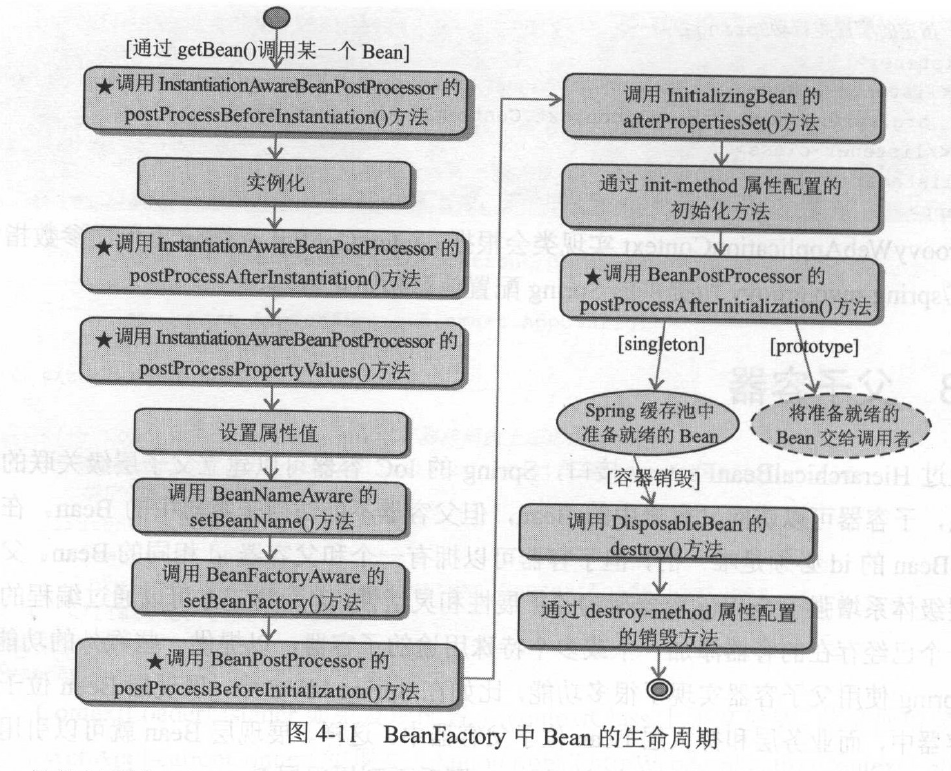

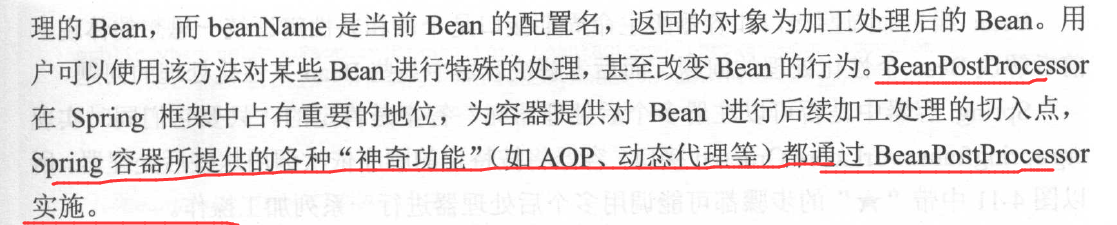
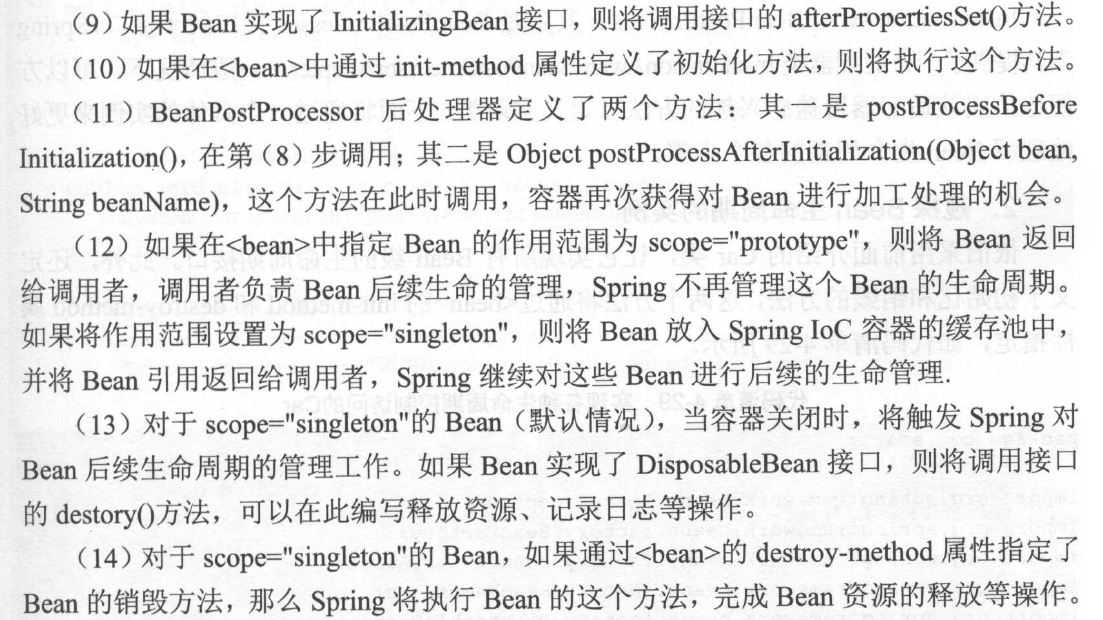
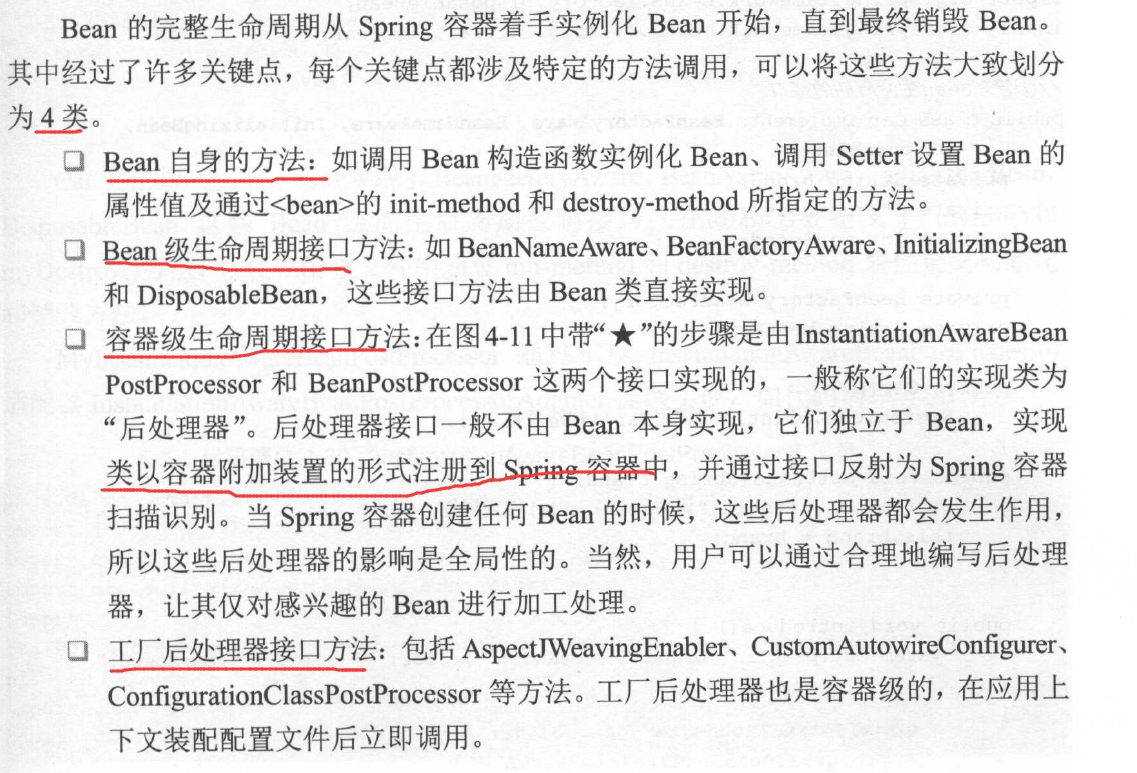


package com.smart;

import org.springframework.beans.BeansException;

import org.springframework.beans.factory.*;

public class Car implements BeanFactoryAware, BeanNameAware, InitializingBean, DisposableBean{

    private String brand;

    private String color;

    private int maxSpeed;

    private BeanFactory beanFactory;

    private String beanName;

    //默认构造函数

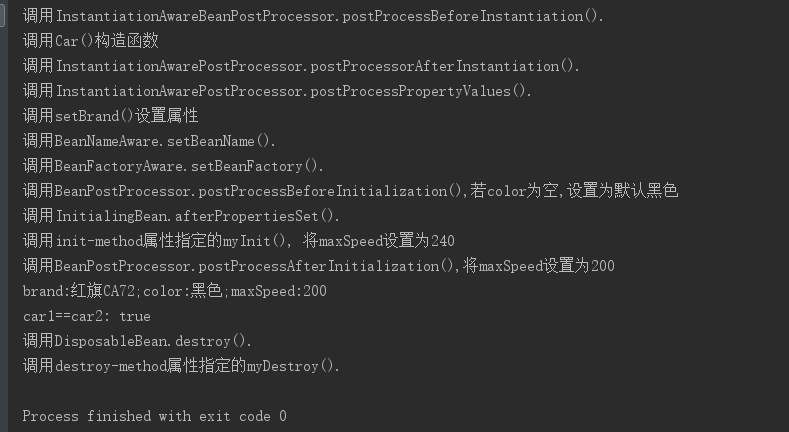
    public Car(){System.out.println("调用Car()构造函数");}

    //带参构造函数

    public Car(String brand, String color, int maxSpeed) {

        this.brand = brand;

        this.color = color;

        this.maxSpeed = maxSpeed;

    }

    //未带参方法

    public void introduce() {

        System.out.println("brand:" + brand + ";color:" + color + ";maxSpeed:" + maxSpeed);

    }

    public String getBrand() {

        return brand;

    }

    public void setBrand(String brand) {

        System.out.println("调用setBrand()设置属性");

        this.brand = brand;

    }

    public String getColor() {

        return color;

    }

    public void setColor(String color) {

        this.color = color;

    }

    public int getMaxSpeed() {

        return maxSpeed;

    }

    public void setMaxSpeed(int maxSpeed) {

        this.maxSpeed = maxSpeed;

    }

    // BeanFactoryAware接口方法

    public void setBeanFactory(BeanFactory beanFactory) throws BeansException {

        System.out.println("调用BeanFactoryAware.setBeanFactory().");

        this.beanFactory = beanFactory;

    }

    // BeanNameAware接口方法

    public void setBeanName(String s) {

        System.out.println("调用BeanNameAware.setBeanName().");

        this.beanName = s;

    }

    // DisposableBean接口方法

    public void destroy() throws Exception {

        System.out.println("调用DisposableBean.destroy().");

    }

    // InitializingBean接口方法

    public void afterPropertiesSet() throws Exception {

        System.out.println("调用InitialingBean.afterPropertiesSet().");

    }

    // 通过<bean>的init-method属性指定的初始方法

    public void myInit() {

        System.out.println("调用init-method属性指定的myInit(), 将maxSpeed设置为240");

        this.maxSpeed = 240;

    }

    //同过<bean>的destroy-method属性指定的销毁方法

    public void myDestroy() {

        System.out.println("调用destroy-method属性指定的myDestroy().");

    }

}

package com.smart.beanfactory;

import org.springframework.beans.BeansException;

import org.springframework.beans.PropertyValues;

import org.springframework.beans.factory.config.InstantiationAwareBeanPostProcessorAdapter;

import java.beans.PropertyDescriptor;

public class MyInstantiationAwareBeanPostProcessor extends InstantiationAwareBeanPostProcessorAdapter {

    @Override

    // 1.接口方法,在实例化Bean前调用

    public Object postProcessBeforeInstantiation(Class<?> beanClass, String beanName) throws BeansException {

        // 1-1. 仅对容器中的car Bean进行处理

        if ("car".equals(beanName)) {

            System.out.println("调用InstantiationAwareBeanPostProcessor.postProcessBeforeInstantiation().");

        }

        return null;

    }

    @Override

    // 2.接口方法,在实例化Bean后调用

    public boolean postProcessAfterInstantiation(Object bean, String beanName) throws BeansException {

        if ("car".equals(beanName)) {

            System.out.println("调用InstantiationAwarePostProcessor.postProcessorAfterInstantiation().");

        }

        return true;

    }

    @Override

    // 3.接口方法,在设置某个属性时调用

    public PropertyValues postProcessPropertyValues(PropertyValues pvs, PropertyDescriptor[] pds, Object bean, String beanName) throws BeansException {

        // 3-1. 仅对容器中的car Bean进行处理, 还可以同过pds入参进行过滤

        if ("car".equals(beanName)) {

            System.out.println("调用InstantiationAwarePostProcessor.postProcessPropertyValues().");

        }

        return pvs;

    }

}

package com.smart.beanfactory;

import com.smart.Car;

import org.springframework.beans.BeansException;

import org.springframework.beans.factory.config.BeanPostProcessor;

public class MyBeanPostProcessor implements BeanPostProcessor {

    public Object postProcessBeforeInitialization(Object bean, String beanName) throws BeansException {

        if ("car".equals(beanName)) {

            Car car = (Car) bean;

            if (car.getColor() == null) {

                System.out.println("调用BeanPostProcessor.postProcessBeforeInitialization()," +

                        "若color为空,设置为默认黑色");

                car.setColor("黑色");

            }

        }

        return bean;

    }

    public Object postProcessAfterInitialization(Object bean, String beanName) throws BeansException {

        if ("car".equals(beanName)) {

            Car car = (Car) bean;

            if (car.getMaxSpeed() >= 200) {

                System.out.println("调用BeanPostProcessor.postProcessAfterInitialization()," +

                        "将maxSpeed设置为200");

                car.setMaxSpeed(200);

            }

        }

        return bean;

    }

}

<?xml version="1.0" encoding="UTF-8"?>

<beans xmlns="http://www.springframework.org/schema/beans"

       xmlns:xsi="http://www.w3.org/2001/XMLSchema-instance" xmlns:p="http://www.springframework.org/schema/p"

       xsi:schemaLocation="http://www.springframework.org/schema/beans http://www.springframework.org/schema/beans/spring-beans.xsd">

    <bean id="car" class="com.smart.Car"

          init-method="myInit"

          destroy-method="myDestroy"

          p:brand="红旗CA72"

          p:maxSpeed="200"/>

</beans>


package com.smart.beanfactory;

import com.smart.Car;

import org.springframework.beans.factory.BeanFactory;

import org.springframework.beans.factory.config.ConfigurableBeanFactory;

import org.springframework.beans.factory.support.DefaultListableBeanFactory;

import org.springframework.beans.factory.xml.XmlBeanDefinitionReader;

import org.springframework.context.ApplicationContext;

import org.springframework.context.support.ClassPathXmlApplicationContext;

import org.springframework.core.io.ClassPathResource;

import org.springframework.core.io.Resource;

public class BeanLifeCycle {

    public static void lifeCycleInBeanFactory() {

        // 1. 装载配置文件并启动容器

        Resource res = new ClassPathResource("beans.xml");

        BeanFactory bf = new DefaultListableBeanFactory();

        XmlBeanDefinitionReader reader = new XmlBeanDefinitionReader((DefaultListableBeanFactory) bf);

        reader.loadBeanDefinitions(res);

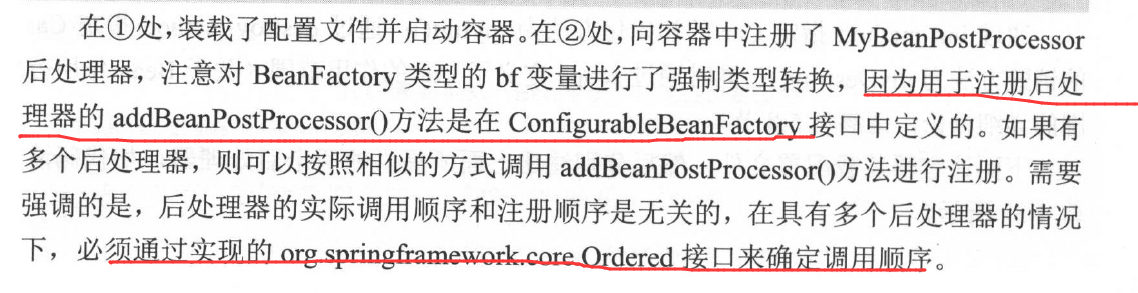
        //后处理器的实际调用顺序与注册顺序无关,在具有多个后处理器的情况下,必须通过实现

        //org.springframework.core.Ordered接口来确定调用顺序

        // 2. 向容器中注册MyBeanPostProcessor后处理器

        ((ConfigurableBeanFactory) bf).addBeanPostProcessor(new MyBeanPostProcessor());

        // 3. 向容器中注册MyInstantiationAwareBeanPostProcessor后处理器

        ((ConfigurableBeanFactory) bf).addBeanPostProcessor(new MyInstantiationAwareBeanPostProcessor());

        // 4. 第一次从容器中获得car, 将触发容器实例化该Bean,这将引发Bean生命周期方法的调用

        Car car1 = (Car) bf.getBean("car");

        car1.introduce();

        car1.setColor("红色");

        // 5. 第二次从容器中获取car, 直接从缓存池中获取

        Car car2 = (Car) bf.getBean("car");

        // 6. 查看car1和car2是否指向同一引用

        System.out.println("car1==car2: " + (car1 == car2));

        // 7. 关闭容器

        ((DefaultListableBeanFactory) bf).destroySingleton("car");

    }

    public static void main(String[] args) {

        lifeCycleInBeanFactory();

    }

}



《精通Spring4.X企业应用开发实战》读后感第四章(BeanFactory生命周期)的更多相关文章
- 《精通Spring4.x企业应用开发实战》第三章
这一章节主要介绍SpringBoot的使用,也是学习的重点内容,之后就打算用SpringBoot来写后台,所以提前看一下还是很有必要的. 3.SpringBoot概况 3.1.1SpringBoot发 ...
- 《精通Spring4.X企业应用开发实战》读后感第四章(资源访问)
package com.smart.resource; import org.springframework.core.io.ClassPathResource; import org.springf ...
- 《精通Spring4.X企业应用开发实战》读后感第七章(创建增强类)
- 《精通Spring4.X企业应用开发实战》读后感第七章(AOP基础知识、jdk动态代理,CGLib动态代理)
- 《精通Spring4.X企业应用开发实战》读后感第七章(AOP概念)
- 《精通Spring4.X企业应用开发实战》读后感第六章(容器事件)
- 《精通Spring4.X企业应用开发实战》读后感第六章(国际化)
- 《精通Spring4.X企业应用开发实战》读后感第六章(引用Bean的属性值)
- 《精通Spring4.X企业应用开发实战》读后感第六章(使用外部属性文件)
- 《精通Spring4.X企业应用开发实战》读后感第六章(属性编辑器)
随机推荐
- Java知识点梳理——常用方法总结
1.查找字符串最后一次出现的位置 String str = "my name is zzw"; int lastIndex = str.lastIndexOf("zzw& ...
- spring事务和mysql的隔离级别
mysql事务.mysql隔离级别.mysql锁.mysql数据一致性.Spring事务.Spring事务传播性之间的关系 一直有些模糊,整理一下. mysql事务: 在mysql中,只有使用了I ...
- 源码编译mysql 5.5+ 安装过程全记录
前言:从mysql 5.5版本开始,mysql源码安装开始使用cmake了,编译安装跟以前的版本有点不一样了. 一,安装步骤: 1.安装前准备工作 a.下载mysql源代码包,到mysql下载页面选择 ...
- 使用ab 进行并发压力测试
使用ab 进行并发压力测试 - 参与商 - 博客园 https://www.cnblogs.com/shenshangzz/p/8340640.html 使用ab 进行并发压力测试 ab全称为:a ...
- pymysql 模块的使用
一 . pymysql 的下载和使用 在python 中操作数据库需要用到 pymysql 模块. (1) . pymysql 模块的下载 pip3 install pymysql (2) . ...
- 51nod 1022 石子归并 V2 —— DP四边形不等式优化
题目链接:http://www.51nod.com/onlineJudge/questionCode.html#!problemId=1022 1022 石子归并 V2 基准时间限制:1 秒 空间限 ...
- awk输出匹配内容的所在列数
想要知道 TCPAbortFailed 所在列数 cat /proc/net/netstat > test awk '/TCPAbortFailed/ {for (i=1;i<=NF;i ...
- jira与wiki官方文档记录
jira:https://confluence.atlassian.com/display/JIRA/Home wiki:https://confluence.atlassian.com/doc/co ...
- FastJson 输出值 首字母大小写问题
解决方案: 1. 如果你的项目由多个模块且为分布式部署, 则可考虑使用设置System.property 2. 一般只是极少数的代码出现此情况, 那么建议直接在你的单例Service初始化时, 在静态 ...
- jquery 3D分页翻转滑块
jquery 3D分页翻转滑块,jquery分页,jquery插件,jquery,3D翻转,css3分页,360度旋转,网页特效代码3D分页翻转滑块是一款使用网格样式与滑块效果分页的特效.