
Springboot依赖注入笔记
结合Autowired和Service注解
public interface IUser {

    void say();

}

@Service

public class Student implements IUser {

    @Override

    public void say() {

        System.out.println("I'm a student");

    }

}

@Component

@Order(value = 3)

public class Entry implements CommandLineRunner {

    public Log log = LogFactory.getLog(Entry.class);

    @Autowired

    IUser user;

    @Override

    public void run(String... args) throws Exception {

        user.say();

    }

}
如果要在构造函数中就需要访问注入的变量,那么Autowired的位置就要放到构造函数上
@Component

@Order(value = 3)

public class TestService {

    private final IUser user;

    @Autowired

    public void TestService (IUser user) {

        user.say();

    }

}
自定义注入的扫描范围
要注意Springboot扫描包的时候默认是从启动类(一般是Application)目录开始往下扫描,也就意味着如果Bean不在Application目录的下层,是不会被扫描到的。
这种情况会提示:
Description:

Field xxx in xxxxxx required a bean of type 'xxxxxx' that could not be found.

Action:

Consider defining a bean of type 'xxxxxxxxxxxxxx' in your configuration.
不过这也不是无法改变的,我们手动指定扫描范围即可:
@SpringBootApplication

@ComponentScan(basePackages={"springbootdemo.basic","anotherspringbootdemo.basic"})

public class Application {

    public static void main(String[] args) {

        SpringApplication.run(Application.class, args);

    }

}
范围列表中不要忘记添加原来的目录,及启动类的包范围。
另外,这个ComponentScan不是必须放到启动类上,只要可以被扫描到即可。
通过Configuration的方式
通过Configuration也可以实现“跨域”的注入方式(即package不在一个范围内)
/**

* Springboot会扫描标有Configuration注解的类

* 该类中标有Bean注解的方法,返回值会被作为被注入项

* 至于这个Bean的注入项,在方法里面return就是。

*/

@Configuration

public class TestConfig{

    @Bean

    public IUser user(){

        return new Teacher();

    }

    //有依赖关系的Bean也很简单

    //这个IDepartment依赖IUser

    @Bean

    public IDepartment(){

        return new Development(user());

    }

}

/*调用*/

public class TestClass{

    @Autowired

    IUser user;

    public void run(String... args) throws Exception {

        user.say();

    }

}
上面的Configuration虽然解决了“跨域”注入,但Configuration注解还是要求放到调用的项目中。
很多时候当我们需要依赖一个第三方jar包,并想要实现自动注入的时候,我们并不想再去手动写Configuration,毕竟如果多个地方引用这个jar包,每一处都需要这样处理。
能不能一劳永逸呢?
使用Springboot中的框架时,例如使用ES,我们发现虽然并没有声明ElasticSearchTemplate,但是却可以直接使用
这里有一篇不错的讲解 https://www.jianshu.com/p/346cac67bfcc
假设第三方项目是ProjectA,应用方是ProjectB
现在ProjectA有 类TestTemplate
package ProjectA;

public class TestTemplate{

    public void test() {

        System.out.println("GO TEST");

    }

}
ProjectB需要注入并使用TestTemplate,当然肯定要先添加maven的依赖(忽略),调用逻辑
package ProjectB;

import org.springframework.beans.factory.annotation.Autowired;

import org.springframework.boot.CommandLineRunner;

import org.springframework.stereotype.Component;

import springbootdemo.common.TestTemplate;

@Component

public class Entry implements CommandLineRunner {

    @Autowired

    private TestTemplate aa;

    @Override

    public void run(String... args) throws Exception {

        aa.test();

    }

}
这时候运行ProjectB的话肯定是会报错的,因为找不到TestTemplate的注入结果,即使在TestTemplate上添加注解也是一样。
我们直接给出一个简单的解决方案
①在ProjectA中新建一个自动配置类 TestAutoConfiguration
package ProjectA;

import org.springframework.boot.autoconfigure.condition.ConditionalOnMissingBean;

import org.springframework.context.annotation.Bean;

import org.springframework.context.annotation.Configuration;

@Configuration

public class TestAutoConfiguration {

    @Bean

    @ConditionalOnMissingBean

    public TestTemplate testTemplate(){

        return new TestTemplate();

    }

}
②在ProjectA的资源目录src/main/resources下创建目录META-INF/spring.factories
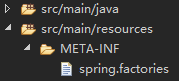
内容:
org.springframework.boot.autoconfigure.EnableAutoConfiguration=\

ProjectA.TestAutoConfiguration
现在再执行,一切OK!
Springboot依赖注入笔记的更多相关文章
- 跟我猜Spring-boot:依赖注入
依赖注入 引&目标 本篇是<跟我猜Spring-Boot>系列的第二篇(Oh,我竟然已经写了10篇了,真不容易). 在上一篇中,我们实现了Bean的创建,但是仅仅是创建而已,并没有 ...
- Unity依赖注入(笔记)
一.介绍 控制反转(Inversion of Control,简称IoC):整洁架构思想,不允许内部获知外部的存在,这就导致了我们必须在内层定义与外层交互的接口,通过依赖注入的方式将外层实现注入到内部 ...
- Springboot依赖注入 Service类中使用静态变量
@Component public class ServerHandler extends IoHandlerAdapter { @Autowired protected HealthDataServ ...
- .NET CORE学习笔记系列(2)——依赖注入[7]: .NET Core DI框架[服务注册]
原文https://www.cnblogs.com/artech/p/net-core-di-07.html 包含服务注册信息的IServiceCollection对象最终被用来创建作为DI容器的IS ...
- .NET CORE学习笔记系列(2)——依赖注入[6]: .NET Core DI框架[编程体验]
原文https://www.cnblogs.com/artech/p/net-core-di-06.html 毫不夸张地说,整个ASP.NET Core框架是建立在一个依赖注入框架之上的,它在应用启动 ...
- .NET CORE学习笔记系列(2)——依赖注入[5]: 创建一个简易版的DI框架[下篇]
为了让读者朋友们能够对.NET Core DI框架的实现原理具有一个深刻而认识,我们采用与之类似的设计构架了一个名为Cat的DI框架.在上篇中我们介绍了Cat的基本编程模式,接下来我们就来聊聊Cat的 ...
- .NET CORE学习笔记系列(2)——依赖注入[4]: 创建一个简易版的DI框架[上篇]
原文https://www.cnblogs.com/artech/p/net-core-di-04.html 本系列文章旨在剖析.NET Core的依赖注入框架的实现原理,到目前为止我们通过三篇文章从 ...
- .NET CORE学习笔记系列(2)——依赖注入【3】依赖注入模式
原文:https://www.cnblogs.com/artech/p/net-core-di-03.html IoC主要体现了这样一种设计思想:通过将一组通用流程的控制权从应用转移到框架中以实现对流 ...
- .NET CORE学习笔记系列(2)——依赖注入【2】基于IoC的设计模式
原文:https://www.cnblogs.com/artech/p/net-core-di-02.html 正如我们在<控制反转>提到过的,很多人将IoC理解为一种“面向对象的设计模式 ...
随机推荐
- Mysql2索引
索引分类: 作用:优化查询,select查询有三种情况:缓存查询(不在mysql中进行数据查询),全表查询,索引扫描 Btree(btree b+tree b*tree) Rtree HASH Ful ...
- yii2 中where条件查询
在Yii的Model里进行查询的时候 where是必不可少的. Where方法声明为 static where( $condition ) 其中参数 $condition 类型为字符串或者数组1.字符 ...
- pycharm激活(转)
1.注册码激活Activation code http://idea.lanyus.com/ 2.服务器激活License server(推荐) 或者http://182.254.242.193:10 ...
- [Windows Powershell]-学习笔记(1)
Powershell 快捷键 Powershell的快捷键和cmd,linux中的shell,都比较像. ALT+F7 清除命令的历史记录 PgUp PgDn 显示当前会话的第 ...
- java 并发——理解 wait / notify / notifyAll
一.前言 前情简介: java 并发--内置锁 java 并发--线程 java 面试是否有被问到过,sleep 和 wait 方法的区别,关于这个问题其实不用多说,大多数人都能回答出最主要的两点区别 ...
- npm使用淘宝镜像
淘宝 npm 地址: http://npm.taobao.org/ 如何使用 有很多方法来配置npm的registry地址,下面根据不同情境列出几种比较常用的方法.以淘宝npm镜像举例: 1.临时使用 ...
- SSIS 2012 Error: An Integration Services class cannot be found
升级SSIS到SQL Server 2012,服务器只安装了SSIS一个功能,应用程序执行dtsx包时报错如下: An Integration Services class cannot be fou ...
- Java序列化的机制和原理 转
转 http://developer.51cto.com/art/200908/147650.htm Java序列化的机制和原理 本文讲解了Java序列化的机制和原理.从文中你可以了解如何序列化一个对 ...
- 新linux系统上rz 与sz命令不可用
使用命令进行安装:yum install lrzsz 即可使用
- python 数据分析----numpy
NumPy是高性能科学计算和数据分析的基础包.它是pandas等其他各种工具的基础. NumPy的主要功能: ndarray,一个多维数组结构,高效且节省空间 无需循环对整组数据进行快速运算的数学函数 ...