
Java基础—ArrayList源码浅析
注:以下源码均为JDK8的源码
一、 核心属性
基本属性如下:
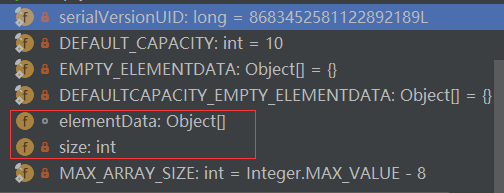
核心的属性其实是红框中的两个:
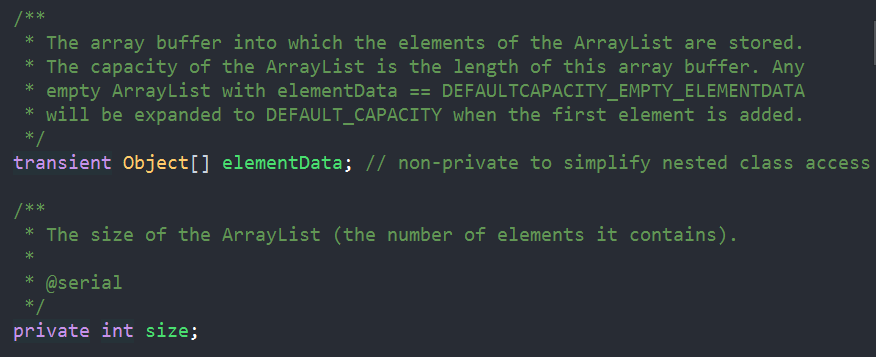
//从注释也容易看出,一个是集合元素,一个是集合长度(注意是逻辑长度,即元素的个数,而非数组长度)
其中:transient指明序列化时请忽略。
二、构造器
一共有3个构造器:

1.构造指定容量的ArrayList

2.默认构造器
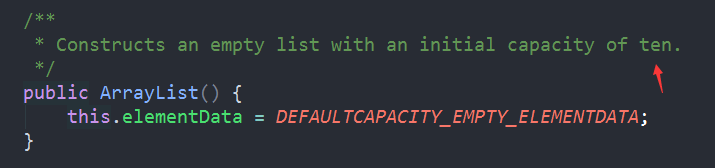
//可以看到,默认初始容量为10(基本属性中的DEFAULT_CAPACITY)
而 DEFAULTCAPACITY_EMPTY_ELEMENTDATA是一个空数组,所有默认构造器初始化的都指向它,目的是为了防止我们创建过多的无用的List
如果创建ArrayList时用的是无参构造器,则第一次插入时会进行一次扩容并且扩到默认数组大小10
3.使用collection参数的构造器

//接收一个集合进行构造,按照迭代器返回的顺序排列
更多容器初始化的介绍,参考是清浅池塘知乎专栏:https://zhuanlan.zhihu.com/p/27873515
三、添加元素
一共有5个(包含2个重载方法)
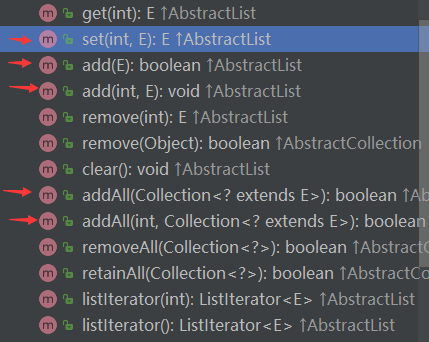
//由于是基于数组进行实现的,我们只要抓住它的特点,就能读懂总体的思路
1.set(int,E),使用新元素,替代指定位置旧元素

//比较容易读懂的一个方法:检查下标->取得旧元素->替代->返回新元素
2.add(E)/add(int,E),包含两个重载方法:在末尾添加元素与在指定位置添加元素
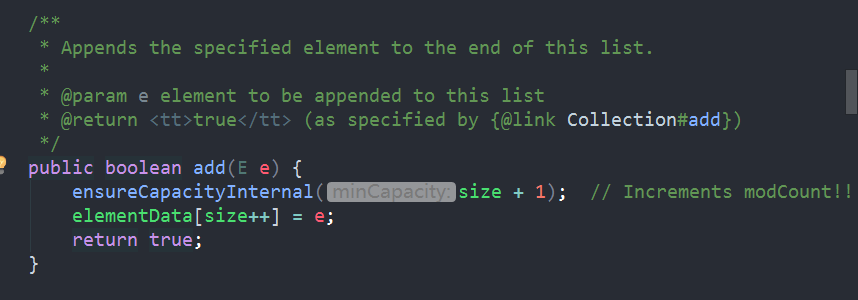
//先检查容量是否需要扩容(扩容算法不在这里展开),再在结尾添加元素(size+1)
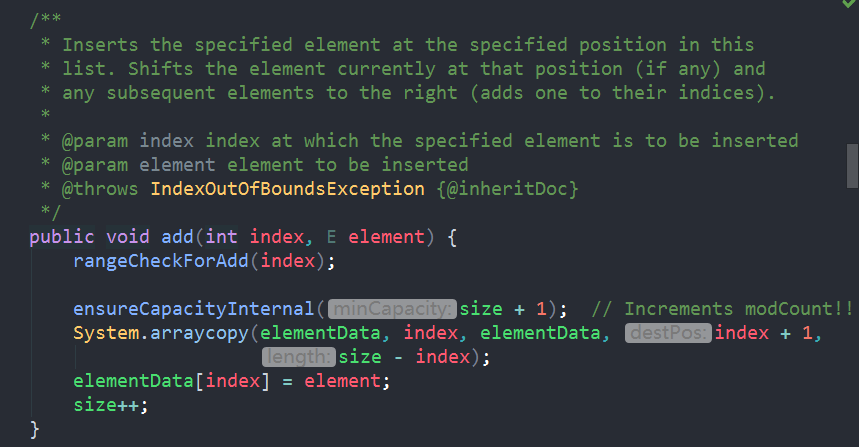
//同样的,涉及下标的都先检查下标,之后检查是否需要扩容,之后,由于是数组,先右移Index+1的元素,再添加
3.addAll(),两个addAll方法,与上面类似,一个为在末尾添加,一个在指定位置添加,顺序均为迭代器返回的顺序,这里就不展开:
  /**

     * Appends all of the elements in the specified collection to the end of

     * this list, in the order that they are returned by the

     * specified collection's Iterator.  The behavior of this operation is

     * undefined if the specified collection is modified while the operation

     * is in progress.  (This implies that the behavior of this call is

     * undefined if the specified collection is this list, and this

     * list is nonempty.)

     *

     * @param c collection containing elements to be added to this list

     * @return <tt>true</tt> if this list changed as a result of the call

     * @throws NullPointerException if the specified collection is null

     */

    public boolean addAll(Collection<? extends E> c) {

        Object[] a = c.toArray();

        int numNew = a.length;

        ensureCapacityInternal(size + numNew);  // Increments modCount

        System.arraycopy(a, 0, elementData, size, numNew);

        size += numNew;

        return numNew != 0;

    }

    /**

     * Inserts all of the elements in the specified collection into this

     * list, starting at the specified position.  Shifts the element

     * currently at that position (if any) and any subsequent elements to

     * the right (increases their indices).  The new elements will appear

     * in the list in the order that they are returned by the

     * specified collection's iterator.

     *

     * @param index index at which to insert the first element from the

     *              specified collection

     * @param c collection containing elements to be added to this list

     * @return <tt>true</tt> if this list changed as a result of the call

     * @throws IndexOutOfBoundsException {@inheritDoc}

     * @throws NullPointerException if the specified collection is null

     */

    public boolean addAll(int index, Collection<? extends E> c) {

        rangeCheckForAdd(index);

        Object[] a = c.toArray();

        int numNew = a.length;

        ensureCapacityInternal(size + numNew);  // Increments modCount

        int numMoved = size - index;

        if (numMoved > 0)

            System.arraycopy(elementData, index, elementData, index + numNew,

                             numMoved);

        System.arraycopy(a, 0, elementData, index, numNew);

        size += numNew;

        return numNew != 0;

    }
四、获取元素
一个我们常见的get方法:
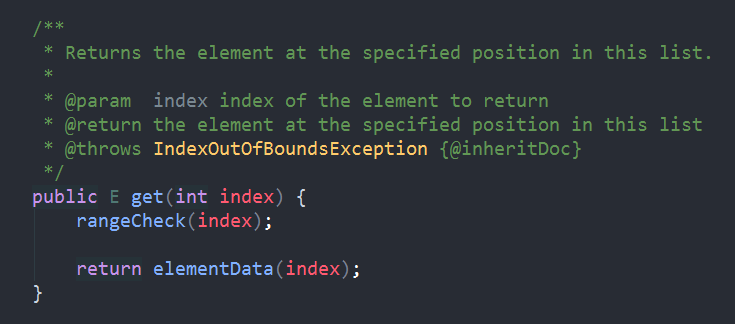
//比较简单的下标检查,获取元素
五、删除元素
3个基本的删除方法:

1.remove(int)/remove(Object),两个重载方法,分别是按照下标和按照元素删除:
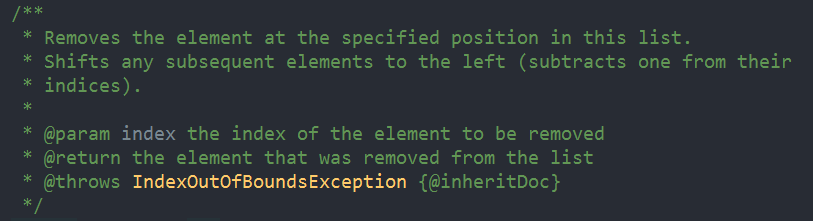
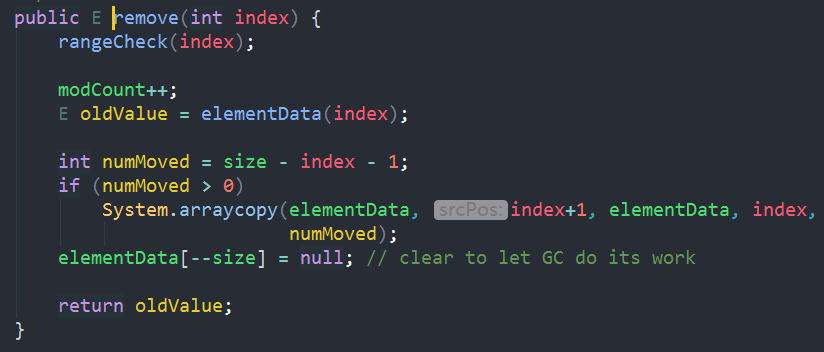
//范围检查->修改次数modCount加1->得到将要删除的元素,被删除元素后的元素向前进一位,末尾元素置空。
关于modCount:
ArrayList也采用了快速失败的机制,通过记录modCount参数来实现。在面对并发的修改时,迭代器很快就会完全失败,而不是冒着在将来某个不确定时间发生任意不确定行为的风险。
在使用迭代器遍历的时候,如果使用ArrayList中的remove(int index) remove(Object o) remove(int fromIndex ,int toIndex) add等方法的时候都会修改modCount,在迭代的时候需要保持单线程的唯一操作,如果期间进行了插入或者删除,就会被迭代器检查获知,从而出现运行时异常


//先检查要删除的元素在不在,存在则删除返回true,不存在返回false
2.removeRange(int,int),按照范围删除,实际是将elementData从toIndex位置开始的元素向前移动到fromIndex,然后将toIndex位置之后的元素全部置空顺便修改size。这里就不展开频率使用不高的范围删除方法了:
/**

     * Removes from this list all of the elements whose index is between

     * {@code fromIndex}, inclusive, and {@code toIndex}, exclusive.

     * Shifts any succeeding elements to the left (reduces their index).

     * This call shortens the list by {@code (toIndex - fromIndex)} elements.

     * (If {@code toIndex==fromIndex}, this operation has no effect.)

     *

     * @throws IndexOutOfBoundsException if {@code fromIndex} or

     *         {@code toIndex} is out of range

     *         ({@code fromIndex < 0 ||

     *          fromIndex >= size() ||

     *          toIndex > size() ||

     *          toIndex < fromIndex})

     */

    protected void removeRange(int fromIndex, int toIndex) {

        modCount++;

        int numMoved = size - toIndex;

        System.arraycopy(elementData, toIndex, elementData, fromIndex,

                         numMoved);

        // clear to let GC do its work

        int newSize = size - (toIndex-fromIndex);

        for (int i = newSize; i < size; i++) {

            elementData[i] = null;

        }

        size = newSize;

    }
清空元素也比较容易看懂:
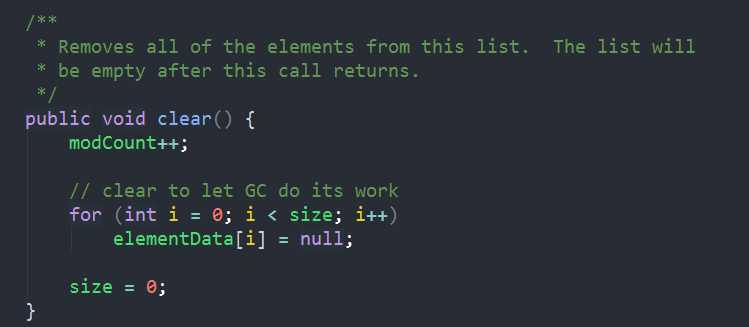
//元素置Null与size置0
在ArrayList中,底层数组存/取元素效率非常的高(get/set),时间复杂度是O(1),而查找,插入和删除元素效率不高,时间复杂度为O(n)。
并且由源码也知道,频繁地插入删除会导致底层数组地复制,这个应当由 LinkedList来弥补它地补足了。
Java基础—ArrayList源码浅析的更多相关文章
- Java基础 ArrayList源码分析 JDK1.8
一.概述 本篇文章记录通过阅读JDK1.8 ArrayList源码,结合自身理解分析其实现原理. ArrayList容器类的使用频率十分频繁,它具有以下特性: 其本质是一个数组,因此它是有序集合 通过 ...
- Java基础——集合源码解析 List List 接口
今天我们来学习集合的第一大体系 List. List 是一个接口,定义了一组元素是有序的.可重复的集合. List 继承自 Collection,较之 Collection,List 还添加了以下操作 ...
- Java集合——ArrayList源码详解
) ArrayList 实现了RandomAccess, Cloneable, java.io.Serializable三个标记接口,表示它自身支持快速随机访问,克隆,序列化. public clas ...
- java的Iterator源码浅析
在java的集合中,List接口继承Collection接口,AbstractList类实现了List接口,在AbstractList中的内部类Itr实现了Iterator接口 ArrayList实现 ...
- Java中ArrayList源码分析
一.简介 ArrayList是一个数组队列,相当于动态数组.每个ArrayList实例都有自己的容量,该容量至少和所存储数据的个数一样大小,在每次添加数据时,它会使用ensureCapacity()保 ...
- Java集合ArrayList源码解读
最近在回顾数据结构,想到JDK这样好的代码资源不利用有点可惜,这是第一篇,花了心思.篇幅有点长,希望想看的朋友认真看下去,提出宝贵的意见. :) 内部原理 ArrayList 的3个字段 priva ...
- ArrayList源码浅析(jdk1.8)
ArrayList的实质就是动态数组.所以可以通过下标准确的找到目标元素,因此查找的效率高.但是添加或删除元素会涉及到大量元素的位置移动,所以效率低. 一.构造方法 ArrayList提供了3个构造方 ...
- Java集合-ArrayList源码解析-JDK1.8
◆ ArrayList简介 ◆ ArrayList 是一个数组队列,相当于 动态数组.与Java中的数组相比,它的容量能动态增长.它继承于AbstractList,实现了List, RandomAcc ...
- 【thinking in java】ArrayList源码分析
简介 ArrayList底层是数组实现的,可以自增扩容的数组,此外它是非线程安全的,一般多用于单线程环境下(Vector是线程安全的,所以ArrayList 性能相对Vector 会好些) Array ...
随机推荐
- February 8 2017 Week 6 Wednesday
Goals determine what you are going to be. 目标决定你将成为什么样的人. Owning some goals in life means you will ha ...
- Native广告月入万刀的全部细节!
一步一步跑Native原生广告: 第一步:跑native前期的准备工作 第二步:阅读大神的Native文档(100多页,英文,建议找一个支持在线翻译功能的app来阅读) 第三步:阅读我的几十条经验总结 ...
- WEB开发的jsp例子标签库(jstl)的使用
<!-- e1 --> <%@ page language="java" contentType="text/html; charset=UTF-8&q ...
- 用python实现矩阵转置
前几天群里有同学提出了一个问题:手头现在有个列表,列表里面两个元素,比如[1, 2],之后不断的添加新的列表,往原来相应位置添加.例如添加[3, 4]使原列表扩充为[[1, 3], [2, 4]],再 ...
- 【[HNOI2004]L语言】
\(Trie\)树+\(DP\) 我们只需要做一个存在性dp就好了 对于每一个字符串,我们设\(f[i]\)表示从\(1\)到\(i\)位是否能被完全匹配 首先\(f[0]=1\),之后我们对于每一个 ...
- php 中输出字符串时怎么换行?
<?php //php 不同系统的换行 //不同系统之间换行的实现是不一样的 //linux 与unix中用 /n //MAC 用 /r //window 为了体现与linux不同 则是 /r/ ...
- Linux 进程与信号的概念和操作 linux process and signals
进程 主要参考: http://www.bogotobogo.com/Linux/linux_process_and_signals.php 译者:李秋豪 信号与进程几乎控制了操作系统的每个任务. 在 ...
- Ajax同时上传表单序列化参数+自定义参数
$.ajax({ type:'POST', url :"<{:U('jiuzhu/edit')}>", data:$.param({'name1':value1,'na ...
- C# 文件流FileStream 实现多媒体文件复制 StreamReader StreamWriter 读取写入文本
#region 实现多媒体文件的复制 string source = @"F:\123\source.avi";//源文件路径 string target = @"F:\ ...
- Intellij IDEA如何删除项目
1. 删除某个项目 1) 选中项目,并关闭 2) File-Open,再选中相应的项目,并delete即可,它会同时在硬盘上删除