
【深入浅出Spring原理及实战】「源码原理实战」从底层角度去分析研究PropertySourcesPlaceholderConfigurer的原理及实战注入机制
Spring提供配置解析功能
主要有一下xml文件占位符解析和Java的属性@Value的占位符解析配置这两种场景进行分析和实现解析,如下面两种案例。
xml文件的占位符解析配置
<bean id="dataSource" class="com.alibaba.druid.pool.DruidDataSource"  init-method="init" destroy-method="close">

    <property name="url" value="${jdbc.url}"/>

    <property name="username" value="${jdbc.username}"/>

    <property name="password" value="${jdbc.password}"/>

</bean>
Java的属性@Value的占位符解析配置
@Value 注解值进行属性占位符解析和替换
@Value("${config}")

private String config;
PropertyPlaceholderConfigurer和PropertySourcesPlaceholderConfigurer
通过配置xml来实现对Classpath下的配置文件的占位符的属性进行注入,或者实现Java的属性@Value的占位符解析配置。
- 在Spring3.1版本之前是通过PropertyPlaceholderConfigurer实现的。
- 在Spring3.1之后则是通过PropertySourcesPlaceholderConfigurer实现的。
注意:在Spring Context 3.1或者更高版本中,缺省使用PropertySourcesPlaceholderConfigurer工具替换了PlaceholderConfigurerSupport,而<=3.0较老的Spring Context中,为了保持和之前的版本兼容,缺省还是使用PropertyPlaceholderConfigurer。
PropertyPlaceholderConfigurer和PropertySourcesPlaceholderConfigurer的实现分析
- PropertyPlaceholderConfigurer本质是基于PlaceholderConfigurerSupport实现读取配置的。
- PropertySourcesPlaceholderConfigurer是PlaceholderConfigurerSupport的特殊化实现。
下图介绍对应的配置解析的继承关系图谱。
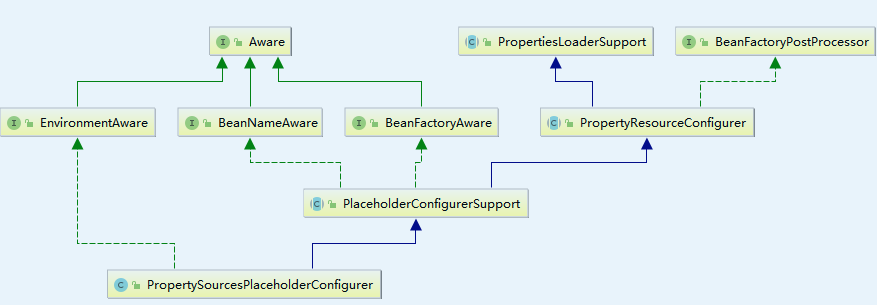
PropertyPlaceholderConfigurer和PropertySourcesPlaceholderConfigurer的执行目标
PropertyPlaceholderConfigurer和PropertyPlaceholderConfigurer在使用上并无本质的区别,两者的根本目标是将配置文件生成KV对,真正的注入工作并不由它们本身执行。
PropertySourcesPlaceholderConfigurer它用于解析bean定义中的属性值,以及注解@Value的值,使用的属性来源是当前的Spring Environment对象,以及设置给自己的PropertySources对象。
Spring Boot 自动配置类 PropertyPlaceholderAutoConfiguration
@Configuration

@AutoConfigureOrder(Ordered.HIGHEST_PRECEDENCE)

public class PropertyPlaceholderAutoConfiguration {

	@Bean

	@ConditionalOnMissingBean(search = SearchStrategy.CURRENT)

	public static PropertySourcesPlaceholderConfigurer propertySourcesPlaceholderConfigurer() {

		return new PropertySourcesPlaceholderConfigurer();

	}

}
PropertyPlaceholderAutoConfiguration定义一个PropertySourcesPlaceholderConfigurer bean,该bean作为一个BeanFactoryPostProcessor,会在容器启动时容器后置处理阶段执行自己的任务。BeanFactoryPostProcessor的优先级又优于其余的Bean。因此可以实现在bean初始化之前的注入。
postProcessBeanFactory方法的执行
如果外部指定了this.propertySources, 则直接使用它,否则从当前Spring的Environment 对象和自身的 #mergeProperties 方法调用返回的 Properties 对象构建属性源对象 this.propertySources
	@Override

	public void postProcessBeanFactory(ConfigurableListableBeanFactory beanFactory) throws BeansException {

		if (this.propertySources == null) {

			this.propertySources = new MutablePropertySources();

			if (this.environment != null) {

				this.propertySources.addLast(

					new PropertySource<Environment>(ENVIRONMENT_PROPERTIES_PROPERTY_SOURCE_NAME,

						this.environment) {

						@Override

						@Nullable

						public String getProperty(String key) {

							return this.source.getProperty(key);

						}

					}

				);

			}

			try {

				PropertySource<?> localPropertySource =

						new PropertiesPropertySource(LOCAL_PROPERTIES_PROPERTY_SOURCE_NAME, mergeProperties());

				if (this.localOverride) {

					this.propertySources.addFirst(localPropertySource);

				}

				else {

					this.propertySources.addLast(localPropertySource);

				}

			}

			catch (IOException ex) {

				throw new BeanInitializationException("Could not load properties", ex);

			}

		}

		processProperties(beanFactory, new PropertySourcesPropertyResolver(this.propertySources));

		this.appliedPropertySources = this.propertySources;

	}
构造一个基于特定属性源 this.propertySources 对属性值进行解析的属性值解析器PropertySourcesPropertyResolver, 对容器中所有的 bean 定义中的属性值,构造函数参数值。
	/**

	 * Visit each bean definition in the given bean factory and attempt to replace ${...} property

	 * placeholders with values from the given properties.

	 */

	protected void processProperties(ConfigurableListableBeanFactory beanFactoryToProcess,

			final ConfigurablePropertyResolver propertyResolver) throws BeansException {

       // 设置属性值解析器所使用的占位符格式参数,缺省为:

       // 占位符前缀 ${

		propertyResolver.setPlaceholderPrefix(this.placeholderPrefix);

       // 占位符后缀 }

		propertyResolver.setPlaceholderSuffix(this.placeholderSuffix);

       // 缺省值分隔符 :

		propertyResolver.setValueSeparator(this.valueSeparator);

       // 结合属性 this. ignoreUnresolvablePlaceholders对propertyResolver 作进一步封装,

       // 封装出来一个 StringValueResolver valueResolver,这是最终要应用的属性值解析器

		StringValueResolver valueResolver = strVal -> {

			String resolved = (this.ignoreUnresolvablePlaceholders ?

					propertyResolver.resolvePlaceholders(strVal) :

					propertyResolver.resolveRequiredPlaceholders(strVal));

			if (this.trimValues) {

				resolved = resolved.trim();

			}

			return (resolved.equals(this.nullValue) ? null : resolved);

		};

       // 调用基类PlaceholderConfigurerSupport实现的对容器中所有 bean定义进行遍历处理属性值中占位符解析的逻辑

		doProcessProperties(beanFactoryToProcess, valueResolver);

	}
doProcessProperties的方法目的是为了添加解析器StringValueResolver
    protected void doProcessProperties(ConfigurableListableBeanFactory beanFactoryToProcess,

            StringValueResolver valueResolver) {

        // ignore

        ....

        // New in Spring 2.5: resolve placeholders in alias target names and aliases as well.

        beanFactoryToProcess.resolveAliases(valueResolver);

        // New in Spring 3.0: resolve placeholders in embedded values such as annotation attributes.

        beanFactoryToProcess.addEmbeddedValueResolver(valueResolver);

    }
这里的ddEmbeddedValueResolver(StringValueResolver) 是为一个 LinkedList添加值。在取用的时候是优先从链表头开始取用的。 一旦发现无法找到值,直接就抛异常了。这个就对外体现出 PropertySourcesPlaceholderConfigurer 的唯一性。
然而Spring内部还是有多个PropertySourcesPlaceholderConfigurer, 只不过除了排列在队首的 PropertySourcesPlaceholderConfigurer之外全都被忽略掉了。
PropertySourcesPlaceholderConfigurer属性注入的原理
AbstractApplicationContext#obtainFreshBeanFactory
Spring框架进行植入元素注入时机
针对于元素的注入依赖于
AutowiredAnnotationBeanPostProcessor#postProcessPropertyValues1。
AbstractApplicationContext#finishBeanFactoryInitialization方法
在Spring初始化流程中,执行AbstractApplicationContext#finishBeanFactoryInitialization方法。 该方法里面发生的主要流程为Spring业务Bean初始化。 实际流程跟Spring Bean的初始化没有任务区别。
InstantiationAwareBeanPostProcessor
- 通过对接口 InstantiationAwareBeanPostProcessor 实现类的方法进行执行。 仅此而已。
AutowiredAnnotationBeanPostProcessor
- InjectionMetadataInjectionMetadataInjectedElementInjectedElement这个类是 InstantiationAwareBeanPostProcessor的一个实现类。
@Value和@Autowired注解实际执行
用于@Value和@Autowired注解实际执行方法postProcessPropertyValues调度实际调度InjectedElement子类被注入值的获取来自于DefaultListableBeanFactory将对应@Value(“${configValue}”)里面的值替换的来源值,是PropertySourcesPlaceholderConfigurer生成的StringValueResolver。
Spring原生的Bean是单例的它直接被储存在了AbstractBeanFactory执行Field.set(Object, Object)或者Method.invoke(Object, Object[])。
所以,可以看出 PropertySourcesPlaceholderConfigurer 或者 PropertyPlaceholderConfigurer仅仅是做了一个配置文件的解析工作,真正的注入并不由它们完成,而是托付给了Spring 的Bean初始化流程。这两个类实现了BeanFactoryPostProcessor 接口,这个接口的优先级高于后续的Spring Bean。
通过解析了的PropertySourcesPlaceholderConfigurer查询得到元素值。 没有则抛出异常,如下源码:
DefaultListableBeanFactory#doResolveDependency
@Value 注解值进行属性占位符解析和替换
// 获取注解的 value() 值。被写死为 Class<? extends Annotation> valueAnnotationType = Value.class;

// 见类 QualifierAnnotationAutowireCandidateResolver

Object value = getAutowireCandidateResolver().getSuggestedValue(descriptor);

if (value != null) {

    if (value instanceof String) {

        // 通过PropertySourcesPlaceholderConfigurer写入的键值对元素获取元素的值.

        // 方法内注册了多个StringValueResolver,循环查找值。提供者为PropertySourcesPlaceholderConfigurer,因此配置多个解析器的时候是以最后的配置为准的。

        String strVal = resolveEmbeddedValue((String) value);

        BeanDefinition bd = (beanName != null && containsBean(beanName) ? getMergedBeanDefinition(beanName) : null);

        value = evaluateBeanDefinitionString(strVal, bd);

    }

    TypeConverter converter = (typeConverter != null ? typeConverter : getTypeConverter());

    return (descriptor.getField() != null ?

            converter.convertIfNecessary(value, type, descriptor.getField()) :

            converter.convertIfNecessary(value, type, descriptor.getMethodParameter()));

}
读取配置的方式介绍
xml文件读取配置信息案例
通过PropertyPlaceholderConfigurer进行配置Bean方式
单个配置文件。
<bean id="propertyConfigurer"class="org.springframework.beans.factory.config.PropertyPlaceholderConfigurer">

   <property name="location">

     <value>conf/sqlmap/jdbc.properties</value>

   </property>

    <property name="fileEncoding">

      <value>UTF-8</value>

    </property>

</bean>
多个配置文件
注意这两种value值的写法
<bean id="propertyConfigurer"class="org.springframework.beans.factory.config.PropertyPlaceholderConfigurer">

    <property name="locations">

        <list>

            <value>/WEB-INF/mail.properties</value>

            <value>classpath: conf/sqlmap/jdbc.properties</value>

     </list>

    </property>

</bean>
Spring标签方式
<context:property-placeholder location="classpath*:/WEB-INF/mail.properties" />
这总方式的原理就是构造一个PropertySourcesPlaceholderConfigurer, (3.1之前是PropertyPlaceholderConfigurer)
- ContextNamespaceHandler#init
- PropertyPlaceholderBeanDefinitionParser#doParse
注入配置触发点
Spring初始化Context的时候读取XML配置, 这个流程优先于Spring普通Bean初始化。配合扫包(<context:component-scan />)得到的Bean进而实现对XML里面配置的Bean的载入。
- PropertySourcesPlaceholderConfigurer本质上是一个BeanFactoryPostProcessor。解析XML的流程在BeanFactoryPostProcessor之前, 优先将配置文件的路径以及名字通过Setter传入PropertySourcesPlaceholderConfigurer。
总结Spring Value注入流程
构建PropertySourcesPlaceholderConfigurerBean或者PropertyPlaceholderConfigurerBean的组件
配置Spring @Value("val2Inject") 方式获取配置文件的属性,需要依赖于在Spring XML里面配置<context:property-placeholder /> 或者PropertySourcesPlaceholderConfigurerBean来添加配置文件的名称。
读取到context:property-placeholder标签或者PropertySourcesPlaceholderConfigurer
解析并实例化一个PropertySourcesPlaceholderConfigurer。同时向其中注入配置文件路径、名称PropertySourcesPlaceholderConfigurer自身生成多个StringValueResolver备用,Bean准备完毕。Spring在初始化非BeanFactoryPostProcessor的Bean的时候,AutowiredAnnotationBeanPostProcessor负责找到Bean内有@Value注解的Field或者Method
- 通过PropertySourcesPlaceholderConfigurer寻找合适的StringValueResolver并解析得到val值。注入给@Value的Field或Method。
AutowiredAnnotationBeanPostProcessor负责@Autowired和@Value两个注解的解析。
@PropertySource注解配置读取单个或多个配置文件
单个配置文件:
@PropertySource(value = "classpath:config/application-config.properties")
多个配置文件:
@PropertySource(value = {"classpath:config/application-config1.properties","classpath:config/application-config2.properties"})
@PropertySource注解使用有两种方式
@PropertySource + Environment,通过@PropertySource注解将properties配置文件中的值存储到Spring的Environment中,Environment接口提供方法去读取配置文件中的值,参数是properties文件中定义的key值。
@PropertySource(PropertySourcesPlaceholderConfigurer) +@Value
@PropertySource + Environment
@Configuration

@ComponentScan(basePackages = "com.libo.config")

@PropertySource(value = "classpath:config/application-config.properties")

public class TestPropertieEnvironment {

    @Autowired

    Environment environment;

    public String properties(){

        String key = this.environment.getProperty("config.key");

        System.out.println(key);

        return null;

    }

}
配置文件config.properties:
config.key=1

config.value=2
测试类操作
public class Test {

    public static void main(String[] args) {

        ApplicationContext context = new AnnotationConfigApplicationContext(TestPropertieEnvironment.class);

        ServiceConfiguration hc2 = (TestPropertieEnvironment) context.getBean("testPropertieEnvironment");

        hc2.properties();

    }

}
@PropertySource(PropertySourcesPlaceholderConfigurer)+@Value
PropertySourcesPlaceholderConfigurer是PlaceholderConfigurerSupport的特殊化实现。它用于解析bean定义中的属性值,以及注解@Value的值,使用的属性来源是当前的Spring Environment对象,以及设置给自己的PropertySources对象。
大于3.1更高版本中,缺省使用该工具替换了PlaceholderConfigurerSupport
<=3.0较老的Spring中,为了保持和之前的版本兼容,缺省还是使用PropertyPlaceholderConfigurer。
创建PropertySourcesPlaceholderConfigurer
创建PropertiesConfig
@Component

@PropertySource(value = "classpath:config/application-config.properties")

public class PropertiesConfig {

    @Value("${config.value}")

    private String value;

    @Value("${config.key}")

    private String key;

}
测试类忽略!
自定义PropertyPlaceholderConfigurer
@Configuration

@ComponentScan(basePackages = "com.libo.config")

public class PropertiesConfiguration2 {

    @Bean

    public static PropertyPlaceholderConfigurer configurer() {

         PropertyPlaceholderConfigurer ppc = new PropertyPlaceholderConfigurer();

         Resource resources = new ClassPathResource( "config/appplication-config.properties" );

         ppc.setLocation(resources);

         return ppc;

    }

    @Bean

    public Configs2 configs2(@Value("${ds.user}") String user, @Value("${key1}") String key1) {

        Configs2 configs = new Configs2();

        configs.setApiKeyId(user);

        configs.setSecretApiKey(key1);

        System.out.println("in ServiceConfiguration" + configs);

        return configs;

    }

}

@Service

public class TestConfigs2 {

    @Autowired

    Configs2 configs2;

    @Autowired

    Configs configs;

    public void testConfigs2() {

        System.out.println("configs:"+configs.getApiKeyId());

        System.out.println("configs2:"+configs2.getApiKeyId());

    }

}
测试类
import org.springframework.context.ApplicationContext;

import org.springframework.context.annotation.AnnotationConfigApplicationContext;

public class Test {

    public static void main(String[] args) {

        ApplicationContext context = new AnnotationConfigApplicationContext(ServiceConfiguration2.class);

        TestConfigs2 hc2 = (TestConfigs2) context.getBean("testConfigs2");

        hc2.testConfigs2();

    }

}
此外需要注意的是:PropertySource是可以支持ignoreResourceNotFound支持无法获取配置文件的i情况。
Spring4版本的PropertySources的注解
在Spring 4版本中,Spring提供了一个新的注解——@PropertySources,从名字就可以猜测到它是为多配置文件而准备的。
@PropertySources({

//@PropertySource("classpath:db.properties"),

@PropertySource(value="classpath:db.properties", ignoreResourceNotFound=true),

@PropertySource("classpath:spring/config.properties")

	public class AppConfig {

    @Value("${key1}")

    private String key1;

    @Value("${key2}")

    private String key2;

    @Override

    public String toString() {

        return "AppConfig [key1=" + key1 + ", key2=" + key2 + "]";

    }

}
【深入浅出Spring原理及实战】「源码原理实战」从底层角度去分析研究PropertySourcesPlaceholderConfigurer的原理及实战注入机制的更多相关文章
- 【Java实战】源码解析Java SPI(Service Provider Interface )机制原理
一.背景知识 在阅读开源框架源码时,发现许多框架都支持SPI(Service Provider Interface ),前面有篇文章JDBC对Driver的加载时应用了SPI,参考[Hibernate ...
- 阿里P7终于讲完了JDK+Spring+mybatis+Dubbo+SpringMvc+Netty源码
前言 这里普及一下,每个公司都有职别定级系统,阿里也是,技术岗以 P 定级,一般校招 P5, 社招 P6 起.其实阅读源码也是有很多诀窍的,这里分享几点心得: 首先要会用.你要知道这个库是干什么的,掌 ...
- Apache Beam WordCount编程实战及源码解读
概述:Apache Beam WordCount编程实战及源码解读,并通过intellij IDEA和terminal两种方式调试运行WordCount程序,Apache Beam对大数据的批处理和流 ...
- Java生鲜电商平台-电商中海量搜索ElasticSearch架构设计实战与源码解析
Java生鲜电商平台-电商中海量搜索ElasticSearch架构设计实战与源码解析 生鲜电商搜索引擎的特点 众所周知,标准的搜索引擎主要分成三个大的部分,第一步是爬虫系统,第二步是数据分析,第三步才 ...
- 七、Spring之深入理解AOP源码
Spring之深入理解AOP源码 在上一篇博文中,我们对AOP有了初步的了解,那么接下来我们就对AOP的实现原理进行深入的分析. 在之前写的那个AOP示例代码当中有这样一个注解:@Enable ...
- SpringCloudGateway微服务网关实战与源码分析 - 中
实战 路由过滤器工厂 路由过滤器允许以某种方式修改传入的HTTP请求或传出的HTTP响应.路由过滤器的作用域是特定的路由.SpringCloud Gateway包括许多内置的GatewayFilter ...
- SpringCloudAlibaba分布式事务解决方案Seata实战与源码分析-上
概述 定义 Spring Cloud Alibaba Seata 官网地址 https://seata.io/zh-cn/ 最新版本1.5.2 Spring Cloud Alibaba Seata 文 ...
- 各个版本spring的jar包以及源码下载地址
各个版本spring的jar包以及源码下载地址,目前最高版本到spring4.1.2,留存备用: http://maven.springframework.org/release/org/spring ...
- Spring Boot 2.0系列文章(五):Spring Boot 2.0 项目源码结构预览
关注我 转载请务必注明原创地址为:http://www.54tianzhisheng.cn/2018/04/15/springboot2_code/ 项目结构 结构分析: Spring-boot-pr ...
- Spring Environment(二)源码分析
Spring Environment(二)源码分析 Spring 系列目录(https://www.cnblogs.com/binarylei/p/10198698.html) Spring Envi ...
随机推荐
- Node.js(一)基本node.js读取删除
npm init -y(初始化项目) npm uninstall (xxx模块名称)=>(移除模块) var text2=require("./text2"); //解构 c ...
- VideoPipe可视化视频结构化框架开源了!
完成多路视频并行接入.解码.多级推理.结构化数据分析.上报.编码推流等过程,插件式/pipe式编程风格,功能上类似英伟达的deepstream和华为的mxvision,但底层核心不依赖复杂难懂的gst ...
- VMware vSphere 8.0 正式版下载
请访问原文链接:https://sysin.org/blog/vmware-vsphere-8/,查看最新版.原创作品,转载请保留出处. 作者主页:www.sysin.org vSphere 8.0 ...
- Containerd-1.6.5 镜像容器操作
一.Containerd 镜像操作 1 基本参数 [root@ecs-65685 ~]# ctr c NAME: ctr containers - manage containers USAGE: c ...
- 基于win11安装Java11环境
下载JDK解压版本 下载后解压,并放到一个没有中文路径的目录,如图所示: 配置Java环境变量 以Windows11系统为例,打开设置,搜索"环境",点击"编辑系统环境变 ...
- 2022年最新最详细IDEA关联数据库方式、在IDEA中进行数据库的可视化操作(包含图解过程)
文章目录 1.使用IDEA关联Mysql数据库的详细操作步骤 1.1 打开侧边栏的Database 2.2. 选择要连接的数据库(Mysql) 2.3 .输入要连接的数据库.用户名.密码 2.4 .点 ...
- 七、docker镜像私有仓库
在Docker中,当我们执行 docker pull xxx 的时候 ,它实际上是从 hub.docker.com 这个地址去查找,这就是 Docker 公司为我们提供的公共仓库.在工作中,我们不可能 ...
- Python基础之面向对象:3、继承与派生
面向对象 一.三大特征之继承 python三大特征: 封装.继承.多态 三者中继承最为核心,实际应用对,感受较为直观 封装和多态略微抽象 1.继承的概念 继承的含义: 在现实生活中,继承表示人与人 ...
- VP记录
预计在最后的日子里适量VP 简单记录一下 CF 1037 Link 上来秒了ABCD,很快啊 A是二进制拆分,B是一眼贪心,C是一个非常简单且好写的dp D把边遍历顺序按照所需的bfs顺序排序,最后比 ...
- 从 洛谷P5309 Ynoi2011 初始化 看卡常
一般情况下,程序运行消耗时间主要与时间复杂度有关,超时与否取决于算法是否正确. 但对于某些题目,时间复杂度正确的程序也无法通过,这时我们就需要卡常数,即通过优化一些操作的常数因子减少时间消耗. 比如这 ...