
Hermite (埃尔米特)曲线
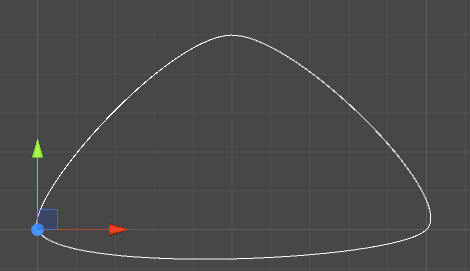
Hermite 曲线
已知曲线的两个端点坐标P0、P1,和端点处的切线R0、R1,确定的一条曲线。
参数方程
1. 几何形式

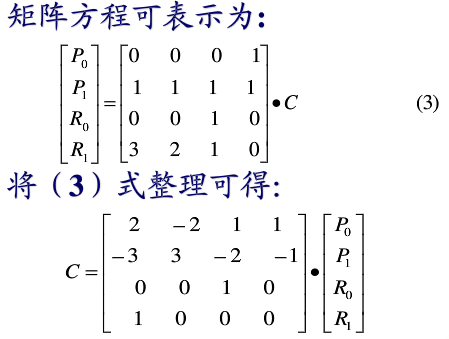
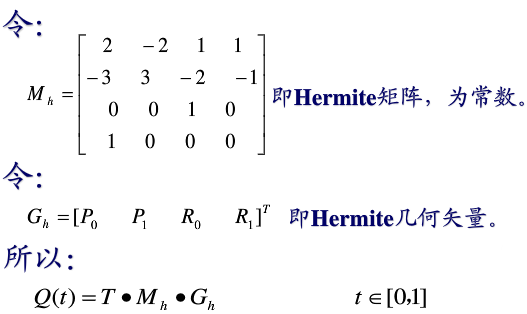
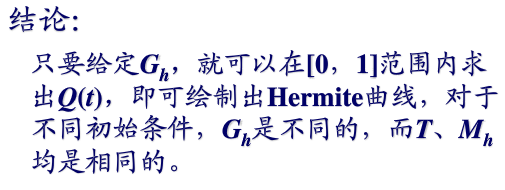
2. 矩阵形式
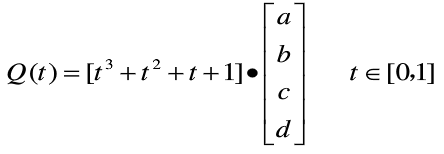
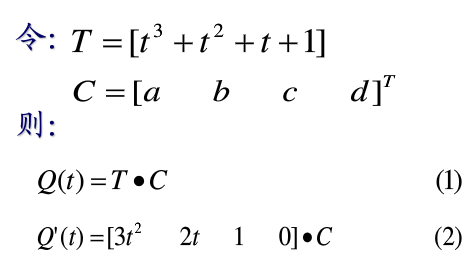
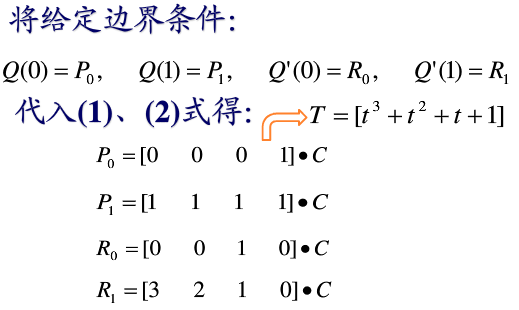
3. 推导
例子分析
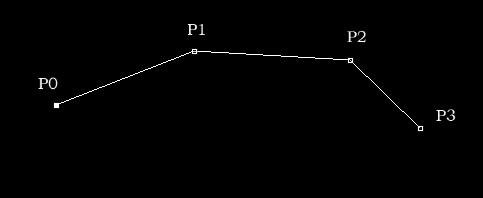
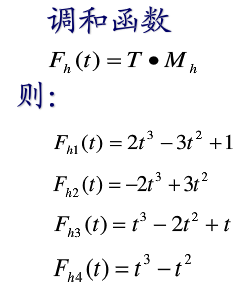
如上图有四个点,假如P0、P2是端点,那么向量R0=(P1-P0),R1=(P3-P2),将数据带入调和函数,即求得曲线。
在程序中,我们通常会使用特殊方法处理顶点之间的关系。
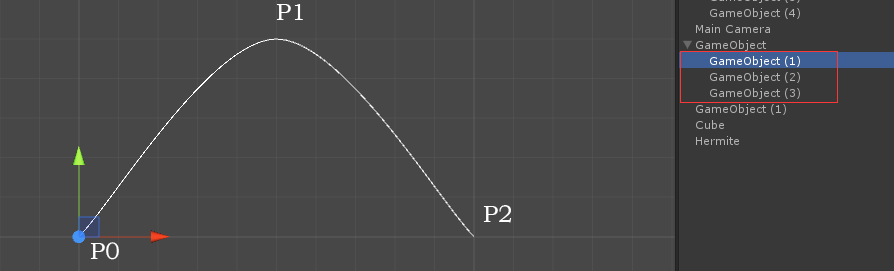
图中含有3个顶点,我们把每挨着的两个顶点看做是一条Hermite曲线,P0和P1是两个端点,那么现在,我们如何求得R1呢? 我们现在构建连个参考点F1,F2。
令 F1 = P0; F2 = P2;
那么 R1 = P1-F1; R2 = F2-P1;
然后将此值带入曲线函数,即可为求得的曲线。
程序代码
该代码是Unity脚本代码:
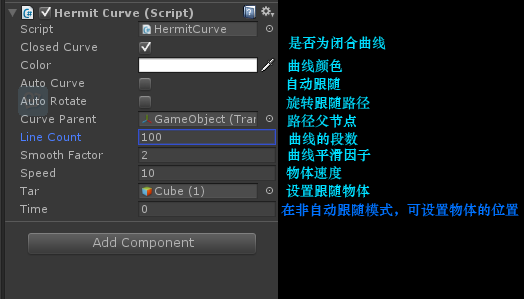
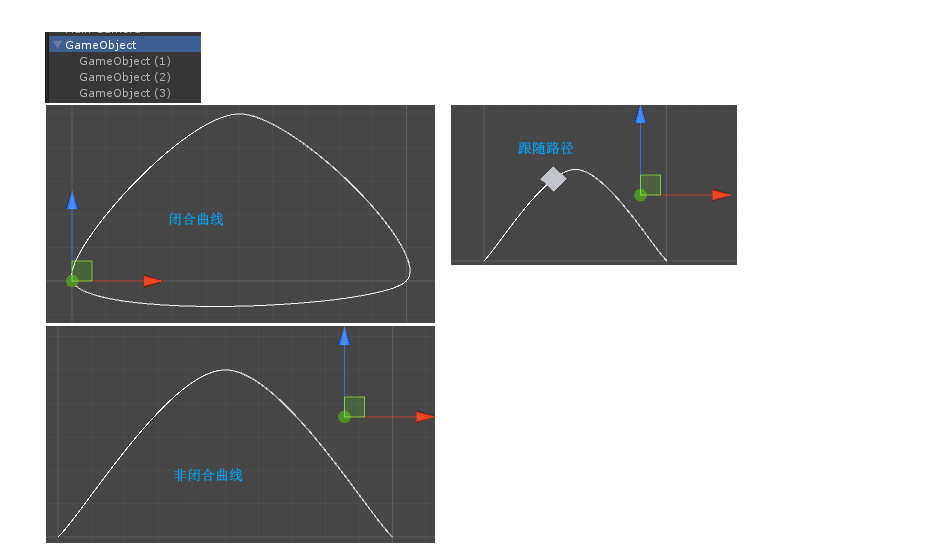
1. 实现编辑器闭合曲线和非闭合曲线的绘制;
2. 运行脚本,可以实现物体跟随曲线路径移动,可以勾选旋转跟随与不跟随;
3. 如果不进行自动跟随曲线路径,可以修改时间值,移动物体。
using UnityEngine;

using System.Collections;

using System.Collections.Generic;

public class HermitCurve : Curve_Root {

    public Transform CurveParent;

    public int lineCount;

    private List<NodePath> nodePath;

    public float smoothFactor = 2.0f;

    private Transform[] transforms;

    private Vector3[] node;

    public float Speed = 10.0f;

    Vector3 curPos;

    Vector3 nextPos;

    Quaternion curRotate;

    Quaternion nextRotate;

    float moveTime;

    float curTime;

    public GameObject Tar;

    int index;

    private Transform T;

    public float time;

    /// <summary>

    /// 数据校正

    /// </summary>

    void DadaCorrection()

    {

        //根节点验证

        if (CurveParent == null)

        {

            Debug.LogError("Please add curve the root node.");

            return;

        }

        //修正平滑因子: 2时,较为理想。

        smoothFactor = smoothFactor >= 10.0f ? 10.0f : smoothFactor;

        smoothFactor = smoothFactor <= 1.0f ? 1.0f : smoothFactor;

    }

    /// <summary>

    /// 计算路径节点

    /// </summary>

    void ComputeNode()

    {

        //将节点添加入链表

        Component[] mTrans = CurveParent.GetComponentsInChildren(typeof(Transform));//物体和子物体的Trans

        if (mTrans.Length -  < )

        {

            Debug.LogError("Please add at least two points.");

            return;

        }

        //非闭合曲线与闭合曲线的顶点时间计算:非闭合曲线,最后个顶点的时间为1.0,闭合曲线的最后个顶点的时间为倒数第二个顶点,因为他的最后个点是原点。

        float t;

        if (closedCurve)

        {

            t = 1.0f / (mTrans.Length - );

            nodePath = new List<NodePath>();

            for (int i = ; i < mTrans.Length; i++)//根节点不参与路径节点的计算

            {

                nodePath.Add(new NodePath(mTrans[i].transform.position, (i - ) * t));

            }

            //闭合曲线完整的节点

            AddClosedCurveNode();

        }

        else

        {

            t = 1.0f / (mTrans.Length - );

            nodePath = new List<NodePath>();

            for (int i = ; i < mTrans.Length; i++)//根节点不参与路径节点的计算

            {

                nodePath.Add(new NodePath(mTrans[i].transform.position, (i - ) * t));

            }

            //非闭合曲线完整的节点

            AddCurveNode();

        }

    }

    // Use this for initialization

    void Start () {

        DadaCorrection();

        ComputeNode();

        node = new Vector3[lineCount+];

        //Vector3 start = nodePath[1].point;

        //Vector3 end;

        node[] = nodePath[].point;

        Vector3 end;

        //绘制节点

        for (int i = ; i <= lineCount; i++)

        {

            float ti = i / (float)lineCount;

            end = GetHermitAtTime(ti);

            if (node != null)

            {

                node[i] = end;

            }

        }

        T = new GameObject().transform;

        curPos = node[];

        nextPos = node[];

        moveTime = (nextPos - curPos).magnitude / Speed;

        Tar.transform.position = curPos;

        Tar.transform.transform.LookAt(nextPos);

        curRotate = Tar.transform.rotation;

        T.position = node[];

        T.LookAt(node[]);

        nextRotate = T.rotation;

        curTime = ;

        index = ;

    }

    // Update is called once per frame

    void Update () {

        if (AutoCurve)

        {

            if (moveTime > curTime)

            {

                Tar.transform.position = Vector3.Lerp(curPos, nextPos, curTime / moveTime);

                if (AutoRotate)

                {

                    Tar.transform.rotation = Quaternion.Slerp(curRotate, nextRotate, curTime / moveTime);

                }

                curTime += Time.deltaTime;

            }

            else

            {

                if (closedCurve)

                {

                    index = ((index + ) % (lineCount + ) == ) ?  : index + ;

                }

                else

                {

                    index = ((index + ) % (lineCount+) == ) ? index : index + ;

                }

                curPos = nextPos;

                nextPos = node[index];

                curTime = ;

                moveTime = (nextPos - curPos).magnitude / Speed;

                T.position = node[index];

                curRotate = nextRotate;

                if (closedCurve)

                {

                    int c1;

                    if (index == node.Length-)

                    {

                        c1 = ;

                    }

                    else

                    {

                        c1 = index + ;

                    }

                    T.LookAt(node[c1]);

                }

                else

                {

                    int c1;

                    if (index == node.Length - )

                    {

                        c1 = ;

                    }

                    else

                    {

                        c1 = index + ;

                        T.LookAt(node[c1]);

                    }

                }

                nextRotate = T.rotation;

            }

        }

        else

        {

            if (closedCurve)

            {

                if (AutoRotate)

                {

                    time = time > 1.0f ? 0.0f : time;

                    time = time < 0.0f ? 1.0f : time;

                    Vector3 cur = GetHermitAtTime(time);

                    Tar.transform.position = cur;

                    float del = 1.0f / lineCount;

                    Vector3 next0 = GetHermitAtTime(time + del);

                    Tar.transform.LookAt(next0);

                }

                else

                {

                    time = time > 1.0f ? 0.0f : time;

                    time = time < 0.0f ? 1.0f : time;

                    Vector3 cur = GetHermitAtTime(time);

                    Tar.transform.position = cur;

                }

            }

            else

            {

                if (AutoRotate)

                {

                    time = time > 1.0f ? 1.0f : time;

                    time = time < 0.0f ? 0.0f : time;

                    Vector3 cur = GetHermitAtTime(time);

                    Tar.transform.position = cur;

                    float del = 1.0f / lineCount;

                    Vector3 next0 = GetHermitAtTime(time + del);

                    Tar.transform.LookAt(next0);

                }

                else

                {

                    time = time > 1.0f ? 1.0f : time;

                    time = time < 0.0f ? 0.0f : time;

                    Vector3 cur = GetHermitAtTime(time);

                    Tar.transform.position = cur;

                }

            }

        }

    }

    /// <summary>

    /// 绘制曲线

    /// </summary>

    void DrawCurve()

    {

        if (closedCurve)

        {

            Vector3 start = nodePath[].point;

            Vector3 end;

            Gizmos.color = _Color;

            //绘制节点

            for (int i = ; i < lineCount; i++)

            {

                float time = i / (float)lineCount;

                end = GetHermitAtTime(time);

                //Debug.Log(end);

                Gizmos.DrawLine(start, end);

                start = end;

            }

            Gizmos.DrawLine(start, nodePath[nodePath.Count - ].point);

        }

        else

        {

            Vector3 start = nodePath[].point;

            Vector3 end;

            Gizmos.color = _Color;

            //绘制节点

            for (int i = ; i < lineCount; i++)

            {

                float time = i / (float)lineCount;

                end = GetHermitAtTime(time);

                //Debug.Log(end);

                Gizmos.DrawLine(start, end);

                start = end;

            }

            Gizmos.DrawLine(start, nodePath[nodePath.Count - ].point);

        }

    }

    /// <summary>

    /// 在Scene场景中,绘制Hermite曲线

    /// </summary>

    void OnDrawGizmos()

    {

        /*数据校正*/

        DadaCorrection();

        /*计算顶点*/

        ComputeNode();

        /*计算曲线*/

        DrawCurve();

    }

    /// <summary>

    /// 1. 非闭合曲线

    /// </summary>

    public void AddCurveNode()

    {

        nodePath.Insert(, nodePath[]);

        nodePath.Add(nodePath[nodePath.Count - ]);

    }

    /// <summary>

    /// 2. 闭合曲线

    /// </summary>

    public void AddClosedCurveNode()

    {

        //nodePath.Insert(0, nodePath[0]);

        nodePath.Add(new NodePath(nodePath[]));

        nodePath[nodePath.Count - ].time = 1.0f;

        Vector3 vInitDir = (nodePath[].point - nodePath[].point).normalized;

        Vector3 vEndDir = (nodePath[nodePath.Count - ].point - nodePath[nodePath.Count - ].point).normalized;

        float firstLength = (nodePath[].point - nodePath[].point).magnitude;

        float lastLength = (nodePath[nodePath.Count - ].point - nodePath[nodePath.Count - ].point).magnitude;

        NodePath firstNode = new NodePath(nodePath[]);

        firstNode.point = nodePath[].point + vEndDir * firstLength;

        NodePath lastNode = new NodePath(nodePath[nodePath.Count - ]);

        lastNode.point = nodePath[].point + vInitDir * lastLength;

        nodePath.Insert(, firstNode);

        nodePath.Add(lastNode);

    }

    /// <summary>

    /// 通过节点段数的时间大小,获取每段节点

    /// </summary>

    /// <param name="t"></param>

    /// <returns></returns>

    public Vector3 GetHermitAtTime(float t)

    {

        //Debug.Log(t);

        int k;

        //最后一个顶点

        if (t >= nodePath[nodePath.Count - ].time)

        {

            return nodePath[nodePath.Count - ].point;

        }

        for (k = ; k < nodePath.Count-; k++)

        {

            if (nodePath[k].time > t)

                break;

        }

        k = k - ;

        float param = (t - nodePath[k].time) / (nodePath[k+].time - nodePath[k].time);

        return GetHermitNode(k, param);

    }

    /// <summary>

    /// Herimite曲线:获取节点

    /// </summary>

    /// <param name="index">节点最近的顶点</param>

    /// <param name="t"></param>

    /// <returns></returns>

    public Vector3 GetHermitNode(int index,float t)

    {

        Vector3 v;

        Vector3 P0 = nodePath[index - ].point;

        Vector3 P1 = nodePath[index].point;

        Vector3 P2 = nodePath[index + ].point;

        Vector3 P3 = nodePath[index + ].point;

        //调和函数

        float h1 =  * t * t * t -  * t * t + ;

        float h2 = - * t * t * t +  * t * t;

        float h3 = t * t * t -  * t * t + t;

        float h4 = t * t * t - t * t;

        v = h1 * P1 + h2 * P2 + h3 * (P2 - P0) / smoothFactor + h4 * (P3 - P1) / smoothFactor;

        //Debug.Log(index + "  "+ t+"  "+v);

        return v;

    }

}

/// <summary>

/// 节点类

/// </summary>

public class NodePath

{

    public Vector3 point;

    public float time;

    public NodePath(Vector3 v,float t)

    {

        point = v;

        time = t;

    }

    public NodePath(NodePath n)

    {

        point = n.point;

        time = n.time;

    }

}
基类代码
using UnityEngine;

using System.Collections;

public class Curve_Root : MonoBehaviour {

    //曲线是否为闭合曲线

    public bool closedCurve = false;

    //曲线的颜色

    public Color _Color = Color.white;

    //自动跟随路径

    public bool AutoCurve = false;

    //旋转跟随

    public bool AutoRotate = false;

}
路径漫游
在曲线函数中,参数t取值[0,1],将曲线进行分段。那么能够计算出每一个点的位置。因此,在路径漫游中,我们从原点出发,将t的增量作为下一个点位置,进行插值移动。就实现了路径漫游,同时进行朝向下一个顶点旋转,就可以使看的方向随着曲线变化。
Unity 3D 项目工程
http://download.csdn.net/detail/familycsd000/9365859
Hermite (埃尔米特)曲线的更多相关文章
- 数值分析:Hermite多项式
http://blog.csdn.net/pipisorry/article/details/49366047 Hermite埃尔米特多项式 在数学中,埃尔米特多项式是一种经典的正交多项式族,得名于法 ...
- 骨骼蒙皮动画(SkinnedMesh Animation)的实现
http://blog.csdn.net/zjull/article/details/11529695 1.简介 骨骼蒙皮动画,简称骨骼动画,因其占用磁盘空间少并且动画效果好被广泛用于3D游戏中,它把 ...
- 样条之埃尔米特(Hermite)
埃尔米特(Charles Hermite,1822—1901) 法国数学家.巴黎综合工科学校毕业.曾任法兰西学院.巴黎高等师范学校.巴黎大学教授.法兰西科学院院士.在函数论.高等代数.微分方程等方面都 ...
- 样条之埃尔米特(Hermite)插值函数
核心代码: ////////////////////////////////////////////////////////////////////// // 埃尔米特等距插值 /////////// ...
- Hermite曲线插值
原文 Hermite Curve Interpolation Hermite Curve Interpolation Hamburg (Germany), the 30th March 1998. W ...
- hermite插值
Hermite 插值就是要求插值函数不仅经过所给节点,而且要保证在该点的导数也相等.<备注:虽然还不理解这句话,但是还是先放这里!> 所谓样条曲线(Spline Curves)是指给定一组 ...
- Moore-Penrose Matrix Inverse 摩尔-彭若斯广义逆 埃尔米特矩阵 Hermitian matrix
http://mathworld.wolfram.com/Moore-PenroseMatrixInverse.html 显然,埃尔米特矩阵主对角线上的元素都是实数的,其特征值也是实数.对于只包含实数 ...
- caffe的python接口学习(7):绘制loss和accuracy曲线
使用python接口来运行caffe程序,主要的原因是python非常容易可视化.所以不推荐大家在命令行下面运行python程序.如果非要在命令行下面运行,还不如直接用 c++算了. 推荐使用jupy ...
- 埃尔米特插值问题——用Python进行数值计算
当插值的要求涉及到对插值函数导数的要求时,普通插值问题就变为埃尔米特插值问题.拉格朗日插值和牛顿插值的要求较低,只需要插值函数的函数值在插值点与被插函数的值相等,以此来使得在其它非插值节点插值函数的值 ...
随机推荐
- 实现自己的ArrayList
最近在学习数据结构和算法,书上有个ArrayList的简单实现,写的很不错. package cn.sp.test4; import java.util.Iterator; import java.u ...
- IDEA远程调试Tomcat程序
如何使用 Idea 远程调试 Java 代码 IDEA远程调试的 基本就是在服务端先设置Tomcat服务器启动脚本catalina.bat,然后在客户端IDEA上进行参数配置,最后二者可以通过Sock ...
- 32位Oracle10g在64位CentOS下安装失败记录
环境信息:Alibaba Cloud Elastic Compute Service,CentOS Linux release 7.4.1708 (Core),16C/64GB. 使用32位Oracl ...
- CoreText的绘制流程-转
来自:http://blog.sina.com.cn/s/blog_7c8dc2d50101lbb1.html 使用coreText进行文本绘制,需要在工程中添加CoreText.framework, ...
- node.js学习笔记(1)
一. 安装以及环境配置 安装路径 http://nodejs.cn/download/ 多种环境选择 环境变量的配置 Step1 先检查环境变量中的系统变量里面的path,查看是否加入了nod ...
- Android Studio 导入新工程项目
1 导入之前先修改工程下相关文件 1.1 只需修改如下三个地方1.2 修改build.gradle文件 1.3 修改gradle/wrapper/gradle-wrapper.properties 1 ...
- iOS Programming Subclassing UITableViewCell
iOS Programming Subclassing UITableViewCell 1.Creating BNRItemCell UITableViewCell is a UIView subc ...
- 【译】x86程序员手册37-第10章 初始化
Chapter 10 Initialization 第10章 初始化 After a signal on the RESET pin, certain registers of the 80386 a ...
- file.seek()
语法:fileObject.seek(offset,whence) offset -- 开始的偏移量,也就是代表需要移动偏移的字节数 whence:可选,默认值为 0.给offset参数一个定义,表示 ...
- 类的封装,property特性,类与对象的绑定方法和非绑定方法,
类的封装 就是把数据或者方法封装起来 为什么要封装 封装数据的主要原因是:保护隐私 封装方法的主要原因是:隔离复杂度(快门就是傻瓜相机为傻瓜们提供的方法,该方法将内部复杂的照相功能都隐藏起来了,比如你 ...