
SpringCloud学习之Sleuth服务链路跟踪(十二)
一、为什么需要Spring Cloud Sleuth
微服务架构是一个分布式架构,它按业务划分服务单元,一个分布式系统往往有很多个服务单元。由于服务单元数量众多,业务的复杂性,如果出现了错误和异常,很难去定位。主要体现在,一个请求可能需要调用很多个服务,而内部服务的调用复杂性,决定了问题难以定位。所以微服务架构中,必须实现分布式链路追踪,去跟进一个请求到底有哪些服务参与,参与的顺序又是怎样的,从而达到每个请求的步骤清晰可见,出了问题,很快定位。
举个例子,在微服务系统中,一个来自用户的请求,请求先达到前端A(如前端界面),然后通过远程调用,达到系统的中间件B、C(如负载均衡、网关等),最后达到后端服务D、E,后端经过一系列的业务逻辑计算最后将数据返回给用户。对于这样一个请求,经历了这么多个服务,怎么样将它的请求过程的数据记录下来呢?这就需要用到服务链路追踪。
Google开源的 Dapper链路追踪组件,并在2010年发表了论文《Dapper, a Large-Scale Distributed Systems Tracing Infrastructure》,这篇文章是业内实现链路追踪的标杆和理论基础,具有非常大的参考价值。
目前,链路追踪组件有Google的Dapper,Twitter 的Zipkin,以及阿里的Eagleeye (鹰眼)等,它们都是非常优秀的链路追踪开源组件。
本文主要讲述如何在Spring Cloud Sleuth中集成Zipkin。在Spring Cloud Sleuth中集成Zipkin非常的简单,只需要引入相应的依赖和做相关的配置即可。
二、基本术语
Spring Cloud Sleuth采用的是Google的开源项目Dapper的专业术语。
- Span:基本工作单元,发送一个远程调度任务 就会产生一个Span,Span是一个64位ID唯一标识的,Trace是用另一个64位ID唯一标识的,Span还有其他数据信息,比如摘要、时间戳事件、Span的ID、以及进度ID。
- Trace:一系列Span组成的一个树状结构。请求一个微服务系统的API接口,这个API接口,需要调用多个微服务,调用每个微服务都会产生一个新的Span,所有由这个请求产生的Span组成了这个Trace。
- Annotation:用来及时记录一个事件的,一些核心注解用来定义一个请求的开始和结束 。这些注解包括以下:
- cs - Client Sent -客户端发送一个请求,这个注解描述了这个Span的开始
- sr - Server Received -服务端获得请求并准备开始处理它,如果将其sr减去cs时间戳便可得到网络传输的时间。
- ss - Server Sent (服务端发送响应)–该注解表明请求处理的完成(当请求返回客户端),如果ss的时间戳减去sr时间戳,就可以得到服务器请求的时间。
- cr - Client Received (客户端接收响应)-此时Span的结束,如果cr的时间戳减去cs时间戳便可以得到整个请求所消耗的时间。
三、代码实战
(1)下载zipkin-server服务器
使用Spring Cloud为Finchley版的时候,已经不需要自己构建Zipkin Server了,只需要下载jar即可,
下载地址: https://dl.bintray.com/openzipkin/maven/io/zipkin/java/zipkin-server
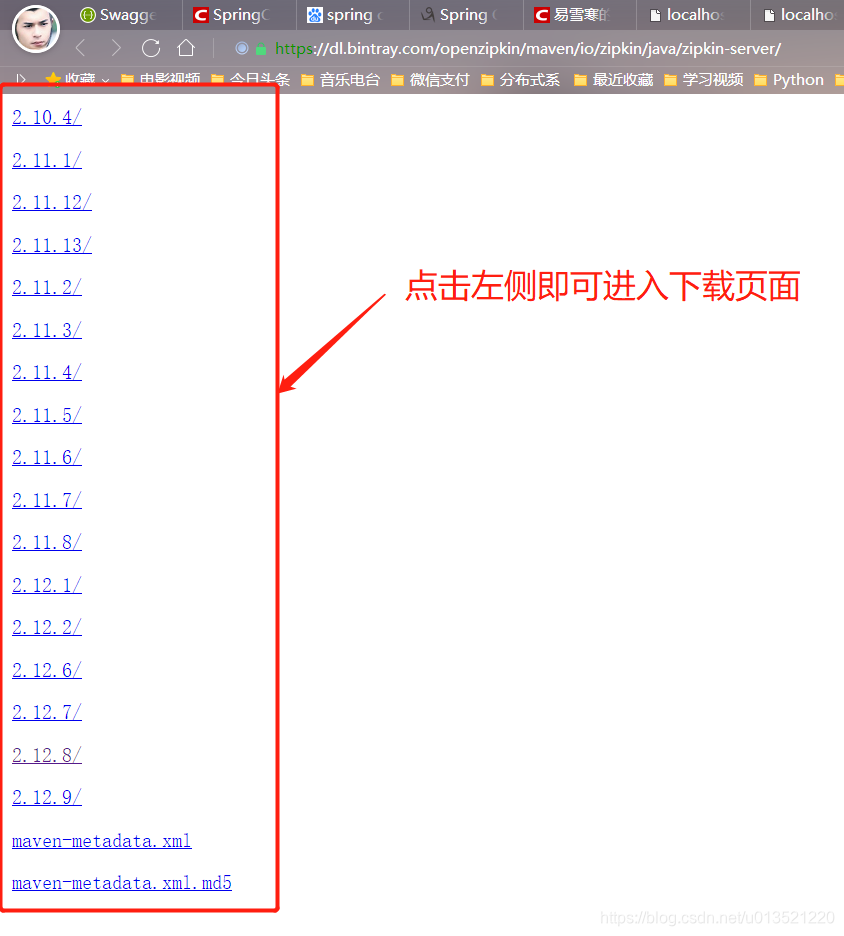

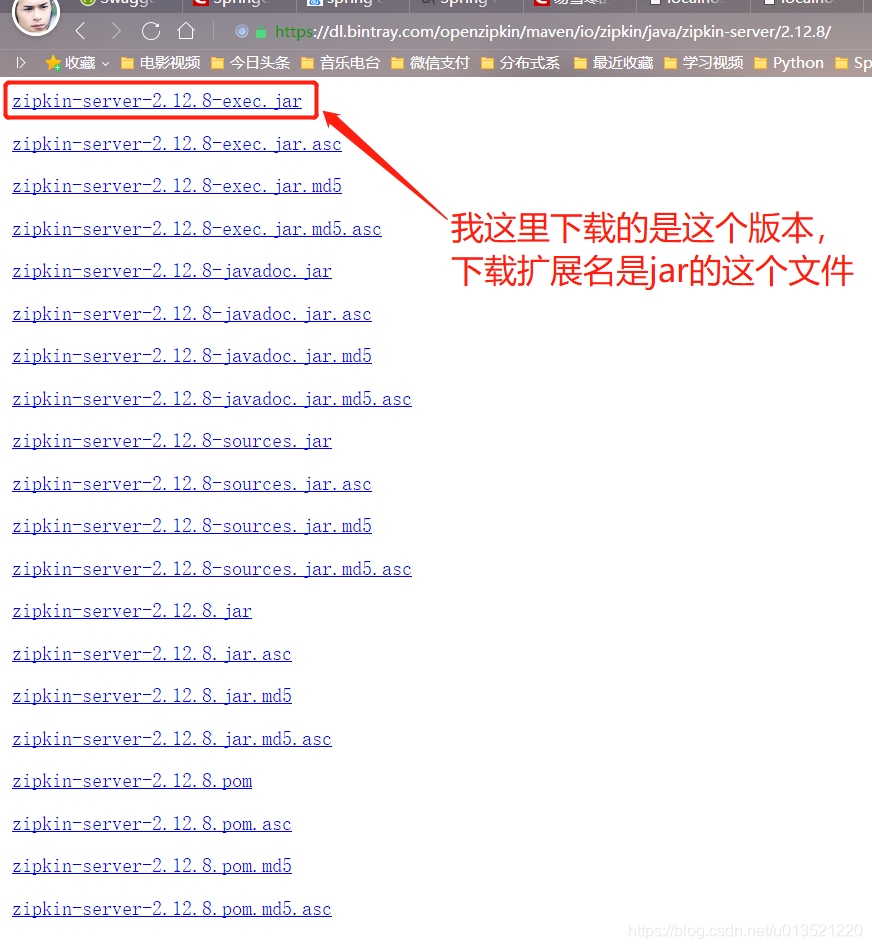
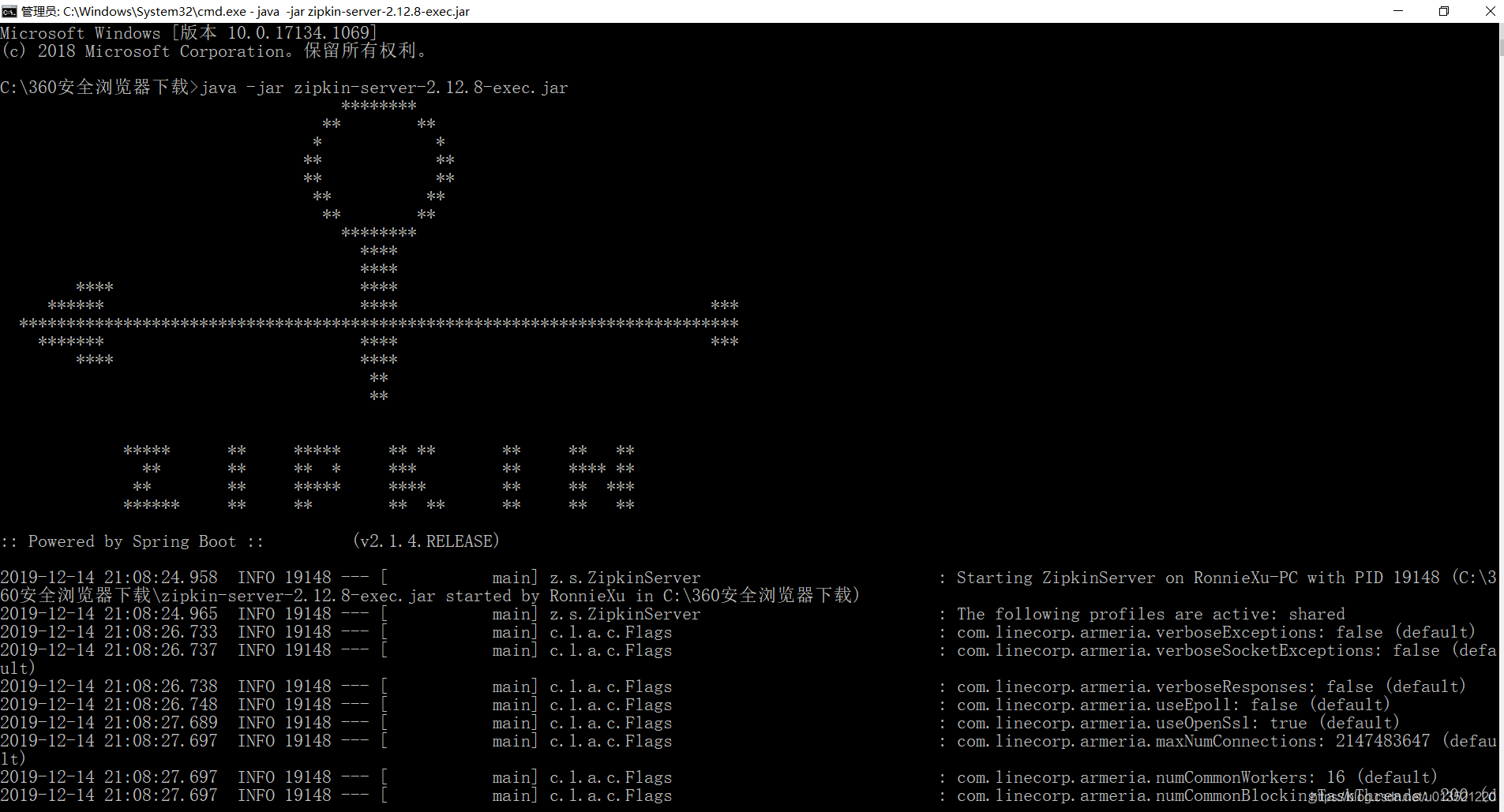
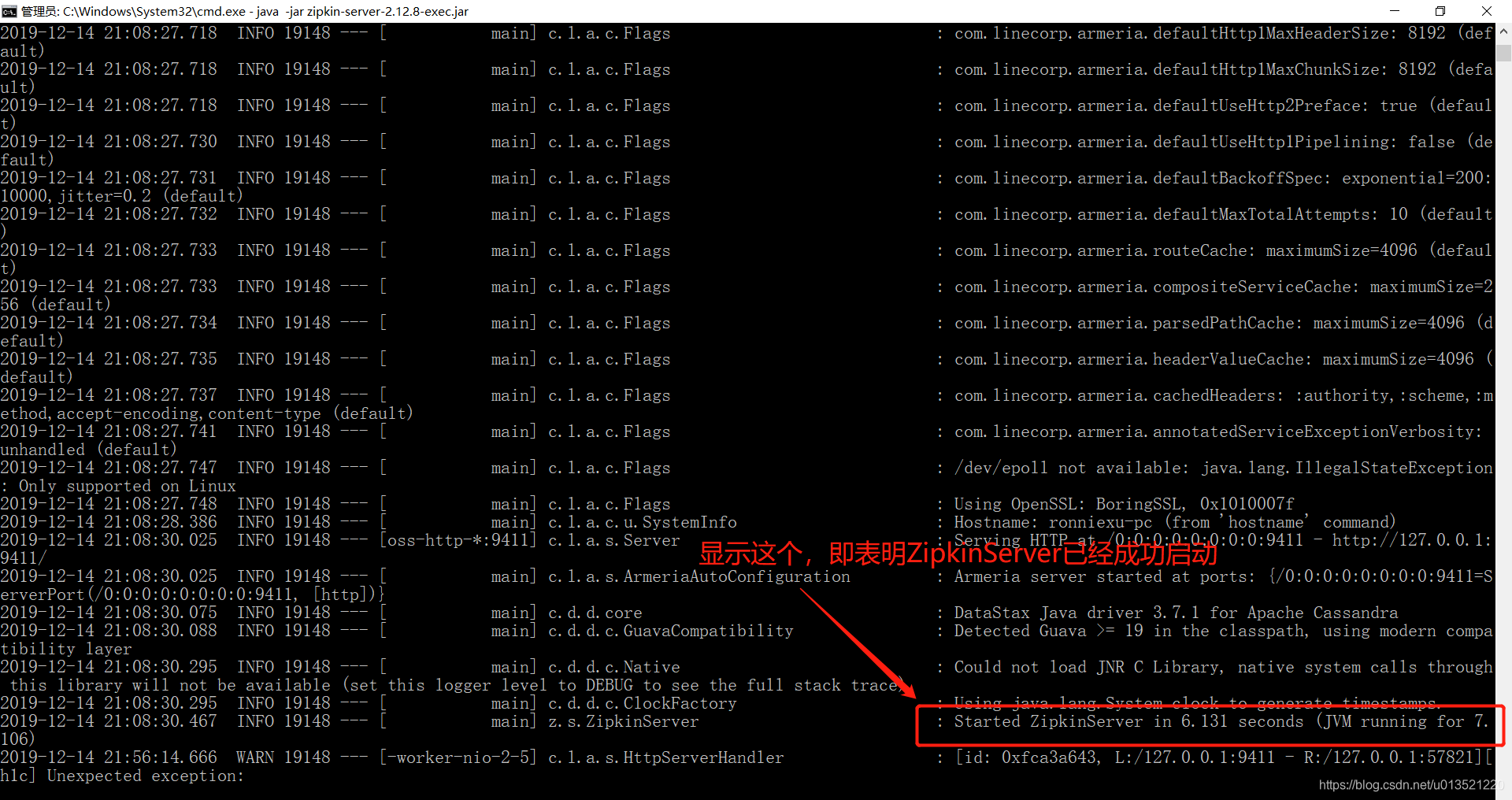
zipkin-server服务器的启动方式:java -jar zipkin-server-2.10.2-exec.jar
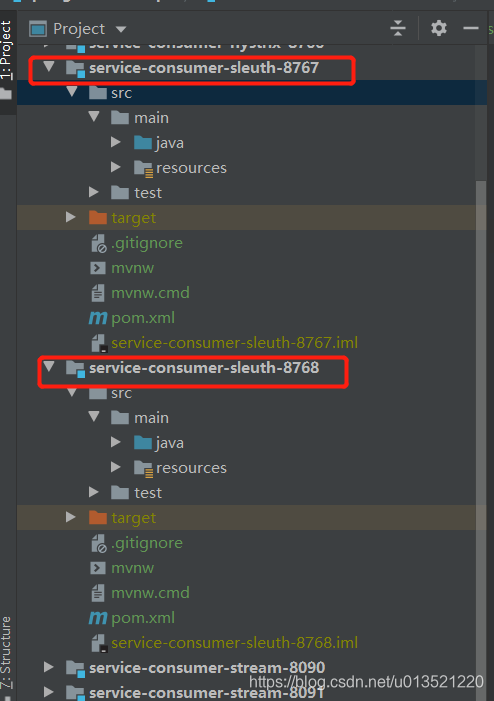
(2)新建两个模块service-consumer-sleuth-8767和service-consumer-sleuth-8768
本文的案例主要有三个工程组成:一个server-zipkin它的主要作用使用ZipkinServer的功能,收集调用数据;新建一个服务
service-sleuth-8768对外暴露hi接口;新建另一个服务service-sleuth-8767对外暴露hi接口,这两个service可以相互调用;
【模块service-consumer-sleuth-8767】
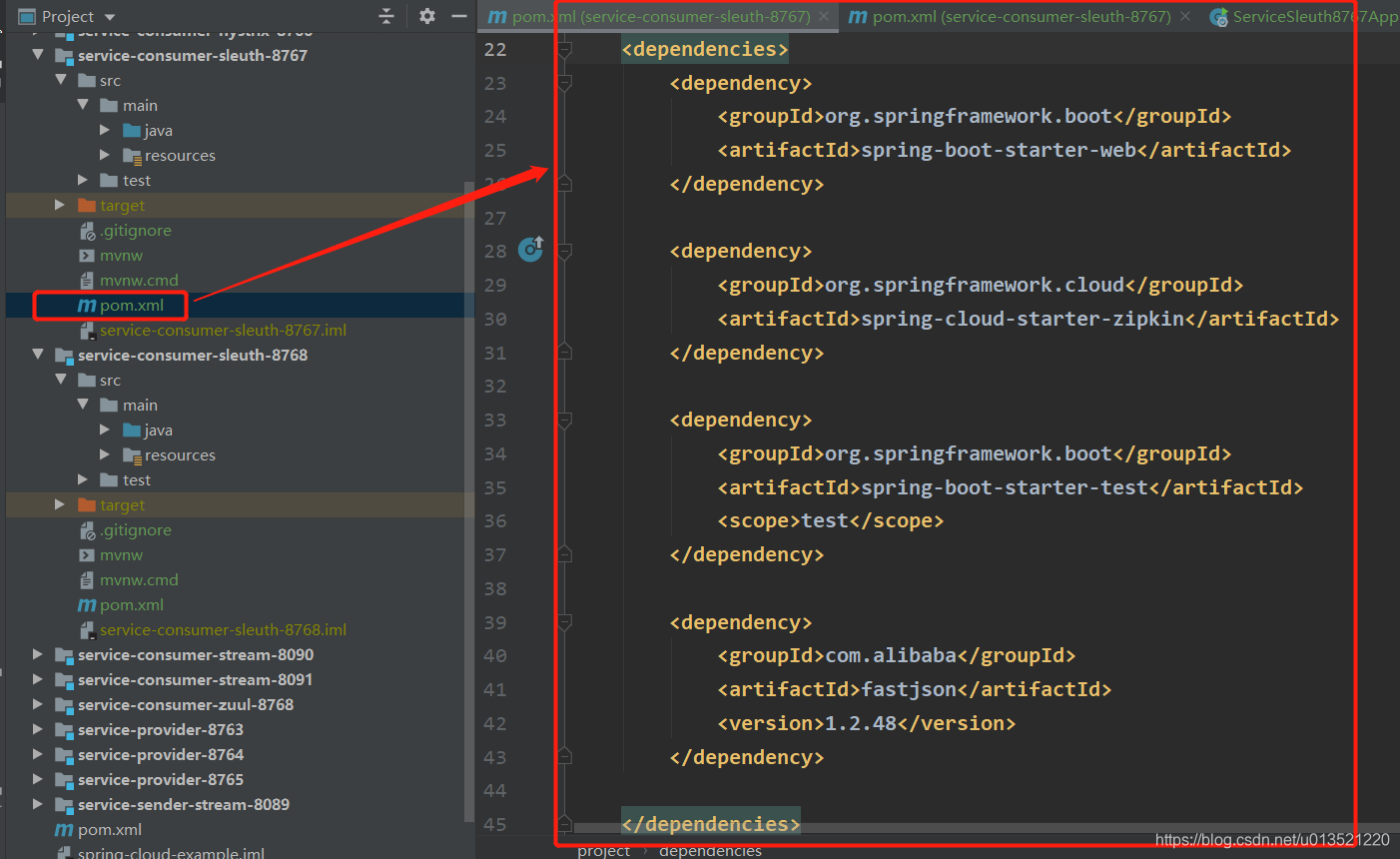
pom.xml
application.yml
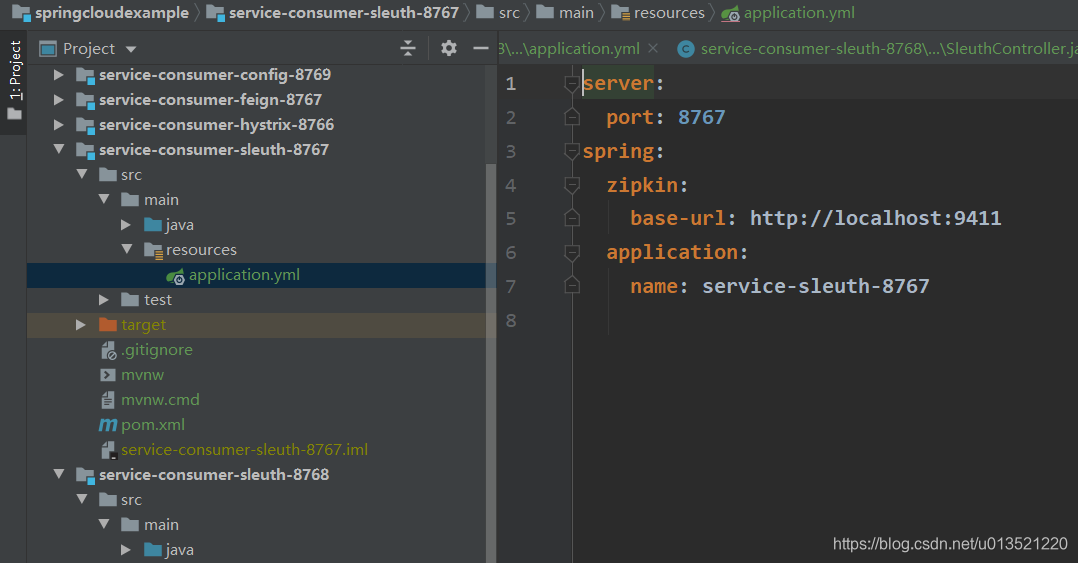
server:

  port: 8767

spring:

  zipkin:

    base-url: http://localhost:9411

  application:

    name: service-sleuth-8767
主启动类
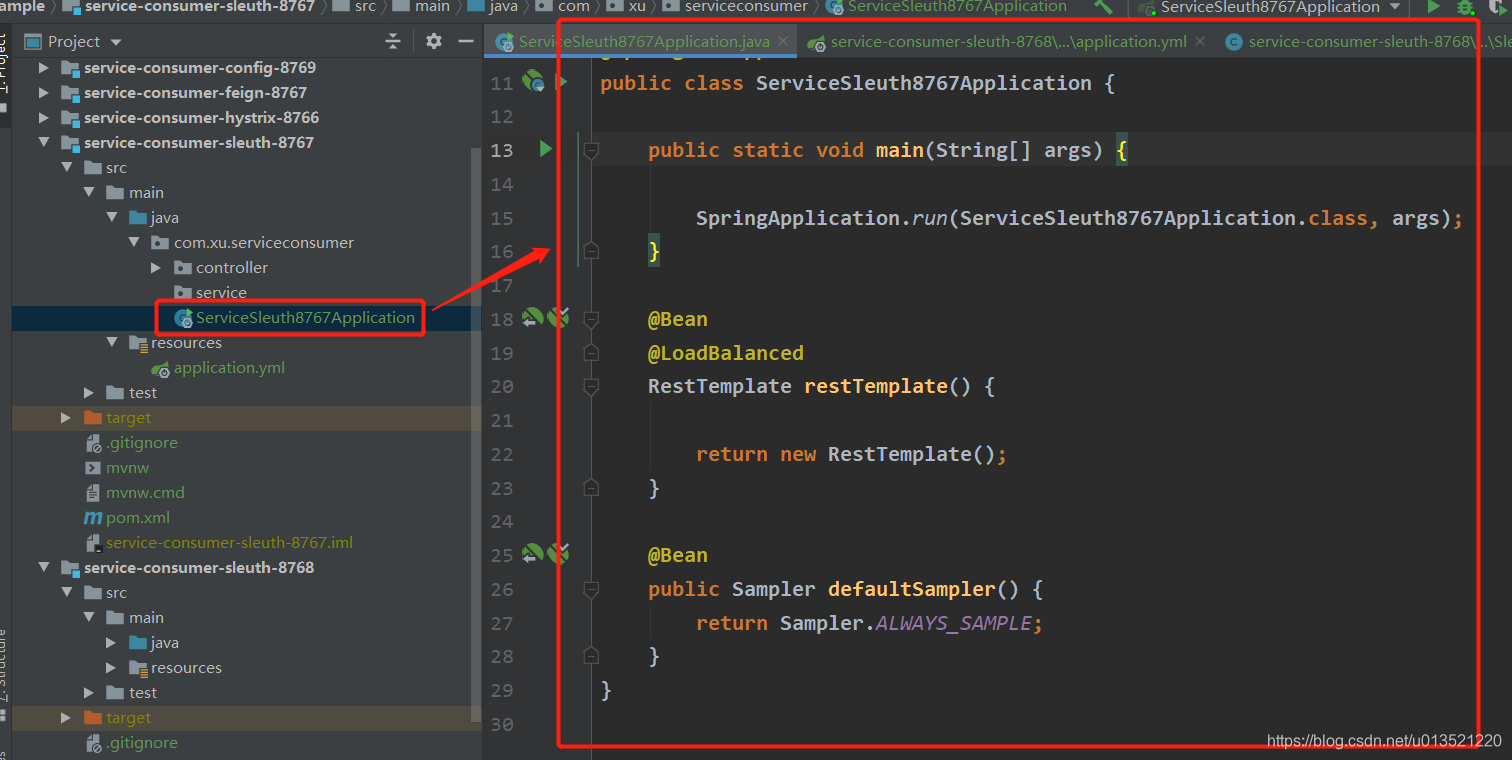
ServiceSleuth8767Application.java
package com.xu.serviceconsumer;

import brave.sampler.Sampler;

import org.springframework.boot.SpringApplication;

import org.springframework.boot.autoconfigure.SpringBootApplication;

import org.springframework.cloud.client.loadbalancer.LoadBalanced;

import org.springframework.context.annotation.Bean;

import org.springframework.web.client.RestTemplate;

@SpringBootApplication

public class ServiceSleuth8767Application {

    public static void main(String[] args) {

        SpringApplication.run(ServiceSleuth8767Application.class, args);

    }

    @Bean

    @LoadBalanced

    RestTemplate restTemplate() {

        return new RestTemplate();

    }

    @Bean

    public Sampler defaultSampler() {

        return Sampler.ALWAYS_SAMPLE;

    }

}
建立一个测试的Controller
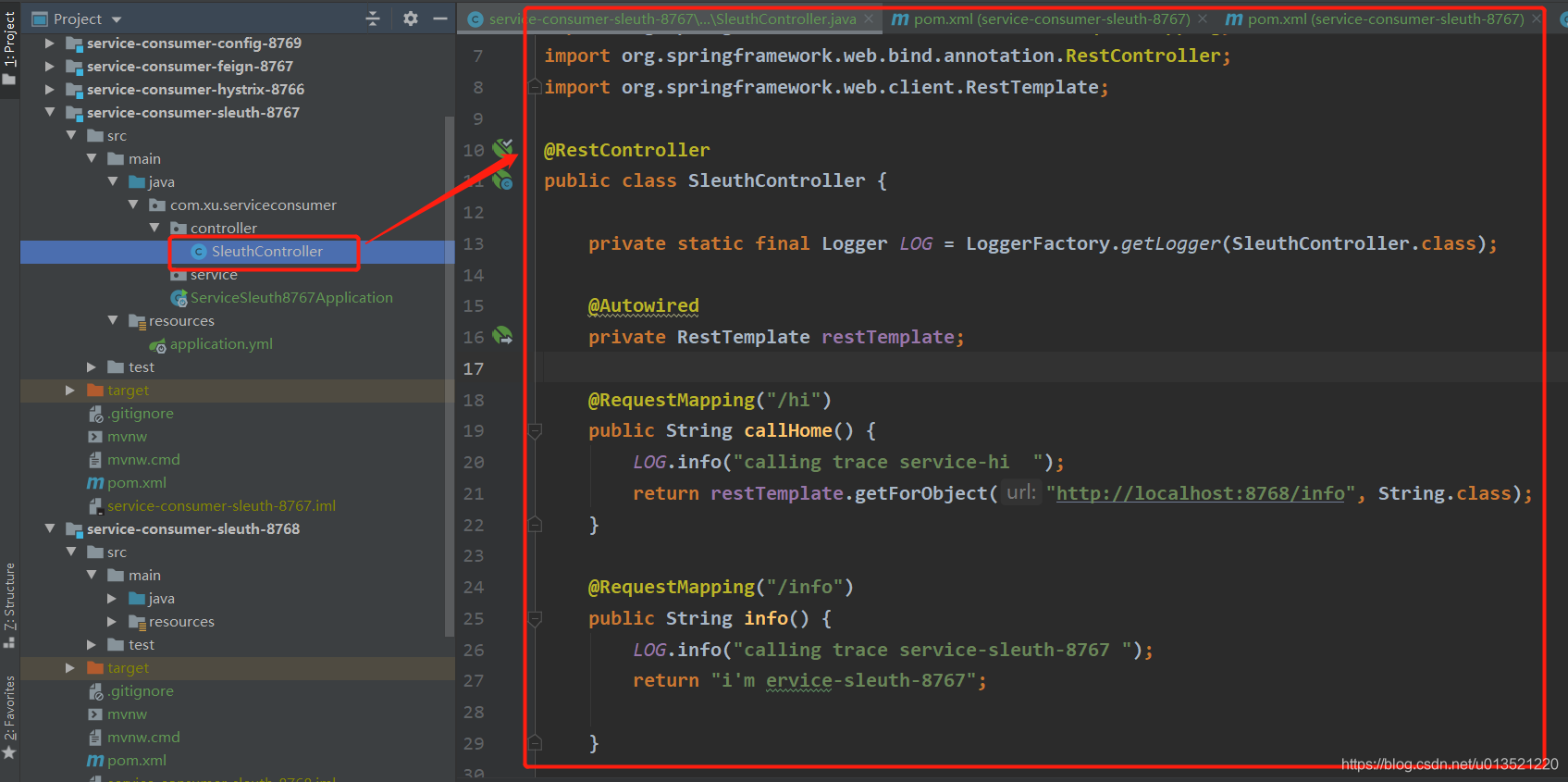
SleuthController.java
package com.xu.serviceconsumer.controller;

import org.slf4j.Logger;

import org.slf4j.LoggerFactory;

import org.springframework.beans.factory.annotation.Autowired;

import org.springframework.web.bind.annotation.RequestMapping;

import org.springframework.web.bind.annotation.RestController;

import org.springframework.web.client.RestTemplate;

@RestController

public class SleuthController {

    private static final Logger LOG = LoggerFactory.getLogger(SleuthController.class);

    @Autowired

    private RestTemplate restTemplate;

    @RequestMapping("/hi")

    public String callHome() {

        LOG.info("calling trace service-hi  ");

        return restTemplate.getForObject("http://localhost:8768/info", String.class);

    }

    @RequestMapping("/info")

    public String info() {

        LOG.info("calling trace service-sleuth-8767 ");

        return "i'm ervice-sleuth-8767";

    }

}
【模块service-consumer-sleuth-8768】
pom.xml
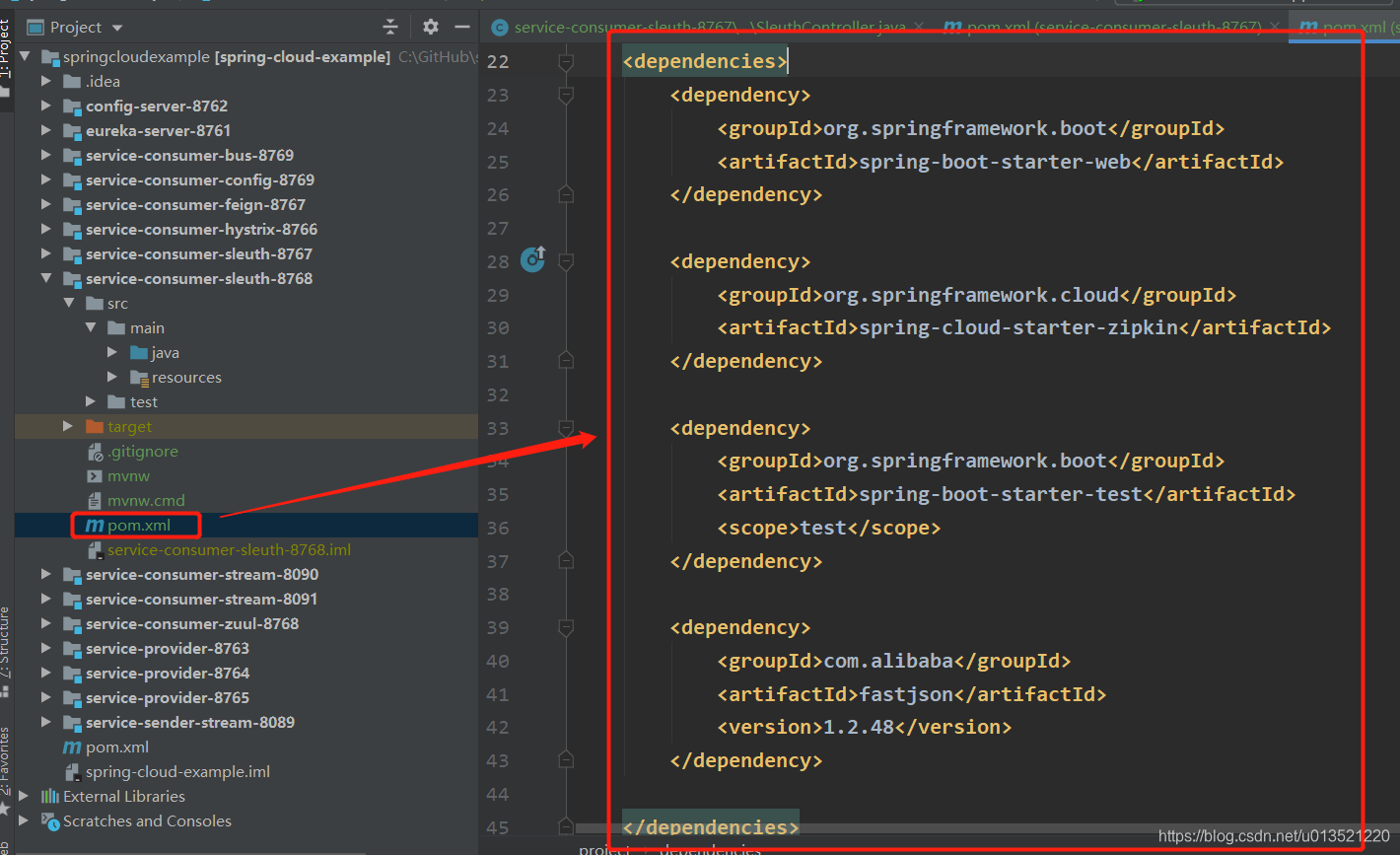
<?xml version="1.0" encoding="UTF-8"?>

<project xmlns="http://maven.apache.org/POM/4.0.0" xmlns:xsi="http://www.w3.org/2001/XMLSchema-instance"

         xsi:schemaLocation="http://maven.apache.org/POM/4.0.0 https://maven.apache.org/xsd/maven-4.0.0.xsd">

    <modelVersion>4.0.0</modelVersion>

    <parent>

        <groupId>org.springframework.boot</groupId>

        <artifactId>spring-boot-starter-parent</artifactId>

        <version>2.2.0.RELEASE</version>

        <relativePath/> <!-- lookup parent from repository -->

    </parent>

    <groupId>com.xu</groupId>

    <artifactId>service-consumer-sleuth-8767</artifactId>

    <version>0.0.1-SNAPSHOT</version>

    <name>service-consumer-sleuth-8767</name>

    <description>Demo project for Spring Boot</description>

    <properties>

        <java.version>1.8</java.version>

        <spring-cloud.version>Hoxton.M3</spring-cloud.version>

    </properties>

    <dependencies>

        <dependency>

            <groupId>org.springframework.boot</groupId>

            <artifactId>spring-boot-starter-web</artifactId>

        </dependency>

        <dependency>

            <groupId>org.springframework.cloud</groupId>

            <artifactId>spring-cloud-starter-zipkin</artifactId>

        </dependency>

        <dependency>

            <groupId>org.springframework.boot</groupId>

            <artifactId>spring-boot-starter-test</artifactId>

            <scope>test</scope>

        </dependency>

        <dependency>

            <groupId>com.alibaba</groupId>

            <artifactId>fastjson</artifactId>

            <version>1.2.48</version>

        </dependency>

    </dependencies>

    <dependencyManagement>

        <dependencies>

            <dependency>

                <groupId>org.springframework.cloud</groupId>

                <artifactId>spring-cloud-dependencies</artifactId>

                <version>${spring-cloud.version}</version>

                <type>pom</type>

                <scope>import</scope>

            </dependency>

        </dependencies>

    </dependencyManagement>

    <build>

        <plugins>

            <plugin>

                <groupId>org.springframework.boot</groupId>

                <artifactId>spring-boot-maven-plugin</artifactId>

            </plugin>

        </plugins>

    </build>

    <repositories>

        <repository>

            <id>spring-milestones</id>

            <name>Spring Milestones</name>

            <url>https://repo.spring.io/milestone</url>

        </repository>

    </repositories>

</project>
application.yml
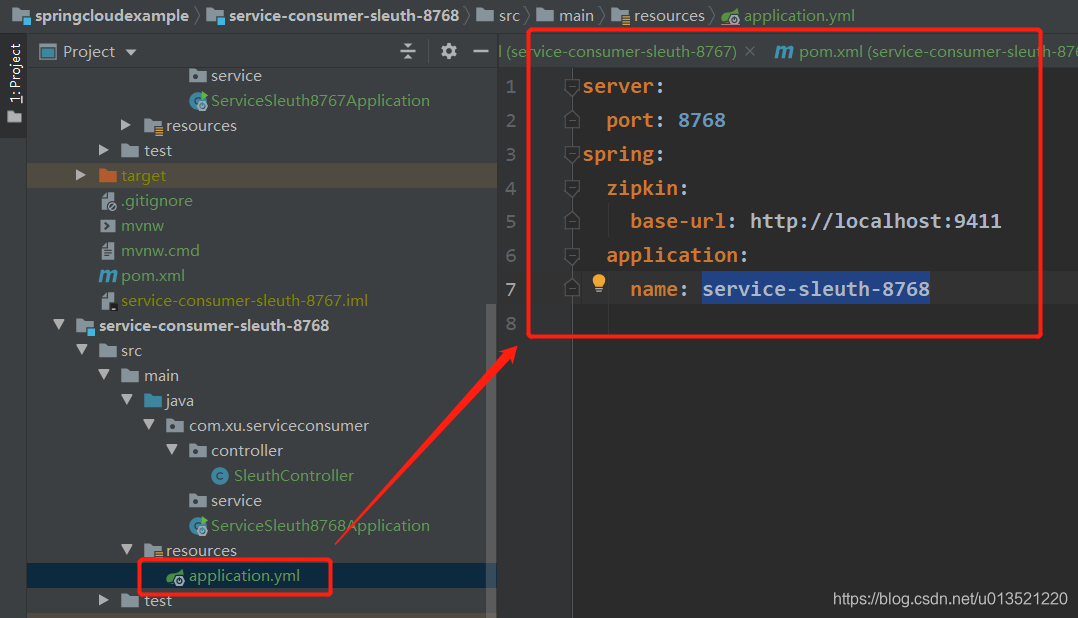
server:

  port: 8768

spring:

  zipkin:

    base-url: http://localhost:9411

  application:

    name: service-sleuth-8768
主启动类ServiceSleuth8768Application.java

package com.xu.serviceconsumer;

import brave.sampler.Sampler;

import org.springframework.boot.SpringApplication;

import org.springframework.boot.autoconfigure.SpringBootApplication;

import org.springframework.cloud.client.loadbalancer.LoadBalanced;

import org.springframework.context.annotation.Bean;

import org.springframework.web.client.RestTemplate;

@SpringBootApplication

public class ServiceSleuth8768Application {

    public static void main(String[] args) {

        SpringApplication.run(ServiceSleuth8768Application.class, args);

    }

    @Bean

    @LoadBalanced

    RestTemplate restTemplate() {

        return new RestTemplate();

    }

    @Bean

    public Sampler defaultSampler() {

        return Sampler.ALWAYS_SAMPLE;

    }

}
SleuthController.java
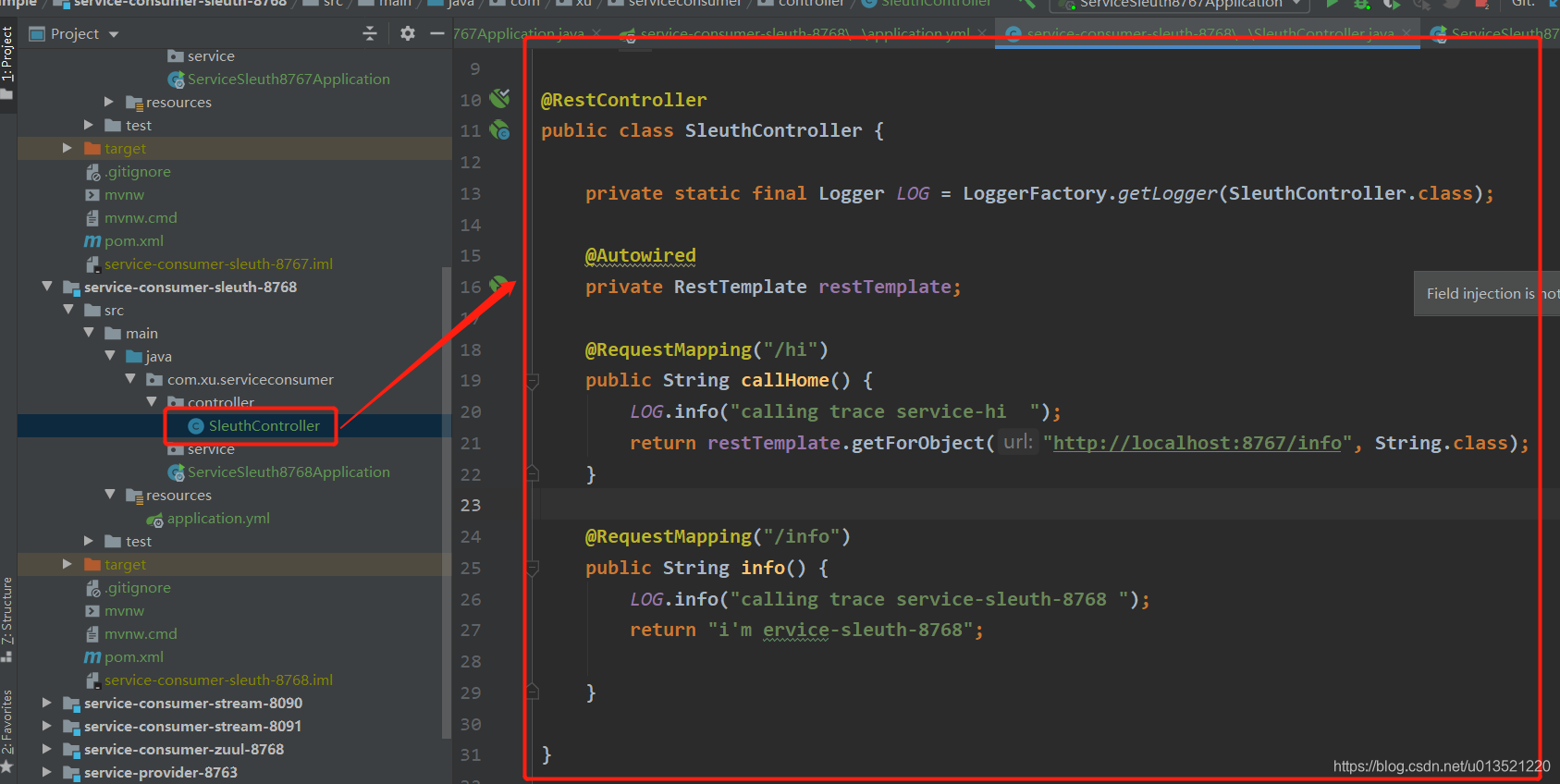
package com.xu.serviceconsumer.controller;

import org.slf4j.Logger;

import org.slf4j.LoggerFactory;

import org.springframework.beans.factory.annotation.Autowired;

import org.springframework.web.bind.annotation.RequestMapping;

import org.springframework.web.bind.annotation.RestController;

import org.springframework.web.client.RestTemplate;

@RestController

public class SleuthController {

    private static final Logger LOG = LoggerFactory.getLogger(SleuthController.class);

    @Autowired

    private RestTemplate restTemplate;

    @RequestMapping("/hi")

    public String callHome() {

        LOG.info("calling trace service-hi  ");

        return restTemplate.getForObject("http://localhost:8767/info", String.class);

    }

    @RequestMapping("/info")

    public String info() {

        LOG.info("calling trace service-sleuth-8768 ");

        return "i'm ervice-sleuth-8768";

    }

}
在启动ZipkinServer后再启动两个服务
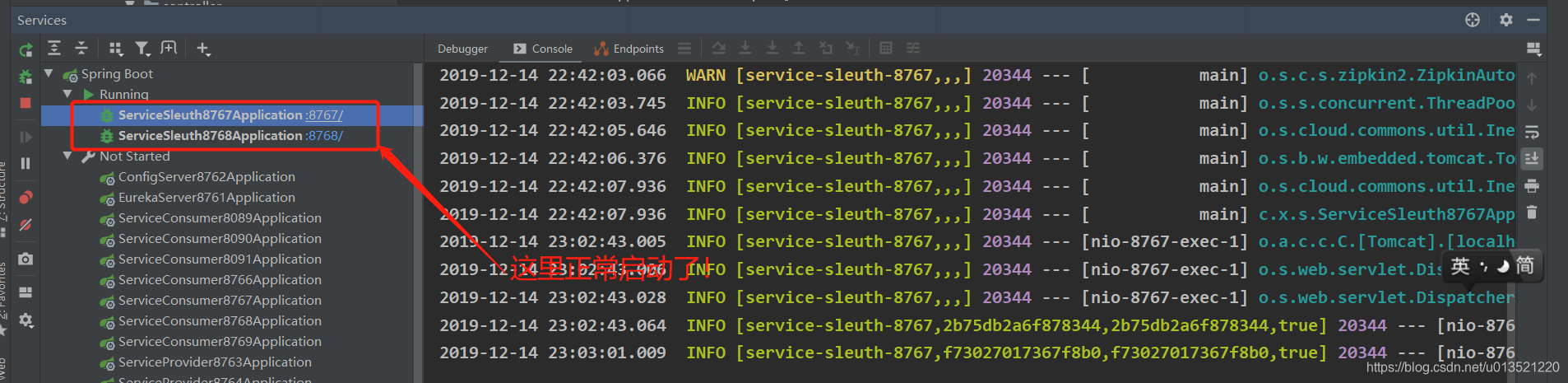
现在我们试着访问一下这个请求http://localhost:8767/hi,可以看到成功访问了另一个服务

再一次打开的zipkin-server服务的管理界面 http://localhost:9411 点击Dependencies可以发现service-sleuth-8767服务调用了service-sleuth-8768服务的依赖关系,还有调用的时间
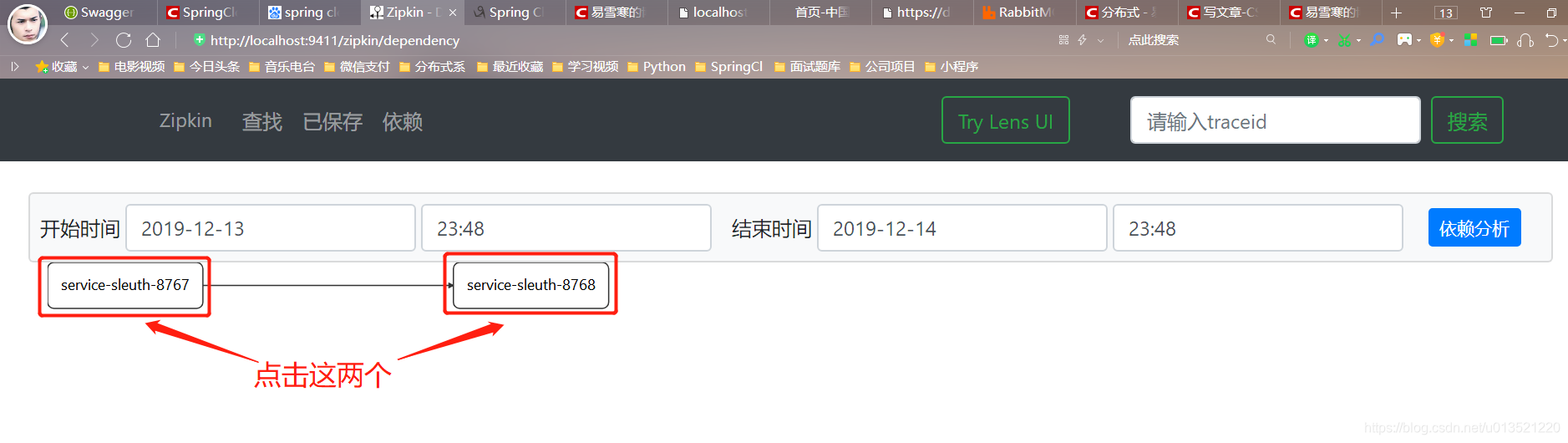
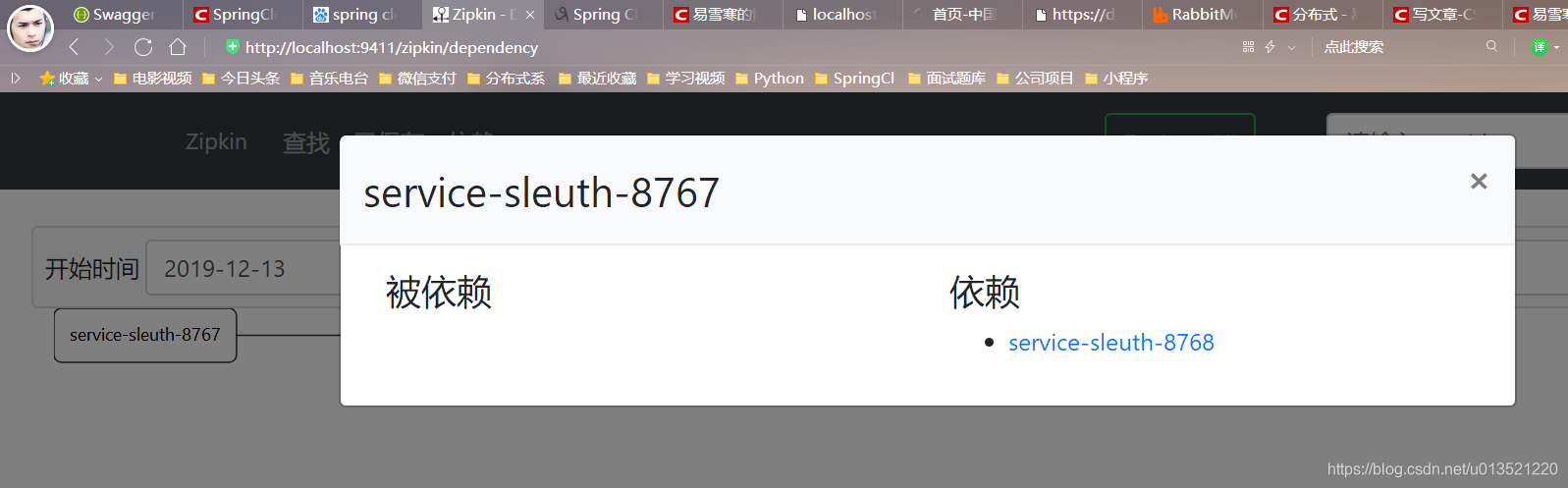
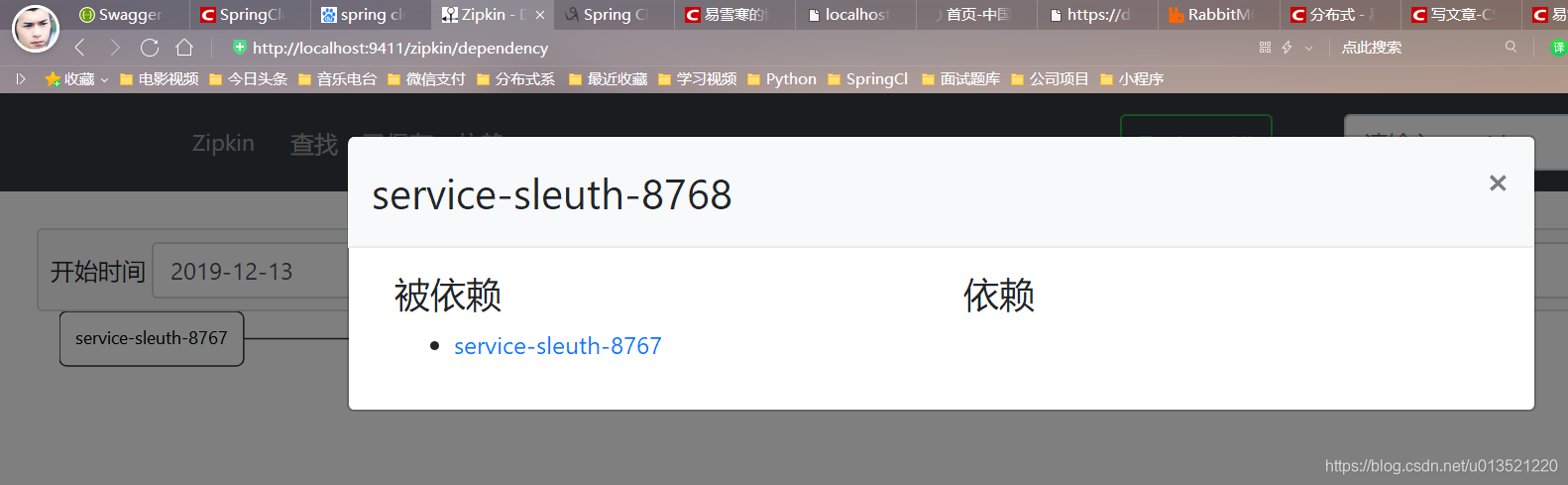
点击截图上两个方框,即可弹出两个详细依赖的信息弹窗
点击【Zipkin】--->【查找】可以看到刚才调用的追踪信息

这里是其中一个点击进入后的信息内容
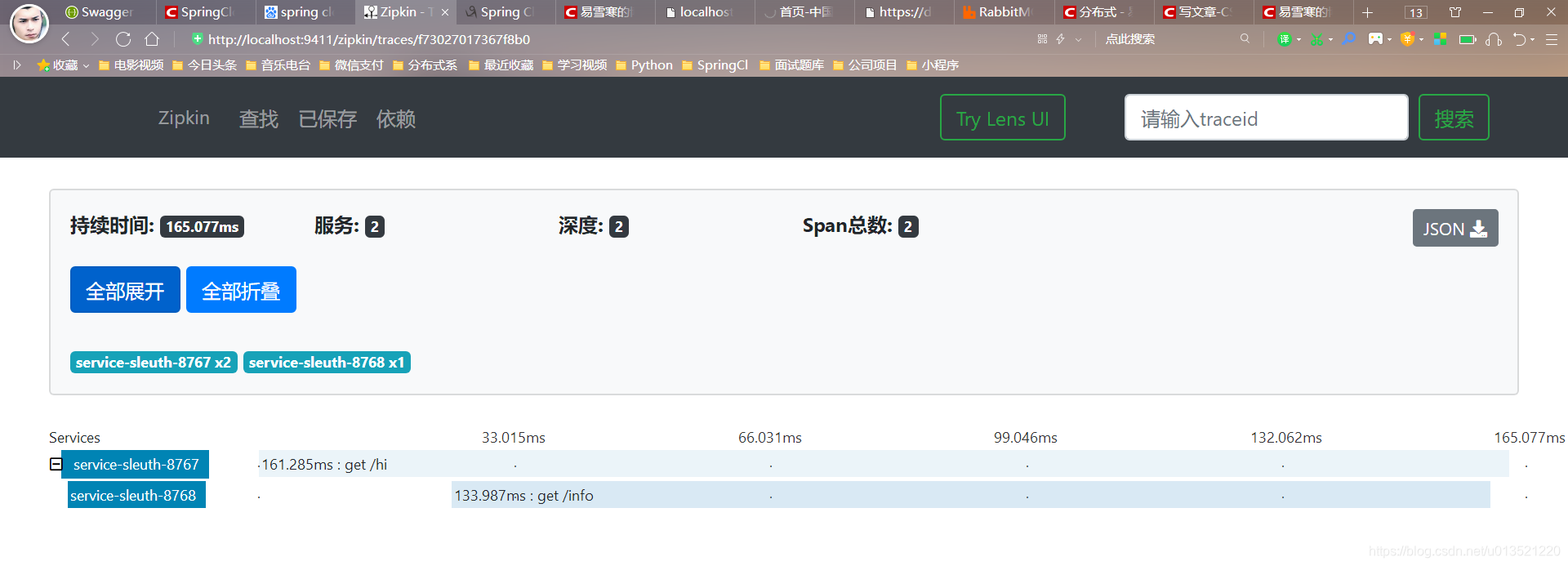
读者可以再请求一下http://localhost:8768/hi试试,然后刷新ZinpkinServer管理页面看看里面又发生了什么变化;到了这里,SpringCloudSleuth入门就到这里结束了,谢谢大家的围观,最后附上一张调用http://localhost:8768/hi后的ZipkinServrer管理页面依赖的截图

===============================================================================
如果您觉得此文有帮助,可以打赏点钱给我支付宝或扫描二维码


SpringCloud学习之Sleuth服务链路跟踪(十二)的更多相关文章
- ⑦SpringCloud 实战:引入Sleuth组件,完善服务链路跟踪
这是SpringCloud实战系列中第7篇文章,了解前面第两篇文章更有助于更好理解本文内容: ①SpringCloud 实战:引入Eureka组件,完善服务治理 ②SpringCloud 实战:引入F ...
- Zipkin和微服务链路跟踪
https://cloud.tencent.com/developer/article/1082821 Zipkin和微服务链路跟踪 本期分享的内容是有关zipkin和分布式跟踪的内容. 首先,我们还 ...
- 服务链路跟踪 && 服务监控
服务链路跟踪 背景 微服务以微出名,在实际的开发过程中,涉及到成百上千个服务,网络请求引起服务之间的调用极其复杂. 当请求不可用或者变慢时,需要及时排查出故障服务点成为了微服务维护的一大难关. 服务链 ...
- SpringCloud学习笔记:服务支撑组件
SpringCloud学习笔记:服务支撑组件 服务支撑组件 在微服务的演进过程中,为了最大化利用微服务的优势,保障系统的高可用性,需要通过一些服务支撑组件来协助服务间有效的协作.各个服务支撑组件的原理 ...
- SpringCloud学习之sleuth&zipkin【二】
这篇文章我们解决上篇链路跟踪的遗留问题 一.将追踪数据存放到MySQL数据库中 默认情况下zipkin将收集到的数据存放在内存中(In-Memeroy),但是不可避免带来了几个问题: 在服务重新启动后 ...
- SpringCloud学习成长之 九 服务链路跟踪
这篇文章主要讲述服务追踪组件zipkin,Spring Cloud Sleuth集成了zipkin组件. 一.简介 Spring Cloud Sleuth 主要功能就是在分布式系统中提供追踪解决方案, ...
- SpringCloud(7)服务链路追踪Spring Cloud Sleuth
1.简介 Spring Cloud Sleuth 主要功能就是在分布式系统中提供追踪解决方案,并且兼容支持了 zipkin,你只需要在pom文件中引入相应的依赖即可.本文主要讲述服务追踪组件zipki ...
- 史上最简单的SpringCloud教程 | 第九篇: 服务链路追踪(Spring Cloud Sleuth)(Finchley版本)
转载请标明出处: 原文首发于:>https://www.fangzhipeng.com/springcloud/2018/08/30/sc-f9-sleuth/ 本文出自方志朋的博客 这篇文章主 ...
- 史上最简单的SpringCloud教程 | 第九篇: 服务链路追踪(Spring Cloud Sleuth)
这篇文章主要讲述服务追踪组件zipkin,Spring Cloud Sleuth集成了zipkin组件. 注意情况: 该案例使用的spring-boot版本1.5.x,没使用2.0.x, 另外本文图3 ...
随机推荐
- java创建线程方式
1.继承Thread类 public class ThreadCreator extends Thread{ public static void main(String[] args) { //第一 ...
- java web开发缓存方案,ehcache和redis哪个更好
Ehcache在java项目广泛的使用.它是一个开源的.设计于提高在数据从RDBMS中取出来的高花费.高延迟采取的一种缓存方案.正因为Ehcache具有健壮性(基于java开发).被认证(具有apac ...
- Lamda简单使用
using System; using System.Collections.Generic; using System.Linq; using System.Text; using System.T ...
- SciPy 图像处理
章节 SciPy 介绍 SciPy 安装 SciPy 基础功能 SciPy 特殊函数 SciPy k均值聚类 SciPy 常量 SciPy fftpack(傅里叶变换) SciPy 积分 SciPy ...
- SciPy 教程
章节 SciPy 介绍 SciPy 安装 SciPy 基础功能 SciPy 特殊函数 SciPy k均值聚类 SciPy 常量 SciPy fftpack(傅里叶变换) SciPy 积分 SciPy ...
- 2018--Linux面试题
1.企业场景面试题:buffer与Cache的区别. 2.企业场景面试题:redhat与CentOS的区别. 3.企业场景面试题: 描述RAID 0 1 5 10的特点. 4.企业场景面试题:32位 ...
- LoadRunner接口测试
[转自http://www.51testing.com/html/87/300987-805230.html] Action(){ //首先调用web_reg_find()这个注册函数,我们接口的正常 ...
- flutter如何使用配置文件pubspec.yaml(位于项目根目录)来管理第三方依赖包
官方文档 在软件开发中,很多时候有一些公共的库或SDK可能会被很多项目用到,因此,将这些代码单独抽到一个独立模块,然后哪个项目需要使用时再直接集成这个模块,便可大大提高开发效率.很多编程语言或开发工具 ...
- Readiness 探测【转】
除了 Liveness 探测,Kubernetes Health Check 机制还包括 Readiness 探测. 用户通过 Liveness 探测可以告诉 Kubernetes 什么时候通过重启容 ...
- 开发自己的 chart【转】
Kubernetes 给我们提供了大量官方 chart,不过要部署微服务应用,还是需要开发自己的 chart,下面就来实践这个主题. 创建 chart 执行 helm create mychart 的 ...