
LeetCode#232-Implement Queue using Stacks-用栈实现队列
一、题目
使用栈实现队列的下列操作:
- push(x) -- 将一个元素放入队列的尾部。
- pop() -- 从队列首部移除元素。
- peek() -- 返回队列首部的元素。
- empty() -- 返回队列是否为空。
示例:
MyQueue queue = new MyQueue();

queue.push(1);

queue.push(2);

queue.peek();  // 返回 1

queue.pop();   // 返回 1

queue.empty(); // 返回 false
说明:
- 你只能使用标准的栈操作 -- 也就是只有 push to top, peek/pop from top, size, 和 is empty 操作是合法的。
- 你所使用的语言也许不支持栈。你可以使用 list 或者 deque(双端队列)来模拟一个栈,只要是标准的栈操作即可。
- 假设所有操作都是有效的 (例如,一个空的队列不会调用 pop 或者 peek 操作)。
二、题解
- 解法1:两个栈
队列是先进先出,栈是先进后出。所以可以用两个栈,新元素压入栈的时候,先将栈中的元素弹出,放到另一个栈中,把新元素压入到栈的底部,再把另一个栈的元素弹出,放回原栈中。此时,栈顶元素就是出队时要先出的队首元素。
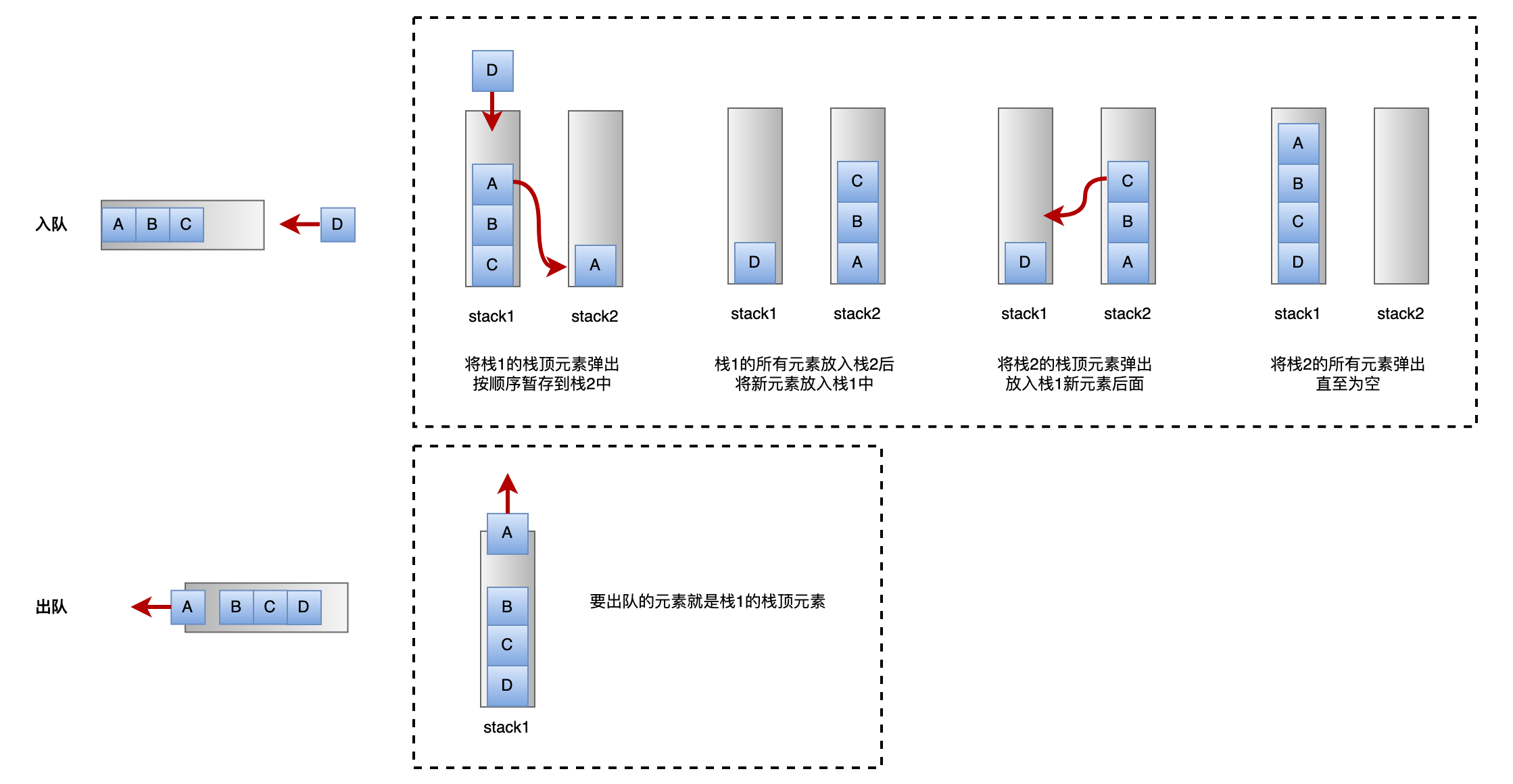
这里用的是数组表示队列,空间复杂度O(n),时间复杂度分 push 和 pop ,前者是O(n),后者是O(1)。
class MyQueue {

    /**

     * Initialize your data structure here.

     */

    function __construct() {

        $this->stack1 = [];

        $this->stack2 = [];

    }

    /**

     * Push element x to the back of queue.

     * @param Integer $x

     * @return NULL

     */

    function push($x) {

        while (!$this->empty()) {

            $this->stack2[] = array_pop($this->stack1);

        }

        $this->stack1[] = $x;

        while (!empty($this->stack2)) {

            $this->stack1[] = array_pop($this->stack2);

        }

    }

    /**

     * Removes the element from in front of queue and returns that element.

     * @return Integer

     */

    function pop() {

        return array_pop($this->stack1);

    }

    /**

     * Get the front element.

     * @return Integer

     */

    function peek() {

        return end($this->stack1);

    }

    /**

     * Returns whether the queue is empty.

     * @return Boolean

     */

    function empty() {

        return empty($this->stack1) ? true :false;

    }

}
- 解法2:两个栈
使用两个栈,一个栈(stack1)仅负责入栈,一个栈(stack2)仅负责出栈。有新元素入队时,直接将元素压入 stack1 即可。但当出队时,需要判断 stack2 是否为空,如果为空,将 stack1 的元素依次出栈,压入 stack2 中,随后从 stack2 弹出,即为出队。但当 stack2 不为空时,仍然直接从 stack2 出栈即可,知道 stack2 为空时,才可将 stack1 的元素拿出来放入 stack2 中。
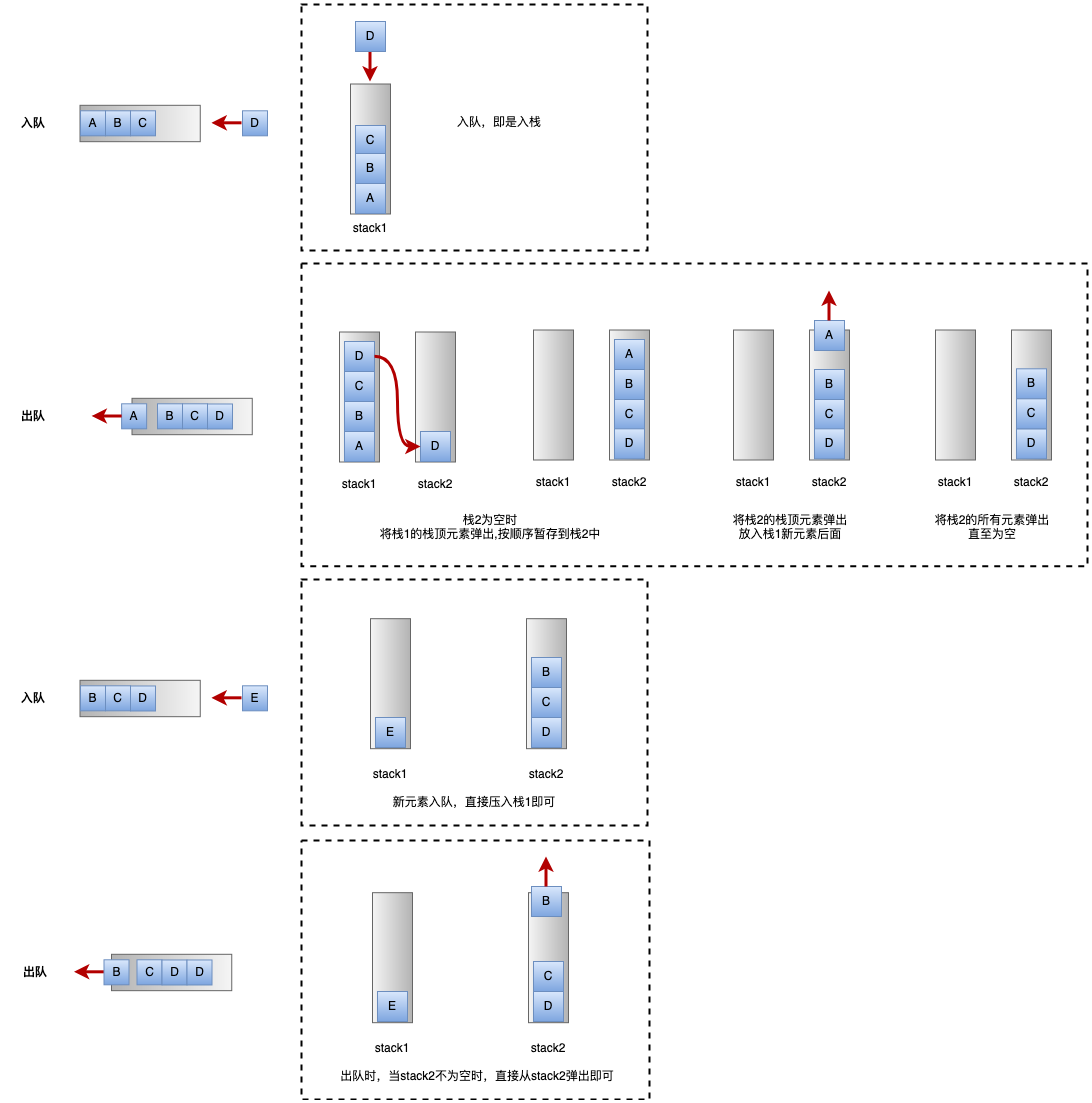
这里用的是数组表示队列,空间复杂度O(n),时间复杂度分 push 和 pop ,前者是O(n),后者是O(1)。
class MyQueue2 {

    /**

     * Initialize your data structure here.

     */

    function __construct() {

        $this->stack1 = [];

        $this->stack2 = [];

    }

    /**

     * Push element x to the back of queue.

     * @param Integer $x

     * @return NULL

     */

    function push($x) {

        $this->stack1[] = $x;

    }

    /**

     * Removes the element from in front of queue and returns that element.

     * @return Integer

     */

    function pop() {

        if (empty($this->stack2)) {

            while (!empty($this->stack1)) {

                $this->stack2[] = array_pop($this->stack1);

            }

        }

        return array_pop($this->stack2);

    }

    /**

     * Get the front element.

     * @return Integer

     */

    function peek() {

        if (empty($this->stack2)) {

            while (!empty($this->stack1)) {

                $this->stack2[] = array_pop($this->stack1);

            }

        }

        return end($this->stack2);

    }

    /**

     * Returns whether the queue is empty.

     * @return Boolean

     */

    function empty() {

        return empty($this->stack1) && empty($this->stack2) ? true : false;

    }

}
LeetCode#232-Implement Queue using Stacks-用栈实现队列的更多相关文章
- [LeetCode] 232. Implement Queue using Stacks 用栈来实现队列
Implement the following operations of a queue using stacks. push(x) -- Push element x to the back of ...
- Leetcode 232 Implement Queue using Stacks 和 231 Power of Two
1. 232 Implement Queue using Stacks 1.1 问题描写叙述 使用栈模拟实现队列.模拟实现例如以下操作: push(x). 将元素x放入队尾. pop(). 移除队首元 ...
- LeetCode 232 Implement Queue using Stacks
Implement the following operations of a queue using stacks. push(x) -- Push element x to the back of ...
- (easy)LeetCode 232.Implement Queue using Stacks
Implement the following operations of a queue using stacks. push(x) -- Push element x to the back of ...
- Java [Leetcode 232]Implement Queue using Stacks
题目描述: Implement the following operations of a queue using stacks. push(x) -- Push element x to the b ...
- Leetcode 232 Implement Queue using Stacks STL
本题用两个栈实现队列,用栈的基本操作去实现队列的所有基本操作push(),pop(),peek()以及empty() sa作为输入栈,sb作为输出栈,将sa输入元素的反转过来放到sb中 push与sa ...
- LeetCode 232 Implement Queue using Stacks 两个栈实现队列
class MyQueue { public: /** Initialize your data structure here. */ MyQueue() { } /** Push element x ...
- 232 Implement Queue using Stacks 用栈来实现队列
使用栈来实现队列的如下操作: push(x) -- 将一个元素放入队列的尾部.pop() -- 从队列首部移除元素.peek() -- 返回队列首部的元素.empty() -- 返回队列是否为空.注意 ...
- Java for LeetCode 232 Implement Queue using Stacks
Stack<Integer> stack=new Stack<Integer>(); public void push(int x) { stack.push(x); } // ...
- LeetCode OJ:Implement Queue using Stacks(栈实现队列)
比较典型的一个题目,easy,不过可以有许多实现方式. 这里用的方式是每次pop完成之后再将stack2中的内容立即倒回stack1中.但是其他的实现也可以不是这样,可以是需要push的时候检查再,如 ...
随机推荐
- mysql--sql_mode报错整理
1.在5.7版本以上mysql中使用group by语句进行分组时, 如果select的字段 , 不是完全对应的group by后面的字段 , 有其他字段 , 那么就会报这个错误 ERROR 1055 ...
- 状压DP小拼盘
有的DP题,某一部分的状态只有两种,选或不选. 开数组记录,代价太大,转移不方便. 状态压缩意为,用 “0/1“ 表示 “选/不选“ . 把状态表示为二进制整数. There are 10 kinds ...
- 选拔赛 hash 字符串匹配 哈希算法(白书p374)
hash Description dr所在国度的有个奇怪的规定:他们的字母不是a~z,而是用1~1000表示. 利用这个奇怪的规定,dr想出了一个好玩的游戏:首先给出n个字符串(当然每个字符用1~ ...
- Maximum Value(CodeForces - 484B)
Maximum Value Time limit 1000 ms Memory limit 262144 kB You are given a sequence a consisting of n i ...
- 【深圳·招聘】QQ音乐测试工程师-职位内推
QQ音乐测试工程师 岗位职责 负责腾讯QQ音乐移动端/后台/web相关特性测试分析和执行,保障发布质量. 岗位要求 专业本科及以上学历,计算机/软件工程/信息管理/数学与应用数学/自动化/通信工程/电 ...
- “代码量统计脚本”
概述 本文从一段统计C/C++程序脚本入手,记录shell脚本常用和重要的知识点. 代码量统计程序 文件名称,count_code_line.sh 12345678910111213141516171 ...
- 成为数据专家,你只差一个Quick Insights的距离
身处如今的大数据时代,你真的知道如何处理数据和分析数据吗?或许那些被你忽视的数据背后就暗藏着重要的商业灵感.并非人人都是数据专家,有时候你需要一些专业的软件来帮你处理数据.那么如何能快速.准确地从数据 ...
- python设置检查点简单实现
说检查点,其实就是对过去历史的记录,可以认为是log.不过这里进行了简化.举例来说,我现在又一段文本.文本里放有一堆堆的链接地址.我现在的任务是下载那些地址中的内容.另外因为网络的问题或者网站的问题, ...
- js的几个库
http://www.w3.org/TR/FileAPI/ http://www.w3.org/TR/html-media-capture/ demo:http://jsfiddle.net/pmat ...
- JAVA WEB基础巩固之Json、Ajax
一.Json(Json介绍)json校验工具 Json是JavaScript object notation的缩写,优点是易读易编写易于解析: 例如:Object: { "name" ...