
基础003_V7-Memory Resources
一、综述
参考ug473.pdf。
常用Memory 资源:

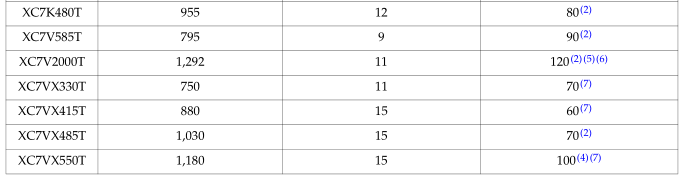
在IP核中,Block memory(distributed memory为CLB中的资源):

通常选用Native,而不用AXI接口:
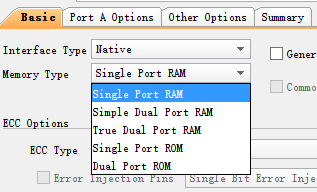
Block RAM可配置单端口RAM、伪双端口RAM、双端口RAM、单端口ROM、双端口ROM、FIFO。
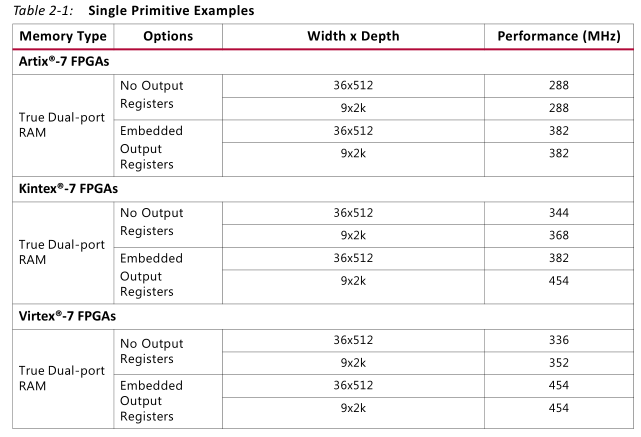
各个模式调用时可承受的最高频率,参考pg058.pdf:
二、主要功能
学习资源: http://www.asic-world.com/examples/verilog/memories.html

A-RAM/ROM
主要功能:
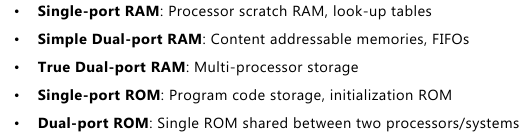
每一个Block RAM都可配置为1个36Kb的BRAM或1个36Kb的FIFO;同时也可以将其配置为2个单独的18Kb的BRAM或1个18KbBRAM + 1个18Kb的BRAM。
为什么是18k而不是16k(2的整次幂)?因为每8bit一个校验位。2*8 + 2 =18bit。

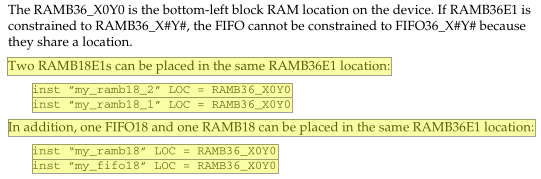
结论:无论是单端口RAM、伪双端口RAM还是双端口RAM,他们都只有一块Memory。
Single-port RAM:
同步示例:
module ram_sp_sr_sw (

clk         , // Clock Input

address     , // Address Input

data        , // Data bi-directional

cs          , // Chip Select

we          , // Write Enable/Read Enable

oe            // Output Enable

);

parameter DATA_WIDTH = 8 ;

parameter ADDR_WIDTH = 8 ;

parameter RAM_DEPTH = 1 << ADDR_WIDTH;

//--------------Input Ports-----------------------

input                  clk         ;

input [ADDR_WIDTH-1:0] address     ;

input                  cs          ;

input                  we          ;

input                  oe          ;

//--------------Inout Ports-----------------------

inout [DATA_WIDTH-1:0]  data       ;

//--------------Internal variables----------------

reg [DATA_WIDTH-1:0] data_out ;

reg [DATA_WIDTH-1:0] mem [0:RAM_DEPTH-1];

reg                  oe_r;

//--------------Code Starts Here------------------

// Tri-State Buffer control

// output : When we = 0, oe = 1, cs = 1

assign data = (cs && oe && !we) ? data_out : 8'bz;

// Memory Write Block

// Write Operation : When we = 1, cs = 1

always @ (posedge clk)

begin : MEM_WRITE

   if ( cs && we ) begin

       mem[address] = data;

   end

end

// Memory Read Block

// Read Operation : When we = 0, oe = 1, cs = 1

always @ (posedge clk)

begin : MEM_READ

  if (cs && !we && oe) begin

    data_out = mem[address];

    oe_r = 1;

  end else begin

    oe_r = 0;

  end

end

endmodule // End of Module ram_sp_sr_sw
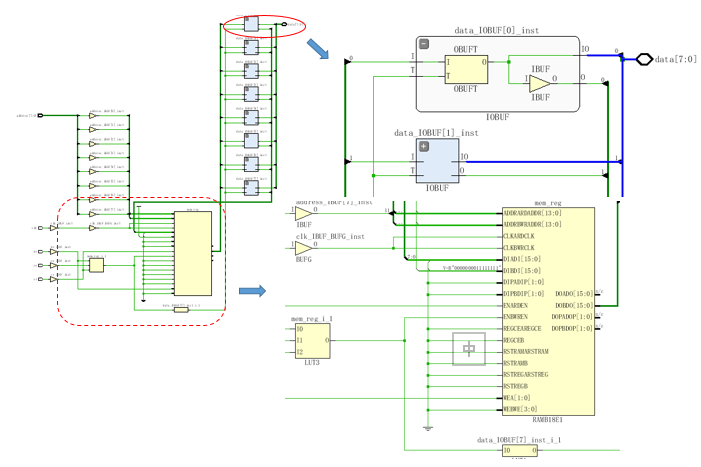
异步(异步读、同步写)示例:
module ram_sp_ar_sw (

clk         , // Clock Input

address     , // Address Input

data        , // Data bi-directional

cs          , // Chip Select

we          , // Write Enable/Read Enable

oe            // Output Enable

);

parameter DATA_WIDTH = 8 ;

parameter ADDR_WIDTH = 8 ;

parameter RAM_DEPTH = 1 << ADDR_WIDTH;

//--------------Input Ports-----------------------

input                                     clk          ;

input [ADDR_WIDTH-1:0] address ;

input                                     cs           ;

input                                     we          ;

input                                     oe           ;

//--------------Inout Ports-----------------------

inout [DATA_WIDTH-1:0]  data       ;

//--------------Internal variables----------------

reg [DATA_WIDTH-1:0]   data_out ;

reg [DATA_WIDTH-1:0] mem [0:RAM_DEPTH-1];

//--------------Code Starts Here------------------

// Tri-State Buffer control

// output : When we = 0, oe = 1, cs = 1

assign data = (cs && oe && !we) ? data_out : 8'bz;

// Memory Write Block

// Write Operation : When we = 1, cs = 1

always @ (posedge clk)

begin : MEM_WRITE

   if ( cs && we ) begin

       mem[address] = data;

   end

end

// Memory Read Block

// Read Operation : When we = 0, oe = 1, cs = 1

always @ (address or cs or we or oe)

begin : MEM_READ

    if (cs && !we && oe) begin

         data_out = mem[address];

    end

end

endmodule // End of Module ram_sp_ar_sw
对应电路:
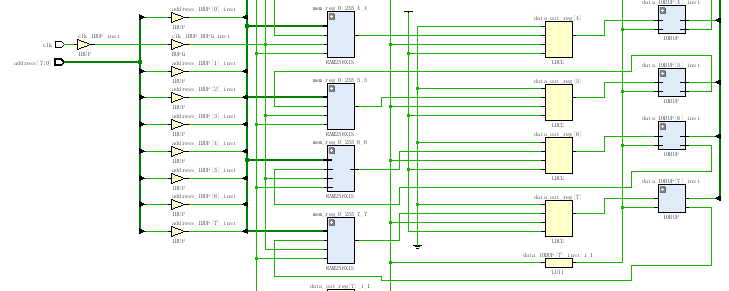
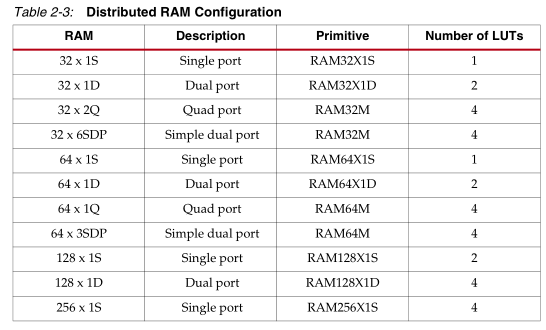
可以看出2^8 = 256由4个64拼接拼接而成:
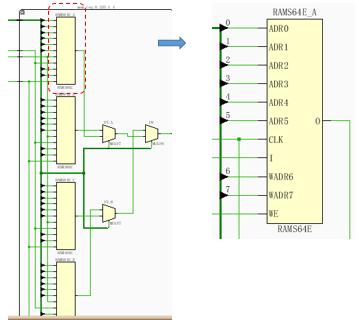
这里其实调用的是CLB中SliceM下的Distributed RAM资源:
B-FIFO
FIFO的能力:
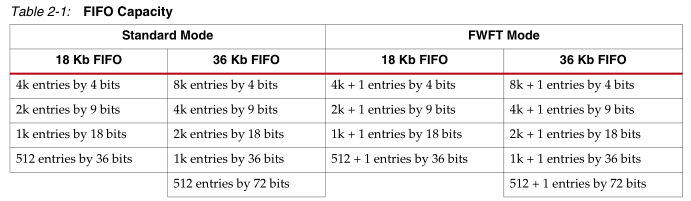
FIFO的IP核使用,具体可参考:pg057.pdf。
FIFO可调用shift reg、distributed RAM、Block RAM、BulitIn FIFO,关于使用,xilinx论坛有相关说法:
Q:
From PG057 (Fifo generator) I understand FIFO's can be implemented in 4 ways, using :
- block RAM
- distributed RAM
- shift register
- built-in FIFO (using FIFO18 / FIFO36)
is there any simple document / app note / overview describing on what basis you typically decide between the 4 implementations. What are the main tradeoffs, advantages, ... of each underlying memory type used?
I can imagine a few, but not sure if these are correct and complete :
- block RAM is interesting for large, deep fifo's
- distributed RAM is interesting for smaller fifo's
- shift register is interesting for smaller fifo's, with short word width
- built-in FIFO allow for the fastest fifo's
but that's just intuition ... so any corrections or further insights are welcome here!
A:
Its based your application , requirement and available resources in your target FPGA. The most of the points you mention correct. I would recommend you to refer target FPGA resource guide LUTs have lowest access time, FIFO18/FIFO36 good timing performance but require effort in design migration, BRAM very good for scalable memory requirement . You can also check about URAM/ultraram available in ultrascale devices
三、IP核调用
A-simple dual RAM
参考IP_bram笔记。
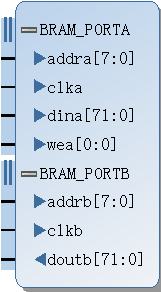
这里涉及到位宽的计算,以6通道,160MHz采样率,12bit有效位AD举例,现在需要转化为:240MHz的FPGA工作时钟。
12bit*6*160/240 = 48bit
位宽由12*6 = 72bit转化为48bit,:
- Port-A为写数据,width:位宽12*6 = 72bit,depth = 160
- Port-B为读数据,width:48bit,depth = 240
但Port-B的width只能是:72bit/(2^n),n = 0, ±1, ±2, ...,因此通常都是二次转化:
Step1:72*160 = 48*240 < x * 240,x = 72*2^n >48,此处n = 0;x工作在240MHz。
Step2:x * M = 48 * N,M、N都是整数。M = 1,N = 2,完成转化。
.png)
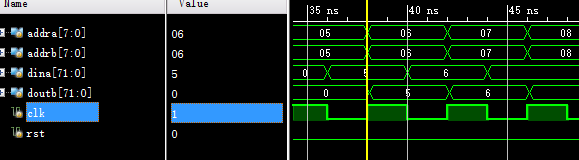
勾选primitive output register:

可见该选项延迟了1拍。
B-FIFO
主要参考:

关于IP核参数设置,可参考FIFO generator笔记。
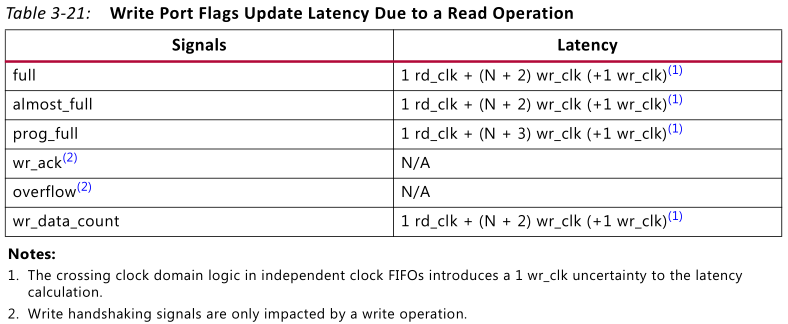
与BRAM同样的例子,很多时候数据时钟域转换用dual-port RAM而不用FIFO,说是前者含地址,存在时延变量取数方便,但改为FIFO实现其实也可以,后者含有计数功能,同样可以进行定位。
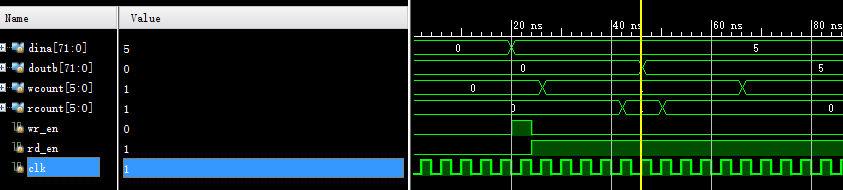
从读使能给出,到数据输出,经过6个周期,计算:
基础003_V7-Memory Resources的更多相关文章
- Understanding Virtual Memory
Understanding Virtual Memory by Norm Murray and Neil Horman Introduction Definitions The Life of a P ...
- DTrace to Troubleshoot Java Native Memory Problems
How to Use DTrace to Troubleshoot Java Native Memory Problems on Oracle Solaris 11 Hands-On Labs of ...
- Spring Boot Memory Performance
The Performance Zone is brought to you in partnership with New Relic. Quickly learn how to use Docke ...
- 再谈.net的堆和栈---.NET Memory Management Basics
.NET Memory Management Basics .NET memory management is designed so that the programmer is freed fro ...
- Allowing GPU memory growth
By default, TensorFlow maps nearly all of the GPU memory of all GPUs (subject to CUDA_VISIBLE_DEVICE ...
- CUDA ---- Memory Model
Memory kernel性能高低是不能单纯的从warp的执行上来解释的.比如之前博文涉及到的,将block的维度设置为warp大小的一半会导致load efficiency降低,这个问题无法用war ...
- Memory Leak Detection in C++
原文链接:http://www.linuxjournal.com/article/6556?page=0,0 An earlier article [“Memory Leak Detection in ...
- System and method for parallel execution of memory transactions using multiple memory models, including SSO, TSO, PSO and RMO
A data processor supports the use of multiple memory models by computer programs. At a device extern ...
- Move resources allocated using unmanaged interface to managed devm interface
转载:http://blog.csdn.net/swingboard/article/details/27207497 So today let’s talk about devm functio ...
- Find out when memory leaks are a concern and how to prevent them
Handling memory leaks in Java programs Find out when memory leaks are a concern and how to prevent t ...
随机推荐
- time series review
https://pdfs.semanticscholar.org/fc9c/1a94a15dd44c8c61b3e4841ecb9505f8cd37.pdf https://edoc.hu-berli ...
- 一、Django用Eclipse编写一个登录界面
一.Django用Eclipse编写一个登录界面 二.Django用Eclipse编写一个登录界面Ajax和Django交互 Eclipse安装Python插件和Django的步骤直接省略. 创建de ...
- Java中String、StringBuffer和StringBuilder的区别
转载请注明原文地址:http://www.cnblogs.com/ygj0930/p/6581009.html 在编程中,对于字符串拼接,我们可以用String类重载的+或concat(str).S ...
- Flink官网文档翻译
http://ifeve.com/flink-quick-start/ http://vinoyang.com/2016/05/02/flink-concepts/ http://wuchong.me ...
- java sm3加密算法
java sm3加密算法实现 CreationTime--2018年7月13日09点28分 Author:Marydon 1.准备工作 所需jar包: bcprov-jdk15on-1.59.ja ...
- RRT路径规划算法
传统的路径规划算法有人工势场法.模糊规则法.遗传算法.神经网络.模拟退火算法.蚁群优化算法等.但这些方法都需要在一个确定的空间内对障碍物进行建模,计算复杂度与机器人自由度呈指数关系,不适合解决多自由度 ...
- Eclipse和MyEclipse使用技巧--Eclipse中使用Git-让版本管理更简单
详细步骤: 第一部分 GIT介绍 (1)GIT往世今生 2005年开发Samba的Andrew试图破解BitKeeper(一款商业的版本控制系统)的协议(这么干的其实也不只他一个),被BitMove ...
- 常用bios flash闪存型号
常用flash IC芯片厂商及型号 制造商 4M 8M 16M 32M Atmel AT25DF321AT25DF321A AT25DF641 EON (cFeon) EN25F32EN25P ...
- PHP执行insert语句报错“Data too long for column”解决办法
PHP执行mysql 插入语句, insert语句在Navicat for mysql(或任意的mysql管理工具) 中可以正确执行,但是用mysql_query()函数执行却报错. 错误 : “Da ...
- mysql配置和管理(转载)
MySQL的配置与管理 (2012-08-09 13:06:59) 转载▼ 标签: mysql 配置 管理 分类: MySQL 安装 yum -y install mysql-server 启动服 ...