
RoIPooling
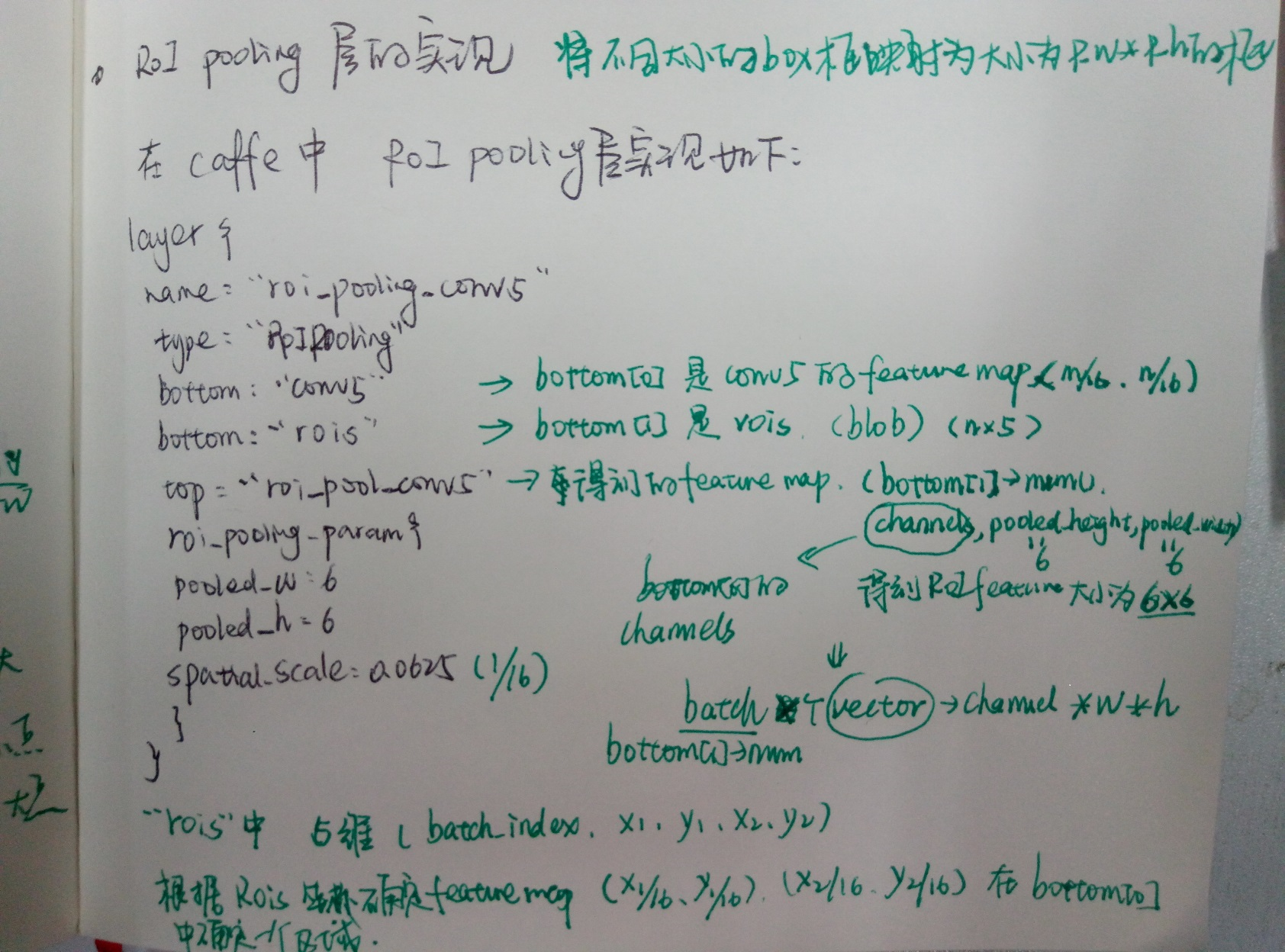
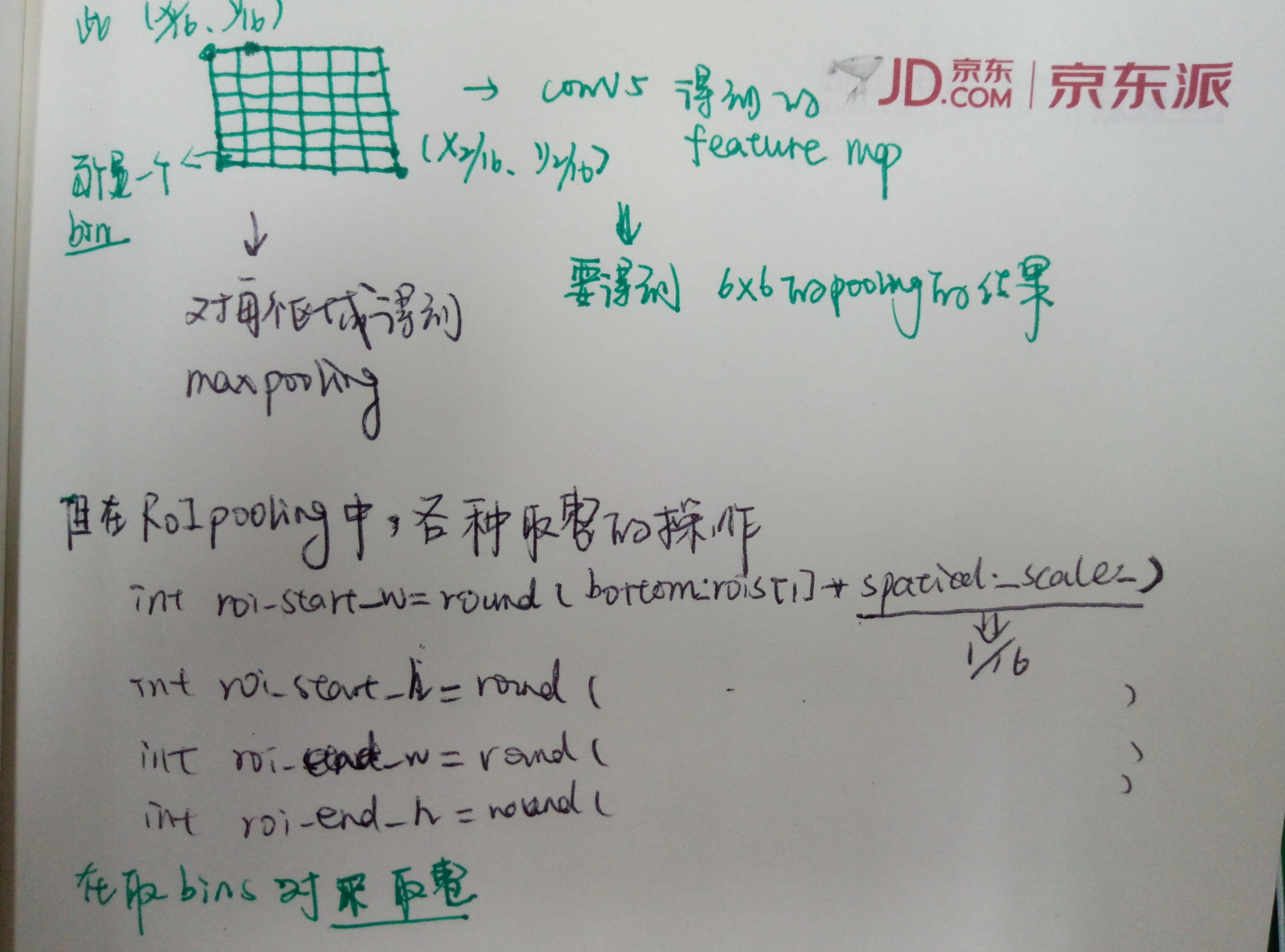 、
、
代码:
template <typename Dtype>

void ROIPoolingLayer<Dtype>::Forward_cpu(const vector<Blob<Dtype>*>& bottom,

      const vector<Blob<Dtype>*>& top) {

  //输入有两部分组成,data和rois

  const Dtype* bottom_data = bottom[0]->cpu_data();

  const Dtype* bottom_rois = bottom[1]->cpu_data();

  // Number of ROIs

  int num_rois = bottom[1]->num();

  int batch_size = bottom[0]->num();

  int top_count = top[0]->count();

  Dtype* top_data = top[0]->mutable_cpu_data();

  caffe_set(top_count, Dtype(-FLT_MAX), top_data);

  int* argmax_data = max_idx_.mutable_cpu_data();

  caffe_set(top_count, -1, argmax_data);

  // For each ROI R = [batch_index x1 y1 x2 y2]: max pool over R

  for (int n = 0; n < num_rois; ++n) {

    int roi_batch_ind = bottom_rois[0];

    //把原图的坐标映射到feature map上面

    int roi_start_w = round(bottom_rois[1] * spatial_scale_);

    int roi_start_h = round(bottom_rois[2] * spatial_scale_);

    int roi_end_w = round(bottom_rois[3] * spatial_scale_);

    int roi_end_h = round(bottom_rois[4] * spatial_scale_);

    //计算每个roi在feature map上面的大小

    int roi_height = max(roi_end_h - roi_start_h + 1, 1);

    int roi_width = max(roi_end_w - roi_start_w + 1, 1);

    //pooling之后的feature map的一个值对应于pooling之前的feature map上的大小

    //注:由于roi的大小不一致,所以每次都需要计算一次

    const Dtype bin_size_h = static_cast<Dtype>(roi_height)

                             / static_cast<Dtype>(pooled_height_);

    const Dtype bin_size_w = static_cast<Dtype>(roi_width)

                             / static_cast<Dtype>(pooled_width_);

    //找到对应的roi的feature map,如果input data的batch size为1

    //那么roi_batch_ind=0

    const Dtype* batch_data = bottom_data + bottom[0]->offset(roi_batch_ind);

    //pooling的过程是针对每一个channel的,所以需要循环遍历

    for (int c = 0; c < channels_; ++c) {

      //计算output的每一个值,所以需要遍历一遍output,然后求出所有值

      for (int ph = 0; ph < pooled_height_; ++ph) {

        for (int pw = 0; pw < pooled_width_; ++pw) {

          // Compute pooling region for this output unit:

          //  start (included) = floor(ph * roi_height / pooled_height_)

          //  end (excluded) = ceil((ph + 1) * roi_height / pooled_height_)

          // 计算output上的一点对应于input上面区域的大小[hstart, wstart, hend, wend]

          int hstart = static_cast<int>(floor(static_cast<Dtype>(ph)

                                              * bin_size_h));

          int hend = static_cast<int>(ceil(static_cast<Dtype>(ph + 1)

                                           * bin_size_h));

          int wstart = static_cast<int>(floor(static_cast<Dtype>(pw)

                                              * bin_size_w));

          int wend = static_cast<int>(ceil(static_cast<Dtype>(pw + 1)

                                           * bin_size_w));

          //将映射后的区域平动到对应的位置[hstart, wstart, hend, wend]

          hstart = min(max(hstart + roi_start_h, 0), height_);

          hend = min(max(hend + roi_start_h, 0), height_);

          wstart = min(max(wstart + roi_start_w, 0), width_);

          wend = min(max(wend + roi_start_w, 0), width_);

          //如果映射后的矩形框不符合

          bool is_empty = (hend <= hstart) || (wend <= wstart);

          //pool_index指的是此时计算的output的值对应于output的位置

          const int pool_index = ph * pooled_width_ + pw;

          //如果矩形不符合,此处output的值设为0,此处的对应于输入区域的最大值为-1

          if (is_empty) {

            top_data[pool_index] = 0;

            argmax_data[pool_index] = -1;

          }

          //遍历output的值对应于input的区域块

          for (int h = hstart; h < hend; ++h) {

            for (int w = wstart; w < wend; ++w) {

             // 对应于input上的位置

              const int index = h * width_ + w;

              //计算区域块的最大值,保存在output对应的位置上

              //同时记录最大值的索引

              if (batch_data[index] > top_data[pool_index]) {

                top_data[pool_index] = batch_data[index];

                argmax_data[pool_index] = index;

              }

            }

          }

        }

      }

      // Increment all data pointers by one channel

      batch_data += bottom[0]->offset(0, 1);

      top_data += top[0]->offset(0, 1);

      argmax_data += max_idx_.offset(0, 1);

    }

    // Increment ROI data pointer

    bottom_rois += bottom[1]->offset(1);

  }

}
RoIPooling的更多相关文章
- RoIPooling、RoIAlign笔记
一).RoIPooling 这个可以在Faster RCNN中使用以便使生成的候选框region proposal映射产生固定大小的feature map 先贴出一张图,接着通过这图解释RoiPool ...
- RoIPooling与RoIAlign的区别
一.RoIPooling与RoIAlign 1.1.RoIPooling 通过对Faster RCNN的学习我妈了解的RolPooling可以使生成的候选框region proposal映射产生固定大 ...
- ROIAlign, ROIPooling及ROIWarp对比
RoI Pooling 实现从原图ROI区域映射到卷积区域最后pooling到固定大小的功能,然后通过池化把该区域的尺寸归一化成卷积网络输入的尺寸. ROIAlign 上面RoI Pooling从原图 ...
- python读取caffemodel文件
caffemodel是二进制的protobuf文件,利用protobuf的python接口可以读取它,解析出需要的内容 不少算法都是用预训练模型在自己数据上微调,即加载"caffemodel ...
- Faster-RCNN 训练自己的数据
在前一篇随笔中,数据制作成了VOC2007格式,可以用于Faster-RCNN的训练. 1.针对数据的修改 修改datasets\VOCdevkit2007\VOCcode\VOCinit.m,我只做 ...
- [OpenCV] Face Detection
即将进入涉及大量数学知识的阶段,先读下“别人家”的博文放松一下. 读罢该文,基本能了解面部识别领域的整体状况. 后生可畏. 结尾的Google Facenet中的2亿数据集,仿佛隐约听到:“你们都玩儿 ...
- (转) 技术揭秘:海康威视PASCAL VOC2012目标检测权威评测夺冠之道
技术揭秘:海康威视PASCAL VOC2012目标检测权威评测夺冠之道 原创 2016-09-21 钟巧勇 深度学习大讲堂 点击上方“深度学习大讲堂”可订阅哦!深度学习大讲堂是高质量原创内容平台,邀请 ...
- 大规模视觉识别挑战赛ILSVRC2015各团队结果和方法 Large Scale Visual Recognition Challenge 2015
Large Scale Visual Recognition Challenge 2015 (ILSVRC2015) Legend: Yellow background = winner in thi ...
- 海康威视研究院ImageNet2016竞赛经验分享
原文链接:https://zhuanlan.zhihu.com/p/23249000 目录 场景分类 数据增强 数据增强对最后的识别性能和泛化能力都有着非常重要的作用.我们使用下面这些数据增强方法. ...
随机推荐
- 【English 】20190319
BOKO鼻子['boʊkoʊ] pores毛孔['pɔ:z] cute漂亮可爱[kjut] DEKO-BOKO pores don't make a girl cute! ideal最理想的[aɪˈ ...
- Python开发【前端篇】HTML
1.html概述和基本结构 html概述 HTML是 HyperText Mark-up Language 的首字母简写,意思是超文本标记语言,超文本指的是超链接,标记指的是标签,是一种用来制作网页的 ...
- 极光推送JAVA代码示例
一. 准备工作 1. 登录极光推送官网https://www.jpush.cn/,注册账号并登录 2. 创建应用 创建应用过程,详见百度经验:http://jingyan.baidu.com/arti ...
- SQL的一些基础查询语法
基础.限定.模糊查询 关键字都是大写. 使用 BETWEENN AND 的时候小的数字或者日期放到 AND(并且) 的面前,大的一个放到AND 后面. 数据操纵语言SQL分类(DML ...
- docker 搭建 Telegram Messenger MTP
docker hub官方镜像地址如下: https://hub.docker.com/r/telegrammessenger/proxy 拉取镜像 sudo docker pull telegramm ...
- C语言之四舍五入
在C语言中,如果进行强制类型转换,它会将所需要取的位数直接提取出来,而其他位数的数字会被直接删除,不会对提取出来的位数有任何影响 所以如果我们需要提高精度,对所取的数进行四舍五入,需要给所需去的数的最 ...
- 控制结构(10): 指令序列(opcode)
// 上一篇:管道(pipeline) // 下一篇:Continuation-passing_style(CPS) 发现问题 在一个正式项目的开发周期中,除了源代码版本控制外,还存在着项目的配置/编 ...
- WPF中利用控件的DataContext属性为多个TextBox绑定数据
工作上需要从给定的接口获取数据,然后显示在界面的编辑框中,以往肯定会一个一个的去赋值,但这样太麻烦而且效率很低,不利于维护,于是想到了数据绑定这一方法,数据绑定主要利用INotifyPropertyC ...
- 查看crontab运行状态
cron服务是linux的内置服务,但它不会开机自动启动.可以用以下命令启动和停止服务: /sbin/service crond start/sbin/service crond stop/sbin/ ...
- 搭建Android手机服务器(一)
自从上学期的软件工程课之后,我们团队设计的抢答器一直想把服务端移到移动端.所以,我一直在考虑如何把手机作为一台服务器.今天我主要讲解一下,对于没有android真机只有模拟器的,如何设置模拟器,使得在 ...