
POJ 3321 Apple Tree 【树状数组+建树】
题目链接:http://poj.org/problem?id=3321
Apple Tree
Time Limit: 2000MS |
Memory Limit: 65536K |
|
Total Submissions: 34812 |
Accepted: 10469 |
Description
There is an apple tree outside of kaka's house. Every autumn, a lot of apples will grow in the tree. Kaka likes apple very much, so he has been carefully nurturing the big apple tree.
The tree has N forks which are connected by branches. Kaka numbers the forks by 1 to N and the root is always numbered by 1. Apples will grow on the forks and two apple won't grow on the same fork. kaka wants to know how many apples are there in a sub-tree, for his study of the produce ability of the apple tree.
The trouble is that a new apple may grow on an empty fork some time and kaka may pick an apple from the tree for his dessert. Can you help kaka?
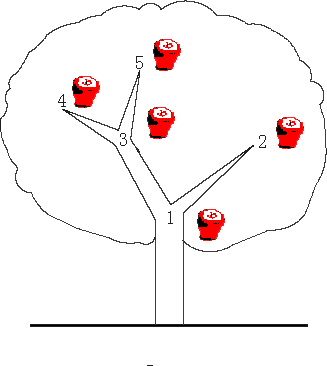
Input
The first line contains an integer N (N ≤ 100,000) , which is the number of the forks in the tree.
The following N - 1 lines each contain two integers u and v, which means fork u and fork v are connected by a branch.
The next line contains an integer M (M ≤ 100,000).
The following M lines each contain a message which is either
"C x" which means the existence of the apple on fork x has been changed. i.e. if there is an apple on the fork, then Kaka pick it; otherwise a new apple has grown on the empty fork.
or
"Q x" which means an inquiry for the number of apples in the sub-tree above the fork x, including the apple (if exists) on the fork x
Note the tree is full of apples at the beginning
Output
Sample Input
3

1 2

1 3

3

Q 1

C 2

Q 1
Sample Output
3

2
Source
题意概括:
给一个 N 阶无向图,要求把这个无向图转换为一颗以 1 为根的树后进行两种操作:
C x :x结点上如果有苹果就摘掉,如果没有苹果就长出一个新的来
Q x: 查询 x 结点与它的所有后代分支一共有几个苹果
解题思路:
因为原本苹果之间的关系我们不好处理,所以就给他们这些结点重新编号。
并且为了方便子树的苹果数求和(即区间查询)我们在给结点增加一个左值一个右值表示当前结点管辖的范围。
如何建树?
根据题目一开始给的边与边的关系我们可以通过 dfs 进行建树。
L[ x ] (X的左值): X结点的新编号就是该结点的左值,表示它管辖范围的下限
R[ x ] (X的右值):而子树的编号最大值为该结点的右值,表示它管辖范围的上限。
至于dfs顺序,如下
举个栗子:
N = 6;
1 - 2
1 - 6
2 - 5
2 - 3
6 - 4
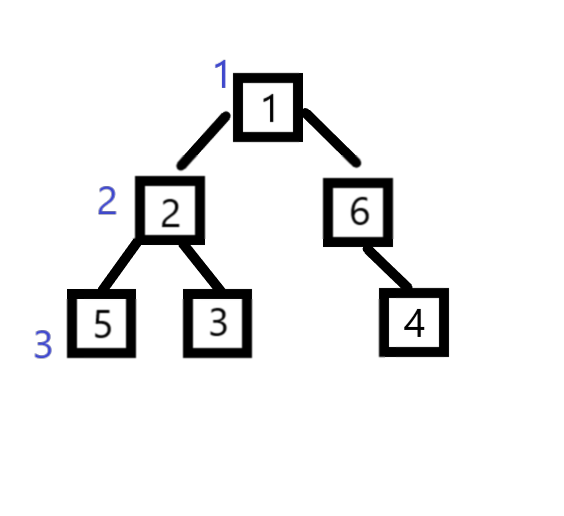
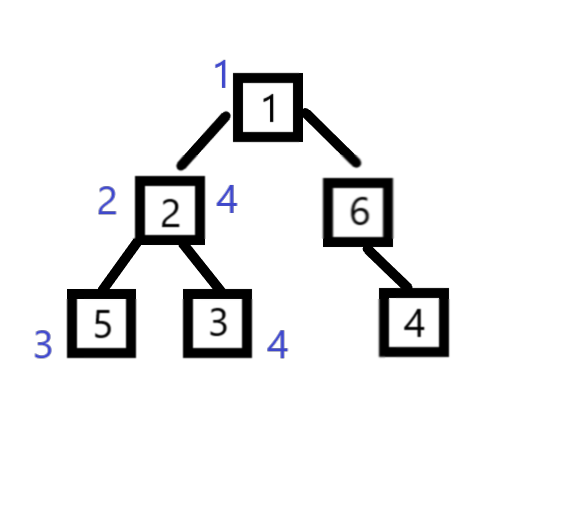

到这里感觉有一点点线段树的味道了。。。
但这里要用树状数组对这些区间进行维护和查询。
例如:我要 Q 2;
由上面建好的新树我们可以知道 结点2这颗子树包含了结点2、结点5、结点3,而结点2所管辖的区间【2,4】刚好把它们包括进去了。
如果我们要求 这可子树的苹果数量,其实就是用树状数组求区间【2,4】的苹果总数
也就是右值的前缀和减去左值的前缀和(但不包括左值,因为结点本身也要算进去)即:ans = sum( R[ 2 ] ) - sum( L[ 2 ] - 1);
而C操作其实就是树状数组的单点更新而已。
注意事项:
一开始用 stl 的 vector 存无向图,虽然过了但效率不咋地。想想好久没用静态邻接表了,换了一下,快了好多。
AC code:
 ///建树+树状数组(stl)8080k 1047ms

 /*

 #include <cstdio>

 #include <iostream>

 #include <cstring>

 #include <vector>

 #include <algorithm>

 #define INF 0x3f3f3f3f

 using namespace std;

 typedef vector<int>ve;

 const int MAXN  = 1e5+10;

 int t[MAXN], l[MAXN], r[MAXN];

 bool vis[MAXN];

 int N, M, cnt;

 vector<ve>node(MAXN);

 int lowbit(int x)

 {

     return x&(-x);

 }

 void add(int x, int value)

 {

     for(int i = x; i <= N; i+=lowbit(i))

         t[i]+=value;

 }

 int sum(int x)

 {

     int res = 0;

     for(int i = x; i > 0; i-=lowbit(i))

         res+=t[i];

     return res;

 }

 void dfs(int k)

 {

     l[k] = cnt;

     for(int i = 0; i < node[k].size(); i++)

     {

         cnt++;

         dfs(node[k][i]);

     }

     r[k] = cnt;

     return;

 }

 int main()

 {

     scanf("%d", &N);

     int a, b;

     for(int i = 1; i <= N; i++)

     {

         vis[i] = 1;

         add(i, 1);

     }

     for(int i = 1; i < N; i++)

     {

         scanf("%d%d", &a, &b);

         node[a].push_back(b);

     }

     cnt = 1;

     dfs(1);

     scanf("%d", &M);

     while(M--)

     {

         char com[3];

         int px;

         scanf("%s", &com);

         if(com[0] == 'C')

         {

             scanf("%d", &px);

             if(vis[px]) add(l[px], -1);

             else add(l[px], 1);

             vis[px] = !vis[px];

         }

         else

         {

             scanf("%d", &px);

             int ans = sum(r[px]) - sum(l[px]-1);

             printf("%d\n", ans);

         }

     }

     return 0;

 }

 */

 ///建树+树状数组(静态连接表) 4940k 454ms

 #include <cstdio>

 #include <iostream>

 #include <cstring>

 #include <vector>

 #include <algorithm>

 #define INF 0x3f3f3f3f

 using namespace std;

 const int MAXN = 1e5+;

 const int MAXM = 1e5+;

 struct node

 {

     int to, next;

 }edge[MAXM<<];

 int head[MAXN];

 bool vis[MAXN];

 int t[MAXN], l[MAXN], r[MAXN];

 int N, M, cnt, key;

 int lowbit(int x)

 {

     return x&(-x);

 }

 void add(int x, int value)

 {

     for(int i = x; i <= N; i+=lowbit(i))

         t[i]+=value;

 }

 int sum(int x)

 {

     int res = ;

     for(int i = x; i > ; i-=lowbit(i))

         res+=t[i];

     return res;

 }

 void dfs(int k)

 {

     l[k] = key;

     for(int i = head[k]; i != -; i = edge[i].next)

     {

         if(l[edge[i].to]) continue;

         key++;

         dfs(edge[i].to);

     }

     r[k] = key;

 }

 void init()

 {

     memset(head, -, sizeof(head));

     cnt = ;

 }

 void add_e(int u, int v)

 {

     edge[cnt].to = v;

     edge[cnt].next = head[u];

     head[u] = cnt++;

 }

 int main()

 {

     scanf("%d", &N);

     init();

     int a, b;

     for(int i = ; i <= N; i++)

     {

         vis[i] = ;             //每个节点一开始都有苹果

         add(i, );              //初始化树状数组

     }

     for(int i = ; i < N; i++)

     {

         scanf("%d%d", &a, &b); ///建无向图

         add_e(a, b);

         add_e(b, a);

     }

     key = ; dfs();           //建树

     scanf("%d", &M);

     int px;

     char com[];

     while(M--)

     {

         scanf("%s", &com);

         if(com[] == 'C')

         {

             scanf("%d", &px);

             if(vis[px]) add(l[px], -);

             else add(l[px], );

             vis[px] = !vis[px];

         }

         else

         {

             scanf("%d", &px);

             printf("%d\n", sum(r[px])-sum(l[px]-));

         }

     }

     return ;

 }
POJ 3321 Apple Tree 【树状数组+建树】的更多相关文章
- POJ 3321 Apple Tree(树状数组)
Apple Tree Time Limit: 2000MS Memory Lim ...
- POJ 3321 Apple Tree (树状数组+dfs序)
题目链接:http://poj.org/problem?id=3321 给你n个点,n-1条边,1为根节点.给你m条操作,C操作是将x点变反(1变0,0变1),Q操作是询问x节点以及它子树的值之和.初 ...
- POJ 3321 Apple Tree 树状数组+DFS
题意:一棵苹果树有n个结点,编号从1到n,根结点永远是1.该树有n-1条树枝,每条树枝连接两个结点.已知苹果只会结在树的结点处,而且每个结点最多只能结1个苹果.初始时每个结点处都有1个苹果.树的主人接 ...
- POJ 3321 Apple Tree 树状数组 第一题
第一次做树状数组,这个东西还是蛮神奇的,通过一个简单的C数组就可以表示出整个序列的值,并且可以用logN的复杂度进行改值与求和. 这道题目我根本不知道怎么和树状数组扯上的关系,刚开始我想直接按图来遍历 ...
- 3321 Apple Tree 树状数组
LIANJIE:http://poj.org/problem?id=3321 给你一个多叉树,每个叉和叶子节点有一颗苹果.然后给你两个操作,一个是给你C清除某节点上的苹果或者添加(此节点上有苹果则清除 ...
- POJ 3321:Apple Tree 树状数组
Apple Tree Time Limit: 2000MS Memory Limit: 65536K Total Submissions: 22131 Accepted: 6715 Descr ...
- POJ--3321 Apple Tree(树状数组+dfs(序列))
Apple Tree Time Limit: 2000MS Memory Limit: 65536K Total Submissions: 22613 Accepted: 6875 Descripti ...
- E - Apple Tree(树状数组+DFS序)
There is an apple tree outside of kaka's house. Every autumn, a lot of apples will grow in the tree. ...
- POJ3321 Apple Tree(树状数组)
先做一次dfs求得每个节点为根的子树在树状数组中编号的起始值和结束值,再树状数组做区间查询 与单点更新. #include<cstdio> #include<iostream> ...
- POJ 2486 Apple Tree [树状DP]
题目:一棵树,每个结点上都有一些苹果,且相邻两个结点间的距离为1.一个人从根节点(编号为1)开始走,一共可以走k步,问最多可以吃多少苹果. 思路:这里给出数组的定义: dp[0][x][j] 为从结点 ...
随机推荐
- .NET平台常用框架整理
基于.NET平台常用的框架整理 转自:http://www.cnblogs.com/hgmyz/p/5313983.html 首先谢谢楼主,以后备用 自从学习.NET以来,优雅的编程风格,极度简单 ...
- vim脚本语言
转自:http://man.chinaunix.net/newsoft/vi/doc/usr_41.html#usr_41.txt Vim 脚本语言在很多地方用到,包括 vimrc 文件, 语法文件, ...
- node.js压缩和解压缩
推荐一个极其简单.及其好用的node.js的压缩和解压缩类库 compressing 支持格式: tar.gzip.tgz.zip 以zip为例,tar,tgz和gzip与zip相同. 压缩文件: ...
- 转载:.NET Memory Leak: XmlSerializing your way to a Memory Leak
原文地址:http://blogs.msdn.com/b/tess/archive/2006/02/15/532804.aspx I hate to give away the resolution ...
- 学习总结(一)java web连接池
大家都知道,在访问数据库时要与数据库建立连接.在jdbc中,用户与数据库建立连接后,取完数据或操作完数据后,就会断开这个连接.当下次还要访问数据库时,就会重新创建连接.这样很浪费资源,尤其是网页上有数 ...
- String常用操作
常量池: 字符串一旦被初始化就不会被改变 String s="123"; s="abc"; System.out.print(s); 这段代码看上去s的值是被改 ...
- Java Timer定时器原理
做项目很多时候会用到定时任务,比如在深夜,流量较小的时候,做一些统计工作.早上定时发送邮件,更新数据库等.这里可以用Java的Timer或线程池实现.Timer可以实现,不过Timer存在一些问题.他 ...
- ACM-线段树
http://blog.csdn.net/libin56842/article/details/8530197 基础可以看上面这篇文章 风格: maxn是题目给的最大区间,而节点数要开4倍,确切的说… ...
- java集合框架(一):HashMap
有大半年没有写博客了,虽然一直有在看书学习,但现在回过来看读书基本都是一种知识“输入”,很多时候是水过无痕.而知识的“输出”会逼着自己去找出没有掌握或者了解不深刻的东西,你要把一个知识点表达出来,自己 ...
- POJ1659 Frogs' Neighborhood(Havel–Hakimi定理)
题意 题目链接 \(T\)组数据,给出\(n\)个点的度数,问是否可以构造出一个简单图 Sol Havel–Hakimi定理: 给定一串有限多个非负整数组成的序列,是否存在一个简单图使得其度数列恰为这 ...