
源码解读SLF4J绑定日志实现的原理
一、导读
SLF4J: Class path contains multiple SLF4J bindings.

SLF4J: Found binding in [jar:file:/Users/abc/maven-repository/org/slf4j/slf4j-simple/1.7.26/slf4j-simple-1.7.26.jar!/org/slf4j/impl/StaticLoggerBinder.class]

SLF4J: Found binding in [jar:file:/Users/abc/maven-repository/org/apache/logging/log4j/log4j-slf4j-impl/2.7/log4j-slf4j-impl-2.7.jar!/org/slf4j/impl/StaticLoggerBinder.class]

SLF4J: See http://www.slf4j.org/codes.html#multiple_bindings for an explanation.

SLF4J: Actual binding is of type [org.slf4j.impl.SimpleLoggerFactory]
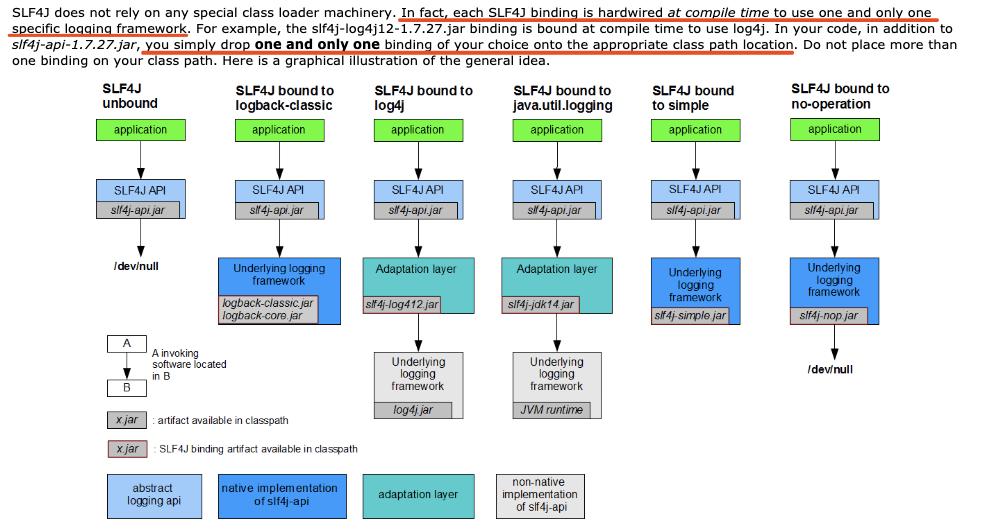

也就是说,当有多个日志实现时,SLF4J会在编译期随机选择其中的一个实现。那么,它到底是如何随机选择的呢?下面我们通过源码来分析。
二、源码分析
2.1 LoggerFactory.getLogger(this.getClass())
public static Logger getLogger(Class<?> clazz) {

    Logger logger = getLogger(clazz.getName());

    if (DETECT_LOGGER_NAME_MISMATCH) {

        Class<?> autoComputedCallingClass = Util.getCallingClass();

        if (autoComputedCallingClass != null && nonMatchingClasses(clazz, autoComputedCallingClass)) {

            Util.report(String.format("Detected logger name mismatch. Given name: \"%s\"; computed name: \"%s\".", logger.getName(),

                            autoComputedCallingClass.getName()));

            Util.report("See " + LOGGER_NAME_MISMATCH_URL + " for an explanation");

        }

    }

    return logger;

}
2.2 LoggerFactory.bind()
private final static void bind() {

    try {

        Set<URL> staticLoggerBinderPathSet = null;

        // skip check under android, see also

        // http://jira.qos.ch/browse/SLF4J-328

        if (!isAndroid()) {

            staticLoggerBinderPathSet = findPossibleStaticLoggerBinderPathSet(); //在classpath下查找有多少个日志实现

            reportMultipleBindingAmbiguity(staticLoggerBinderPathSet); //如果有多个日志实现,打印出来

        }

        // the next line does the binding。classpath下每个日志实现jar都会有org.slf4j.impl.StaticLoggerBinder类,这里会随机加载其中的一个。

        StaticLoggerBinder.getSingleton();

        INITIALIZATION_STATE = SUCCESSFUL_INITIALIZATION;

        reportActualBinding(staticLoggerBinderPathSet);

        fixSubstituteLoggers();

        replayEvents();

        // release all resources in SUBST_FACTORY

        SUBST_FACTORY.clear();

    } catch (NoClassDefFoundError ncde) { //如果在classpath下没有找到一个org.slf4j.impl.StaticLoggerBinder

        String msg = ncde.getMessage();

        if (messageContainsOrgSlf4jImplStaticLoggerBinder(msg)) {

            INITIALIZATION_STATE = NOP_FALLBACK_INITIALIZATION;

            Util.report("Failed to load class \"org.slf4j.impl.StaticLoggerBinder\".");

            Util.report("Defaulting to no-operation (NOP) logger implementation");

            Util.report("See " + NO_STATICLOGGERBINDER_URL + " for further details.");

        } else {

            failedBinding(ncde);

            throw ncde;

        }

    } catch (java.lang.NoSuchMethodError nsme) {

        String msg = nsme.getMessage();

        if (msg != null && msg.contains("org.slf4j.impl.StaticLoggerBinder.getSingleton()")) {

            INITIALIZATION_STATE = FAILED_INITIALIZATION;

            Util.report("slf4j-api 1.6.x (or later) is incompatible with this binding.");

            Util.report("Your binding is version 1.5.5 or earlier.");

            Util.report("Upgrade your binding to version 1.6.x.");

        }

        throw nsme;

    } catch (Exception e) {

        failedBinding(e);

        throw new IllegalStateException("Unexpected initialization failure", e);

    }

}
2.3 LoggerFactory.findPossibleStaticLoggerBinderPathSet()
static Set<URL> findPossibleStaticLoggerBinderPathSet() {

    // use Set instead of list in order to deal with bug #138

    // LinkedHashSet appropriate here because it preserves insertion order

    // during iteration

    Set<URL> staticLoggerBinderPathSet = new LinkedHashSet<URL>();

    try {

        ClassLoader loggerFactoryClassLoader = LoggerFactory.class.getClassLoader();

        Enumeration<URL> paths;

        if (loggerFactoryClassLoader == null) { //用ClassLoader去查找classpath下有多少个org.slf4j.impl.StaticLoggerBinder类

            paths = ClassLoader.getSystemResources(STATIC_LOGGER_BINDER_PATH);

        } else {

            paths = loggerFactoryClassLoader.getResources(STATIC_LOGGER_BINDER_PATH);

        }

        while (paths.hasMoreElements()) {

            URL path = paths.nextElement();

            staticLoggerBinderPathSet.add(path);

        }

    } catch (IOException ioe) {

        Util.report("Error getting resources from path", ioe);

    }

    return staticLoggerBinderPathSet;

}
三、具体日志实现
3.1 slf4j-simple
3.2 slf4j-nop
3.3 logback-classic
3.4 log4j-slf4j-impl

四、总结
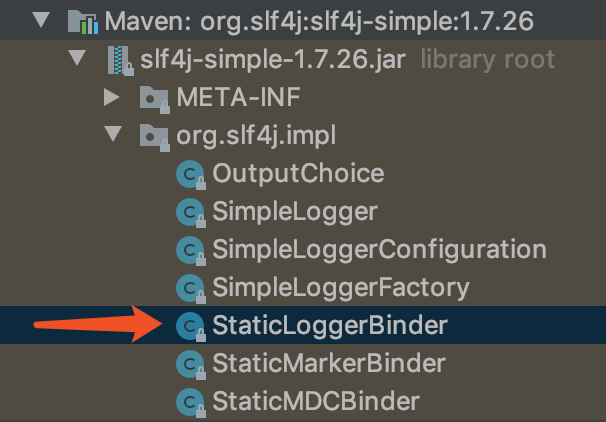
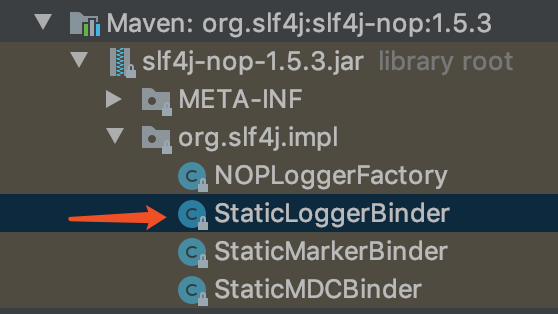
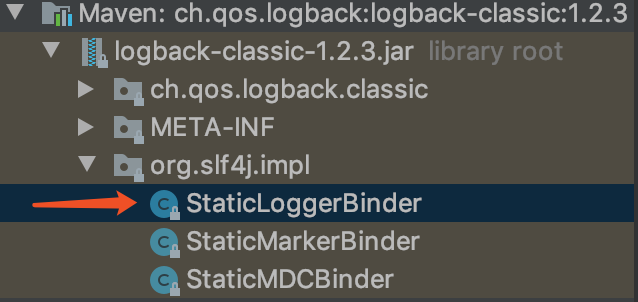
- 每个日志实现jar都会有org.slf4j.impl.StaticLoggerBinder类的实现;
- SLF4J会通过ClassLoad扫描当前classpath下有多少个org.slf4j.impl.StaticLoggerBinder类,也就找到了有多少个日志实现(通过这样,我们只需在项目中加入日志实现的jar包,编译时即可自动加载,业务代码无须显式依赖,实现解耦);
- 如果有多个org.slf4j.impl.StaticLoggerBinder类,SLF4J会在LoggerFactory.bind()里调用StaticLoggerBinder.getSingleton()随机加载一个日志实现jar的StaticLoggerBinder。
- 发现一个有趣的现象,在本地idea上运行时,是加载pom.xml里声明的第一个日志实现;但是如果打包好后通过java -jar启动时,其加载的日志实现确实是随机的(是在编译打包时随机加载一个日志实现,所以一旦编译打包好后其加载的那个日志实现就会固定不变)。所以,我们在具体使用时一定要通过排除依赖的方式来确定日志实现,不要由于日志实现的不确定性引入难以排查、不必要的坑。
源码解读SLF4J绑定日志实现的原理的更多相关文章
- Vue 源码解读(3)—— 响应式原理
前言 上一篇文章 Vue 源码解读(2)-- Vue 初始化过程 详细讲解了 Vue 的初始化过程,明白了 new Vue(options) 都做了什么,其中关于 数据响应式 的实现用一句话简单的带过 ...
- petite-vue源码剖析-双向绑定`v-model`的工作原理
前言 双向绑定v-model不仅仅是对可编辑HTML元素(select, input, textarea和附带[contenteditable=true])同时附加v-bind和v-on,而且还能利用 ...
- 源码解读 Golang 的 sync.Map 实现原理
简介 Go 的内建 map 是不支持并发写操作的,原因是 map 写操作不是并发安全的,当你尝试多个 Goroutine 操作同一个 map,会产生报错:fatal error: concurrent ...
- petite-vue源码剖析-属性绑定`v-bind`的工作原理
关于指令(directive) 属性绑定.事件绑定和v-modal底层都是通过指令(directive)实现的,那么什么是指令呢?我们一起看看Directive的定义吧. //文件 ./src/dir ...
- petite-vue源码剖析-事件绑定`v-on`的工作原理
在书写petite-vue和Vue最舒服的莫过于通过@click绑定事件,而且在移除元素时框架会帮我们自动解除绑定.省去了过去通过jQuery的累赘.而事件绑定在petite-vue中就是一个指令(d ...
- nodeJS之eventproxy源码解读
1.源码缩影 !(function (name, definition) { var hasDefine = typeof define === 'function', //检查上下文环境是否为AMD ...
- ScheduledThreadPoolExecutor源码解读
1. 背景 在之前的博文--ThreadPoolExecutor源码解读已经对ThreadPoolExecutor的实现原理与源码进行了分析.ScheduledExecutorService也是我们在 ...
- Vue 源码解读(4)—— 异步更新
前言 上一篇的 Vue 源码解读(3)-- 响应式原理 说到通过 Object.defineProperty 为对象的每个 key 设置 getter.setter,从而拦截对数据的访问和设置. 当对 ...
- Asp.NetCore源码学习[2-1]:日志
Asp.NetCore源码学习[2-1]:日志 在一个系统中,日志是不可或缺的部分.对于.net而言有许多成熟的日志框架,包括Log4Net.NLog.Serilog 等等.你可以在系统中直接使用这些 ...
随机推荐
- 项目整合SpringDataRedis
1:准备工作 先导入redis和jedis依赖,在配置redis-config.properties 和applicationContext-redis.xml (详细配置信息及入门demo见我上一篇 ...
- 微信分享网页时自定义缩略图和简介(.net版本)
要实现微信分享网页时自定义缩略图和简介,需开发者在公众平台网站中创建公众号.获取接口权限后,通过微信JS-SDK的分享接口,来实现微信分享功能. 下面来说明实现步骤. 第一部分 准备步骤 步骤一:注册 ...
- docfx 简单使用方法、自动生成目录的工具
[摘要] 这是我编写的一个 Docfx 文档自动生成工具,只要写好 Markdown 文档,使用此工具可为目录.文件快速生成配置,然后直接使用 docfx 运行即可. https://github.c ...
- 编辑修改json文件(PSCustomObject)
#$uname:用户 #$mails:需要绑定或删除的邮箱,如有多个邮箱,中间以,为分隔符,无需添加引号 #######################脚本开始#################### ...
- npm和cnpm命令后无响应
问题: 1.把前端环境配制完毕之后,打开项目,输入cnpm install之后,光标一直在另起一行的位置闪,但是丝毫没有在安装的迹象. 2.打开cmd,在窗体中输入node -v 可以显示版本,但是输 ...
- openssl生成随机数
#include <stdio.h> #include <openssl/bn.h> int main() { BIGNUM *bn; bn = BN_new(); //生成一 ...
- LeetCode学习_day1:原地算法
原地算法:是一种使用小的,固定数量的额外之空间来转换资料的算法.当算法执行时,输入的资料通常会被要输出的部份覆盖掉. 范例:冒泡排序.选择排序.插入排序.希尔排序 (1)冒泡排序: 冒泡排序算法的原理 ...
- hadoop 完全分布式集群搭建
1.在伪分布式基础上搭建,伪分布式搭建参见VM上Hadoop3.1伪分布式模式搭建 2.虚拟机准备,本次集群采用2.8.3版本与3.X版本差别不大,端口号所有差别 192.168.44.10 vmho ...
- java引用的强制转型
在java的面向对象的特性里,父类的引用可以指向子类的实例对象.但是,如果一个引用b(b本身指向了一个对象)想赋值给引用a,b不是a的类型且不是a的子类类型,那么就需要强制转换,并有失败的可能性,这个 ...
- CornerNet: Detecting Objects as Paired Keypoints
CornerNet是一种anchor free的目标检测方法,不需要设置anchor,而是通过检测关键点(Keypoints),即目标的左上角(Top-Left Corners)和右下角(Bottom ...