
Django--自定义用户认证
Django自带的用户认证
以前都是用Django自带的用户认证,用户名字段一对一关系对应Django--User表(其实它也是继承了abstractbaseuser)。
|
1
2
3
|
from django.contrib.auth.models import Userclass UserInfo(models.Model): username = models.OneToOneField(User) |
为什么使用要自定义用户认证?
原生的Django--User认证只有用户名和密码字段,自定义用户认证可以根据项目的需求定制化和扩展认证系统。
比如把唯一标识改成email,或加入用户组等等。
官方说明
官方文档:
Specifying a custom User model(指定自定义用户模型)
使用Django自定义用户模型必须满足:
模型必须有一个唯一的字段,可用于识别目的。
用户给定名称为“短”的标识,用户的全名为“长”标识符。他们可以返回完全相同的值。
构建一个符合用户自定义模型的最简单的方法是继承abstractbaseuser类。abstractbaseuser提供一个用户模型的核心实现,包括密码和符号密码重置。Django自带用用户认证User也是继承了它。一些关键的实现细节:
class models.CustomUser
USERNAME_FIELD
必须有一个唯一标识--USERNAME_FIELD
|
1
2
3
4
|
class MyUser(AbstractBaseUser): name = models.CharField(max_length=40, unique=True) ... USERNAME_FIELD = 'name' |
REQUIRED_FIELDS
创建superuser时的必须字段
|
1
2
3
4
5
6
|
class MyUser(AbstractBaseUser): ... date_of_birth = models.DateField() height = models.FloatField() ... REQUIRED_FIELDS = ['date_of_birth', 'height'] |
abstractbaseuser提供的方法
is_active(),is_authenticated()......
自定义models(略)
settings中添加models文件名
|
1
|
AUTH_USER_MODEL = 'app.MyUser(类名)' |
Django会去models中找这个类,所以要在原生的models.py中导入这个类。
代码实现
asset\user_models.py
|
1
2
3
4
5
6
7
8
9
10
11
12
13
14
15
16
17
18
19
20
21
22
23
24
25
26
27
28
29
30
31
32
33
34
35
36
37
38
39
40
41
42
43
44
45
46
47
48
49
50
51
52
53
54
55
56
57
58
59
60
61
62
63
64
65
66
67
68
69
70
71
72
73
74
75
76
77
78
79
80
81
82
83
|
#!/usr/bin/env python# -*- coding:utf-8 -*-from django.db import modelsfrom django.contrib.auth.models import ( BaseUserManager, AbstractBaseUser)class UserProfileManager(BaseUserManager): def create_user(self, email, name, password=None): """ Creates and saves a User with the given email, name and password. """ '''email是唯一标识,没有会报错''' if not email: raise ValueError('Users must have an email address') user = self.model( email=self.normalize_email(email), name=name, ) user.set_password(password) #检测密码合理性 user.save(using=self._db) #保存密码 return user def create_superuser(self, email, name, password): """ Creates and saves a superuser with the given email, name and password. """ user = self.create_user(email, password=password, name=name ) user.is_admin = True #比创建用户多的一个字段 user.save(using=self._db) return userclass UserProfile(AbstractBaseUser): email = models.EmailField( verbose_name='email address', max_length=255, unique=True, ) name = models.CharField(max_length=32) is_active = models.BooleanField(default=True) is_admin = models.BooleanField(default=False) objects = UserProfileManager() #创建用户 USERNAME_FIELD = 'email' REQUIRED_FIELDS = ['name'] def get_full_name(self): # The user is identified by their email address return self.email def get_short_name(self): # The user is identified by their email address return self.email def __str__(self): # __unicode__ on Python 2 return self.email '''django自带后台权限控制,对哪些表有查看权限等''' def has_perm(self, perm, obj=None): "Does the user have a specific permission?" # Simplest possible answer: Yes, always return True '''用户是否有权限看到app''' def has_module_perms(self, app_label): "Does the user have permissions to view the app `app_label`?" # Simplest possible answer: Yes, always return True @property def is_staff(self): "Is the user a member of staff?" # Simplest possible answer: All admins are staff return self.is_admin |
asset\models.py
|
1
|
from asset.user_models import UserProfile |
myCMDB\settings.py
|
1
|
AUTH_USER_MODEL = 'asset.UserProfile' |
asset\admin.py
|
1
2
|
from asset import modelsadmin.site.register(models.UserProfile) |
初始化数据库,登录后台。此时密码是明文显示,如果想改密码怎么办?
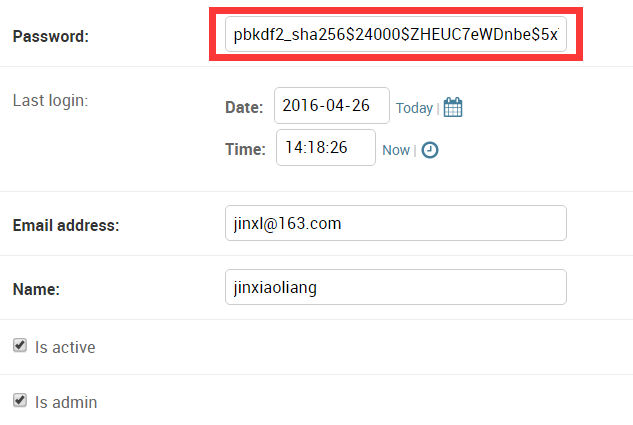
这时,需要自定义admin显示(官方都提供了)。
asset\admin.py
|
1
2
|
from user_admin import UserAdminadmin.site.register(models.UserProfile,UserAdmin) |
asset\user_admin.py
|
1
2
3
4
5
6
7
8
9
10
11
12
13
14
15
16
17
18
19
20
21
22
23
24
25
26
27
28
29
30
31
32
33
34
35
36
37
38
39
40
41
42
43
44
45
46
47
48
49
50
51
52
53
54
55
56
57
58
59
60
61
62
63
64
65
66
67
68
69
70
71
72
73
74
75
76
77
78
79
80
81
82
83
84
85
86
87
88
89
90
|
#!/usr/bin/env python# -*- coding:utf-8 -*-from django import formsfrom django.contrib import adminfrom django.contrib.auth.models import Groupfrom django.contrib.auth.admin import UserAdmin as BaseUserAdminfrom django.contrib.auth.forms import ReadOnlyPasswordHashFieldfrom asset.models import UserProfileclass UserCreationForm(forms.ModelForm): """A form for creating new users. Includes all the required fields, plus a repeated password.""" password1 = forms.CharField(label='Password', widget=forms.PasswordInput) password2 = forms.CharField(label='Password confirmation', widget=forms.PasswordInput) class Meta: model = UserProfile fields = ('email', 'name') def clean_password2(self): # Check that the two password entries match password1 = self.cleaned_data.get("password1") password2 = self.cleaned_data.get("password2") if password1 and password2 and password1 != password2: raise forms.ValidationError("Passwords don't match") return password2 def save(self, commit=True): # Save the provided password in hashed format user = super(UserCreationForm, self).save(commit=False) user.set_password(self.cleaned_data["password1"]) if commit: user.save() return userclass UserChangeForm(forms.ModelForm): """A form for updating users. Includes all the fields on the user, but replaces the password field with admin's password hash display field. """ password = ReadOnlyPasswordHashField() class Meta: model = UserProfile fields = ('email', 'password', 'name', 'is_active', 'is_admin') def clean_password(self): # Regardless of what the user provides, return the initial value. # This is done here, rather than on the field, because the # field does not have access to the initial value return self.initial["password"]class UserAdmin(BaseUserAdmin): # 以前是ModelAdmin # The forms to add and change user instances form = UserChangeForm add_form = UserCreationForm # The fields to be used in displaying the User model. # These override the definitions on the base UserAdmin # that reference specific fields on auth.User. list_display = ('email', 'name', 'is_admin') #这个和以前一样,显示什么 list_filter = ('is_admin',) fieldsets = ( (None, {'fields': ('email', 'password')}), ('Personal info', {'fields': ('name',)}), ('Permissions', {'fields': ('is_admin',)}), ) # add_fieldsets is not a standard ModelAdmin attribute. UserAdmin # overrides get_fieldsets to use this attribute when creating a user. add_fieldsets = ( (None, { 'classes': ('wide',), 'fields': ('email', 'name', 'password1', 'password2')} ), ) search_fields = ('email',) ordering = ('email',) filter_horizontal = ()# Now register the new UserAdmin...#admin.site.register(UserProfile, UserAdmin)# ... and, since we're not using Django's built-in permissions,# unregister the Group model from admin.admin.site.unregister(Group) #不显示系统自带的group |
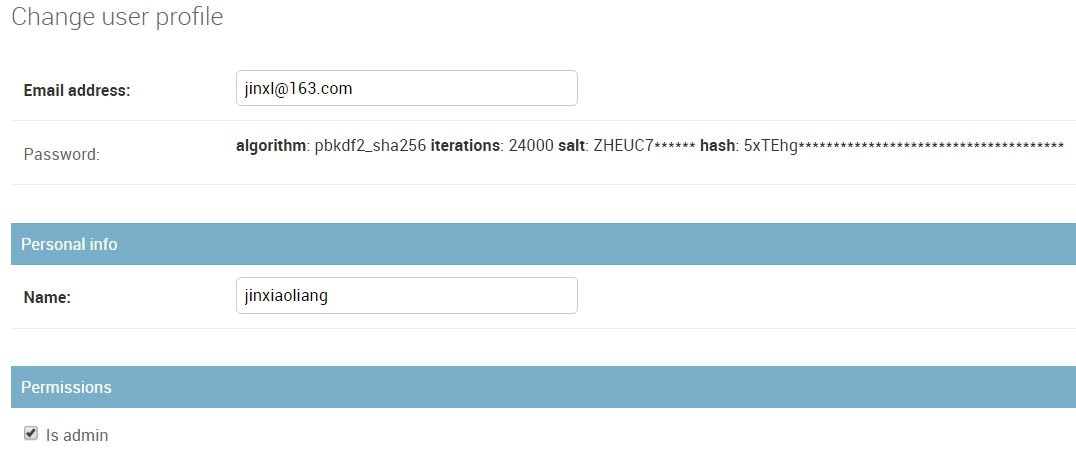
后台效果
编辑用户:
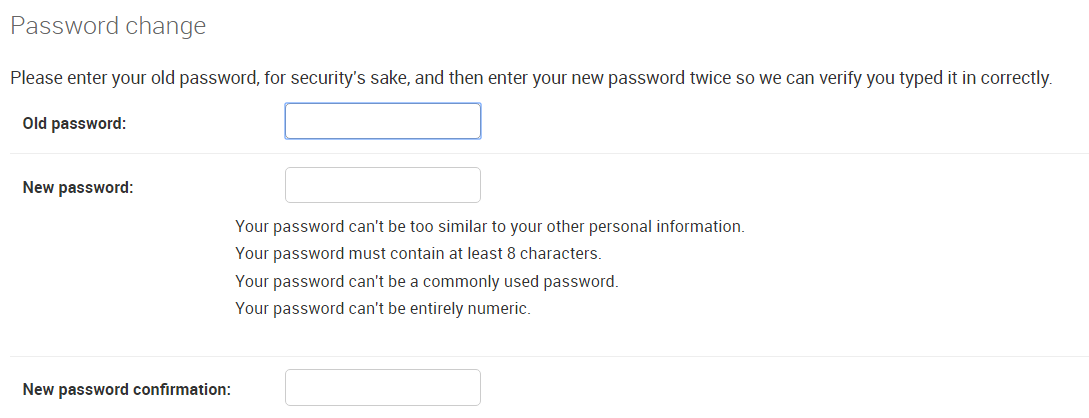
更改密码:
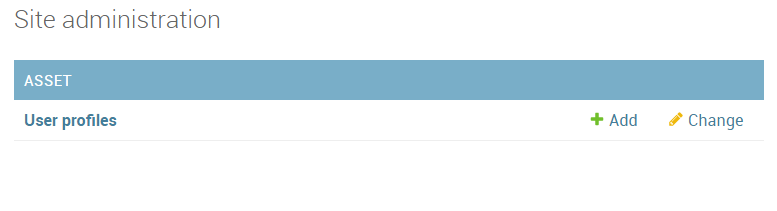
没有Group:
Django--自定义用户认证的更多相关文章
- Django自定义用户认证
自定义一个用户认证 详细参考官方文档: https://docs.djangoproject.com/en/1.9/topics/auth/customizing/#django.contrib.au ...
- CMDB资产管理系统开发【day25】:Django 自定义用户认证
官方文档:https://docs.djangoproject.com/en/1.10/topics/auth/customizing/#substituting-a-custom-user-mode ...
- Django自定义用户认证系统之自定义用户模型
参考文档:http://python.usyiyi.cn/django/topics/auth/customizing.html Django 自带的认证系统足够应付大多数情况,但你或许不打算使用现成 ...
- Django自定义用户认证系统Customizing authentication
扩展已有的用户模型Extending the existing User model 有两种方法来扩展默认的User Model而不用重写自己的模型.如果你不需要改变存储在数据库中的字段,而只是需要改 ...
- 使用django实现自定义用户认证
参考资料:https://docs.djangoproject.com/en/1.10/topics/auth/customizing/ 直接拉到最后看栗子啦 django自定义用户认证(使用自 ...
- 自定义用户认证(继承django的)
1.在app下创建一个自己用户认证文件,文件名随意,记得为.py文件 2.编辑该userauth.py文件 #!/usr/bin/env python #coding:utf-8 from djang ...
- python 全栈开发,Day79(Django的用户认证组件,分页器)
一.Django的用户认证组件 用户认证 auth模块 在进行用户登陆验证的时候,如果是自己写代码,就必须要先查询数据库,看用户输入的用户名是否存在于数据库中: 如果用户存在于数据库中,然后再验证用户 ...
- 深入一下Django的用户认证和cache
深入一下Django的用户认证和cache 用户认证 首先明白一个概念,http协议是无状态的,也就是每一次交互都是独立的,那如何让服务器和客户端进行有状态的交互呢,现在较为常见的方法就是让客户端在发 ...
- COOKIE与SESSION、Django的用户认证、From表单
一.COOKIE 与 SESSION 1.简介 1.cookie不属于http协议范围,由于http协议无法保持状态,但实际情况,我们却又需要“保持状态”,因此cookie就是在这样一个场景下诞生. ...
- Django--分页器(paginator)、Django的用户认证、Django的FORM表单
分页器(paginator) >>> from django.core.paginator import Paginator >>> objects = ['joh ...
随机推荐
- AutoFac在项目中的应用
技能大全:http://www.cnblogs.com/dunitian/p/4822808.html#skill 完整Demo:https://github.com/dunitian/LoTCode ...
- SQL Server-聚焦查询计划Stream Aggregate VS Hash Match Aggregate(二十)
前言 之前系列中在查询计划中一直出现Stream Aggregate,当时也只是做了基本了解,对于查询计划中出现的操作,我们都需要去详细研究下,只有这样才能对查询计划执行的每一步操作都了如指掌,所以才 ...
- 做一个gulp+webpack+vue的单页应用开发架子
1.目标 最近项目上的事情不多,根据我自己的开发习惯,决定开发一些简单的开发架子,方便以后事情多的时候直接套用.本文讲的一个gulp+webpack+vue的单页应用架子,想要达到的目的: 可以通过命 ...
- PHP设计模式(八)桥接模式(Bridge For PHP)
一.概述 桥接模式:将两个原本不相关的类结合在一起,然后利用两个类中的方法和属性,输出一份新的结果. 二.案例 1.模拟毛笔(转) 需求:现在需要准备三种粗细(大中小),并且有五种颜色的比 如果使用蜡 ...
- Nginx反向代理,负载均衡,redis session共享,keepalived高可用
相关知识自行搜索,直接上干货... 使用的资源: nginx主服务器一台,nginx备服务器一台,使用keepalived进行宕机切换. tomcat服务器两台,由nginx进行反向代理和负载均衡,此 ...
- Consul-template的简单应用:配置中心,服务发现与健康监测
简介 Consul-template是Consul的一个方扩展工具,通过监听Consul中的数据可以动态修改一些配置文件,大家比较热衷于应用在Nginx,HAProxy上动态配置健康状态下的客户端反向 ...
- 初识的Spring Mvc-----原理
一.Spring Mvc简介 Spring Mvc(Spring Web Mvc) 属于表现层的框架. 二.Spring结构图 Spring Mvc是Spring框架里面web模块的一部分,是在Spr ...
- Android Studio开发RecyclerView遇到的各种问题以及解决(二)
开发RecyclerView时候需要导入别人的例子,我的是从github导入的,下载下github的压缩包之后解压看你要导入的文件是priject还是Module.(一般有app文件夹的大部分是pro ...
- 使用Metrics.NET 构建 ASP.NET MVC 应用程序的性能指标
通常我们需要监测ASP.NET MVC 或 Web API 的应用程序的性能时,通常采用的是自定义性能计数器,性能计数器会引发无休止的运维问题(损坏的计数器.权限问题等).这篇文章向你介绍一个新的替代 ...
- C#将Word转换成PDF方法总结(基于Office和WPS两种方案)
有时候,我们需要在线上预览word文档,当然我们可以用NPOI抽出Word中的文字和表格,然后显示到网页上面,但是这样会丢失掉Word中原有的格式和图片.一个比较好的办法就是将word转换成pdf,然 ...