
Linux内核中的常用宏container_of
Container_of在Linux内核中是一个常用的宏,用于从包含在某个结构中的指针获得结构本身的指针,通俗地讲就是通过结构体变量中某个成员的首地址进而获得整个结构体变量的首地址。
Container_of的定义如下:
- #define container_of(ptr, type, member) ({ \
- const typeof( ((type *)0)->member ) *__mptr = (ptr); \
- (type *)( (char *)__mptr - offsetof(type,member) );})
其实它的语法很简单,只是一些指针的灵活应用,它分两步:
第一步,首先定义一个临时的数据类型(通过typeof( ((type *)0)->member )获得)与ptr相同的指针变量__mptr,然后用它来保存ptr的值。
第二步,用(char *)__mptr减去member在结构体中的偏移量,得到的值就是整个结构体变量的首地址(整个宏的返回值就是这个首地址)。
其中的语法难点就是如何得出成员相对结构体的偏移量?
通过例子说明,如清单1:
- /* linux-2.6.38.8/include/linux/compiler-gcc4.h */
- #define __compiler_offsetof(a,b) __builtin_offsetof(a,b)
- /* linux-2.6.38.8/include/linux/stddef.h */
- #undef offsetof
- #ifdef __compiler_offsetof
- #define offsetof(TYPE,MEMBER) __compiler_offsetof(TYPE,MEMBER)
- #else
- #define offsetof(TYPE, MEMBER) ((size_t) &((TYPE *)0)->MEMBER)
- #endif
- #include <stdio.h>
- struct test_struct {
- int num;
- char ch;
- float fl;
- };
- int main(void)
- {
- printf("offsetof(struct test_struct, num) = %d\n",
- offsetof(struct test_struct, num));
- printf("offsetof(struct test_struct, ch) = %d\n",
- offsetof(struct test_struct, ch));
- printf("offsetof(struct test_struct, fl) = %d\n",
- offsetof(struct test_struct, fl));
- return 0;
- }
说明,__builtin_offsetof(a,b)是GCC的内置函数,可认为它的实现与((size_t) &((TYPE *)0)->MEMBER)这段代码是一致的。
例子输出结果:
- offsetof(struct test_struct, num) = 0
- offsetof(struct test_struct, ch) = 4
- offsetof(struct test_struct, fl) = 8
其中代码难以理解的地方就是它灵活地运用了0地址。如果觉得&( (struct test_struct *)0 )->ch这样的代码不好理解,那么我们可以假设在0地址分配了一个结构体变量struct test_struct a,然后定义结构体指针变量p并指向a(struct test_struct *p = &a),如此我们就可以通过&p->ch获得成员ch的地址。由于a的首地址为0x0,所以成员ch的首地址为0x4。
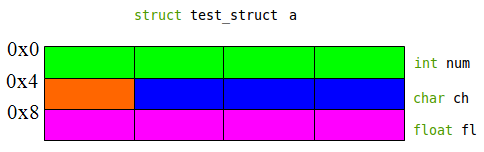
最后通过强制类型转换(size_t)把一个地址值转换为一个整数。
分析完container_of的定义,接下来举两个例子来体会一下它的使用方法。
正确的例子,如清单2:
- /* linux-2.6.38.8/include/linux/compiler-gcc4.h */
- #define __compiler_offsetof(a,b) __builtin_offsetof(a,b)
- /* linux-2.6.38.8/include/linux/stddef.h */
- #undef offsetof
- #ifdef __compiler_offsetof
- #define offsetof(TYPE,MEMBER) __compiler_offsetof(TYPE,MEMBER)
- #else
- #define offsetof(TYPE, MEMBER) ((size_t) &((TYPE *)0)->MEMBER)
- #endif
- /* linux-2.6.38.8/include/linux/kernel.h *
- * container_of - cast a member of a structure out to the containing structure
- * @ptr: the pointer to the member.
- * @type: the type of the container struct this is embedded in.
- * @member: the name of the member within the struct.
- *
- */
- #define container_of(ptr, type, member) ({ \
- const typeof( ((type *)0)->member ) *__mptr = (ptr); \
- (type *)( (char *)__mptr - offsetof(type,member) );})
- #include <stdio.h>
- struct test_struct {
- int num;
- char ch;
- float fl;
- };
- int main(void)
- {
- struct test_struct init_test_struct = { 99, 'C', 59.12 };
- char *char_ptr = &init_test_struct.ch;
- struct test_struct *test_struct = container_of(char_ptr, struct test_struct, ch);
- printf(" test_struct->num = %d\n test_struct->ch = %c\n test_struct->fl = %f\n",
- test_struct->num, test_struct->ch, test_struct->fl);
- return 0;
- }
例子输出结果:
- test_struct->num = 99
- test_struct->ch = C
- test_struct->fl = 59.119999
不适当的例子,如清单3:
- /* linux-2.6.38.8/include/linux/compiler-gcc4.h */
- #define __compiler_offsetof(a,b) __builtin_offsetof(a,b)
- /* linux-2.6.38.8/include/linux/stddef.h */
- #undef offsetof
- #ifdef __compiler_offsetof
- #define offsetof(TYPE,MEMBER) __compiler_offsetof(TYPE,MEMBER)
- #else
- #define offsetof(TYPE, MEMBER) ((size_t) &((TYPE *)0)->MEMBER)
- #endif
- /* linux-2.6.38.8/include/linux/kernel.h *
- * container_of - cast a member of a structure out to the containing structure
- * @ptr: the pointer to the member.
- * @type: the type of the container struct this is embedded in.
- * @member: the name of the member within the struct.
- *
- */
- #define container_of(ptr, type, member) ({ \
- const typeof( ((type *)0)->member ) *__mptr = (ptr); \
- (type *)( (char *)__mptr - offsetof(type,member) );})
- #include <stdio.h>
- struct test_struct {
- int num;
- char ch;
- float fl;
- };
- int main(void)
- {
- char real_ch = 'A';
- char *char_ptr = &real_ch;
- struct test_struct *test_struct = container_of(char_ptr, struct test_struct, ch);
- printf(" char_ptr = %p test_struct = %p\n\n", char_ptr, test_struct);
- printf(" test_struct->num = %d\n test_struct->ch = %c\n test_struct->fl = %f\n",
- test_struct->num, test_struct->ch, test_struct->fl);
- return 0;
- }
例子输出结果:
- char_ptr = 0xbfb72d7f test_struct = 0xbfb72d7b
- test_struct->num = -1511000897
- test_struct->ch = A
- test_struct->fl = 0.000000
注意,由于这里并没有一个具体的结构体变量,所以成员num和fl的值是不确定的。
Linux内核中的常用宏container_of的更多相关文章
- (十)Linux内核中的常用宏container_of
Container_of在Linux内核中是一个常用的宏,用于从包含在某个结构中的指针获得结构本身的指针,通俗地讲就是通过结构体变量中某个成员的首地址进而获得整个结构体变量的首地址. Containe ...
- Linux内核中的常用宏container_of其实很简单【转】
转自:http://blog.csdn.net/npy_lp/article/details/7010752 开发平台:Ubuntu11.04 编 译器:gcc version 4.5.2 (Ubun ...
- Linux内核中的常用宏container_of其实很简单
http://blog.csdn.net/npy_lp/article/details/7010752 通过一个结构体变量的地址,求该结构体的首地址. #ifndef CONTAINER_OF #de ...
- 《C预处理》Linux内核中可变参数宏的用法
http://blog.csdn.net/tankai19880619/article/details/12015305
- linux内核中的宏ffs(x)
linux内核中ffs(x)宏是平台相关的宏,在arm平台,该宏定义在 arch/arm/include/asm/bitops.h #define ffs(x) ({ unsigned long __ ...
- Linux内核中双向链表的经典实现
概要 前面一章"介绍双向链表并给出了C/C++/Java三种实现",本章继续对双向链表进行探讨,介绍的内容是Linux内核中双向链表的经典实现和用法.其中,也会涉及到Linux内核 ...
- Linux 内核中的 GCC 特性
https://www.ibm.com/developerworks/cn/linux/l-gcc-hacks/ GCC 和 Linux 是出色的组合.尽管它们是独立的软件,但是 Linux 完全依靠 ...
- 剖析linux内核中的宏---------container_of
#define container_of(ptr, type, member) ({ \ const typeof(((type *)0)->member) * __mptr = (ptr); ...
- Linux内核中常用的数据结构和算法(转)
知乎链接:https://zhuanlan.zhihu.com/p/58087261 Linux内核代码中广泛使用了数据结构和算法,其中最常用的两个是链表和红黑树. 链表 Linux内核代码大量使用了 ...
随机推荐
- 关于Hadoop之父Doug Cutting
生活中,可能所有人都间接用过他的作品,他是Lucene.Nutch .Hadoop等项目的发起人.是他,把高深莫测的搜索技术形成产品,贡献给普罗大众:还是他,打造了目前在云计算和大数据领域里如日中天的 ...
- hdu 1423 最长公共递增子序列
这题一开始把我给坑了,我还没知道LCIS的算法,然后就慢慢搞吧,幸运的是还真写出来了,只不过麻烦了一点. 我是将该题转换为多条线段相交,然后找出最多多少条不相交,并且其数值死递增的. 代码如下: #i ...
- JMS - Exceptions
The JMSException JMS defines JMSException as the root class for exceptions thrown by JMS methods. JM ...
- Centos6.5 64linux系统基础优化(一)
1 SecureCRT配色方案 http://blog.csdn.net/zklth/article/details/8937905 2 32位和64位Centos linux系统的区别及实际查看 ...
- st_mode 的位定义
先前所描述的st_mode 则定义了下列数种情况: S_IFMT 0170000 文件类型的位遮罩 S_IFSOCK 0140000 scoket S_IFLNK 0120000 符号连接 S_IFR ...
- Swift标识符和关键字
任何一种计算机语言都离不开标识符和关键字,下面我们将详细介绍Swift标识符和关键字. 标示符 标识符就是给变量.常量.方法.函数.枚举.结构体.类.协议等指定的名字.构成标识符的字母均有一定的规范, ...
- UIPickerView常见属性、常见方法(包括代理方法和数据源方法)的一些说明
一.UIPickerView 1.UIPickerView的常见属性 // 数据源(用来告诉UIPickerView有多少列多少行) @property(nonatomic,assign) id< ...
- 在String()构造器不存在的情况下自定义一个MyString()函数,实现如下内建String()方法和属性:
在String()构造器不存在的情况下自定义一个MyString()函数,实现如下内建String()方法和属性: var s = new MyString("hello"); s ...
- 用angular实时获取本地localStorage数据,实现一个模拟后台数据登入的效果
研究了一上午,终于做出了,实时获取本地localStorage来模拟注册登入~~~ <!DOCTYPE html><html><head lang="en&qu ...
- 将一个应用程序添加做成windows服务
需求来源: 在服务器端运行的一个应用程序,为完成客户端路径分析等功能: 此应用程序只需要运行着就可以,没有界面等要求: 因此,考虑把此应用程序添加到服务器端电脑管理的服务中,可以启动和停止. 这里添加 ...