
Understanding the JavaScript Engine—— two phase
Understanding the JavaScript Engine — Part 1

I have been a Ruby on Rails developer for the last 2 years. I have used JavaScript both in its vanilla form and in some frameworks. However, I learned JavaScript as most new programmers do, by going through a course, without quite understanding how the JavaScript engine works.
Before diving deep into JavaScript, I decided to take some time off and understand its core working principles. I’ll be sharing what I’ve learned so far in this, and subsequent blog posts.
First, let me define some terms you’ll come across. I’ll add examples where necessary.
Syntax Parser
When you write code, a compiler converts your code into a set of instructions that the computer can understand. Part of the compiler is what is known as a syntax parser. The syntax parser goes through your code character by character, and determines if the syntax is valid or not.
Lexical Environment
In simple terms, a Lexical environment refers to where something sits physically in your code. Where something is written gives an idea of how the computer will interpret it and how it will interact with other variables and functions e.g
function hello() {

  var greet = "Hello world"

}
In the function above, we can say that var greet sits lexically in the function.
Execution Context
This is a wrapper that helps manage the code that is running. Looking at the gif below, you can see there’s an execution context stack and in it, we have a Global execution context. When functionA() is called, it is added to the Stack meaning that functionA() is currently being executed. The same goes for functionB().
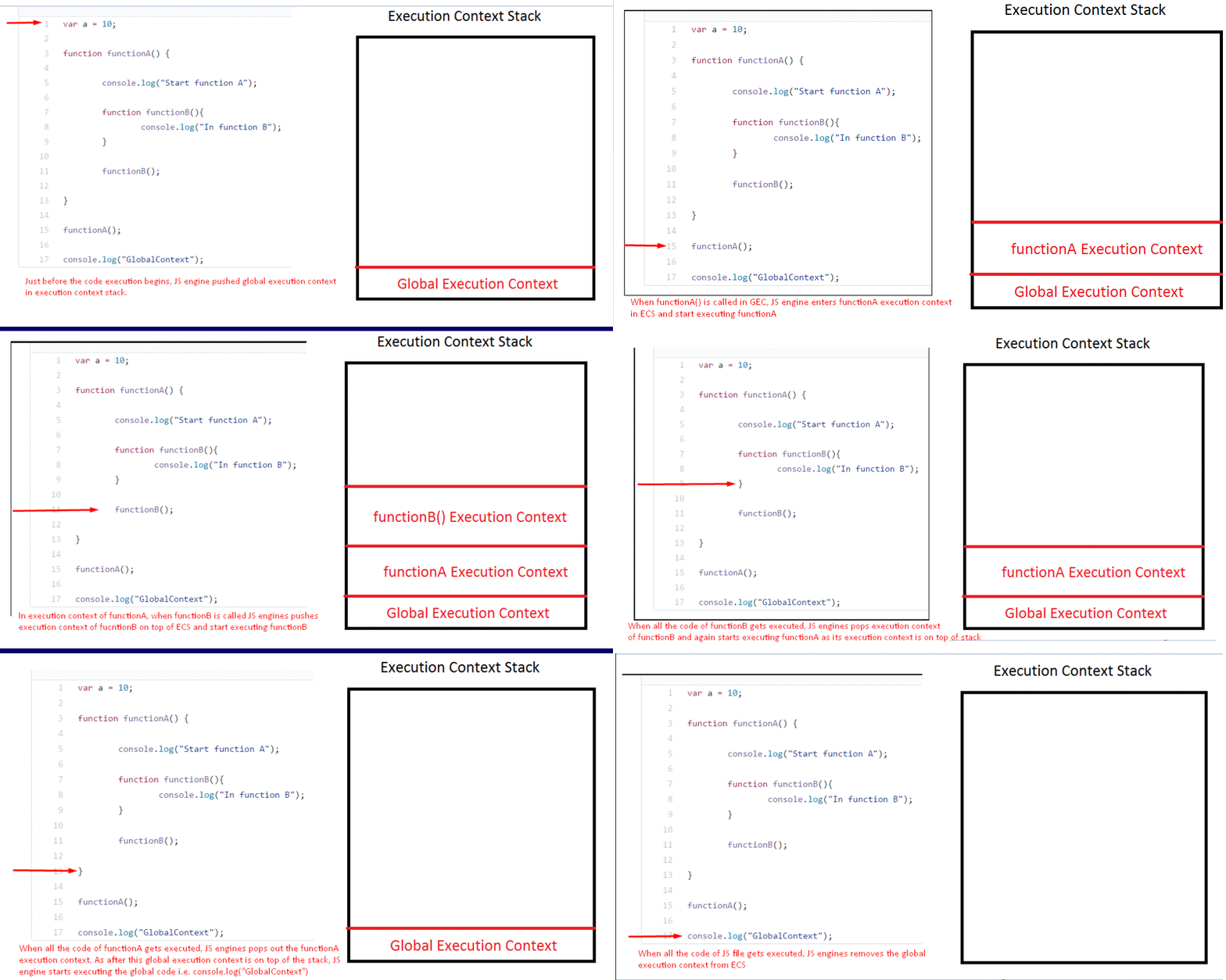
The execution context is created in two phases:
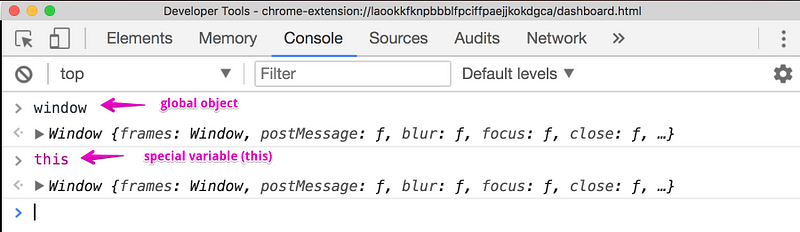
The first phase is called the creation phase. The global execution context creates two things for you, that you don’t have in your code; a global object(window) and a special variable called this. The window object is a global object inside a browser. This object is different depending on whether you are using node or running JavaScript on the server. But there is always a global object when you’re running JavaScript. Take a look at the following image from a browser console:
When you create a variable and function that is not inside a function, those variables and functions get attached to the global object.
var name = "Debby";

function greet() {

  console.log("Hello", name)

}
If you run the above JavaScript code in the browser and you inspect the global object, you will see that the variable and the function were added to it.
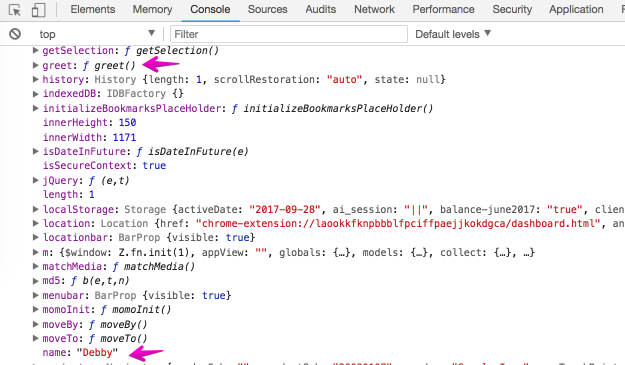
During the creation phase, the syntax parser recognizes where you have defined variables and functions. It therefore sets up memory space for the variables and functions. It’s not actually moving code to the top of the page. What this means is that before your code begins to be executed line by line, the JavaScript engine has already set aside memory space for the variables and functions that you’ve written. This is what is called Hoisting.
The next phase is the execution phase, where assignments are made. When the JavaScript engine sets up memory space for variables, it doesn’t know which values will be stored in them. Therefore, it puts a placeholder called undefined. That placeholder means; I don’t know what this value is yet. All variables in JavaScript are initially set to undefined while functions sit in memory in their entirety. This is why it’s possible to declare a variable without assigning it and the JavaScript engine will not throw any error.
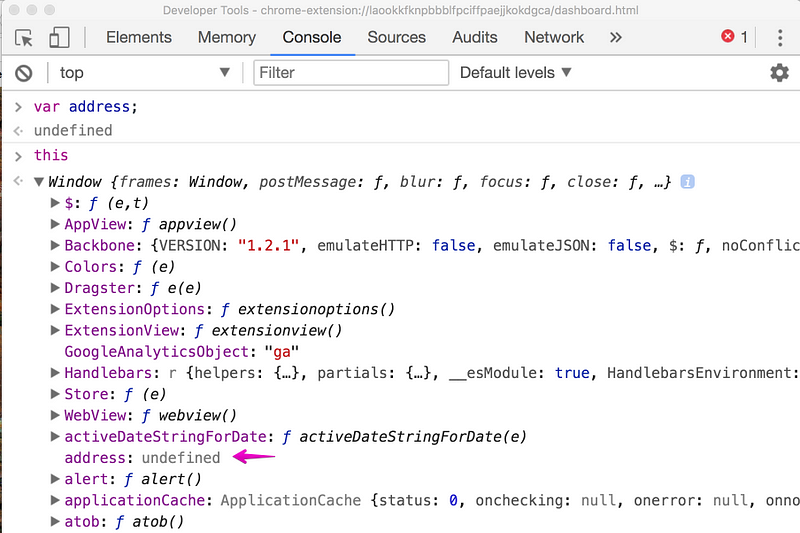
This is just a brief introduction to how the JavaScript engine executes the code you write. To know more, you can use the resources below:
JavaScript: Understanding the Weird Parts by Anthony Alicea on Udemy.Execution context, Scope chain and JavaScript internals by Rupesh Mishra.
Understanding the JavaScript Engine—— two phase的更多相关文章
- 「2014-3-13」Javascript Engine, Java VM, Python interpreter, PyPy – a glance
提要: url anchor (ajax) => javascript engine (1~4 articles) => java VM vs. python interpreter =& ...
- Javascript Engine, Java VM, Python interpreter, PyPy – a glance
提要: url anchor (ajax) => javascript engine (1~4 articles) => java VM vs. python interpreter =& ...
- Browser Render Engine & Javascript Engine
Browser Render Engine Programming Language Open Source Javascript Engine Comparation for CSS Compati ...
- JavaScript Engine 可视化
JavaScript Engine 可视化 图解 JavaScript Engine JavaScript 可视化 (7 部曲) ️ JavaScript Visualized: Event Loop
- Understanding Delegated JavaScript Events
While I ended up using a CSS-only implementation for this pen, I started by writing it mostly using ...
- v8 javascript engine
https://code.google.com/p/v8-wiki/wiki/BuildingWithGYP vs2013git v8 http://github.com/v8/v8-git-mirr ...
- Attacking JavaScript Engines: A case study of JavaScriptCore and CVE-2016-4622(转)
转:http://phrack.org/papers/attacking_javascript_engines.html Title : Attacking JavaScript Engines: A ...
- Bring JavaScript to your Java enterprise with Vert.x
转自:https://opensource.com/article/18/4/benefits-javascript-vertx If you are a Java programmer, chanc ...
- JavaScript Interview Questions: Event Delegation and This
David Posin helps you land that next programming position by understanding important JavaScript fund ...
随机推荐
- React篇章-React 组件
<!DOCTYPE html> <html> <head> <meta charset="UTF-8" /> <title&g ...
- 【伪暴力+智商剪枝】Codeforces Round #489 (Div. 2) D
失踪人口突然回归……orz.题解还是有必要写的,虽然估计只有自己(?自己也不一定看得懂)看得懂. 题目链接:http://codeforces.com/contest/992/problem/D 题目 ...
- Redis学习篇(一)之String类型及其操作
SET 作用: 设置key对应的值, 返回ok 语法: SET key value [EX seconds] [PX milliseconds] [NX] [XX] 如果key已经存在,同名会产生覆盖 ...
- FastReport.Net使用:[10]报表栏目说明
报表栏目说明 报表标题(Report Title):在每个报表的开始时打印. 报表合计区(Report Summary):在报表结尾时打印,显示在最后一行数据后,页脚前. 页眉(Page Header ...
- 【Pollard-rho算法】【DFS】poj2429 GCD & LCM Inverse
题意:给你一两个数m和n,它们分别是某对数A,B的gcd和lcm,让你求出一对使得A+B最小的A,B. n/m的所有质因子中,一定有一部分是只在A中的,另一部分是只在B中的. 于是对n/m质因子分解后 ...
- Java并发(七):双重检验锁定DCL
双重检查锁定(Double Check Lock,DCL) 1.懒汉式单例模式,无法保证线程安全: public class Singleton { private static Singleton ...
- bzoj 4397: [Usaco2015 dec]Breed Counting -- 前缀和
4397: [Usaco2015 dec]Breed Counting Time Limit: 10 Sec Memory Limit: 128 MB Description Farmer John ...
- 清北学堂学习总结 day2 字符串 练习
1.hash表(哈希表) codevs 2147 数星星--简单哈希 时间限制: 3 s 空间限制: 64000 KB 题目等级 : 钻石 Diamond 题目描述 Description 小明 ...
- 安装myeclipse的常见问题
1.破解myeclipse网站: https://jingyan.baidu.com/article/acf728fd49519ff8e410a361.html
- Codeforces Round #299 (Div. 2) B. Tavas and SaDDas 水题
B. Tavas and SaDDas Time Limit: 1 Sec Memory Limit: 256 MB 题目连接 http://codeforces.com/contest/535/p ...