
iOS开发多线程篇—线程安全
iOS开发多线程篇—线程安全
一、多线程的安全隐患
资源共享
1块资源可能会被多个线程共享,也就是多个线程可能会访问同一块资源
比如多个线程访问同一个对象、同一个变量、同一个文件
当多个线程访问同一块资源时,很容易引发数据错乱和数据安全问题
示例一:

示例二:
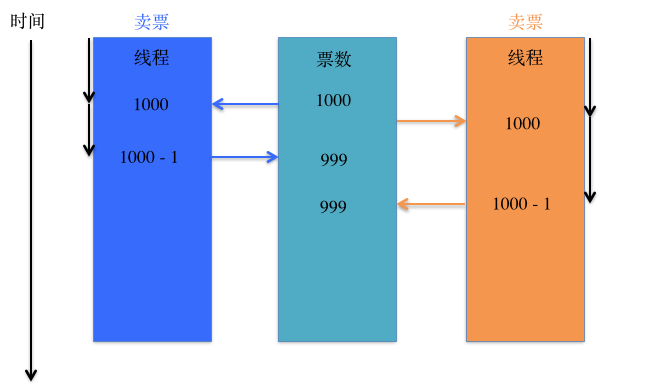
问题代码:
 //

 //  YYViewController.m

 //  05-线程安全

 //

 //  Created by apple on 14-6-23.

 //  Copyright (c) 2014年 itcase. All rights reserved.

 //

 #import "YYViewController.h"

 @interface YYViewController ()

 //剩余票数

 @property(nonatomic,assign) int leftTicketsCount;

 @property(nonatomic,strong)NSThread *thread1;

 @property(nonatomic,strong)NSThread *thread2;

 @property(nonatomic,strong)NSThread *thread3;

 @end

 @implementation YYViewController

 - (void)viewDidLoad

 {

     [super viewDidLoad];

     //默认有20张票

     self.leftTicketsCount=;

     //开启多个线程,模拟售票员售票

     self.thread1=[[NSThread alloc]initWithTarget:self selector:@selector(sellTickets) object:nil];

     self.thread1.name=@"售票员A";

     self.thread2=[[NSThread alloc]initWithTarget:self selector:@selector(sellTickets) object:nil];

     self.thread2.name=@"售票员B";

     self.thread3=[[NSThread alloc]initWithTarget:self selector:@selector(sellTickets) object:nil];

     self.thread3.name=@"售票员C";

 }

 -(void)sellTickets

 {

     while () {

         //1.先检查票数

         int count=self.leftTicketsCount;

         if (count>) {

             //暂停一段时间

             [NSThread sleepForTimeInterval:0.002];

             //2.票数-1

            self.leftTicketsCount= count-;

             //获取当前线程

             NSThread *current=[NSThread currentThread];

             NSLog(@"%@--卖了一张票,还剩余%d张票",current,self.leftTicketsCount);

         }else

         {

             //退出线程

             [NSThread exit];

         }

     }

 }

 -(void)touchesBegan:(NSSet *)touches withEvent:(UIEvent *)event

 {

     //开启线程

    [self.thread1 start];

     [self.thread2 start];

     [self.thread3 start];

 }

 @end
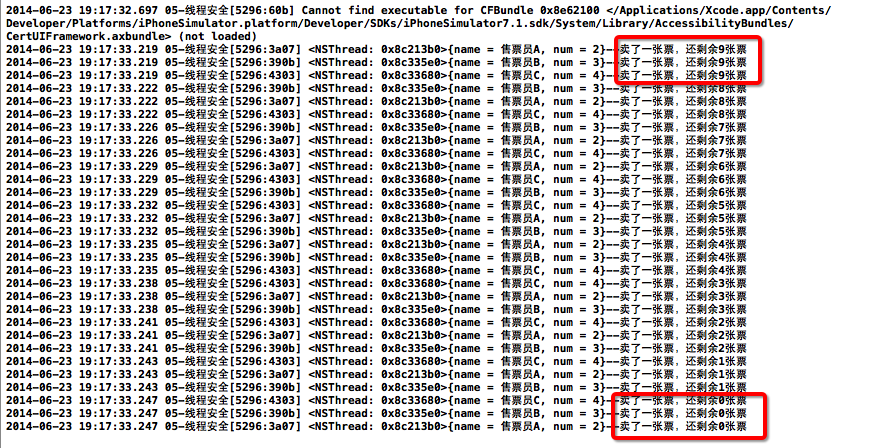
打印结果:
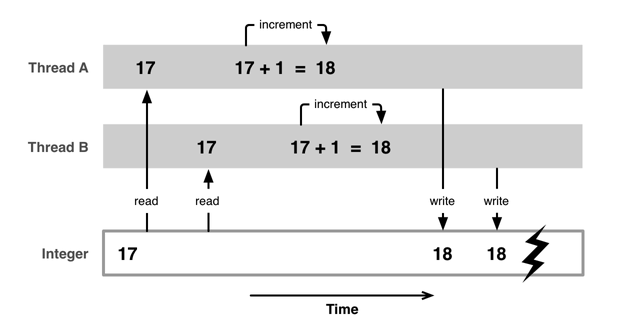
二、安全隐患分析

三、如何解决
互斥锁使用格式
@synchronized(锁对象) { // 需要锁定的代码 }
注意:锁定1份代码只用1把锁,用多把锁是无效的
代码示例:
 //

 //  YYViewController.m

 //  05-线程安全

 //

 //  Created by apple on 14-6-23.

 //  Copyright (c) 2014年 itcase. All rights reserved.

 //

 #import "YYViewController.h"

 @interface YYViewController ()

 //剩余票数

 @property(nonatomic,assign) int leftTicketsCount;

 @property(nonatomic,strong)NSThread *thread1;

 @property(nonatomic,strong)NSThread *thread2;

 @property(nonatomic,strong)NSThread *thread3;

 @end

 @implementation YYViewController

 - (void)viewDidLoad

 {

     [super viewDidLoad];

     //默认有20张票

     self.leftTicketsCount=;

     //开启多个线程,模拟售票员售票

     self.thread1=[[NSThread alloc]initWithTarget:self selector:@selector(sellTickets) object:nil];

     self.thread1.name=@"售票员A";

     self.thread2=[[NSThread alloc]initWithTarget:self selector:@selector(sellTickets) object:nil];

     self.thread2.name=@"售票员B";

     self.thread3=[[NSThread alloc]initWithTarget:self selector:@selector(sellTickets) object:nil];

     self.thread3.name=@"售票员C";

 }

 -(void)sellTickets

 {

     while () {

         @synchronized(self){//只能加一把锁

         //1.先检查票数

         int count=self.leftTicketsCount;

         if (count>) {

             //暂停一段时间

             [NSThread sleepForTimeInterval:0.002];

             //2.票数-1

            self.leftTicketsCount= count-;

             //获取当前线程

             NSThread *current=[NSThread currentThread];

             NSLog(@"%@--卖了一张票,还剩余%d张票",current,self.leftTicketsCount);

         }else

         {

             //退出线程

             [NSThread exit];

         }

         }

     }

 }

 -(void)touchesBegan:(NSSet *)touches withEvent:(UIEvent *)event

 {

     //开启线程

    [self.thread1 start];

     [self.thread2 start];

     [self.thread3 start];

 }

 @end
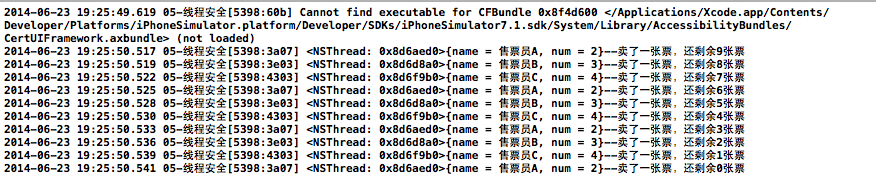
执行效果图
互斥锁的优缺点
优点:能有效防止因多线程抢夺资源造成的数据安全问题
缺点:需要消耗大量的CPU资源
互斥锁的使用前提:多条线程抢夺同一块资源
相关专业术语:线程同步,多条线程按顺序地执行任务
互斥锁,就是使用了线程同步技术
四:原子和非原子属性
OC在定义属性时有nonatomic和atomic两种选择
atomic:原子属性,为setter方法加锁(默认就是atomic)
nonatomic:非原子属性,不会为setter方法加锁
atomic加锁原理
 @property (assign, atomic) int age;

 - (void)setAge:(int)age

 {

     @synchronized(self) {

        _age = age;

     }

 }
原子和非原子属性的选择
nonatomic和atomic对比
atomic:线程安全,需要消耗大量的资源
nonatomic:非线程安全,适合内存小的移动设备
iOS开发的建议
所有属性都声明为nonatomic
尽量避免多线程抢夺同一块资源
尽量将加锁、资源抢夺的业务逻辑交给服务器端处理,减小移动客户端的压力
iOS开发多线程篇—线程安全的更多相关文章
- iOS开发多线程篇—线程间的通信
iOS开发多线程篇—线程间的通信 一.简单说明 线程间通信:在1个进程中,线程往往不是孤立存在的,多个线程之间需要经常进行通信 线程间通信的体现 1个线程传递数据给另1个线程 在1个线程中执行完特定任 ...
- iOS开发多线程篇—线程的状态
iOS开发多线程篇—线程的状态 一.简单介绍 线程的创建: self.thread=[[NSThread alloc]initWithTarget:self selector:@selector(te ...
- iOS开发多线程篇—线程间的通信(转)
这里转载 给自己一个备份 一.简单说明 线程间通信:在1个进程中,线程往往不是孤立存在的,多个线程之间需要经常进行通信 线程间通信的体现 1个线程传递数据给另1个线程 在1个线程中执行完特定任务后,转 ...
- iOS开发多线程篇 04 —线程间的通信
iOS开发多线程篇—线程间的通信 一.简单说明 线程间通信:在1个进程中,线程往往不是孤立存在的,多个线程之间需要经常进行通信 线程间通信的体现 1个线程传递数据给另1个线程 在1个线程中执行完特定任 ...
- iOS开发多线程篇 03 —线程安全
iOS开发多线程篇—线程安全 一.多线程的安全隐患 资源共享 1块资源可能会被多个线程共享,也就是多个线程可能会访问同一块资源 比如多个线程访问同一个对象.同一个变量.同一个文件 当多个线程访问同一块 ...
- iOS开发多线程篇—创建线程
iOS开发多线程篇—创建线程 一.创建和启动线程简单说明 一个NSThread对象就代表一条线程 创建.启动线程 (1) NSThread *thread = [[NSThread alloc] in ...
- iOS开发多线程篇—多线程简单介绍
iOS开发多线程篇—多线程简单介绍 一.进程和线程 1.什么是进程 进程是指在系统中正在运行的一个应用程序 每个进程之间是独立的,每个进程均运行在其专用且受保护的内存空间内 比如同时打开QQ.Xcod ...
- iOS 开发多线程篇—GCD的常见用法
iOS开发多线程篇—GCD的常见用法 一.延迟执行 1.介绍 iOS常见的延时执行有2种方式 (1)调用NSObject的方法 [self performSelector:@selector(run) ...
- iOS开发多线程篇—GCD介绍
iOS开发多线程篇—GCD介绍 一.简单介绍 1.什么是GCD? 全称是Grand Central Dispatch,可译为“牛逼的中枢调度器” 纯C语言,提供了非常多强大的函数 2.GCD的优势 G ...
随机推荐
- 第18/24周 乐观并发控制(Optimistic Concurrency)
大家好,欢迎回到性能调优培训.上个星期我通过讨论悲观并发模式拉开了第5个月培训的序幕.今天我们继续,讨论下乐观并发模式(Optimistic Concurrency). 行版本(Row Version ...
- HT for Web的HTML5树组件延迟加载技术实现
HT for Web的HTML5树组件有延迟加载的功能,这个功能对于那些需要从服务器读取具有层级依赖关系数据时非常有用,需要获取数据的时候再向服务器发起请求,这样可减轻服务器压力,同时也减少了浏览器的 ...
- Java Lambda表达式初探
Java Lambda表达式初探 前言 本文受启发于Trisha Gee在JavaOne 2016的主题演讲Refactoring to Java 8. Java 8已经发行两年多,但很多人仍然在使用 ...
- NOIP模拟赛-旅行者问题 解题报告
旅行者问题 [问题描述] lahub是一个旅行者的粉丝,他想成为一个真正的旅行者,所以他计划开始一段旅行.lahub想去参观n个目的地(都在一条直道上).lahub在起点开始他的旅行.第i个目的地和起 ...
- Auto Mapper02《demo》
学习这些基本上网上都有一些教程或者别人做的demo,我是按照这个方式去学习的.先做个demo,学会如何去使用它,接着去慢慢的了解它是如何的运行的,理解里面的一些基本的基础知识.我们不可以再像 ...
- 使用CSS3对链接颜色与下划线进行优化
效果: 代码: <!DOCTYPE html> <html lang="en"> <head> <meta charset="U ...
- 【原创】Windows平台搭建Kafka源代码开发环境(Eclipse版本)
最近在研究Kafka源代码,需要自己搭建一个开发环境.官网上给出的提示略显简单,照着做了一遍也碰到了一些问题.特此记录下来. 开发环境: Oracle Java 1.7_u71 + Eclipse 4 ...
- UrlRewriter实现.NET的URL重写
首先下载安装MSDNURLRewriting.msi,链接地址http://pan.baidu.com/s/1c0pRnTu. 在安装目录下找到RewriterTester\bin\URLRewrit ...
- oracle分组查询实例ORA-00979和ORA-00937错误分析
select J.ZWJGH,J.CZZXBH,J.JZZT,J.CWNY,J.JZPZH sum(J.FSE)<!-- 聚合函数字段没在分组条件中--> from JZPZXX J &l ...
- ahjesus 前端缓存原理 转载
LAMP缓存图 从图中我们可以看到网站缓存主要分为五部分 服务器缓存:主要是基于web反向代理的静态服务器nginx和squid,还有apache2的mod_proxy和mod_cache模 浏览器缓 ...