
Power Network(网络流最大流 & dinic算法 + 优化)
| Time Limit: 2000MS | Memory Limit: 32768K | |
| Total Submissions: 24019 | Accepted: 12540 |
Description
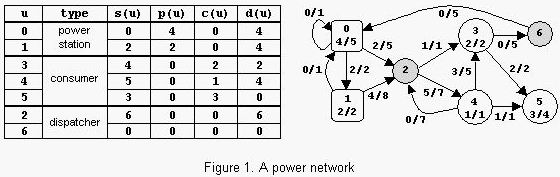
An example is in figure 1. The label x/y of power station u shows that p(u)=x and pmax(u)=y. The label x/y of consumer u shows that c(u)=x and cmax(u)=y. The label x/y of power transport line (u,v) shows that l(u,v)=x and lmax(u,v)=y. The power consumed is Con=6. Notice that there are other possible states of the network but the value of Con cannot exceed 6.
Input
Output
Sample Input
2 1 1 2 (0,1)20 (1,0)10 (0)15 (1)20

7 2 3 13 (0,0)1 (0,1)2 (0,2)5 (1,0)1 (1,2)8 (2,3)1 (2,4)7

         (3,5)2 (3,6)5 (4,2)7 (4,3)5 (4,5)1 (6,0)5

         (0)5 (1)2 (3)2 (4)1 (5)4
Sample Output
15

6
Hint
Source
 #include<iostream>

 #include<stdio.h>

 #include<string.h>

 using namespace std;

 #define MAXN 202

 const int INT_MAX = 0x3f3f3f3f ;

 int s, t;

 int n, np, nc, m;

 char str[];

 int c[MAXN][MAXN];

 int f[MAXN][MAXN];

 int e[MAXN];

 int h[MAXN];

 void push(int u, int v)

 {

     int d = min(e[u], c[u][v] - f[u][v]);

     f[u][v] += d;

     f[v][u] = -f[u][v];

     e[u] -= d;

     e[v] += d;

 }

 bool relabel(int u)

 {

     int mh = INT_MAX;

     for(int i=; i<n+; i++)

     {

         if(c[u][i] > f[u][i])

             mh = min(mh, h[i]);

     }

     if(mh == INT_MAX)

         return false; //残留网络中无从u出发的路

     h[u] = mh + ;

     for(int i=; i<n+; i++)

     {

         if(e[u] == ) //已无余流,不需再次push

             break;

         if(h[i] == mh && c[u][i] > f[u][i]) //push的条件

             push(u, i);

     }

     return true;

 }

 void init_preflow()

 {

     memset(h, , sizeof(h));

     memset(e, , sizeof(e));

     h[s] = n+;

     for(int i=; i<n+; i++)

     {

         if(c[s][i] == )

             continue;

         f[s][i] = c[s][i];

         f[i][s] = -f[s][i];

         e[i] = c[s][i];

         e[s] -= c[s][i];

     }

 }

 void push_relabel()

 {

     init_preflow();

     bool flag = true; //表示是否还有relabel操作

     while(flag)

     {

         flag = false;

         for(int i=; i<n; i++)

             if(e[i] > )

                 flag = flag || relabel(i);

     }

 }

 int main()

 {

     while(scanf("%d%d%d%d", &n, &np, &nc, &m) != EOF)

     {

         s = n; t = n+;

         memset(c, , sizeof(c));

         memset(f, , sizeof(f));

         while(m--)

         {

             scanf("%s", &str);

             int u=, v=, z=;

             sscanf(str, "(%d,%d)%d", &u, &v, &z);

             c[u][v] = z;

         }

         for(int i=; i<np+nc; i++)

         {

             scanf("%s", &str);

             int u=, z=;

             sscanf(str, "(%d)%d", &u, &z);

             if(i < np)

                 c[s][u] = z;

             else if(i >= np && i < np + nc)

                 c[u][t] = z;

         }

         push_relabel();

         printf("%d\n", e[t]);

     }

 }
dinic递归 110ms / 非递归 110 或 94 ms:http://hefeijack.iteye.com/blog/1885944
dinic 63ms/SAP 63 ms:http://www.cnblogs.com/kuangbin/archive/2012/09/11/2680908.html
dinic 63ms :http://blog.csdn.net/u011721440/article/details/38611197
初学者可以先去poj1273试试水=。=
这道题只要加一个 源点 和 汇点 , 就万事大吉了。
自己写了一遍,用dinic的递归形式,一开始tle,但就加了一句话,813msAC,
貌似是一种优化,但为啥不清楚。
 #include<stdio.h>

 #include<string.h>

 #include<queue>

 #include<algorithm>

 using namespace std;

 const int M =  , inf = 0x3f3f3f3f ;

 int m , n ;

 int map[M][M] ;

 int dis[M];

 bool bfs ()

 {

     queue <int> q ;

     while (!q.empty ())

         q.pop () ;

     memset (dis , 0xff , sizeof(dis)) ;

     dis[] =  ;

     q.push () ;

     while (!q.empty () ) {

         int u = q.front () ;

         q.pop () ;

         for (int v =  ; v <= n ; v++) {

             if (map[u][v] && dis[v] == -) {

                 dis[v] = dis[u] +  ;

                 q.push (v) ;

             }

         }

     }

     if (dis[n] > )

         return true ;

     return false ;

 }

 int find (int u , int low)

 {

     int a =  ;

     if (u == n)

         return low ;

     for (int v =  ; v <= n ; v++) {

         if (map[u][v] && dis[v] == dis[u] +  && (a = find (v , min(map[u][v] , low)))) {

             map[u][v] -= a ;

             map[v][u] += a ;

             return a ;

         }

     }

     dis[u] = - ;//就这句

     return  ;

 }

 int main ()

 {

     //freopen ("b.txt" , "r" , stdin) ;

     int u , v , w ;

     int ans ;

     while (~ scanf ("%d%d" , &m , &n)) {

         memset (map ,  , sizeof(map)) ;

         while (m--) {

             scanf ("%d%d%d" , &u , &v , &w) ;

             map[u][v] += w ;

         }

         int maxn =  ;

         while (bfs()) {

             if (ans = find( , inf))

                 maxn += ans ;

         }

         printf ("%d\n" , maxn) ;

     }

     return  ;

 }
用邻接表可以进一步优化(但上面那句话仍要加):因为用矩阵的话在find 和 bfs 时找点都要遍历一遍所有的点,但用邻接表的话可以很快找到。
110msAC:
 #include<stdio.h>

 #include<string.h>

 #include<queue>

 #include<algorithm>

 using namespace std;

 const int M =  , inf = 0x3f3f3f3f ;

 struct edge

 {

     int u , v , time_u ;

     int w ;

 }e[M * M * ];

 int n , np , nc , m ;

 int src , des ;

 int cnt =  ;

 int dis[M] ;

 char st[] ;

 int head[M * M * ] ;

 void addedge (int u , int v , int w)

 {

     e[cnt].u = u ; e[cnt].v = v ; e[cnt].w = w ; e[cnt].time_u = head[u] ;

     head[u] = cnt++ ;

     e[cnt].v = u ; e[cnt].u = v ; e[cnt].w =  ; e[cnt].time_u = head[v] ;

     head[v] = cnt++ ;

 }

 bool bfs ()

 {

     queue <int> q ;

     while (!q.empty ())

         q.pop () ;

     memset (dis , - , sizeof(dis)) ;

     dis[src] =  ;

     q.push (src) ;

     while (!q.empty ()) {

         int u = q.front () ;

         q.pop () ;

         for (int i = head[u] ; i != - ; i = e[i].time_u) {

             int v = e[i].v ;

             if (dis[v] == - && e[i].w > ) {

                 dis[v] = dis[u] +  ;

                 q.push (v) ;

             }

         }

     }

     if (dis[des] > )

         return true ;

     return false ;

 }

 int find (int u , int low)

 {

     int a =  ;

     if (u == des)

         return low ;

     for (int i = head[u] ; i != - ; i = e[i].time_u) {

         int v = e[i].v ;

         if (e[i].w >  && dis[v] == dis[u] +  && (a = find(v , min (low , e[i].w)))) {

             e[i].w -= a ;

             e[i^].w += a ;

             return a ;

         }

     }

     dis[u] = -  ;

     return false ;

 }

 int main ()

 {

    // freopen ("a.txt" , "r" , stdin) ;

     int u , v , w ;

     while (~ scanf ("%d%d%d%d" , &n , &np , &nc , &m)) {

         src = n ;

         des = n +  ;

         cnt =  ;

         memset (head , - , sizeof(head)) ;

         while (m--) {

             scanf ("%s" , st) ;

             sscanf (st , "(%d,%d)%d" , &u , &v , &w) ;

             addedge(u , v , w) ;

         }

         while (np--) {

             scanf ("%s" , st) ;

             sscanf (st , "(%d)%d" , &v , &w) ;

             addedge (src , v , w) ;

         }

         while (nc--) {

             scanf ("%s" , st) ;

             sscanf (st , "(%d)%d" , &u , &w) ;

             addedge (u , des , w) ;

         }

         int ans =  , res =  ;

         while (bfs()) {

             while () {

                 if (ans = find(src , inf))

                     res += ans ;

                 else

                     break ;

             }

         }

         printf ("%d\n" , res) ;

     }

     return  ;

 }
head[u]用来存放点u最新出现的时间 ,感觉和tarjan算法中的dfn[u]差不多;
time_u则保存上一次点u出现的时间 。
Power Network(网络流最大流 & dinic算法 + 优化)的更多相关文章
- POJ训练计划1459_Power Network(网络流最大流/Dinic)
解题报告 这题建模实在是好建.,,好贱.., 给前向星给跪了,纯dinic的前向星居然TLE,sad.,,回头看看优化,.. 矩阵跑过了.2A,sad,,, /******************** ...
- 网络流最大流——dinic算法
前言 网络流问题是一个很深奥的问题,对应也有许多很优秀的算法.但是本文只会讲述dinic算法 最近写了好多网络流的题目,想想看还是写一篇来总结一下网络流和dinic算法以免以后自己忘了... 网络流问 ...
- [讲解]网络流最大流dinic算法
网络流最大流算法dinic ps:本文章不适合萌新,我写这个主要是为了复习一些细节,概念介绍比较模糊,建议多刷题去理解 例题:codevs草地排水,方格取数 [抒情一下] 虽然老师说这个多半不考,但是 ...
- POJ 1459 Power Network(网络流 最大流 多起点,多汇点)
Power Network Time Limit: 2000MS Memory Limit: 32768K Total Submissions: 22987 Accepted: 12039 D ...
- POJ1459 Power Network 网络流 最大流
原文链接http://www.cnblogs.com/zhouzhendong/p/8326021.html 题目传送门 - POJ1459 题意概括 多组数据. 对于每一组数据,首先一个数n,表示有 ...
- 网络流——最大流Dinic算法
前言 突然发现到了新的一年什么东西好像就都不会了凉凉 算法步骤 建残量网络图 在残量网络图上跑增广路 重复1直到没有增广路(注意一个残量网络图要尽量把价值都用完,不然会浪费建图的时间) 代码实现 #i ...
- 网络流之最大流Dinic算法模版
/* 网络流之最大流Dinic算法模版 */ #include <cstring> #include <cstdio> #include <queue> using ...
- hdu-3572 Task Schedule---最大流判断满流+dinic算法
题目链接: http://acm.hdu.edu.cn/showproblem.php?pid=3572 题目大意: 给N个任务,M台机器.每个任务有最早才能开始做的时间S,deadline E,和持 ...
- 网络流(最大流-Dinic算法)
摘自https://www.cnblogs.com/SYCstudio/p/7260613.html 网络流定义 在图论中,网络流(Network flow)是指在一个每条边都有容量(Capacity ...
随机推荐
- 喝咖啡写脚本,顺便再加一点点CSS语法糖 1.选择环境
经过对前端开发的初步了解,大体上发现了以下几点,前端开发需要使用脚本语言,主要是JavaScript,需要Html,需要CSS,这些东西相信很多人已经很熟了.但是仅仅只是学习一点简单的JS,配合Htm ...
- [codevs 1051]接龙游戏(栈)
题目:http://codevs.cn/problem/1051/ 分析: 当然单词查找树是可以的,但这题有更为简便的方法.可以先按字典序排序,然后弄一个栈,如果当前字串可以接到栈顶元素的后面,那么当 ...
- shell中的流程控制
一.if的使用 判断磁盘使用率,如果超过要求值就直接报警 数据库备份 apache服务器启动检测(nmap工具需要安装) 多重条件判断 二.case的使用 三.for使用 字符串循环,in后面的内容以 ...
- android学习——Android Studio下创建menu布局文件
一.问题: android studio项目中没有看到menu文件夹: 在android studio项目中想要添加menu布局文件,一开始我的做法是:直接在res文件夹右键选择xml文件来添加,如下 ...
- javaee添加验证码
package com.zh.code; import java.awt.Color; import java.awt.Font; import java.awt.Graphics; import j ...
- DELETE和DELETE FROM有什么区别
你如果只针对表进行删除,则一样. 但是如果需要联合其他表,则需要使用from 例如 delete tb1 from tb1 m where id in (select id from tb2) 我的习 ...
- 状态压缩dp问题
问题:Ignatius has just come back school from the 30th ACM/ICPC. Now he has a lot of homework to do. Ev ...
- jdbcTemplate的配置
相关jar 包 package sfk.bbs.test.springjsbctempletTest; import static org.junit.Assert.*; import java.sq ...
- poj 1845 数论综合
题意:求A^B的所有因数的和 mod 9901 sol:一开始毫无思路,因为很多定理都不知道-_-|| 1. 整数的唯一分解定理: 任意正整数都有且只有一种方式写出其素因子的乘积表达式. A=(p1^ ...
- jsp学习(三)
<%@page contentType="text/html;charset=gbk"%> <html> <body> <font siz ...