
深度学习基础 Probabilistic Graphical Models | Statistical and Algorithmic Foundations of Deep Learning
原文链接:小样本学习与智能前沿

Probabilistic Graphical Models
Statistical and Algorithmic Foundations of Deep Learning
Author: Eric Xing
01 An overview of DL components
Historical remarks: early days of neural networks
我们知道生物神经元是这样的:
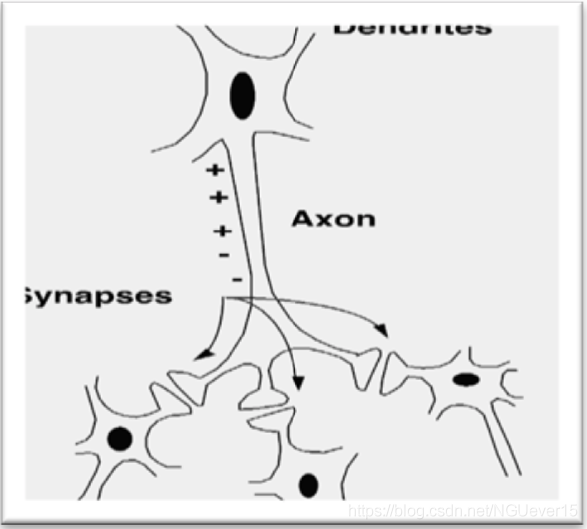
上游细胞通过轴突(Axon)将神经递质传送给下游细胞的树突。 人工智能受到该原理的启发,是按照下图来构造人工神经元(或者是感知器)的。
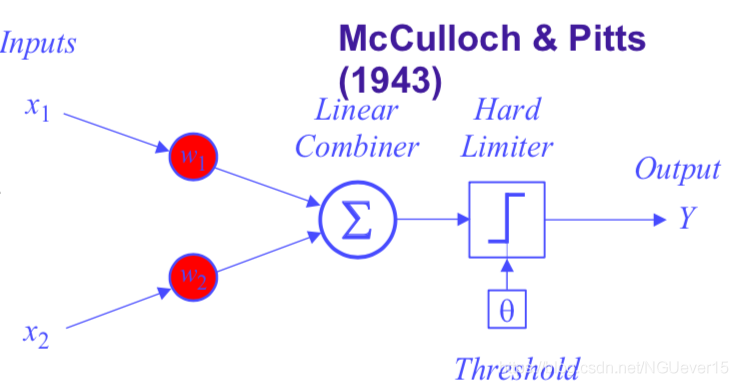
类似的,生物神经网络 —— > 人工神经网络


Reverse-mode automatic differentiation (aka backpropagation)
下面我们来看看具体的感知器学习算法。
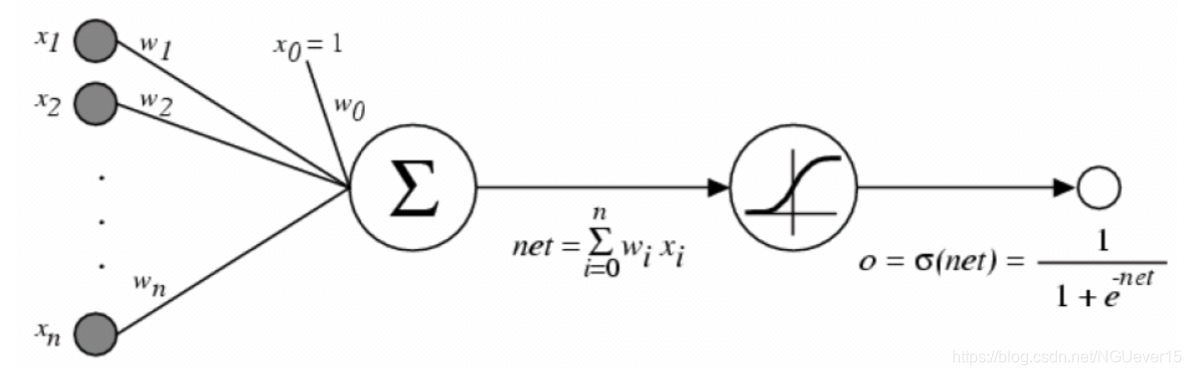
假设这是一个回归问题x->y,\(y = f(x)+\eta\)$, 则目标函数为

为了求出该函数的解,我们需要对其求导,具体的:
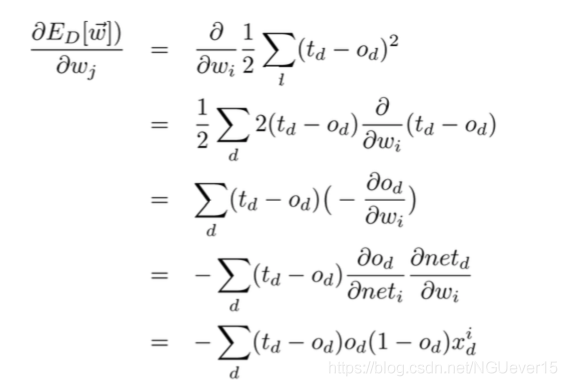
其中
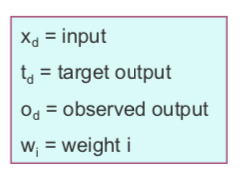
由此\(w\)的更新公式为:

下面我们来说说神经网络模型:
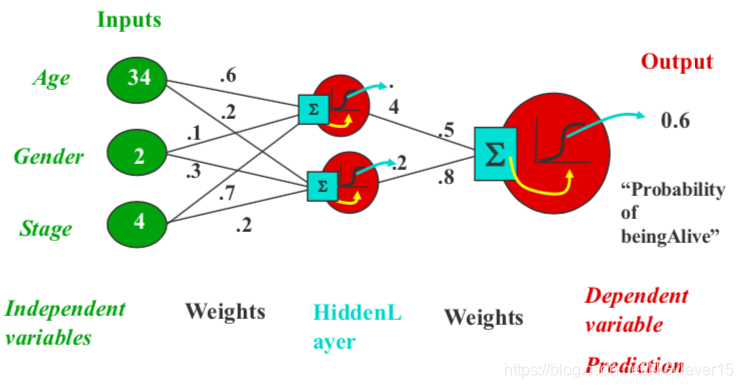
其中,隐藏单元没有目标。
人工神经网络不过是可以由计算图表示的复杂功能组成。
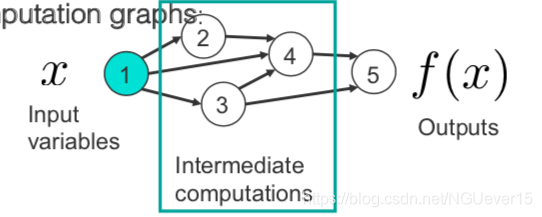
通过应用链式规则并使用反向累积,我们得到:

该算法通常称为反向传播。 如果某些功能是随机的怎么办?使用随机反向传播!现代软件包可以自动执行此操作(稍后再介绍)
Modern building blocks: units, layers, activations functions, loss functions, etc.
常用激活函数:
- Linear and ReLU
- Sigmoid and tanh
- Etc.
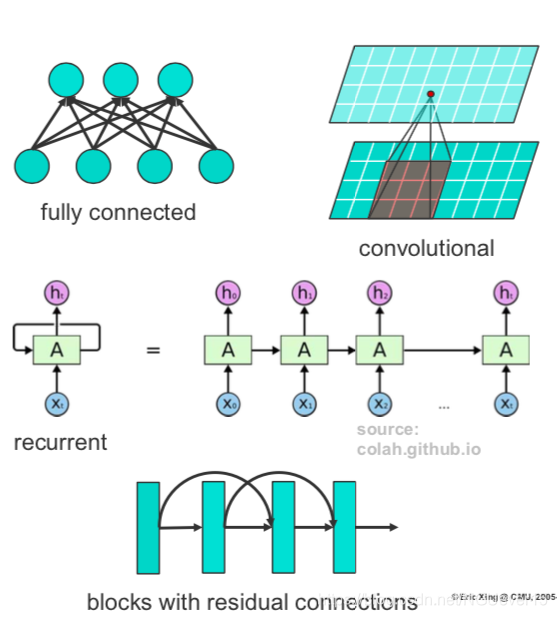
网络层:
- Fully connected
- Convolutional & pooling
- Recurrent
- ResNets
- Etc.
-
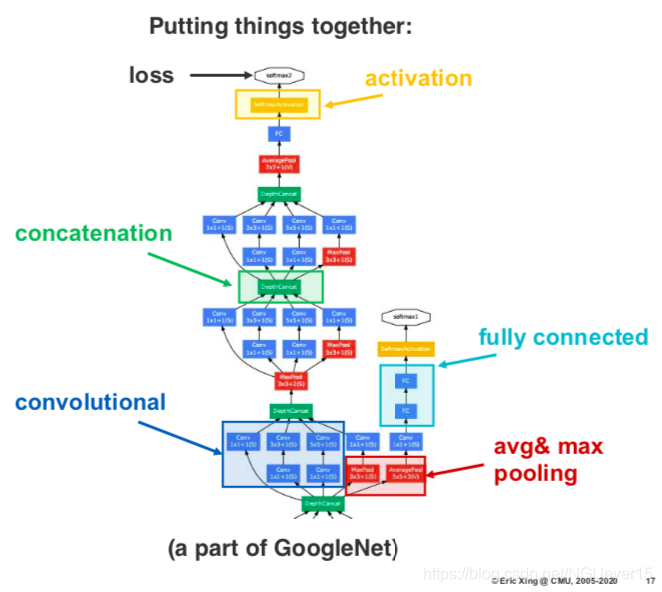
也就是说基本构成要素的可以任意组合,如果有多种损失功能的话,可以实现多目标预测和转移学习等。 只要有足够的数据,更深的架构就会不断改进。
Feature learning
成功学习中间表示[Lee et al ICML 2009,Lee et al NIPS 2009]
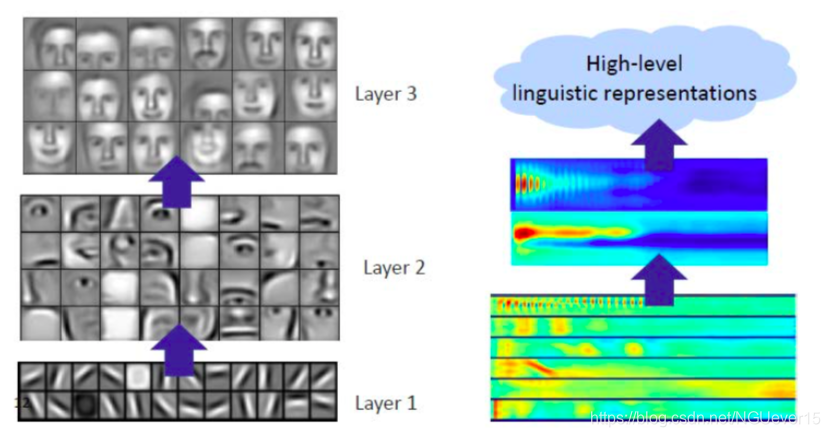
表示学习:网络学习越来越多的抽象数据表示形式,这些数据被“解开”,即可以进行线性分离。
02 Similarities and differences between GMs and NNs
Graphical models vs. computational graphs
Graphical models:
- 用于以图形形式编码有意义的知识和相关的不确定性的表示形式
- 学习和推理基于经过充分研究(依赖于结构)的技术(例如EM,消息传递,VI,MCMC等)的丰富工具箱
- 图形代表模型
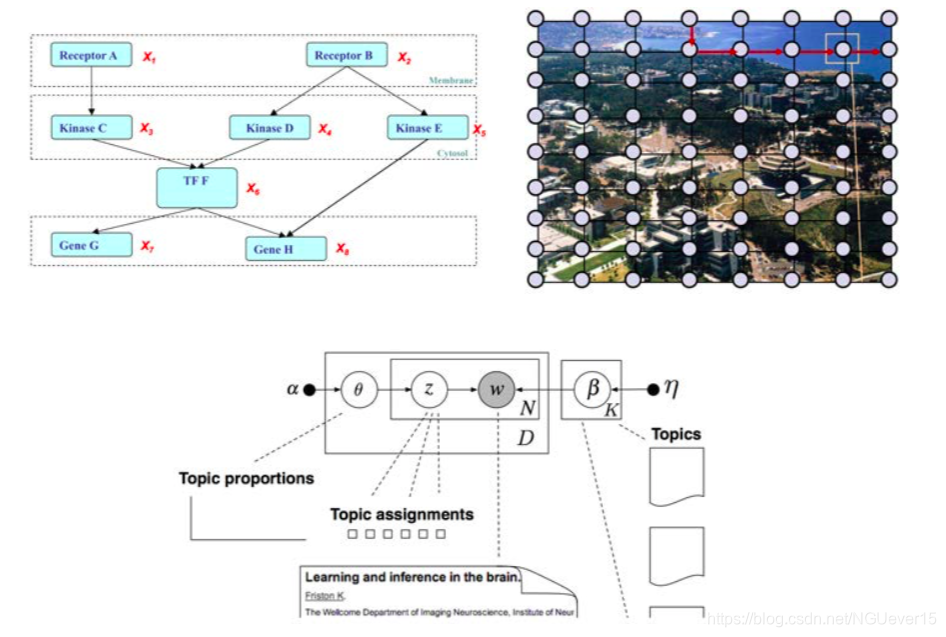
Utility of the graph - 一种用于从局部结构综合全局损失函数的工具(潜在功能,特征功能等)
- 一种设计合理有效的推理算法的工具(总和,均值场等)
- 激发近似和惩罚的工具(结构化MF,树近似等)
- 用于监视理论和经验行为以及推理准确性的工具
Utility of the loss function
- 学习算法和模型质量的主要衡量指标
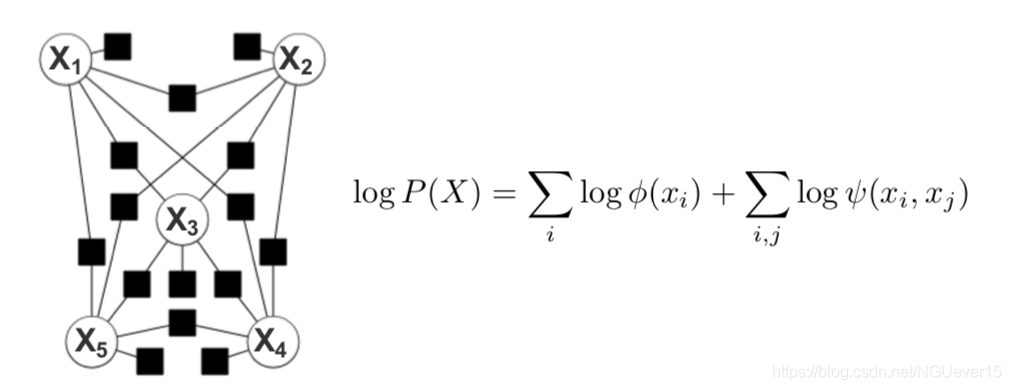
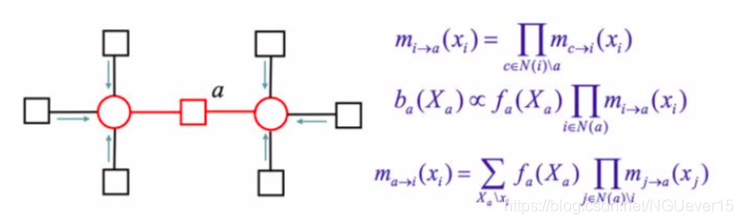
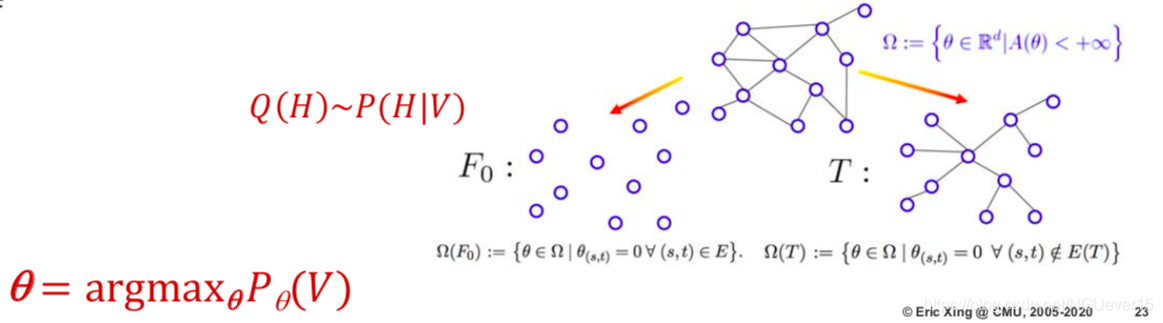
Deep neural networks :
- 学习有助于最终指标上的计算和性能的表示形式(中间表示形式不保证一定有意义)
- 学习主要基于梯度下降法(aka反向传播);推论通常是微不足道的,并通过“向前传递”完成
- 图形代表计算
Utility of the network
- 概念上综合复杂决策假设的工具(分阶段的投影和聚合)
- 用于组织计算操作的工具(潜在状态的分阶段更新)
- 用于设计加工步骤和计算模块的工具(逐层并行化)
- 在评估DL推理算法方面没有明显的用途
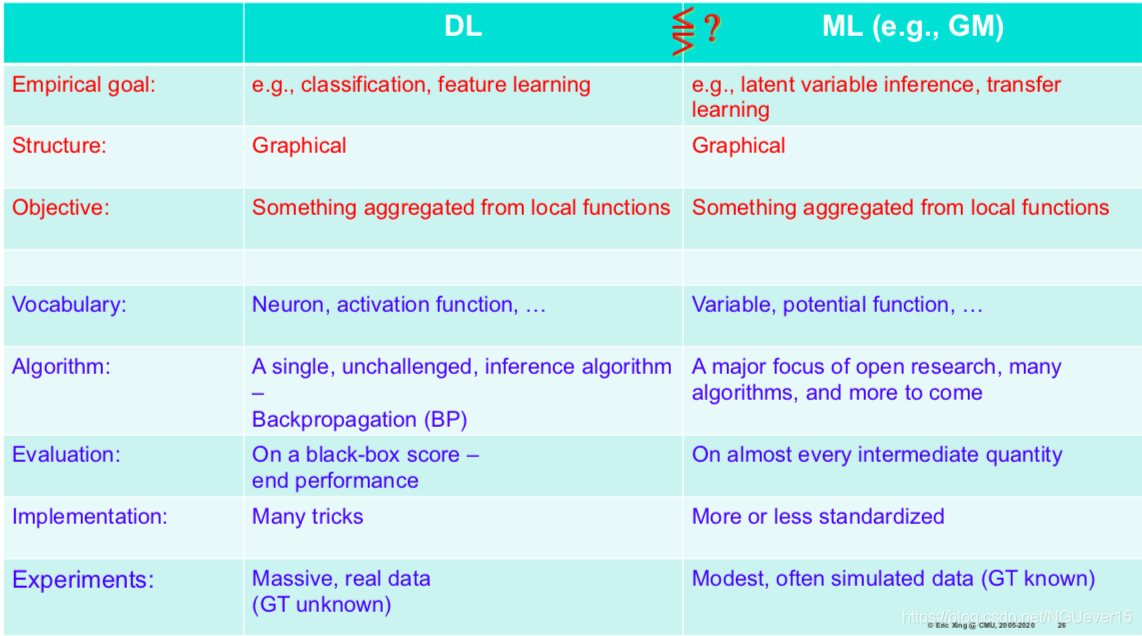
到目前为止,图形模型是概率分布的表示,而神经网络是函数近似器(无概率含义)。有些神经网络实际上是图形模型(即单位/神经元代表随机变量):
- 玻尔兹曼机器Boltzmann machines (Hinton&Sejnowsky,1983)
- 受限制的玻尔兹曼机器Restricted Boltzmann machines(Smolensky,1986)
- Sigmoid信念网络的学习和推理Learning and Inference in sigmoid belief networks(Neal,1992)
- 深度信念网络中的快速学习Fast learning in deep belief networks(Hinton,Osindero,Teh,2006年)
- 深度玻尔兹曼机器Deep Boltzmann machines(Salakhutdinov和Hinton,2009年)
接下来我们会逐一介绍他们。
I: Restricted Boltzmann Machines
受限玻尔兹曼机器,缩写为RBM。 RBM是用二部图(bi-partite graph)表示的马尔可夫随机场,图的一层/部分中的所有节点都连接到另一层中的所有节点; 没有层间连接。
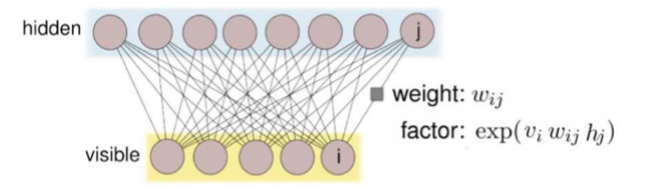
联合分布为:

单个数据点的对数似然度(不可观察的边际被边缘化):

对数似然比的梯度 模型参数:

对数似然比的梯度 参数(替代形式):

两种期望都可以通过抽样来近似, 从后部采样是准确的(RBM在给定的h上分解)。 通过MCMC从关节进行采样(例如,吉布斯采样)
在神经网络文献中:
- 计算第一项称为钳位/唤醒/正相(网络是“清醒的”,因为它取决于可见变量)
- 计算第二项称为非固定/睡眠/自由/负相(该网络“处于睡眠状态”,因为它对关节的可见变量进行了采样;比喻,它梦见了可见的输入)
通过随机梯度下降(SGD)优化给定数据的模型对数似然来完成学习, 第二项(负相)的估计严重依赖于马尔可夫链的混合特性,这经常导致收敛缓慢并且需要额外的计算。
II: Sigmoid Belief Networks
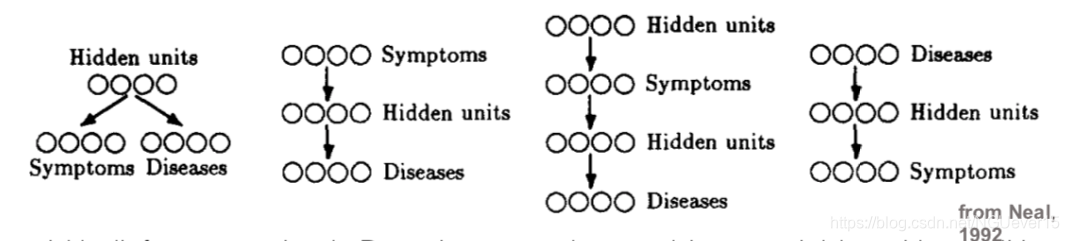
Sigimoid信念网是简单的贝叶斯网络,其二进制变量的条件概率由Sigmoid函数表示:

贝叶斯网络表现出一种称为“解释效应”的现象:如果A与C相关,则B与C相关的机会减少。 ⇒在给定C的情况下A和B相互关联。
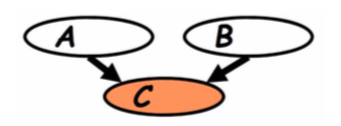
值得注意的是, 由于“解释效应”,当我们以信念网络中的可见层为条件时,所有隐藏变量都将成为因变量。
Sigmoid Belief Networks as graphical models
尼尔提出了用于学习和推理的蒙特卡洛方法(尼尔,1992年):
RBMs are infinite belief networks
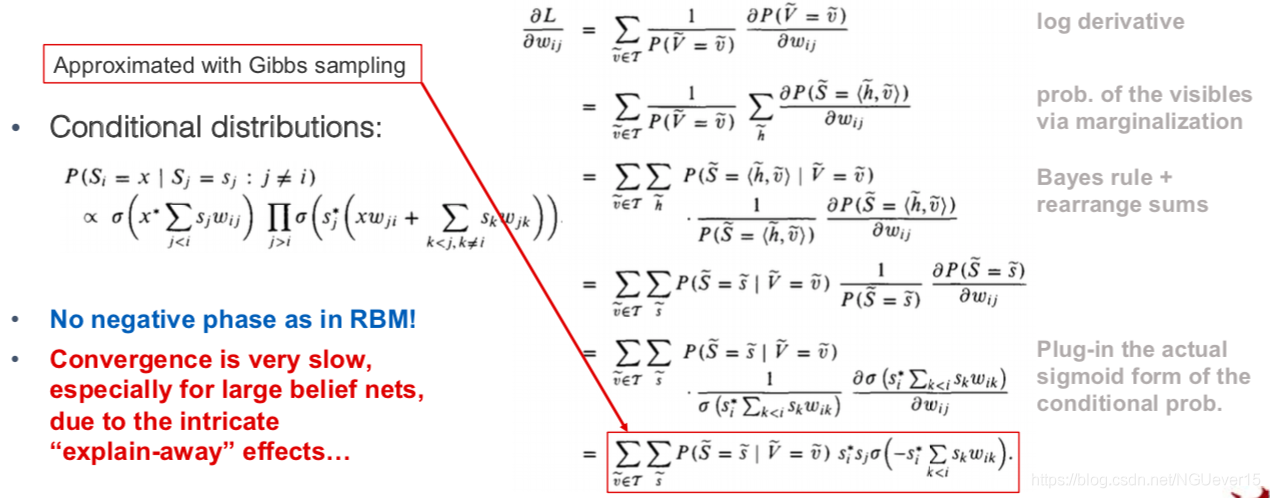
要对模型参数进行梯度更新,我们需要通过采样计算期望值。
- 我们可以在第一阶段从后验中精确采样
- 我们运行吉布斯块抽样,以从联合分布中近似抽取样本
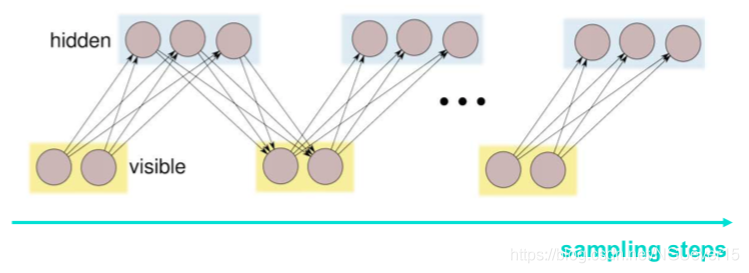
条件分布\(p(v| h)\)和\(p(h|v)\)用sigmoid表示, 因此,我们可以将以RBM表示的联合分布中的Gibbs采样视为无限深的Sigmoid信念网络中的自顶向下传播!
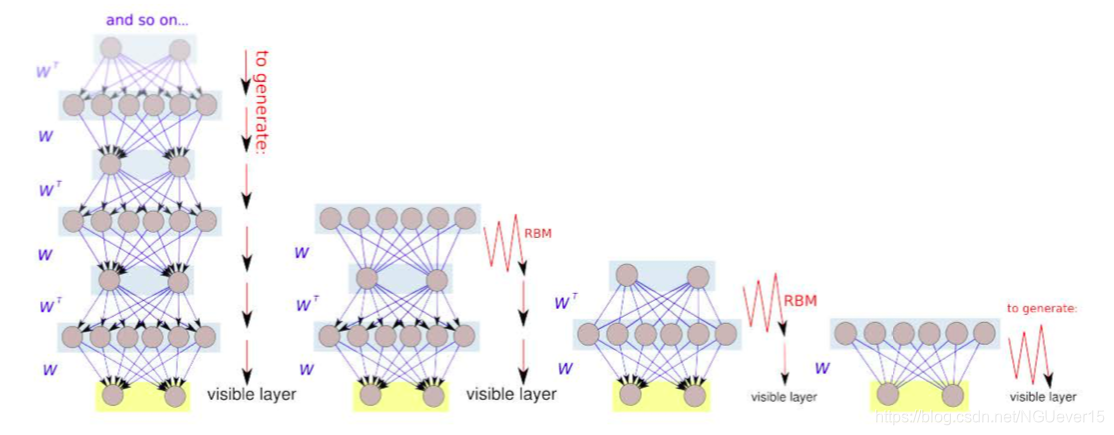
RBM等效于无限深的信念网络。当我们训练RBM时,实际上就是在训练一个无限深的简短网, 只是所有图层的权重都捆绑在一起。如果权重在某种程度上“统一”,我们将获得一个深度信仰网络。
Deep Belief Networks and Boltzmann Machines
III: Deep Belief Nets
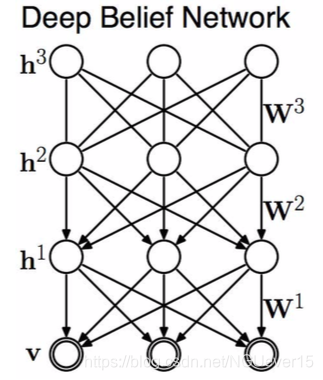
DBN是混合图形模型(链图)。其联合概率分布可表示为:

其中蕴含的挑战:
由于explaining away effect,因此在DBN中进行精确推断是有问题的
训练分两个阶段进行:
- 贪婪的预训练+临时微调; 没有适当的联合训练
- 近似推断为前馈(自下而上)
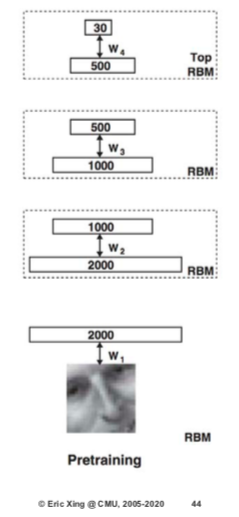
Layer-wise pre-training
- 预训练并冻结第一个RBM
- 在顶部堆叠另一个RBM并对其进行训练
- 重物2层以上的重物保持绑紧状态
- 我们重复此过程:预训练和解开
Fine-tuning
- Pre-training is quite ad-hoc(特别指定) and is unlikely to lead to a good probabilistic model per se
- However, the layers of representations could perhaps be useful for some other downstream tasks!
- We can further “fine-tune” a pre-trained DBN for some other task
Setting A: Unsupervised learning (DBN → autoencoder)
- Pre-train a stack of RBMs in a greedy layer-wise fashion
- “Unroll” the RBMs to create an autoencoder
- Fine-tune the parameters by optimizing the reconstruction error(重构误差)
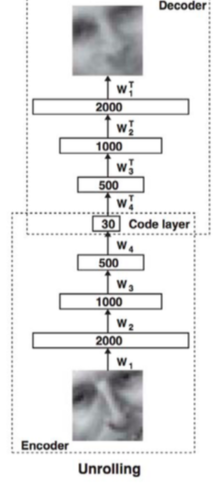
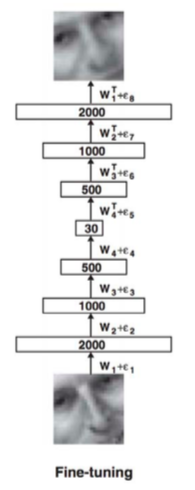
Setting B: Supervised learning (DBN → classifier)
- Pre-train a stack of RBMs in a greedy layer-wise fashion
- “Unroll” the RBMs to create a feedforward classifier
- Fine-tune the parameters by optimizing the reconstruction error
Deep Belief Nets and Boltzmann Machines
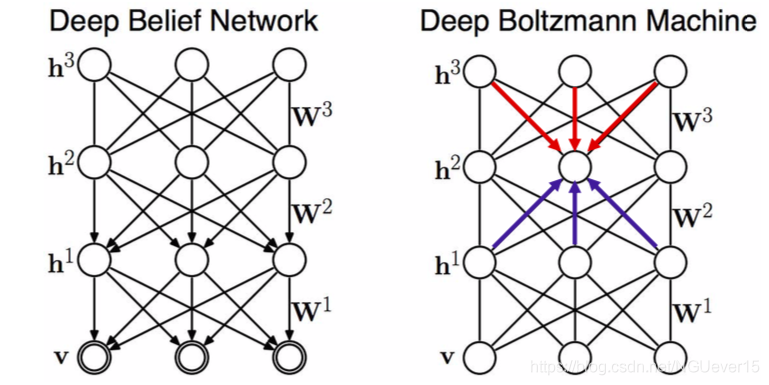
DBMs are fully un-directed models (Markov random fields). Can be trained similarly as RBMs via MCMC (Hinton & Sejnowski, 1983). Use a variational approximation(变分近似) of the data distribution for faster training (Salakhutdinov & Hinton, 2009). Similarly, can be used to initialize other networks for downstream tasks
A few critical points to note about all these models:
- The primary goal of deep generative models is to represent the distribution of the observable variables. Adding layers of hidden variables allows to represent increasingly more complex distributions.
- Hidden variables are secondary (auxiliary) elements used to facilitate learning of complex dependencies between the observables.
- Training of the model is ad-hoc, but what matters is the quality of learned hidden representations.
- Representations are judged by their usefulness on a downstream task (the probabilistic meaning of the model is often discarded at the end).
- In contrast, classical graphical models are often concerned with the correctness of learning and inference of all variables
Conclusion
- DL & GM: the fields are similar in the beginning (structure, energy, etc.), and then diverge to their own signature pipelines
- DL: most effort is directed to comparing different architectures and their components (models are driven by evaluating empirical performance on a downstream tasks)
- DL models are good at learning robust hierarchical representations from the data and suitable for simple reasoning (call it “low-level cognition”)
- GM: the effort is directed towards improving inference accuracy and convergence speed
- GMs are best for provably correct inference and suitable for high-level complex reasoning tasks (call it “high-level cognition”) 推理任务
- Convergence of both fields is very promising!
03 Combining DL methods and GMs
Using outputs of NNs as inputs to GMs
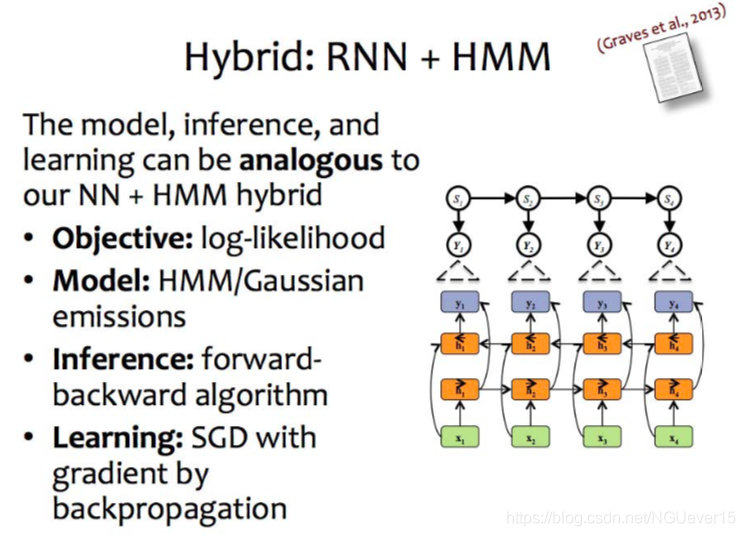
Combining sequential NNs and GMs
HMM:隐马尔可夫
Hybrid NNs + conditional GMs
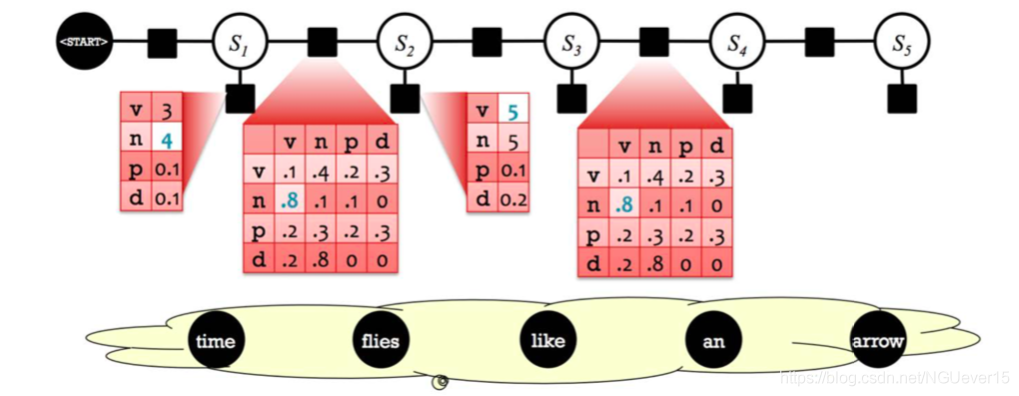
In a standard CRF条件随机场, each of the factor cells is a parameter.
In a hybrid model, these values are computed by a neural network.
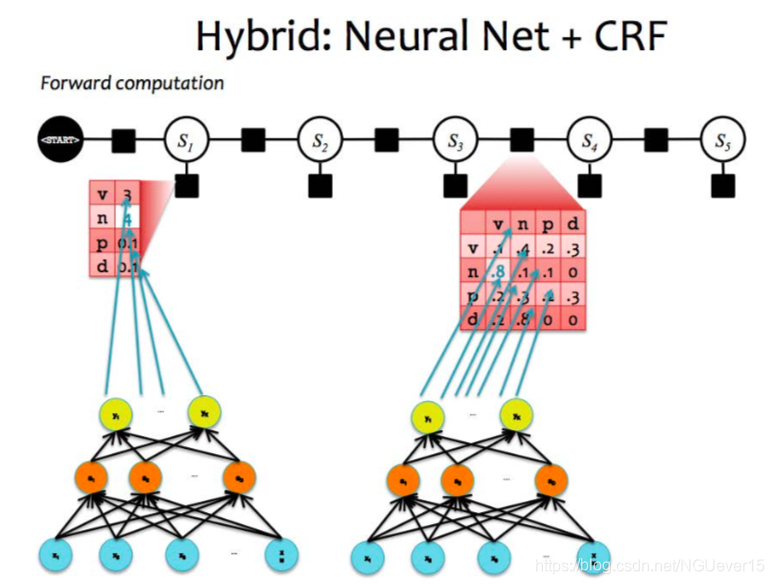
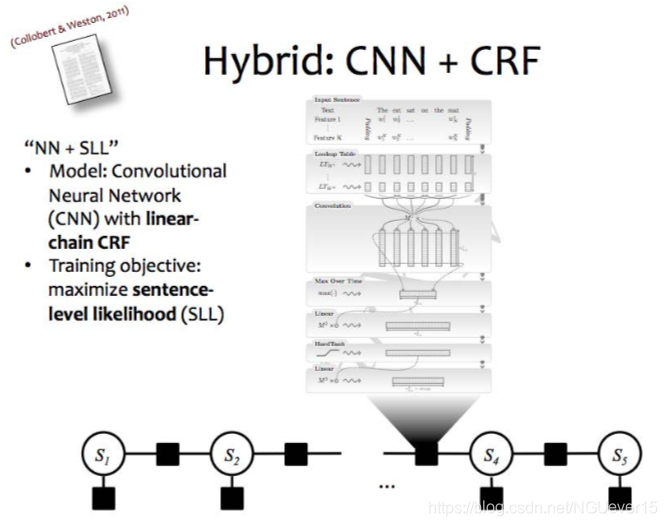
GMs with potential functions represented by NNs q NNs with structured outputs
Using GMs as Prediction Explanations
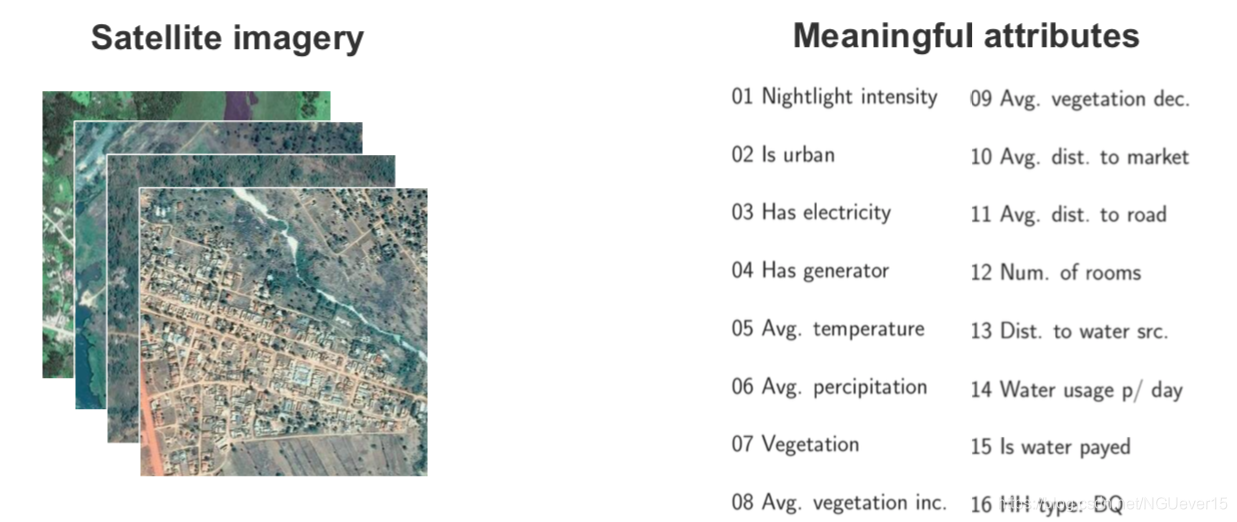
!!!! How do we build a powerful predictive model whose predictions we can interpret in terms of semantically meaningful features?
Contextual Explanation Networks (CENs)
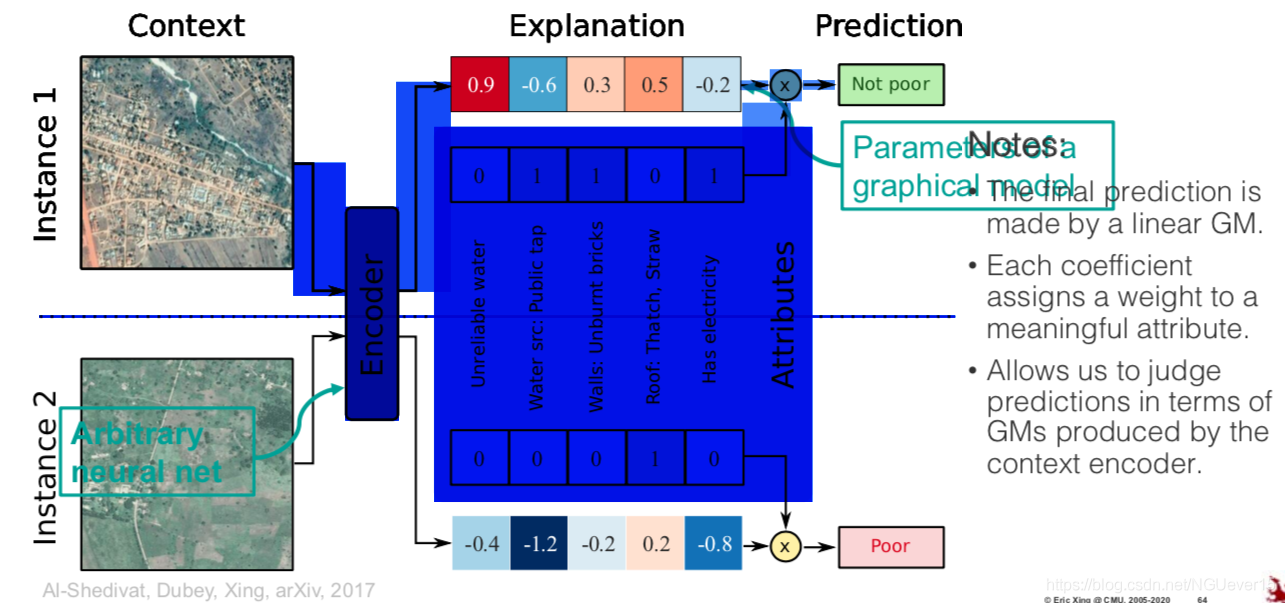
- The final prediction is made by a linear GM.
- Each coefficient assigns a weight to a meaningful attribute.
- Allows us to judge predictions in terms of GMs produced by the context encoder.
CEN: Implementation Details
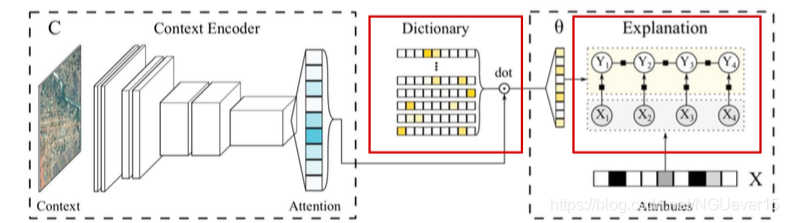
Workflow:
- Maintain a (sparse稀疏) dictionary of GM parameters.
- Process complex inputs (images, text, time series, etc.) using deep nets; use soft attention to either select or combine models from the dictionary.
• Use constructed GMs (e.g., CRFs) to make predictions.
• Inspect GM parameters to understand the reasoning behind predictions.
Results: imagery as context
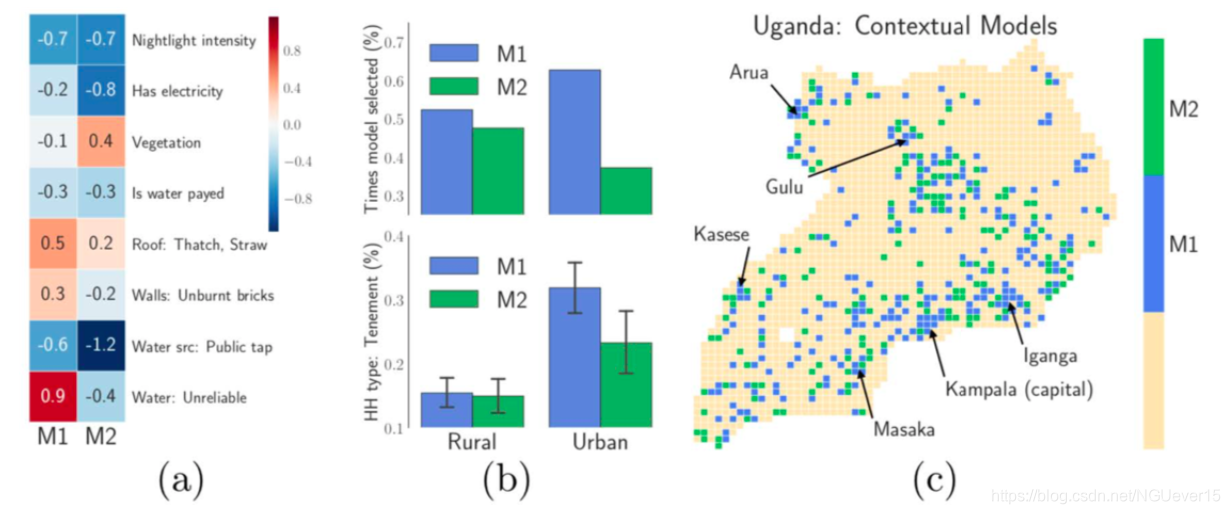
Based on the imagery, CEN learns to select different models for urban and rural
Results: classical image & text datasets
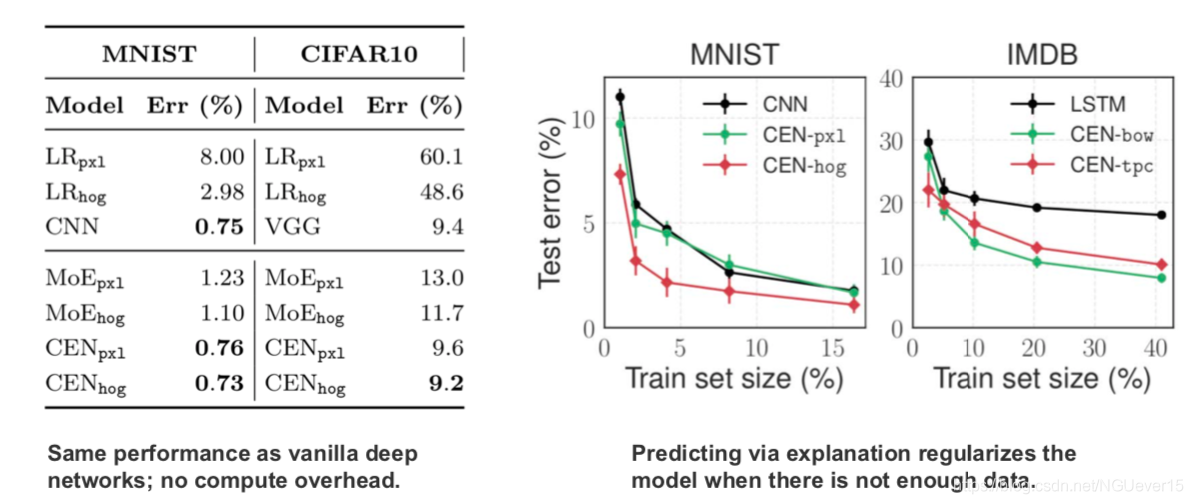
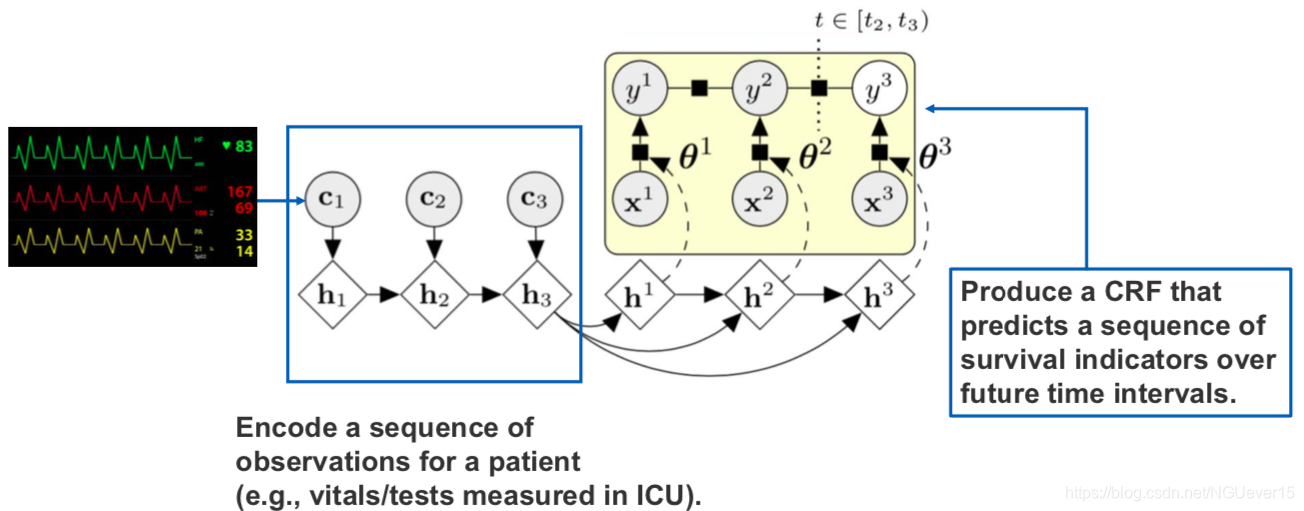
CEN architectures for survival analysis
04 Bayesian Learning of NNs
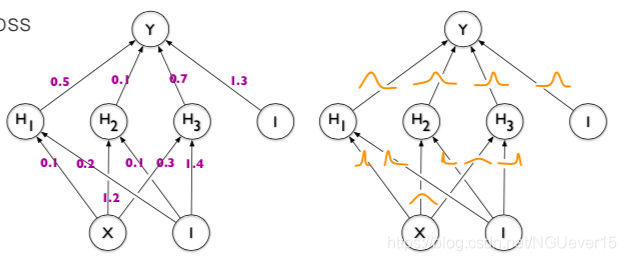
Bayesian learning of NN parameters q Deep kernel learning
A neural network as a probabilistic model: Likelihood: \(p(y|x, \theta)\)
- Categorical distribution for classification ⇒ cross-entropy loss 交叉熵损失
- Gaussian distribution for regression ⇒ squared loss平方损失
- Gaussianprior⇒L2regularization
- Laplaceprior⇒L1regularization
Bayesian learning [MacKay 1992, Neal 1996, de Freitas 2003]
深度学习基础 Probabilistic Graphical Models | Statistical and Algorithmic Foundations of Deep Learning的更多相关文章
- 深度学习笔记之关于总结、展望、参考文献和Deep Learning学习资源(五)
不多说,直接上干货! 十.总结与展望 1)Deep learning总结 深度学习是关于自动学习要建模的数据的潜在(隐含)分布的多层(复杂)表达的算法.换句话来说,深度学习算法自动的提取分类需要的低层 ...
- 吴恩达《深度学习》-课后测验-第一门课 (Neural Networks and Deep Learning)-Week 3 - Shallow Neural Networks(第三周测验 - 浅层神 经网络)
Week 3 Quiz - Shallow Neural Networks(第三周测验 - 浅层神经网络) \1. Which of the following are true? (Check al ...
- 吴恩达《深度学习》-课后测验-第一门课 (Neural Networks and Deep Learning)-Week 2 - Neural Network Basics(第二周测验 - 神经网络基础)
Week 2 Quiz - Neural Network Basics(第二周测验 - 神经网络基础) 1. What does a neuron compute?(神经元节点计算什么?) [ ] A ...
- 吴恩达《深度学习》-课后测验-第一门课 (Neural Networks and Deep Learning)-Week 4 - Key concepts on Deep Neural Networks(第四周 测验 – 深层神经网络)
Week 4 Quiz - Key concepts on Deep Neural Networks(第四周 测验 – 深层神经网络) \1. What is the "cache" ...
- 贝叶斯网络基础(Probabilistic Graphical Models)
本篇博客是Daphne Koller课程Probabilistic Graphical Models(PGM)的学习笔记. 概率图模型是一类用图形模式表达基于概率相关关系的模型的总称.概率图模型共分为 ...
- 深度学习基础系列(九)| Dropout VS Batch Normalization? 是时候放弃Dropout了
Dropout是过去几年非常流行的正则化技术,可有效防止过拟合的发生.但从深度学习的发展趋势看,Batch Normalizaton(简称BN)正在逐步取代Dropout技术,特别是在卷积层.本文将首 ...
- Probabilistic Graphical Models
http://innopac.lib.tsinghua.edu.cn/search~S1*chx?/YProbabilistic+Graphical+Models&searchscope=1& ...
- 算法工程师<深度学习基础>
<深度学习基础> 卷积神经网络,循环神经网络,LSTM与GRU,梯度消失与梯度爆炸,激活函数,防止过拟合的方法,dropout,batch normalization,各类经典的网络结构, ...
- 深度学习基础系列(五)| 深入理解交叉熵函数及其在tensorflow和keras中的实现
在统计学中,损失函数是一种衡量损失和错误(这种损失与“错误地”估计有关,如费用或者设备的损失)程度的函数.假设某样本的实际输出为a,而预计的输出为y,则y与a之间存在偏差,深度学习的目的即是通过不断地 ...
随机推荐
- Elasticsearch数据库 | Elasticsearch-7.5.0应用搭建实战
Elasticsearch 是一个可用于分布式以及符合RESTful 风格的搜索和数据分析引擎.-- Elastic Stack 官网 搭建Elasticsearch的"那些事儿" ...
- Spring Cloud Alibaba 基础
Spring Cloud Alibaba 基础 什么是Spring Cloud Alibaba 这里我们不讲解Spring Cloud 和 Spring Cloud Alibaba 的关系,大家自己查 ...
- 6.1 接口 - 6.3 lambda表达式
6.1 接口 接口概念 接口是对类的一组需求描述,这些类要遵从接口描述的统一格式进行定义.设计目的是解决多继承的问题 接口中所有方法时 public 不用现实声明 java.lang.Comparab ...
- 【17】进大厂必须掌握的面试题-50个Angular面试
我们整理了一份主要的Angular面试问题清单,分为三部分: 角度面试问题–初学者水平 角度面试问题–中级 角度面试问题–高级 初学者水平–面试问题 1.区分Angular和AngularJS. 特征 ...
- WEB系统防退出账户,回退主页问题(2020最新最有效的方式没有之一)
WEB系统防退出账户,回退主页问题(2020最新最有效的方式没有之一) 很多小伙伴在web开发中都遇倒的问题? JavaWeb项目注销后,可能存在通过浏览器缓存回退的方式进入主页系统 WEB项目 ...
- c#写入文件流
using (FileStream wir=new FileStream(@"C:\Documents and Settings\Administrator\桌面\1.txt",F ...
- python菜鸟教程学习1:背景性学习
https://www.runoob.com/python3/python3-intro.html 优点 简单 -- Python 是一种代表简单主义思想的语言.阅读一个良好的 Python 程序就感 ...
- k8s event监控利器kube-eventer对接企微告警
背景 监控是保障系统稳定性的重要组成部分,在Kubernetes开源生态中,资源类的监控工具与组件监控百花齐放. cAdvisor:kubelet内置的cAdvisor,监控容器资源,如容器cpu.内 ...
- centos常用指令之-卸载
卸载centos自带java: rpm -qa|grep java // 查询javax相关 xxxxxxxxxxxxxx # 卸载1.2方式 # 1 yum -y remove java xxxxx ...
- hadoop启动脚本
记录一下一个简单的hadoop启动脚本 就是启动zookeeper集群,hadoop的HDFS和YRAN的脚本 start-cluster.sh 关于关闭的脚本,只需要顺序换一下,然后将start改为 ...