
机器学习(四) 分类算法--K近邻算法 KNN (上)
一、K近邻算法基础
KNN------- K近邻算法--------K-Nearest Neighbors
思想极度简单
应用数学知识少 (近乎为零)
效果好(缺点?)
可以解释机器学习算法使用过程中很多细节问题
更完整的刻画机器学习应用的流程
import numpy as np

import matplotlib.pyplot as plt

实现我们自己的 kNN

创建简单测试用例

raw_data_X = [[3.393533211, 2.331273381],

              [3.110073483, 1.781539638],

              [1.343808831, 3.368360954],

              [3.582294042, 4.679179110],

              [2.280362439, 2.866990263],

              [7.423436942, 4.696522875],

              [5.745051997, 3.533989803],

              [9.172168622, 2.511101045],

              [7.792783481, 3.424088941],

              [7.939820817, 0.791637231]

             ]

raw_data_y = [0, 0, 0, 0, 0, 1, 1, 1, 1, 1]

X_train = np.array(raw_data_X)

y_train = np.array(raw_data_y)

X_train

array([[ 3.39353321,  2.33127338],

       [ 3.11007348,  1.78153964],

       [ 1.34380883,  3.36836095],

       [ 3.58229404,  4.67917911],

       [ 2.28036244,  2.86699026],

       [ 7.42343694,  4.69652288],

       [ 5.745052  ,  3.5339898 ],

       [ 9.17216862,  2.51110105],

       [ 7.79278348,  3.42408894],

       [ 7.93982082,  0.79163723]])

y_train

array([0, 0, 0, 0, 0, 1, 1, 1, 1, 1])

kNN的过程
from math import sqrt

distances = []

for x_train in X_train:

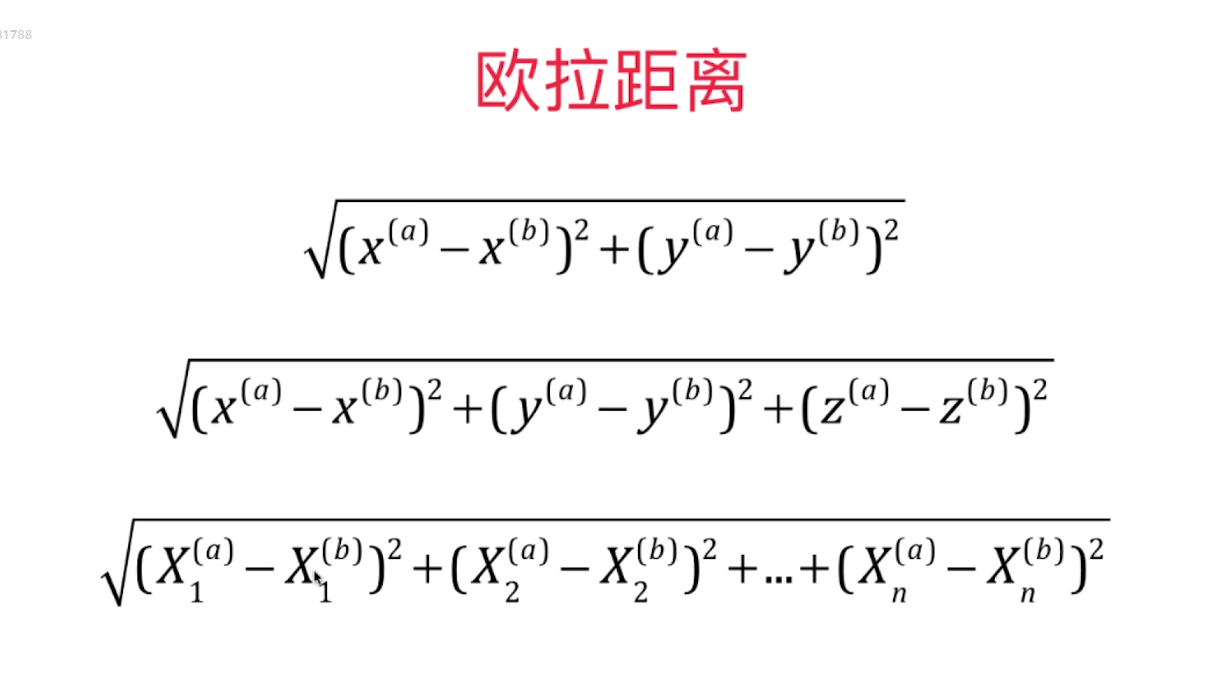
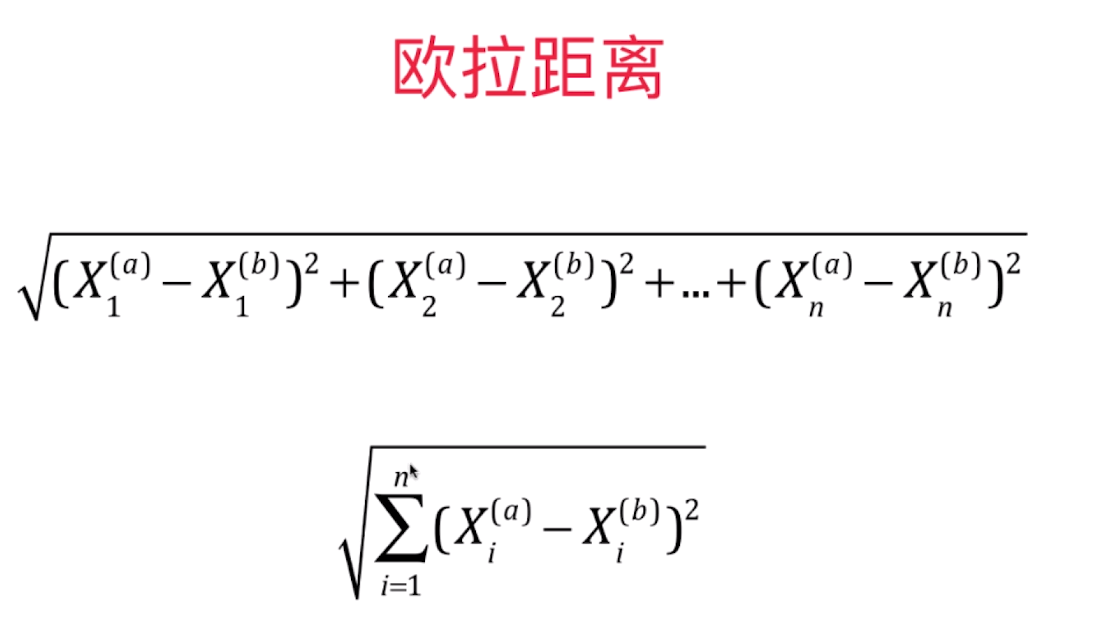
    d = sqrt(np.sum((x_train - x)**2))

    distances.append(d)

distances

[4.812566907609877,

 5.229270827235305,

 6.749798999160064,

 4.6986266144110695,

 5.83460014556857,

 1.4900114024329525,

 2.354574897431513,

 1.3761132675144652,

 0.3064319992975,

 2.5786840957478887]

distances = [sqrt(np.sum((x_train - x)**2))

             for x_train in X_train]

distances

[4.812566907609877,

 5.229270827235305,

 6.749798999160064,

 4.6986266144110695,

 5.83460014556857,

 1.4900114024329525,

 2.354574897431513,

 1.3761132675144652,

 0.3064319992975,

 2.5786840957478887]

np.argsort(distances)

array([8, 7, 5, 6, 9, 3, 0, 1, 4, 2])

nearest = np.argsort(distances)

k = 6

topK_y = [y_train[neighbor] for neighbor in nearest[:k]]

topK_y

[1, 1, 1, 1, 1, 0]

from collections import Counter

votes = Counter(topK_y)

votes

Counter({0: 1, 1: 5})

votes.most_common(1)

[(1, 5)]

predict_y = votes.most_common(1)[0][0]

predict_y

1
二、scikit-learn 中的机器学习算法封装
KNN/KNNN.py
import numpy as np

from math import sqrt

from collections import Counter

class KNNClassifier:

    def __init__(self, k):

        """初始化kNN分类器"""

        assert k >= 1, "k must be valid"

        self.k = k

        self._X_train = None

        self._y_train = None

    def fit(self, X_train, y_train):

        """根据训练数据集X_train和y_train训练kNN分类器"""

        assert X_train.shape[0] == y_train.shape[0], \

            "the size of X_train must be equal to the size of y_train"

        assert self.k <= X_train.shape[0], \

            "the size of X_train must be at least k."

        self._X_train = X_train

        self._y_train = y_train

        return self

    def predict(self, X_predict):

        """给定待预测数据集X_predict,返回表示X_predict的结果向量"""

        assert self._X_train is not None and self._y_train is not None, \

                "must fit before predict!"

        assert X_predict.shape[1] == self._X_train.shape[1], \

                "the feature number of X_predict must be equal to X_train"

        y_predict = [self._predict(x) for x in X_predict]

        return np.array(y_predict)

    def _predict(self, x):

        """给定单个待预测数据x,返回x的预测结果值"""

        assert x.shape[0] == self._X_train.shape[1], \

            "the feature number of x must be equal to X_train"

        distances = [sqrt(np.sum((x_train - x) ** 2))

                     for x_train in self._X_train]

        nearest = np.argsort(distances)

        topK_y = [self._y_train[i] for i in nearest[:self.k]]

        votes = Counter(topK_y)

        return votes.most_common(1)[0][0]

    def __repr__(self):

        return "KNN(k=%d)" % self.k
kNN_function/KNN.py
import numpy as np

from math import sqrt

from collections import Counter

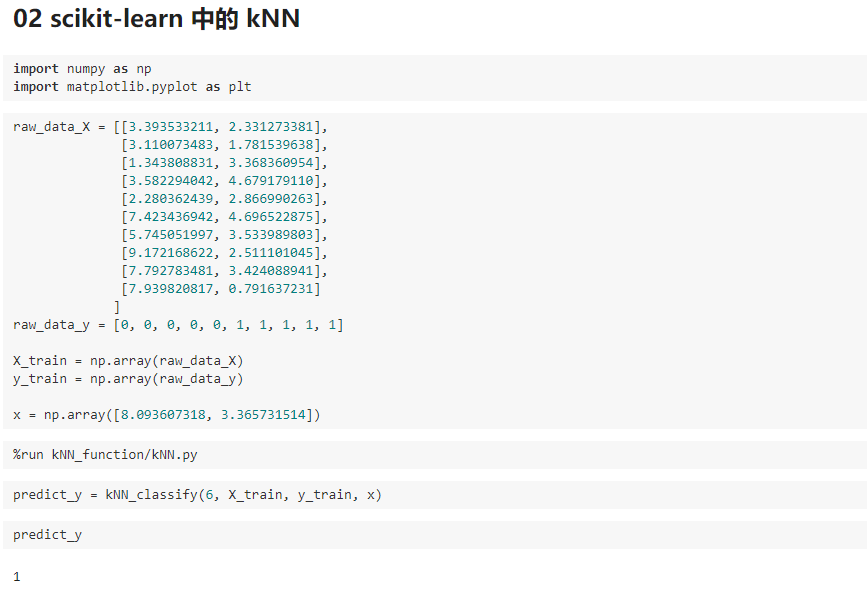
def kNN_classify(k, X_train, y_train, x):

    assert 1 <= k <= X_train.shape[0], "k must be valid"

    assert X_train.shape[0] == y_train.shape[0], \

        "the size of X_train must equal to the size of y_train"

    assert X_train.shape[1] == x.shape[0], \

        "the feature number of x must be equal to X_train"

    distances = [sqrt(np.sum((x_train - x)**2)) for x_train in X_train]

    nearest = np.argsort(distances)

    topK_y = [y_train[i] for i in nearest[:k]]

    votes = Counter(topK_y)

    return votes.most_common(1)[0][0]
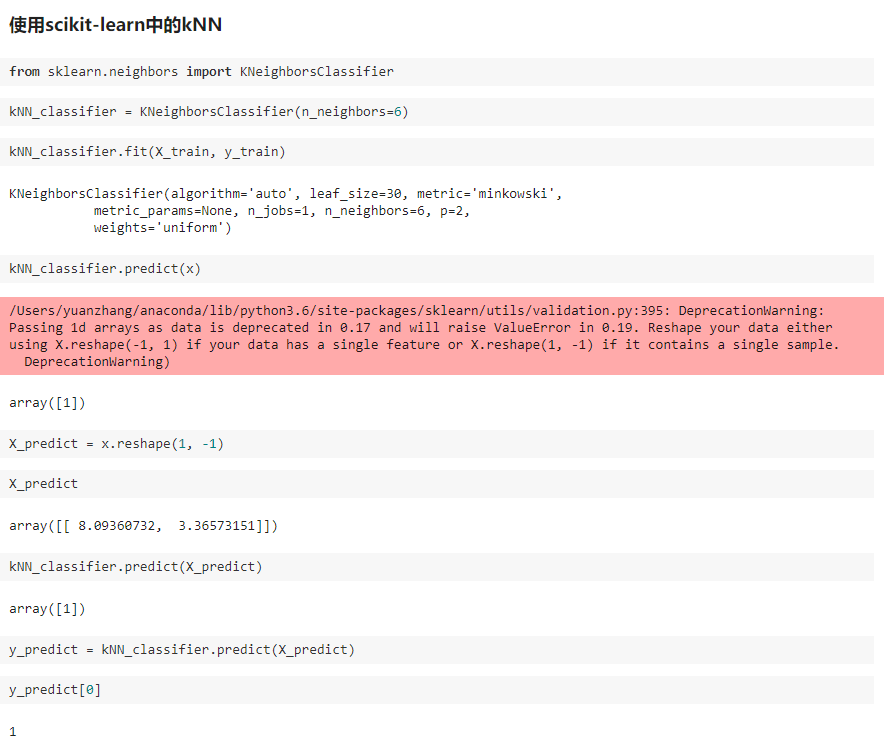
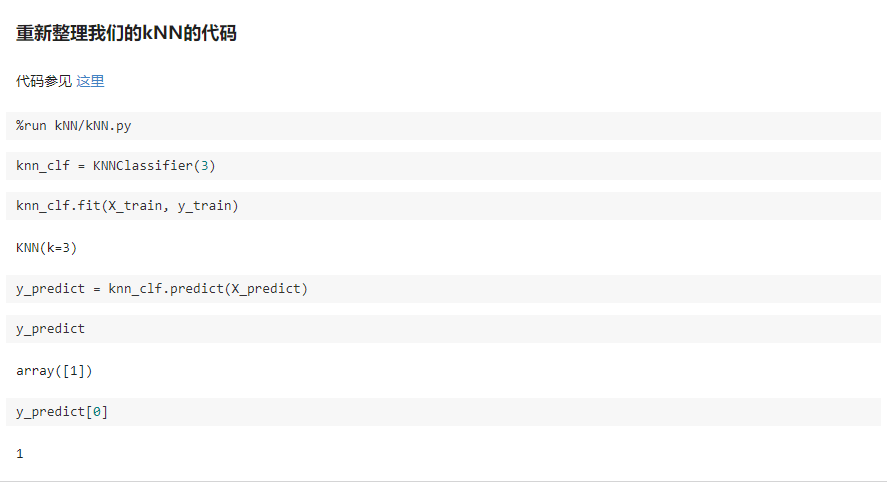
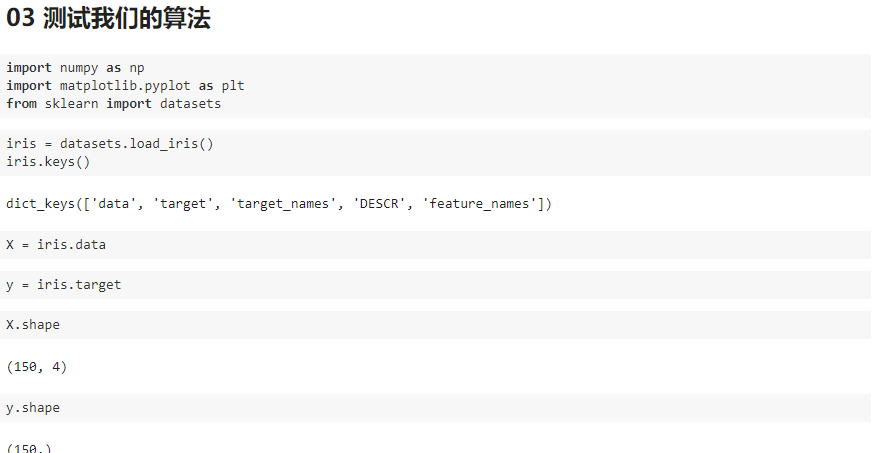
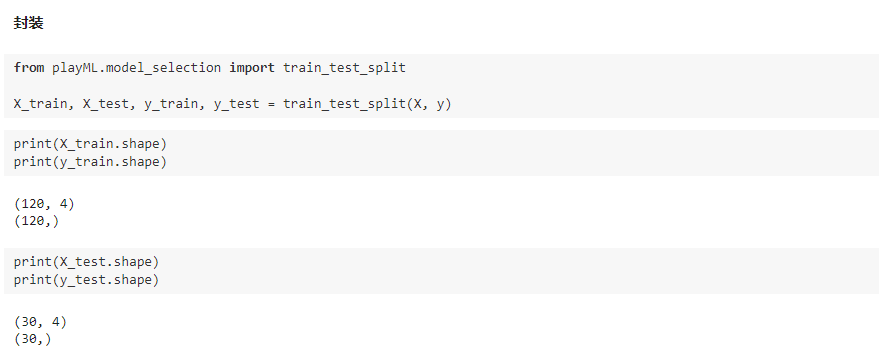
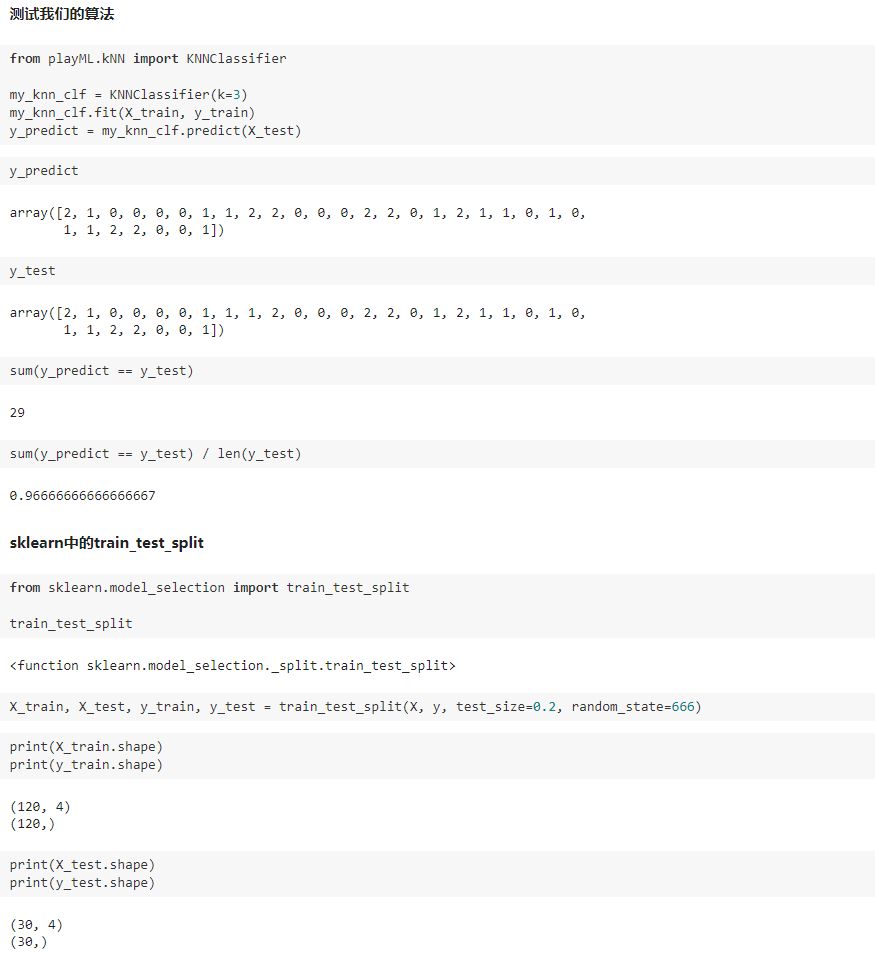
三、训练数据集、测试数据集
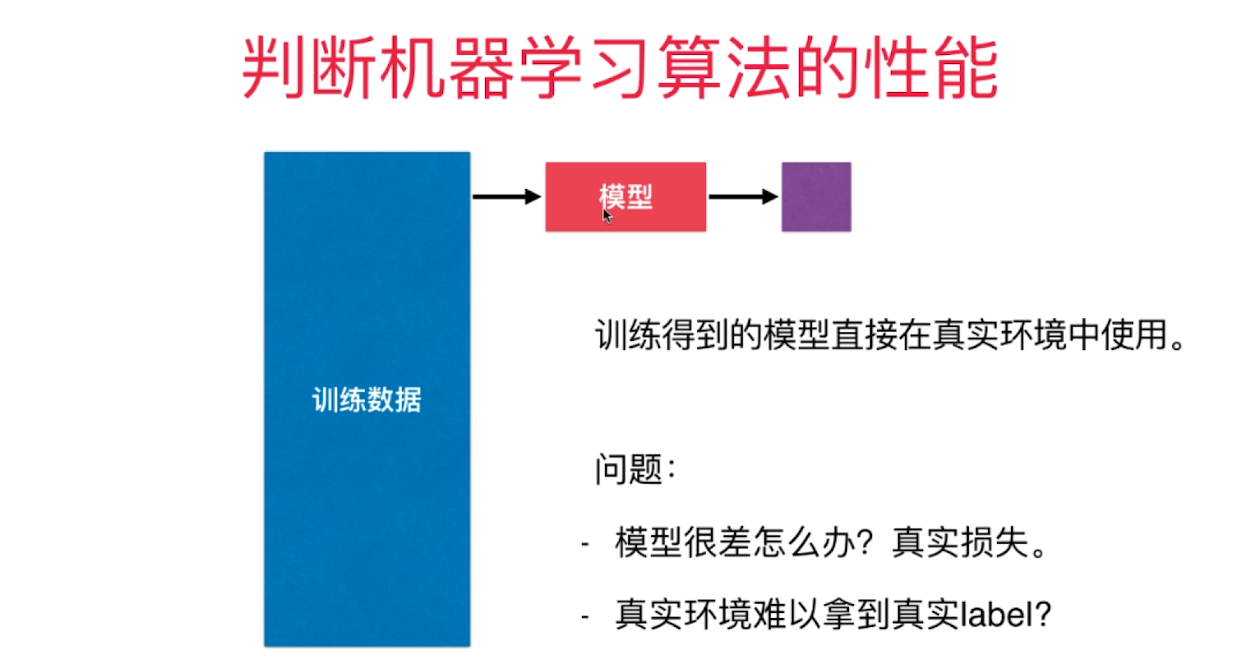
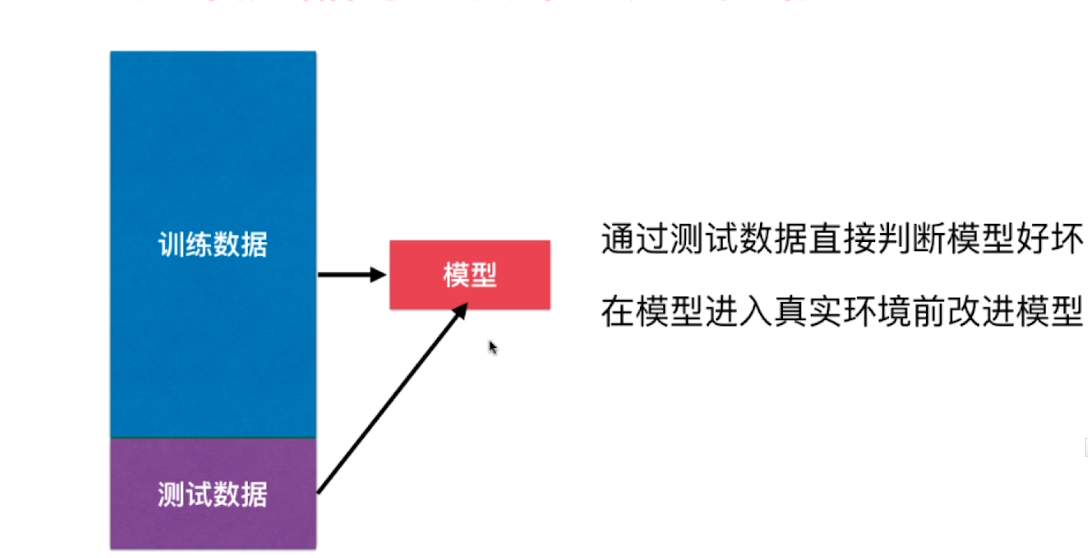
判断机器学习算法的性能
playML/KNN.py
import numpy as np

from math import sqrt

from collections import Counter

class KNNClassifier:

    def __init__(self, k):

        """初始化kNN分类器"""

        assert k >= 1, "k must be valid"

        self.k = k

        self._X_train = None

        self._y_train = None

    def fit(self, X_train, y_train):

        """根据训练数据集X_train和y_train训练kNN分类器"""

        assert X_train.shape[0] == y_train.shape[0], \

            "the size of X_train must be equal to the size of y_train"

        assert self.k <= X_train.shape[0], \

            "the size of X_train must be at least k."

        self._X_train = X_train

        self._y_train = y_train

        return self

    def predict(self, X_predict):

        """给定待预测数据集X_predict,返回表示X_predict的结果向量"""

        assert self._X_train is not None and self._y_train is not None, \

                "must fit before predict!"

        assert X_predict.shape[1] == self._X_train.shape[1], \

                "the feature number of X_predict must be equal to X_train"

        y_predict = [self._predict(x) for x in X_predict]

        return np.array(y_predict)

    def _predict(self, x):

        """给定单个待预测数据x,返回x的预测结果值"""

        assert x.shape[0] == self._X_train.shape[1], \

            "the feature number of x must be equal to X_train"

        distances = [sqrt(np.sum((x_train - x) ** 2))

                     for x_train in self._X_train]

        nearest = np.argsort(distances)

        topK_y = [self._y_train[i] for i in nearest[:self.k]]

        votes = Counter(topK_y)

        return votes.most_common(1)[0][0]

    def __repr__(self):

        return "KNN(k=%d)" % self.k
playML/model_selection.py
import numpy as np

def train_test_split(X, y, test_ratio=0.2, seed=None):

    """将数据 X 和 y 按照test_ratio分割成X_train, X_test, y_train, y_test"""

    assert X.shape[0] == y.shape[0], \

        "the size of X must be equal to the size of y"

    assert 0.0 <= test_ratio <= 1.0, \

        "test_ration must be valid"

    if seed:

        np.random.seed(seed)

    shuffled_indexes = np.random.permutation(len(X))

    test_size = int(len(X) * test_ratio)

    test_indexes = shuffled_indexes[:test_size]

    train_indexes = shuffled_indexes[test_size:]

    X_train = X[train_indexes]

    y_train = y[train_indexes]

    X_test = X[test_indexes]

    y_test = y[test_indexes]

    return X_train, X_test, y_train, y_test
playML/__init__.py

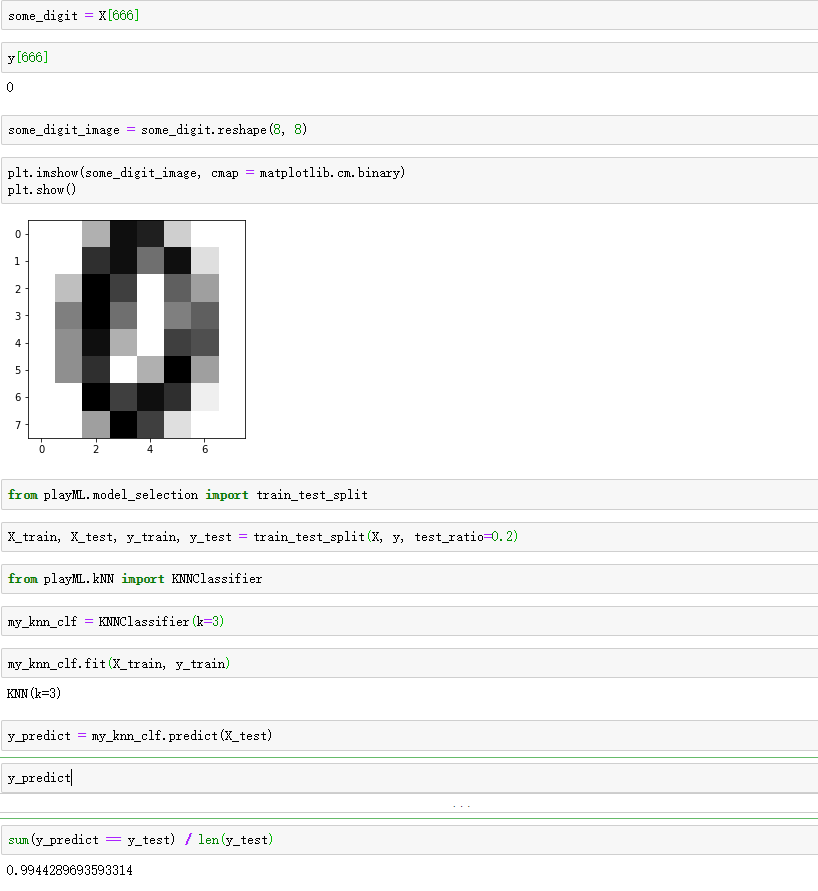
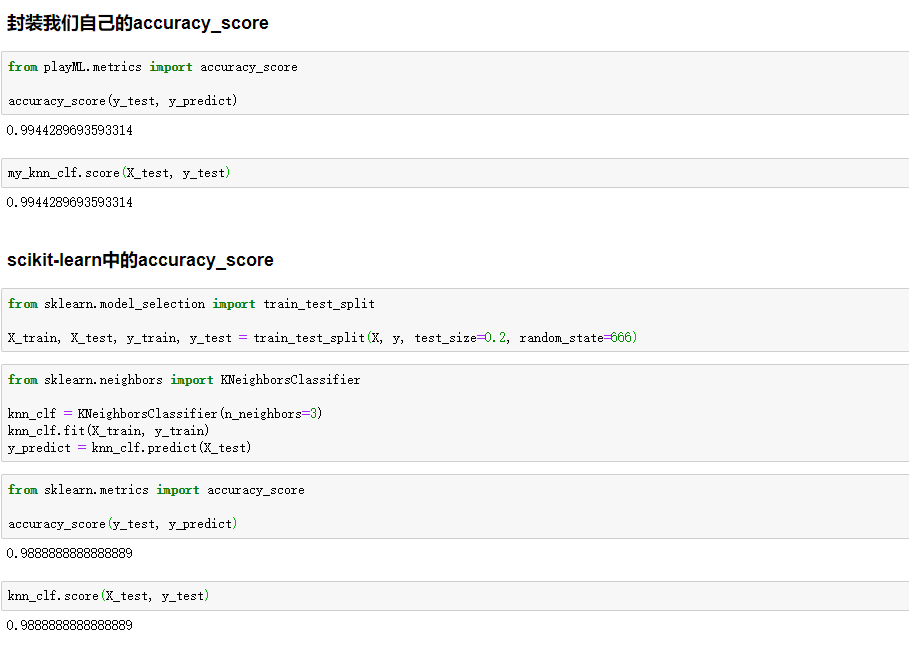
四、分类的准确度
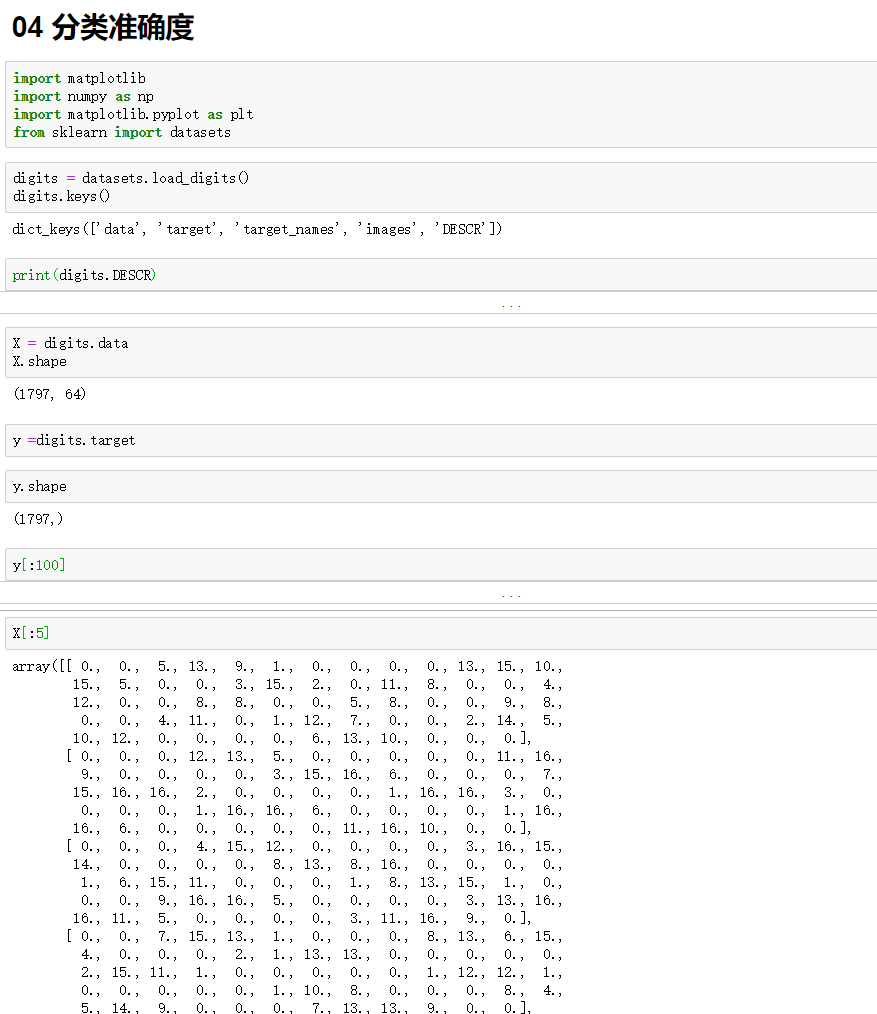
playML/metrics.py
import numpy as np

def accuracy_score(y_true, y_predict):

    '''计算y_true和y_predict之间的准确率'''

    assert y_true.shape[0] == y_predict.shape[0], \

        "the size of y_true must be equal to the size of y_predict"

    return sum(y_true == y_predict) / len(y_true)
model_selection.py-->KNNClassifier 类 里面添加 这样一个方法
from .metrics import accuracy_score

    def score(self, X_test, y_test):

        """根据测试数据集 X_test 和 y_test 确定当前模型的准确度"""

        y_predict = self.predict(X_test)

        return accuracy_score(y_test, y_predict)
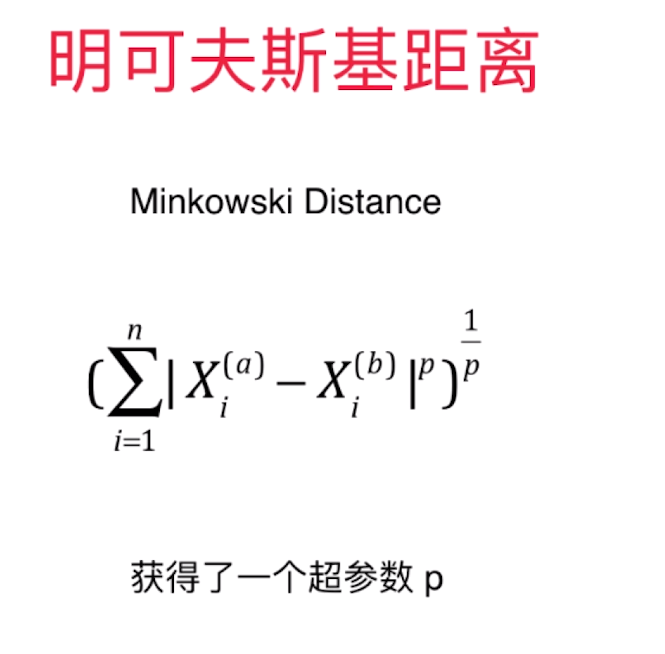
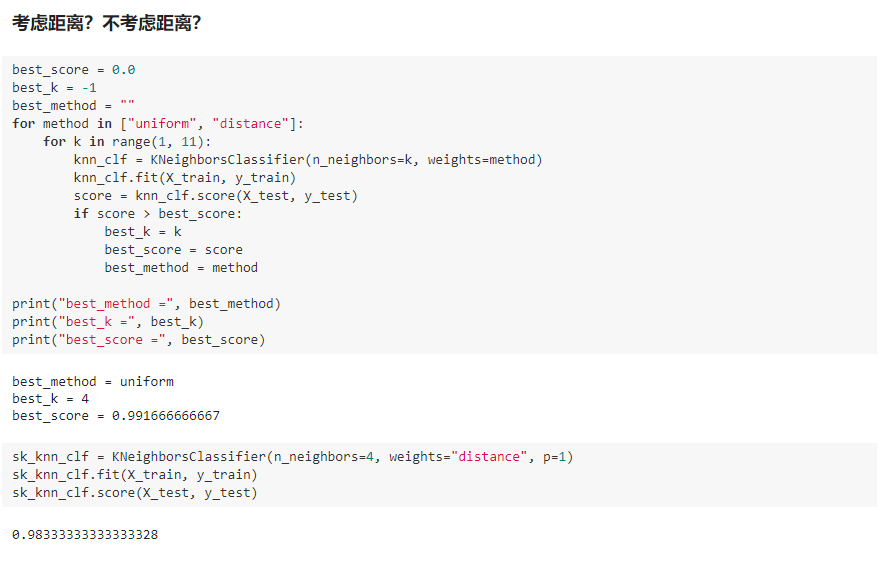
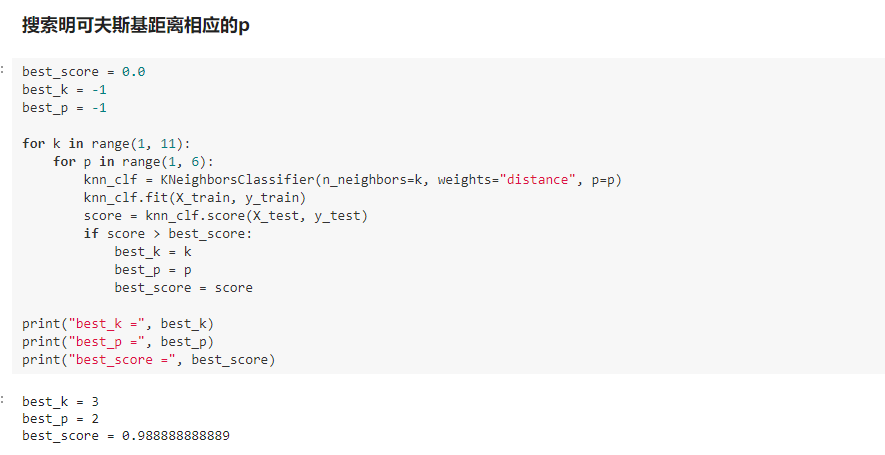
五、超参数
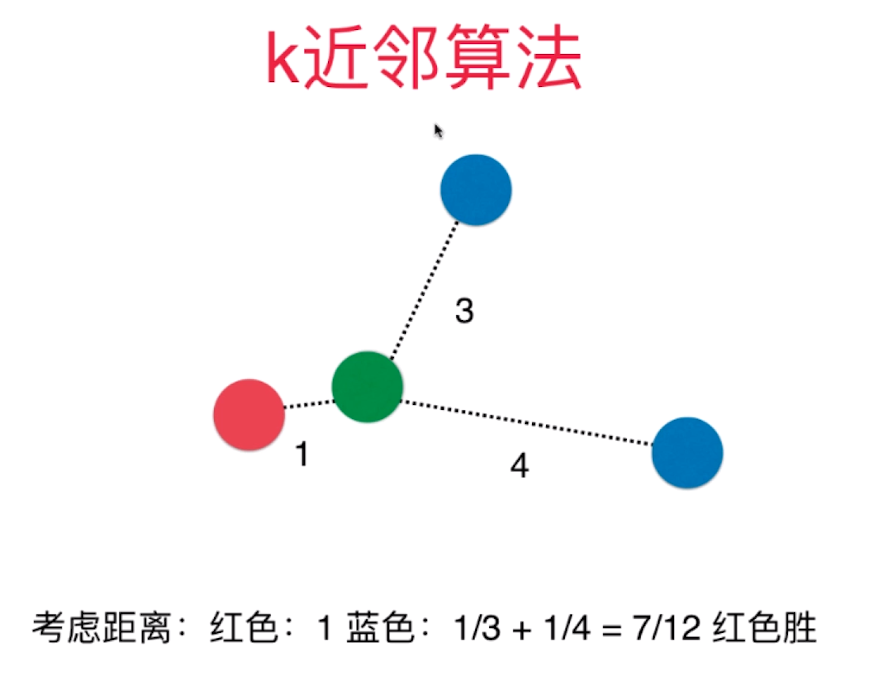
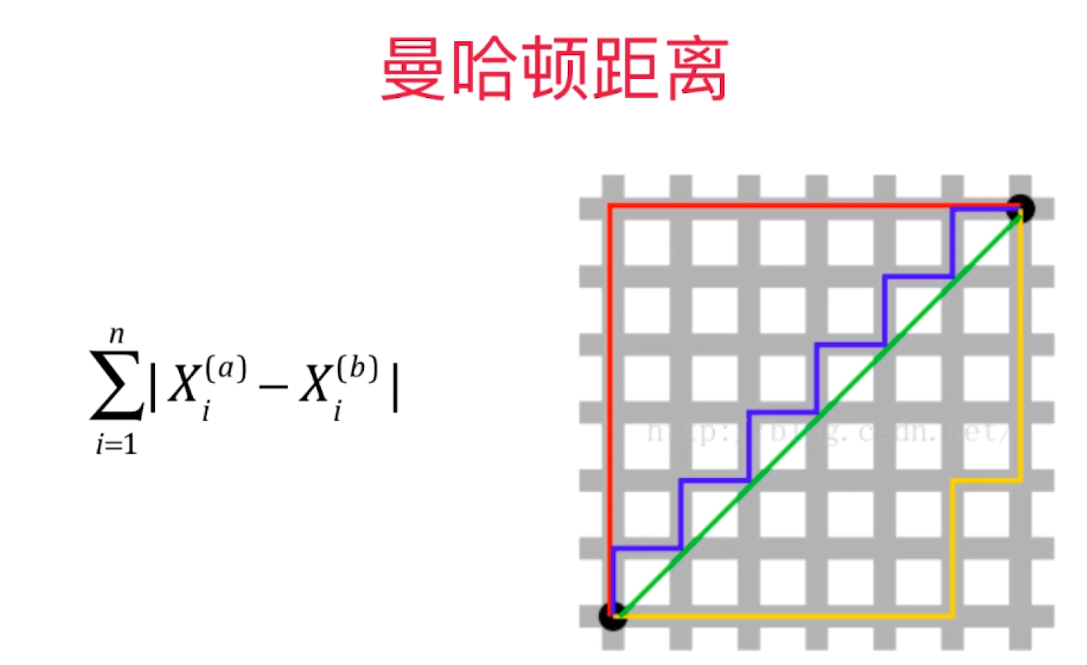
超参数:在算法运行前需要决定的参数
模型参数:算法过程中学习的参数
KNN算法没有模型参数
KNN算法中的 K 是 典型的 超参数
寻找好的超参数:
领域知识、经验数值、实验搜索



我写的文章只是我自己对bobo老师讲课内容的理解和整理,也只是我自己的弊见。bobo老师的课 是慕课网出品的。欢迎大家一起学习。
机器学习(四) 分类算法--K近邻算法 KNN (上)的更多相关文章
- 第4章 最基础的分类算法-k近邻算法
思想极度简单 应用数学知识少 效果好(缺点?) 可以解释机器学习算法使用过程中的很多细节问题 更完整的刻画机器学习应用的流程 distances = [] for x_train in X_train ...
- 机器学习(四) 机器学习(四) 分类算法--K近邻算法 KNN (下)
六.网格搜索与 K 邻近算法中更多的超参数 七.数据归一化 Feature Scaling 解决方案:将所有的数据映射到同一尺度 八.scikit-learn 中的 Scaler preprocess ...
- python 机器学习(二)分类算法-k近邻算法
一.什么是K近邻算法? 定义: 如果一个样本在特征空间中的k个最相似(即特征空间中最邻近)的样本中的大多数属于某一个类别,则该样本也属于这个类别. 来源: KNN算法最早是由Cover和Hart提 ...
- 分类算法----k近邻算法
K最近邻(k-Nearest Neighbor,KNN)分类算法,是一个理论上比较成熟的方法,也是最简单的机器学习算法之一.该方法的思路是:如果一个样本在特征空间中的k个最相似(即特征空间中最邻近)的 ...
- 机器学习(1)——K近邻算法
KNN的函数写法 import numpy as np from math import sqrt from collections import Counter def KNN_classify(k ...
- SIGAI机器学习第七集 k近邻算法
讲授K近邻思想,kNN的预测算法,距离函数,距离度量学习,kNN算法的实际应用. KNN是有监督机器学习算法,K-means是一个聚类算法,都依赖于距离函数.没有训练过程,只有预测过程. 大纲: k近 ...
- 最基础的分类算法-k近邻算法 kNN简介及Jupyter基础实现及Python实现
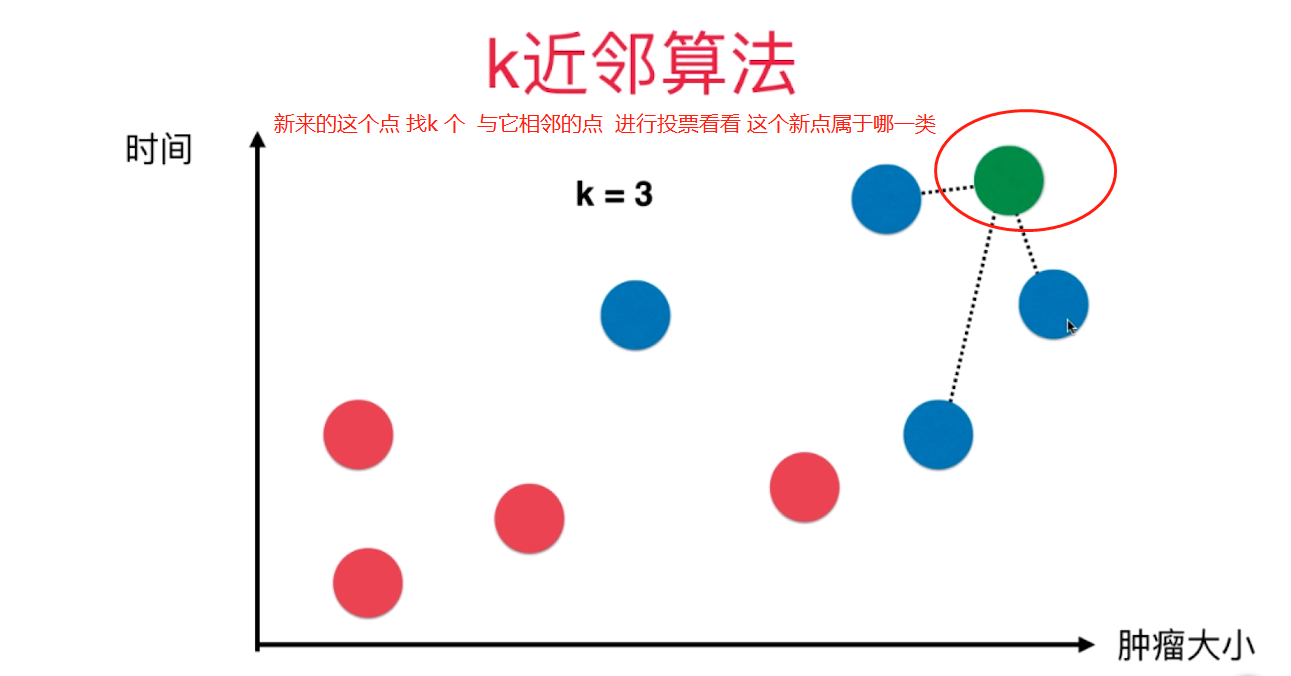
k-Nearest Neighbors简介 对于该图来说,x轴对应的是肿瘤的大小,y轴对应的是时间,蓝色样本表示恶性肿瘤,红色样本表示良性肿瘤,我们先假设k=3,这个k先不考虑怎么得到,先假设这个k是 ...
- 【学习笔记】分类算法-k近邻算法
k-近邻算法采用测量不同特征值之间的距离来进行分类. 优点:精度高.对异常值不敏感.无数据输入假定 缺点:计算复杂度高.空间复杂度高 使用数据范围:数值型和标称型 用例子来理解k-近邻算法 电影可以按 ...
- 机器学习03:K近邻算法
本文来自同步博客. P.S. 不知道怎么显示数学公式以及排版文章.所以如果觉得文章下面格式乱的话请自行跳转到上述链接.后续我将不再对数学公式进行截图,毕竟行内公式截图的话排版会很乱.看原博客地址会有更 ...
随机推荐
- Qt 学习之路问题
Qt5 cannot include the file QMainWindow add "greaterThan(QT_MAJOR_VERSION, 4): QT += widgets&qu ...
- 使用Openfire和Asmack实现IM功能,常常出现“Thread already started”的错误
近期使用Openfire和Asmack实现Android端的IM功能,可是实际使用的过程中,常常出现"java.lang.IllegalThreadStateException:Thread ...
- spark的内存分配管理
SPARK的内存管理器 StaticMemoryManager,UnifiedMemoryManager 1.6以后默认是UnifiedMemoryManager. 这个内存管理器在sparkCont ...
- 转:移动建站工具(一):分秒钟将Web网站移动化
作者唐小引 移动建站工具Web移动化简易开发MobifyTOPMobile Joomla!MoFuseWordPress优化 摘要:时下移动端显然已是诸多企业都想要占领的重要阵地.但限于较小的屏幕 ...
- Java排序之直接选择排序
public class SelectSort { public static void selectSort(int [] a){ int min; int temp; if(a==null || ...
- PostgreSQL+pgpooll+Keepalived双机HA方案
PostgreSQL+pgpooll+Keepalived双机HA方案 (注:本文档中的所有操作在没有说明的情况下都应该使用postgres用户进行操作,postgres用户没有权限的操作方可采用ro ...
- BootStrap--from 表单
1 垂直表单(默认) 2 内联表单 3 水平表单 使用 class .sr-only,您可以隐藏内联表单的标签. 垂直或基本表单 基本的表单结构是 Bootstrap 自带的,个别的表单控件自动接收一 ...
- http://www.open-open.com/lib/tag/ReactiveCocoa
http://www.open-open.com/lib/tag/ReactiveCocoa
- 学习Go语言之简易ORM框架
ORM即为对象关系映射,ORM常用于程序适配多种数据库,以达到开放扩展关闭修改的原则.笔者初学Golang,遂有意写个简易ORM框架,权当知识巩固. 首先需要有一个思想就是数据库表结构都是固定,但是每 ...
- Python对象引用的所有权
目录 引用所有权 传递引用的所有权--返回值 出借引用的所有权--返回值 占据引用的所有权--参数 出借引用的所有权--参数 引用所有权 谁持有对象引用的所有权,谁就要对对象负责. 引用的所有权对函数 ...