
对于 Netty ByteBuf 的零拷贝(Zero Copy) 的理解
此文章已同步发布在我的 segmentfault 专栏.
根据 Wiki 对 Zero-copy 的定义:
"Zero-copy" describes computer operations in which the CPU does not perform the task of copying data from one memory area to another. This is frequently used to save CPU cycles and memory bandwidth when transmitting a file over a network.
即所谓的 Zero-copy, 就是在操作数据时, 不需要将数据 buffer 从一个内存区域拷贝到另一个内存区域. 因为少了一次内存的拷贝, 因此 CPU 的效率就得到的提升.
在 OS 层面上的 Zero-copy 通常指避免在 用户态(User-space) 与 内核态(Kernel-space) 之间来回拷贝数据. 例如 Linux 提供的 mmap 系统调用, 它可以将一段用户空间内存映射到内核空间, 当映射成功后, 用户对这段内存区域的修改可以直接反映到内核空间; 同样地, 内核空间对这段区域的修改也直接反映用户空间. 正因为有这样的映射关系, 我们就不需要在 用户态(User-space) 与 内核态(Kernel-space) 之间拷贝数据, 提高了数据传输的效率.
而需要注意的是, Netty 中的 Zero-copy 与上面我们所提到到 OS 层面上的 Zero-copy 不太一样, Netty的 Zero-coyp 完全是在用户态(Java 层面)的, 它的 Zero-copy 的更多的是偏向于 优化数据操作 这样的概念.
Netty 的 Zero-copy 体现在如下几个个方面:
- Netty 提供了
CompositeByteBuf类, 它可以将多个 ByteBuf 合并为一个逻辑上的 ByteBuf, 避免了各个 ByteBuf 之间的拷贝. - 通过 wrap 操作, 我们可以将 byte[] 数组、ByteBuf、ByteBuffer等包装成一个 Netty ByteBuf 对象, 进而避免了拷贝操作.
- ByteBuf 支持 slice 操作, 因此可以将 ByteBuf 分解为多个共享同一个存储区域的 ByteBuf, 避免了内存的拷贝.
- 通过
FileRegion包装的FileChannel.tranferTo实现文件传输, 可以直接将文件缓冲区的数据发送到目标Channel, 避免了传统通过循环 write 方式导致的内存拷贝问题.
下面我们就来简单了解一下这几种常见的零拷贝操作.
通过 CompositeByteBuf 实现零拷贝
假设我们有一份协议数据, 它由头部和消息体组成, 而头部和消息体是分别存放在两个 ByteBuf 中的, 即:
ByteBuf header = ...

ByteBuf body = ...
我们在代码处理中, 通常希望将 header 和 body 合并为一个 ByteBuf, 方便处理, 那么通常的做法是:
ByteBuf allBuf = Unpooled.buffer(header.readableBytes() + body.readableBytes());

allBuf.writeBytes(header);

allBuf.writeBytes(body);
可以看到, 我们将 header 和 body 都拷贝到了新的 allBuf 中了, 这无形中增加了两次额外的数据拷贝操作了.
那么有没有更加高效优雅的方式实现相同的目的呢? 我们来看一下 CompositeByteBuf 是如何实现这样的需求的吧.
ByteBuf header = ...

ByteBuf body = ...

CompositeByteBuf compositeByteBuf = Unpooled.compositeBuffer();

compositeByteBuf.addComponents(true, header, body);
上面代码中, 我们定义了一个 CompositeByteBuf 对象, 然后调用
public CompositeByteBuf addComponents(boolean increaseWriterIndex, ByteBuf... buffers) {

...

}
方法将 header 与 body 合并为一个逻辑上的 ByteBuf, 即:
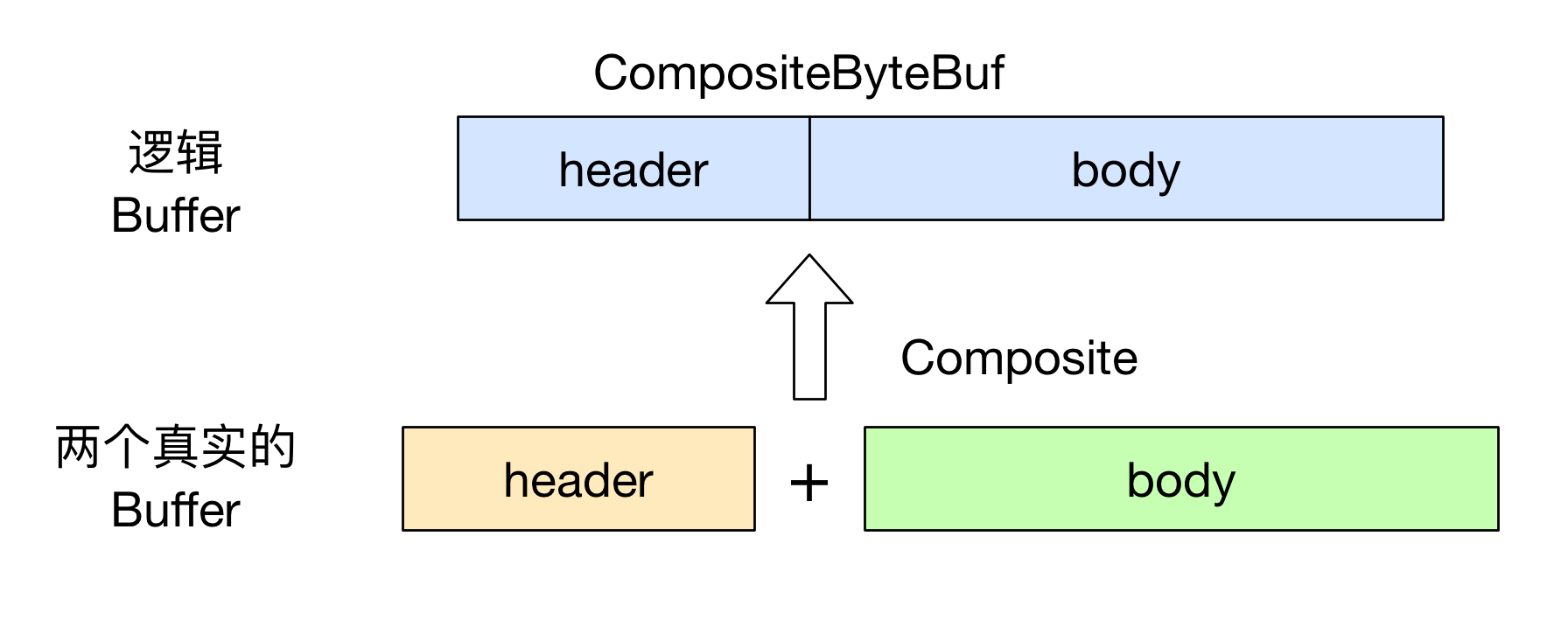
不过需要注意的是, 虽然看起来 CompositeByteBuf 是由两个 ByteBuf 组合而成的, 不过在 CompositeByteBuf 内部, 这两个 ByteBuf 都是单独存在的, CompositeByteBuf 只是逻辑上是一个整体.
上面 CompositeByteBuf 代码还以一个地方值得注意的是, 我们调用 addComponents(boolean increaseWriterIndex, ByteBuf... buffers) 来添加两个 ByteBuf, 其中第一个参数是 true, 表示当添加新的 ByteBuf 时, 自动递增 CompositeByteBuf 的 writeIndex.
如果我们调用的是
compositeByteBuf.addComponents(header, body);
那么其实 compositeByteBuf 的 writeIndex 仍然是0, 因此此时我们就不可能从 compositeByteBuf 中读取到数据, 这一点希望大家要特别注意.
除了上面直接使用 CompositeByteBuf 类外, 我们还可以使用 Unpooled.wrappedBuffer 方法, 它底层封装了 CompositeByteBuf 操作, 因此使用起来更加方便:
ByteBuf header = ...

ByteBuf body = ...

ByteBuf allByteBuf = Unpooled.wrappedBuffer(header, body);
通过 wrap 操作实现零拷贝
例如我们有一个 byte 数组, 我们希望将它转换为一个 ByteBuf 对象, 以便于后续的操作, 那么传统的做法是将此 byte 数组拷贝到 ByteBuf 中, 即:
byte[] bytes = ...

ByteBuf byteBuf = Unpooled.buffer();

byteBuf.writeBytes(bytes);
显然这样的方式也是有一个额外的拷贝操作的, 我们可以使用 Unpooled 的相关方法, 包装这个 byte 数组, 生成一个新的 ByteBuf 实例, 而不需要进行拷贝操作. 上面的代码可以改为:
byte[] bytes = ...

ByteBuf byteBuf = Unpooled.wrappedBuffer(bytes);
可以看到, 我们通过 Unpooled.wrappedBuffer 方法来将 bytes 包装成为一个 UnpooledHeapByteBuf 对象, 而在包装的过程中, 是不会有拷贝操作的. 即最后我们生成的生成的 ByteBuf 对象是和 bytes 数组共用了同一个存储空间, 对 bytes 的修改也会反映到 ByteBuf 对象中.
Unpooled 工具类还提供了很多重载的 wrappedBuffer 方法:
public static ByteBuf wrappedBuffer(byte[] array)

public static ByteBuf wrappedBuffer(byte[] array, int offset, int length)

public static ByteBuf wrappedBuffer(ByteBuffer buffer)

public static ByteBuf wrappedBuffer(ByteBuf buffer)

public static ByteBuf wrappedBuffer(byte[]... arrays)

public static ByteBuf wrappedBuffer(ByteBuf... buffers)

public static ByteBuf wrappedBuffer(ByteBuffer... buffers)

public static ByteBuf wrappedBuffer(int maxNumComponents, byte[]... arrays)

public static ByteBuf wrappedBuffer(int maxNumComponents, ByteBuf... buffers)

public static ByteBuf wrappedBuffer(int maxNumComponents, ByteBuffer... buffers)
这些方法可以将一个或多个 buffer 包装为一个 ByteBuf 对象, 从而避免了拷贝操作.
通过 slice 操作实现零拷贝
slice 操作和 wrap 操作刚好相反, Unpooled.wrappedBuffer 可以将多个 ByteBuf 合并为一个, 而 slice 操作可以将一个 ByteBuf 切片 为多个共享一个存储区域的 ByteBuf 对象.
ByteBuf 提供了两个 slice 操作方法:
public ByteBuf slice();

public ByteBuf slice(int index, int length);
不带参数的 slice 方法等同于 buf.slice(buf.readerIndex(), buf.readableBytes()) 调用, 即返回 buf 中可读部分的切片. 而 slice(int index, int length) 方法相对就比较灵活了, 我们可以设置不同的参数来获取到 buf 的不同区域的切片.
下面的例子展示了 ByteBuf.slice 方法的简单用法:
ByteBuf byteBuf = ...

ByteBuf header = byteBuf.slice(0, 5);

ByteBuf body = byteBuf.slice(5, 10);
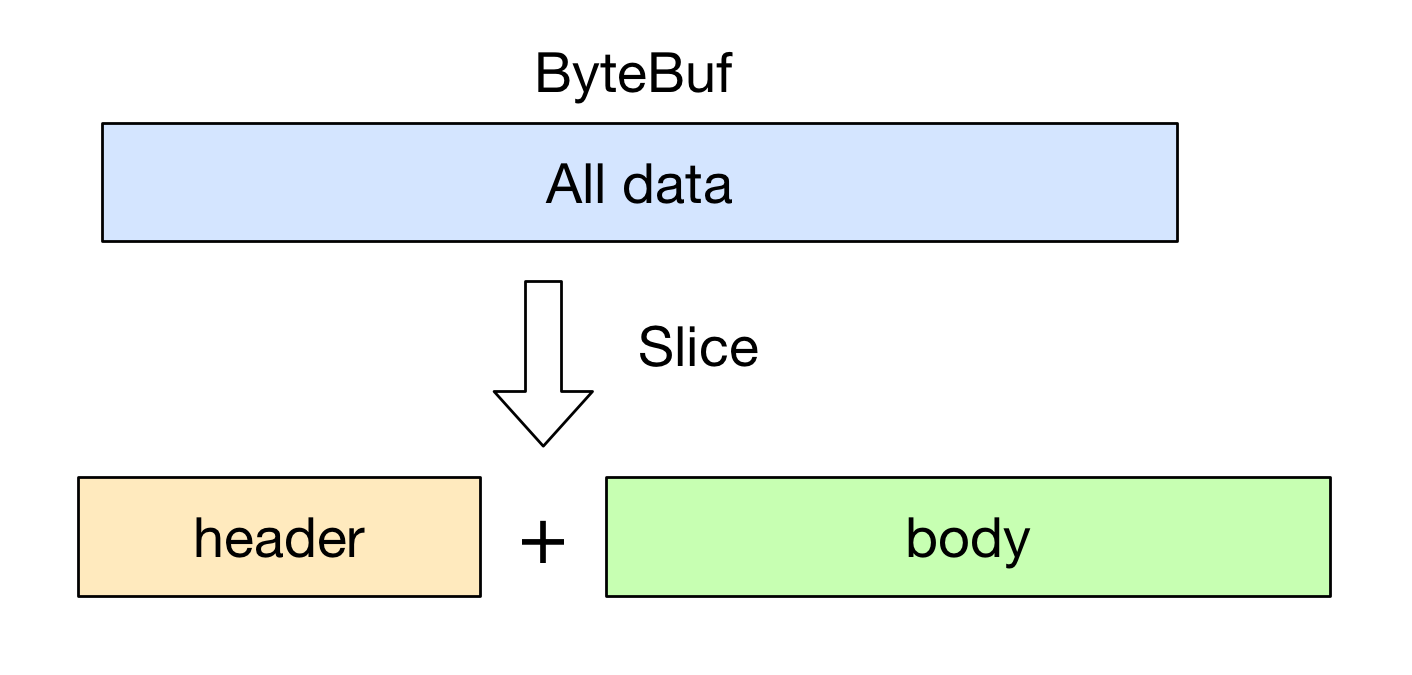
用 slice 方法产生 header 和 body 的过程是没有拷贝操作的, header 和 body 对象在内部其实是共享了 byteBuf 存储空间的不同部分而已. 即:
通过 FileRegion 实现零拷贝
Netty 中使用 FileRegion 实现文件传输的零拷贝, 不过在底层 FileRegion 是依赖于 Java NIO FileChannel.transfer 的零拷贝功能.
首先我们从最基础的 Java IO 开始吧. 假设我们希望实现一个文件拷贝的功能, 那么使用传统的方式, 我们有如下实现:
public static void copyFile(String srcFile, String destFile) throws Exception {

    byte[] temp = new byte[1024];

    FileInputStream in = new FileInputStream(srcFile);

    FileOutputStream out = new FileOutputStream(destFile);

    int length;

    while ((length = in.read(temp)) != -1) {

        out.write(temp, 0, length);

    }

    in.close();

    out.close();

}
上面是一个典型的读写二进制文件的代码实现了. 不用我说, 大家肯定都知道, 上面的代码中不断中源文件中读取定长数据到 temp 数组中, 然后再将 temp 中的内容写入目的文件, 这样的拷贝操作对于小文件倒是没有太大的影响, 但是如果我们需要拷贝大文件时, 频繁的内存拷贝操作就消耗大量的系统资源了.
下面我们来看一下使用 Java NIO 的 FileChannel 是如何实现零拷贝的:
public static void copyFileWithFileChannel(String srcFileName, String destFileName) throws Exception {

    RandomAccessFile srcFile = new RandomAccessFile(srcFileName, "r");

    FileChannel srcFileChannel = srcFile.getChannel();

    RandomAccessFile destFile = new RandomAccessFile(destFileName, "rw");

    FileChannel destFileChannel = destFile.getChannel();

    long position = 0;

    long count = srcFileChannel.size();

    srcFileChannel.transferTo(position, count, destFileChannel);

}
可以看到, 使用了 FileChannel 后, 我们就可以直接将源文件的内容直接拷贝(transferTo) 到目的文件中, 而不需要额外借助一个临时 buffer, 避免了不必要的内存操作.
有了上面的一些理论知识, 我们来看一下在 Netty 中是怎么使用 FileRegion 来实现零拷贝传输一个文件的:
@Override

public void channelRead0(ChannelHandlerContext ctx, String msg) throws Exception {

    RandomAccessFile raf = null;

    long length = -1;

    try {

	    // 1. 通过 RandomAccessFile 打开一个文件.

        raf = new RandomAccessFile(msg, "r");

        length = raf.length();

    } catch (Exception e) {

        ctx.writeAndFlush("ERR: " + e.getClass().getSimpleName() + ": " + e.getMessage() + '\n');

        return;

    } finally {

        if (length < 0 && raf != null) {

            raf.close();

        }

    }

    ctx.write("OK: " + raf.length() + '\n');

    if (ctx.pipeline().get(SslHandler.class) == null) {

        // SSL not enabled - can use zero-copy file transfer.

        // 2. 调用 raf.getChannel() 获取一个 FileChannel.

        // 3. 将 FileChannel 封装成一个 DefaultFileRegion

        ctx.write(new DefaultFileRegion(raf.getChannel(), 0, length));

    } else {

        // SSL enabled - cannot use zero-copy file transfer.

        ctx.write(new ChunkedFile(raf));

    }

    ctx.writeAndFlush("\n");

}
上面的代码是 Netty 的一个例子, 其源码在 netty/example/src/main/java/io/netty/example/file/FileServerHandler.java
可以看到, 第一步是通过 RandomAccessFile 打开一个文件, 然后 Netty 使用了 DefaultFileRegion 来封装一个 FileChannel 即:
new DefaultFileRegion(raf.getChannel(), 0, length)
当有了 FileRegion 后, 我们就可以直接通过它将文件的内容直接写入 Channel 中, 而不需要像传统的做法: 拷贝文件内容到临时 buffer, 然后再将 buffer 写入 Channel. 通过这样的零拷贝操作, 无疑对传输大文件很有帮助.
对于 Netty ByteBuf 的零拷贝(Zero Copy) 的理解的更多相关文章
- 理解Netty中的零拷贝(Zero-Copy)机制【转】
理解零拷贝 零拷贝是Netty的重要特性之一,而究竟什么是零拷贝呢? WIKI中对其有如下定义: “Zero-copy” describes computer operations in which ...
- 零拷贝-zero copy
Efficient data transfer through zero copy Zero Copy I: User-Mode Perspective 0. 前言 在阅读RocketMQ的官方文档时 ...
- Netty:Netty中的零拷贝(Zero Copy)
零复制概念: " 零复制"描述了计算机操作,其中CPU不执行将数据从一个存储区复制到另一个存储区的任务.通过网络传输文件时,通常用于节省CPU周期和内存带宽. WIKI的定义中,我 ...
- Netty中ByteBuf 的零拷贝
转载:https://www.jianshu.com/p/1d1fa2fe1ed9 此文章已同步发布在我的 segmentfault 专栏. 根据 Wiki 对 Zero-copy 的定义: &quo ...
- netty如何实现零拷贝
根据 Wiki 对 Zero-copy 的定义: "Zero-copy" describes computer operations in which the CPU does n ...
- NIO学习笔记,从Linux IO演化模型到Netty—— Java NIO零拷贝
同样只是大致上的认识. 其中,当使用transferFrom,transferTo的时候用的sendfile(). 如果系统内核不支持 sendfile,进一步执行 transferToTrusted ...
- 感悟优化——Netty对JDK缓冲区的内存池零拷贝改造
NIO中缓冲区是数据传输的基础,JDK通过ByteBuffer实现,Netty框架中并未采用JDK原生的ByteBuffer,而是构造了ByteBuf. ByteBuf对ByteBuffer做了大量的 ...
- Netty源码解析 -- 零拷贝机制与ByteBuf
本文来分享Netty中的零拷贝机制以及内存缓冲区ByteBuf的实现. 源码分析基于Netty 4.1.52 Netty中的零拷贝 Netty中零拷贝机制主要有以下几种 1.文件传输类DefaultF ...
- Linux、JDK、Netty中的NIO与零拷贝
一.先理解内核空间与用户空间 Linux 按照特权等级,把进程的运行空间分为内核空间和用户空间,分别对应着下图中, CPU 特权等级分为4个,Linux 使用 Ring 0 和 Ring 3. 内核空 ...
随机推荐
- hadoop学习要点
一.HDFS (一)HDFS 概念 (二)HDFS命令行接口 (三)Java 接口 (四)文件读取和文件写入,一致性 (五)集群数据的均衡 (六)存档 (七)NameNode 单点故障问题 (八)大量 ...
- 对嵌入式开发C语言结构体的一点总结
今天冬至居然不上班,公司的良心啊!这回有心情写博客和日志了,好了,废话不多说.直接看下文: 鉴于嵌入式开发过程中,C语言结构体的使用当然是必不可少.话说,基础什么的比你会更牛逼的算法更重要,基础不牢, ...
- 仿百度壁纸客户端(二)——主页自定义ViewPager广告定时轮播图
仿百度壁纸客户端(二)--主页自定义ViewPager广告定时轮播图 百度壁纸系列 仿百度壁纸客户端(一)--主框架搭建,自定义Tab + ViewPager + Fragment 仿百度壁纸客户端( ...
- 关于hashCode与equals
首先我得说明,在我们自己写得类中你可以复写这两个方法,此时从语法的角度来说,他们没关系. 在object中 public native int hashCode(); public boolean e ...
- iOS中NSBundle的介绍
bundle是一个目录,其中包含了程序会使用到的资源.这些资源包含了如图像,声音,编译好的代码,nib文件(用户也会把bundle称为plug-in).对应bundle,cocoa提供了类NSBund ...
- 结合FireBreath在Chrome/FireFox的多进程模式下崩溃一例
FireBreath是跨浏览器跨操作系统的插件方案,它封装了ActiveX和NPAPI的插件接口,使用统一的API来暴露JSAPI.Chrome和FireFox使用NPAPI,IE使用ActiveX. ...
- gtk+修改控件文本字体一例
因为家里电脑是Mac系统,所以就拿Mac系统来示范. 要注意的是gtk+2.0和3.0对字体的处理是有一些区别的: 1.后者使用的是pango的机制,我们这里以gtk+3.0为基础. 2.两者调用Fo ...
- myBatis源码之XMLConfigBuilder
XMLConfigBuilder是对mybatis的配置文件进行解析的类,会对myabtis解析后的信息存放在Configuration对象中,Configuration对象会贯穿整个mybatis的 ...
- Unity Socket TCP
using UnityEngine; using System.Collections; using System.Collections.Generic; using System.Net.Sock ...
- SharePoint 2007 图片库视图不可用、页面标题不显示
描述: 问题1:SharePoint新建图片库,想选择"视图"-"所有图片",选择"详细信息.幻灯片.缩略图"等视图,均没有反应.如图1. ...