
Spring ( 五 )Spring之数据访问与事务管理
个人博客网:https://wushaopei.github.io/ (你想要这里多有)
一、Spring之数据访问
1、Spring数据访问工程环境搭建
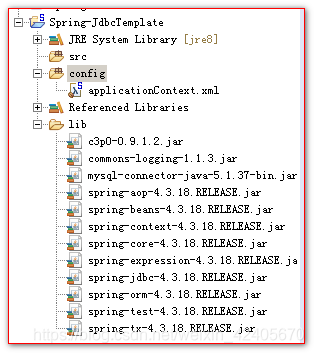

jdbc.properties配置文件:
jdbc.user=root

jdbc.password=root

jdbc.driverClass=com.mysql.jdbc.Driver

jdbc.url=jdbc:mysql://localhost:3306/jdbctemplate
applicationContext.xml配置文件:
        <!-- 加载jdbc.properties配置文件 -->

	<context:property-placeholder location="classpath:jdbc.properties"/>

	<!-- 数据源 -->

	<bean id="dataSource" class="com.mchange.v2.c3p0.ComboPooledDataSource">

		<property name="user" value="${jdbc.user}" />

		<property name="password" value="${jdbc.password}" />

		<property name="driverClass" value="${jdbc.driverClass}" />

		<property name="jdbcUrl" value="${jdbc.url}" />

	</bean>

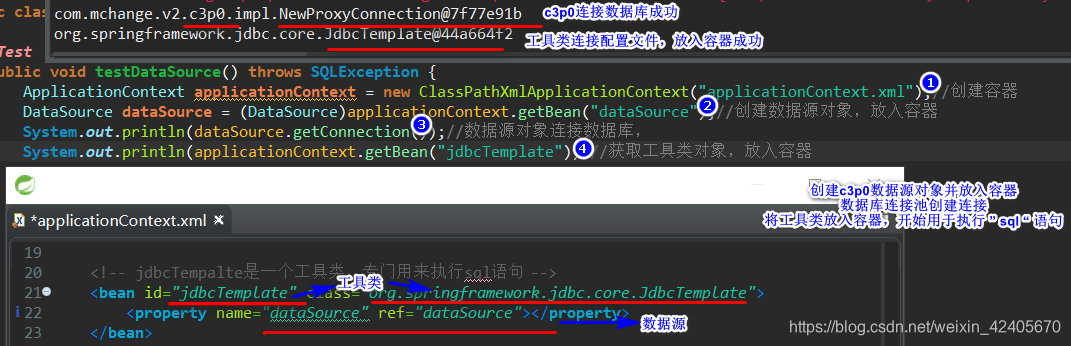
	<!-- jdbcTempalte是一个工具类,专门用来执行sql语句 -->

	<bean id="jdbcTemplate" class="org.springframework.jdbc.core.JdbcTemplate">

		<property name="dataSource" ref="dataSource"/>

	</bean>
测试代码:
     @Test

     public void testDataSource() throws Exception {

	ApplicationContext applicationContext = new ClassPathXmlApplicationContext("applicationContext.xml");

	DataSource dataSource = (DataSource) applicationContext.getBean("dataSource");

	System.out.println( dataSource.getConnection() );

	System.out.println(applicationContext.getBean("jdbcTemplate"));

    }
2、Spring之JdbcTemplate使用
在Spring中提供了对jdbc的封装类叫JdbcTemplate。它可以很方便的帮我们执行sql语句,操作数据库。
先准备单表的数据库数据
drop database  if exists jdbctemplate;

create database jdbctemplate;

use jdbctemplate;

CREATE TABLE `employee` (

  `id` int(11) primary key AUTO_INCREMENT,

  `name` varchar(100) DEFAULT NULL,

  `salary` decimal(11,2) DEFAULT NULL

);

insert  into `employee`(`id`,`name`,`salary`)

values (1,'李三',5000.23),(2,'李四',4234.77),(3,'王五',9034.51),

(4,'赵六',8054.33),(5,'孔七',6039.11),(6,'曹八',7714.11);

select * from employee;
创建一个与数据库表对应的javaBean类

3、将id=5的记录的salary字段更新为1300.00
@ContextConfiguration(locations="classpath:applicationContext.xml")

@RunWith(SpringJUnit4ClassRunner.class)

public class JdbcTempalteTest {

	@Autowired

	JdbcTemplate jdbcTemplate;

	@Test

	public void test2() throws Exception {

		// 实验2:将id=5的记录的salary字段更新为1300.00

		String sql = "update employee set salary = ? where id = ?";

		System.out.println( jdbcTemplate.update(sql, new BigDecimal(1300),5) );

	}

}
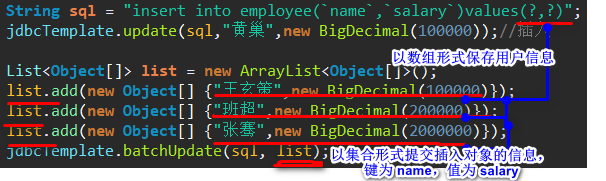
4、批量插入
        @Test

	public void test3() throws Exception {

		String sql = "insert into employee(`name`,`salary`) values(?,?)";

//		jdbcTemplate.update(sql, "尚硅谷94V587",new BigDecimal(100000)); //插入一条

		List<Object[]> batchArgs = new ArrayList<Object[]>();

		batchArgs.add(new Object[] {"新来的1",new BigDecimal(30000)});

		batchArgs.add(new Object[] {"新来的2",new BigDecimal(40000)});

		batchArgs.add(new Object[] {"新来的3",new BigDecimal(50000)});

		jdbcTemplate.batchUpdate(sql, batchArgs);

	}
分析图解:
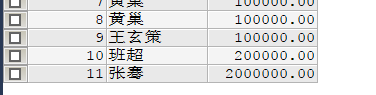
数据库结果:
5、查询id=5的数据库记录,封装为一个Java对象返回
        @Test

	public void test4() throws Exception {

		String sql = "select id,name,salary from employee where id = ?";

//		rowMapper是将查询到的ResultSet的每一行记录转换成为一个javaBean对象

		Employee employee = jdbcTemplate.queryForObject(sql, new BeanPropertyRowMapper<Employee>(Employee.class), 5);

		System.out.println( employee );

	}

6、查询salary>4000的数据库记录,封装为List集合返回
public void test5() throws Exception {

//	QueryRunner

//		update()	====>>>>		insert、update、delete

//		到底是查一条,还是查多条记录,由ResultSetHandler决定

//	Jdbctempalte

//		update()	====>>>>		insert、update、delete

//	queryForObject		查一个对象

//	query				查多个对象

	String sql = "select id,name,salary from employee where salary > ?";

	List<Employee> employees = jdbcTemplate.query(sql,

			new BeanPropertyRowMapper<Employee>(Employee.class), new BigDecimal(4000));

	employees.forEach(System.out::println);

	}
7、查询最大salary
	@Test

	public void test6() throws Exception {

		String sql = "select max(salary) from employee";

		BigDecimal maxSalary = jdbcTemplate.queryForObject(sql, BigDecimal.class);

		System.out.println( maxSalary );

	}
8、使用带有具名参数的SQL语句插入一条员工记录,并以Map形式传入参数值
配置NamedParameterJdbcTemplate
        <!-- 配置可以解析执行具名参数的sql的JdbcTemplate -->

	<bean id="namedParameterJdbcTemplate"

		class="org.springframework.jdbc.core.namedparam.NamedParameterJdbcTemplate">

		<constructor-arg index="0" ref="dataSource" />

	</bean>
Test中添加以下注解,用于注入xml中解析执行具名参数所用

        @Test

	public void test7() throws Exception {

		/**

		 * :name	就是占位符,参数。名是name。	一起,就是具名参数

		 */

		String sql = "insert into employee(`name`,`salary`) values(:name,:salary)";

		Map<String, Object>paramMap = new HashMap<>();

		paramMap.put("name", "这是具名参数的name");

		paramMap.put("salary", new BigDecimal(100000));

		namedParameterJdbcTemplate.update(sql, paramMap);

	}
Mysql 结果:

9、重复8,以SqlParameterSource形式传入参数值
        @Test

	public void test8() throws Exception {

		/**

		 * :name	就是占位符,参数。名是name。		一起,就是具名参数

		 */

		String sql = "insert into employee(`name`,`salary`) values(:name,:salary)";

		Employee employee = new Employee(null, "新插入的帅哥", new BigDecimal(3000));

		namedParameterJdbcTemplate.update(sql, new BeanPropertySqlParameterSource(employee));

	}
10、创建Dao,自动装配JdbcTemplate对象
@Repository

public class EmployeeDao {

	@Autowired

	private JdbcTemplate jdbcTemplate;

	public Employee queryEmployeeById(Integer id) {

		String sql = "select id,name,salary from employee where id = ?";

		Employee employee = jdbcTemplate.queryForObject(sql,

				new BeanPropertyRowMapper<Employee>(Employee.class), id);

		return employee;

	}

}
配置内容:
<context:component-scan base-package="com.webcode"></context:component-scan>
测试代码:
@ContextConfiguration(locations = "classpath:applicationContext.xml")

@RunWith(SpringJUnit4ClassRunner.class)

public class JdbcTempalteTest {

	@Autowired

	JdbcTemplate jdbcTemplate;

	@Autowired

	NamedParameterJdbcTemplate namedParameterJdbcTemplate;

	@Autowired

	EmployeeDao employeeDao;

	@Test

	public void test9() throws Exception {

		System.out.println( employeeDao.queryEmployeeById(1) );

	}

}
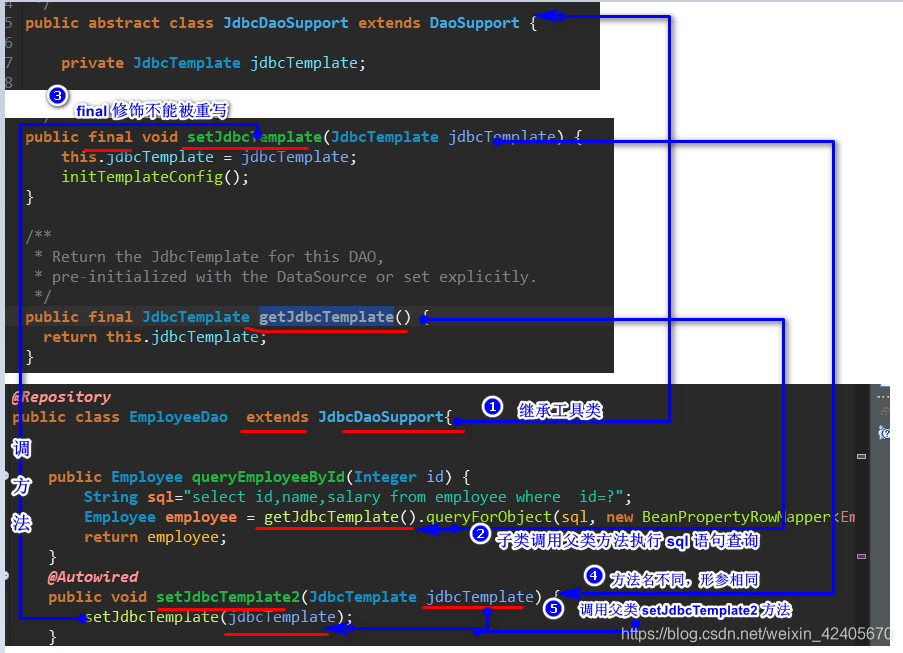
11、通过继承JdbcDaoSupport创建JdbcTemplate的Dao
@Repository

public class EmployeeDao extends JdbcDaoSupport {

//	@Autowired

//	private JdbcTemplate jdbcTemplate;

	public Employee queryEmployeeById(Integer id) {

		String sql = "select id,name,salary from employee where id = ?";

		Employee employee = getJdbcTemplate().queryForObject(sql,

				new BeanPropertyRowMapper<Employee>(Employee.class), id);

		return employee;

	}

	@Autowired

	public void setJdbcTemplate2(JdbcTemplate jdbcTemplate) {

		setJdbcTemplate(jdbcTemplate);

	}

}
源码分析方法实现与调用过程:
二、声明式事务
事务分为声明式和编程式两种:
声明式事务:声明式事务是指通过注解(和xml配置)的形式对事务的各种特性进行控制和管理。
编码式(编程式)事务:指的是通过编码的方式实现事务的声明。
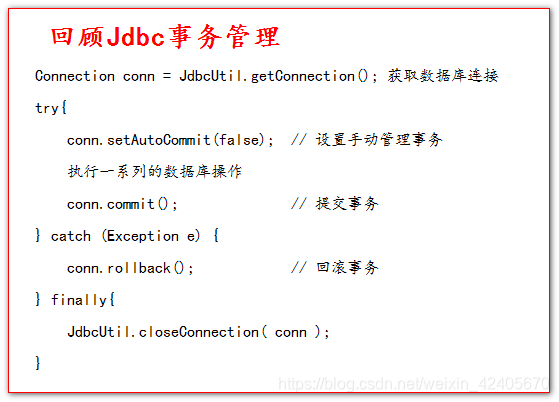
1、编码方式实现事务:
2、声明式事务环境搭建
2.1、准备测试数据库
##创建tx数据库

drop database if exists `tx`;

CREATE database `tx`;

##切换tx数据库

USE `tx`;

##删除用户表

DROP TABLE IF EXISTS `user`;

##创建用户表

CREATE TABLE `user` (

  `id` int primary key auto_increment,

  `username` varchar(50) NOT NULL,

  `money` int(11) DEFAULT NULL

);

##插入数据

insert  into `user`(`username`,`money`) values ('张三',1000),('李四',1000);

##删除图书表

drop table if exists `book`;

##创建图书表

create table `book`(

    `id` int primary key auto_increment,

    `name` varchar(500) not null,

    `stock` int

);

##插入数据

insert into book(`name`,`stock`) values('java编程思想',100),('C++编程思想',100);

##查看数据

select * from book;

select * from user;
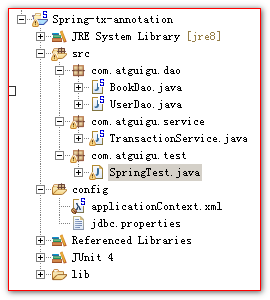
2.2、创建一个Java工程,导入Jar包
@Repository

public class UserDao {

	@Autowired

	JdbcTemplate jdbcTemplate;

	public void updateUser() {

		jdbcTemplate.update("update user set username = '用户表被修改了'");

	}

}

@Repository

public class BookDao {

	@Autowired

	JdbcTemplate jdbcTemplate;

	public void updateBook() {

		jdbcTemplate.update("update book set name = '图书表被修改了'");

	}

}
Service
@Service

public class TransactionService {

	@Autowired

	private UserDao userDao;

	@Autowired

	private BookDao bookDao;

	public void multiUpdate() {

		userDao.updateUser();

		int i = 12 / 0 ;

		bookDao.updateBook();

	}

}
3、测试Service的默认事务
【1】测试service服务层的默认事务
默认一个sql一个事务
@ContextConfiguration(locations="classpath:applicationContext.xml")

@RunWith(SpringJUnit4ClassRunner.class)

public class SpringTest {

	@Autowired

	TransactionService transactionService;

	@Test

	public void testMultiUpdate() throws Exception {

		transactionService.multiUpdate();

	}

}
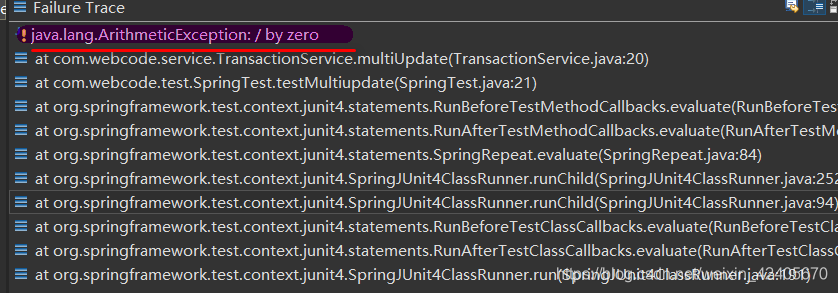
异常的演示

Spring事务引入的分析------PlatformTransactionManager类简单介绍


4、使用Spring的注解声明事务管制
【1】测试Spring的声明式事务
TransactionService中的修改
        /**

	 * @Transactional表示当前方法有事务管理

	 */

	@Transactional

	public void multiUpdate() {

		userDao.updateUser();

//		int i = 12 / 0 ;

		bookDao.updateBook();

	}
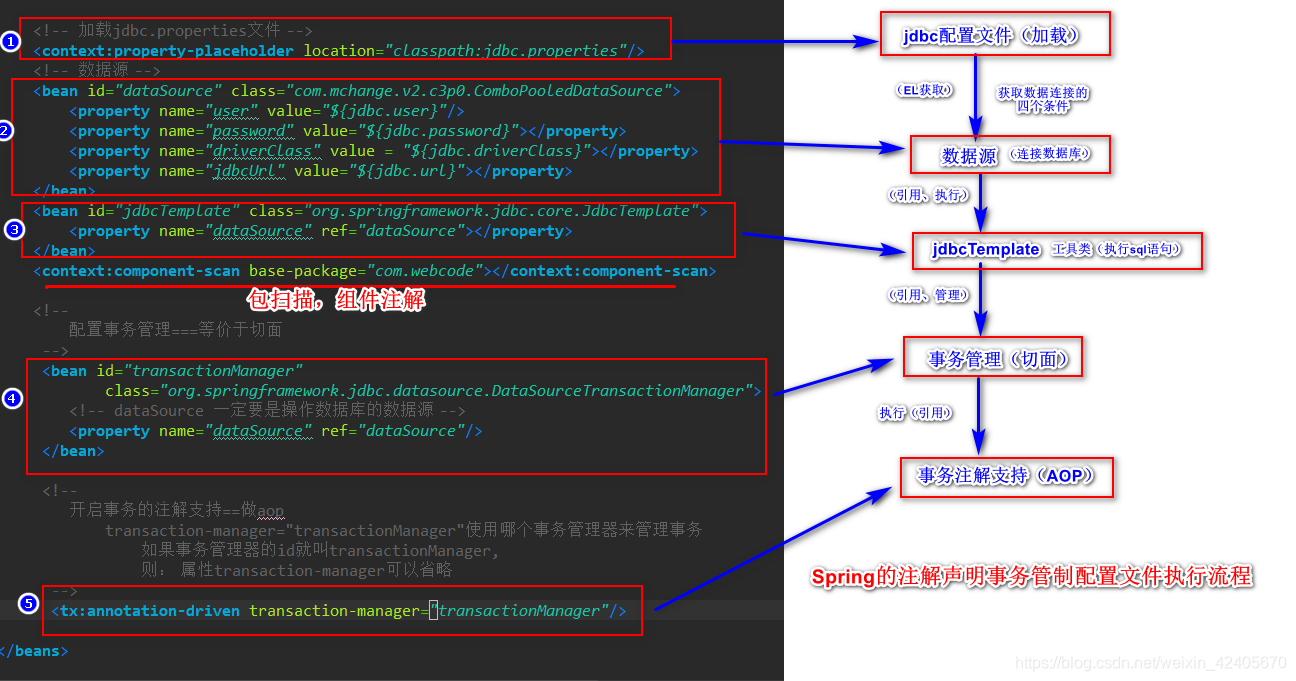
配置文件中的内容:
        <!--

    		配置事务管理===等价于切面

	 -->

	<bean id="transactionManager"

		class="org.springframework.jdbc.datasource.DataSourceTransactionManager">

		<!-- dataSource一定要是操作数据库的数据源 -->

		<property name="dataSource" ref="dataSource" />

	</bean>

	<!--

		开启事务的注解支持==做aop

			transaction-manager="transactionManager" 使用哪个事务管理器来管理事务

				如果事务管理器的id就叫transactionManager,

				则:属性transaction-manager可以省略

	 -->

	<tx:annotation-driven transaction-manager="transactionManager"/>
5、noRollbackFor和noRollbackForClassName测试不回滚的异常
【1】noRollbackFor和noRollbackForClassName测试不回滚的异常
        /**

	 * @throws FileNotFoundException

	 * @Transactional表示当前方法有事务管理<br/>

	 * 	Spring底层默认是回滚运行时异常,以运行时子异常<br/>

	 *  noRollbackFor设置哪些异常不回滚事务<br/>

	 *  noRollbackForClassName设置哪些类型的异常不回滚事务<br/>

	 */

	@Transactional(noRollbackForClassName="java.lang.ArithmeticException")

	public void multiUpdate() throws FileNotFoundException {

		userDao.updateUser();

		int i = 12 / 0 ;

		bookDao.updateBook();

	}
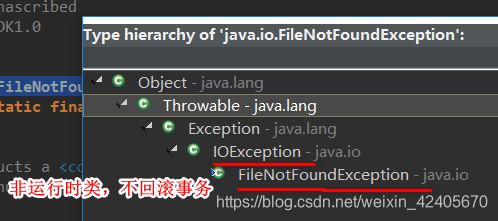
运行时异常回滚

编译异常:不回滚
6、自定义设置回滚异常
【1】rollbackFor和rollbackForClassName回滚的异常
        /**

	 * @throws FileNotFoundException

	 * @Transactional表示当前方法有事务管理<br/>

	 * 	Spring底层默认是回滚运行时异常,以运行时子异常<br/>

	 * 	rollbackFor是设置哪个异常回滚事务<br/>

	 *  rollbackForClassName是设置哪个异常类名也会回滚事务<br/>

	 */

	@Transactional()

	public void multiUpdate() throws FileNotFoundException {

		userDao.updateUser();

//		int i = 12 / 0 ;

		int i = 12 ;

		if (i == 12) {

			throw new FileNotFoundException("asdf");

		}

		bookDao.updateBook();

	}
7、事务的只读属性
实验4:测试readOnly只读属性
        /**

	 * @throws FileNotFoundException

	 * @Transactional表示当前方法有事务管理<br/>

	 * 	Spring底层默认是回滚运行时异常,以运行时子异常<br/>

	 * readOnly 设置当前执行的sql语句是不是只是select查询

	 * 	如果设置为false就允许执行insert,delete、update

	 */

	@Transactional(readOnly=true)

	public void multiUpdate() throws FileNotFoundException {

		userDao.updateUser();

		bookDao.updateBook();

	}

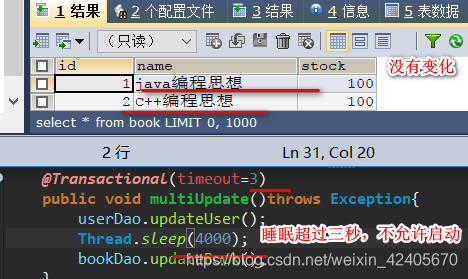
8、事务超时属性timeout(秒为单位)
        /**

	 * @throws FileNotFoundException

	 * @throws InterruptedException

	 * @Transactional表示当前方法有事务管理<br/>

	 * 	Spring底层默认是回滚运行时异常,以运行时子异常<br/>

	 * timeout设置连接的超时属性。

	 * timeout=3表示3秒后不允许再执行sql语句

	 */

	@Transactional(timeout=3)

	public void multiUpdate() throws InterruptedException {

		userDao.updateUser();

		Thread.sleep(4000);

		bookDao.updateBook();

	}
10、事务的传播特性propagation
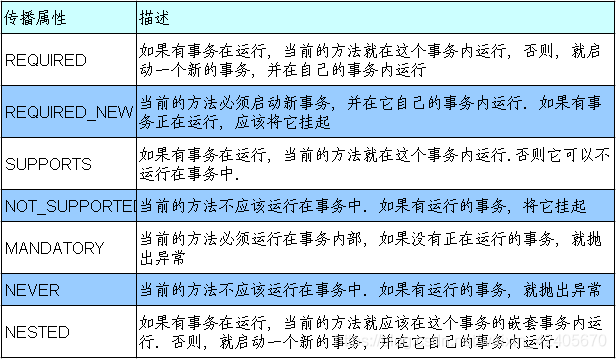
什么是事务的传播行为:
当事务方法被另一个事务方法调用时,必须指定事务应该如何传播。例如:方法可能继续在现有事务中运行,也可能开启一个新事务,并在自己的事务中运行。
事务的传播行为可以由传播属性指定。Spring定义了7种类传播行为。
事务的传播特性,有以下几种类型:
11、注解演示事物传播特性
UserService
BookService
TransactionService
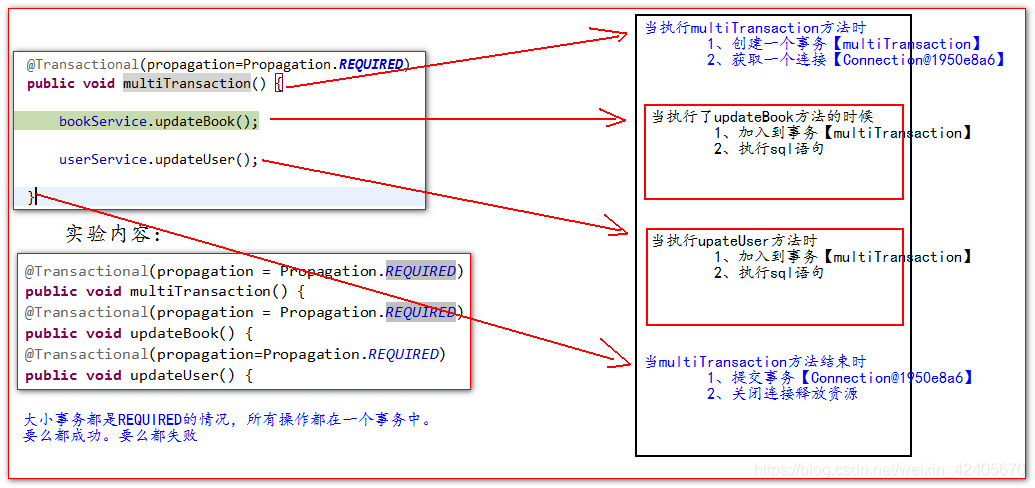
实验1:大小事务传播特性都是REQUIRED
        @Transactional(propagation = Propagation.REQUIRED)

	public void multiTransaction() {

	@Transactional(propagation = Propagation.REQUIRED)

	public void updateBook() {

        @Transactional(propagation=Propagation.REQUIRED)

        public void updateUser() {
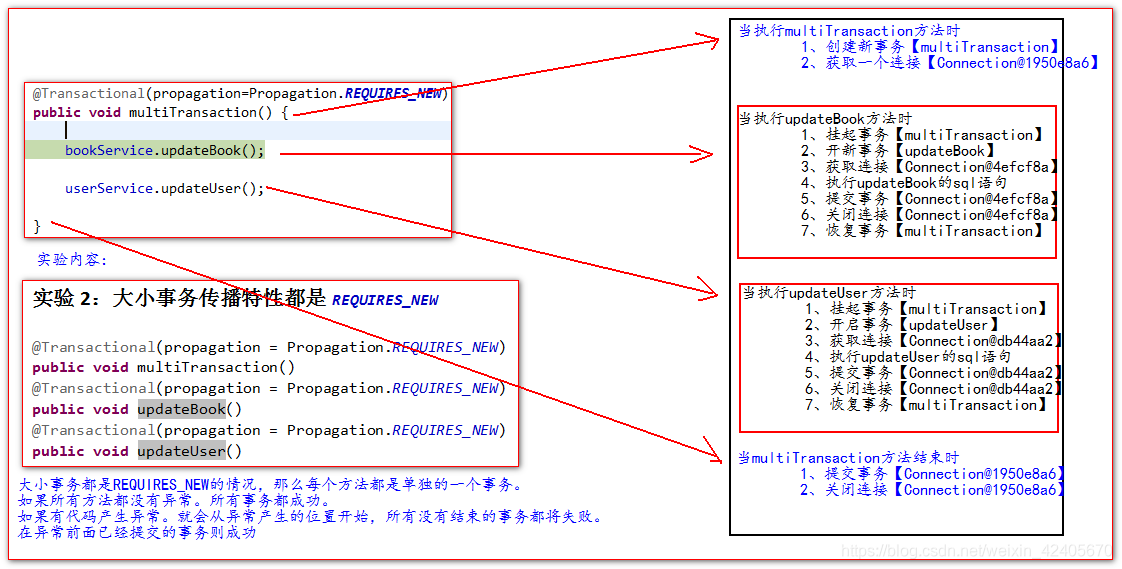
实验2:大小事务传播特性都是REQUIRES_NEW
        @Transactional(propagation = Propagation.REQUIRES_NEW)

	public void multiTransaction()

	@Transactional(propagation = Propagation.REQUIRES_NEW)

	public void updateBook()

	@Transactional(propagation = Propagation.REQUIRES_NEW)

	public void updateUser()
实验3:大事务是REQUIRED,小事务都是REQUIRES_NEW
        @Transactional(propagation = Propagation.REQUIRED)

	public void multiTransaction()

	@Transactional(propagation = Propagation.REQUIRES_NEW)

	public void updateBook()

	@Transactional(propagation = Propagation.REQUIRES_NEW)

	public void updateUser()
实验3跟实验2一样。
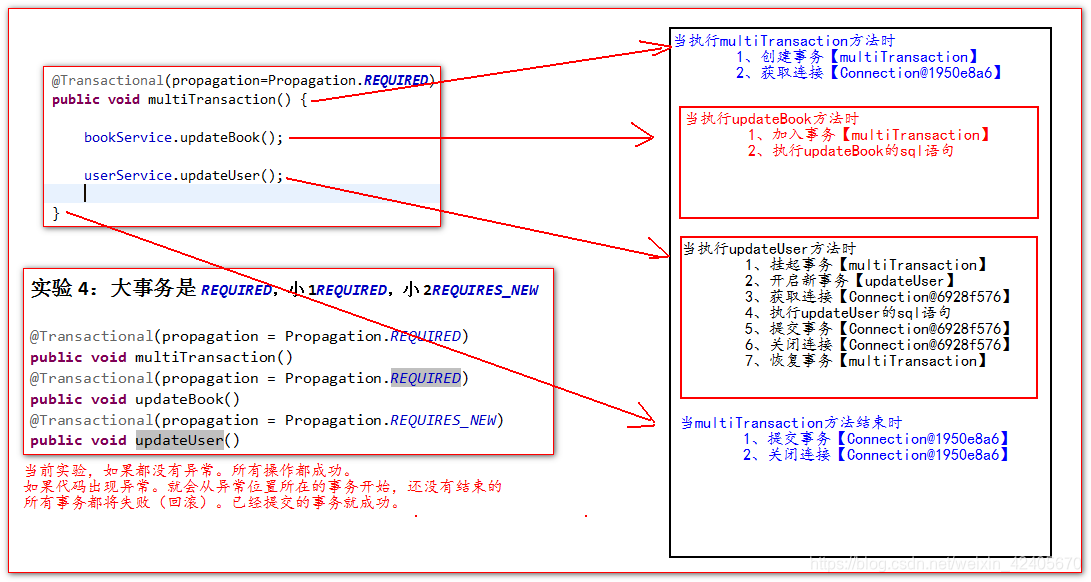
实验4:大事务是REQUIRED,小1REQUIRED,小2REQUIRES_NEW
	@Transactional(propagation = Propagation.REQUIRED)

	public void multiTransaction()

	@Transactional(propagation = Propagation.REQUIRED)

	public void updateBook()

	@Transactional(propagation = Propagation.REQUIRES_NEW)

	public void updateUser()
三、xml配置式事务声明
去掉。所有@Transactional的注解。
配置文件内容:
<?xml version="1.0" encoding="UTF-8"?>

<beans xmlns="http://www.springframework.org/schema/beans"

	xmlns:xsi="http://www.w3.org/2001/XMLSchema-instance"

	xmlns:context="http://www.springframework.org/schema/context"

	xmlns:tx="http://www.springframework.org/schema/tx"

	xmlns:aop="http://www.springframework.org/schema/aop"

	xsi:schemaLocation="http://www.springframework.org/schema/beans http://www.springframework.org/schema/beans/spring-beans.xsd

		http://www.springframework.org/schema/context http://www.springframework.org/schema/context/spring-context.xsd

		http://www.springframework.org/schema/aop http://www.springframework.org/schema/aop/spring-aop-4.3.xsd

		http://www.springframework.org/schema/tx http://www.springframework.org/schema/tx/spring-tx.xsd">

	<context:component-scan base-package="com.webcode"></context:component-scan>

	<!-- 加载jdbc.properties配置文件 -->

	<context:property-placeholder location="classpath:jdbc.properties"/>

	<!-- 数据源 -->

	<bean id="dataSource" class="com.mchange.v2.c3p0.ComboPooledDataSource">

		<property name="user" value="${jdbc.user}" />

		<property name="password" value="${jdbc.password}" />

		<property name="driverClass" value="${jdbc.driverClass}" />

		<property name="jdbcUrl" value="${jdbc.url}" />

	</bean>

	<!-- jdbcTempalte是一个工具类,专门用来执行sql语句 -->

	<bean id="jdbcTemplate" class="org.springframework.jdbc.core.JdbcTemplate">

		<property name="dataSource" ref="dataSource"/>

	</bean>

	<!-- 配置事务管理器 -->

	<bean id="transactionManager"

		class="org.springframework.jdbc.datasource.DataSourceTransactionManager">

		<property name="dataSource" ref="dataSource" />

	</bean>

	<!-- 配置事务特性 -->

	<tx:advice id="tx_advice" transaction-manager="transactionManager">

		<tx:attributes>

			<!--

				配置一个或多个方法的特性

				<tx:method name="save*" propagation="REQUIRED"/>

					name表示方法名

						save*表示方法名以save打头的方法都算

					propagation="REQUIRED"表示必须要有事务

			 -->

			<tx:method name="save*" propagation="REQUIRED"/>

			<tx:method name="update*" propagation="REQUIRED"/>

			<tx:method name="delete*" propagation="REQUIRED"/>

			<!--

				精确匹配方法名

					精确匹配优先 ===>>> 半模糊(update*) ====>>>> *

			 -->

			<tx:method name="multiTransaction" propagation="REQUIRED"/>

			<tx:method name="updateUser" propagation="REQUIRES_NEW"/>

			<!--

				*表示剩下的方法

				read-only="true"会做一些优化

			 -->

			<tx:method name="*" read-only="true"/>

		</tx:attributes>

	</tx:advice>

	<!--

		配置代理

	 -->

	<aop:config>

		<!-- advisor是配置切面 -->

		<aop:advisor advice-ref="tx_advice"

			pointcut="execution(public * com.webcode.service..*Service*.*(..))"/>

	</aop:config>

</beans>
四、Spring整合Web
1、在web工程中添加Spring的jar包
Spring的核心包

    spring-beans-4.0.0.RELEASE.jar

    spring-context-4.0.0.RELEASE.jar

    spring-core-4.0.0.RELEASE.jar

    spring-expression-4.0.0.RELEASE.jar

aop包

    spring-aop-4.0.0.RELEASE.jar

    spring-aspects-4.0.0.RELEASE.jar

    com.springsource.org.aopalliance-1.0.0.jar

    com.springsource.org.aspectj.weaver-1.6.8.RELEASE.jar

JDBC-ORM包

    spring-jdbc-4.0.0.RELEASE.jar

    spring-orm-4.0.0.RELEASE.jar

    spring-tx-4.0.0.RELEASE.jar

Spring的web整合包

    spring-web-4.0.0.RELEASE.jar

测试包

    spring-test-4.0.0.RELEASE.jar
- ServletContext在web工程启动的时候创建
- 在Web工程停止的时候销毁
整合Spring和Web容器分两个步骤:
1、导入spring-web-4.0.0.RELEASE.jar
2、在web.xml配置文件中配置org.springframework.web.context.ContextLoaderListener监听器监听ServletContext的初始化
3、在web.xml配置文件中配置contextConfigLocation上下文参数。配置Spring配置文件的位置,以用于初始化Spring容器
在web.xml中配置
 <context-param>

  	<param-name>contextConfigLocation</param-name>

  	<param-value>classpath:applicationContext.xml</param-value>

  </context-param>

  <listener>

  	<listener-class>org.springframework.web.context.ContextLoaderListener</listener-class>

  </listener>
获取WebApplicationContext上下文对象的方法如下:
方法一(推荐):
WebApplicationContextUtils.getWebApplicationContext(getServletContext())
方法二(不推荐):
getServletContext().getAttribute(WebApplicationContext.ROOT_WEB_APPLICATION_CONTEXT_ATTRIBUTE);
Spring ( 五 )Spring之数据访问与事务管理的更多相关文章
- Spring 4 官方文档学习(九)数据访问之事务管理
说明:未整理版,未完待续,请绕行 本部分的重点是数据访问以及数据访问层与业务层之间的交互. 1.Spring框架的事务管理 介绍 http://docs.spring.io/spring/docs/c ...
- Spring数据访问和事务
1.模型 2.解耦 3.实现 3.1 核心接口 3.2 代码分析 3.2.1 事务管理 3.2.2 数据访问 4.使用 4.1 编程模式 4.2 配置模式 4.2.1 声明式配置方式 4.2.2 注解 ...
- Solon Web 开发,五、数据访问、事务与缓存应用
Solon Web 开发 一.开始 二.开发知识准备 三.打包与运行 四.请求上下文 五.数据访问.事务与缓存应用 六.过滤器.处理.拦截器 七.视图模板与Mvc注解 八.校验.及定制与扩展 九.跨域 ...
- SpringBoot之数据访问和事务-专题三
SpringBoot之数据访问和事务-专题三 四.数据访问 4.1.springboot整合使用JdbcTemplate 4.1.1 pom文件引入 <parent> <groupI ...
- Spring Boot 2.x基础教程:事务管理入门
什么是事务? 我们在开发企业应用时,通常业务人员的一个操作实际上是对数据库读写的多步操作的结合.由于数据操作在顺序执行的过程中,任何一步操作都有可能发生异常,异常会导致后续操作无法完成,此时由于业务逻 ...
- Spring整合Hibernate 二 - 声明式的事务管理
Spring大战Hibernate之声明式的事务管理 Spring配置文件: 添加事务管理类的bean: <bean id="txManager" class="o ...
- 程序员笔记|Spring IoC、面向切面编程、事务管理等Spring基本概念详解
一.Spring IoC 1.1 重要概念 1)控制反转(Inversion of control) 控制反转是一种通过描述(在java中通过xml或者注解)并通过第三方去产生或获取特定对象的方式. ...
- Spring Boot 中使用 @Transactional 注解配置事务管理
事务管理是应用系统开发中必不可少的一部分.Spring 为事务管理提供了丰富的功能支持.Spring 事务管理分为编程式和声明式的两种方式.编程式事务指的是通过编码方式实现事务:声明式事务基于 AOP ...
- Spring Boot中使用@Transactional注解配置事务管理
事务管理是应用系统开发中必不可少的一部分.Spring 为事务管理提供了丰富的功能支持.Spring 事务管理分为编程式和声明式的两种方式.编程式事务指的是通过编码方式实现事务:声明式事务基于 AOP ...
随机推荐
- java读源码 之 list源码分析(LinkedList)
文章目录 LinkedList: 继承关系分析: 字段分析: 构造函数分析: 方法分析: LinkedList: 继承关系分析: public class LinkedList<E> ex ...
- 201771010113 李婷华 《面向对象程序设计(Java)》第十六周总结
一.理论知识部分 1.程序是一段静态的代码,它应用程序执行蓝 是一段静态的代码,它应用程序执行蓝 是一段静态的代码,它应用程序执行蓝本. 2.进程是程序的一次动态执行,它对应了从代码加载.执行至执行完 ...
- metasploit payload运行原理浅析
背景 最近在做一些msf相关的事情,今天听到免杀相关的,去查询了下相关资料. 第一个不能错过的就是cobalt strike作者早年写的metasploit-loader项目了,我看了项目源码,找了一 ...
- EEGLAB-批量处理.dat数据及保存脑电地形图
步骤 1.先在图形界面操作一遍准备做的操作. 2.在命令行窗口输入 EEG.history 获取刚刚操作都用到哪些语句. 3.稍加修改即可以写一个批量化函数来读取生成数据. 4.在 EEGLAB\ee ...
- 在培训机构花了好几万学Java,当了程序员还常被鄙视,这是招谁惹谁了?
在之前的文章中说过,我是非计算机专业,通过参加培训进入程序员这行的. 入了程序员这行后,挺长一段时间在亲戚朋友中,我还是挺有面子的:家族里的第一个程序员,工作不用风吹日晒,收入比其他行业高不少,尤其是 ...
- [zoj3632]线段树的应用
题意:f[i] = min(f[i+L]~f[i+R]) + x,计算f数组.从大到小计算即可,用线段树维护一下. #pragma comment(linker, "/STACK:10240 ...
- Java 在Excel中创建透视表
本文内容介绍通过Java程序在Excel表格中根据数据来创建透视表. 环境准备 需要使用Excel类库工具—Free Spire.XLS for Java,这里使用的是免费版,可通过官网下载Jar包并 ...
- 题解 洛谷P2959 【[USACO09OCT]悠闲漫步The Leisurely Stroll】
原题:洛谷P2959 不得不说这道题的图有点吓人,但实际上很多都没有用 通过题上说的“三岔路口”(对于每一个节点有三条连接,其中一条连接父节点,另外两条连接子节点)和数据,可以那些乱七八糟的路和牧场看 ...
- PAT 1011 World Cup Betting (20分) 比较大小难度级别
题目 With the 2010 FIFA World Cup running, football fans the world over were becoming increasingly exc ...
- 手把手教你用Python网络爬虫获取网易云音乐歌曲
前天给大家分享了用Python网络爬虫爬取了网易云歌词,在文尾说要爬取网易云歌曲,今天小编带大家一起来利用Python爬取网易云音乐,分分钟将网站上的音乐down到本地. 跟着小编运行过代码的筒子们将 ...