
Unit01: Spring简介 、 Spring容器 、 Spring IOC
Unit01: Spring简介 、 Spring容器 、 Spring IOC
Spring
(1)Spring是什么?
Spring是一个开源的用来简化应用开发的框架。
(2)Spring的特点?
简化开发
Spring对很多常用的api做了简化(比如,Spring对jdbc就做了很好的 封装,我们利用Springjdbc访问数据库,就不用考虑如何获取连接和关闭 连接)。
解耦
Spring帮我们管理对象之间的依赖关系,这样,便于代码的维护。
集成
Spring可以集成其它的一些框架。集成之后,这些框架的使用会变得 更加的简单。
(3)Spring容器
Spring容器是什么?
Spring框架当中的一个核心模块,用来管理对象。
如何启动Spring容器?
step1. 导包。
step2. 添加配置文件。
step3. 编写启动Spring容器的代码。
如何创建对象?
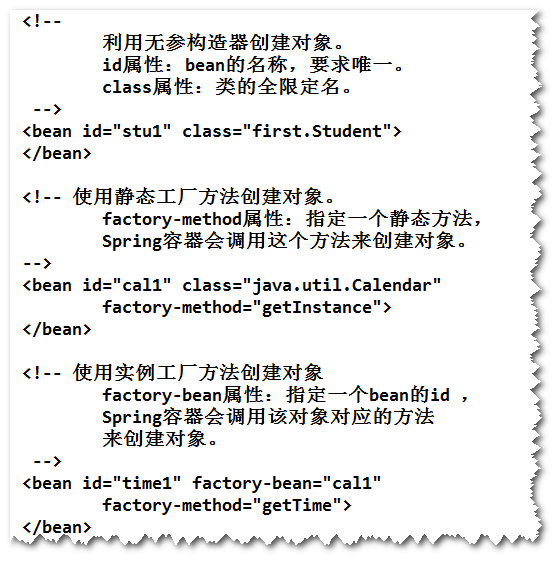
方式一 无参构造器
step1. 类应用提供无参构造器(或者缺省构造器)。
step2. 在配置文件当中,添加一个bean元素。
step3. 启动Spring容器,调用容器提供的getBean方法获得要创建的
对象。
方式二 静态工厂方法 (了解)
方式三 实例工厂方法 (了解)
生命周期的管理
初始化方法 :
(用于获取资源,只执行一次)。
销毁方法:
(用于释放资源,只执行一次)。
注意,销毁方法只有在作用域为singleton才起作用。
作用域
默认情况下,对于一个bean元素,容器只会创建一个对应的实例。
可以设置作用域为prototype(原型,多个实例)。
延迟加载 (了解)
默认情况下,当容器启动之后,会将所有作用域为单例的bean创建好。
lazy-init属性:如果值为true,表示延迟加载,即容器启动之后,不会立即创建该实例。
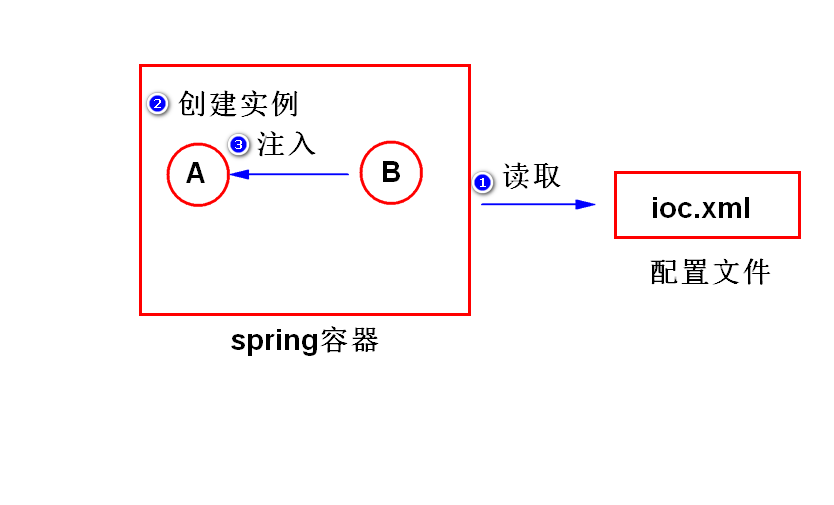
(4)IOC (Inversion Of Controll 控制反转)
什么是IOC?
对象之间的依赖关系由容器来建立。
什么是DI? (Dependency Injection 依赖注入)
容器通过调用set方法或者构造器来建立对象之间的依赖关系。
注: IOC是目标,而DI是手段。
依赖注入的两种方式
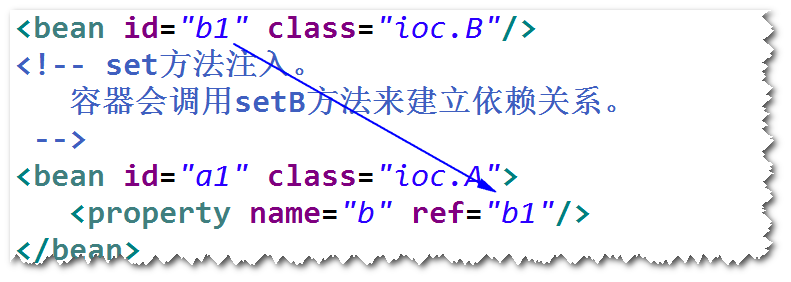
方式一 set方法。
step1. 添加set方法。

step2. 配置set方法注入。
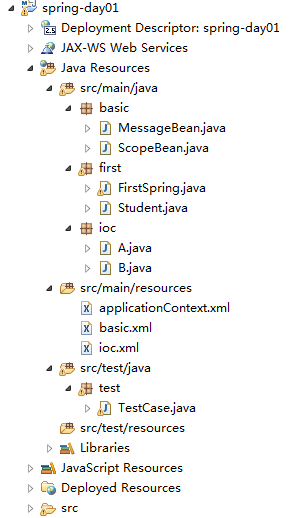
代码演示:
依赖的Jar包:
<project xmlns="http://maven.apache.org/POM/4.0.0" xmlns:xsi="http://www.w3.org/2001/XMLSchema-instance" xsi:schemaLocation="http://maven.apache.org/POM/4.0.0 http://maven.apache.org/xsd/maven-4.0.0.xsd">

  <modelVersion>4.0.0</modelVersion>

  <groupId>com.tarena.spring</groupId>

  <artifactId>spring-day01</artifactId>

  <version>0.0.1-SNAPSHOT</version>

  <packaging>war</packaging>

  <dependencies>

      <dependency>

          <groupId>org.springframework</groupId>

          <artifactId>spring-webmvc</artifactId>

          <version>3.2.8.RELEASE</version>

      </dependency>

      <dependency>

          <groupId>junit</groupId>

          <artifactId>junit</artifactId>

          <version>4.12</version>

      </dependency>

  </dependencies>

</project>
pom.xml
src/main/java/
basic
package basic;

public class MessageBean {

    public MessageBean() {

        System.out.println("MessageBean()");

    }

    public void init(){

        System.out.println("init()");

    }

    public void sendMsg(){

        System.out.println("sendMsg()");

    }

    public void destroy(){

        System.out.println("destroy()");

    }

}
MessageBean.java
package basic;

public class ScopeBean {

    public ScopeBean() {

        System.out.println("ScopeBean()");

    }

}
ScopeBean.java
first
package first;

import java.util.Calendar;

import java.util.Date;

import org.springframework.context.ApplicationContext;

import org.springframework.context.support.ClassPathXmlApplicationContext;

public class FirstSpring {

    public static void main(String[] args) {

        //step1. 启动Spring容器

        /*

         * ClassPathXmlApplicationContext

         * 会依据类路径查找配置文件。

         */

        ApplicationContext ac =

        new ClassPathXmlApplicationContext(

                "applicationContext.xml");

        //System.out.println(ac);

        //step2. 通过容器,获得对象。

        Student stu1 =

                ac.getBean("stu1",Student.class);

        System.out.println(stu1);

        Date date1 =

                ac.getBean("date1",Date.class);

        System.out.println(date1);

        Calendar cal1 =

                ac.getBean("cal1",Calendar.class);

        System.out.println("cal1:" + cal1);

        Date time1 =

                ac.getBean("time1",Date.class);

        System.out.println("time1:" + time1);

    }

}
FirstSpring.java
package first;

public class Student {

    public Student() {

        System.out.println("Student()");

    }

}
Student.java
ioc
package ioc;

public class A {

    private B b;

    public void setB(B b) {

        System.out.println("A's setB()");

        this.b = b;

    }

    public A() {

        System.out.println("A()");

    }

    public void service(){

        System.out.println("A's service()");

        //调用B的f1()方法

        b.f1();

    }

}
A.java
package ioc;

public class B {

    public B() {

        System.out.println("B()");

    }

    public void f1(){

        System.out.println("B's f1()");

    }

}
B.java
src/main/resource
<?xml version="1.0" encoding="UTF-8"?>

<beans xmlns="http://www.springframework.org/schema/beans"

    xmlns:xsi="http://www.w3.org/2001/XMLSchema-instance"

    xmlns:context="http://www.springframework.org/schema/context"

    xmlns:jdbc="http://www.springframework.org/schema/jdbc"

    xmlns:jee="http://www.springframework.org/schema/jee"

    xmlns:tx="http://www.springframework.org/schema/tx"

    xmlns:aop="http://www.springframework.org/schema/aop"

    xmlns:mvc="http://www.springframework.org/schema/mvc"

    xmlns:util="http://www.springframework.org/schema/util"

    xmlns:jpa="http://www.springframework.org/schema/data/jpa"

    xsi:schemaLocation="

        http://www.springframework.org/schema/beans http://www.springframework.org/schema/beans/spring-beans-3.2.xsd

        http://www.springframework.org/schema/context http://www.springframework.org/schema/context/spring-context-3.2.xsd

        http://www.springframework.org/schema/jdbc http://www.springframework.org/schema/jdbc/spring-jdbc-3.2.xsd

        http://www.springframework.org/schema/jee http://www.springframework.org/schema/jee/spring-jee-3.2.xsd

        http://www.springframework.org/schema/tx http://www.springframework.org/schema/tx/spring-tx-3.2.xsd

        http://www.springframework.org/schema/data/jpa http://www.springframework.org/schema/data/jpa/spring-jpa-1.3.xsd

        http://www.springframework.org/schema/aop http://www.springframework.org/schema/aop/spring-aop-3.2.xsd

        http://www.springframework.org/schema/mvc http://www.springframework.org/schema/mvc/spring-mvc-3.2.xsd

        http://www.springframework.org/schema/util http://www.springframework.org/schema/util/spring-util-3.2.xsd">

    <!--

        利用无参构造器创建对象。

        id属性:bean的名称,要求唯一。

        class属性:类的全限定名。

     -->

    <bean id="stu1" class="first.Student">

    </bean>

    <bean id="date1" class="java.util.Date">

    </bean>

    <!-- 使用静态工厂方法创建对象。

        factory-method属性:指定一个静态方法,

        Spring容器会调用这个方法来创建对象。

    -->

    <bean id="cal1" class="java.util.Calendar"

        factory-method="getInstance">

    </bean>

    <!-- 使用实例工厂方法创建对象

        factory-bean属性:指定一个bean的id ,

        Spring容器会调用该对象对应的方法

        来创建对象。

     -->

    <bean id="time1" factory-bean="cal1"

        factory-method="getTime">

    </bean>

</beans>
applicationContext.xml
<?xml version="1.0" encoding="UTF-8"?>

<beans xmlns="http://www.springframework.org/schema/beans"

    xmlns:xsi="http://www.w3.org/2001/XMLSchema-instance"

    xmlns:context="http://www.springframework.org/schema/context"

    xmlns:jdbc="http://www.springframework.org/schema/jdbc"

    xmlns:jee="http://www.springframework.org/schema/jee"

    xmlns:tx="http://www.springframework.org/schema/tx"

    xmlns:aop="http://www.springframework.org/schema/aop"

    xmlns:mvc="http://www.springframework.org/schema/mvc"

    xmlns:util="http://www.springframework.org/schema/util"

    xmlns:jpa="http://www.springframework.org/schema/data/jpa"

    xsi:schemaLocation="

        http://www.springframework.org/schema/beans http://www.springframework.org/schema/beans/spring-beans-3.2.xsd

        http://www.springframework.org/schema/context http://www.springframework.org/schema/context/spring-context-3.2.xsd

        http://www.springframework.org/schema/jdbc http://www.springframework.org/schema/jdbc/spring-jdbc-3.2.xsd

        http://www.springframework.org/schema/jee http://www.springframework.org/schema/jee/spring-jee-3.2.xsd

        http://www.springframework.org/schema/tx http://www.springframework.org/schema/tx/spring-tx-3.2.xsd

        http://www.springframework.org/schema/data/jpa http://www.springframework.org/schema/data/jpa/spring-jpa-1.3.xsd

        http://www.springframework.org/schema/aop http://www.springframework.org/schema/aop/spring-aop-3.2.xsd

        http://www.springframework.org/schema/mvc http://www.springframework.org/schema/mvc/spring-mvc-3.2.xsd

        http://www.springframework.org/schema/util http://www.springframework.org/schema/util/spring-util-3.2.xsd">

    <!--

        init-method属性:指定初始化方法。

        destroy-method属性:指定销毁方法。

        lazy-init属性:如果值为true,表示延迟加载,

        即容器启动之后,不会立即创建该实例。

     -->

    <bean id="mb1" class="basic.MessageBean"

        init-method="init"

        destroy-method="destroy"

        lazy-init="true">

    </bean>

    <!--

        scope属性:指定作用域,缺省值是

        singleton(单例,即单个实例);

        可以设置作用域为prototype(原型,多个实例)。

     -->

    <bean id="sb1" class="basic.ScopeBean"

    scope="prototype">

    </bean>

</beans>
basic.java
<?xml version="1.0" encoding="UTF-8"?>

<beans xmlns="http://www.springframework.org/schema/beans"

    xmlns:xsi="http://www.w3.org/2001/XMLSchema-instance"

    xmlns:context="http://www.springframework.org/schema/context"

    xmlns:jdbc="http://www.springframework.org/schema/jdbc"

    xmlns:jee="http://www.springframework.org/schema/jee"

    xmlns:tx="http://www.springframework.org/schema/tx"

    xmlns:aop="http://www.springframework.org/schema/aop"

    xmlns:mvc="http://www.springframework.org/schema/mvc"

    xmlns:util="http://www.springframework.org/schema/util"

    xmlns:jpa="http://www.springframework.org/schema/data/jpa"

    xsi:schemaLocation="

        http://www.springframework.org/schema/beans http://www.springframework.org/schema/beans/spring-beans-3.2.xsd

        http://www.springframework.org/schema/context http://www.springframework.org/schema/context/spring-context-3.2.xsd

        http://www.springframework.org/schema/jdbc http://www.springframework.org/schema/jdbc/spring-jdbc-3.2.xsd

        http://www.springframework.org/schema/jee http://www.springframework.org/schema/jee/spring-jee-3.2.xsd

        http://www.springframework.org/schema/tx http://www.springframework.org/schema/tx/spring-tx-3.2.xsd

        http://www.springframework.org/schema/data/jpa http://www.springframework.org/schema/data/jpa/spring-jpa-1.3.xsd

        http://www.springframework.org/schema/aop http://www.springframework.org/schema/aop/spring-aop-3.2.xsd

        http://www.springframework.org/schema/mvc http://www.springframework.org/schema/mvc/spring-mvc-3.2.xsd

        http://www.springframework.org/schema/util http://www.springframework.org/schema/util/spring-util-3.2.xsd">

    <bean id="b1" class="ioc.B"/>

    <!-- set方法注入。

        容器会调用setB方法来建立依赖关系。

     -->

    <bean id="a1" class="ioc.A">

        <property name="b" ref="b1"/>

    </bean>

</beans>
ioc.xml
src/test/java
test
package test;

import org.junit.Test;

import org.springframework.context.ApplicationContext;

import org.springframework.context.support.AbstractApplicationContext;

import org.springframework.context.support.ClassPathXmlApplicationContext;

import basic.MessageBean;

import basic.ScopeBean;

import ioc.A;

public class TestCase {

    @Test

    //测试 初始化方法和销毁方法

    public void test1(){

        //启动spring容器

        String config = "basic.xml";

        /*

         * ApplicationContext接口没有提供

         * 关闭容器的方法。

         */

        AbstractApplicationContext ac =

        new ClassPathXmlApplicationContext(

                config);

        //通过容器获得对象

        MessageBean mb1 =

                ac.getBean("mb1",MessageBean.class);

        mb1.sendMsg();

        //关闭容器

        ac.close();

    }

    @Test

    //测试  作用域

    public void test2(){

        //启动spring容器

        String config = "basic.xml";

        ApplicationContext ac =

        new ClassPathXmlApplicationContext(

                config);

        ScopeBean sb1 =

                ac.getBean("sb1",ScopeBean.class);

        ScopeBean sb2 =

                ac.getBean("sb1",ScopeBean.class);

        System.out.println(sb1 == sb2);

    }

    @Test

    //测试  延迟加载

    public void test3(){

        //启动spring容器

        String config = "basic.xml";

        ApplicationContext ac =

        new ClassPathXmlApplicationContext(

                config);

    }

    @Test

    //测试  依赖注入

    public void test4(){

        //启动spring容器

        String config = "ioc.xml";

        ApplicationContext ac =

        new ClassPathXmlApplicationContext(

                config);

        A a1 =

            ac.getBean("a1",A.class);

        a1.service();

    }

}
TestCase.java
下面是上面这个案例:ioc包下的方法升级版:
增加一个IB接口,B.java , C.java实现IB.java接口,实现f1()方法,能让A.java灵活调用B和C下的f1方法。
ioc
接口:
package ioc;

public interface IB {

    public void f1();

}
IB.java
package ioc;

public class A {

    private IB b;

    public void setB(IB b) {

        System.out.println("A's setB()");

        this.b = b;

    }

    public A() {

        System.out.println("A()");

    }

    public void service(){

        System.out.println("A's service()");

        //调用B的f1()方法

        b.f1();

    }

}
A.java
package ioc;

public class B implements IB{

    public B() {

        System.out.println("B()");

    }

    public void f1(){

        System.out.println("B's f1()");

    }

}
B.java
package ioc;

public class C implements IB{

    public C() {

        System.out.println("C()");

    }

    public void f1(){

        System.out.println("C's f1()");

    }

}
C.java
Unit01: Spring简介 、 Spring容器 、 Spring IOC的更多相关文章
- spring简介、容器、IOC
对IOC的理解: 在平时的java应用开发中,我们要实现某一个功能或者说是完成某个业务逻辑时至少需要两个或以上的对象来协作完成,在没有使用Spring的时候,每个对象在需要使用他的合作对象时,自己均要 ...
- [Spring学习笔记 1 ] Spring 简介,初步知识--Ioc容器详解 基本原理。
一.Spring Ioc容器详解(1) 20131105 1.一切都是Bean Bean可是一个字符串或者是数字,一般是一些业务组件. 粒度一般比较粗. 2.Bean的名称 xml配置文件中,id属性 ...
- 【Spring 1】Spring简介
一.Spring简介 首先,Spring框架是由于软件开发的复杂性而创建的.Spring使用的是基本的JavaBean来完成以前只可能由EJB完成的事情.然而,Spring的用途不仅仅限于服务器端的开 ...
- spring框架篇(一)-------spring简介与配置文件使用控制反转事例
spring简介 Spring 是一个开源框架,中文意思就是春天,也许是作者想让自己的这个框架给Java开发人员带来春天吧.其官方网站是 https://spring.io/ ,可以在官方网站下载到完 ...
- Spring简介即Spring Ioc
Spring框架简介 Spring是一个开源框架,Spring是于2003 年兴起的一个轻量级的Java 开发框架,由Rod Johnson 在其著作Expert One-On-One J2EE De ...
- 【Spring】IoC容器 - Spring Bean作用域Scope(含SpringCloud中的RefreshScope )
前言 上一章学习了[依赖来源],本章主要讨论SpringBean的作用域,我们这里讨论的Bean的作用域,很大程度都是默认只讨论依赖来源为[Spring BeanDefinition]的作用域,因为在 ...
- MyEclipse Spring 学习总结一 Spring IOC容器
一.Spring IOC容器---- Spring AllicationContext容器 程序的结构如下: 1.首先在MyEclipse 创建创建Java Project 2.创建好后,添加spin ...
- 【spring源码分析】IOC容器初始化(总结)
前言:在经过前面十二篇文章的分析,对bean的加载流程大致梳理清楚了.因为内容过多,因此需要进行一个小总结. 经过前面十二篇文章的漫长分析,终于将xml配置文件中的bean,转换成我们实际所需要的真正 ...
- 【spring源码分析】IOC容器初始化(二)
前言:在[spring源码分析]IOC容器初始化(一)文末中已经提出loadBeanDefinitions(DefaultListableBeanFactory)的重要性,本文将以此为切入点继续分析. ...
随机推荐
- js排序算法03——选择排序
选排序的思路是首先从要排序的数组中选择最小的和目前的第一位交换位置,然后从剩下的数中选择最小的和第二个位置的数交换位置,再从剩下的数中选择最小的和第三个位置的数交换位置,以此类推,实现代码如下: fu ...
- SpringBoot Mybatis PageHelper插件报错
SpringBoot2.0.0 MyBatis1.3.2 PageHelper1.1.2插件,但是在启动运行时,抛错:org.springframework.beans.factory.BeanCre ...
- IGMP 因特网组管理协议
IGMP(Internet Group Management Protocol)作为因特网组管理协议,用于多播. 与ICMP一样, IGMP也被当作 IP 层的一部分,IGMP报文也通过IP数 ...
- 判断Git是否有新的提交
公司要搭建CI,有这样一个需求:判断Git是否有新的提交,如果有的话拉取代码构建,如果没有不构建,Jenkins的搭建这里就不赘述了,主要讲一下判断这里. Jenkins需要安装插件Condition ...
- 分水岭分割算法(watershed segmentation)的C++实现(法1)
运行环境:ubuntu16.04+Qt+opencv2.4.13 参考链接:http://blog.csdn.net/u010741471/article/details/45193521 water ...
- Android常见问题——Genymotion无法启动问题
在官网下载了Genymotion和VirturalBox的合集安装之后启动模拟器的时候发现启动不了(默认下载,啥都没干),在网上找了一些方法,也没有解决,最后偶然看到一种方法才解决的,先看一下具体的问 ...
- 特性属性 @property
实现其它语言所拥有的 getter 和 setter 的功能 作用: 用来模拟一个属性 通过@property 装饰器可以对模拟属性的取值和赋值加以控制 class Student: def __in ...
- Matlab以MEX方式调用C源代码【转载】
原文地址:http://blog.sina.com.cn/s/blog_468651400100coas.html 这是自己整理的一个对应的文档:<Matlab以MEX方式调用C源代码> ...
- Floyd's Cycle Detection Algorithm
Floyd's Cycle Detection Algorithm http://www.siafoo.net/algorithm/10 改进版: http://www.siafoo.net/algo ...
- 流形-Manifold
流形,也就是 Manifold .不知道你有没有为我在本文开头放上的那个地球的图片感到困惑?这是因为球面是一个很典型的流形的例子,而地球就是一个很典型的“球面”啦(姑且当作球面好啦). 有时候经常会在 ...