
SpringCloud之RefreshScope 源码解读
SpringCloud之RefreshScope
@Scope 源码解读
Scope(
org.springframework.beans.factory.config.Scope)是Spring 2.0开始就有的核心的概念RefreshScope(
org.springframework.cloud.context.scope.refresh)是spring cloud提供的一种特殊的scope实现,用来实现配置、实例热加载。Scope -> GenericScope -> RefreshScope
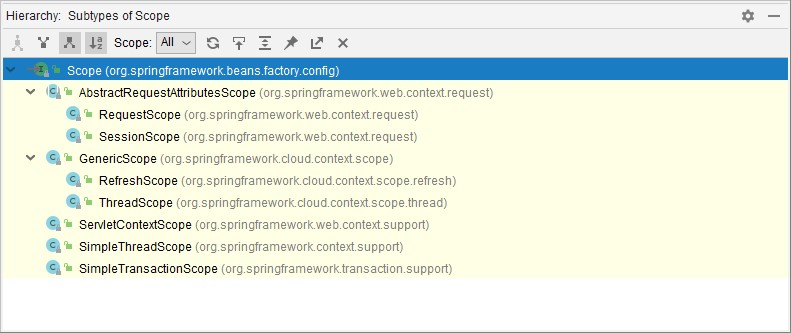
Scope与ApplicationContext生命周期
- AbstractBeanFactory#doGetBean创建Bean实例
protected <T> T doGetBean(...){

    final RootBeanDefinition mbd = ...

    if (mbd.isSingleton()) {

        ...

    } else if (mbd.isPrototype())

       ...

    } else {

          String scopeName = mbd.getScope();

          final Scope scope = this.scopes.get(scopeName);

          Object scopedInstance = scope.get(beanName, new ObjectFactory<Object>() {...});

          ...

    }

    ...

 }
- Singleton和Prototype是硬编码的,并不是Scope子类。 Scope实际上是自定义扩展的接口
- Scope Bean实例交由Scope自己创建,例如SessionScope是从Session中获取实例的,ThreadScope是从ThreadLocal中获取的,而RefreshScope是在内建缓存中获取的
- @Scope 对象的实例化
- @RefreshScope 是scopeName="refresh"的 @Scope
@Target({ ElementType.TYPE, ElementType.METHOD })

@Retention(RetentionPolicy.RUNTIME)

@Scope("refresh")

@Documented

public @interface RefreshScope {

	/**

	 * @see Scope#proxyMode()

	 * @return proxy mode

	 */

	ScopedProxyMode proxyMode() default ScopedProxyMode.TARGET_CLASS;

}
- @Scope 的注册 AnnotatedBeanDefinitionReader#registerBean
public void registerBean(...){

    ...

    ScopeMetadata scopeMetadata = this.scopeMetadataResolver.resolveScopeMetadata(abd);

      abd.setScope(scopeMetadata.getScopeName());

    ...

      definitionHolder = AnnotationConfigUtils.applyScopedProxyMode(scopeMetadata, definitionHolder, this.registry);

  }
- 读取@Scope元数据, AnnotationScopeMetadataResolver#resolveScopeMetadata
public ScopeMetadata resolveScopeMetadata(BeanDefinition definition) {

          AnnotationAttributes attributes = AnnotationConfigUtils.attributesFor(

                  annDef.getMetadata(), Scope.class);

          if (attributes != null) {

              metadata.setScopeName(attributes.getString("value"));

              ScopedProxyMode proxyMode = attributes.getEnum("proxyMode");

              if (proxyMode == null || proxyMode == ScopedProxyMode.DEFAULT) {

                  proxyMode = this.defaultProxyMode;

              }

              metadata.setScopedProxyMode(proxyMode);

          }

}
- Scope实例对象通过ScopedProxyFactoryBean创建,其中通过AOP使其实现ScopedObject接口,这里不再展开
@RefreshScope 源码解读
RefreshScope注册
- RefreshAutoConfiguration#RefreshScopeConfiguration
@Component

@ConditionalOnMissingBean(RefreshScope.class)

protected static class RefreshScopeConfiguration implements BeanDefinitionRegistryPostProcessor{

 ...

    registry.registerBeanDefinition("refreshScope",

    BeanDefinitionBuilder.genericBeanDefinition(RefreshScope.class)

                        .setRole(BeanDefinition.ROLE_INFRASTRUCTURE)

                        .getBeanDefinition());

 ...

}
- RefreshScope extends GenericScope, 大部分逻辑在 GenericScope 中
- GenericScope#postProcessBeanFactory 中向AbstractBeanFactory注册自己
public class GenericScope implements Scope, BeanFactoryPostProcessor...{

      @Override

      public void postProcessBeanFactory(ConfigurableListableBeanFactory beanFactory)

          throws BeansException {

          beanFactory.registerScope(this.name/*refresh*/, this/*RefreshScope*/);

          ...

      }

}
RefreshScope 刷新过程
- 入口在ContextRefresher#refresh
public synchronized Set<String> refresh() {

  Set<String> keys = refreshEnvironment();

  this.scope.refreshAll();

  return keys;

}

public synchronized Set<String> refreshEnvironment() {

  Map<String, Object> before = extract(

      this.context.getEnvironment().getPropertySources());

  addConfigFilesToEnvironment();

  Set<String> keys = changes(before,

      extract(this.context.getEnvironment().getPropertySources())).keySet();

  this.context.publishEvent(new EnvironmentChangeEvent(this.context, keys));

  return keys;

}
- ①提取标准参数(SYSTEM,JNDI,SERVLET)之外所有参数变量
- ②把原来的Environment里的参数放到一个新建的Spring Context容器下重新加载,完事之后关闭新容器
- ③提起更新过的参数(排除标准参数)
- ④比较出变更项
- ⑤发布环境变更事件,接收:EnvironmentChangeListener/LoggingRebinder
- ⑥RefreshScope用新的环境参数重新生成Bean
- ⑦重新生成的过程很简单,清除refreshscope缓存幷销毁Bean,下次就会重新从BeanFactory获取一个新的实例(该实例使用新的配置)
- ⑧RefreshScope#refreshAll
public void refreshAll() {

        <b>super.destroy();</b>

        this.context.publishEvent(new RefreshScopeRefreshedEvent());

}
- ⑨GenericScope#destroy
public void destroy() {

    ...

    Collection<BeanLifecycleWrapper> wrappers = <b>this.cache.clear()</b>;

    for (BeanLifecycleWrapper wrapper : wrappers) {

        <b>wrapper.destroy();</b>

    }

}
SpringCloud之RefreshScope 源码解读的更多相关文章
- SDWebImage源码解读之SDWebImageDownloaderOperation
第七篇 前言 本篇文章主要讲解下载操作的相关知识,SDWebImageDownloaderOperation的主要任务是把一张图片从服务器下载到内存中.下载数据并不难,如何对下载这一系列的任务进行设计 ...
- SDWebImage源码解读 之 NSData+ImageContentType
第一篇 前言 从今天开始,我将开启一段源码解读的旅途了.在这里先暂时不透露具体解读的源码到底是哪些?因为也可能随着解读的进行会更改计划.但能够肯定的是,这一系列之中肯定会有Swift版本的代码. 说说 ...
- SDWebImage源码解读 之 UIImage+GIF
第二篇 前言 本篇是和GIF相关的一个UIImage的分类.主要提供了三个方法: + (UIImage *)sd_animatedGIFNamed:(NSString *)name ----- 根据名 ...
- SDWebImage源码解读 之 SDWebImageCompat
第三篇 前言 本篇主要解读SDWebImage的配置文件.正如compat的定义,该配置文件主要是兼容Apple的其他设备.也许我们真实的开发平台只有一个,但考虑各个平台的兼容性,对于框架有着很重要的 ...
- SDWebImage源码解读_之SDWebImageDecoder
第四篇 前言 首先,我们要弄明白一个问题? 为什么要对UIImage进行解码呢?难道不能直接使用吗? 其实不解码也是可以使用的,假如说我们通过imageNamed:来加载image,系统默认会在主线程 ...
- SDWebImage源码解读之SDWebImageCache(上)
第五篇 前言 本篇主要讲解图片缓存类的知识,虽然只涉及了图片方面的缓存的设计,但思想同样适用于别的方面的设计.在架构上来说,缓存算是存储设计的一部分.我们把各种不同的存储内容按照功能进行切割后,图片缓 ...
- SDWebImage源码解读之SDWebImageCache(下)
第六篇 前言 我们在SDWebImageCache(上)中了解了这个缓存类大概的功能是什么?那么接下来就要看看这些功能是如何实现的? 再次强调,不管是图片的缓存还是其他各种不同形式的缓存,在原理上都极 ...
- AFNetworking 3.0 源码解读 总结(干货)(下)
承接上一篇AFNetworking 3.0 源码解读 总结(干货)(上) 21.网络服务类型NSURLRequestNetworkServiceType 示例代码: typedef NS_ENUM(N ...
- AFNetworking 3.0 源码解读 总结(干货)(上)
养成记笔记的习惯,对于一个软件工程师来说,我觉得很重要.记得在知乎上看到过一个问题,说是人类最大的缺点是什么?我个人觉得记忆算是一个缺点.它就像时间一样,会自己消散. 前言 终于写完了 AFNetwo ...
随机推荐
- Cabloy全栈JS框架微创新之一:不一样的“移动优先 PC适配”
前言 目前流行的前端UI组件库都支持移动设备优先的响应式布局特性.但基于Mobile和PC两个场景的不同用户体验,也往往会实现Mobile和PC两个版本. PC场景下的Web工程,如大量的后台前端管理 ...
- 让Samba支持Windows10的自动发现
Windows10如果开了SMB 1.0支持,就非常不安全,不开就搜索不到samba的NETBIOS. 在安装配置好samba,并且确认windows可以通过netbios名访问后. 可以使用http ...
- 03: OpenGL ES 基础教程02 使用OpenGL ES 基本步骤
第二章:让硬件为你工作(OpenGL ES 应用实践指南 iOS卷) 前言: 1:使用OpenGL ES 基本步骤 2:绘制三角形 3:效果 正文: 一:使用OpenGL ES 基本步骤 1:生成缓存 ...
- docker部署jenkins
步骤一: 查找jenkins镜像(也可以直接去jenkins官网找镜像docker pull jenkins/jenkins)(官方版本文档https://hub.docker.com/_/jenki ...
- Tomcat启动报错java.lang.ClassNotFoundException: javax.el.ExpressionFactory
严重: Context initialization failedorg.springframework.beans.factory.BeanCreationException: Error crea ...
- 【Django】url(路由系统)
1.单一路由对应 url(r'^index/',views.index), 2.基于正则的路由 url(r'^index/(\d*)', views.index), url(r'^manage/(?P ...
- Mycat 配置文件schema.xml
1.介绍 schema.xml 作为 MyCat 中重要的配置文件之一,管理着 MyCat 的逻辑库.表.分片规则. DataNode 以及 DataSource. 2.schema相关标签 sche ...
- 什么是VR中的Locomotion?
Locomotion,本文中我称之为移位,是VR研究中最重要的话题之一.因为它属于VR中三大元老级操作(Selection选择,Manipulation操纵物体,Locomotion移位),其中,前两 ...
- spring源码分析系列2:Bean与BeanDefinition关系
接口表示一种能力,实现了一个接口,即拥有一种能力. BeanDefinition与Bean的关系, 就好比类与对象的关系. 类在spring的数据结构就是BeanDefinition.根据BeanDe ...
- 【maven的使用】1maven的概念与配置
maven是一个基于java平台的自动化构建工具.构建工具的发展由make->ant->maven->gradle其中gradle还在发展中,使用较少,学习难度比较大,所以目前占据主 ...