
Java/C++实现解释器模式---机器人控制程序
某机器人控制程序包含一些简单的英文指令,其文法规则如下:
expression ::= direction action distance | composite
composite ::= expression and expression
direction ::= ‘up’ | ‘down’ | ‘left’ | ‘right’
action ::= ‘move’ | ‘run’
distance ::= an integer //一个整数值
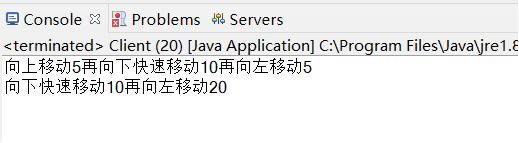
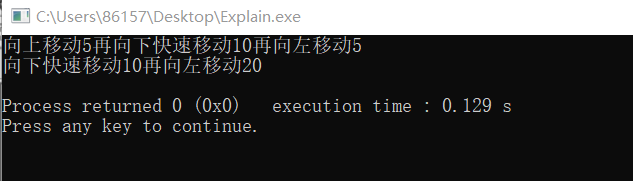
如输入:up move 5,则输出“向上移动5个单位”;输入:down run 10 and left move 20,则输出“向下移动10个单位再向左移动20个单位”。
类图:

Java代码:
import java.util.Stack;

public abstract class AbstractNode {

    public abstract String interpret();

}

public class ActionNode extends AbstractNode{

    private String action;

    public ActionNode(String action) {

        this.action = action;

    }

    //动作(移动方式)表达式的解释操作

    public String interpret() {

        if (action.equalsIgnoreCase("move")) {

            return "移动";

        }

        else if (action.equalsIgnoreCase("run")) {

            return "快速移动";

        }

        else {

            return "无效指令";

        }

    }

}

public class AndNode extends AbstractNode{

    private AbstractNode left; //And的左表达式

    private AbstractNode right; //And的右表达式

    public AndNode(AbstractNode left, AbstractNode right) {

        this.left = left;

        this.right = right;

    }

    //And表达式解释操作

    public String interpret() {

        return left.interpret() + "再" + right.interpret();

    }

}

public class DirectionNode extends AbstractNode{

    private String direction;

    public DirectionNode(String direction) {

        this.direction = direction;

    }

    //方向表达式的解释操作

    public String interpret() {

        if (direction.equalsIgnoreCase("up")) {

            return "向上";

        }

        else if (direction.equalsIgnoreCase("down")) {

            return "向下";

        }

        else if (direction.equalsIgnoreCase("left")) {

            return "向左";

        }

        else if (direction.equalsIgnoreCase("right")) {

            return "向右";

        }

        else {

            return "无效指令";

        }

    }

}

public class DistanceNode extends AbstractNode{

     private String distance;

        public DistanceNode(String distance) {

            this.distance = distance;

        }

    //距离表达式的解释操作

        public String interpret() {

            return this.distance;

        }

}

public class InstructionHandler {

     private String instruction;

        private AbstractNode node;

        public void handle(String instruction) {

            AbstractNode left = null, right = null;

            AbstractNode direction = null, action = null, distance = null;

            Stack stack = new Stack(); //声明一个栈对象用于存储抽象语法树

            String[] words = instruction.split(" "); //以空格分隔指令字符串

            for (int i = 0; i < words.length; i++) {

                //本实例采用栈的方式来处理指令,如果遇到“and”,则将其后的三个单词作为三个终结符表达式连成一个简单句子SentenceNode作为“and”的右表达式,而将从栈顶弹出的表达式作为“and”的左表达式,最后将新的“and”表达式压入栈中。

                if (words[i].equalsIgnoreCase("and")) {

                    left = (AbstractNode)stack.pop(); //弹出栈顶表达式作为左表达式

                    String word1= words[++i];

                    direction = new DirectionNode(word1);

                    String word2 = words[++i];

                    action = new ActionNode(word2);

                    String word3 = words[++i];

                    distance = new DistanceNode(word3);

                    right = new SentenceNode(direction,action,distance); //右表达式

                    stack.push(new AndNode(left,right)); //将新表达式压入栈中

                }

                //如果是从头开始进行解释,则将前三个单词组成一个简单句子SentenceNode并将该句子压入栈中

                else {

                    String word1 = words[i];

                    direction = new DirectionNode(word1);

                    String word2 = words[++i];

                    action = new ActionNode(word2);

                    String word3 = words[++i];

                    distance = new DistanceNode(word3);

                    left = new SentenceNode(direction,action,distance);

                    stack.push(left); //将新表达式压入栈中

                }

            }

            this.node = (AbstractNode)stack.pop(); //将全部表达式从栈中弹出

        }

        public String output() {

            String result = node.interpret(); //解释表达式

            return result;

        }

}

public class SentenceNode extends AbstractNode{

    private AbstractNode direction;

    private AbstractNode action;

    private AbstractNode distance;

    public SentenceNode(AbstractNode direction,AbstractNode action,AbstractNode distance) {

        this.direction = direction;

        this.action = action;

        this.distance = distance;

    }

    //简单句子的解释操作

    public String interpret() {

        return direction.interpret() + action.interpret() + distance.interpret();

    }

}

public class Client {

    public static void main(String[] args) {

        // TODO Auto-generated method stub

         String instruction1 = "up move 5 and down run 10 and left move 5";

         String instruction2="down run 10 and left move 20";

         InstructionHandler handler = new InstructionHandler();

         handler.handle(instruction1);

         String outString;

         outString = handler.output();

         System.out.println(outString);

         handler.handle(instruction2);

         outString = handler.output();

         System.out.println(outString);

    }

}
C++代码:
#include<iostream>

#include<stack>

#include <sstream>

#include<string>

using namespace std;

class AbstractNode {

public:

    virtual string interpret()=0;

};

class ActionNode:public AbstractNode{

private:

    string action;

public:

    ActionNode(string action) {

        this->action = action;

    }

    string interpret() {

        if (action=="move") {

            return "移动";

        }

        else if (action=="run") {

            return "快速移动";

        }

        else {

            return "无效指令";

        }

    }

};

class AndNode:public AbstractNode{

private:

    AbstractNode *left; //And的左表达式

    AbstractNode *right; //And的右表达式

public:

    AndNode(AbstractNode *left, AbstractNode *right) {

        this->left = left;

        this->right = right;

    }

    //And表达式解释操作

    string interpret() {

        return left->interpret() + "再" + right->interpret();

    }

};

class DirectionNode :public AbstractNode{

private:

    string direction;

public:

    DirectionNode(string direction) {

        this->direction = direction;

    }

    //方向表达式的解释操作

    string interpret() {

        if (direction=="up") {

            return "向上";

        }

        else if (direction=="down") {

            return "向下";

        }

        else if (direction=="left") {

            return "向左";

        }

        else if (direction=="right") {

            return "向右";

        }

        else {

            return "无效指令";

        }

    }

};

class DistanceNode:public AbstractNode{

private:

    string distance;

public:

    DistanceNode(string distance) {

        this->distance = distance;

    }

    //距离表达式的解释操作

    string interpret() {

        return this->distance;

    }

};

class SentenceNode:public AbstractNode{

private:

    AbstractNode *direction;

    AbstractNode *action;

    AbstractNode *distance;

public:

    SentenceNode(AbstractNode *direction,AbstractNode *action,AbstractNode *distance) {

        this->direction = direction;

        this->action = action;

        this->distance = distance;

    }

    //简单句子的解释操作

    string interpret() {

        return direction->interpret() + action->interpret() + distance->interpret();

    }

};

class InstructionHandler {

private:

    string instruction;

    AbstractNode *node;

public:

    void handle(string instruction) {

        AbstractNode *left = NULL, *right = NULL;

        AbstractNode *direction = NULL, *action = NULL, *distance = NULL;

        stack<AbstractNode*> stack; //声明一个栈对象用于存储抽象语法树

        istringstream str1(instruction);

        istringstream str2(instruction);

        string out;

        int j=0,k=0;

        int n;

        //以空格分隔指令字符串

        while (str1 >> out) {

            j++;

        }

        n=j;

        string words[n];

        string out2;

        while (str2 >> out2) {

            words[k]=out2;

            k++;

        }

        for (int i = 0; i <n; i++) {

        //本实例采用栈的方式来处理指令,如果遇到“and”,则将其后的三个单词作为三个终结符表达式连成一个简单句子SentenceNode作为“and”的右表达式,而将从栈顶弹出的表达式作为“and”的左表达式,最后将新的“and”表达式压入栈中。

            if (words[i]=="and") {

                left = stack.top(); //弹出栈顶表达式作为左表达式

                stack.pop();

                string word1= words[++i];

                direction = new DirectionNode(word1);

                string word2 = words[++i];

                action = new ActionNode(word2);

                string word3 = words[++i];

                distance = new DistanceNode(word3);

                right = new SentenceNode(direction,action,distance); //右表达式

                stack.push(new AndNode(left,right)); //将新表达式压入栈中

            }

            //如果是从头开始进行解释,则将前三个单词组成一个简单句子SentenceNode并将该句子压入栈中

            else {

                string word1 = words[i];

                direction = new DirectionNode(word1);

                string word2 = words[++i];

                action = new ActionNode(word2);

                string word3 = words[++i];

                distance = new DistanceNode(word3);

                left = new SentenceNode(direction,action,distance);

                stack.push(left); //将新表达式压入栈中

            }

        }

        this->node = stack.top(); //将全部表达式从栈中弹出

        stack.pop();

    }

    string output() {

        string result = node->interpret(); //解释表达式

        return result;

    }

};

int main(){

    string instruction1 = "up move 5 and down run 10 and left move 5";

    string instruction2="down run 10 and left move 20";

    InstructionHandler *handler = new InstructionHandler();

    handler->handle(instruction1);

    string outString;

    outString = handler->output();

    cout<<outString<<endl;

    handler->handle(instruction2);

    outString = handler->output();

    cout<<outString<<endl;

}
运行结果:
Java/C++实现解释器模式---机器人控制程序的更多相关文章
- JAVA设计模式之解释器模式
在阎宏博士的<JAVA与模式>一书中开头是这样描述解释器(Interpreter)模式的: 解释器模式是类的行为模式.给定一个语言之后,解释器模式可以定义出其文法的一种表示,并同时提供一个 ...
- 折腾Java设计模式之解释器模式
解释器模式 解释器模式是类的行为模式.给定一个语言之后,解释器模式可以定义出其文法的一种表示,并同时提供一个解释器.客户端可以使用这个解释器来解释这个语言中的句子. 意图 给定一个语言,定义它的文法表 ...
- 20.java设计模式之解释器模式
基本需求 实现四则运算,如计算a+b-c+d的值 先输入表达式的形式,如a+b-c+d,要求表达式正确 再分别输出a,b,c,d的值 最后求出结果 传统方案 编写一个方法,接收表达式的形式,根据用户输 ...
- 简单的介绍一下Java设计模式:解释器模式
目录 定义 意图 主要解决问题 优缺点 结构 示例 适用情况 定义 解释器模式是类的行为型模式,给定一个语言之后,解释器模式可以定义出其文法的一种表示,并同时提供一个解释器,客户端可以使用这个解释器来 ...
- JAVA 设计模式 解释器模式
用途 解释器模式 (Interpreter) 定义一个语言,定义它的文法的一种表示. 并定义一个解释器,这个解释器使用该表示来解释语言中的句子. 解释器模式是一种行为型模式. 结构
- Java进阶篇设计模式之九----- 解释器模式和迭代器模式
前言 在上一篇中我们学习了行为型模式的责任链模式(Chain of Responsibility Pattern)和命令模式(Command Pattern).本篇则来学习下行为型模式的两个模式, 解 ...
- 设计模式之解释器模式——Java语言描述
解释器模式提供了评估语言的语法或表达式的方式,它属于行为型模式.这种模式实现了一个表达式接口,该接口解释一个特定的上下文.这种模式被用在SQL解析.符号处理引擎等 介绍 意图 给定一个语言,定义它的文 ...
- Java设计模式学习记录-解释器模式
前言 这次介绍另一个行为模式,解释器模式,都说解释器模式用的少,其实只是我们在日常的开发中用的少,但是一些开源框架中还是能见到它的影子,例如:spring的spEL表达式在解析时就用到了解释器模式,以 ...
- Java设计模式之九 ----- 解释器模式和迭代器模式
前言 在上一篇中我们学习了行为型模式的责任链模式(Chain of Responsibility Pattern)和命令模式(Command Pattern).本篇则来学习下行为型模式的两个模式, 解 ...
随机推荐
- Angular依赖注入:全面讲解(翻译中)
在实际使用Angular依赖注入系统时,你需要知道的一切都在本文中.我们将以实用易懂并附带示例的形式解释它的所有高级概念. Angular最强大.最独特的功能之一就是它内置的依赖注入系统. 大多数时候 ...
- 构造方法__construct()与析构方法__destruct() 构造方法:刚出生时婴儿的啼哭 析构方法:老人临终时的遗言
<?phpclass person{ var $name; var $sex; var $age;//构造方法 function __construct($name, $sex, $age) { ...
- Linux kernel cfg80211_mgd_wext_giwessid缓冲区溢出漏洞
受影响系统:Linux kernel <= 5.3.2描述:CVE(CAN) ID: CVE-2019-17133 Linux kernel是开源操作系统Linux所使用的内核. Linux k ...
- 阿里一面,说说你了解zookeeper的应用场景有哪些?
1.前言 又到了金三银四的时候,大家都按耐不住内心的躁动,我在这里给大家分享下之前面试中遇到的一个知识点(zookeeper应用场景),希望对大家有些帮助.如有不足,欢迎大佬们指点指点. 2.zook ...
- Java的自动装箱与拆箱(Autoboxing and unboxing)
一.什么是自动装箱拆箱 很简单,下面两句代码就可以看到装箱和拆箱过程 1 //自动装箱 2 Integer total = 99; 3 4 //自动拆箱 5 int totalprim = total ...
- maven国内镜像配置
Maven是当前流行的项目管理工具,但官方的库在国外经常连不上,连上也下载速度很慢.国内oschina的maven服务器很早之前就关了.今天发现阿里云的一个中央仓库,亲测可用. 1 <mirro ...
- STL基本用法的一些记录
迭代器 (set类型)::iterator 就是迭代器 迭代器可以看成stl容器内元素的指针 set 默认从小到大排序 begin() set中最小的元素的迭代器 end() set中最大的元素的迭代 ...
- java 学习笔记(一)
书 head first java 1. 2.加强版的FOR循环 3. 通过super引用父类 4.多态 5.接口和抽象类 接口 6.多线程锁 7.JDBC
- XStream类的对象将javaBean转成XML
[省市联动] servlet端: //返回数据xml(XStream) XStream xStream = new XStream(); //把路径设置别名 xStream.alias("c ...
- 请描述一下Struts2的值栈结构,以及它是如何工作的?
值栈 Value Stack 值栈是Struts2框架的核心概念.所有的核心组件都以某种方式与之进行交互,它提供对上下文信息和执行环境中元素的访问机制.值栈的内容由如下4个层级组成. 1.临时对象 这 ...