
Hibernate的一级缓存和二级缓存
- Fist level cache: This is enabled by default and works in session scope. Read more about hibernate first level cache.
- Second level cache: This is apart from first level cache which is available to be used globally in session factory scope.
一级缓存(不能disable):
- First level cache is associated with “session” object and other session objects in application can not see it.
- The scope of cache objects is of session. Once session is closed, cached objects are gone forever.
- First level cache is enabled by default and you can not disable it.
- When we query an entity first time, it is retrieved from database and stored in first level cache associated with hibernate session.
- If we query same object again with same session object, it will be loaded from cache and no sql query will be executed.
- The loaded entity can be removed from session using evict() method. The next loading of this entity will again make a database call if it has been removed using evict() method.
- The whole session cache can be removed using clear() method. It will remove all the entities stored in cache.
二级缓存默认是disable,需要自己配置
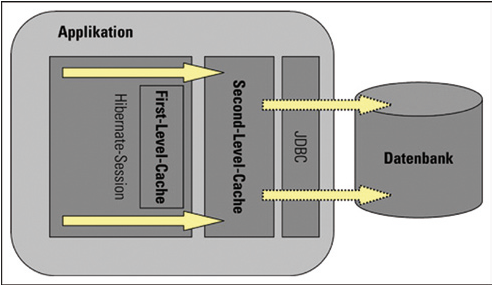
How second level cache works:
Lets write all the facts point by point:
- Whenever hibernate session try to load an entity, the very first place it look for cached copy of entity in first level cache (associated with particular hibernate session).
- If cached copy of entity is present in first level cache, it is returned as result of load method.
- If there is no cached entity in first level cache, then second level cache is looked up for cached entity.
- If second level cache has cached entity, it is returned as result of load method. But, before returning the entity, it is stored in first level cache also so that next invocation to load method for entity will return the entity from first level cache itself, and there will not be need to go to second level cache again.
- If entity is not found in first level cache and second level cache also, then database query is executed and entity is stored in both cache levels, before returning as response of load() method.
- Second level cache validate itself for modified entities, if modification has been done through hibernate session APIs.
- If some user or process make changes directly in database, the there is no way that second level cache update itself until “timeToLiveSeconds” duration has passed for that cache region. In this case, it is good idea to invalidate whole cache and let hibernate build its cache once again. You can use below code snippet to invalidate whole hibernate second level cache.
refer:https://howtodoinjava.com/hibernate/understanding-hibernate-first-level-cache-with-example/
https://howtodoinjava.com/hibernate/how-hibernate-second-level-cache-works/
Hibernate的一级缓存和二级缓存的更多相关文章
- 【转】hibernate缓存:一级缓存和二级缓存
什么是缓存? 缓存是介于物理数据源与应用程序之间,是对数据库中的数据复制一份临时放在内存中的容器,其作用是为了减少应用程序对物理数据源访问的次数,从而提高了应用程序的运行性能.Hibernate在进行 ...
- Hibernate中的一级缓存、二级缓存和懒加载(转)
1.为什么使用缓存 hibernate使用缓存减少对数据库的访问次数,从而提升hibernate的执行效率.hibernate中有两种类型的缓存:一级缓存和二级缓存. 2.一级缓存 Hibenate中 ...
- Hibernate一级缓存与二级缓存的区别
一级缓存: 就是Session级别的缓存.一个Session做了一个查询操作,它会把这个操作的结果放在一级缓存中. 如果短时间内这个session(一定要同一个session)又做了同一个操作,那么h ...
- Hibernate中一级缓存和二级缓存使用详解
一.一级缓存二级缓存的概念解释 (1)一级缓存就是Session级别的缓存,一个Session做了一个查询操作,它会把这个操作的结果放在一级缓存中,如果短时间内这个 session(一定要同一个ses ...
- Hibernate中的一级缓存、二级缓存和懒加载
1.为什么使用缓存 hibernate使用缓存减少对数据库的访问次数,从而提升hibernate的执行效率.hibernate中有两种类型的缓存:一级缓存和二级缓存. 2.一级缓存 Hibenate中 ...
- hibernate缓存:一级缓存和二级缓存
1.什么是缓存? 缓存是介于物理数据源与应用程序之间,是对数据库中的数据复制一份临时放在内存中的容器,其作用是为了减少应用程序对物理数据源访问的次数,从而提高了应用程序的运行性能.Hibernate在 ...
- Hibernate一级缓存和二级缓存深度比较
1.什么是缓存 缓存是介于应用程序和物理数据源之间,其作用是为了降低应用程序对物理数据源访问的频次,从而提高了应用的运行性能.缓存内的数据是对物理数据源中的数据的复制,应用程序在运行时从缓存读写数据, ...
- Hibernate一级缓存和二级缓存详解
(1)一级缓存 是Session级别的缓存,一个Session做了一个查询操作,它会把这个操作的结果放在一级缓存中,如果短时间内这个session(一定要同一个session)又做了同一个操作,那么h ...
- Hibernate之一级缓存和二级缓存
1:Hibernate的一级缓存: 1.1:使用一级缓存的目的是为了减少对数据库的访问次数,从而提升hibernate的执行效率:(当执行一次查询操作的时候,执行第二次查询操作,先检查缓存中是否有数据 ...
- Hibernate 的一级缓存和二级缓存总结
缓存:缓存是什么,解决什么问题? 位于速度相差较大的两种硬件/软件之间的,用于协调两者数据传输速度差异的结构,均可称之为缓存Cache.缓存目的:让数据更接近于应用程序,协调速度不匹配,使访问速度更快 ...
随机推荐
- 【Azure Redis 缓存】Azure Redis出现了超时问题后,记录一步一步的排查出异常的客户端连接和所执行命令的步骤
问题描述 Azure Redis在使用的过程中,多次无规律的出现超时问题.抓取到客户端的异常错误后,想进一步的分析是何原因导致了如下异常呢? Timeout awaiting response (ou ...
- CRUD搬砖两三年了,怎么阅读Spring源码?
作者:小傅哥 博客:https://bugstack.cn 沉淀.分享.成长,让自己和他人都能有所收获! 连读同事写的代码都费劲,还读Spring? 咋的,Spring 很难读! 这个与我们码农朝夕 ...
- java 利用Calendar进行日期更改
//建立1个日期实例 Date tomorrow= new Date(); //获取今天日期 Date nowDate = Calendar.getInstance().getTime(); // 构 ...
- jstack 命令使用经验总结
jstack 命令的基本使用 jstack 在命令使用上十分简洁, 其信息量与复杂度主要体如今 thread dump 内容的分析上;web # 最基本的使用sudo -u xxx jstack {v ...
- spring Data Rest 远程命令执行漏洞(CVE-2017-8046)
参考 文章https://blog.csdn.net/weixin_41438728/article/details/110425174 影响版本 Spring Framework 5.0 to 5. ...
- 随处可编辑的编辑器之神VIM
据说这世界上只有三种编辑器:Vim,Emacs 和 其他编辑器,其中 Vim 被称作编辑器之神,Emacs 被称作神的编辑器,当然,其他编辑器永远只能是其他编辑器. 拿一位 网友的话 来说,VIM 的 ...
- 用QT写的简单Todo记事本-附源码(浮动窗口)
去年边学边写了搞了很久, 已经好久没继续开发了, 先放出来供大家参考吧. 发现自己的学习能力还是不错的. 技术点: 使用QT, QML技术 代码参考: https://github.com/cnscu ...
- GooseFS助力大数据业务数倍提升计算能力
前言 GooseFS是由腾讯云推出的一款分布式缓存方案,主要针对包括需要缓存加速的数据湖业务场景,提供基于对象存储COS服务的近计算端数据加速层. GooseFS 基于开源大数据缓存方案 Alluxi ...
- vue 快速入门 系列 —— vue-cli 上
其他章节请看: vue 快速入门 系列 Vue CLI 4.x 上 在 vue loader 一文中我们已经学会从零搭建一个简单的,用于单文件组件开发的脚手架:本篇,我们将全面学习 vue-cli 这 ...
- MySQL 优化特定类型的查询
优化COUNT()查询 COUNT() 是一个特殊的函数,有两种非常不同的作用: 统计某个列值的数量,也可以统计行数.在统计列值时要求列值是非空的(不统计NULL ).如果在COUNT() 的括号中指 ...