
重新整理 .net core 周边阅读篇————AspNetCoreRateLimit[一]
前言
整理了一下.net core 一些常见的库的源码阅读,共32个库,记100余篇。
以下只是个人的源码阅读,如有错误或者思路不正确,望请指点。
正文
github 地址为:
https://github.com/stefanprodan/AspNetCoreRateLimit
一般个人习惯先阅读readme的简介。

上面大概翻译是:
AspNetCoreRateLimit 是ASP.NET Core 访问速率限制的解决方案,设计基于ip地址和客户端id用于控制用于web api和 mvc app的客户端访问速率。
这个包包含了IpRateLimitMiddleware and a ClientRateLimitMiddleware两个中间件,用这两个中间件你根据不同的场景能设置几种不同的限制,
比如限制一个客户端或者一个ip在几秒或者15分钟内访问最大限制。您可以定义这些限制来处理对某个API的所有请求,也可以将这些限制限定在指定范围的每个API URL或HTTP请求路径上。
上面说了这么多就是用来限流的,针对客户端id和ip进行限流。
因为一般用的是ip限流,看下ip限制怎么使用的,毕竟主要还是拿来用的嘛。
本来还想根据文档先写个小demo,然后发现官方已经写了demo。
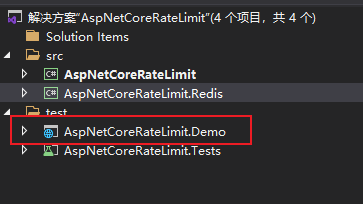
直接看demo(只看ip限制部分的)。
先来看下ConfigureServices:
services.Configure<IpRateLimitOptions>(Configuration.GetSection("IpRateLimiting"));

services.Configure<IpRateLimitPolicies>(Configuration.GetSection("IpRateLimitPolicies"));

services.AddSingleton<IRateLimitConfiguration, RateLimitConfiguration>();

services.AddInMemoryRateLimiting();
从上面看,那么配置ip 限制的有两个配置,一个配置是IpRateLimitOptions,另外一个配置是IpRateLimitPolicies。
那么为什么要设计成两个配置呢?一个配置不是更香吗?
官方设计理念是这样的:
IpRateLimiting Configuration and general rules appsettings.json

IpRateLimitPolicies Override general rules for specific IPs appsettings.json


原来IpRateLimiting 是限制普遍的ip,而IpRateLimitPolicies 是限制一些特殊的ip。
比如说有些api对内又对外的,普遍的ip对外限制是1分钟300次,如果有个大客户特殊需求且固定ip的,需要限制是1分钟是10000次的,那么就可以这样特殊处理,而不用另外写code来维护,成本问题。
故而我们写中间件组件的时候也可以参考这个来做,特殊的怎么处理,普遍的怎么处理,当然也不能盲目的设计。
然后看:AddInMemoryRateLimiting
public static IServiceCollection AddInMemoryRateLimiting(this IServiceCollection services)

{

	services.AddSingleton<IIpPolicyStore, MemoryCacheIpPolicyStore>();

	services.AddSingleton<IClientPolicyStore, MemoryCacheClientPolicyStore>();

	services.AddSingleton<IRateLimitCounterStore, MemoryCacheRateLimitCounterStore>();

	services.AddSingleton<IProcessingStrategy, AsyncKeyLockProcessingStrategy>();

	return services;

}
里面注入了MemoryCacheIpPolicyStore、MemoryCacheClientPolicyStore、MemoryCacheRateLimitCounterStore、AsyncKeyLockProcessingStrategy。
分别看下这几个东西。
MemoryCacheIpPolicyStore:
public class MemoryCacheIpPolicyStore : MemoryCacheRateLimitStore<IpRateLimitPolicies>, IIpPolicyStore

{

	private readonly IpRateLimitOptions _options;

	private readonly IpRateLimitPolicies _policies;

	public MemoryCacheIpPolicyStore(

		IMemoryCache cache,

		IOptions<IpRateLimitOptions> options = null,

		IOptions<IpRateLimitPolicies> policies = null) : base(cache)

	{

		_options = options?.Value;

		_policies = policies?.Value;

	}

	public async Task SeedAsync()

	{

		// on startup, save the IP rules defined in appsettings

		if (_options != null && _policies != null)

		{

			await SetAsync($"{_options.IpPolicyPrefix}", _policies).ConfigureAwait(false);

		}

	}

}
这个是用例存储IpRateLimitPolicies(ip限制)。
MemoryCacheIpPolicyStore 这个名字起的有点意思,MemoryCache 是内存缓存,IpPolicy ip策略,store 存储。
分别是存储空间、物品、功能的组合。所以这个库应该是外国人写的,一般来说中国人会这样改:IpPolicyMemoryCacheStore,估计是因为强调故而把MemoryCache放到前面去了。
这里我刚开始有点不理解,本来已经可以读取到了options,那么按照options操作就很方便了。
那么为啥要用缓存到内存中呢?后来大体的通读了一下,是因为_policies(特殊制定的ip规则)很多地方都要使用到,一方面是为了解耦,另外一方面呢,是因为下面这个。
[HttpPost]

public void Post()

{

	var pol = _ipPolicyStore.Get(_options.IpPolicyPrefix);

	pol.IpRules.Add(new IpRateLimitPolicy

	{

		Ip = "8.8.4.4",

		Rules = new List<RateLimitRule>(new RateLimitRule[] {

			new RateLimitRule {

				Endpoint = "*:/api/testupdate",

				Limit = 100,

				Period = "1d" }

		})

	});

	_ipPolicyStore.Set(_options.IpPolicyPrefix, pol);

}
是可以动态设置特殊ip的一些配置的。 那么里面也考虑到了分布式的一些行为,比如把缓存放到redis这种隔离缓存中。
如果将_policies 封装到memory cache 中,那么和redis cache形成了一套适配器。个人认为是从设计方面考虑的。
然后看下这个方法,里面就是以IpRateLimiting的IpPolicyPrefix 作为key,然后存储了IpRateLimitPolicies。
public async Task SeedAsync()

{

	// on startup, save the IP rules defined in appsettings

	if (_options != null && _policies != null)

	{

		await SetAsync($"{_options.IpPolicyPrefix}", _policies).ConfigureAwait(false);

	}

}
具体的SetAsync 如下:
public Task SetAsync(string id, T entry, TimeSpan? expirationTime = null, CancellationToken cancellationToken = default)

{

	var options = new MemoryCacheEntryOptions

	{

		Priority = CacheItemPriority.NeverRemove

	};

	if (expirationTime.HasValue)

	{

		options.SetAbsoluteExpiration(expirationTime.Value);

	}

	_cache.Set(id, entry, options);

	return Task.CompletedTask;

}
然后这里值得注意的是_options.IpPolicyPrefix,这个值如果是分布式那么应该值得关注一下,因为我们有不同应用服务,如果希望不同的应用服务用到不同的ip限制,那么IpPolicyPrefix 最好改成应用名,而不是使用默认值。
那么看下MemoryCacheClientPolicyStore:
public class MemoryCacheClientPolicyStore : MemoryCacheRateLimitStore<ClientRateLimitPolicy>, IClientPolicyStore

{

	private readonly ClientRateLimitOptions _options;

	private readonly ClientRateLimitPolicies _policies;

	public MemoryCacheClientPolicyStore(

		IMemoryCache cache,

		IOptions<ClientRateLimitOptions> options = null,

		IOptions<ClientRateLimitPolicies> policies = null) : base(cache)

	{

		_options = options?.Value;

		_policies = policies?.Value;

	}

	public async Task SeedAsync()

	{

		// on startup, save the IP rules defined in appsettings

		if (_options != null && _policies?.ClientRules != null)

		{

			foreach (var rule in _policies.ClientRules)

			{

				await SetAsync($"{_options.ClientPolicyPrefix}_{rule.ClientId}", new ClientRateLimitPolicy { ClientId = rule.ClientId, Rules = rule.Rules }).ConfigureAwait(false);

			}

		}

	}

}
这个就是client id的限制的缓存的,和上面一样就不看了。
MemoryCacheRateLimitCounterStore:
public class MemoryCacheRateLimitCounterStore : MemoryCacheRateLimitStore<RateLimitCounter?>, IRateLimitCounterStore

{

	public MemoryCacheRateLimitCounterStore(IMemoryCache cache) : base(cache)

	{

	}

}
这里面没有啥子。但是从名字上猜测,里面是缓存每个ip请求次数的当然还有时间,主要起缓存作用。
最后一个:AsyncKeyLockProcessingStrategy
public class AsyncKeyLockProcessingStrategy : ProcessingStrategy

{

	private readonly IRateLimitCounterStore _counterStore;

	private readonly IRateLimitConfiguration _config;

	public AsyncKeyLockProcessingStrategy(IRateLimitCounterStore counterStore, IRateLimitConfiguration config)

		: base(config)

	{

		_counterStore = counterStore;

		_config = config;

	}

	/// The key-lock used for limiting requests.

	private static readonly AsyncKeyLock AsyncLock = new AsyncKeyLock();

	public override async Task<RateLimitCounter> ProcessRequestAsync(ClientRequestIdentity requestIdentity, RateLimitRule rule, ICounterKeyBuilder counterKeyBuilder, RateLimitOptions rateLimitOptions, CancellationToken cancellationToken = default)

	{

		var counter = new RateLimitCounter

		{

			Timestamp = DateTime.UtcNow,

			Count = 1

		};

		var counterId = BuildCounterKey(requestIdentity, rule, counterKeyBuilder, rateLimitOptions);

		// serial reads and writes on same key

		using (await AsyncLock.WriterLockAsync(counterId).ConfigureAwait(false))

		{

			var entry = await _counterStore.GetAsync(counterId, cancellationToken);

			if (entry.HasValue)

			{

				// entry has not expired

				if (entry.Value.Timestamp + rule.PeriodTimespan.Value >= DateTime.UtcNow)

				{

					// increment request count

					var totalCount = entry.Value.Count + _config.RateIncrementer?.Invoke() ?? 1;

					// deep copy

					counter = new RateLimitCounter

					{

						Timestamp = entry.Value.Timestamp,

						Count = totalCount

					};

				}

			}

			// stores: id (string) - timestamp (datetime) - total_requests (long)

			await _counterStore.SetAsync(counterId, counter, rule.PeriodTimespan.Value, cancellationToken);

		}

		return counter;

	}

}
估摸着是执行具体计数逻辑的,那么等执行中间件的时候在看。
后面有写入了一个:services.AddSingleton<IRateLimitConfiguration, RateLimitConfiguration>();
那么这个RateLimitConfiguration 是做什么的呢?
public class RateLimitConfiguration : IRateLimitConfiguration

{

	public IList<IClientResolveContributor> ClientResolvers { get; } = new List<IClientResolveContributor>();

	public IList<IIpResolveContributor> IpResolvers { get; } = new List<IIpResolveContributor>();

	public virtual ICounterKeyBuilder EndpointCounterKeyBuilder { get; } = new PathCounterKeyBuilder();

	public virtual Func<double> RateIncrementer { get; } = () => 1;

	public RateLimitConfiguration(

		IOptions<IpRateLimitOptions> ipOptions,

		IOptions<ClientRateLimitOptions> clientOptions)

	{

		IpRateLimitOptions = ipOptions?.Value;

		ClientRateLimitOptions = clientOptions?.Value;

	}

	protected readonly IpRateLimitOptions IpRateLimitOptions;

	protected readonly ClientRateLimitOptions ClientRateLimitOptions;

	public virtual void RegisterResolvers()

	{

		string clientIdHeader = GetClientIdHeader();

		string realIpHeader = GetRealIp();

		if (clientIdHeader != null)

		{

			ClientResolvers.Add(new ClientHeaderResolveContributor(clientIdHeader));

		}

		// the contributors are resolved in the order of their collection index

		if (realIpHeader != null)

		{

			IpResolvers.Add(new IpHeaderResolveContributor(realIpHeader));

		}

		IpResolvers.Add(new IpConnectionResolveContributor());

	}

	protected string GetClientIdHeader()

	{

		return ClientRateLimitOptions?.ClientIdHeader ?? IpRateLimitOptions?.ClientIdHeader;

	}

	protected string GetRealIp()

	{

		return IpRateLimitOptions?.RealIpHeader ?? ClientRateLimitOptions?.RealIpHeader;

	}

}
重点看:
public virtual void RegisterResolvers()

{

	string clientIdHeader = GetClientIdHeader();

	string realIpHeader = GetRealIp();

	if (clientIdHeader != null)

	{

		ClientResolvers.Add(new ClientHeaderResolveContributor(clientIdHeader));

	}

	// the contributors are resolved in the order of their collection index

	if (realIpHeader != null)

	{

		IpResolvers.Add(new IpHeaderResolveContributor(realIpHeader));

	}

	IpResolvers.Add(new IpConnectionResolveContributor());

}
这里只看ip部分:
protected string GetRealIp()

{

	return IpRateLimitOptions?.RealIpHeader ?? ClientRateLimitOptions?.RealIpHeader;

}
那么这个IpHeaderResolveContributor是什么呢?
public class IpHeaderResolveContributor : IIpResolveContributor

{

	private readonly string _headerName;

	public IpHeaderResolveContributor(

		string headerName)

	{

		_headerName = headerName;

	}

	public string ResolveIp(HttpContext httpContext)

	{

		IPAddress clientIp = null;

		if (httpContext.Request.Headers.TryGetValue(_headerName, out var values))

		{

			clientIp = IpAddressUtil.ParseIp(values.Last());

		}

		return clientIp?.ToString();

	}

}
原来是配置是从header的哪个位置获取ip。官网demo中给的是"RealIpHeader": "X-Real-IP"。从header部分的RealIpHeader获取。
同样,官方也默认提供了IpResolvers.Add(new IpConnectionResolveContributor());。
public class IpConnectionResolveContributor : IIpResolveContributor

{

	public IpConnectionResolveContributor()

	{

	}

	public string ResolveIp(HttpContext httpContext)

	{

		return httpContext.Connection.RemoteIpAddress?.ToString();

	}

}
从httpContext.Connection.RemoteIpAddress 中获取ip,那么问题来了,RemoteIpAddress 是如何获取的呢? 到底X-Real-IP 获取的ip准不准呢?会在.net core 细节篇中介绍。
回到原始。现在已经注入了服务,那么如何把中间件注入进去呢?
在Configure 中:
app.UseIpRateLimiting();
将会执行中间件:IpRateLimitMiddleware
public class IpRateLimitMiddleware : RateLimitMiddleware<IpRateLimitProcessor>

{

	private readonly ILogger<IpRateLimitMiddleware> _logger;

	public IpRateLimitMiddleware(RequestDelegate next,

		IProcessingStrategy processingStrategy,

		IOptions<IpRateLimitOptions> options,

		IRateLimitCounterStore counterStore,

		IIpPolicyStore policyStore,

		IRateLimitConfiguration config,

		ILogger<IpRateLimitMiddleware> logger

	)

		: base(next, options?.Value, new IpRateLimitProcessor(options?.Value, counterStore, policyStore, config, processingStrategy), config)

	{

		_logger = logger;

	}

	protected override void LogBlockedRequest(HttpContext httpContext, ClientRequestIdentity identity, RateLimitCounter counter, RateLimitRule rule)

	{

		_logger.LogInformation($"Request {identity.HttpVerb}:{identity.Path} from IP {identity.ClientIp} has been blocked, quota {rule.Limit}/{rule.Period} exceeded by {counter.Count - rule.Limit}. Blocked by rule {rule.Endpoint}, TraceIdentifier {httpContext.TraceIdentifier}. MonitorMode: {rule.MonitorMode}");

	}

}
查看:RateLimitMiddleware
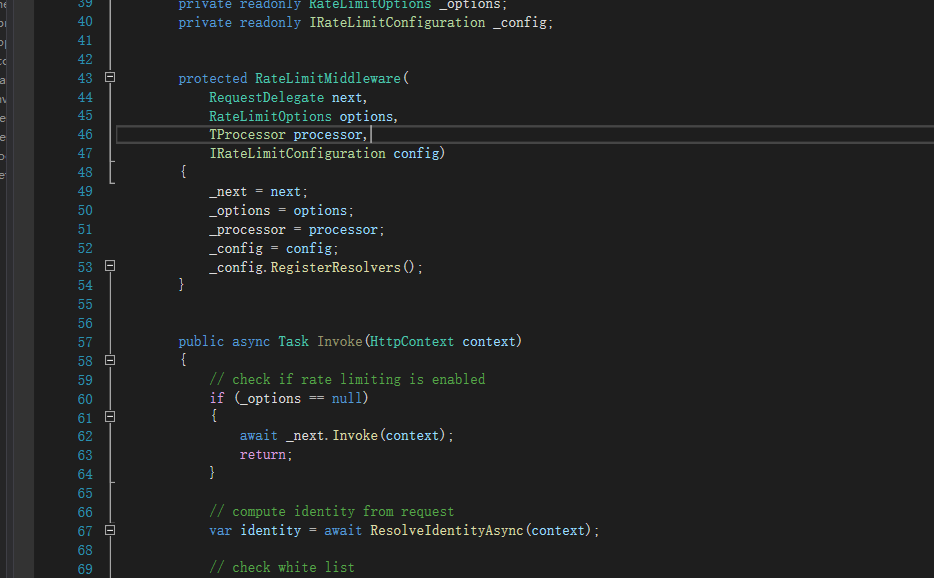
里面就是具体的invoke中间件代码了。
结
因为篇幅有限,后一节invoke逐行分析其如何实现的。
以上只是个人看源码的过程,希望能得到各位的指点,共同进步。
另外.net core 细节篇整理进度为40%。
重新整理 .net core 周边阅读篇————AspNetCoreRateLimit[一]的更多相关文章
- 重新整理 .net core 周边阅读篇————AspNetCoreRateLimit 之规则[二]
前言 本文和上文息息相关. https://www.cnblogs.com/aoximin/p/15315102.html 是紧接着上文invoke来书写的,那么现在来逐行分析invoke到底干了啥. ...
- 重新整理 .net core 实践篇————配置应用[一]
前言 本来想整理到<<重新整理.net core 计1400篇>>里面去,但是后来一想,整理 .net core 实践篇 是偏于实践,故而分开. 因为是重新整理,那么就从配置开 ...
- .NET Core实战项目之CMS 第二章 入门篇-快速入门ASP.NET Core看这篇就够了
作者:依乐祝 原文链接:https://www.cnblogs.com/yilezhu/p/9985451.html 本来这篇只是想简单介绍下ASP.NET Core MVC项目的(毕竟要照顾到很多新 ...
- .NET Core CSharp初级篇 1-1
.NET Core CSharp初级篇 1-1 本节内容是对于C#基础类型的存储方式以及C#基础类型的理论介绍 基础数据类型介绍 例如以下这句话:"张三是一名程序员,今年15岁重50.3kg ...
- net core体系-web应用程序-4asp.net core2.0 项目实战(CMS)-第二章 入门篇-快速入门ASP.NET Core看这篇就够了
.NET Core实战项目之CMS 第二章 入门篇-快速入门ASP.NET Core看这篇就够了 原文链接:https://www.cnblogs.com/yilezhu/p/9985451.ht ...
- 重新整理 .net core 实践篇————依赖注入应用[二]
前言 这里介绍一下.net core的依赖注入框架,其中其代码原理在我的另一个整理<<重新整理 1400篇>>中已经写了,故而专门整理应用这一块. 以下只是个人整理,如有问题, ...
- NET Core CSharp初级篇 1-3面向对象
.NET Core CSharp初级篇 1-3 本节内容为面向对象初级教程 类 简介 面向对象是整个C#中最核心最有特色的一个模块了,它很好的诠释了程序与现实世界的联系. 面向对象的三大特征:继承.多 ...
- .NET Core CSharp初级篇 1-5 接口、枚举、抽象
.NET Core CSharp初级篇 1-5 本节内容类的接口.枚举.抽象 简介 问题 如果你需要表示星期或者是某些状态,使用字符串或者数字是否不直观? 你是否发现,无论何种电脑,它的USB口的设计 ...
- .NET Core CSharp初级篇 1-6 类的多态与继承
.NET Core CSharp初级篇 1-6 本节内容为类的多态与继承 简介 终于讲到了面向对象三大特性中的两大特性--继承与多态.通过继承与多态,我们能很好的将类的拓展性发挥到了极致.在下面的内容 ...
随机推荐
- 中文屋 Chinese room
中文屋 Chinese room 深夜了,假装有个bgm,虽然我真的有个bgm<中间人> 强烈安利,无敌好听,冰老师yyds 开始瞎侃 在经历了机器学习的洗礼以后,感觉人都升华了,本来对于 ...
- python初始化定义空变量-小记
python初始化定义空变量 数值 digital_value = 0 字符串 str_value = "" 列表 list_value = [] 字典 ditc_value = ...
- NOIP 模拟 7 寿司
题解 题目 这道题考试的时候直接打暴力,结果暴力连样例都过不了,最后放上去一个玄学东西,骗了 \(5pts\). 正解: 此题中我们可以看到原序列是一个环,所以我们要把它拆成一条链,那么我们需要暴力枚 ...
- noip 模拟9 题解
rp++==文化课报废 考试经过 先看T1,有被1e12吓到,但根据经验这很可能是水题,经过一番观察后直接打表,似乎看出了规律,觉得应该有了正解,写完之后顺利过掉大样例,但似乎时间稍慢一点,写上快读交 ...
- Tomcat配置SSL证书(PFX证书)
公司项目,应该是阿里云服务器 在windows2008 R2搭建的 Tomcat部署SSL证书,本文以PFX证书为例. 配置好之后开始 一.什么是SSL(证书)? SSL证书服务(Alibaba Cl ...
- 获取SpringBean对象工具类
获取SpringBean工具类 SpringBeanUtil代码如下: package com.meeno.wzq.util; import org.springframework.beans.Bea ...
- vue--三种组件中之间的传值
参考网址:https://www.jianshu.com/p/46573a741c29 一.父子组件之间的传值----props/$emit 组件之间的传值,我们比较常用到的是props/$emit ...
- 【转】 C#中检查网络是否连通的二种方法
1 using System; 2 using System.Collections.Generic; 3 using System.Text; 4 //方法一 5 using Syste ...
- Git (13) -- Git 分支 -- 分支的新建与合并
@ 目录 0.准备工作 1.新建分支 一个简单提交历史: 创建一个新分支指针: iss53 分支随着工作的进展向前推进: 基于 main 分支的紧急问题分支 hotfix branch: main 被 ...
- 关闭 Scroll Lock
通常,在电子表格中选择一个单元格并按箭头键时,所选内容会在各个单元格之间上下左右移动,具体取决于您按的箭头键.但是,如果在 Scroll Lock 处于开启状态时按箭头键,则向上或向下滚动一行.或者, ...