
[转]Greenplum 资源隔离的原理与源码分析
摘要: 背景 Greenplum是一个MPP的数据仓库系统,最大的优点是水平扩展,并且一个QUERY就能将硬件资源的能力发挥到极致。 但这也是被一些用户诟病的一点,因为一个的QUERY就可能占光所有的硬件资源,所以并发一多的话,query相互之间的资源争抢就比较严重。 Greenplum资源隔
背景
Greenplum是一个MPP的数据仓库系统,最大的优点是水平扩展,并且一个QUERY就能将硬件资源的能力发挥到极致。
但这也是被一些用户诟病的一点,因为一个的QUERY就可能占光所有的硬件资源,所以并发一多的话,query相互之间的资源争抢就比较严重。
Greenplum资源隔离的手段
Greenplum为了降低并发query之间的资源争抢,设计了一套基于resource queue的资源管理方法。
每个resource queue定义了资源的使用或限制模式,根据用户的用途将用户指派给resource queue,这样就起到了资源管理的目的。
例如将分析师、跑报表的、ETL分为三用户。根据这三类用户的预期资源使用情况,以及任务的优先级,规划三类资源管理的队列。分别将三类用户和三类resource queue绑定,起到资源控制的作用。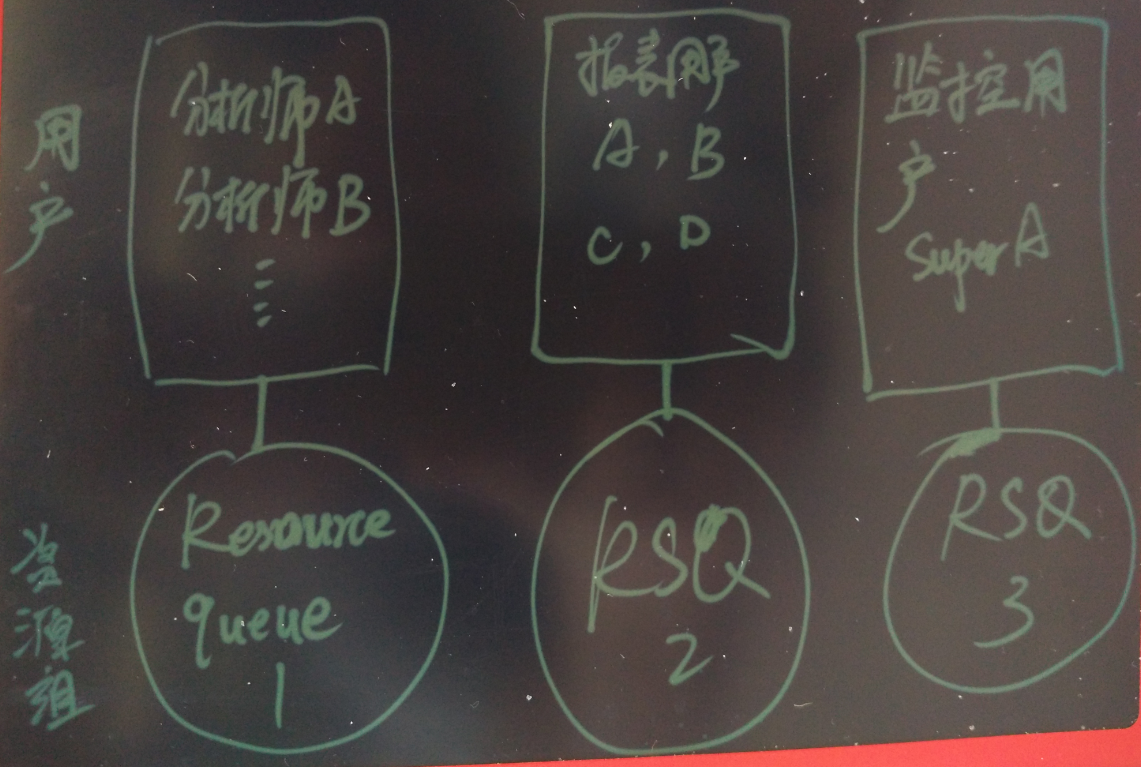
resource queue的创建语法
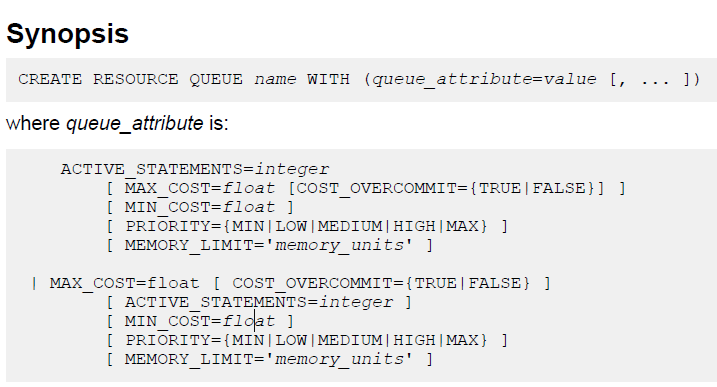
支持的资源隔离类别
- active_statements, 该queue同时可以运行的query数量。
- max_cost,指资源组内所有正在运行的query的评估成本的最大值。
- cost_overcommit,当系统空闲时,是否允许该queue的query总cost超出设定的max_cost。
- min_cost 指低于该值的QUERY不计入该queue 的cost成本,也不排队,而是直接执行。
- priority , 用于平衡各个QUEUE之间的CPU争抢使用,分为5个等级,每个等级设定了响应的weight,间隔一定的时间判断使用的资源是否达到了weight,然后对该queue 的query使用pg_usleep进行抑制。
- mem_limit , 为队列中单个segment query(s)允许的最大statement(s)运行内存。
创建resource queue时必须设置active_statements与max_cost之一。
只有超级用户能创建和修改resource queue。
绑定角色与resource queue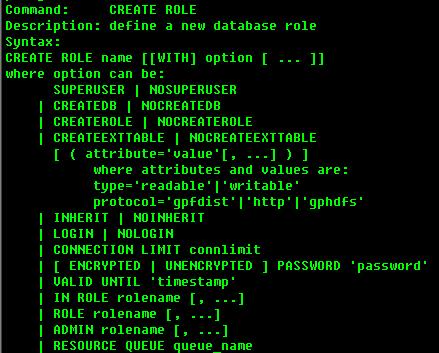
resource queue用法举例
创建两个资源队列,指派给两个用户(一个资源队列可以指派给多个用户)。
postgres=# create resource queue min with (active_statements=3, priority=min);

CREATE QUEUE

postgres=# create resource queue max with (active_statements=1, priority=max);

CREATE QUEUE

postgres=# create role max login encrypted password '123' resource queue max;

CREATE ROLE

postgres=# create role min login encrypted password '123' resource queue min;

CREATE ROLE
Greenplum资源隔离的相关代码
src/include/catalog/pg_resqueue.h
#define PG_RESRCTYPE_ACTIVE_STATEMENTS  1       /* rsqcountlimit:                       count  */

#define PG_RESRCTYPE_MAX_COST                   2       /* rsqcostlimit:                max_cost */

#define PG_RESRCTYPE_MIN_COST                   3       /* rsqignorecostlimit:          min_cost */

#define PG_RESRCTYPE_COST_OVERCOMMIT    4       /* rsqovercommit:                       cost_overcommit*/

                        /* start of "pg_resourcetype" entries... */

#define PG_RESRCTYPE_PRIORITY                   5       /* backoff.c:                   priority queue */

#define PG_RESRCTYPE_MEMORY_LIMIT               6       /* memquota.c:                  memory quota */
接下来我挑选了CPU的资源调度进行源码的分析,其他的几个本文就不分析了。
CPU的资源隔离
src/backend/postmaster/backoff.c
五个CPU优先级级别,以及对应的weight(可通过gp_adjust_priority函数调整当前query的weight)。
typedef struct PriorityMapping

{

        const char *priorityVal;

        int weight;

} PriorityMapping;

const struct PriorityMapping priority_map[] = {

                {"MAX", 1000000},

                {"HIGH", 1000},

                {"MEDIUM", 500},

                {"LOW", 200},

                {"MIN", 100},

                /* End of list marker */

                {NULL, 0}

};
单个进程的资源使用统计信息数据结构
/**

 * This is information that only the current backend ever needs to see.

 */

typedef struct BackoffBackendLocalEntry

{

        int                                     processId;              /* Process Id of backend */

        struct rusage           startUsage;             /* Usage when current statement began. To account for caching of backends. */

        struct rusage           lastUsage;              /* Usage statistics when backend process performed local backoff action */

        double                          lastSleepTime;  /* Last sleep time when local backing-off action was performed */

        int                             counter;                /* Local counter is used as an approx measure of time */

        bool                            inTick;                 /* Is backend currently performing tick? - to prevent nested calls */

        bool                            groupingTimeExpired;    /* Should backend try to find better leader? */

} BackoffBackendLocalEntry;
单个segment或master内所有进程共享的资源使用统计信息数据结构
/**

 * There is a backend entry for every backend with a valid backendid on the master and segments.

 */

typedef struct BackoffBackendSharedEntry

{

        struct  StatementId     statementId;            /* A statement Id. Can be invalid. */

        int                                     groupLeaderIndex;       /* Who is my leader? */

        int                                     groupSize;                      /* How many in my group ? */

        int                                     numFollowers;           /* How many followers do I have? */

        /* These fields are written by backend and read by sweeper process */

        struct timeval          lastCheckTime;          /* Last time the backend process performed local back-off action.

                                                                                                Used to determine inactive backends. */

        /* These fields are written to by sweeper and read by backend */

        bool                            noBackoff;                      /* If set, then no backoff to be performed by this backend */

        double                          targetUsage;            /* Current target CPU usage as calculated by sweeper */

        bool                            earlyBackoffExit;       /* Sweeper asking backend to stop backing off */

        /* These fields are written to and read by sweeper */

        bool                            isActive;                       /* Sweeper marking backend as active based on lastCheckTime */

        int                                     numFollowersActive;     /* If backend is a leader, this represents number of followers that are active */

        /* These fields are wrtten by backend during init and by manual adjustment */

        int                                     weight;                         /* Weight of this statement */

} BackoffBackendSharedEntry;

/* In ms */

#define MIN_SLEEP_THRESHOLD  5000

/* In ms */

#define DEFAULT_SLEEP_TIME 100.0
通过getrusage()系统调用获得进程的资源使用情况
/* Provide tracing information */
PG_TRACE1(backoff__localcheck, MyBackendId);
if (gettimeofday(¤tTime, NULL) < 0)
{
elog(ERROR, "Unable to execute gettimeofday(). Please disable query prioritization.");
}
if (getrusage(RUSAGE_SELF, ¤tUsage) < 0)
{
elog(ERROR, "Unable to execute getrusage(). Please disable query prioritization.");
}
资源使用换算
        if (!se->noBackoff)

        {

                /* How much did the cpu work on behalf of this process - incl user and sys time */

                thisProcessTime = TIMEVAL_DIFF_USEC(currentUsage.ru_utime, le->lastUsage.ru_utime)

                                                                                + TIMEVAL_DIFF_USEC(currentUsage.ru_stime, le->lastUsage.ru_stime);

                /* Absolute cpu time since the last check. This accounts for multiple procs per segment */

                totalTime = TIMEVAL_DIFF_USEC(currentTime, se->lastCheckTime);

                cpuRatio = thisProcessTime / totalTime;

                cpuRatio = Min(cpuRatio, 1.0);

                changeFactor = cpuRatio / se->targetUsage;      // 和priority的weight有关,

        // 和参数gp_resqueue_priority_cpucores_per_segment有关, double CPUAvailable = numProcsPerSegment(); 有关,

        // se->targetUsage = (CPUAvailable) * (se->weight) / activeWeight / gl->numFollowersActive;

                le->lastSleepTime *= changeFactor;  // 计算是否需要sleep

                if (le->lastSleepTime < DEFAULT_SLEEP_TIME)

                        le->lastSleepTime = DEFAULT_SLEEP_TIME;
超出MIN_SLEEP_THRESHOLD则进入休眠
memcpy( &le->lastUsage, ¤tUsage, sizeof(currentUsage));
memcpy( &se->lastCheckTime, ¤tTime, sizeof(currentTime));
if (le->lastSleepTime > MIN_SLEEP_THRESHOLD) // 计算是否需要sleep
{
/*
* Sleeping happens in chunks so that the backend may exit early from its sleep if the sweeper requests it to.
*/
int j =0;
long sleepInterval = ((long) gp_resqueue_priority_sweeper_interval) * 1000L;
int numIterations = (int) (le->lastSleepTime / sleepInterval);
double leftOver = (double) ((long) le->lastSleepTime % sleepInterval);
for (j=0;j<numIterations;j++)
{
/* Sleep a chunk */
pg_usleep(sleepInterval); // 休眠
/* Check for early backoff exit */
if (se->earlyBackoffExit)
{
le->lastSleepTime = DEFAULT_SLEEP_TIME; /* Minimize sleep time since we may need to recompute from scratch */
break;
}
}
if (j==numIterations)
pg_usleep(leftOver);
}
}
除了前面的休眠调度,还需要考虑当数据库空闲的时候,应该尽量使用数据库的资源,那么什么情况下不进入休眠呢?
        /**

         * Under certain conditions, we want to avoid backoff. Cases are:

         * 1. A statement just entered or exited

         * 2. A statement's weight changed due to user intervention via gp_adjust_priority()

         * 3. There is no active backend

         * 4. There is exactly one statement

         * 5. Total number valid of backends <= number of procs per segment(gp_resqueue_priority_cpucores_per_segment 参数设置)

         * Case 1 and 2 are approximated by checking if total statement weight changed since last sweeper loop.

         */
如何调整正在执行的query的weight
当正在执行一个query时,如果发现它太占资源,我们可以动态的设置它的weight。
当一个query正在执行时,可以调整它的priority
postgres=# set gp_debug_resqueue_priority=on;

postgres=# set client_min_messages ='debug';

查询当前的resource queue priority

postgres=# select * from gp_toolkit.gp_resq_priority_statement;

 rqpdatname | rqpusename | rqpsession | rqpcommand | rqppriority | rqpweight |                        rqpquery

------------+------------+------------+------------+-------------+-----------+--------------------------------------------------------

 postgres   | digoal     |         21 |          1 | MAX         |   1000000 | select pg_sleep(1000000) from gp_dist_random('gp_id');

 postgres   | digoal     |         22 |          1 | MAX         |   1000000 | select pg_sleep(1000000) from gp_dist_random('gp_id');

 postgres   | digoal     |         23 |          1 | MAX         |   1000000 | select pg_sleep(1000000) from gp_dist_random('gp_id');

 postgres   | digoal     |         24 |          1 | MAX         |   1000000 | select pg_sleep(1000000) from gp_dist_random('gp_id');

 postgres   | digoal     |         25 |          1 | MAX         |   1000000 | select pg_sleep(1000000) from gp_dist_random('gp_id');

 postgres   | digoal     |         26 |         65 | MAX         |   1000000 | select * from gp_toolkit.gp_resq_priority_statement;

(6 rows)

设置,可以直接设置priority的别名(MIN, MAX, LOW, HIGH, MEDIAM),或者使用数字设置weight。

postgres=# select gp_adjust_priority(21,1,'MIN');

LOG:  changing weight of (21:1) from 1000000 to 100

 gp_adjust_priority

--------------------

                  1

(1 row)

postgres=# select * from gp_toolkit.gp_resq_priority_statement;

 rqpdatname | rqpusename | rqpsession | rqpcommand | rqppriority | rqpweight |                        rqpquery

------------+------------+------------+------------+-------------+-----------+--------------------------------------------------------

 postgres   | digoal     |         21 |          1 | MIN         |       100 | select pg_sleep(1000000) from gp_dist_random('gp_id');

600是一个非标准的priority,所以显示NON-STANDARD

postgres=# select gp_adjust_priority(21,1,600);

postgres=# select * from gp_toolkit.gp_resq_priority_statement;

 rqpdatname | rqpusename | rqpsession | rqpcommand | rqppriority  | rqpweight |                        rqpquery

------------+------------+------------+------------+--------------+-----------+--------------------------------------------------------

 postgres   | digoal     |         21 |          1 | NON-STANDARD |       600 | select pg_sleep(1000000) from gp_dist_random('gp_id');
代码如下
/**

 * An interface to re-weigh an existing session on the master and all backends.

 * Input:

 *      session id - what session is statement on?

 *      command count - what is the command count of statement.

 *      priority value - text, what should be the new priority of this statement.

 * Output:

 *      number of backends whose weights were changed by this call.

 */

Datum

gp_adjust_priority_value(PG_FUNCTION_ARGS)

{

        int32 session_id = PG_GETARG_INT32(0);

        int32 command_count = PG_GETARG_INT32(1);

        Datum           dVal = PG_GETARG_DATUM(2);

        char *priorityVal = NULL;

        int wt = 0;

        priorityVal = DatumGetCString(DirectFunctionCall1(textout, dVal));

        if (!priorityVal)

        {

                elog(ERROR, "Invalid priority value specified.");

        }

        wt = BackoffPriorityValueToInt(priorityVal);

        Assert(wt > 0);

        pfree(priorityVal);

        return DirectFunctionCall3(gp_adjust_priority_int, Int32GetDatum(session_id),

                                                                Int32GetDatum(command_count), Int32GetDatum(wt));

}
通过cgroup细粒度控制query的资源使用
前面讲的是Greenplum通过自带的resource queue来控制资源使用的情况,但是Greenplum控制的资源种类有限,有没有更细粒度的控制方法呢?
如果要进行更细粒度的控制,可以考虑使用cgroup来隔离各个query的资源使用。
可以做到对cpu, memory, iops, network的细粒度控制。
做法也很简单,
首先要在所有的物理主机创建对应的cgroup,例如为每个资源分配几个等级。
- cpu: 分若干个等级
- memory: 分若干个等级
- iops: 分若干个等级
- network: 分若干个等级

然后获得会话对应的所有节点的backend pid,将backend pid move到对应的cgroup即可。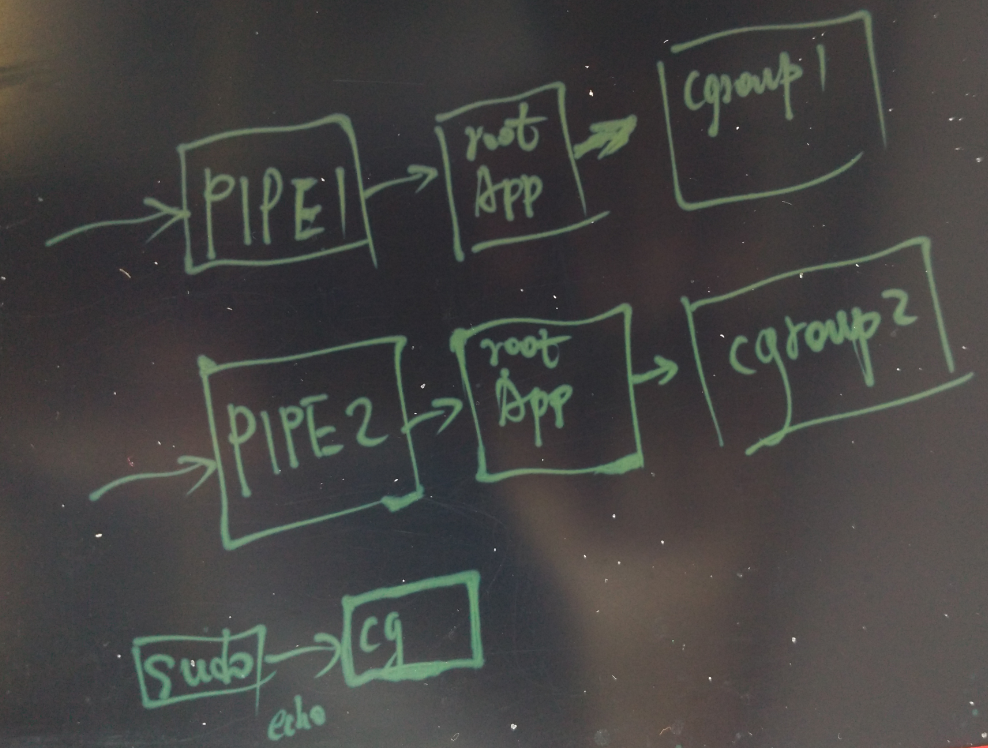
祝大家玩得开心,欢迎随时来阿里云促膝长谈业务需求 ,恭候光临。
阿里云的小伙伴们加油,努力做 最贴地气的云数据库 。
[转]Greenplum 资源隔离的原理与源码分析的更多相关文章
- OpenCV学习笔记(27)KAZE 算法原理与源码分析(一)非线性扩散滤波
http://blog.csdn.net/chenyusiyuan/article/details/8710462 OpenCV学习笔记(27)KAZE 算法原理与源码分析(一)非线性扩散滤波 201 ...
- ConcurrentHashMap实现原理及源码分析
ConcurrentHashMap实现原理 ConcurrentHashMap源码分析 总结 ConcurrentHashMap是Java并发包中提供的一个线程安全且高效的HashMap实现(若对Ha ...
- HashMap和ConcurrentHashMap实现原理及源码分析
HashMap实现原理及源码分析 哈希表(hash table)也叫散列表,是一种非常重要的数据结构,应用场景及其丰富,许多缓存技术(比如memcached)的核心其实就是在内存中维护一张大的哈希表, ...
- (转)ReentrantLock实现原理及源码分析
背景:ReetrantLock底层是基于AQS实现的(CAS+CHL),有公平和非公平两种区别. 这种底层机制,很有必要通过跟踪源码来进行分析. 参考 ReentrantLock实现原理及源码分析 源 ...
- 【转】HashMap实现原理及源码分析
哈希表(hash table)也叫散列表,是一种非常重要的数据结构,应用场景极其丰富,许多缓存技术(比如memcached)的核心其实就是在内存中维护一张大的哈希表,而HashMap的实现原理也常常出 ...
- 【OpenCV】SIFT原理与源码分析:DoG尺度空间构造
原文地址:http://blog.csdn.net/xiaowei_cqu/article/details/8067881 尺度空间理论 自然界中的物体随着观测尺度不同有不同的表现形态.例如我们形 ...
- 《深入探索Netty原理及源码分析》文集小结
<深入探索Netty原理及源码分析>文集小结 https://www.jianshu.com/p/239a196152de
- HashMap实现原理及源码分析之JDK8
继续上回HashMap的学习 HashMap实现原理及源码分析之JDK7 转载 Java8源码-HashMap 基于JDK8的HashMap源码解析 [jdk1.8]HashMap源码分析 一.H ...
- 【OpenCV】SIFT原理与源码分析:关键点描述
<SIFT原理与源码分析>系列文章索引:http://www.cnblogs.com/tianyalu/p/5467813.html 由前一篇<方向赋值>,为找到的关键点即SI ...
随机推荐
- How to check WWN and Multipathing on Windows Server
There are many ways to find the World Wide Name (WWN) of fibre channel HBA connected to windows serv ...
- DbScopeFactory
using (var db = DbScopeFactory.Create()) { //这里修改数据 db.SaveChanges(); }
- sell 项目 类目表 设计 及 创建
1.数据库设计 2.类目表 创建 /** * 类目表 */ create table `product_category` ( `category_id` int not null auto_incr ...
- HTTPS与HTTP协议区别
1.主要区别 (1)超文本传输协议HTTP,HTTP下加入SSL层(位于传输层)的安全协议. (2)HTTP端口为80,HTTPS端口是443. 2.HTTPS通信过程 https 通信传输过程:
- Struck 跟踪算法(二)
以下開始读详细源代码 config.h文件 /* * Struck: Structured Output Tracking with Kernels * * Code to accompany the ...
- 写了一个简单的Linux Shell用来下载文件
#!/bin/sh ; i<; i=i+ )); do # 利用spider来探测请求的资源是否存在,并把请求的结果写入到一个文件 wget --spider --http-user=usern ...
- 〖Android〗Nexus 7 flo (razor) 刷入Recovery/CM-11.0后卡在开机动画的解决方法
操作日志: 起因:Nexus 7 flo 华硕平板,刷了一个CWM Recovery之后变成了砖机: 尝试1:使用CWM Recovery清除数据,开机失败 尝试2:刷入CM 11 Snapshot的 ...
- urlencode编码问题(以及urlparse)
# -*- coding: cp936 -*- #python 27 #xiaodeng #urlencode编码问题(以及urlparse) import sys, urllib def urlen ...
- 关于继承中的super()调用父类构造方法
super super可以理解为是指向自己超(父)类对象的一个指针,而这个超类指的是离自己最近的一个父类. 每当你new一个子类对象的时候,子类对象都隐式内置了一个父类对象.所以说,为了那个内置的父类 ...
- Quartz.NET开源作业调度框架系列(二):CronTrigger-转
CronTriggers比SimpleTrigger更加的灵活和有用,对于比较复杂的任务触发规则,例如"每个星期天的晚上12:00"进行备份任务,SimpleTrigger就不能胜 ...