
spring bean 加载过程(spring)
以classpathXmlApplication为例
入口方法包含3个部分,
public ClassPathXmlApplicationContext(String[] configLocations, boolean refresh, ApplicationContext parent)

            throws BeansException {

        super(parent);

        setConfigLocations(configLocations);

        if (refresh) {

            refresh();

        }

    }
1.继承父类,没什么东西
2.设置配置文件
3.执行refresh方法(关键)。下面我们就这两个方法看看内部实现
设置配置文件,这块其实没什么东西,就是给context对象设置一个configLocations的数组,我们看一下context类的继承关系
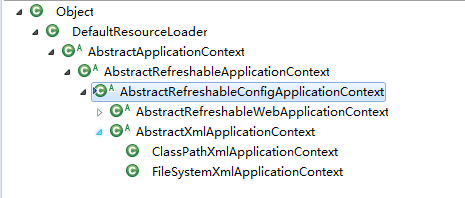
下面看重点的refresh方法
 public void refresh() throws BeansException, IllegalStateException {

         synchronized (this.startupShutdownMonitor) {//锁住一个对象,防止多线程同时执行初始化的操作

             // Prepare this context for refreshing.准备上下文,这里设置一下开始实现,准备propery等

             prepareRefresh();

             // Tell the subclass to refresh the internal bean factory.

             ConfigurableListableBeanFactory beanFactory = obtainFreshBeanFactory();

             // Prepare the bean factory for use in this context.

             prepareBeanFactory(beanFactory);

             try {

                 // Allows post-processing of the bean factory in context subclasses.

                 postProcessBeanFactory(beanFactory);

                 // Invoke factory processors registered as beans in the context.

                 invokeBeanFactoryPostProcessors(beanFactory);

                 // Register bean processors that intercept bean creation.

                 registerBeanPostProcessors(beanFactory);

                 // Initialize message source for this context.

                 initMessageSource();

                 // Initialize event multicaster for this context.

                 initApplicationEventMulticaster();

                 // Initialize other special beans in specific context subclasses.

                 onRefresh();

                 // Check for listener beans and register them.

                 registerListeners();

                 // Instantiate all remaining (non-lazy-init) singletons.

                 finishBeanFactoryInitialization(beanFactory);

                 // Last step: publish corresponding event.

                 finishRefresh();

             }

             catch (BeansException ex) {

                 if (logger.isWarnEnabled()) {

                     logger.warn("Exception encountered during context initialization - " +

                             "cancelling refresh attempt: " + ex);

                 }

                 // Destroy already created singletons to avoid dangling resources.

                 destroyBeans();

                 // Reset 'active' flag.

                 cancelRefresh(ex);

                 // Propagate exception to caller.

                 throw ex;

             }

             finally {

                 // Reset common introspection caches in Spring's core, since we

                 // might not ever need metadata for singleton beans anymore...

                 resetCommonCaches();

             }

         }

     }
这个代码有点长,我们把每个方法干什么先研究一下,在深入看每个方法怎么实现的。
从7行开始看,这个方法是为了一个refreshBeanFactory。返回的类是ConfigurableListableBeanFactory,而这个factory是一个接口,我们待会看看这个接口有哪些实现,先看看这个方法内部实现
protected ConfigurableListableBeanFactory obtainFreshBeanFactory() {

        refreshBeanFactory();

        ConfigurableListableBeanFactory beanFactory = getBeanFactory();

        if (logger.isDebugEnabled()) {

            logger.debug("Bean factory for " + getDisplayName() + ": " + beanFactory);

        }

        return beanFactory;

    }
我们看到最后return的beanFactory就是ConfigurableListableBeanFactory。而这个接口只有一个default实现类DefaultListableBeanFactory。我们看看这个类主要有哪些成员变量
 private boolean allowEagerClassLoading = true;

     /** Optional OrderComparator for dependency Lists and arrays */

     private Comparator<Object> dependencyComparator;

     /** Resolver to use for checking if a bean definition is an autowire candidate */

     private AutowireCandidateResolver autowireCandidateResolver = new SimpleAutowireCandidateResolver();

     /** Map from dependency type to corresponding autowired value */

     private final Map<Class<?>, Object> resolvableDependencies = new ConcurrentHashMap<Class<?>, Object>(16);

     /** Map of bean definition objects, keyed by bean name */

     private final Map<String, BeanDefinition> beanDefinitionMap = new ConcurrentHashMap<String, BeanDefinition>(256);

     /** Map of singleton and non-singleton bean names, keyed by dependency type */

     private final Map<Class<?>, String[]> allBeanNamesByType = new ConcurrentHashMap<Class<?>, String[]>(64);

     /** Map of singleton-only bean names, keyed by dependency type */

     private final Map<Class<?>, String[]> singletonBeanNamesByType = new ConcurrentHashMap<Class<?>, String[]>(64);

     /** List of bean definition names, in registration order */

     private volatile List<String> beanDefinitionNames = new ArrayList<String>(256);

     /** List of names of manually registered singletons, in registration order */

     private volatile Set<String> manualSingletonNames = new LinkedHashSet<String>(16);

     /** Cached array of bean definition names in case of frozen configuration */

     private volatile String[] frozenBeanDefinitionNames;

     /** Whether bean definition metadata may be cached for all beans */

     private volatile boolean configurationFrozen = false;
这些成员变量有机会我们一个个分析下,我们知道每个bean 有一个beanDefinition对象来定义。在13行,我们看到有一个BeanDefinition的Map,我们随便调试一下,看看这个里面存了什么东西。
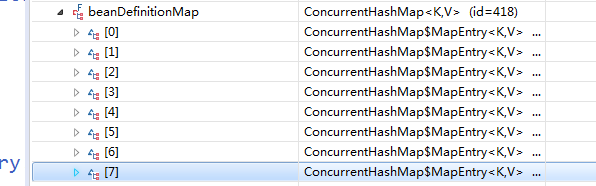
这里面竟然只有7个对象,分别是:ConfigurationClassPostProcessor、DefaultEventListenerFactory、MessageResolver、EventListenerMethodProcessor、AutowiredAnnotationBeanPostProcessor、CommonAnnotationBeanPostProcessor、PropertiesFactoryBean、RequiredAnnotationBeanPostProcessor。这七个对象怎么来的呢,举个例子来看ConfigurationClassPostProcessor,这个类说明是,当配置文件中
Registered by default when using {@code <context:annotation-config/>} or
* {@code <context:component-scan/>}有这两个配置的时候,便会注入这么个类。好吧,那我们看看在哪里register的。我们猜测是在
refreshBeanFactory();这个方法里面。那看看这个方法
 protected final void refreshBeanFactory() throws BeansException {

         if (hasBeanFactory()) {

             destroyBeans();

             closeBeanFactory();

         }

         try {

             DefaultListableBeanFactory beanFactory = createBeanFactory();

             beanFactory.setSerializationId(getId());

             customizeBeanFactory(beanFactory);

             loadBeanDefinitions(beanFactory);

             synchronized (this.beanFactoryMonitor) {

                 this.beanFactory = beanFactory;

             }

         }

         catch (IOException ex) {

             throw new ApplicationContextException("I/O error parsing bean definition source for " + getDisplayName(), ex);

         }

     }
我们看到第7行,创建了一个DefaultListableBeanFactory ,第10行有loadBeanDefinition。应该是在这里处理的。我们还是先调试下看看。执行7行代码,这个时候beanDefinitionMap是空的。执行完10行代码,我们的beanDefinitionMap有值了。这里面为了加深理解,我们在我们的spring-config.xml文件中加一个bean看看会怎么样。原来的spring-config.xml文件如下
 <?xml version="1.0" encoding="UTF-8"?>

 <beans xmlns="http://www.springframework.org/schema/beans"

        xmlns:xsi="http://www.w3.org/2001/XMLSchema-instance"

        xmlns:context="http://www.springframework.org/schema/context"

        xmlns:util="http://www.springframework.org/schema/util"

        xsi:schemaLocation="

            http://www.springframework.org/schema/beans

            http://www.springframework.org/schema/beans/spring-beans-4.1.xsd

            http://www.springframework.org/schema/context

            http://www.springframework.org/schema/context/spring-context-4.1.xsd

            http://www.springframework.org/schema/util

            http://www.springframework.org/schema/util/spring-util-4.1.xsd">

     <context:annotation-config/>

     <context:component-scan base-package="com.newbie.common"></context:component-scan>

     <util:properties id="systemProperties" location="classpath:conf/user.properties" />

 </beans>
我们随便加一个bean,如下图所示,有多个一个beanDefinition。所以这个地就是定义所以beanDefinition的入口,而我们从autowire的bean是由相关processor处理的,这个今后如果有时间的话,我们在分析。我们继续往下看

我们回到原来的refresh方法里面。
 public void refresh() throws BeansException, IllegalStateException {

         synchronized (this.startupShutdownMonitor) {

             // Prepare this context for refreshing.

             prepareRefresh();

             // Tell the subclass to refresh the internal bean factory.

             ConfigurableListableBeanFactory beanFactory = obtainFreshBeanFactory();

             // Prepare the bean factory for use in this context.

             prepareBeanFactory(beanFactory);

             try {

                 // Allows post-processing of the bean factory in context subclasses.

                 postProcessBeanFactory(beanFactory);

                 // Invoke factory processors registered as beans in the context.

                 invokeBeanFactoryPostProcessors(beanFactory);

                 // Register bean processors that intercept bean creation.

                 registerBeanPostProcessors(beanFactory);

                 // Initialize message source for this context.

                 initMessageSource();

                 // Initialize event multicaster for this context.

                 initApplicationEventMulticaster();

                 // Initialize other special beans in specific context subclasses.

                 onRefresh();

                 // Check for listener beans and register them.

                 registerListeners();

                 // Instantiate all remaining (non-lazy-init) singletons.

                 finishBeanFactoryInitialization(beanFactory);

                 // Last step: publish corresponding event.

                 finishRefresh();

             }

             catch (BeansException ex) {

                 if (logger.isWarnEnabled()) {

                     logger.warn("Exception encountered during context initialization - " +

                             "cancelling refresh attempt: " + ex);

                 }

                 // Destroy already created singletons to avoid dangling resources.

                 destroyBeans();

                 // Reset 'active' flag.

                 cancelRefresh(ex);

                 // Propagate exception to caller.

                 throw ex;

             }

             finally {

                 // Reset common introspection caches in Spring's core, since we

                 // might not ever need metadata for singleton beans anymore...

                 resetCommonCaches();

             }

         }

     }
我们现在知道第7行返回的这个ConfigurableListableBeanFactory 有我们所有的beanDefintion。这个方法是给ConfigurableListableBeanFactory 设置了若干预设变量,现在我们也不清楚这个变量是干嘛的,我们先跳过这个方法,等回头再分析他。
第14行postProcessBeanFactory(ConfigurableListableBeanFactory )。我们看看这个代码是做什么事情,我们有一个关注点,我们@autowired的bean是怎么被处理的。这个代码,会根据不同context子类加入不同Processors,这个我们也暂时不分析他,等回头再看
第17行invokeBeanFactoryPostProcessors(ConfigurableListableBeanFactory )。这个方法应该就是能看到bean是如何创建的。这个代码比较长,我们先把调用关系简单画出来
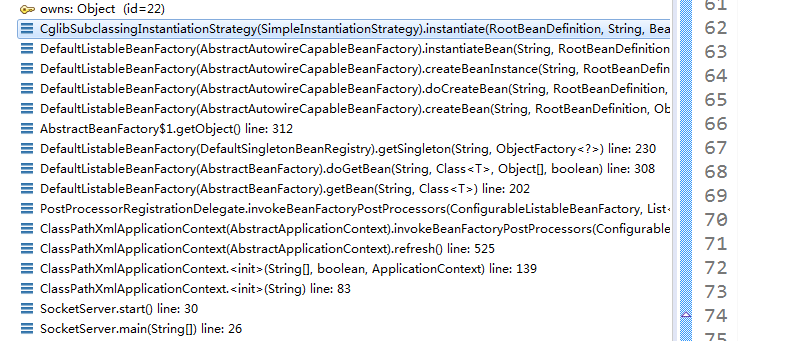
执行invokeBeanFactoryPostProcessors之后,这里主要是讲各个processors类注册进去,这里需要获得具体的bean了,根据beanName和BeanDefinition。如何获得bean,通过DefaultListableBeanFactory的getBean方法,这里判断bean是单利还是原型的,进入不同的getBean的逻辑,之后调用的AbstractAutowireCapableBeanFactory的createBean方法,之后通过反射来获得对应的bean。注意看一下doCreateBean方法里面的populateBean()方法,这里能够完成对属性的注入。
上面这个方法,我们调用的时候发现就注册了一个ConfigurationClassPostProcessor,也不知道干嘛的。后来通过搜索了解到这个方法主要是用于处理spring的后置处理器的相关内容,参考https://www.cnblogs.com/sishang/p/6588542.html和https://www.cnblogs.com/sishang/p/6576665.html。
spring bean 加载过程(spring)的更多相关文章
- Spring bean加载2--FactoryBean情况处理
Spring bean加载2--FactoryBean情况处理 在Spring bean加载过程中,每次bean实例在返回前都会调用getObjectForBeanInstance来处理Factory ...
- 工厂模式模拟Spring的bean加载过程
一.前言 在日常的开发过程,经常使用或碰到的设计模式有代理.工厂.单例.反射模式等等.下面就对工厂模式模拟spring的bean加载过程进行解析,如果对工厂模式不熟悉的,具体可以先去学习一下工厂 ...
- Spring IOC bean加载过程
首先我们不要在学习Spring的开始产生畏难情绪.Spring没有臆想的那么高深,相反,它帮我们再项目开发中制定项目框架,简化项目开发.它的主要功能是将项目开发中繁琐的过程流程化,模式化,使用户仅在固 ...
- 07.Spring Bean 加载 - BeanDefinitionReader
基本概念 BeanDefinitionReader ,该接口的作用就是加载 Bean. 在 Spring 中,Bean 一般来说都在配置文件中定义.而在配置的路径由在 web.xml 中定义.所以加载 ...
- SSH 之 Spring的源码(一)——Bean加载过程
看看Spring的源码,看看巨人的底层实现,拓展思路,为了更好的理解原理,看看源码,深入浅出吧.本文基于Spring 4.0.8版本. 首先Web项目使用Spring是通过在web.xml里面配置 o ...
- 看看Spring的源码(一)——Bean加载过程
首先Web项目使用Spring是通过在web.xml里面配置org.springframework.web.context.ContextLoaderListener初始化IOC容器的. <li ...
- spring bean加载顺序指定方式之一
在某些情况下,我们在容器启动的时候做一些事情,举个例子,加载缓存等.. 此时我们会希望某个bean先被加载并执行其中的afterpropertiesset方法. 因为spring默认是通过contex ...
- Spring bean加载之1:BeanFactory和FactoryBean
BeanFactory BeanFactory:以Factory结尾,表示它是一个工厂类(接口),用于管理Bean的一个工厂.在Spring中,BeanFactory是IOC容器的核心接口,它的职责包 ...
- Spring bean加载多个配置文件
除了写很简单的加载一个xml,加载多个的情况一直没用到,在公司里也不会由自己处理这个问题,现在需要用到了,就研究验证一下. 使用的案例还是上面的例子. 只有,将原来的beans.xml分成两个部分. ...
随机推荐
- 使用python抓取CSDN关注人的全部公布的文章
# -*- coding: utf-8 -*- """ @author: jiangfuqiang """ import re import ...
- 【BZOJ 1026】 [SCOI2009]windy数
[题目链接]:http://www.lydsy.com/JudgeOnline/problem.php?id=1026 [题意] [题解] 数位Dp 设f[i][j]表示长度为i,第一位(也就是最高位 ...
- Python 第三方库 cp27、cp35 等文件名的含义
What does version name 'cp27' or 'cp35' mean in Python? 如对于 gensim-0.12.4-cp27-none-win_amd64.whl文件名 ...
- Cordova app 检查更新 ----创建项目、添加插件、修改插件(一)
原文:Cordova app 检查更新 ----创建项目.添加插件.修改插件(一) 使用Cordova 进行跨平台应用程序的开发 1.创建Cordova项目 $ cordova create hell ...
- Cordova-Android-Android target:not installed
原文:Cordova-Android-Android target:not installed 运行cordova requirements检查是否具备使用 Cordova 开发/运行 Android ...
- selenium firefox 提取qq空间相册链接
环境: selenium-java 3.9.1 firefox 57.0 geckodriver 0.19.1 1.大概的思路就是模拟用户点击行为,关于滚动条的问题,我是模拟下拉箭头,否则只能每个相册 ...
- JAVA SE回顾及思考(2)——数组的复制与动态扩展
我们知道在Java中数组是非基本类型既数组是对象(Object)的子类,所以用下面的这种方式是不能复制该对象的 public static void main(String[] args) { int ...
- node服务器如何部署https证书
var http = require('http'); var https = require('https'); var path = require('path'); var fs = requi ...
- POJ 3904(容斥原理)
Sky Code Time Limit: 1000MS Memory Limit: 65536K Total Submissions: 1750 Accepted: 545 Descripti ...
- Visual Studio for Mac第四预
微软发布Visual Studio for Mac第四预览版 去年 11 月,微软发布了 Visual Studio for Mac 的首个预览版本,并且承诺后续数月会带来更多功能.而今天,随着 Vi ...