
07.Spring Bean 加载 - BeanDefinitionReader
基本概念
BeanDefinitionReader ,该接口的作用就是加载 Bean。
在 Spring 中,Bean 一般来说都在配置文件中定义。而在配置的路径由在 web.xml 中定义。所以加载 Bean 的步骤大致就是:
加载资源,通过配置文件的路径(Location)加载配置文件(Resource)
解析资源,通过解析配置文件的内容得到 Bean。
下面来看它的接口定义:
public interface BeanDefinitionReader {

    BeanDefinitionRegistry getRegistry();

    ResourceLoader getResourceLoader();

    ClassLoader getBeanClassLoader();

    BeanNameGenerator getBeanNameGenerator();

    // 通过 Resource 加载 Bean

    int loadBeanDefinitions(Resource resource)

        throws BeanDefinitionStoreException;

    int loadBeanDefinitions(Resource... resources)

        throws BeanDefinitionStoreException;

    // 通过 location 加载资源

    int loadBeanDefinitions(String location)

        throws BeanDefinitionStoreException;

    int loadBeanDefinitions(String... locations)

        throws BeanDefinitionStoreException;

}
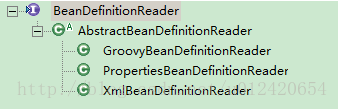
具体的继承关系如下:
流程分析
首先来看 Spring Ioc 容器从启动开始到调用 BeanDefinitionReader 加载 Bean 的过程如下:
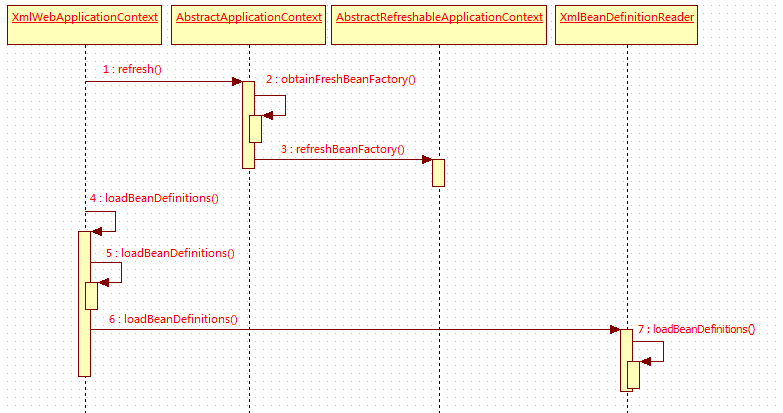
注意:由于这里采用 XML 文件作为 Spring 的配置文件,所以默认调用 XmlBeanDefinitionReader 来处理。
1.通过 BeanFactory 加载 Bean
在 Spring 容器(ApplicationContext)内部存在一个内部容器(BeanFactory)负责 Bean 的创建与管理。
在创建完 BeanFactory ,下一步就是要去加载 Bean。它由 loadBeanDefinitions 方法负责。
protected void loadBeanDefinitions(DefaultListableBeanFactory beanFactory)

    throws BeansException, IOException {

    // 1.创建 BeanDefinitionReader

    XmlBeanDefinitionReader beanDefinitionReader =

        new XmlBeanDefinitionReader(beanFactory);

    // 2.设置 BeanDefinitionReader 的相关属性

    // 2.1.设置 Environment,即环境,与容器的环境一致

    beanDefinitionReader.setEnvironment(getEnvironment());

    // 2.2.设置 ResourceLoader,即资源加载器,因为容器实现了该接口,具体加载资源的功能

    beanDefinitionReader.setResourceLoader(this);

    // 2.3.设置 EntityResolver,即实体解析器,这里用于解析资源加载器加载的资源内容

    beanDefinitionReader.setEntityResolver(new ResourceEntityResolver(this));

    // 3.初始化 BeanDefinitionReader ,空方法

    initBeanDefinitionReader(beanDefinitionReader);

    // 4.通过 BeanDefinitionReader 加载 Bean

    loadBeanDefinitions(beanDefinitionReader);

}

// 构造函数

public XmlBeanDefinitionReader(BeanDefinitionRegistry registry) {

    // 内部 BeanFactory 被当作 Bean 注册器

    super(registry);

}
观察代码,该方法的主要目的是创建了 BeanDefinitionReader ,并由它去加载 Bean。具体过程如下:
- 创建 BeanDefinitionReader
- 设置 BeanDefinitionReader 的相关属性
- 初始化 BeanDefinitionReader
- 通过 BeanDefinitionReader 加载 Bean
2.通过 BeanDefinitionReader 加载 Bean
在创建完 BeanDefinitionReader 后,则就需要通过它来 加载 Bean,过程如下:
// 通过 BeanDefinitionReader 加载 Bean

protected void loadBeanDefinitions(XmlBeanDefinitionReader reader)

    throws IOException {

    // 取得 Spring 容器的所有配置文件

    String[] configLocations = getConfigLocations();

    if (configLocations != null) {

        for (String configLocation : configLocations) {

            // 调用 BeanDefinitionReader 加载 Bean

            reader.loadBeanDefinitions(configLocation);

        }

    }

}
3.通过 Location 加载 Bean
加载的 Bean 的责任被交给了 BeanDefinitionReader ,下面来看看该类的 loadBeanDefinitions 方法。
public int loadBeanDefinitions(String location)

    throws BeanDefinitionStoreException {

    return loadBeanDefinitions(location, null);

}

public int loadBeanDefinitions(String location, Set<Resource> actualResources)

    throws BeanDefinitionStoreException {

    // 1.取得资源加载器,即容器本身

    ResourceLoader resourceLoader = getResourceLoader();

    if (resourceLoader == null) {

        // 抛出异常...

    }

    // 判断资源加载器类型

    if (resourceLoader instanceof ResourcePatternResolver) {

        // 说明该 ResourceLoader 可以基于路径加载多个资源

        try {

            // 2.加载资源

            Resource[] resources =

                ((ResourcePatternResolver) resourceLoader).getResources(location);

            // 3.通过 Resource 加载 Bean

            int loadCount = loadBeanDefinitions(resources);

            if (actualResources != null) {

                for (Resource resource : resources) {

                    actualResources.add(resource);

                }

            }

            // 省略代码...

            return loadCount;

        }catch (IOException ex) {

            // 抛出异常...

        }

    }else {

        // 表示 ResourceLoader 只能加载一个资源

        Resource resource = resourceLoader.getResource(location);

        int loadCount = loadBeanDefinitions(resource);

        if (actualResources != null) {

            actualResources.add(resource);

        }

        // 省略代码...

        return loadCount;

    }

}
观察代码,该方法的工作流程可分为四个步骤:
取得资源加载器
加载资源,通过 location 利用 ResourceLoader 加载
通过 Resource 加载 Bean
4.通过 Resource 加载 Bean
在得到资源(Resource)后,该方法对它进行了封装,使其变成一个 EncodedResource 对象。
public int loadBeanDefinitions(Resource resource)

    throws BeanDefinitionStoreException {

    // EncodedResource 表示编码类型的资源

    return loadBeanDefinitions(new EncodedResource(resource));

}

// 构造函数

public EncodedResource(Resource resource, String encoding) {

    // 封装资源,并带上编码类型

    this(resource, encoding, null);

}
5.通过 EncodedResource 加载 Bean
public int loadBeanDefinitions(EncodedResource encodedResource)

    throws BeanDefinitionStoreException {

    // 省略代码...

    // 1.取得[已加载的资源]的集合,用于存在已加载的资源。空,则创建。

    Set<EncodedResource> currentResources = this.resourcesCurrentlyBeingLoaded.get();

    if (currentResources == null) {

        currentResources = new HashSet<EncodedResource>(4);

        this.resourcesCurrentlyBeingLoaded.set(currentResources);

    }

    // 2.将当前资源加入集合

    if (!currentResources.add(encodedResource)) {

        // 抛出异常...

    }

    try {

        // 3.将资源转换成流

        InputStream inputStream = encodedResource.getResource().getInputStream();

        try {

            //5.通过流创建 InputSource ,并设置编码

            InputSource inputSource = new InputSource(inputStream);

            if (encodedResource.getEncoding() != null) {

                inputSource.setEncoding(encodedResource.getEncoding());

            }

            //6.通过 InputSource 加载 Bean

            return doLoadBeanDefinitions(inputSource, encodedResource.getResource());

        }finally {

            inputStream.close();

        }

    }catch (IOException ex) {

        // 抛出异常...

    }finally {

        // 移除已完成解析的资源

        currentResources.remove(encodedResource);

        // 集合为空,则一并删除

        if (currentResources.isEmpty()) {

            this.resourcesCurrentlyBeingLoaded.remove();

        }

    }

}- 取得已加载的资源集合
- 将当前资源添加到集合
- 将资源转换成流
- 通过流创建 InputSource ,并设置编码
- 通过 InputSource 加载 Bean
6.通过 InputSource 加载 Bean
之所以把 Resource 转换成 InputSource ,就是为了 SAX 解析作准备。
protected int doLoadBeanDefinitions(InputSource inputSource, Resource resource)

    throws BeanDefinitionStoreException {

    try {

        // 1.解析 XML 文件

        Document doc = doLoadDocument(inputSource, resource);

        // 2.注册 Bean

        return registerBeanDefinitions(doc, resource);

    }catch (BeanDefinitionStoreException ex) {

        // 抛出异常...

    }catch (SAXParseException ex) {

        // 抛出异常...

    }catch (SAXException ex) {

        // 抛出异常...

    }catch (ParserConfigurationException ex) {

        // 抛出异常...

    }catch (IOException ex) {

        // 抛出异常...

    }catch (Throwable ex) {

        // 抛出异常...

    }

}

// 解析 XML 文件,并返回 Document 对象。

protected Document doLoadDocument(InputSource inputSource, Resource resource)

    throws Exception {

    return this.documentLoader.loadDocument(

        inputSource,

        getEntityResolver(),

        this.errorHandler,

        getValidationModeForResource(resource),

        isNamespaceAware());

}
3.Bean 注册
上一步中 XmlBeanDefinitionReader 已经取得了 XML 的 Document 对象,完成了资源的解析过程。
下一步就是 Bean 的注册过程。
public int registerBeanDefinitions(Document doc, Resource resource) throws BeanDefinitionStoreException {

    // 利用 documentReader 对配置文件的内容进行解析

    BeanDefinitionDocumentReader documentReader = createBeanDefinitionDocumentReader();

    // 取得已经注册 BeanDefinition

    int countBefore = getRegistry().getBeanDefinitionCount();

    // 关键 -> 注册 BeanDefinition (包含解析过程)

    documentReader.registerBeanDefinitions(doc, createReaderContext(resource));

    return getRegistry().getBeanDefinitionCount() - countBefore;

}
总结
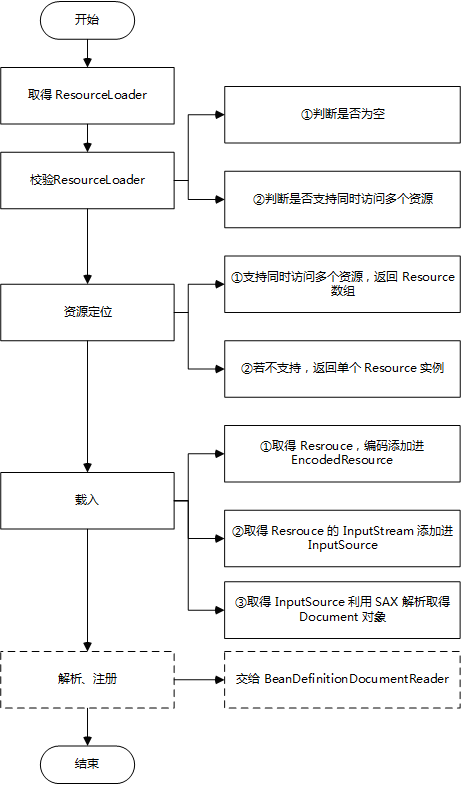
分析完 BeanDefinitionReader 具体工作流程,最后通过一个图简单阐述:
07.Spring Bean 加载 - BeanDefinitionReader的更多相关文章
- Spring bean加载2--FactoryBean情况处理
Spring bean加载2--FactoryBean情况处理 在Spring bean加载过程中,每次bean实例在返回前都会调用getObjectForBeanInstance来处理Factory ...
- spring bean加载顺序指定方式之一
在某些情况下,我们在容器启动的时候做一些事情,举个例子,加载缓存等.. 此时我们会希望某个bean先被加载并执行其中的afterpropertiesset方法. 因为spring默认是通过contex ...
- Spring bean加载多个配置文件
除了写很简单的加载一个xml,加载多个的情况一直没用到,在公司里也不会由自己处理这个问题,现在需要用到了,就研究验证一下. 使用的案例还是上面的例子. 只有,将原来的beans.xml分成两个部分. ...
- spring bean 加载过程(spring)
以classpathXmlApplication为例 入口方法包含3个部分, public ClassPathXmlApplicationContext(String[] configLocation ...
- Spring bean加载之1:BeanFactory和FactoryBean
BeanFactory BeanFactory:以Factory结尾,表示它是一个工厂类(接口),用于管理Bean的一个工厂.在Spring中,BeanFactory是IOC容器的核心接口,它的职责包 ...
- Spring源码分析:Bean加载流程概览及配置文件读取
很多朋友可能想看Spring源码,但是不知道应当如何入手去看,这个可以理解:Java开发者通常从事的都是Java Web的工作,对于程序员来说,一个Web项目用到Spring,只是配置一下配置文件而已 ...
- 【Spring源码分析】Bean加载流程概览
代码入口 之前写文章都会啰啰嗦嗦一大堆再开始,进入[Spring源码分析]这个板块就直接切入正题了. 很多朋友可能想看Spring源码,但是不知道应当如何入手去看,这个可以理解:Java开发者通常从事 ...
- 【Spring源码分析】Bean加载流程概览(转)
转载自:https://www.cnblogs.com/xrq730/p/6285358.html 代码入口 之前写文章都会啰啰嗦嗦一大堆再开始,进入[Spring源码分析]这个板块就直接切入正题了. ...
- 工厂模式模拟Spring的bean加载过程
一.前言 在日常的开发过程,经常使用或碰到的设计模式有代理.工厂.单例.反射模式等等.下面就对工厂模式模拟spring的bean加载过程进行解析,如果对工厂模式不熟悉的,具体可以先去学习一下工厂 ...
随机推荐
- [转]基于phantomJS实现web性能监控
1.web性能监控背景描述 上期分享的<Web性能监控自动化探索之路–初识WebPageTest>从依赖webpagetest的角度给出了做性能日常检查的方案,但由于依赖结构相对复杂我们需 ...
- DataGrid 支持字符截断显示
DataGrid支持截断时, 需要分2部分, DataGridColumnHeader和DataGridCell. 1)创建上述2部分的ControlTemplate . 2)把其中的ContentP ...
- 类方法,实例方法,静态方法,@property的应用
class test(object): h = 'hello' w = 'world' def demo(self): print("demo") def test_class(s ...
- yum软件包管理器
Yum (Yellow dog Updater, Modified) 黄狗升级器是一个在 Fedora 中的字符前端软件包管理器.基于 RPM 包管理(介绍见RPM包及其管理),能够从指定的服务器自动 ...
- 事务之五:Spring @Transactional工作原理
本文将深入研究Spring的事务管理.主要介绍@Transactional在底层是如何工作的. JPA(Java Persistence API--java持久层)和事务管理 很重要的一点是JPA本身 ...
- 杂项:TModJS
ylbtech-杂项:TModJS TmodJS(原名 atc)是一个简单易用的前端模板预编译工具.它通过预编译技术让前端模板突破浏览器限制,实现后端模板一样的同步“文件”加载能力.它采用目录来组织维 ...
- ss1
首先,对系统来一次升级,以解决一些莫名其妙的依赖问题. sudo yum update 然后安装Python-pip. sudo yum -y install python-pip 注意,通过yum包 ...
- 【255】◀▶IEW-Unit20
Unit 20 Environment: Tourism I.定语从句及分词在雅思写作中的运用 定语从句: 1. 先行词 2. 关系词:关系代词.关系副词 3. 非限制性定语从句 4. 分词和定语从句 ...
- Flask10 登录模块、表单框架、表单渲染、表单验证、bookie、请求之前钩子、g对象、编写装饰器
from flask import Flask from flask import request from flask import render_template from flask_wtf i ...
- 15、使用ggtree实现进化树的可视化和注释(转载)
本文作者:余光创,目前就读于香港大学公共卫生系,开发过多个R/Bioconductor包,包括ChIPseeker, clusterProfiler, DOSE,ggtree,GOSemSim和Rea ...