
C++解析(8):C++中的新成员
0.目录
1.动态内存分配
- 1.1 C++中的动态内存分配
- 1.2 new关键字与malloc函数的区别
- 1.3 new关键字的初始化
2.命名空间
- 2.1 作用域与命名空间
- 2.2 命名空间的定义和使用
3.强制类型转换
- 3.1 C方式的强制类型转换
- 3.2 C++的新式类型转换
4.小结
1.动态内存分配
1.1 C++中的动态内存分配
- C++中通过new关键字进行动态内存申请
- C++中的动态内存申请是基于类型进行的
- delete关键字用于内存释放
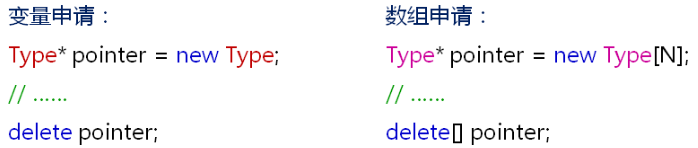
1.2 new关键字与malloc函数的区别
- new关键字是C++的一部分
- malloc是由C库提供的函数
- new以具体类型为单位进行内存分配
- malloc以字节为单位进行内存分配
- new在申请单个类型变量时可进行初始化
- malloc不具备内存初始化的特性
1.3 new关键字的初始化

2.命名空间
2.1 作用域与命名空间
在C语言中只有一个全局作用域:
- C语言中所有的全局标识符共享同一个作用域
- 标识符之间可能发生冲突
C++中提出了命名空间的概念:
- 命名空间将全局作用域分成不同的部分
- 不同命名空间中的标识符可以同名而不会发生冲突
- 命名空间可以相互嵌套
- 全局作用域也叫默认命名空间
2.2 命名空间的定义和使用
C++命名空间的定义:
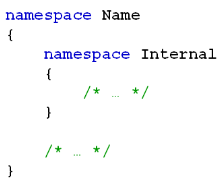
C++命名空间的使用:
使用整个命名空间:using namespace name;
使用命名空间中的变量:using name::variable;
使用默认命名空间中的变量:::variable;
示例:
#include <stdio.h>

namespace First

{

    int i = 0;

}

namespace Second

{

    int i = 1;

    namespace Internal

    {

        struct P

        {

            int x;

            int y;

        };

    }

}

int main()

{

    using namespace First;

    using Second::Internal::P;

    printf("First::i = %d\n", i);

    printf("Second::i = %d\n", Second::i);

    P p = {2, 3};

    printf("p.x = %d\n", p.x);

    printf("p.y = %d\n", p.y);

    return 0;

}
运行结果:
[root@bogon Desktop]# g++ test.cpp

[root@bogon Desktop]# ./a.out

First::i = 0

Second::i = 1

p.x = 2

p.y = 3
3.强制类型转换
3.1 C方式的强制类型转换
C方式的强制类型转换:
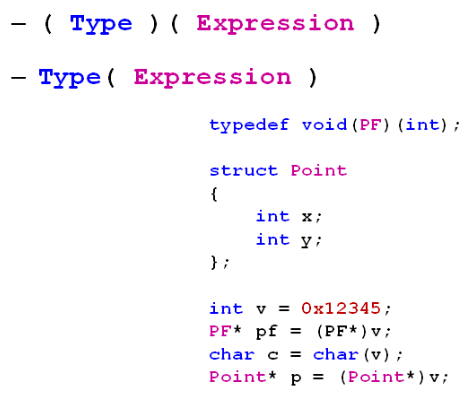
示例:
#include <stdio.h>

typedef void(PF)(int);

struct Point

{

    int x;

    int y;

};

int main()

{

    int v = 0x12345;

    PF* pf = (PF*)v;

    char c = char(v);

    Point* p = (Point*)v;

    pf(5);

    printf("p->x = %d\n", p->x);

    printf("p->y = %d\n", p->y);

    return 0;

}
运行结果:
[root@bogon Desktop]# g++ test.cpp

[root@bogon Desktop]# ./a.out

Segmentation fault (core dumped)
编译器虽然可以编译通过,但是无法运行!
存在的问题:
- 过于粗暴——任意类型之间都可以进行转换,编译器很难判断其正确性
- 难于定位——在源码中无法快速定位所有使用强制类型转换的语句
问题:强制类型转换在实际工程中是很难完全避免的!如何进行更加安全可靠的转换?
3.2 C++的新式类型转换
C++将强制类型转换分为4个不同的类型:

static_cast强制类型转换——静态类型转换
- 用于基本类型间的转换
- 不能用于基本类型指针间的转换
- 用于有继承关系类对象之间的转换和类指针之间的转换
const_cast强制类型转换
- 用于去除变量的只读属性
- 强制转换的目标类型必须是指针或引用
reinterpret_cast强制类型转换
- 用于指针类型间的强制转换
- 用于整数和指针类型间的强制转换
dynamic_cast强制类型转换——动态类型转换
- 用于有继承关系的类指针间的转换
- 用于有交叉关系的类指针间的转换
- 具有类型检查的功能
- 需要虚函数的支持
示例:
#include <stdio.h>

void static_cast_demo()

{

    int i = 0x12345;

    char c = 'c';

    int* pi = &i;

    char* pc = &c;

    c = static_cast<char>(i);

    pc = static_cast<char*>(pi); // Error

}

void const_cast_demo()

{

    const int& j = 1;

    int& k = const_cast<int&>(j);

    const int x = 2;

    int& y = const_cast<int&>(x);

    int z = const_cast<int>(x); // Error

    k = 5;

    printf("k = %d\n", k);

    printf("j = %d\n", j);

    y = 8;

    printf("x = %d\n", x);

    printf("y = %d\n", y);

    printf("&x = %p\n", &x);

    printf("&y = %p\n", &y);

}

void reinterpret_cast_demo()

{

    int i = 0;

    char c = 'c';

    int* pi = &i;

    char* pc = &c;

    pc = reinterpret_cast<char*>(pi);

    pi = reinterpret_cast<int*>(pc);

    pi = reinterpret_cast<int*>(i);

    c = reinterpret_cast<char>(i); // Error

}

void dynamic_cast_demo()

{

    int i = 0;

    int* pi = &i;

    char* pc = dynamic_cast<char*>(pi); // Error

}

int main()

{

    static_cast_demo();

    const_cast_demo();

    reinterpret_cast_demo();

    dynamic_cast_demo();

    return 0;

}
运行结果为:
[root@bogon Desktop]# g++ test.cpp

test.cpp: In function ‘void static_cast_demo()’:

test.cpp:11: error: invalid static_cast from type ‘int*’ to type ‘char*’

test.cpp: In function ‘void const_cast_demo()’:

test.cpp:22: error: invalid use of const_cast with type ‘int’, which is not a pointer, reference, nor a pointer-to-data-member type

test.cpp: In function ‘void reinterpret_cast_demo()’:

test.cpp:47: error: invalid cast from type ‘int’ to type ‘char’

test.cpp: In function ‘void dynamic_cast_demo()’:

test.cpp:54: error: cannot dynamic_cast ‘pi’ (of type ‘int*’) to type ‘char*’ (target is not pointer or reference to class)
将出错的几行代码注释后:
#include <stdio.h>

void static_cast_demo()

{

    int i = 0x12345;

    char c = 'c';

    int* pi = &i;

    char* pc = &c;

    c = static_cast<char>(i);

    //pc = static_cast<char*>(pi); // Error

}

void const_cast_demo()

{

    const int& j = 1;

    int& k = const_cast<int&>(j);

    const int x = 2;

    int& y = const_cast<int&>(x);

    //int z = const_cast<int>(x); // Error

    k = 5;

    printf("k = %d\n", k);

    printf("j = %d\n", j);

    y = 8;

    printf("x = %d\n", x);

    printf("y = %d\n", y);

    printf("&x = %p\n", &x);

    printf("&y = %p\n", &y);

}

void reinterpret_cast_demo()

{

    int i = 0;

    char c = 'c';

    int* pi = &i;

    char* pc = &c;

    pc = reinterpret_cast<char*>(pi);

    pi = reinterpret_cast<int*>(pc);

    pi = reinterpret_cast<int*>(i);

    //c = reinterpret_cast<char>(i); // Error

}

void dynamic_cast_demo()

{

    int i = 0;

    int* pi = &i;

    //char* pc = dynamic_cast<char*>(pi); // Error

}

int main()

{

    static_cast_demo();

    const_cast_demo();

    reinterpret_cast_demo();

    dynamic_cast_demo();

    return 0;

}
运行结果为:
[root@bogon Desktop]# g++ test.cpp

[root@bogon Desktop]# ./a.out

k = 5

j = 5

x = 2

y = 8

&x = 0x7ffd5a6a5650

&y = 0x7ffd5a6a5650
4.小结
- C++中内置了动态内存分配的专用关键字
- C++中的动态内存分配可以同时进行初始化
- C++中的动态内存分配是基于类型进行的
- C++中命名空间概念用于解决名称冲突问题
- C方式的强制类型转换
- 过于粗暴
- 潜在的问题不易被发现
- 不易在代码中定位
- 新式类型转换以C++关键字的方式出现
- 编译器能够帮助检查潜在的问题
- 非常方便的在代码中定位
- 支持动态类型识别( dynamic_cast )
C++解析(8):C++中的新成员的更多相关文章
- C++深度解析教程学习笔记(4)C++中的新成员
1. 动态内存分配 (1)C++通过 new 关键字进行动态内存申请,是以类型为单位来申请空间大小的 (2)delete 关键字用于内存释放 ▲注意释放数组时要加[],否则只释放这个数组中的第 1 个 ...
- 第10课 C++中的新成员
1. 动态内存分配 (1)C++通过new关键字进行动态内存申请,是以类型为单位来申请空间大小的 (2)delete关键字用于内存释放 ▲注意释放数组时要加[],否则只释放这个数组中的第1个元素. [ ...
- 解析C#类中的构造函数
<解析C#类中的构造函数> 一. C#中的构造函数概述: C#中类包含数据成员和函数成员.函数成员提供了操作类中数据的某些功能,包括方法.属性.构造器和终结器.运算符和索引器. 构造函数 ...
- NET Framework 4 中的新 C# 功能
http://msdn.microsoft.com/zh-cn/magazine/ff796223.aspx C# 编程语言自 2002 年初次发布以来已经有了极大的改善,可以帮助程序员编写更清晰易懂 ...
- [转]【译】.NET Core 3.0 中的新变化
.NET Core 3.0 是 .NET Core 平台的下一主要版本.本文回顾了 .Net Core 发展历史,并展示了它是如何从基本支持 Web 和数据工作负载的版本 1,发展成为能够运行 Web ...
- 1 PHP 5.3中的新特性
1 PHP 5.3中的新特性 1.1 支持命名空间 (Namespace) 毫无疑问,命名空间是PHP5.3所带来的最重要的新特性. 在PHP5.3中,则只需要指定不同的命名空间即可,命名空间的分隔符 ...
- 介绍一位OWin服务器新成员TinyFox
TinyFox 是一款支持OWIN标准的WEB应用的高性能的HTTP服务器,是Jexus Web Server的"姊妹篇".TinyFox本身的功能是html服务器,所有的WEB应 ...
- Windows 10 版本 1507 中的新 AppLocker 功能
要查看 Windows 10 版本信息,使用[运行]> dxdiag 回车 下表包含 Windows 10 的初始版本(版本 1507)中包括的一些新的和更新的功能以及对版本 1511 的 W ...
- TWaver家族新成员 — Legolas工业自动化设计平台
对于TWaver可视化家族的成员,大家比较熟悉的是我们的网络拓扑图组件和MONO Design三维建模工具.作为开发工具,这两款产品面向广大的程序猿同志,在界面可视化上为大家省时省力.但是,当项目交付 ...
随机推荐
- 成都Uber优步司机奖励政策(4月18日)
滴快车单单2.5倍,注册地址:http://www.udache.com/ 如何注册Uber司机(全国版最新最详细注册流程)/月入2万/不用抢单:http://www.cnblogs.com/mfry ...
- [并发并行]_[线程模型]_[Pthread线程使用模型之二 工作组work crew]
Pthread线程使用模型之二工作组(Work crew) 场景 1.一些耗时的任务,比如分析多个类型的数据, 是独立的任务, 并不像 pipeline那样有序的依赖关系, 这时候pipeline就显 ...
- PHPStrom 里修改Emmet对php的自动扩展
PHPStrom 7.1.3 Emmet 想必大家都比较清楚了.Emmet有个特点,对于匹配不到的符号,仍然会自动扩展为标签的形式,比如我输入aaaa,然后按tab,会自动扩展为<aaaa> ...
- 建表/修改表名/增加删除字段(MySql)
修改表名:alter table 旧表名 rename 新表名; 删除字段:alter table 表名 drop 字段名; 增加字段:alter table 表名 add 字段名 字段类型 [def ...
- 【转】在Android Studio中下载Android SDK的两种方式(Android Studio3.0、windows)
在Android Studio中下载Android SDK的两种方式(Android Studio3.0.windows) 方式一.设置HTTP Proxy1. 打开Settings2. 点击HTTP ...
- JMeter学习笔记(一) 工具的安装和基本介绍
因为网上的资料比较多,就不多描述了,在此引用了其他大神的文档,用于学习 这个文档中有比较详细的jmeter工具介绍: https://wenku.baidu.com/view/64f3a5f75901 ...
- CentOS 下 Java 的下载、安装、配置
CentOS 下 Java 的下载.安装.配置 系统: CentOS 7 x86_64 Java 版本: 1.8.0_171 本文将 Java 目录放在 /usr/local/java 文件夹下,读者 ...
- idea 模版之自定义类与方法注释
idea 模版之自定义类与方法注释 很多公司都有要求的代码注释规范,我们每新建类或者方法的时候从新复制粘贴很麻烦,而且容易粘错. 当然自定义模板还可以用到很多地方,比如系统自带的 sout就是syst ...
- 大O算法
大O计法:根据执行次数计算#sum = (1+n)*n/2://执行了一次,即为O(1)#for(i=0;i<n;i++);//执行了n次,即为O(n)#算法的时间复杂度:T(n) = O(f( ...
- 生成dataset的几种方式
1.常用的方式通过sparksession读取外部文件或者数据生成dataset(这里就不讲了) 注: 生成Row对象的方法提一下:RowFactory.create(x,y,z),取Row中的数据 ...