
通过注解配置Bean
之前说的三种配置方式,都是使用XML配置,现在我们说说使用注解配置Bean。
这部分内容主要分为两个部分:使用注解配置Bean,使用注解配置Bean属性。
在classpath中扫描组件
组件扫描:Spring能够从ClassPath下自动扫描,侦测和实例化具有特定注释的组件
特定组件包括:
@Component
@Respository 持久层
@Service 业务层
@Controller 控制层
这四个标签可以混用,暂时没有什么区别,不过建议在不同层用不同的注释,方便阅读。
创建一个新的包com.figsprite.spring.beans_annotation,新的类com.figsprite.spring.beans_annotation.TestObject:
在TestObject.java里我们先放上注释,
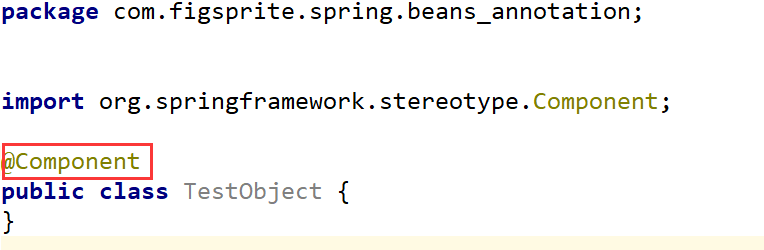
现在Bean还没有被IOC容器管理,我们再来建一个子包com.figsprite.spring.beans_annotation.repository,写一个接口com.figsprite.spring.beans_annotation.repository.UserRepository和实现类com.figsprite.spring.beans_annotation.repository.UserRepositoryImpl,接下来写业务层和控制层,分别创建一个包,然后写上相应代码,并写上注释:
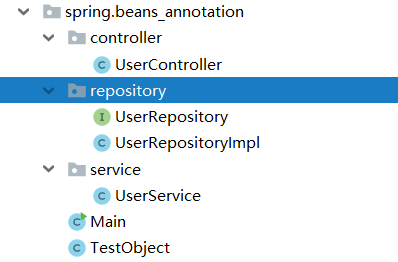
UserController.java:
package com.figsprite.spring.beans_annotation.controller;

import org.springframework.stereotype.Controller;

@Controller

public class UserController {

    public void execute(){

        System.out.println("Controller execute");

    }

}
UserService.java:
package com.figsprite.spring.beans_annotation.service;

import org.springframework.stereotype.Service;

@Service

public class UserService {

    public void add(){

        System.out.println("Service Add");

    }

}
UserRepository.java
package com.figsprite.spring.beans_annotation.repository;

public interface UserRepository {

    void save();

}
UserRepositoryImpl.java
package com.figsprite.spring.beans_annotation.repository;

import org.springframework.stereotype.Repository;

@Repository("userRepository")

public class UserRepositoryImpl implements UserRepository{

    @Override

    public void save() {

        System.out.println("SAVE");

    }

}
做完这些,我们可以创建一个配置文件beans-annotation.xml,然后我们在这个配置文件里,通过<context:component-scan>标签扫描具有这些注释的类的包:
<context:component-scan base-package="com.figsprite.spring.beans_annotation"/>
接下来做一个测试,创建Main.java
在我们没有指明Bean对象的id时,在注释配置下,默认id为类名的驼峰命名。
如何命名呢?只要在我们刚刚写的标签里加个括号指定就行:
@Repository("userRepository")
Main.java:
- package com.figsprite.spring.beans_annotation;
- import com.figsprite.spring.beans_annotation.controller.UserController;
- import com.figsprite.spring.beans_annotation.repository.UserRepositoryImpl;
- import com.figsprite.spring.beans_annotation.service.UserService;
- import org.springframework.context.ApplicationContext;
- import org.springframework.context.support.ClassPathXmlApplicationContext;
- public class Main {
- public static void main(String[] args) {
- ApplicationContext ctx = new ClassPathXmlApplicationContext("beans-annotation.xml");
- TestObject to = (TestObject) ctx.getBean("testObject") ;
- System.out.println(to);
- UserController userController = (UserController) ctx.getBean("userController");
- System.out.println(userController);
- UserRepositoryImpl userRepository = (UserRepositoryImpl) ctx.getBean("userRepository");
- System.out.println(userRepository);
- UserService userService = (UserService) ctx.getBean("userService");
- System.out.println(userService);
- }
- }

接下来回到<context:compomenr-scan>标签,再来说说里面的其他属性resource-pattern
,这个属性可以过滤特定类,比如我只想扫描repository底下的类,
<context:component-scan
base-package="com.figsprite.spring.beans_annotation"
resource-pattern="repository/*.class"/>
这样在Main里面,我们只会得到UserRepository的对象,其他的就得不到了,肯定报错,

<context:compomenr-scan>标签还有两个子标签
<context:include-filtter>包含哪些指定表达式的组件
< context:exclude-filtter >排除哪些指定表达式的组件
type属性:这里就介绍两种常用的annotation根据注解锁定目标,

比如不包含Repository注解
<context:exclude-filter type="annotation" expression="org.springframework.stereotype.Repository"/>
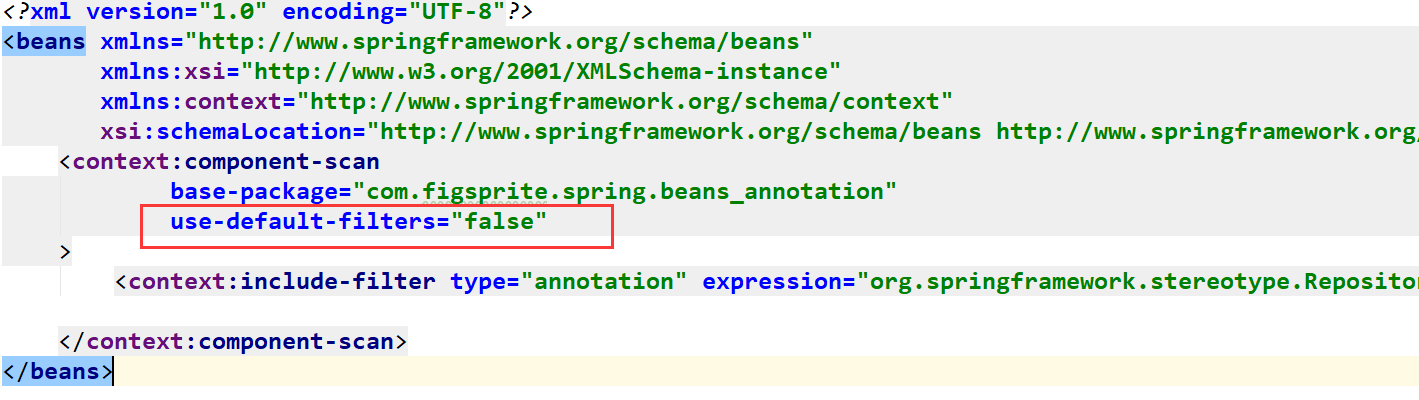
对于<context:include-filtter>,由于<context:compomenr-scan>默认是扫描包下的所有指定表达式组件,所有我们要加上use-default-filters="false",这样就不会自动扫描了,<context:include-filtter>与< context:exclude-filtter >使用方法一致,
另外一种是使用assignable方式,根据类名锁定目标。这里就再演示了
通过注解配置Bean的更多相关文章
- [原创]java WEB学习笔记103:Spring学习---Spring Bean配置:基于注解的方式(基于注解配置bean,基于注解来装配bean的属性)
本博客的目的:①总结自己的学习过程,相当于学习笔记 ②将自己的经验分享给大家,相互学习,互相交流,不可商用 内容难免出现问题,欢迎指正,交流,探讨,可以留言,也可以通过以下方式联系. 本人互联网技术爱 ...
- Spring(二)--FactoryBean、bean的后置处理器、数据库连接池、引用外部文件、使用注解配置bean等
实验1:配置通过静态工厂方法创建的bean [通过静态方法提供实例对象,工厂类本身不需要实例化!] 1.创建静态工厂类 public class StaticFactory { private st ...
- Spring(十五):通过注解配置 Bean
在ClassPath中扫描组件 1)组件扫描(component scanning):Spring能够从classpath下自动扫描,侦测和实例化具有特定注解的组件: 2)特定组件包含: --- @C ...
- IDEA02 利用Maven创建Web项目、为Web应用添加Spring框架支持、bean的创建于获取、利用注解配置Bean、自动装配Bean、MVC配置
1 环境版本说明 Jdk : 1.8 Maven : 3.5 IDEA : 专业版 2017.2 2 环境准备 2.1 Maven安装及其配置 2.2 Tomcat安装及其配置 3 详细步骤 3.1 ...
- Spring IOC机制之使用注解配置bean
一. 通过注解配置bean 1.1 概述 相对于XML方式而言,通过注解的方式配置bean更加简洁和优雅,而且和MVC组件化开发的理念十分契合,是开发中常用的使用方式. 1.2 ...
- 14Spring通过注解配置Bean(2)
下面将对13Spring通过注解配置Bean(1)的中Repository.Service.Controller通过注解方式来建立关联. <context:component-scan>元 ...
- 13Spring通过注解配置Bean(1)
配置Bean的形式:基于XML文件的方式:基于注解的方式(基于注解配置Bean:基于注解来装配Bean的属性) 下面介绍基于注解的方式来配置Bean. ——组件扫描(component scannin ...
- Spring框架入门之基于Java注解配置bean
Spring框架入门之基于Java注解配置bean 一.Spring bean配置常用的注解 常用的有四个注解 Controller: 用于控制器的注解 Service : 用于service的注解 ...
- Spring 注解配置Bean
一.使用注解配置Bean 1.注解 在类定义.方法定义.成员变量定义前使用.其简化<bean>标签,功能同<bean>标签.格式为: @注解标记名. 2.组件扫描 Spring ...
随机推荐
- [PHP] 频率限制类
比如要实现 单个ip限制60秒1次单个关键字,比如手机号,限制60秒1次,3600秒10次 <?php class Sina_Mail_WebAntispam { const PREFIX_WH ...
- Go中变量作用域的小坑
直接上一实例: package main import "fmt" func main(){ fmt.Println("for start") ; a < ...
- centos-linux入门笔记
一.linux的用户 linux的用户和windwos差不多,分为管理员用户和普通用户. 普通用户:权限没那么高而已. 管理员用户:在linux中就是root用户,所拥有的权限是最高的. 二.linu ...
- 教你快速撸一个免费HTTPS证书
摘要: 免费 HTTPS 证书,了解一下? HTTPS 已成为业界标准,这篇博客将教你申请Let's Encrypt的免费 HTTPS 证书. 本文的操作是在 Ubuntu 16.04 下进行,使用 ...
- springboot之JdbcTemplate
springboot可以使用JdbcTemplate进行数据库访问,代码如下 添加pom文件 <parent> <groupId>org.springframework.boo ...
- Oracle11g: datetime
--上一月,上一年 select add_months(sysdate,-1) last_month,add_months(sysdate,-12) last_year from dual; --下一 ...
- 关于ArcMap中打开ArcToolbox导致闪退的解决办法
最近好久不用ArcGis的小编要用到ArcMap去发送一个GP服务,发现按照套路打开ArcMap点击ArcToolbox时,发生了ArcMap的闪退现象,几经周折终于解决了问题. 希望也遇到这类问题的 ...
- Java 8 的Lambda表达式
第一次看到用lambda表达式写出来的Java代码时,我对这种神秘的语法感到非常不理解,认为这样的Java搞得不可读.没有专门的去学习和认识,今天花了几个小时写了示例的练习后,我开心的看到了更清晰的J ...
- Django数据库--事务及事务回滚
数据库的读写操作中,事务在保证数据的安全性和一致性方面起着关键的作用,而回滚正是这里面的核心操作.Django的ORM在事务方面也提供了不少的API.有事务出错的整体回滚操作,也有基于保存点的部分回滚 ...
- ES6常用
ECMAScript 6(以下简称ES6)是JavaScript语言的下一代标准. 因为当前版本的ES6是在2015年发布的,所以又称ECMAScript 2015(简称ES2015).虽然浏览器在不 ...