
Openfire的启动过程与session管理
Class containerClass = loader.loadClass("org.jivesoftware.openfire.XMPPServer");

containerClass.newInstance();
- 初始化配置参数
- 检查是否需要安装
- 初始化Module
- 启动统计模块
- 启动plugin
if (!setupMode) {

    verifyDataSource();

    // First load all the modules so that modules may access other modules while

    // being initialized

    loadModules();

    // Initize all the modules

    initModules();

    // Start all the modules

    startModules();

}
public interface Module {

    /**

     * Returns the name of the module for display in administration interfaces.

     *

     * @return The name of the module.

     */

    String getName();

    /**

     * Initialize the module with the container.

     * Modules may be initialized and never started, so modules

     * should be prepared for a call to destroy() to follow initialize().

     *

     * @param server the server hosting this module.

     */

    void initialize(XMPPServer server);

    /**

     * Start the module (must return quickly). Any long running

     * operations should spawn a thread and allow the method to return

     * immediately.

     */

    void start();

    /**

     * Stop the module. The module should attempt to free up threads

     * and prepare for either another call to initialize (reconfigure the module)

     * or for destruction.

     */

    void stop();

    /**

     * Module should free all resources and prepare for deallocation.

     */

    void destroy();

}
// Load this module always last since we don't want to start listening for clients

// before the rest of the modules have been started

loadModule(ConnectionManagerImpl.class.getName());
  private final ConnectionListener clientListener;

    private final ConnectionListener clientSslListener;

    private final ConnectionListener boshListener;

    private final ConnectionListener boshSslListener;

    private final ConnectionListener serverListener;

    private final ConnectionListener componentListener;

    private final ConnectionListener componentSslListener;

    private final ConnectionListener connectionManagerListener; // Also known as 'multiplexer'

    private final ConnectionListener connectionManagerSslListener; // Also known as 'multiplexer'

    private final ConnectionListener webAdminListener;

    private final ConnectionListener webAdminSslListener;
- client:表示客户端连接
- bosh:就是HTTP绑定的连接
- server:服务器到服务器的socket连接
- component:组件到服务器的连接
- connectionManager:是指通过connectionManager连接器过来的连接
- webAdmin:是指web控制台的连接
if ( getType() == ConnectionType.SOCKET_S2S )

{

    connectionAcceptor = new LegacyConnectionAcceptor( generateConnectionConfiguration() );

}

else

{

    connectionAcceptor = new MINAConnectionAcceptor( generateConnectionConfiguration() );

}

@Override

    StanzaHandler createStanzaHandler(NIOConnection connection) {

        return new ClientStanzaHandler(XMPPServer.getInstance().getPacketRouter(), connection);

    }
@Override

public void sessionOpened(IoSession session) throws Exception {

    // Create a new XML parser for the new connection. The parser will be used by the XMPPDecoder filter.

    final XMLLightweightParser parser = new XMLLightweightParser(StandardCharsets.UTF_8);

    session.setAttribute(XML_PARSER, parser);

    // Create a new NIOConnection for the new session

    final NIOConnection connection = createNIOConnection(session);

    session.setAttribute(CONNECTION, connection);

    session.setAttribute(HANDLER, createStanzaHandler(connection));

    // Set the max time a connection can be idle before closing it. This amount of seconds

    // is divided in two, as Openfire will ping idle clients first (at 50% of the max idle time)

    // before disconnecting them (at 100% of the max idle time). This prevents Openfire from

    // removing connections without warning.

    final int idleTime = getMaxIdleTime() / 2;

    if (idleTime > 0) {

        session.getConfig().setIdleTime(IdleStatus.READER_IDLE, idleTime);

    }

}
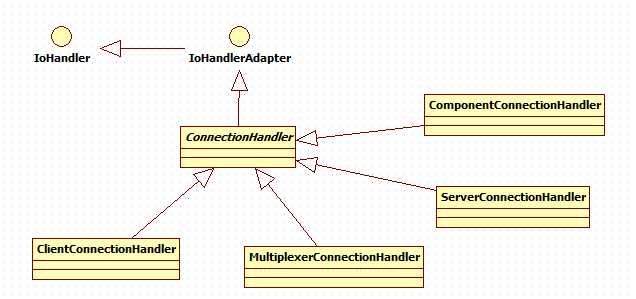
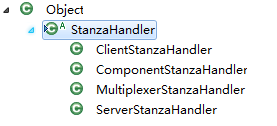
这样每一个session在打开时都会设置handler,而具体的handler由各个派生类创建返回。这里的StanzHandler就是Openfire里的数据包处理单元。和connection类型一样,包处理也是对应的几个类:

@Override

public void messageReceived(IoSession session, Object message) throws Exception {

    // Get the stanza handler for this session

    StanzaHandler handler = (StanzaHandler) session.getAttribute(HANDLER);

    // Get the parser to use to process stanza. For optimization there is going

    // to be a parser for each running thread. Each Filter will be executed

    // by the Executor placed as the first Filter. So we can have a parser associated

    // to each Thread

    final XMPPPacketReader parser = PARSER_CACHE.get();

    // Update counter of read btyes

    updateReadBytesCounter(session);

    //System.out.println("RCVD: " + message);

    // Let the stanza handler process the received stanza

    try {

        handler.process((String) message, parser);

    } catch (Exception e) {

        Log.error("Closing connection due to error while processing message: " + message, e);

        final Connection connection = (Connection) session.getAttribute(CONNECTION);

        if ( connection != null ) {

            connection.close();

        }

    }

}
在接收到数据包后获取到StanzaHandler,然后调用了它的process方法,也就是让实际的包处理者去处理数据。这样就回到了StanzeHanler,以ClientStanzaHandler为例子。只不过这个派生类中没有重写process方法,也就是说要看父类的实现:
public void process(String stanza, XMPPPacketReader reader) throws Exception {

    boolean initialStream = stanza.startsWith("<stream:stream") || stanza.startsWith("<flash:stream");

    if (!sessionCreated || initialStream) {

        if (!initialStream) {

..........

        // Found an stream:stream tag...

        if (!sessionCreated) {

            sessionCreated = true;

            MXParser parser = reader.getXPPParser();

            parser.setInput(new StringReader(stanza));

            createSession(parser);

        }

..........

        return;

    }

..........

}
由于代码较多,我省略了一些代码。看到这应该明白了吧,对于当前的连接没有创建Openfire的session对象时,会进行创建过程createSession,对于不同的StanzeHandler会有些不一样,这里ClientStanzaHandler的实现就是把创建好的session放到本地的LocalClientSession中:
@Override

boolean createSession(String namespace, String serverName, XmlPullParser xpp, Connection connection)

        throws XmlPullParserException {

    if ("jabber:client".equals(namespace)) {

        // The connected client is a regular client so create a ClientSession

        session = LocalClientSession.createSession(serverName, xpp, connection);

        return true;

    }

    return false;

}
public ClientSession getSession(JID from) {

    // Return null if the JID is null or belongs to a foreign server. If the server is

    // shutting down then serverName will be null so answer null too in this case.

    if (from == null || serverName == null || !serverName.equals(from.getDomain())) {

        return null;

    }

    // Initially Check preAuthenticated Sessions

    if (from.getResource() != null) {

        ClientSession session = localSessionManager.getPreAuthenticatedSessions().get(from.getResource());

        if (session != null) {

            return session;

        }

    }

    if (from.getResource() == null || from.getNode() == null) {

        return null;

    }

    return routingTable.getClientRoute(from);

}
先是获取本地的session,如果能找到直接返回,找不到则跳到routingTable里获取客户端的路由信息。
@Override

public ClientSession getClientRoute(JID jid) {

    // Check if this session is hosted by this cluster node

    ClientSession session = (ClientSession) localRoutingTable.getRoute(jid.toString());

    if (session == null) {

        // The session is not in this JVM so assume remote

        RemoteSessionLocator locator = server.getRemoteSessionLocator();

        if (locator != null) {

            // Check if the session is hosted by other cluster node

            ClientRoute route = usersCache.get(jid.toString());

            if (route == null) {

                route = anonymousUsersCache.get(jid.toString());

            }

            if (route != null) {

                session = locator.getClientSession(route.getNodeID().toByteArray(), jid);

            }

        }

    }

    return session;

}
这里更直接的可以看到,查找本地路由不null则会通过RemoteSessionLocator来完成。当然这里最大的奥秘其实是usersCache和anonymousUsersCache这两个cache。之前写的集群源码分析中提过,最终openfire集群后会对缓存进行同步,这样每台服务器上都会有缓存的副本。所以usersCache是拥有所有用户信息的,有了user的信息就有了jid的信息,这样不管是哪台服务器都可以对数据包处理并发送给客户端。
public Collection<ClientSession> getSessions() {

        return routingTable.getClientsRoutes(false);

    }
其实就是访问路由表,因为路由表里有所有的cache,和获取单个的session不一样,需要对所有的路由都遍历返回。
@Override

public Collection<ClientSession> getClientsRoutes(boolean onlyLocal) {

    // Add sessions hosted by this cluster node

    Collection<ClientSession> sessions = new ArrayList<ClientSession>(localRoutingTable.getClientRoutes());

    if (!onlyLocal) {

        // Add sessions not hosted by this JVM

        RemoteSessionLocator locator = server.getRemoteSessionLocator();

        if (locator != null) {

            // Add sessions of non-anonymous users hosted by other cluster nodes

            for (Map.Entry<String, ClientRoute> entry : usersCache.entrySet()) {

                ClientRoute route = entry.getValue();

                if (!server.getNodeID().equals(route.getNodeID())) {

                    sessions.add(locator.getClientSession(route.getNodeID().toByteArray(), new JID(entry.getKey())));

                }

            }

            // Add sessions of anonymous users hosted by other cluster nodes

            for (Map.Entry<String, ClientRoute> entry : anonymousUsersCache.entrySet()) {

                ClientRoute route = entry.getValue();

                if (!server.getNodeID().equals(route.getNodeID())) {

                    sessions.add(locator.getClientSession(route.getNodeID().toByteArray(), new JID(entry.getKey())));

                }

            }

        }

    }

    return sessions;

}
Openfire的启动过程与session管理的更多相关文章
- cocos2dx 解释二具体的启动过程:内存管理和回调
在上一篇的第二部分中.我们有一句代码待解释的: // Draw the Scene void CCDirector::drawScene(void) { -... //tick before ...
- 启动期间的内存管理之初始化过程概述----Linux内存管理(九)
在内存管理的上下文中, 初始化(initialization)可以有多种含义. 在许多CPU上, 必须显式设置适用于Linux内核的内存模型. 例如在x86_32上需要切换到保护模式, 然后内核才能检 ...
- tomcat架构分析 (Session管理)
Session管理是JavaEE容器比较重要的一部分,在app中也经常会用到.在开发app时,我们只是获取一个session,然后向session中存取数据,然后再销毁session.那么如何产生se ...
- 使用Memcached Session Manager扩展Session管理
>>Tomcat的session管理 在请求过程中首先要解析请求中的sessionId信息,然后将sessionId存储到request的参数列表中. 然后再从request获取sessi ...
- Tomcat的Session管理机制
>>Session和Cookie请求的过程 Http连接本身是无状态的,即前一次发起的连接跟后一次没有任何关系,是属于两次独立的连接请求,但是互联网访问基本上都是需要有状态的,即服务器需要 ...
- Nginx学习笔记(六) 源码分析&启动过程
Nginx的启动过程 主要介绍Nginx的启动过程,可以在/core/nginx.c中找到Nginx的主函数main(),那么就从这里开始分析Nginx的启动过程. 涉及到的基本函数 源码: /* * ...
- How Tomcat works — 八、tomcat中的session管理
在使用shiro的session的时候感觉对于tomcat中session的管理还不是特别清楚,而且session管理作为tomcat中比较重要的一部分还是很有必要学习的. 目录 概述 session ...
- Linux X Window System运行原理和启动过程
本文主要说明X Window System的基本运行原理,其启动过程,及常见的跨网络运行X Window System. 一) 基本运行原理 X Window System采用C/S结构,但和我们常见 ...
- Spring Boot启动过程(四):Spring Boot内嵌Tomcat启动
之前在Spring Boot启动过程(二)提到过createEmbeddedServletContainer创建了内嵌的Servlet容器,我用的是默认的Tomcat. private void cr ...
随机推荐
- web全栈开发之网站开发二(弹出式登录注册框前端实现-类腾讯)
这次给大家分享的是目前很多网站中流行的弹出式登录框,如下面的腾讯网登录界面,采用弹出式登录的好处是大大提升了网站的用户体验和交互性,用户不用重新跳转到指定的页面就能登录,非常方便 先来个演示地址 要实 ...
- junit4进行单元测试
一.前言 提供服务的时候,为了保证服务的正确性,有时候需要编写测试类验证其正确性和可用性.以前的做法都是自己简单写一个控制层,然后在控制层里调用服务并测试,这样做虽然能够达到测试的目的,但是太不专业了 ...
- 【翻译】Awesome R资源大全中文版来了,全球最火的R工具包一网打尽,超过300+工具,还在等什么?
0.前言 虽然很早就知道R被微软收购,也很早知道R在统计分析处理方面很强大,开始一直没有行动过...直到 直到12月初在微软技术大会,看到我软的工程师演示R的使用,我就震惊了,然后最近在网上到处了解和 ...
- 香蕉云APP,2016下半年开发日记
2016-6-17 数据库设计不应该过多依赖范式,适度的冗余可以加快搜索速度,在服务器的配置还可以的情况下,可以采用冗余来解决查找慢的问题.还一个是要选择好数据库引擎,例如 InnoDB 和 myi ...
- Jvm 内存浅析 及 GC个人学习总结
从诞生至今,20多年过去,Java至今仍是使用最为广泛的语言.这仰赖于Java提供的各种技术和特性,让开发人员能优雅的编写高效的程序.今天我们就来说说Java的一项基本但非常重要的技术内存管理 了解C ...
- Entity Framework 教程——DBContext
DBContext: 在之前的章节<创建实体数据模型>中,EDM为我们创建了SchoolDBEntities 类,它派生子System.Data.Entity.DbContext这个类,这 ...
- 树莓派 基于Web的温度计
前言:家里的树莓派吃灰很久,于是拿出来做个室内温度展示也不错. 板子是model b型. 使用Python开发,web框架是flask,温度传感器是ds18b20 1 硬件连接 ds18b20的vcc ...
- 关于Genymotion下载比较慢的解决办法
Genymotion号称Android模拟器中运行最快的,但是服务器在国外,Android镜像下载起来那个速度就不想说了. Add new device后下载速度太慢了,容易失败 先登录,然后add, ...
- Android Fragment 剖析
1.Fragment如何产生?2.什么是Fragment Android运行在各种各样的设备中,有小屏幕的手机,超大屏的平板甚至电视.针对屏幕尺寸的差距,很多情况下,都是先针对手机开发一套App,然后 ...
- gulp 自动添加版本号
本文介绍利用 gulp-rev 和 gulp-rev-collector 进行版本管理 npm官网介绍使用后的效果如下: "/css/style.css" => " ...