
Messenger在MVVM模式中的应用
Messenger在MVVM模式中的应用
Messenger在MVVM中应用的前提
我们知道在MVVM架构中,系统平台的Silverlight客户端界面开发和业务逻辑已经被分开,XAML是SL的主要部分,界面设计者只需要绑定ViewModel里的数据即可。但是在ViewModel里有些时候是需要界面发出响应的,在这种情况下,Messenger显示出它的用处。
Messenger的架构
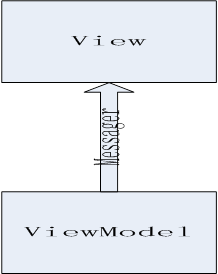
Messager构件代码
定义Imessager接口
注册一个接收消息的类型,比如某一控件来接收消息
void Register<TMessage>(object recipient, Action<TMessage> action);
给最近注册的类型发送消息
void Send<TMessage, TTarget>(TMessage message);
取消最近注册的类型,当执行该句后,不再接收任何消息
void Unregister(object recipient);
实现Imessager接口
public class Messenger : IMessenger
{
private static Messenger _defaultInstance;
private Dictionary<Type, List<WeakActionAndToken>> _recipientsOfSubclassesAction;
private Dictionary<Type, List<WeakActionAndToken>> _recipientsStrictAction;
public static Messenger Default
{
get
{
if (_defaultInstance == null)
{
_defaultInstance = new Messenger();
}
return _defaultInstance;
}
}
public static void OverrideDefault(Messenger newMessenger)
{
_defaultInstance = newMessenger;
}
public static void Reset()
{
_defaultInstance = null;
}
public virtual void Register<TMessage>(object recipient, Action<TMessage> action)
{
Register(recipient, null, false, action);
}
public virtual void Register<TMessage>(object recipient, bool receiveDerivedMessagesToo, Action<TMessage> action)
{
Register(recipient, null, receiveDerivedMessagesToo, action);
}
public virtual void Register<TMessage>(object recipient, object token, Action<TMessage> action)
{
Register(recipient, token, false, action);
}
public virtual void Register<TMessage>(
object recipient,
object token,
bool receiveDerivedMessagesToo,
Action<TMessage> action)
{
var messageType = typeof(TMessage);
Dictionary<Type, List<WeakActionAndToken>> recipients;
if (receiveDerivedMessagesToo)
{
if (_recipientsOfSubclassesAction == null)
{
_recipientsOfSubclassesAction = new Dictionary<Type, List<WeakActionAndToken>>();
}
recipients = _recipientsOfSubclassesAction;
}
else
{
if (_recipientsStrictAction == null)
{
_recipientsStrictAction = new Dictionary<Type, List<WeakActionAndToken>>();
}
recipients = _recipientsStrictAction;
}
List<WeakActionAndToken> list;
if (!recipients.ContainsKey(messageType))
{
list = new List<WeakActionAndToken>();
recipients.Add(messageType, list);
}
else
{
list = recipients[messageType];
}
var weakAction = new WeakAction<TMessage>(recipient, action);
var item = new WeakActionAndToken
{
Action = weakAction,
Token = token
};
list.Add(item);
Cleanup();
}
public virtual void Send<TMessage>(TMessage message)
{
SendToTargetOrType(message, null, null);
}
[SuppressMessage(
"Microsoft.Design",
"CA1004:GenericMethodsShouldProvideTypeParameter",
Justification = "This syntax is more convenient than other alternatives.")]
public virtual void Send<TMessage, TTarget>(TMessage message)
{
SendToTargetOrType(message, typeof(TTarget), null);
}
public virtual void Send<TMessage>(TMessage message, object token)
{
SendToTargetOrType(message, null, token);
}
/// <summary>
public virtual void Unregister(object recipient)
{
UnregisterFromLists(recipient, _recipientsOfSubclassesAction);
UnregisterFromLists(recipient, _recipientsStrictAction);
}
[SuppressMessage(
"Microsoft.Design",
"CA1004:GenericMethodsShouldProvideTypeParameter",
Justification =
"The type parameter TMessage identifies the message type that the recipient wants to unregister for.")]
public virtual void Unregister<TMessage>(object recipient)
{
Unregister<TMessage>(recipient, null);
}
public virtual void Unregister<TMessage>(object recipient, Action<TMessage> action)
{
UnregisterFromLists(recipient, action, _recipientsStrictAction);
UnregisterFromLists(recipient, action, _recipientsOfSubclassesAction);
Cleanup();
}
private static void CleanupList(IDictionary<Type, List<WeakActionAndToken>> lists)
{
if (lists == null)
{
return;
}
var listsToRemove = new List<Type>();
foreach (var list in lists)
{
var recipientsToRemove = new List<WeakActionAndToken>();
foreach (var item in list.Value)
{
if (item.Action == null
|| !item.Action.IsAlive)
{
recipientsToRemove.Add(item);
}
}
foreach (var recipient in recipientsToRemove)
{
list.Value.Remove(recipient);
}
if (list.Value.Count == 0)
{
listsToRemove.Add(list.Key);
}
}
foreach (var key in listsToRemove)
{
lists.Remove(key);
}
}
private static bool Implements(Type instanceType, Type interfaceType)
{
if (interfaceType == null
|| instanceType == null)
{
return false;
}
var interfaces = instanceType.GetInterfaces();
foreach (var currentInterface in interfaces)
{
if (currentInterface == interfaceType)
{
return true;
}
}
return false;
}
private static void SendToList<TMessage>(
TMessage message,
IEnumerable<WeakActionAndToken> list,
Type messageTargetType,
object token)
{
if (list != null)
{
var listClone = list.Take(list.Count()).ToList();
foreach (var item in listClone)
{
var executeAction = item.Action as IExecuteWithObject;
if (executeAction != null
&& item.Action.IsAlive
&& item.Action.Target != null
&& (messageTargetType == null
|| item.Action.Target.GetType() == messageTargetType
|| Implements(item.Action.Target.GetType(), messageTargetType))
&& ((item.Token == null && token == null)
|| item.Token != null && item.Token.Equals(token)))
{
executeAction.ExecuteWithObject(message);
}
}
}
}
private static void UnregisterFromLists(object recipient, Dictionary<Type, List<WeakActionAndToken>> lists)
{
if (recipient == null
|| lists == null
|| lists.Count == 0)
{
return;
}
lock (lists)
{
foreach (var messageType in lists.Keys)
{
foreach (var item in lists[messageType])
{
var weakAction = item.Action;
if (weakAction != null
&& recipient == weakAction.Target)
{
weakAction.MarkForDeletion();
}
}
}
}
}
private static void UnregisterFromLists<TMessage>(
object recipient,
Action<TMessage> action,
Dictionary<Type, List<WeakActionAndToken>> lists)
{
var messageType = typeof(TMessage);
if (recipient == null
|| lists == null
|| lists.Count == 0
|| !lists.ContainsKey(messageType))
{
return;
}
lock (lists)
{
foreach (var item in lists[messageType])
{
var weakActionCasted = item.Action as WeakAction<TMessage>;
if (weakActionCasted != null
&& recipient == weakActionCasted.Target
&& (action == null
|| action == weakActionCasted.Action))
{
item.Action.MarkForDeletion();
}
}
}
}
private void Cleanup()
{
CleanupList(_recipientsOfSubclassesAction);
CleanupList(_recipientsStrictAction);
}
private void SendToTargetOrType<TMessage>(TMessage message, Type messageTargetType, object token)
{
var messageType = typeof(TMessage);
if (_recipientsOfSubclassesAction != null)
{
var listClone = _recipientsOfSubclassesAction.Keys.Take(_recipientsOfSubclassesAction.Count()).ToList();
foreach (var type in listClone)
{
List<WeakActionAndToken> list = null;
if (messageType == type
|| messageType.IsSubclassOf(type)
|| Implements(messageType, type))
{
list = _recipientsOfSubclassesAction[type];
}
SendToList(message, list, messageTargetType, token);
}
}
if (_recipientsStrictAction != null)
{
if (_recipientsStrictAction.ContainsKey(messageType))
{
var list = _recipientsStrictAction[messageType];
SendToList(message, list, messageTargetType, token);
}
}
Cleanup();
}
private struct WeakActionAndToken
{
public WeakAction Action;
public object Token;
}
}
Messager在MVVM的实例
在ViewModel端
public void UpdateJob(object sender, RoutedEventArgs v)
{
var focusrow = (JobMVVMClient.JobBL.View_T_SegmentJob)SelectRow;
if (focusrow != null)
{
JobMVVMClient.JobBL.JobBLClient Job = new JobMVVMClient.JobBL.JobBLClient();
var row = (JobMVVMClient.JobBL.View_T_SegmentJob)selectRow;
if (row.班次号 == null || row.班组号 == null
|| row.计划结束时间 == null || row.计划开始时间 == null || row.投产量 == 0.0)
return;
Job.UpdateSegmentJobBySomeThingCompleted += (s, e) =>
{
if (e.Result)
{
MessageBox.Show(PromptString.UpdateJobYes);
foreach (var element in jobModel.Gradeinfo)
{
if (element.DetailID == row.班次号.ToString())
row.班次 = element.DetailName;
}
foreach (var element in jobModel.Groupinfo)
{
if (element.DetailID == row.班组号.ToString())
row.班组 = element.DetailName;
}
}
};
Messenger.Default.Send<bool?,JobMVVMClinet.Views.JobPlanUpdateView>(true);
//给位于View层中的JobPlanUpdateView这个界面发送bool消息,这个消息是true.
Job.UpdateSegmentJobBySomeThingAsync(row.工单ID, row.投产量, (DateTime)row.计划开始时间, (DateTime)row.计划结束时间, (int)row.班次号, (int)row.班组号);
Job.CloseAsync();
}
}
在VIEW端
public partial class JobPlanUpdateView : ChildWindow
{
public JobPlanUpdateView(CreateJobViewModel model)
{
InitializeComponent();
DataContext = model;
Messenger.Default.Register<bool?>(this, m => this.DialogResult = m);
//注册接收消息,并且做出响应处理
}
}
Messager总结
消息在MVVM中广泛应用,更好的运用MESSAGER能更好的处理View与ViewModel的关系,为MVVM添加喝彩。
Messenger在MVVM模式中的应用的更多相关文章
- 在MVVM模式中,按钮Click事件的绑定方法
在MVVM模式中,我们将Button的方法写到ViewModel中,然后绑定到前端界面.通常的做法是写一个类,继承ICommand接口,然而如果按钮比较多的话,就需要写很多的类,对于后期维护造成很大的 ...
- silverlighter下MVVM模式中利用Behavior和TargetedTriggerAction实现文本框的一些特效
在silverlight一般开发模式中,给文本框添加一些事件是轻而易举的,然而MVVM开发模式中,想要给文本框添加一些事件并非那么容易,因为MVVM模式中,只有ICommand接口,而且也只有Butt ...
- “Win10 UAP 开发系列”之 在MVVM模式中控制ListView滚动位置
这个扩展属性从WP8.1就开始用了,主要是为了解决MVVM模式中无法直接控制ListView滚动位置的问题.比如在VM中刷新了数据,需要将View中的ListView滚动到顶部,ListView只有一 ...
- WPF MVVM模式中,通过命令实现窗体拖动、跳转以及显隐控制
原文:WPF MVVM模式中,通过命令实现窗体拖动.跳转以及显隐控制 在WPF中使用MVVM模式,可以让我们的程序实现界面与功能的分离,方便开发,易于维护.但是,很多初学者会在使用MVVM的过程中遇到 ...
- WPF ContextMenu 在MVVM模式中绑定 Command及使用CommandParameter传参
原文:WPF ContextMenu 在MVVM模式中绑定 Command及使用CommandParameter传参 ContextMenu无论定义在.cs或.xaml文件中,都不继承父级的DataC ...
- 深入理解MVVM模式中Silverlight的Trigger、Action和Behavior及Silverlight的继承机制
接触Silverlight已经有两三个月了,开始一直感觉他和Winform很相似,拖拖控件就行了,所以一直把经历放在了研究后台和服务器交互和性能优化上面,很少去仔细研究Silverlight的页面.前 ...
- MVVM模式中WPF数据的完全绑定
一:截图,描述:将后台代码的姓名.年龄绑定到文本框,单击”增加年龄“--年龄自+1,单击”显示年龄“--弹出年龄的显示对话框,实现了从文本框修改年龄和后台更改年龄并显示到文本框 运行结果和解决方案管理 ...
- MVVM模式中ViewModel和View、Model有什么区别
Model:很简单,就是业务逻辑相关的数据对象,通常从数据库映射而来,我们可以说是与数据库对应的model. View:也很简单,就是展现出来的用户界面. 基本上,绝大多数软件所做的工作无非就是从数据 ...
- XAML: 在 MVVM 模式中,关于绑定的几处技巧
以下会提到三个绑定的技巧,分别是 在 ListView 中为 ListViewItem 的 MenuFlyout 绑定 Command: 在 ListView 的 事件中绑定所选择项目,即其 Sele ...
随机推荐
- 老司机带路:《axios从入门到开车 嘀嘀~~》
前言:axios vue.axios 跨域.axios.js.axios get.axios post.axios中文文档 之前当vue更新到2.0之后,作者就宣告不再对vue-resource更新, ...
- 【RL-TCPnet网络教程】第13章 RL-TCPnet之TCP服务器
第13章 RL-TCPnet之TCP服务器 本章节为大家讲解RL-TCPnet的TCP服务器实现,学习本章节前,务必要优先学习第12章TCP传输控制协议基础知识.有了这些基础知识之后,再搞本 ...
- [Swift]LeetCode529. 扫雷游戏 | Minesweeper
Let's play the minesweeper game (Wikipedia, online game)! You are given a 2D char matrix representin ...
- springboot 实战之一站式开发体验
都说springboot是新形势的主流框架工具,然而我的工作中并没有真正用到springboot: 都说springboot里面并没有什么新技术,不过是组合了现有的组件而已,但是自己却说不出来: 都说 ...
- 接口平台经常报server internal error(500)错误
查询日志,发现连接mysql报错,web页面显示server internal error(500) 解决方法:重启mysql服务器 systemctl start mysqld #安装mysql # ...
- Maven项目执行java入口main方法
在Maven项目中配置pom.xml文件加载maven-surefire-plugin插件来执行testng.xml,相信大家对此种用法已经非常熟悉了.但是有些场景可能需要我们去加载执行java的ma ...
- 在asp.net web api 2 (ioc autofac) 使用 Serilog 记录日志
Serilog是.net里面非常不错的记录日志的库,另外一个我认为比较好的Log库是NLog. 在我个人的asp.net web api 2 基础框架(Github地址)里,我原来使用的是NLog,但 ...
- 并发编程(十二)—— Java 线程池 实现原理与源码深度解析 之 submit 方法 (二)
在上一篇<并发编程(十一)—— Java 线程池 实现原理与源码深度解析(一)>中提到了线程池ThreadPoolExecutor的原理以及它的execute方法.这篇文章是接着上一篇文章 ...
- asp.net core 系列 14 错误处理
一.概述 本文介绍处理 ASP.NET Core 应用中常见错误的一些方法.主要是关于:开发环境异常页:非开发环境配置自定义异常处理页:配置状态代码页(没有正文响应,http状态400~599的). ...
- SVN客户端安装与使用
转载请注明原文地址:http://www.cnblogs.com/ygj0930/p/6623148.html 一:SVN客户端下载与安装 下载网址:https://tortoisesvn.net/ ...