
NIO完成网络通信(一)
NIO:即非阻塞式IO
视频教程: https://chuanke.baidu.com/v1982732-211322-1316084.html
使用步骤:
1、创建 ServerSocketChannel 和业务处理线程池。
2、绑定监听端口,并配置为非阻塞模式。
3、创建 多路复用器Selector,将之前创建的 ServerSocketChannel 注册到 Selector 上,监听 SelectionKey.OP_ACCEPT。
4、循环执行 Selector.select() 方法,轮询就绪的 Channel。
5、Selector轮询就绪的 Channel 时,如果是处于 OP_ACCEPT 状态,说明是新的客户端接入,调用 ServerSocketChannel.accept 接收新的客户端。
6、设置新接入的 SocketChannel 为非阻塞模式,并注册到 Selector 上,监听 OP_READ。
7、如果Selector轮询的 Channel 状态是 OP_READ,说明有新的就绪数据包需要读取,则构造 ByteBuffer 对象,读取数据。
先启动服务端,不停监听客户端连接
服务端代码
import java.io.IOException;

import java.net.InetSocketAddress;

import java.nio.ByteBuffer;

import java.nio.channels.SelectionKey;

import java.nio.channels.Selector;

import java.nio.channels.ServerSocketChannel;

import java.nio.channels.SocketChannel;

import java.util.Iterator;

public class NIOServer {

    /*标识数字*/

    private  int flag = ;

    /*缓冲区大小*/

    private  int BLOCK = ;

    /*接受数据缓冲区*/

    private  ByteBuffer sendbuffer = ByteBuffer.allocate(BLOCK);

    /*发送数据缓冲区*/

    private  ByteBuffer receivebuffer = ByteBuffer.allocate(BLOCK);

    //选择器

    private Selector selector;

    public NIOServer(int port) throws IOException {

        //1. 获取通道, 打开服务器套接字通道

        ServerSocketChannel serverSocketChannel = ServerSocketChannel.open();

        //2. 切换到非阻塞模式

        serverSocketChannel.configureBlocking(false);

        //3. 绑定连接的端口

        serverSocketChannel.socket().bind(new InetSocketAddress(port));

        //4. 获取选择器

        selector = Selector.open();

        //5. 通道注册到选择器上,指定监听事件:接收。……等待连接

        serverSocketChannel.register(selector, SelectionKey.OP_ACCEPT);

        System.out.println("Server Start----8888:");

    }

    //监听

    public void listen() throws IOException {

        while(true) {

            //6. 循环获取选择器上已经“准备就绪”的事件,返回的int值表示有多少个通道在上一次select后发生了注册事件

            int nKeys = selector.select();

            if(nKeys>){

                //7. 获取当前选择器中所有注册的选择键(已就绪的监听事件)

                Iterator<SelectionKey> iterator = selector.selectedKeys().iterator();

                while(iterator.hasNext()){

                    //8. 获取“准备就绪”的事件

                    SelectionKey selectionKey = iterator.next();

                    //9. 判断具体是什么事件准备就绪,开始处理请求

                    handleKey(selectionKey);

                    iterator.remove();

                }

            } else {

                try {

                    Thread.sleep();

                } catch (InterruptedException e) {

                    e.printStackTrace();

                }

            }

        }

    }

    // 处理请求

    private void handleKey(SelectionKey selectionKey) throws IOException {

        // 接受请求

        ServerSocketChannel server = null;

        SocketChannel client = null;

        String receiveText;

        String sendText;

        int count=;

        // 此选择键的通道是否已准备好接受新的套接字连接。

        if (selectionKey.isAcceptable()) {

            // 返回为之创建此选择键的通道。

            server = (ServerSocketChannel) selectionKey.channel();

            //10. 若“接收就绪”,获取客户端连接

            client = server.accept();

            //11. 切换到非阻塞模式

            client.configureBlocking(false);

            //12. 通道注册到选择器上,指定监听事件:读 就绪

            client.register(selector, SelectionKey.OP_READ);

        } else if (selectionKey.isReadable()) {

            // 返回为之创建此键的通道。

            client = (SocketChannel) selectionKey.channel();

            //将缓冲区清空以备下次读取

            receivebuffer.clear();

            //读取服务器发送来的数据到缓冲区中

            count = client.read(receivebuffer);

            if (count > ) {

                receiveText = new String(receivebuffer.array(),,count);

                System.out.println("服务器端接受客户端数据--:"+receiveText);

                client.register(selector, SelectionKey.OP_WRITE);

            }

        } else if (selectionKey.isWritable()) {

            //将缓冲区清空以备下次写入

            sendbuffer.clear();

            // 返回为之创建此键的通道。

            client = (SocketChannel) selectionKey.channel();

            sendText="message from server--" + flag++;

            //向缓冲区中输入数据

            sendbuffer.put(sendText.getBytes());

             //将缓冲区各标志复位,因为向里面put了数据标志被改变要想从中读取数据发向服务器,就要复位

            sendbuffer.flip();

            //输出到通道

            client.write(sendbuffer);

            System.out.println("服务器端向客户端发送数据--:"+sendText);

            client.register(selector, SelectionKey.OP_READ);

        }

    }

    public static void main(String[] args) throws IOException {

         int port = ;

         NIOServer server = new NIOServer(port);

         server.listen();

    }

}
心得:
1、第5步中,先把服务端通道注册到选择器上,该选择器等待accept接收客户端消息
2、转到第9步,处理请求,如果isAcceptable()=true,准备好接收客户端了,获取客户端连接
3、第12步,客户端通道注册到选择器上,并指定监听读。然后,继续走到listen()方法的循环体中,
4、 这次循环中,上面已获取客户端连接,nKeys >0了,selectionKey 是监听读
5、又到第9步,isReadable()=true,说明是读事件,开始操作数据,通道读取缓冲区
客户端代码
import java.io.IOException;

import java.net.InetSocketAddress;

import java.nio.ByteBuffer;

import java.nio.channels.SelectionKey;

import java.nio.channels.Selector;

import java.nio.channels.SocketChannel;

import java.util.Iterator;

import java.util.Set;

public class NIOClient {

     /*标识数字*/

    private static int flag = ;

    /*缓冲区大小*/

    private static int BLOCK = ;

    /*接受数据缓冲区*/

    private static ByteBuffer sendbuffer = ByteBuffer.allocate(BLOCK);

    /*发送数据缓冲区*/

    private static ByteBuffer receivebuffer = ByteBuffer.allocate(BLOCK);

    /*服务器端地址*/

    private final static InetSocketAddress SERVER_ADDRESS = new InetSocketAddress("127.0.0.1", );

    public static void main(String[] args) throws IOException {

        // TODO Auto-generated method stub

        // 打开socket通道

        SocketChannel socketChannel = SocketChannel.open();

        // 设置为非阻塞方式

        socketChannel.configureBlocking(false);

        // 打开选择器

        Selector selector = Selector.open();

        // 注册连接服务端socket动作

        socketChannel.register(selector, SelectionKey.OP_CONNECT);

        // 连接

        socketChannel.connect(SERVER_ADDRESS);

        // 分配缓冲区大小内存

        Set<SelectionKey> selectionKeys;

        Iterator<SelectionKey> iterator;

        SelectionKey selectionKey;

        SocketChannel client;

        String receiveText;

        String sendText;

        int count=;

        while (true) {

            //选择一组键,其相应的通道已为 I/O 操作准备就绪。

            //此方法执行处于阻塞模式的选择操作。

            selector.select();

            //返回此选择器的已选择键集。

            selectionKeys = selector.selectedKeys();

            //System.out.println(selectionKeys.size());

            iterator = selectionKeys.iterator();

            while (iterator.hasNext()) {

                selectionKey = iterator.next();

                if (selectionKey.isConnectable()) {

                    System.out.println("client connect");

                    client = (SocketChannel) selectionKey.channel();

                    // 判断此通道上是否正在进行连接操作。

                    // 完成套接字通道的连接过程。

                    if (client.isConnectionPending()) {

                        client.finishConnect();

                        System.out.println("完成连接!");

                        sendbuffer.clear();

                        sendbuffer.put("Hello,Server".getBytes());

                        sendbuffer.flip();

                        client.write(sendbuffer);

                    }

                    client.register(selector, SelectionKey.OP_READ);

                } else if (selectionKey.isReadable()) {

                    client = (SocketChannel) selectionKey.channel();

                    //将缓冲区清空以备下次读取

                    receivebuffer.clear();

                    //读取服务器发送来的数据到缓冲区中

                    count=client.read(receivebuffer);

                    if(count>){

                        receiveText = new String( receivebuffer.array(),,count);

                        System.out.println("客户端接受服务器端数据--:"+receiveText);

                        client.register(selector, SelectionKey.OP_WRITE);

                    }

                } else if (selectionKey.isWritable()) {

                    sendbuffer.clear();

                    client = (SocketChannel) selectionKey.channel();

                    sendText = "message from client--" + (flag++);

                    sendbuffer.put(sendText.getBytes());

                     //将缓冲区各标志复位,因为向里面put了数据标志被改变要想从中读取数据发向服务器,就要复位

                    sendbuffer.flip();

                    client.write(sendbuffer);

                    System.out.println("客户端向服务器端发送数据--:"+sendText);

                    client.register(selector, SelectionKey.OP_READ);

                }

            }

            selectionKeys.clear();

        }

    }

}
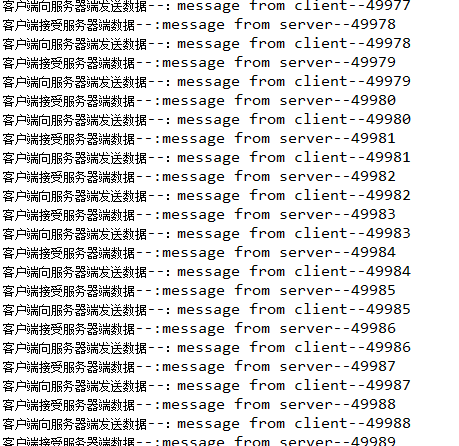
运行效果:
NIO完成网络通信(一)的更多相关文章
- JAVA NIO学习三:NIO 的非阻塞式网络通信
紧接着上一章,我们继续来研究NIO,上一章中我们讲了NIO 中最常见的操作即文件通道的操作,但实际上NIO的主要用途还是在于网络通信,那么这个时候就会涉及到选择器,这一章我们就会对其进行讲解操作. 一 ...
- JAVA NIO学习记录2-非阻塞式网络通信
一.阻塞与非阻塞 传统的IO 流都是阻塞式的.也就是说,当一个线程调用read() 或write() 时,该线程被阻塞,直到有一些数据被读取或写入,该线程在此期间不能执行其他任务.因此,在完成网络通信 ...
- 4.NIO的非阻塞式网络通信
/*阻塞 和 非阻塞 是对于 网络通信而言的*/ /*原先IO通信在进行一些读写操作 或者 等待 客户机连接 这种,是阻塞的,必须要等到有数据被处理,当前线程才被释放*/ /*NIO 通信 是将这个阻 ...
- NIO 的非阻塞式网络通信
1.阻塞与非阻塞 ① 传统的 IO 流都是阻塞式的.也就是说,当一个线程调用 read() 或 write()时, 该线程被阻塞,直到有一些数据被读取或写入,该线程在此期间不能执行其他任务. 因 ...
- JDK10都发布了,nio你了解多少?
前言 只有光头才能变强 回顾前面: 给女朋友讲解什么是代理模式 包装模式就是这么简单啦 本来我预想是先来回顾一下传统的IO模式的,将传统的IO模式的相关类理清楚(因为IO的类很多). 但是,发现在整理 ...
- NIO的初步入门
NIO java NIO简介 Java NIO 简介 是从java1.4版本开始引入的一个新的IO AP可以替代标准java IO API NIO与原来的IO有同样的作用和目的,但是使用方式完全不同 ...
- Java之NIO
想要学习Java的Socket通信,首先要学习Java的IO和NIO基础,这方面可以阅读<Java NIO 系列教程>. 下面展示自己代码熟悉Java的NIO编程的笔记. 1.缓冲区(Bu ...
- Java NIO -- 阻塞和非阻塞
传统的 IO 流都是阻塞式的.也就是说,当一个线程调用 read() 或 write()时,该线程被阻塞,直到有一些数据被读取或写入,该线程在此期间不能执行其他任务.因此,在完成网络通信进行 IO操作 ...
- Java中的NIO及IO
1.概述 Java NIO(New IO) 是从Java 1.4版本开始引入的一个新的IO API,可以替代标准的Java IO API.NIO与原来的IO有同样的作用和目的,但是使用的方式完全不同, ...
随机推荐
- Semana i 2018
Semana i 2018 A Giga-Kilo-Gigabyte 思路: dp水题 代码: #pragma GCC optimize(2) #pragma GCC optimize(3) #pra ...
- Unity--- 资源路径问题
使用 System.IO.Path 这个API得到的路径,其实也是以"\"分隔路径的. 我们在windows下打开资源管理器,某个目录或文件的路径为:E:\uniuProject5 ...
- 最大频率栈 Maximum Frequency Stack
2018-10-06 22:01:11 问题描述: 问题求解: 为每个频率创建一个栈即可. class FreqStack { Map<Integer, Integer> map; Lis ...
- java异常:java.lang.NullPointerException
/** * 功能:空指针异常测试 */ /* Object[] parameters1=null; if(parameters1.length>0&¶meters1!=n ...
- WPF经典编程模式-MVVM示例讲解
https://www.cnblogs.com/lvdongjie/p/5515962.html
- English trip V1 - 21. I dreamed dream Teacher:Corrine Key: past tense(过去式)
In this lesson you will learn to describe an experience. 本课将会学习描述一次经历 课上内容(Lesson) 词汇(Key Word ) # ...
- slf4j日志用法
在pom.xml中添加日志依赖 <!--slf4j--> <dependency> <groupId>org.slf4j</groupId> <a ...
- New task CodeForces - 788E (线段树优化dp)
比较套路的一个题, 对每个数维护一颗线段树来转移就好了. #include <iostream> #include <algorithm> #include <cstdi ...
- CoordinatorLayout、AppBarLayout、CollapsingToolbarLayout的用法,让Toolbar与系统栏融为一体
CoordinatorLayout其实是加强版的FrameLayout布局,可以监听期所有子控件的各种事件,由Design Support库提供的,能体现Material Design 的魔力.能解决 ...
- 函数使用九:CAT_CHECK_RFC_DESTINATION
此函数是用来检查RFC DESTINATION是否存在,RFC是否通 Import RFCDESTINATION RFC目标 类型:RSCAT-RFCDEST Export MSG ...