
Python - Django - ORM 实例
准备工作:
首先创建一个名为 Py_Django 的数据库
新建项目,名为 mysite0
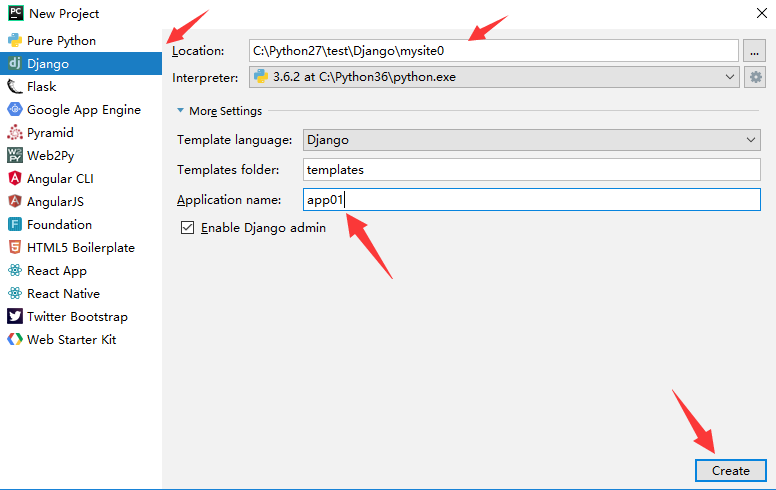
创建完成后需要进行几项配置
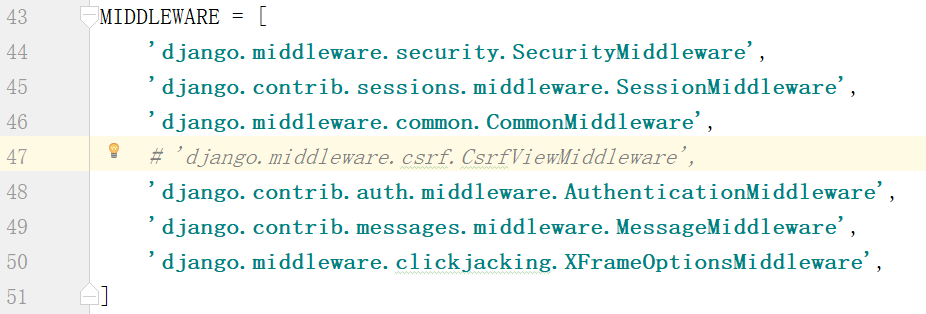
mysite0/settings.py 下
首先是 html 文件相关
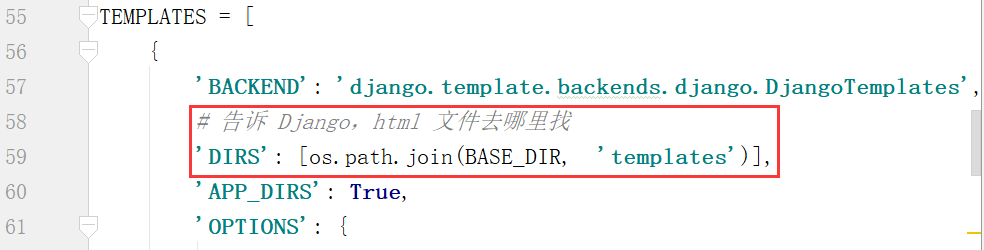
其次是数据库配置

最后注释掉 CSRF 的代码
在 mysite0/__init__.py 中添加以下代码
import pymysql

pymysql.install_as_MySQLdb()
app01/models.py 中写上创建表的类
from django.db import models

# Create your models here.

# 出版社

class Publisher(models.Model):

    id = models.AutoField(primary_key=True)  # 自增的 id 主键

    # 创建一个 varchar(64) 的唯一的不为空的字段

    name = models.CharField(max_length=64, null=False, unique=True)
执行一下两条命令来创建表
python manage.py makemigrations

python manage.py migrate
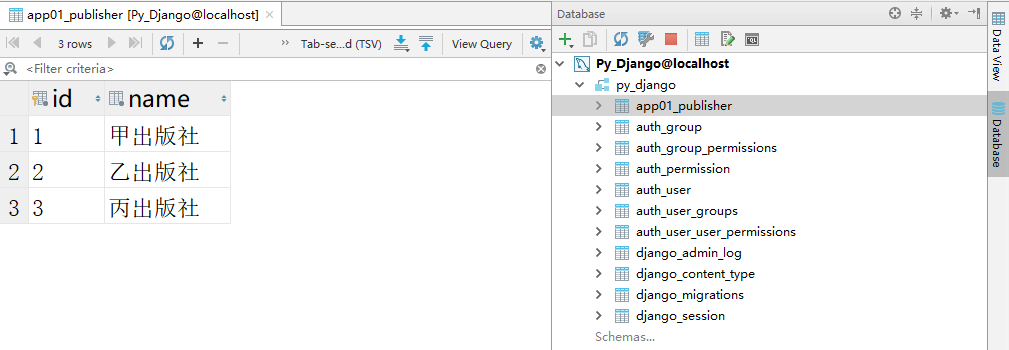
连接数据库,创建三条数据
展示出版社列表:
publisher_list.html:
<!DOCTYPE html>

<html lang="en">

<head>

    <meta charset="UTF-8">

    <title>出版社列表</title>

</head>

<body>

<table border="1">

    <thead>

    <tr>

        <th>序号</th>

        <th>ID</th>

        <th>出版社名称</th>

    </tr>

    </thead>

    <tbody>

    {% for publisher in publisher_list %}

        <tr>

        <td>{{ forloop.counter }}</td>

        <td>{{ publisher.id }}</td>

        <td>{{ publisher.name }}</td>

        </tr>

    {% endfor %}

    </tbody>

</table>

</body>

</html>
第几次循环,forloop.counter 的值就是多少
app01/views.py 中 publisher_list 函数:
from django.shortcuts import render

from app01 import models

# Create your views here.

# 展示出版社列表

def publisher_list(request):

    # 去数据库查出所有的出版社,填充到 html 中,返回给用户

    ret = models.Publisher.objects.all().order_by("id")  # order_by("id") 通过 id 进行排序

    return render(request, "publisher_list.html", {"publisher_list": ret})
在 mysite0/urls.py 中添加对应关系
from django.conf.urls import url

from django.contrib import admin

from app01 import views

urlpatterns = [

    url(r'^admin/', admin.site.urls),

    url(r'^publisher_list/', views.publisher_list),

]
运行结果:
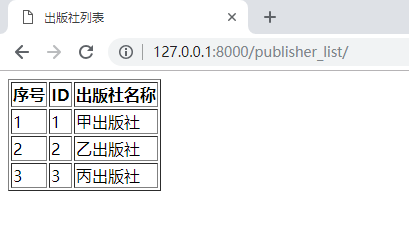
添加出版社:
修改 publisher_list.html:
<!DOCTYPE html>

<html lang="en">

<head>

    <meta charset="UTF-8">

    <title>出版社列表</title>

</head>

<body>

<table border="1">

    <thead>

    <tr>

        <th>序号</th>

        <th>ID</th>

        <th>出版社名称</th>

    </tr>

    </thead>

    <tbody>

    {% for publisher in publisher_list %}

        <tr>

        <td>{{ forloop.counter }}</td>

        <td>{{ publisher.id }}</td>

        <td>{{ publisher.name }}</td>

        </tr>

    {% endfor %}

    </tbody>

</table>

<a href="/add_publisher/">添加新的出版社</a>

</body>

</html>
创建 add_publisher.html:
<!DOCTYPE html>

<html lang="en">

<head>

    <meta charset="UTF-8">

    <title>添加出版社</title>

</head>

<body>

<h1>添加出版社</h1>

<form action="/add_publisher/" method="post">

    <input type="text" name="publisher_name">

    <input type="submit" value="提交">

</form>

</body>

</html>
在 app01/views.py 中添加 add_publisher 函数:
from django.shortcuts import render, redirect

from app01 import models

# Create your views here.

# 展示出版社列表

def publisher_list(request):

    # 去数据库查出所有的出版社,填充到 html 中,返回给用户

    ret = models.Publisher.objects.all().order_by("id")  # order_by("id") 通过 id 进行排序

    return render(request, "publisher_list.html", {"publisher_list": ret})

# 添加新的出版社

def add_publisher(request):

    # 如果是 POST 请求,就获取用户填写的数据

    if request.method == "POST":

        new_publisher = request.POST.get("publisher_name")

        # 获得数据后去数据库中新增一条数据

        models.Publisher.objects.create(name=new_publisher)

        # 添加成功后进行跳转

        return redirect("/publisher_list/")

    # 用户来到该界面返回的 html 页面

    return render(request, "add_publisher.html")
在 mysite0/urls.py 中添加对应关系
from django.conf.urls import url

from django.contrib import admin

from app01 import views

urlpatterns = [

    url(r'^admin/', admin.site.urls),

    url(r'^publisher_list/', views.publisher_list),

    url(r'^add_publisher/', views.add_publisher),

]
运行结果:
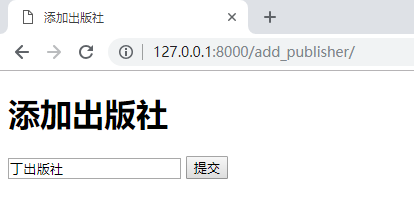
添加一个“丁出版社”

删除出版社:
修改 publisher_list.html,添加删除按钮
<!DOCTYPE html>

<html lang="en">

<head>

    <meta charset="UTF-8">

    <title>出版社列表</title>

</head>

<body>

<table border="1">

    <thead>

    <tr>

        <th>序号</th>

        <th>ID</th>

        <th>出版社名称</th>

        <th>操作</th>

    </tr>

    </thead>

    <tbody>

    {% for publisher in publisher_list %}

        <tr>

        <td>{{ forloop.counter }}</td>

        <td>{{ publisher.id }}</td>

        <td>{{ publisher.name }}</td>

        <td>

            <a href="/del_publisher/?id={{ publisher.id }}">删除</a>

        </td>

        </tr>

    {% endfor %}

    </tbody>

</table>

<a href="/add_publisher/">添加新的出版社</a>

</body>

</html>
app01/views.py 中添加 del_publisher 函数
from django.shortcuts import render, redirect, HttpResponse

from app01 import models

# Create your views here.

# 展示出版社列表

def publisher_list(request):

    # 去数据库查出所有的出版社,填充到 html 中,返回给用户

    ret = models.Publisher.objects.all().order_by("id")  # order_by("id") 通过 id 进行排序

    return render(request, "publisher_list.html", {"publisher_list": ret})

# 添加新的出版社

def add_publisher(request):

    # 如果是 POST 请求,就获取用户填写的数据

    if request.method == "POST":

        new_publisher = request.POST.get("publisher_name")

        # 获得数据后去数据库中新增一条数据

        models.Publisher.objects.create(name=new_publisher)

        # 添加成功后进行跳转

        return redirect("/publisher_list/")

    # 用户来到该界面返回的 html 页面

    return render(request, "add_publisher.html")

# 删除出版社

def del_publisher(request):

    # 从 GET 请求的参数中拿到要删除的 id 值

    del_id = request.GET.get('id', None)  # 取不到 id 值的话,默认为 None

    # 如果取到 id 值,就去数据库中删除该 id 的数据

    if del_id:

        # 根据 id 查找数据,并删除

        del_obj = models.Publisher.objects.get(id=del_id).delete()

        # 删除后返回页面

        return redirect("/publisher_list/")

    else:

        return HttpResponse("要删除的数据不存在!")
mysite0/urls.py 中添加对应关系
from django.conf.urls import url

from django.contrib import admin

from app01 import views

urlpatterns = [

    url(r'^admin/', admin.site.urls),

    url(r'^publisher_list/', views.publisher_list),

    url(r'^add_publisher/', views.add_publisher),

    url(r'^del_publisher/', views.del_publisher),

]
运行结果:
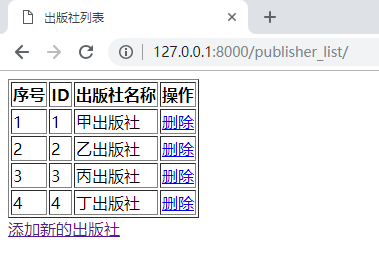
点击删除丁出版社
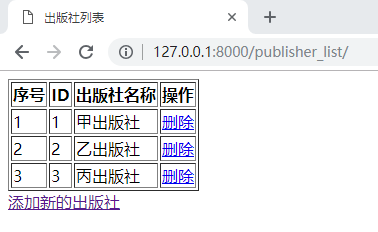
页面闪了一下,丁出版社就被删除了
编辑出版社:
修改 publisher_list.html
<!DOCTYPE html>

<html lang="en">

<head>

    <meta charset="UTF-8">

    <title>出版社列表</title>

</head>

<body>

<table border="1">

    <thead>

    <tr>

        <th>序号</th>

        <th>ID</th>

        <th>出版社名称</th>

        <th>操作</th>

    </tr>

    </thead>

    <tbody>

    {% for publisher in publisher_list %}

        <tr>

        <td>{{ forloop.counter }}</td>

        <td>{{ publisher.id }}</td>

        <td>{{ publisher.name }}</td>

        <td>

            <a href="/del_publisher/?id={{ publisher.id }}">删除</a>

            <a href="/edit_publisher/?id={{ publisher.id }}">编辑</a>

        </td>

        </tr>

    {% endfor %}

    </tbody>

</table>

<a href="/add_publisher/">添加新的出版社</a>

</body>

</html>
edit_publisher.html:
<!DOCTYPE html>

<html lang="en">

<head>

    <meta charset="UTF-8">

    <title>编辑出版社</title>

</head>

<body>

<h1>编辑出版社</h1>

<form action="/edit_publisher/" method="post">

    <input type="text" name="id" value="{{ publisher.id }}" style="display: none">

    <input type="text" name="publisher_name" value="{{ publisher.name }}">

    <input type="submit" value="提交">

</form>

</body>

</html>
在 app01/views.py 中添加 edit_publisher 函数
from django.shortcuts import render, redirect, HttpResponse

from app01 import models

# Create your views here.

# 展示出版社列表

def publisher_list(request):

    # 去数据库查出所有的出版社,填充到 html 中,返回给用户

    ret = models.Publisher.objects.all().order_by("id")  # order_by("id") 通过 id 进行排序

    return render(request, "publisher_list.html", {"publisher_list": ret})

# 添加新的出版社

def add_publisher(request):

    # 如果是 POST 请求,就获取用户填写的数据

    if request.method == "POST":

        new_publisher = request.POST.get("publisher_name")

        # 获得数据后去数据库中新增一条数据

        models.Publisher.objects.create(name=new_publisher)

        # 添加成功后进行跳转

        return redirect("/publisher_list/")

    # 用户来到该界面返回的 html 页面

    return render(request, "add_publisher.html")

# 删除出版社

def del_publisher(request):

    # 从 GET 请求的参数中拿到要删除的 id 值

    del_id = request.GET.get('id')

    # 如果取到 id 值,就去数据库中删除该 id 的数据

    if del_id:

        # 根据 id 查找数据,并删除

        del_obj = models.Publisher.objects.get(id=del_id).delete()

        # 删除后返回页面

        return redirect("/publisher_list/")

    else:

        return HttpResponse("要删除的数据不存在!")

# 编辑出版社

def edit_publisher(request):

    # 获取 POST 发来的数据,并更新到数据库中

    if request.method == "POST":

        # 获取 POST 传送来的 id 值和出版社

        edit_id = request.POST.get('id')

        new_name = request.POST.get('publisher_name')

        # 根据 id 取得出版社

        publisher = models.Publisher.objects.get(id=edit_id)

        publisher.name = new_name

        publisher.save()  # 把修改的结果提交到数据库

        return redirect("/publisher_list/")  # 跳转到列表页面

    # 从 GET 请求中取得 id 值

    publisher_id = request.GET.get('id')

    if publisher_id:

        # 获取当前编辑的出版社对象

        publisher_obj = models.Publisher.objects.get(id=publisher_id)

        return render(request, "edit_publisher.html", {"publisher": publisher_obj})

    else:

        return HttpResponse("编辑的出版社不存在!")
在 mysite0/urls.py 中添加对应关系
from django.conf.urls import url

from django.contrib import admin

from app01 import views

urlpatterns = [

    url(r'^admin/', admin.site.urls),

    url(r'^publisher_list/', views.publisher_list),

    url(r'^add_publisher/', views.add_publisher),

    url(r'^del_publisher/', views.del_publisher),

    url(r'^edit_publisher/', views.edit_publisher),

]
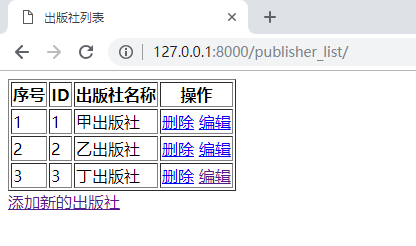
运行结果:
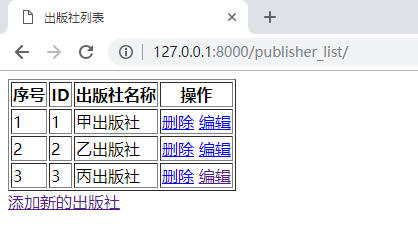
编辑“丙出版社”
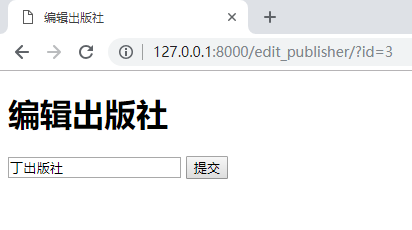
改为“丁出版社”
Python - Django - ORM 实例的更多相关文章
- Python - Django - ORM 实例(二)
在 app01/models.py 中添加 Book 类对象表 from django.db import models # Create your models here. # 出版社 class ...
- Python - Django - ORM 多对多表结构的三种方式
多对多的三种方式: ORM 自动创建第三张表 自己创建第三张表, 利用外键分别关联作者和书,关联查询比较麻烦,因为没办法使用 ORM 提供的便利方法 自己创建第三张表,使用 ORM 的 ManyToM ...
- Python - Django - ORM 操作表
ORM 的对应关系: 类 ---> 数据库表对象 ---> 数据库行属性 ---> 字段 操作数据库表 ---> ...
- Python - Django - ORM 查询方法
models.py: from django.db import models class Human(models.Model): id = models.AutoField(primary_key ...
- python django ORM
1.在models.py中创创建类 # -*- coding: utf-8 -*- from __future__ import unicode_literals from django.db imp ...
- Python Django ORM 字段类型、参数、外键操作
AutoField(Field) - int自增列,必须填入参数 primary_key=True BigAutoField(AutoField) - bigint自增列,必须填入参数 primary ...
- Python Django ORM基本增删改查
工程下的urls.py中增加如下: from cmdb import views as cmdb #要把你要操作的项目import进来 urlpatterns = [ url(r'orm', cmdb ...
- Python Django ORM创建基本类以及生成数据结构
#在项目目录下的modules.py中创建一个类,来自动生成一张表UserInfo class UserInfo(models.Model): username = models.CharField( ...
- python - django (ORM使用步骤)
print('asd') """ # 1. 手动创建一个数据库 # 2. 在 Django 项目中设置连接数据库的相关配置(告诉Django 连接哪一个数据库) 在 DA ...
随机推荐
- JQuery - Tab Control
http://jqueryui.com/tabs/ <!doctype html> <html lang="en"> <head> <me ...
- ZOJ2402 Lenny's Lucky Lotto List 简单DP
Lenny's Lucky Lotto Lists Time Limit: 2 Seconds Memory Limit:65536 KB Lenny likes to play the g ...
- 51Nod:1995 三子棋
1995 三子棋 题目来源: syu校赛 基准时间限制:1 秒 空间限制:131072 KB 分值: 0 难度:基础题 收藏 关注 小的时候大家一定玩过"井"字棋吧.也就是在 ...
- 工具运行过程中,CPU占用过高的分析定位
之前使用Java Swing开发了一款设备档案收集工具.支持多台设备同时收集,每个设备使用一个线程.在同时收集多台设备信息时,发现CPU占用率居然达到了97%,而且高居不下.显然这样的性能是令人无法忍 ...
- HDU 4619 Warm up 2 贪心或者二分图匹配
给同一张横着的牌的所在的格子编同一样的号,这些格子对应x集合,给同一张竖着的牌所在的格子编同一样的号,对应y集合,同一个格子上既有横着的牌又有竖着的牌,那么就建一条边,有冲突就要拿走一张,结果是总的牌 ...
- node启动时候报错 Error: Cannot find module 'express'
cmd命令 到目录下,然后运行 npm install -d 再 node hello.js
- C语言屏幕打印,再删除打印的内容
在做项目的时候,用到了命令行模式进行监听数据,并且是多线程的.因为程序大部分时间都只是在监听状态,容易给人假死的信息.所以单独使用一个进行在屏幕上打印省略号(.......),然后再把打印的省略号(. ...
- Java中 @Override 的作用
@Override是伪代码,表示重写(当然不写也可以),不过写上有如下好处: 可以当注释用,方便阅读: 编译器可以给你验证@Override下面的方法名是否是你父类中所有的,如果没有则报错.例如,你如 ...
- php curl文件上传兼容php5.0~5.6各版本
PHP 5.0~5.6 各版本兼容的cURL文件上传 最近做的一个需求,使用PHP cURL上传文件.踩坑若干,整理如下. 不同版本PHP之间cURL的区别 PHP的cURL支持通过给CURL_POS ...
- bzoj 3622 已经没有什么好害怕的了——二项式反演
题目:https://www.lydsy.com/JudgeOnline/problem.php?id=3622 令 f[i] 表示钦定 i 对 a[ ]>b[ ] 的关系的方案数:g[i] 表 ...