
《MIDINET: A CONVOLUTIONAL GENERATIVE ADVERSARIAL NETWORK FOR SYMBOLIC-DOMAIN MUSIC GENERATION》论文阅读笔记
出处 arXiv.org (引用量暂时只有3,too new)2017.7
SourceCode:https://github.com/RichardYang40148/MidiNet
Abstract
以前的音乐生成工作多基于RNN,受DeepMind提出的WaveNet的启发,作者尝试用CNN来生成音乐,确切地说,用GAN来生成音乐,模型称为MidiNet。与Google的MelodyRNN(magenta)相比,在realistic和pleasant上旗鼓相当,yet MidiNet’s melodies are reported to be much more interesting。
Introduction
1989年[1]就开始研究用神经网络来谱曲,最近几年才形成气候(这里列举了一堆神经网络生成音乐的参考paper),主要还是基于RNN来生成。接着重点介绍了WaveNet[2],WaveNet证实了用CNN来生成音乐的可能性,并且CNN在训练的速度和并行性上都优于RNN[3]。作者这样描述所做的工作:Following this light, we investigate in this paper a novel CNN-based model for symbolic-domain generation, focusing on melody generation. Instead of creating a melody sequence continuously, we propose to generate melodies one bar (measure) after another, in a successive manner. This allows us to employ convolutions on a 2-D matrix representing the presence of notes over different time steps in a bar. We can have such a score-like representation for each bar for either a real or a generated MIDI.
借助于transposed convolution[4],G将噪音z生成为2-D scorelike representation,D判断2-D scorelike representation的真假。这套gan结构没有考虑bar与bar之间的temporal依赖,作者将前面生成bar作为条件,输入到下个G的生成过程中(conditioner CNN)。这样MidiNet模型既可以从scratch(不带前置条件的z noise)从生成旋律,也能从任一表示为scorelike representation的前置音乐片段中生成旋律.借助于[5]中提出的feature matching(既然 G 和 D 的训练不够稳定,常常 D 太强,G 太弱,那么不如就把 D 网络学到的特征直接“传”给 G,让 G 不仅能知道 D 的输出,还能知道 D 是基于什么输出的),模型可以控制当前bar与前面生成的bar之间的相似度。
Related Work
Google的MelodyRNN(magenta)[6]是当前最著名的symbolic-domain神经网络音乐生成器,作为基准参考。Song from PI [7]多轨道RNN生成音乐,需要提供一些先验的配置信息(?)。Sony的DeepBach[8]也是基于RNN。C-RNN-GAN[9]是目前作者已知的唯一基于GAN的模型,与本文模型相比,缺乏条件生成机制,因此不能给定前置音乐来进行生成。DeepMind的WaveNet[10]是基于waveform的形式而不是symbolic-domain的。

Method

Symbolic Representation for Convolution: MiDi数据依然是被分为bars,固定时间长度,一个track的数据矩阵被表示为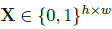 ,h是note数量,w是一个bar中的time_step,这里忽略了音符的力度。多个X就组织成了多个track的数据。这个矩阵无法分辨长拍音符和短拍连续按键音符,作者留到未来工作去处理。
Generator CNN and Discriminator CNN:作者使用了feature matching 和 one-sided label 来优化GAN: ,f是D的第一层输出(为什么只要第一层呢?)
Conditioner CNN:额外输入的condition分为1D和2D。1D condition是一个n维tensor,被reshape后concatenate在CNN的各个中间层的featuremap上,reshape规则为duplicate the values ab times to get a tensor of shape a-by-b-by-n,,(a,b)是中间层的shape。2D condition是h-by-w matrix(可以是multiple),对于D来说,可以直接加到D的输入层,影响后面整个的网络,对G来说,需要构建一个Condition CNN,架构近似于reverse of the generator CNN,将h*w的矩阵依次生成为对应于G的中间层的shape的矩阵并concatenate(与G使用了相同的filter参数,训练时使用与G相同的梯度来训练)。
对于Creativity的控制,采用了两种方式(1)对条件condition的控制只应用到G的部分卷积层中,让G有一定自由度 (2)在feature matching的公式中控制$\lamda1$和$\lamda2$的值,以控制生成的歌和训练集中歌曲的相似度。
IMPLEMENTATION
Dataset:从TheoryTab(https://www.hooktheory.com/theorytab)爬取了1,022 首MIDI tab,只有两个track:melody和chord。为了简化,过滤出了规整的12个大调和弦和12个小调和弦。每8个bars做一个切分,并将melody和chord分开,每个bar被定义为16个音符的长度(w=16)。数据中不许存在pause,存在pause就将前面的音符(或后面的)拉长,这个规则太不灵活了吧,同时将三十二分音符等都exclude掉了。notes数量被限定为C4 to B5两个8度,忽略掉音符的按键力度。虽然只有24个音符有效,但在数据表示中还是使用了h=128。和弦使用了13维的vector,12维表示和弦名,1维表示大小调。一个bar限制为一个和弦。限制真多。

三种模型:
Melody generator, no chord condition--- condition是melody of the previous bar,将此2D condition分散输入到G的各中间层中,不输入到D中。the first bar was composed of a real, priming melody sampled from our dataset; the
generation of the second bar was made by G, conditioned by this real melody; starting from the third bar, G had to use the (artificial) melody it generated previously for the last bar as the 2-D condition. This process repeated until
we had all the eight bars.
Melody generator with chord condition,stable mode----chord作为1D condition(13维向量,每个bar一个chord)应用在G的每一个卷积层上,为了突出和弦的贡献,2-D previous-bar condition只被应用在G的最后一层卷积上。
Melody generator with chord condition,creative mode---同上面一样,只是2-D previous-bar condition被应用在G所有的卷积层上,G可以在某些时候突破chord的限制,向上一个bar产生的旋律靠拢。这种模式的产出音乐,有不和谐的风险也有创新的可能性。
FutureWork
(1) multi-track + velocity + pause
(2)reinforcement learning with music theory[11]
(3)genre recognition[12], emotion recognition[13]
[1]Peter M. Todd. A connectionist approach to algorithmic composition. Computer Music Journal, 13(4):27– 43.
[2]A¨aron van den Oord, Sander Dieleman, Heiga Zen, Karen Simonyan, Oriol Vinyals, Alex Graves, Nal Kalchbrenner, Andrew Senior, and Koray Kavukcuoglu. WaveNet: A generative model for raw audio. arXiv preprint arXiv:1609.03499, 2016.
[3]A¨aron van den Oord, Nal Kalchbrenner, Lasse Espeholt, Oriol Vinyals, Alex Graves, et al. Conditional image generation with pixelCNN decoders. In Proc. Advances in Neural Information Processing Systems,pages 4790–4798, 2016.
[4]Vincent Dumoulin and Francesco Visin. A guide to convolution arithmetic for deep learning. arXiv preprint arXiv:1603.07285, 2016.
[5]Tim Salimans, Ian J. Goodfellow, Wojciech Zaremba,Vicki Cheung, Alec Radford, and Xi Chen. Improved techniques for training GANs. In Proc. Advances in Neural Information Processing Systems, pages 2226–2234, 2016.
[6]Elliot Waite, Douglas Eck, Adam Roberts, and Dan Abolafia. Project Magenta: Generating longterm structure in songs and stories, 2016. https://magenta.tensorflow.org/blog/2016/07/15/lookback-rnn-attention-rnn/
[7] Hang Chu, Raquel Urtasun, and Sanja Fidler. Song from PI: A musically plausible network for pop music generation. arXiv preprint arXiv:1611.03477, 2016.
[8]Ga¨etan Hadjeres and Franc¸ois Pachet. DeepBach: a steerable model for bach chorales generation. arXiv preprint arXiv:1612.01010, 2016
[9]Olof Mogren. C-RNN-GAN: Continuous recurrent neural networks with adversarial training. arXiv preprint arXiv:1611.09904, 2016.
[10] Tom Le Paine, Pooya Khorrami, Shiyu Chang, YangZhang, Prajit Ramachandran, Mark A. Hasegawa-Johnson, and Thomas S. Huang. Fast WaveNet generation algorithm. arXiv preprint arXiv:1611.09482,2016.
[11]Natasha Jaques, Shixiang Gu, Richard E. Turner, and Douglas Eck. Tuning recurrent neural networks with reinforcement learning. arXiv preprint arXiv:1611.02796, 2016.
[12]Keunwoo Choi, George Fazekas, Mark B. Sandler, and Kyunghyun Cho. Convolutional recurrent neural networks for music classification. arXiv preprint arXiv:1609.04243, 2016.
[13]Yi-Hsuan Yang and Homer H. Chen. Music Emotion Recognition. CRC Press, 2011.
代码解析:
数据
因为没有拿到dataset,所以数据的格式只能猜测为主。
data_x 从npy文件中读取 ,猜测应该是一个nX1XhXw的tensor,n为长度,在训练时被截取为batch_size,1猜测为单track,h为note数量(128),w为time_step(16)
prev_x猜测和data_x同形,时序上比data_x领先,作为模型输入的2D_condition
data_y 作为模型输入的1D_condition
猜测因为卷积的时候要求输入tensor的shape为[batch, in_height, in_width, in_channels],所以作者为之量身定做了4维的X矩阵
构建模型:


这里代码与paper有不一致的地方,D中只输入了1D_condition,没有把前期的条件矩阵2D_condition(prev_x)输入进来
Loss函数:
标准GAN的loss,使用单边平滑0.9

feature matching和L2 loss

综合起来:

模型搭建:
G:
首先将prev_x进行一系列卷积,也就是模型中的Condition CNN,每一层featureMap被加入到后面的生成层中

其后的deconv反卷积层中,都将结果与上面的prev_x的featuremap及y进行连接。
D:
D没有像论文中提及那样将prev_x作为输入条件在初始层进行连接,只在每一层将Y做了连接。
《MIDINET: A CONVOLUTIONAL GENERATIVE ADVERSARIAL NETWORK FOR SYMBOLIC-DOMAIN MUSIC GENERATION》论文阅读笔记的更多相关文章
- 《MuseGAN: Multi-track Sequential Generative Adversarial Networks for Symbolic Music Generation and Accompaniment》论文阅读笔记
出处:2018 AAAI SourceCode:https://github.com/salu133445/musegan abstract: (写得不错 值得借鉴)重点阐述了生成音乐和生成图片,视频 ...
- (转)Introductory guide to Generative Adversarial Networks (GANs) and their promise!
Introductory guide to Generative Adversarial Networks (GANs) and their promise! Introduction Neural ...
- 生成对抗网络(Generative Adversarial Networks,GAN)初探
1. 从纳什均衡(Nash equilibrium)说起 我们先来看看纳什均衡的经济学定义: 所谓纳什均衡,指的是参与人的这样一种策略组合,在该策略组合上,任何参与人单独改变策略都不会得到好处.换句话 ...
- 生成对抗网络(Generative Adversarial Networks, GAN)
生成对抗网络(Generative Adversarial Networks, GAN)是一种深度学习模型,是近年来复杂分布上无监督学习最具前景的学习方法之一. GAN 主要包括了两个部分,即 ...
- StackGAN: Text to Photo-realistic Image Synthesis with Stacked Generative Adversarial Networks 论文笔记
StackGAN: Text to Photo-realistic Image Synthesis with Stacked Generative Adversarial Networks 本文将利 ...
- 论文笔记之:Semi-Supervised Learning with Generative Adversarial Networks
Semi-Supervised Learning with Generative Adversarial Networks 引言:本文将产生式对抗网络(GAN)拓展到半监督学习,通过强制判别器来输出类 ...
- 《Self-Attention Generative Adversarial Networks》里的注意力计算
前天看了 criss-cross 里的注意力模型 仔细理解了 在: https://www.cnblogs.com/yjphhw/p/10750797.html 今天又看了一个注意力模型 < ...
- Paper Reading: Perceptual Generative Adversarial Networks for Small Object Detection
Perceptual Generative Adversarial Networks for Small Object Detection 2017-07-11 19:47:46 CVPR 20 ...
- SalGAN: Visual saliency prediction with generative adversarial networks
SalGAN: Visual saliency prediction with generative adversarial networks 2017-03-17 摘要:本文引入了对抗网络的对抗训练 ...
- Generative Adversarial Networks,gan论文的畅想
前天看完Generative Adversarial Networks的论文,不知道有什么用处,总想着机器生成的数据会有机器的局限性,所以百度看了一些别人 的看法和观点,可能我是机器学习小白吧,看完之 ...
随机推荐
- leetcode之twosum
class Solution { public: vector<int> twoSum(vector<int>& nums, int target) { vector& ...
- 矩形周长(codevs 2149)
题目描述 Description N(N<5000) 张矩形的海报,照片和其他同样形状的图片贴在墙上.它们的边都是垂直的或水平的.每个矩形可以部分或者全部覆盖其他矩形.所有的矩形组成的集合的轮廓 ...
- C. Nearest vectors--cf598C(极角排序)
http://codeforces.com/problemset/problem/598/C 题目大意: 给你你个向量 向量的起点都是从(0,0)开始的 求哪个角最小 输出这两个向量 这是第一 ...
- python 爬虫(转,我使用的python3)
原文地址:http://blog.csdn.net/pi9nc/article/details/9734437 [Python]网络爬虫(一):抓取网页的含义和URL基本构成 分类: 爬虫 Pyt ...
- MongoDB学习day08--Mongoose索引、Mongoose内置方法、扩展Mongoose Model的静态方法和实例方法
一.Mongoose索引 索引是对数据库表中一列或多列的值进行排序的一种结构, 可以让我们查询数据库变得更快. MongoDB 的索引几乎与传统的关系型数据库一模一样, 这其中也包括一些基本的查询优化 ...
- 【c++】动态内存
静态存储区:内存在程序编译的时候就已经分配好,这块内存在程序的整个运行期间都存在.它主要存放静态数据.全局数据和常量.注意:const常量在定义时必须初始化 栈区:在执行函数时,函数内局部变量的存储单 ...
- CentOS 6.x Radius
CentOS 6.x Radius 一. 实现环境: 1.系统:CentOS release 6.6 (Final) 2.需要软件包: 1) freeradius-2.1.12-6.e16.x ...
- windows下 sqlplus / as sysdba 报ora-12560的终极解决方法
windows下 sqlplus / as sysdba 报ora-12560的终极解决方法 本文是原创文章.转载请注明出处:http://blog.csdn.net/msdnchina/articl ...
- Scrum 时间估算
在新公司里,不懂软件工程的产品经理经常逼迫研发人员作出很不靠谱的时间估算.常见场景有下面这些: 需求未细化的情况下要求给出时间估算:比如,就一句话描述需要做一个什么样的功能,但是具体页面长什么样,交互 ...
- 基于.net的分布式系统限流组件 C# DataGridView绑定List对象时,利用BindingList来实现增删查改 .net中ThreadPool与Task的认识总结 C# 排序技术研究与对比 基于.net的通用内存缓存模型组件 Scala学习笔记:重要语法特性
基于.net的分布式系统限流组件 在互联网应用中,流量洪峰是常有的事情.在应对流量洪峰时,通用的处理模式一般有排队.限流,这样可以非常直接有效的保护系统,防止系统被打爆.另外,通过限流技术手段,可 ...