
BufferedInputStream 源码分析
一、简介
BufferedInputStream会缓存一部分数据(默认8K),这个函数的作用就是读取更多的数据到缓存,必要的时候会扩大缓存的内容。
在该类中有几个重要的标志位:markpos,pos,count
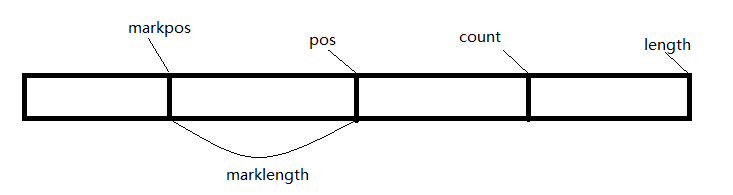
【markpos的作用,marklength区域内的数据表示需要保留的数据,也就是在重置(reset 方法)buffer的时候,这部分数据是不会被删除的,强制要求保留。】
pos:
current position in the buffer, this is the index of the next character to be read from the buffer.
表示下一个即将读入的字符。
markpos:
The value of the pos field at the time the last mark method was called.
markpos 的数值等于上一次调用mark方法时候的pos位置。
     public synchronized void mark(int readlimit) {

         marklimit = readlimit;

         markpos = pos;

     }
count:
可以使用的buffer
二、fill()函数
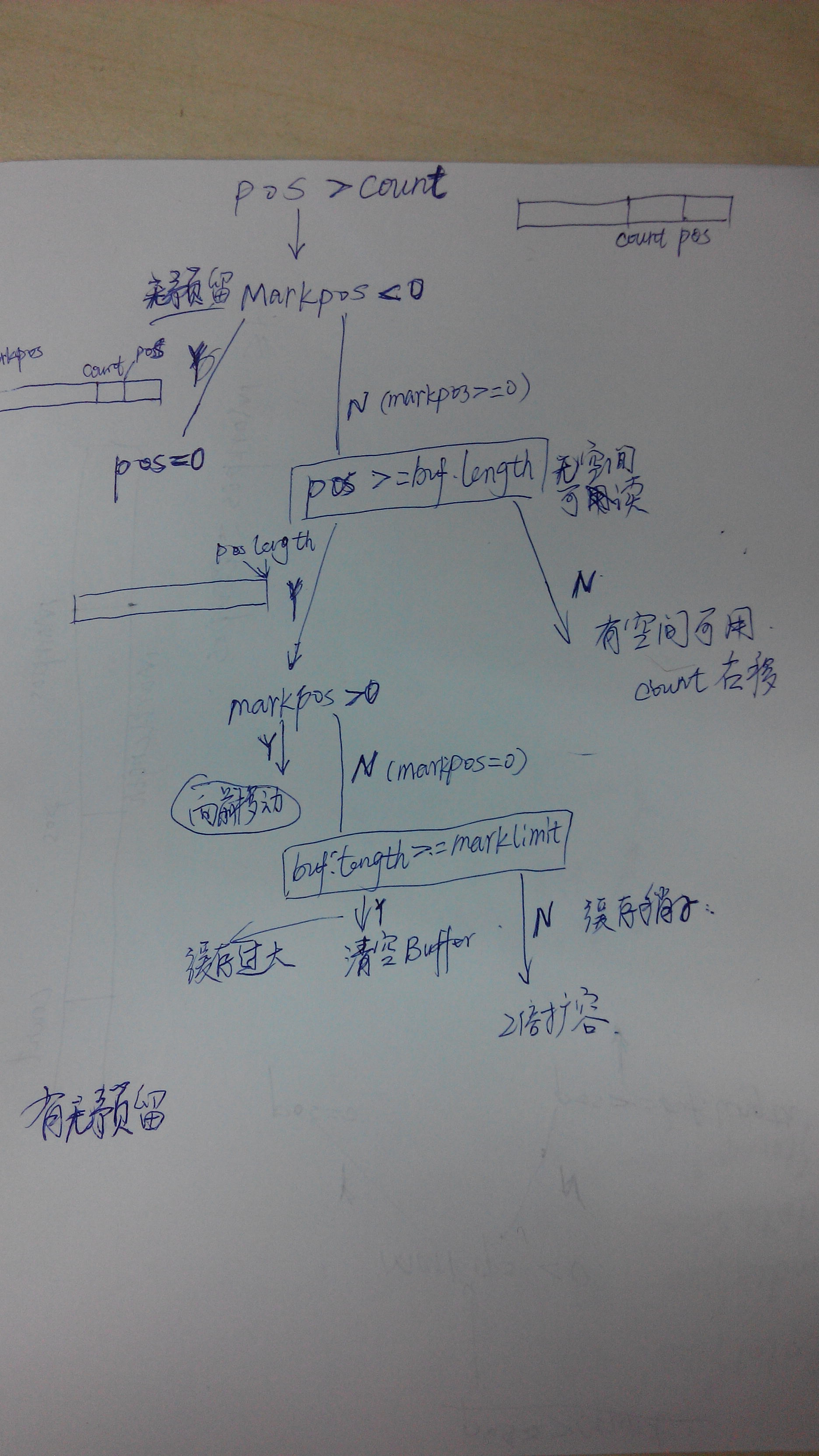
当pos>count的时候,调用该方法来扩容。它总会将预留空间的位置挪动到buffer的前端。
 private void fill() throws IOException {

         byte[] buffer = getBufIfOpen();

         if (markpos < 0)

             pos = 0;            /* no mark: throw away the buffer */

         else if (pos >= buffer.length)  /* no room left in buffer */

             if (markpos > 0) {  /* can throw away early part of the buffer */

                 int sz = pos - markpos;

                 System.arraycopy(buffer, markpos, buffer, 0, sz);

                 pos = sz;

                 markpos = 0;

             } else if (buffer.length >= marklimit) {

                 markpos = -1;   /* buffer got too big, invalidate mark */

                 pos = 0;        /* drop buffer contents */

             } else {            /* grow buffer */

                 int nsz = pos * 2;

                 if (nsz > marklimit)

                     nsz = marklimit;

                 byte nbuf[] = new byte[nsz];

                 System.arraycopy(buffer, 0, nbuf, 0, pos);

                 if (!bufUpdater.compareAndSet(this, buffer, nbuf)) {

                     // Can't replace buf if there was an async close.

                     // Note: This would need to be changed if fill()

                     // is ever made accessible to multiple threads.

                     // But for now, the only way CAS can fail is via close.

                     // assert buf == null;

                     throw new IOException("Stream closed");

                 }

                 buffer = nbuf;

             }

         count = pos;

         int n = getInIfOpen().read(buffer, pos, buffer.length - pos);

         if (n > 0)

             count = n + pos;

     }
byte[] buffer = getBufIfOpen(); 获取当前buffer的引用
if (markpos < 0)
pos = 0; /* no mark: throw away the buffer */ 整个buffer没有被标记过,也就是没有预留空间。
else if (pos >= buffer.length) /* no room left in buffer */ (markpos >0 或=0 )有预留空间,而且没有剩余空间可用。
if (markpos > 0) { /* can throw away early part of the buffer */ 预留空间的起始位置不在buffer的开始位置
int sz = pos - markpos; 挪动预留空间
System.arraycopy(buffer, markpos, buffer, 0, sz);
pos = sz;
markpos = 0;
} else if (buffer.length >= marklimit) { 如果marklimit的值小于缓存的长度,说明buffer很大,从内存使用的角度考虑,此时不宜再增大缓存的容量,
在这种情形下直接丢弃buf中的已有内容;
markpos = -1; /* buffer got too big, invalidate mark */
pos = 0; /* drop buffer contents */
} else { /* grow buffer */ 2倍扩展buffer
int nsz = pos * 2;
if (nsz > marklimit)
nsz = marklimit;
byte nbuf[] = new byte[nsz];
System.arraycopy(buffer, 0, nbuf, 0, pos);
if (!bufUpdater.compareAndSet(this, buffer, nbuf)) { 确保多线程情况下的可见性。
// Can't replace buf if there was an async close.
// Note: This would need to be changed if fill()
// is ever made accessible to multiple threads.
// But for now, the only way CAS can fail is via close.
// assert buf == null;
throw new IOException("Stream closed");
}
buffer = nbuf;
}
BufferedInputStream 源码分析的更多相关文章
- java.io.BufferedInputStream 源码分析
BufferedInputStream是一个带缓冲区的输入流,在读取字节数据时可以从底层流中一次性读取多个字节到缓冲区,而不必每次读取操作都调用底层流,从而提高系统性能. 先介绍几个关键属性 //默认 ...
- 【Zookeeper】源码分析之持久化--FileSnap
一.前言 前篇博文已经分析了FileTxnLog的源码,现在接着分析持久化中的FileSnap,其主要提供了快照相应的接口. 二.SnapShot源码分析 SnapShot是FileTxnLog的父类 ...
- 【Zookeeper】源码分析之持久化(二)之FileSnap
一.前言 前篇博文已经分析了FileTxnLog的源码,现在接着分析持久化中的FileSnap,其主要提供了快照相应的接口. 二.SnapShot源码分析 SnapShot是FileTxnLog的父类 ...
- hadoop的RPC机制 -源码分析
这些天一直奔波于长沙和武汉之间,忙着腾讯的笔试.面试,以至于对hadoop RPC(Remote Procedure Call Protocol ,远程过程调用协议,它是一种通过网络从远程计算机程序上 ...
- Spark大师之路:广播变量(Broadcast)源码分析
概述 最近工作上忙死了……广播变量这一块其实早就看过了,一直没有贴出来. 本文基于Spark 1.0源码分析,主要探讨广播变量的初始化.创建.读取以及清除. 类关系 BroadcastManager类 ...
- TOMCAT8源码分析——SESSION管理分析(上)
前言 对于广大java开发者而已,对于J2EE规范中的Session应该并不陌生,我们可以使用Session管理用户的会话信息,最常见的就是拿Session用来存放用户登录.身份.权限及状态等信息.对 ...
- Tomcat源码分析——Session管理分析(上)
前言 对于广大java开发者而已,对于J2EE规范中的Session应该并不陌生,我们可以使用Session管理用户的会话信息,最常见的就是拿Session用来存放用户登录.身份.权限及状态等信息.对 ...
- Hadoop的RPC机制源码分析
分析对象: hadoop版本:hadoop 0.20.203.0 必备技术点: 1. 动态代理(参考 :http://www.cnblogs.com/sh425/p/6893662.html )2. ...
- HDFS源码分析DataXceiver之整体流程
在<HDFS源码分析之DataXceiverServer>一文中,我们了解到在DataNode中,有一个后台工作的线程DataXceiverServer.它被用于接收来自客户端或其他数据节 ...
随机推荐
- JS笔记 入门第一
WHY? 一.你知道,为什么JavaScript非常值得我们学习吗? 1. 所有主流浏览器都支持JavaScript. 2. 目前,全世界大部分网页都使用JavaScript. 3. 它可以让网页呈现 ...
- KVO 的使用和举例
KVO(key-value Observer),通过命名可以联想到,一个监视着监视着键值配对,让一个对象A来监视另一个对象B中的键值,一旦B中的受监视键所对应的值发生了变化,对象A会进入一个回调函数, ...
- 灵动标签内sql语句调用
本节来介绍帝国cms中,灵动标签中如何写数据库调用我们所要的信息.方便一些没有学习过数据库的朋友 转载请注明出处:谢寒的博客 灵动标签默认的语法 [e:loop={栏目ID/专题ID,显示条数,操作类 ...
- 百度云世界里的“七种武器”:PCS、BAE、Site App、ScreenX等
如果说去年百度世界的关键词是“百度新首页”的话,那么今年在研发者人群中,对百度世界最深的印象就是“七种武器”,即在云的世界里,百度为开发者所提供的包括个人云存储.LBS.移动云测试中心等在内的七种工具 ...
- HDU 1507 Uncle Tom's Inherited Land*
题目大意:给你一个矩形,然后输入矩形里面池塘的坐标(不能放东西的地方),问可以放的地方中,最多可以放多少块1*2的长方形方块,并输出那些方块的位置. 题解:我们将所有未被覆盖的分为两种,即分为黑白格( ...
- poj 2503 Babelfish(Map、Hash、字典树)
题目链接:http://poj.org/bbs?problem_id=2503 思路分析: 题目数据数据量为10^5, 为查找问题,使用Hash或Map等查找树可以解决,也可以使用字典树查找. 代码( ...
- 今天刚申请成为Uber司机 已经接了5单了....大家有什么想问的吗?
今天刚申请成为Uber司机 已经接了5单了....大家有什么想问的吗? 滴滴快车单单2.5倍,注册地址:http://www.udache.com/如何注册Uber司机(全国版最新最详细注册流程)/ ...
- nodejs--express开发博客系统(三)
上一节已经实现了登录.注册.发表文章和文章读取的功能,今天咱加上评论.文章页面和作者页面. 评论只能在进入文章页面后才能进行,所以咱们先写文章页面. 在上一节的代码中,我已经给文章标题添加了超链接了, ...
- wpf全局异常
在App.xaml文件中 添加DispatcherUnhandledExceptionEventArgs 新增对应事件
- 将从数据库中获取的数据 ,以HTML表格的形式显示
1.HTML页面 <body> <form id="form1" runat="server"> <div id="di ...