
.28-浅析webpack源码之compiler.resolvers
原本该在过WebpackOptionsApply时讲解这个方法的,但是当时一不小心过掉了,所以在这里补上。
compiler.resolvers
该对象的三个方法均在WebpackOptionsApply中生成,代码如下:
compiler.resolvers.normal = ResolverFactory.createResolver(Object.assign({

    fileSystem: compiler.inputFileSystem

}, options.resolve));

compiler.resolvers.context = ResolverFactory.createResolver(Object.assign({

    fileSystem: compiler.inputFileSystem,

    resolveToContext: true

}, options.resolve));

compiler.resolvers.loader = ResolverFactory.createResolver(Object.assign({

    fileSystem: compiler.inputFileSystem

}, options.resolveLoader));
由于调用的是一个工厂函数,所以用normal作为示例讲解。
/*

    "resolve": {

        "unsafeCache": true,

        "modules": ["node_modules"],

        "extensions": [".js", ".json"],

        "mainFiles": ["index"],

        "aliasFields": ["browser"],

        "mainFields": ["browser", "module", "main"],

        "cacheWithContext": false

    },

*/

compiler.resolvers.normal = ResolverFactory.createResolver(Object.assign({

    fileSystem: compiler.inputFileSystem

}, options.resolve));
其中参数中的resolve取了默认值,如注释所示。
ResolveFactory.createResolver
这个方法比较有意思,一块一块的来看源码,所有注释保留英文原文更好理解:
exports.createResolver = function(options) {

    //// OPTIONS ////

    // A list of directories to resolve modules from, can be absolute path or folder name

    // 模块文件夹的目录或者文件夹名称

    var modules = options.modules || ["node_modules"];

    // A list of description files to read from

    // 描述配置文件名

    var descriptionFiles = options.descriptionFiles || ["package.json"];

    // A list of additional resolve plugins which should be applied

    // The slice is there to create a copy, because otherwise pushing into plugins

    // changes the original options.plugins array, causing duplicate plugins

    // 额外的插件

    var plugins = (options.plugins && options.plugins.slice()) || [];

    // A list of main fields in description files

    // 不知道干啥的

    var mainFields = options.mainFields || ["main"];

    // A list of alias fields in description files

    // 不知道干啥的

    var aliasFields = options.aliasFields || [];

    // A list of main files in directories

    // 模块主入口文件名

    var mainFiles = options.mainFiles || ["index"];

    // A list of extensions which should be tried for files

    // 默认的文件扩展名

    var extensions = options.extensions || [".js", ".json", ".node"];

    // Enforce that a extension from extensions must be used

    var enforceExtension = options.enforceExtension || false;

    // A list of module extensions which should be tried for modules

    var moduleExtensions = options.moduleExtensions || [];

    // Enforce that a extension from moduleExtensions must be used

    var enforceModuleExtension = options.enforceModuleExtension || false;

    // A list of module alias configurations or an object which maps key to value

    // 别名

    var alias = options.alias || [];

    // ...还有一些其他奇奇怪怪的属性

    //// options processing ////

    // ...第二部分

};
这一步是包装参数,主要看注释,基本上对resolve参数下的各个key都做了解释,有一些实在不知道干啥用的就省略了。
基本上可能会自定义的大概只有extensions、alias两个属性。
下面来看第二部分:
exports.createResolver = function(options) {

    //// OPTIONS ////

    // ...第一部分

    //// options processing ////

    if (!resolver) {

        // useSyncFileSystemCalls默认为undefined

        resolver = new Resolver(useSyncFileSystemCalls ? new SyncAsyncFileSystemDecorator(fileSystem) : fileSystem);

    }

    // 数组包装

    extensions = [].concat(extensions);

    moduleExtensions = [].concat(moduleExtensions);

    // 返回[['node_modules']]

    modules = mergeFilteredToArray([].concat(modules), function(item) {

        return !isAbsolutePath(item);

    });

    // 不懂这个参数干啥的

    // 返回一个对象数组

    mainFields = mainFields.map(function(item) {

        if (typeof item === "string") {

            item = {

                name: item,

                forceRelative: true

            };

        }

        return item;

    });

    // 处理别名

    if (typeof alias === "object" && !Array.isArray(alias)) { /**/ }

    // 不知道什么东西

    if (unsafeCache && typeof unsafeCache !== "object") {

        unsafeCache = {};

    }

    //// pipeline ////

    // ...第三部分

};
这一部分是处理参数,resolver是最后返回的对象,到调用的时候再细看。
几个参数由于不太懂什么作用,处理方法也很简单,就不做解释,这里看一下alias别名的处理:
/*

    alias: {

        'vue$': 'vue/dist/vue.esm.js',

        '@': '../src'

    }

*/

/*

    alias:[

        {

            name: 'vue',

            onlyModule: true,

            alias: 'vue/dist/vue.esm.js'

        },

        {

            name: '@',

            onlyModule: false,

            alias: '../src'

        }

    ]

*/

if (typeof alias === "object" && !Array.isArray(alias)) {

    alias = Object.keys(alias).map(function(key) {

        var onlyModule = false;

        var obj = alias[key];

        // 测试是否以$结尾

        if (/\$$/.test(key)) {

            onlyModule = true;

            key = key.substr(0, key.length - 1);

        }

        // alias的值是否为字符串

        if (typeof obj === "string") {

            obj = {

                alias: obj

            };

        }

        obj = Object.assign({

            name: key,

            onlyModule: onlyModule

        }, obj);

        return obj;

    });

}
这里以vue-cli为例,展示了转换后的alias,看注释就OK了。
第三部分有点恶心,源码大概是这样子的:
exports.createResolver = function(options) {

    //// OPTIONS ////

    // ...第一部分

    //// options processing ////

    // ...第二部分

    //// pipeline ////

    // resolve

    if (unsafeCache) {

        plugins.push(new UnsafeCachePlugin("resolve", cachePredicate, unsafeCache, cacheWithContext, "new-resolve"));

        plugins.push(new ParsePlugin("new-resolve", "parsed-resolve"));

    } else {

        plugins.push(new ParsePlugin("resolve", "parsed-resolve"));

    }

    // ...无穷多的if + plugins.push(...)

    //// RESOLVER ////

    plugins.forEach(function(plugin) {

        resolver.apply(plugin);

    });

    return resolver;

};
虽然有非常多的plugin,但是内部处理形式大同小异。所以就一个常用参数作为例子,比如说:
// described-resolve

alias.forEach(function(item) {

    plugins.push(new AliasPlugin("described-resolve", item, "resolve"));

});
简要的看一下内部,这里的alias就是上面转换后的对象数组。
class AliasPlugin {

    constructor(source, options, target) {

        this.source = source;

        this.name = options.name;

        this.alias = options.alias;

        this.onlyModule = options.onlyModule;

        this.target = target;

    }

    apply(resolver) {

        var target = this.target;

        var name = this.name;

        var alias = this.alias;

        var onlyModule = this.onlyModule;

        resolver.plugin(this.source, function(request, callback) { /**/ });

    }

}
第三部分所有的plugins都是这样的形式。
1、构造函数仅仅获取并初始化值
2、有一个apply方法,接受一个resolver参数
3、注入参数source的事件流
4、在source事件流最后,target参数会在resolver.doResolve方法中被调用,这里省略了代码
在函数的最后,可以看到有一个这样的调用:
plugins.forEach(function(plugin) {

    resolver.apply(plugin);

});
这里就是依次执行所有plugin的apply方法,传入resolver作为参数。
所有的插件plugin流程以示意图的形式给出,这里就不一一分析了。
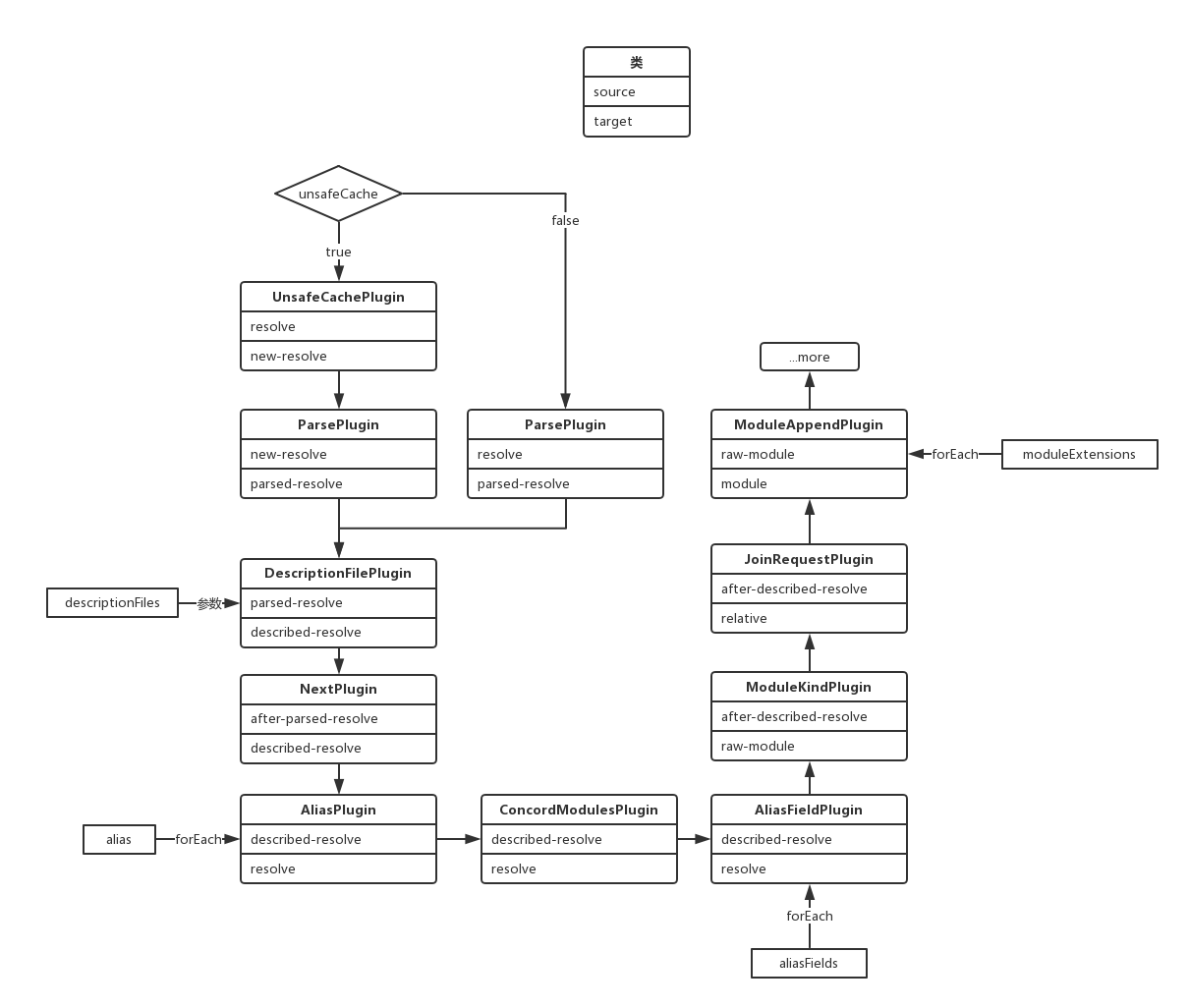
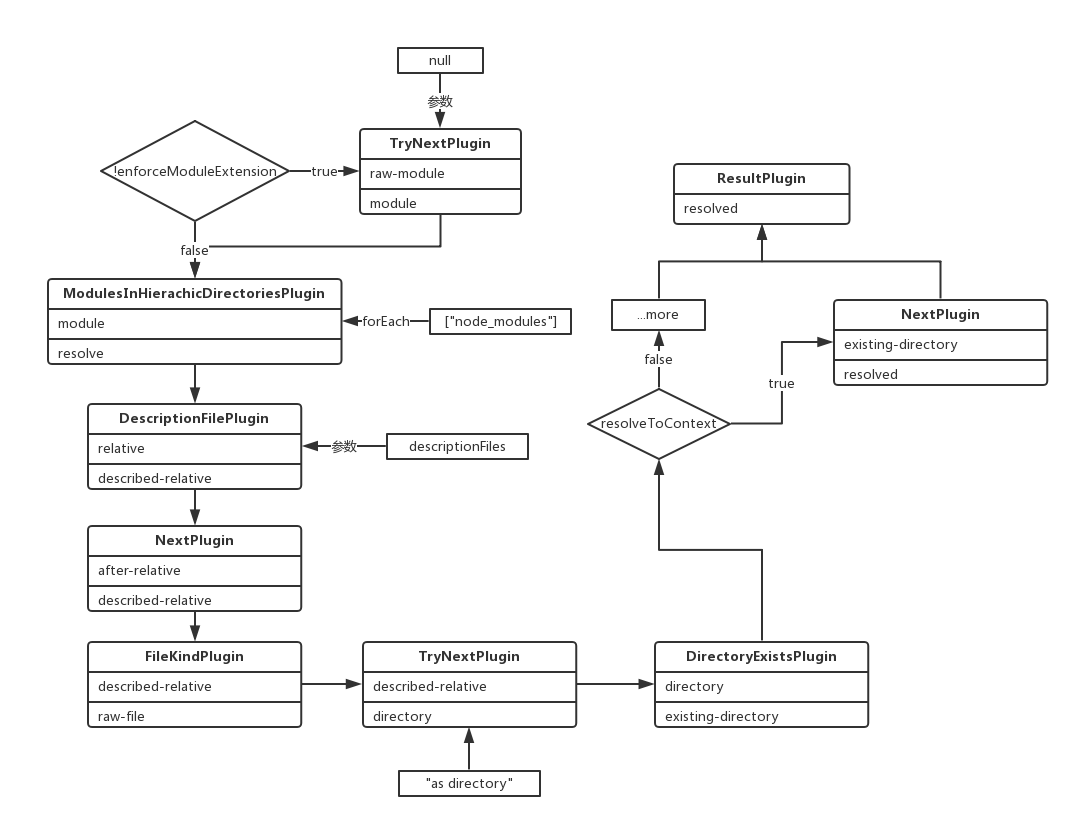

注入完所有的事件流后,返回这个resolver对象,也就是compiler.resolvers.normal(loader、context)。
.28-浅析webpack源码之compiler.resolvers的更多相关文章
- .30-浅析webpack源码之doResolve事件流(1)
这里所有的插件都对应着一个小功能,画个图整理下目前流程: 上节是从ParsePlugin中出来,对'./input.js'入口文件的路径做了处理,返回如下: ParsePlugin.prototype ...
- .34-浅析webpack源码之事件流make(3)
新年好呀~过个年光打游戏,function都写不顺溜了. 上一节的代码到这里了: // NormalModuleFactory的resolver事件流 this.plugin("resolv ...
- .30-浅析webpack源码之doResolve事件流(2)
这里所有的插件都对应着一个小功能,画个图整理下目前流程: 上节是从ParsePlugin中出来,对'./input.js'入口文件的路径做了处理,返回如下: ParsePlugin.prototype ...
- .3-浅析webpack源码之预编译总览
写在前面: 本来一开始想沿用之前vue源码的标题:webpack源码之***,但是这个工具比较巨大,所以为防止有人觉得我装逼跑来喷我(或者随时鸽),加上浅析二字,以示怂. 既然是浅析,那么案例就不必太 ...
- .17-浅析webpack源码之compile流程-入口函数run
本节流程如图: 现在正式进入打包流程,起步方法为run: Compiler.prototype.run = (callback) => { const startTime = Date.now( ...
- 从Webpack源码探究打包流程,萌新也能看懂~
简介 上一篇讲述了如何理解tapable这个钩子机制,因为这个是webpack程序的灵魂.虽然钩子机制很灵活,而然却变成了我们读懂webpack道路上的阻碍.每当webpack运行起来的时候,我的心态 ...
- 浅析libuv源码-node事件轮询解析(3)
好像博客有观众,那每一篇都画个图吧! 本节简图如下. 上一篇其实啥也没讲,不过node本身就是这么复杂,走流程就要走全套.就像曾经看webpack源码,读了300行代码最后就为了取package.js ...
- webpack源码-依赖收集
webpack源码-依赖收集 version:3.12.0 程序主要流程: 触发make钩子 Compilation.js 执行EntryOptionPlugin 中注册的make钩子 执行compi ...
- .20-浅析webpack源码之compile流程-Template模块
这里的编译前指的是开始触发主要的事件流this-compilaiton.compilation之前,由于还有一些准备代码,这一节全部弄出来. 模块基本上只走构造函数,具体的方法调用的时候再具体讲解. ...
随机推荐
- js 变量、作用域和内存问题
基本类型和引用类型 5种基本类型:undefined.null.boolean.number.string 引用类型:由多个值构成的对象 属性 引用类型可以动态添加属性,而基本类型不可以 var p ...
- weex Mac开发环境
安装: 1.java的jdk下载和安装 1-1.下载.安装:省略 1-2.配置 第一步:命令行内输入touch .bash_profile命令,生成.bash_profile的隐藏配置文件,用于配置j ...
- Maven打包排除某个资源或者目录
最近在spark streaming本地调试的时候,引入了一些资源文件,打包的时候需要给排除掉.所以就考虑使用maven的方式 详细参考官方文档:https://maven.apache.org/pl ...
- 在Eclipse中查看JDK源码的方法
遇到这个问题是因为想证明Vector中的get()方法是不是用synchronized关键字修饰的来保证线程安全的方法, 于是在Eclipse里面: Vector<Integer> vec ...
- Head First设计模式之抽象工厂模式
一.定义 给客户端提供一个接口,可以创建多个产品族中的产品对象 ,而且使用抽象工厂模式还要满足一下条件: 1)系统中有多个产品族,而系统一次只可能消费其中一族产品. 2)同属于同一个 ...
- 析构函数(C#)
析构函数又称终结器,用于析构类的实例. 定义 析构函数(destructor) 与构造函数相反,当对象结束其生命周期时(例如对象所在的函数已调用完毕),系统自动执行析构函数.析构函数往往用来做&quo ...
- 第十章:Python の 网络编程基础(二)
本課主題 Python中的作用域补充 socketserver 源码 线程的介绍和操作实战 进程的介绍和操作实战 协程的介绍和操作实战 本周作业 Python中的作用域补充 Python世界里沒有块级 ...
- SQL列中含有换行符的查找和替换方法
最近在获取数据时,发现程序读取的字段中含有\r\n字符,检查数据库表中的数据,发现是varchar字符串中包含了换行符.导入数据导致了这一情况出现. 回车换行 不同系统的行结尾符号并不同,如下: li ...
- centos6.5 redis搭建
redis安装1.wget http://download.redis.io/redis-stable.tar.gz2.tar -zxvf redis-stable.tar.gz3.cd redis- ...
- 【倍增】洛谷P3379 倍增求LCA
题目描述 如题,给定一棵有根多叉树,请求出指定两个点直接最近的公共祖先. 输入输出格式 输入格式: 第一行包含三个正整数N.M.S,分别表示树的结点个数.询问的个数和树根结点的序号. 接下来N-1行每 ...