
Bean Definition从加载、解析、处理、注册到BeanFactory的过程。
为了弄清楚Bean是怎么来的,花费了大把功夫,现在要把Bean Definition的加载、解析、处理、注册到bean工厂的过程记下来。这只是bean definition 的加载、解析、处理、注册过程中的一种。
好记性不如烂笔头。
首先我已经知道bean definition 存在了哪里:它就存在一个Map对象中,如果使用的是DefaultListableBeanFactory的话,它就存在一个ConcurrentHashMap对象中。
    /** bean 的名字为键,BeanDefinition为值,初始容量为256 */

    private final Map<String, BeanDefinition> beanDefinitionMap = new ConcurrentHashMap<String, BeanDefinition>(256);
现在将BeanDefinition是如何一步步走到这个Map对象中的。
一、BeanDefinition的加载
过程比较长,得对着源码慢慢看。
这里讲的是使用xml配置文件的方式来配置bean.
既然是使用的xml配置文件的方式来配置bean,那么首先要读取xml文件。
一)、AbstractBeanDefinitionReader类中
这一步只是说加载bean definition,但是这里方法参数resources 所指的资源并不确定是什么样的,有可能是xml文件,也有可能是属性文件,或者是脚本。
    @Override

    public int loadBeanDefinitions(Resource... resources) throws BeanDefinitionStoreException {

        Assert.notNull(resources, "Resource array must not be null");

        int counter = 0;

        for (Resource resource : resources) {

            counter += loadBeanDefinitions(resource);//这个方法有几个实现,如下

        }

        return counter;

    }
上面的代码中的一行 counter += loadBeanDefinitions(resource); 这行代码有好几个实现类都实现了它。如下图:
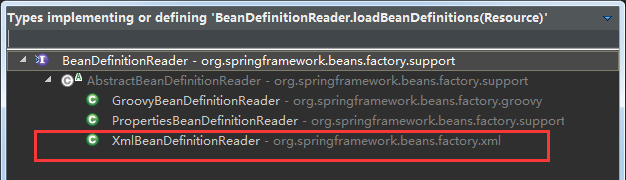
我这里使用实现类XmlBeanDefinitionReader中的实现,所以这里的资源是xml文件。
二)、XmlBeanDefinitionReader类中
从指定的xml文件中加载bean definition,但是他这里只是将Resource转化为EncodedResource对象。然后把这个任务递交给它的重载方法来做。

三)、XmlBeanDefinitionReader类中
从指定的XML文件中加载bean definition。但还不是真正的加载bean定义,只是做准备。
    /**

     * Load bean definitions from the specified XML file.

     * @param encodedResource the resource descriptor for the XML file,

     * allowing to specify an encoding to use for parsing the file

     * @return the number of bean definitions found

     * @throws BeanDefinitionStoreException in case of loading or parsing errors

     */

    public int loadBeanDefinitions(EncodedResource encodedResource) throws BeanDefinitionStoreException {

        Assert.notNull(encodedResource, "EncodedResource must not be null");

        if (logger.isInfoEnabled()) {

            logger.info("Loading XML bean definitions from " + encodedResource.getResource());

        }

        Set<EncodedResource> currentResources = this.resourcesCurrentlyBeingLoaded.get();

        if (currentResources == null) {

            currentResources = new HashSet<EncodedResource>(4);

            this.resourcesCurrentlyBeingLoaded.set(currentResources);

        }

        if (!currentResources.add(encodedResource)) {

            throw new BeanDefinitionStoreException(

                    "Detected cyclic loading of " + encodedResource + " - check your import definitions!");

        }

        try {

            InputStream inputStream = encodedResource.getResource().getInputStream();

            try {

                InputSource inputSource = new InputSource(inputStream);

                if (encodedResource.getEncoding() != null) {

                    inputSource.setEncoding(encodedResource.getEncoding());

                }

                return doLoadBeanDefinitions(inputSource, encodedResource.getResource());

            }

            finally {

                inputStream.close();

            }

        }

        catch (IOException ex) {

            throw new BeanDefinitionStoreException(

                    "IOException parsing XML document from " + encodedResource.getResource(), ex);

        }

        finally {

            currentResources.remove(encodedResource);

            if (currentResources.isEmpty()) {

                this.resourcesCurrentlyBeingLoaded.remove();

            }

        }

    }
四、XmlBeanDefinitionReader类中
这里是真正的从xml 文件中加载的bean definition 。主要有两个步骤:①、加载指定的文档,得到一个Document对象。②、将Document对象和Resource交给registerBeanDefinitions(...)方法来完成注册
    /**

     * Actually load bean definitions from the specified XML file.

     * @param inputSource the SAX InputSource to read from

     * @param resource the resource descriptor for the XML file

     * @return the number of bean definitions found

     * @throws BeanDefinitionStoreException in case of loading or parsing errors

     * @see #doLoadDocument

     * @see #registerBeanDefinitions

     */

    protected int doLoadBeanDefinitions(InputSource inputSource, Resource resource)

            throws BeanDefinitionStoreException {

        try {

            Document doc = doLoadDocument(inputSource, resource);

            return registerBeanDefinitions(doc, resource);

        }

        catch (BeanDefinitionStoreException ex) {

            //省略捕获异常的代码

        }

    }
五)、XmlBeanDefinitionReader类中
注册指定的Document对象中的bean definition。这里实际上是创建了一个BeanDefinitionDocumentReader对象然后让它来完成。
    /**

     * Register the bean definitions contained in the given DOM document.

     * Called by {@code loadBeanDefinitions}.

     * <p>Creates a new instance of the parser class and invokes

     * {@code registerBeanDefinitions} on it.

     * @param doc the DOM document

     * @param resource the resource descriptor (for context information)

     * @return the number of bean definitions found

     * @throws BeanDefinitionStoreException in case of parsing errors

     * @see #loadBeanDefinitions

     * @see #setDocumentReaderClass

     * @see BeanDefinitionDocumentReader#registerBeanDefinitions

     */

    public int registerBeanDefinitions(Document doc, Resource resource) throws BeanDefinitionStoreException {

        BeanDefinitionDocumentReader documentReader = createBeanDefinitionDocumentReader();

        int countBefore = getRegistry().getBeanDefinitionCount();

        documentReader.registerBeanDefinitions(doc, createReaderContext(resource));

        return getRegistry().getBeanDefinitionCount() - countBefore;

    }
二、BeanDefinition的解析
六)、DefaultBeanDefinitionDocumentReader类中
DefaultBeanDefinitionDocumentReader是BeanDefinitionDocumentReader的一个实现类。这一步主要是解析文档解析的是<beans/>。比如xml文件是XSD的还是DTD的。
这里主要是获得一个Element对象。这个对象就代表xml文件中的<beans/>节点。在这个节点下包含着文件中的所有<bean/>节点。然后将这个Element对像交给的doRegistrerBeanDefinitions(Element)方法来处理。

七)、DefaultBeanDefinitionDocumentReader类中
这个方法将</beans>节点下的每一个<bean/>相对应的bean definition注册。但是真正做这件事的是另一个方法 parseBeanDefinitions(root, this.delegate);
不过在调用parseBeanDefinitions(root,this.delegate)方法之前和之后都可以对这个这个方法参数中的Element对象进行处理。
    /**

     * Register each bean definition within the given root {@code <beans/>} element.

     */

    protected void doRegisterBeanDefinitions(Element root) {

        // Any nested <beans> elements will cause recursion in this method. In

        // order to propagate and preserve <beans> default-* attributes correctly,

        // keep track of the current (parent) delegate, which may be null. Create

        // the new (child) delegate with a reference to the parent for fallback purposes,

        // then ultimately reset this.delegate back to its original (parent) reference.

        // this behavior emulates a stack of delegates without actually necessitating one.

        BeanDefinitionParserDelegate parent = this.delegate;

        this.delegate = createDelegate(getReaderContext(), root, parent);

        if (this.delegate.isDefaultNamespace(root)) {

            String profileSpec = root.getAttribute(PROFILE_ATTRIBUTE);

            if (StringUtils.hasText(profileSpec)) {

                String[] specifiedProfiles = StringUtils.tokenizeToStringArray(

                        profileSpec, BeanDefinitionParserDelegate.MULTI_VALUE_ATTRIBUTE_DELIMITERS);

                if (!getReaderContext().getEnvironment().acceptsProfiles(specifiedProfiles)) {

                    if (logger.isInfoEnabled()) {

                        logger.info("Skipped XML bean definition file due to specified profiles [" + profileSpec +

                                "] not matching: " + getReaderContext().getResource());

                    }

                    return;

                }

            }

        }

        preProcessXml(root);

        parseBeanDefinitions(root, this.delegate);

        postProcessXml(root);

        this.delegate = parent;

    }
八、DefaultBeanDefinitionDocumentReader类中
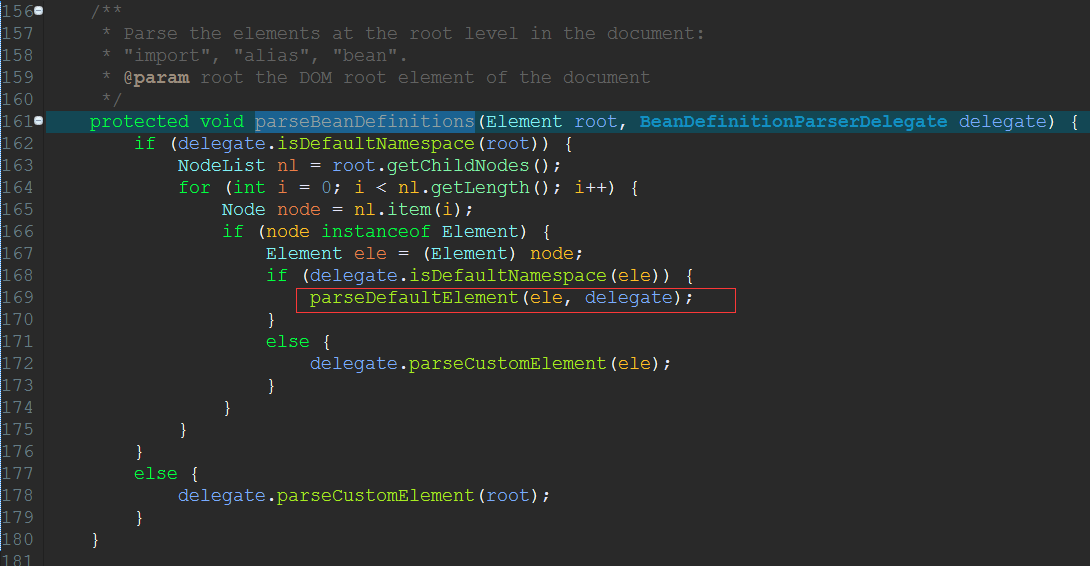
用一个for循环遍历<beans/>节点下的所有子节点,也就是所有的<bean/>,然后对<bean/>节点进行解析。注意,刚才是对<beans/>进行解析。不过这个解析的任务交给parseDefaultElement(Element ele,BeanDefinitionParserDelegate delegate)方法来完成。
九)、DefaultBeanDefinitionDocumentReader类中
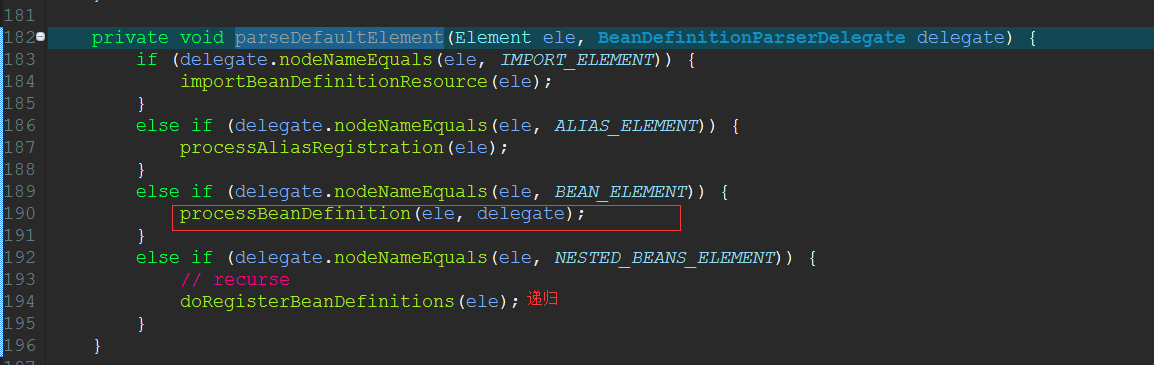
这个方法用到了递归,因为bean是可以嵌套的,所以<beans/>节点下的每一个<bean/>节点都可能在嵌套有很多bean。所以它会判断这个bean是不是嵌套bean,如果不是就进行处理,如果是就进行递归。
处理bean元素的任务交给了三个方法,如图。我这里用processBeanDefinition(ele,delegate)方法举例。
三、BeanDefinition的处理
十)、DefaultBeanDefinitionDocumentReader类中
在这个方法中它将的Element对象转化成了BeanDefinitionHolder对象。这个BeanDefinitionHolder对象中持有的BeanDefinition实例的引用,还有beanName,还有bean的别名。
然后将BeanDefinitionHolder对象和特定的bean工厂作为参数交个BeanDefinitionReaderUtils类来处理来进行注册。
第301行代码中如何创建BeanDefinitionHolder的??BeanDefinition的创建

四、BeanDefinition的注册
十一)、BeanDefinitionReaderUtils类中
这个方法先根据BeanDefinitionHolder获取beanName和BeanDefinition,然后将其注册到Bean工厂中Map对象中。比如bean工厂是DefaultListableBeanFactory。
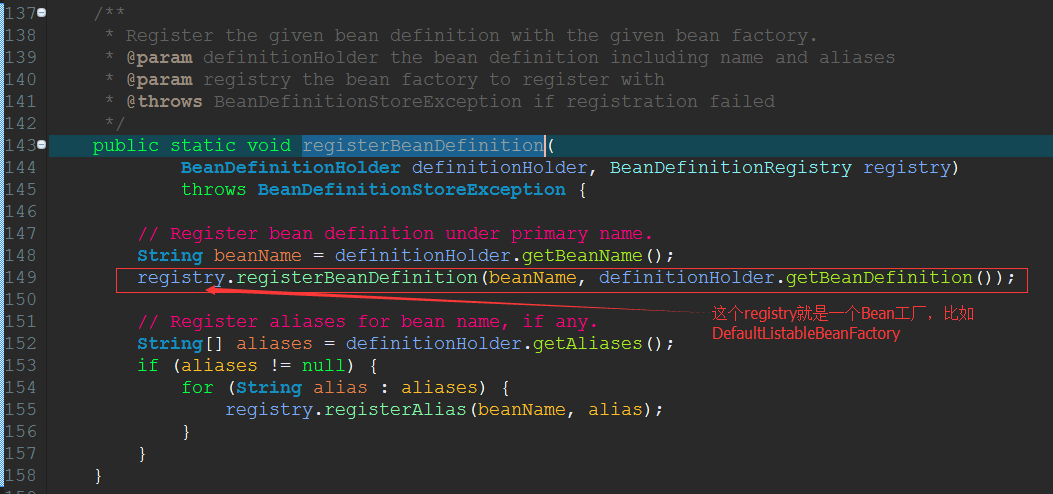
上面红色方框中的代码 registry.registerBeanDefinition(beanName, definitionHolder.getBeanDefinition());这个方法有好几个实现类实现了它,如下图:
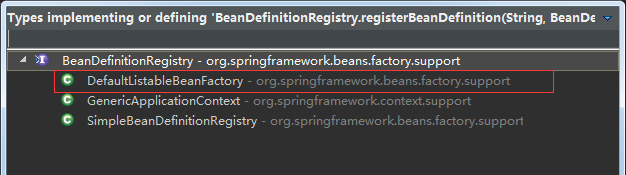
我选择了DefaultListableBeanFactory
十二)、DefaultListableBeanFactory类中,在这个方法中,将BeanDefinition 注册到了开头所说的ConcurrentHashMap对象中了。
    //---------------------------------------------------------------------

    // Implementation of BeanDefinitionRegistry interface

    //---------------------------------------------------------------------

    @Override

    public void registerBeanDefinition(String beanName, BeanDefinition beanDefinition)

            throws BeanDefinitionStoreException {

        Assert.hasText(beanName, "Bean name must not be empty");

        Assert.notNull(beanDefinition, "BeanDefinition must not be null");

        if (beanDefinition instanceof AbstractBeanDefinition) {

            try {

                ((AbstractBeanDefinition) beanDefinition).validate();

            }

            catch (BeanDefinitionValidationException ex) {

                throw new BeanDefinitionStoreException(beanDefinition.getResourceDescription(), beanName,

                        "Validation of bean definition failed", ex);

            }

        }

        BeanDefinition oldBeanDefinition;

        oldBeanDefinition = this.beanDefinitionMap.get(beanName);

        if (oldBeanDefinition != null) {

            if (!isAllowBeanDefinitionOverriding()) {

                throw new BeanDefinitionStoreException(beanDefinition.getResourceDescription(), beanName,

                        "Cannot register bean definition [" + beanDefinition + "] for bean '" + beanName +

                        "': There is already [" + oldBeanDefinition + "] bound.");

            }

            else if (oldBeanDefinition.getRole() < beanDefinition.getRole()) {

                // e.g. was ROLE_APPLICATION, now overriding with ROLE_SUPPORT or ROLE_INFRASTRUCTURE

                if (this.logger.isWarnEnabled()) {

                    this.logger.warn("Overriding user-defined bean definition for bean '" + beanName +

                            "' with a framework-generated bean definition: replacing [" +

                            oldBeanDefinition + "] with [" + beanDefinition + "]");

                }

            }

            else if (!beanDefinition.equals(oldBeanDefinition)) {

                if (this.logger.isInfoEnabled()) {

                    this.logger.info("Overriding bean definition for bean '" + beanName +

                            "' with a different definition: replacing [" + oldBeanDefinition +

                            "] with [" + beanDefinition + "]");

                }

            }

            else {

                if (this.logger.isDebugEnabled()) {

                    this.logger.debug("Overriding bean definition for bean '" + beanName +

                            "' with an equivalent definition: replacing [" + oldBeanDefinition +

                            "] with [" + beanDefinition + "]");

                }

            }

            this.beanDefinitionMap.put(beanName, beanDefinition);

        }

        else {

            if (hasBeanCreationStarted()) {

                // Cannot modify startup-time collection elements anymore (for stable iteration)

                synchronized (this.beanDefinitionMap) {

                    this.beanDefinitionMap.put(beanName, beanDefinition);

                    List<String> updatedDefinitions = new ArrayList<String>(this.beanDefinitionNames.size() + 1);

                    updatedDefinitions.addAll(this.beanDefinitionNames);

                    updatedDefinitions.add(beanName);

                    this.beanDefinitionNames = updatedDefinitions;

                    if (this.manualSingletonNames.contains(beanName)) {

                        Set<String> updatedSingletons = new LinkedHashSet<String>(this.manualSingletonNames);

                        updatedSingletons.remove(beanName);

                        this.manualSingletonNames = updatedSingletons;

                    }

                }

            }

            else {

                // Still in startup registration phase

                this.beanDefinitionMap.put(beanName, beanDefinition);

                this.beanDefinitionNames.add(beanName);

                this.manualSingletonNames.remove(beanName);

            }

            this.frozenBeanDefinitionNames = null;

        }

        if (oldBeanDefinition != null || containsSingleton(beanName)) {

            resetBeanDefinition(beanName);

        }

    }
五、总结
BeanDefinition的加载、解析、处理、注册主要涉及到了四个类。
①、XMLBeanDefinitionReader:主要是的任务是把XML文件加载到内存中以Document对象的形式存在。
②、DefaultBeanDefinitionDocumentReader:完成解析和处理的任务。最后将处理得到的BeanDefinitionHolder交给了BeanDefinitionReaderUtils进行注册。
③、BeanDefinitionReaderUtils:BeanDefinitionHolder有了,Bean工厂也有了,它就负责把BeanDefinitionHolder中的BeanDefinition和BeanName等取出来,然后注册到Bean工厂中。
④、DefaultListableBeanFactory(bean工厂):它有一个ConcurrentHashMap成员变量,以beanName为键,BeanDefinition为值保存注册的bean。
Bean Definition从加载、解析、处理、注册到BeanFactory的过程。的更多相关文章
- spring bean的重新加载
架构体系 在谈spring bean的重新加载前,首先我们来看看spring ioc容器. spring ioc容器主要功能是完成对bean的创建.依赖注入和管理等功能,而这些功能的实现是有下面几个组 ...
- Spring bean是如何加载的
Spring bean是如何加载的 加载bean的主要逻辑 在AbstractBeanFactory中doGetBean对加载bean的不同情况进行拆分处理,并做了部分准备工作 具体如下 获取原始be ...
- Hibernate懒加载解析
Hibernate懒加载解析 在Hibernate框架中,当我们要访问的数据量过大时,明显用缓存不太合适, 因为内存容量有限 ,为了减少并发量,减少系统资源的消耗,这时Hibernate用懒加载机制来 ...
- Sspring bean被初始化加载2次
Sspring bean被初始化加载2次 spring框架的web项目时,启动的时候发现某个bean被加载了两次,比如使用SchedulingConfigurer或者使用@PostConstruct的 ...
- SpringXML方式配置bean的懒加载lazy-init
lazy-init(懒加载),表示该bean在容器初始化的时候不进行初始化. 例如: <bean name="role1" class="com.fz.entity ...
- Away3D引擎学习笔记(一)资源加载解析块
前文:Away3D断断续续用了一段时间了,三维相关的很多算法,计算转换还是有点绕,整理些自己觉得还有点意思东西,希望大家有用. 三维开始,Away3D构架你场景那几行代码各处都有,这里就不copy了, ...
- Spring Boot 学习系列(09)—自定义Bean的顺序加载
此文已由作者易国强授权网易云社区发布. 欢迎访问网易云社区,了解更多网易技术产品运营经验. Bean 的顺序加载 有些场景中,我们希望编写的Bean能够按照指定的顺序进行加载.比如,有UserServ ...
- <script>标签的加载解析执行
转自原文 <script>标签的加载解析执行 看了很多网上的文章,都是大同小异.总结一下.内部原理还没有搞清楚,有机会再学习. 一.<script>标签的加载解析执行顺序 ht ...
- 一文带你解读Spring5源码解析 IOC之开启Bean的加载,以及FactoryBean和BeanFactory的区别。
前言 通过往期的文章我们已经了解了Spring对XML配置文件的解析,将分析的信息组装成BeanDefinition,并将其保存到相应的BeanDefinitionRegistry中,至此Spring ...
随机推荐
- WCF中的AddressHeader作用
客户端发送请求给服务端,服务端根据请求消息把消息转发给对应的终结点.这里面有个消息筛选机制,如果请求消息中带有地址报头相关信息,则会用地址报头匹配当前的所有终结点.所以默认情况下客户端和服务端的地址报 ...
- springboot基本注解
声明Bean的注解: @Component组件 @Service service层 @Respository dao层 @Controller 注入Bean的注解: @Autowired Spring ...
- 如何实现监听 console.log
var lastLog; console.oldLog = console.log; console.log = function(str) { console.oldLog(str); lastLo ...
- is_array判断是否为数组
if(is_array($arr)){ echo "是数组"; }else{ echo "不是数组"; }
- Python 循环删除指定文件夹下所有的.longtian类型文件
# -*- coding: utf-8 -*- import os #遍历文件夹删除文件 def traversing_dir(rootDir): #遍历根目录 for root,dirs,files ...
- html+css 百度首页练习
这几天看完了<css权威指南>,写了个百度页面,不带js的纯静态,主要目的就是掌握页面布局,字体颜色之类的没有深究. 写完了觉得很简单,毕竟一开始觉得只要模仿的像就行,但是缩小了浏览器窗口 ...
- Java内存模型(JMM)以及 垃圾回收机制 小结
内存模型: 内存模型描述了程序中各个变量(实例域.静态域和数组元素)之间的关系,以及在实际计算机系统中将变量存储到内存和从内存中取出变量这样的底层细节,对象最终是存储在内存里面的,这点没有错,但是编译 ...
- C++学习笔记(5)----重载自增自减运算符
自增运算符“++”和自减运算符“--”分别包含两个版本.即运算符前置形式(如 ++x)和运算符后置形式(如 x++),这两者进行的操作是不一样的.因此,当我们在对这两个运算符进行重载时,就必须区分前置 ...
- 图片裁剪(基于RxPaparazzo)
图片裁剪(基于RxPaparazzo) 前言:基于RxPaparazzo的图片裁剪,图片旋转.比例放大|缩小. 效果: 开发环境:AndroidStudio2.2.1+gradle-2.14.1 涉及 ...
- JDK配置步骤
1.安装jkd1.6.0以上版本. 2.安装结束后,运行cmd.键入: java -version判断JDK是否安装成功,如下图所示. 3.首先需要到官网上下载JDK这款软件,本人下载的是jdk-6u ...