
北大poj- 1009
| Time Limit: 1000MS | Memory Limit: 10000K | |
| Total Submissions: 22835 | Accepted: 5398 |
Description
A simple edge detection algorithm sets an output pixel's value to be
the maximum absolute value of the differences between it and all its
surrounding pixels in the input image. Consider the input image below:
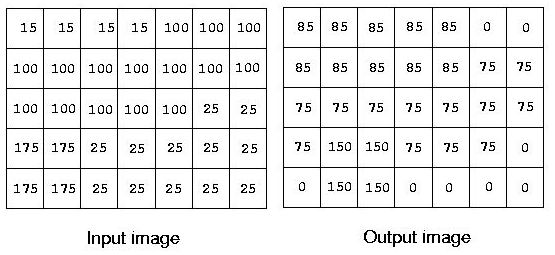
The upper left pixel in the output image is the maximum of the
values |15-15|,|15-100|, and |15-100|, which is 85. The pixel in the 4th
row, 2nd column is computed as the maximum of |175-100|, |175-100|,
|175-100|, |175-175|, |175-25|, |175-175|,|175-175|, and |175-25|, which
is 150.
Images contain 2 to 1,000,000,000 (109) pixels. All
images are encoded using run length encoding (RLE). This is a sequence
of pairs, containing pixel value (0-255) and run length (1-109).
Input images have at most 1,000 of these pairs. Successive pairs have
different pixel values. All lines in an image contain the same number of
pixels.
Input
consists of information for one or more images. Each image starts with
the width, in pixels, of each image line. This is followed by the RLE
pairs, one pair per line. A line with 0 0 indicates the end of the data
for that image. An image width of 0 indicates there are no more images
to process. The first image in the example input encodes the 5x7 input
image above.
Output
is a series of edge-detected images, in the same format as the input
images, except that there may be more than 1,000 RLE pairs.
Sample Input
7

15 4

100 15

25 2

175 2

25 5

175 2

25 5

0 0

10

35 500000000

200 500000000

0 0

3

255 1

10 1

255 2

10 1

255 2

10 1

255 1

0 0

0
Sample Output
7

85 5

0 2

85 5

75 10

150 2

75 3

0 2

150 2

0 4

0 0

10

0 499999990

165 20

0 499999990

0 0

3

245 9

0 0

0
Hint
Source
 #include <stdio.h>

 #include <stdlib.h>

 #include <string.h>

 #define MAX_POINT_SERIES_NUM 1000

 #define FAILURE (int)0xF

 #define SUCCESS (int)0x0

 #define TRUE  (int)1

 #define FALSE (int)0

 #define MIN(a, b) (((a) < (b))?(a):(b))

 #define MAX(a, b) (((a) > (b))?(a):(b))

 typedef int BOOL;

 typedef struct

 {

     int value;

     long long num;

     long long startIdx;

     long long endIdx;

 }PointSeries;

 typedef struct

 {

     long long imageWide;

     int pointsNum;

     long long endIdx;

     PointSeries points[MAX_POINT_SERIES_NUM];

 }Image;

 Image g_input;

 Image g_output;

 int GetInputImage(Image *input)

 {

     int i = ;

     long long idx = ;

     PointSeries *points = NULL;

     scanf("%I64d", &input->imageWide);

     if( == input->imageWide)

     {

         printf("0\n");

         return FAILURE;

     }

     do

     {

         points = &input->points[i];

         scanf("%d %I64d", &points->value, &points->num);

         points->startIdx = idx;

         points->endIdx = idx + points->num - ;

         idx = idx + points->num;

         i++;

     }while(points->num !=  && MAX_POINT_SERIES_NUM <= i);

     input->endIdx = input->points[i-].endIdx;

     input->pointsNum = i;

     return SUCCESS;

 }

 void PrintImage(Image *image)

 {

     int i;

     printf("%I64d\n", image->imageWide);

     for(i = ; i < image->pointsNum; i++)

     {

         printf("%d %I64d\n",

                image->points[i].value,

                image->points[i].num);

     }

     if(image->imageWide != ) printf("0 0\n");

 }

 static int GetLeftDelta(long long wide, PointSeries *points, long long idx, PointSeries *cmpPoints)

 {

     PointSeries *lastPoints = NULL;

     long long lastIdx = idx - ;

     if(idx % wide !=

        && lastIdx >=

        && lastIdx < points->startIdx)

     {

         lastPoints = points-;

         return abs(lastPoints->value - cmpPoints->value);

     }

     return ;

 }

 static int GetRightDelta(Image *input, PointSeries *points, long long idx, PointSeries *cmpPoints)

 {

     PointSeries *nextPoints = NULL;

     long long nextIdx = idx + ;

     if(idx % input->imageWide != input->imageWide -

        && points->endIdx < input->endIdx

        && nextIdx > points->endIdx)

     {

         nextPoints = points+;

         return abs(nextPoints->value - cmpPoints->value);

     }

     return ;

 }

 static int GetPointSeries(long long idx, long long endIdx, PointSeries **targetPoints)

 {

     PointSeries *points = (*targetPoints);

     if(idx <  || idx > endIdx) return FAILURE;

     while()

     {

         if(idx <= points->endIdx && points->startIdx <= idx) break;

         if(idx > points->endIdx)

         {

             points++;

         }

         else if(idx < points->startIdx)

         {

             points--;

         }

     }

     *targetPoints = points;

     return SUCCESS;

 }

 static int GetOtherLineDelta(Image *input, PointSeries *orgPoints, long long idx)

 {

     int leftDelta, rightDelta, delta;

     PointSeries *target = orgPoints;

     if(FAILURE == GetPointSeries(idx, input->endIdx, &target)) return ;

     leftDelta = GetLeftDelta(input->imageWide, target, idx, orgPoints);

     rightDelta = GetRightDelta(input, target, idx, orgPoints);

     delta = abs(target->value - orgPoints->value);

     delta = MAX(delta , leftDelta);

     delta = MAX(delta , rightDelta);

     return delta;

 }

 void SaveOutput(Image *output, int delta, long long num)

 {

     PointSeries *points = &output->points[output->pointsNum];

     if(num == ) return;

     if(output->pointsNum == )

     {

         points->num = num;

         points->value = delta;

         output->pointsNum = ;

         return;

     }

     if((points-)->value != delta)

     {

         points->num = num;

         points->value = delta;

         output->pointsNum++;

     }

     else

     {

         (points-)->num += num;

     }

 }

 void ProcPoints(Image *input, PointSeries *points, long long num, int *rightDelta, long long *idx, Image *output)

 {

     long long j;

     long long tmpIdx = *idx;

     int leftDelta, upDelta, dowmDelta, delta;

     int tmpRight = *rightDelta;

     for(j = ; j < num; j++)

     {

         leftDelta = tmpRight;

         tmpRight = GetRightDelta(input, points, tmpIdx, points);

         upDelta = GetOtherLineDelta(input, points, tmpIdx - input->imageWide);

         dowmDelta = GetOtherLineDelta(input, points, tmpIdx + input->imageWide);

         delta = MAX(leftDelta, tmpRight);

         delta = MAX(delta, upDelta);

         delta = MAX(delta, dowmDelta);

         SaveOutput(output, delta, );

         tmpIdx++;

     }

     *idx = tmpIdx;

     *rightDelta = tmpRight;

 }

 void RowFastForward(Image *input, PointSeries *points, int *rightDelta, long long *idx, Image *output)

 {

     long long firstNum, secondNum, thridNum;

     long long endIdx;

     long long wide = input->imageWide;

     if(*idx % wide == )

         firstNum = wide;

     else

         firstNum = wide + ;

     ProcPoints(input, points, firstNum, rightDelta, idx, output);

     if(points->endIdx % wide == wide - )

         endIdx = points->endIdx - wide;

     else

         endIdx = points->endIdx - wide - ;

     secondNum = endIdx +  - points->startIdx - firstNum;

     thridNum = points->endIdx - endIdx;

     SaveOutput(output, , secondNum);

     *idx += secondNum;

     ProcPoints(input, points, thridNum, rightDelta, idx, output);

 }

 inline BOOL CanBeRowFastForward(long long pointsNum, long long imageWide)

 {

     if(pointsNum >=  * imageWide - )

     {

         return TRUE;

     }

     else

     {

         return FALSE;

     }

 }

 inline BOOL CanBeSpecFastForward(PointSeries *points, long long wide)

 {

     if(points->num ==

        || points->num / wide ==

        || points->num % wide !=

        || (points+)->num % wide != )

     {

         return FALSE;

     }

     return TRUE;

 }

 void SpecFastForward(PointSeries *points, long long wide, int *specDelta, Image *output)

 {

     int tmpDeta = *specDelta;

     long long num, lineNum = points->num / wide;

     num = (lineNum > ) ? wide : ;

     SaveOutput(output, tmpDeta, num);

     num = (lineNum > ) ? ((lineNum - )*wide) : ;

     SaveOutput(output, , num);

     if((points+)->num !=  && lineNum == )

     {

         tmpDeta = MAX(abs(points->value - (points+)->value), tmpDeta);

     }

     else if((points+)->num !=  && lineNum > )

     {

         tmpDeta = abs(points->value - (points+)->value);

     }

     else if((points+)->num ==  && lineNum > )

     {

         tmpDeta = ;

     }

     SaveOutput(output, tmpDeta, wide);

     *specDelta = tmpDeta;

 }

 void ProcImage(Image *input, Image *output)

 {

     long long i = , idx = ;

     int rightDelta = ;

     int specDelta = ;

     PointSeries *points = &input->points[];

     if(input->pointsNum == ) return;

     while(CanBeSpecFastForward(points, input->imageWide))

     {

         SpecFastForward(points, input->imageWide, &specDelta, output);

         points++;

         i++;

     }

     for(; i < input->pointsNum; i++)

     {

         points = &input->points[i];

         if(points->num <= ) continue;

         if(CanBeRowFastForward(points->num, input->imageWide))

         {

             RowFastForward(input, points, &rightDelta, &idx, output);

         }

         else

         {

             ProcPoints(input, points, points->num, &rightDelta, &idx, output);

         }

     }

 }

 inline void InitOutputBuf(Image *input, Image *output)

 {

     output->pointsNum = ;

     output->imageWide = input->imageWide;

 }

 int main()

 {

     while(SUCCESS == GetInputImage(&g_input))

     {

         InitOutputBuf(&g_input, &g_output);

         ProcImage(&g_input, &g_output);

         PrintImage(&g_output);

     }

     return ;

 }
北大poj- 1009的更多相关文章
- 北大POJ题库使用指南
原文地址:北大POJ题库使用指南 北大ACM题分类主流算法: 1.搜索 //回溯 2.DP(动态规划)//记忆化搜索 3.贪心 4.图论 //最短路径.最小生成树.网络流 5.数论 //组合数学(排列 ...
- 【Java】深深跪了,OJ题目Java与C运行效率对比(附带清华北大OJ内存计算的对比)
看了园友的评论之后,我也好奇清橙OJ是怎么计算内存占用的.重新测试的情况附在原文后边. -------------------------------------- 这是切割线 ----------- ...
- POJ 1861 Network (Kruskal算法+输出的最小生成树里最长的边==最后加入生成树的边权 *【模板】)
Network Time Limit: 1000MS Memory Limit: 30000K Total Submissions: 14021 Accepted: 5484 Specia ...
- next_permutation 和 一个不成功的案例
一个失败的案例:(POJ 1009) 题目描述 小翔同学的宿舍WIFI添加了密码,密码每天都会变更.而小翔每天都会给蹭网的同学们提供密码提示.现在请你根据密码提示,编写程序破译密码. 已知密码提示给出 ...
- 各大OJ
北大POJ 杭电HDU 浙大ZOj 蓝桥杯 PAT
- leetcode学习笔记--开篇
1 LeetCode是什么? LeetCode是一个在线的编程测试平台,国内也有类似的Online Judge平台.程序开发人员可以通过在线刷题,提高对于算法和数据结构的理解能力,夯实自己的编程基础. ...
- OJ题目JAVA与C运行效率对比
[JAVA]深深跪了,OJ题目JAVA与C运行效率对比(附带清华北大OJ内存计算的对比) 看了园友的评论之后,我也好奇清橙OJ是怎么计算内存占用的.重新测试的情况附在原文后边. ----------- ...
- C++ 指针常见用法小结
1. 概论 2.指针基础 3. 指针进阶 4. 一维数组的定义与初始化 5. 指针和数组 6. 指针运算 7. 多维数组和指针 8. 指针形参 9. 数组形参 10. 返回指针和数组 11. 结语 ...
- 几个比較好的IT站和开发库官网
几个比較好的IT站和开发库官网 1.IT技术.项目类站点 (1)首推CodeProject,一个国外的IT站点,官网地址为:http://www.codeproject.com,这个站点为程序开发人员 ...
- C语言程序设计100例之(10):最大公约数
例10 最大公约数 问题描述 有三个正整数a,b,c(0<a,b,c<10^6),其中c不等于b.若a和c的最大公约数为b,现已知a和b,求满足条件的最小的c. 输入数据 第 ...
随机推荐
- (2)OSi模型
osi七层模型 #(应用层,表示层,会话层) => 应用层 => 表达一个数据信息 # 传输层 port(端口) tcp/udp协议 硬件设备:四层交换机 四层路由器 # 网络层 ip协议 ...
- python基本概念
python环境以及python的搭建的基本知识 python解释器 python语言的本质 通过解释器将脚本翻译成机器能识别的二进制码,交予机器执行 pycharm ide:集成开发环境 集成编译器 ...
- 李航《统计学习方法》CH01
CH01 统计学方法概论 前言 章节目录 统计学习 监督学习 基本概念 问题的形式化 统计学习三要素 模型 策略 算法 模型评估与模型选择 训练误差与测试误差 过拟合与模型选择 正则化与交叉验证 正则 ...
- 在 ubuntu18.04 中搭建 Django 开发环境
在Ubuntu 18.04 安装 python3.pip3.pycharm,搭建 Django 开发环境. 1.安装 python3 pip3 sudo apt-get install python3 ...
- kafka已生产消息查看
在测试过程中有用到kafka,由于开发说我往kafka里面生产了消息,通知了对方要消费....看到这块一头雾水 kafka主要2个功能生产和消费 ##查询topic列表 ./kafka-topics. ...
- MVP之高级MVP架构封装
MVP之高级MVP架构封装 No MVP: 我们一般会这样写: public class MainActivity extends AppCompatActivity { private EditTe ...
- JavaScript中事件委托(事件代理)详解
在JavaScript的事件中,存在事件委托(事件代理),那么什么是事件委托呢? 事件委托在生活中的例子: 有三个同事预计会在周一收到快递.为签收快递,有两种办法:一是三个人在公司门口等快递:二是委托 ...
- 记初学python的一些心得
人生苦短,我用python! 其实我自学python也很长一段时间了,但总是去更换学习资料,搞的现在学的不是很好,因为没更换次资料都要从头开始学起,那么分享下我的学习战况吧,不是很好,还将就的能看. ...
- java 反射获取方法返回值类型
//ProceedingJoinPoint pjp //获取方法返回值类型 Object[] args = pjp.getArgs(); Class<?>[] paramsCls = ne ...
- jmeter如何进行MQTT性能测试(测试前期准备一,性能测试需求)
接到一个有关MQTT的性能测试任务,把查找资料到解决问题的过程都记录.分享下 首先先科普下性能测试中相关术语的解释及 说到性能测试.负载测试.压力测试.并发测试,很多人都是混合使用,或者一会叫压力测试 ...