
What is Web Application Architecture? How It Works, Trends, Best Practices and More
At Stackify, we understand the amount of effort that goes into creating great applications. That’s why we build tools for Application Performance Management (APM), log management, and a whole suite of application support tools (in one solution) to make your life easier and your apps better. But every developer knows that the foundation of an outstanding application is its architecture. In this overview, we’ll take a closer look at web application architecture, its importance for future growth, current trends, and best practices.
A Definition of Web Application Architecture
Web application architecture defines the interactions between applications, middlewaresystems and databases to ensure multiple applications can work together. When a user types in a URL and taps “Go,” the browser will find the Internet-facing computer the website lives on and requests that particular page.
The server then responds by sending files over to the browser. After that action, the browser executes those files to show the requested page to the user. Now, the user gets to interact with the website. Of course, all of these actions are executed within a matter of seconds. Otherwise, users wouldn’t bother with websites.
What’s important here is the code, which has been parsed by the browser. This very code may or may not have specific instructions telling the browser how to react to a wide swath of inputs. As a result, web application architecture includes all sub-components and external applications interchanges for an entire software application.
Of course, it is designed to function efficiently while meeting its specific needs and goals. Web application architecture is critical since the majority of global network traffic, and every single app and device uses web-based communication. It deals with scale, efficiency, robustness, and security.
How Web Application Architecture Works
With web applications, you have the server vs. the client side. In essence, there are two programs running concurrently:
- The code which lives in the browser and responds to user input
- The code which lives on the server and responds to HTTP requests
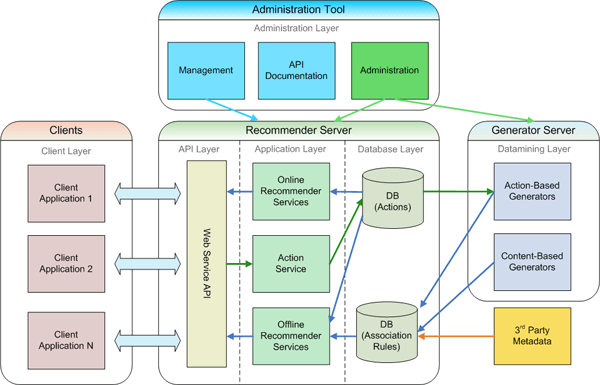
Image via Wikipedia
When writing an app, it is up to the web developer to decide what the code on the server should do in relation to what the code on the browser should do. With server-side code, languages include:
- Ruby on Rails
- PHP
- C#
- Java
- Python
- Javascript
In fact, any code that can respond to HTTP requests has the capability to run on a server. Here are a few other attributes of server-side code:
- Is never seen by the user (except within a rare malfunction)
- Stores data such as user profiles, tweets, pages, etc…
- Creates the page the user requested
With client-side code, languages used include:
- CSS
- Javascript
- HTML
These are then parsed by the user’s browser. Moreover, client-side code can be seen and edited by the user. Plus, it has to communicate only through HTTP requests and cannot read files off of a server directly. Furthermore, it reacts to user input.
Web Application Architecture is Important for Supporting Future Growth
The reason why it is imperative to have good web application architecture is because it is the blueprint for supporting future growth which may come from increased demand, future interoperability and enhanced reliability requirements. Through object-oriented programming, the organizational design of web application architecture defines precisely how an application will function. Some features include:
- Delivering persistent data through HTTP, which can be understood by client-side code and vice-versa
- Making sure requests contain valid data
- Offers authentication for users
- Limits what users can see based on permissions
- Creates, updates and deletes records
Trends in Web Application Architecture
As technology continues to evolve, so does web application architecture. One such trend is the use of and creation of service-oriented architecture. This is where most of the code for the entire application exists as services. In addition, each has its own HTTP API. As a result, one facet of the code can make a request to another part of the code–which may be running on a different server.
Another trend is a single-page application. This is where web UI is presented through a rich JavaScript application. It then stays in the user’s browser over a variety of interactions. In terms of requests, it uses AJAX or WebSockets for performing asynchronous or synchronous requests to the web server without having to load the page.
The user then gets a more natural experience with limited page load interruptions. At their core, many web applications are built around objects. The objects are stored in tables via an SQL database. Each row in a table has a particular record. So, with relational databases, it is all about relations. You can call on records just by listing the row and column for a target data point.
With the two above trends, web apps are now much better suited for viewing on multiple platforms and multiple devices. Even when most of the code for the apps remain the same, they can still be viewed clearly and easily on a smaller screen.
Best Practices for Good Web Application Architecture
You may have a working app, but it also needs to have good web architecture. Here are several attributes necessary for good web application architecture:
- Solves problems consistently and uniformly
- Is as simple as possible
- Supports the latest standards include A/B testing and analytics
- Offers fast response times
- Utilizes security standards to reduce the chance of malicious penetrations
- Does not crash
- Heals itself
- Does not have a single point of failure
- Scales out easily
- Allows for easy creation of known data
- Errors logged in a user-friendly way
- Automated deployments
The reason the above factors are necessary is because, with the right attributes, you can build a better app. Not to mention, by supporting horizontal and vertical growth, software deployment is much more efficient, user-friendly and reliable. While web application architecture is vitally important, don’t forget to check out our BuildBetter archives for more tips and resources on building better apps from planning to post-production.
Additional Resources and Tutorials on Web Application Architecture
To learn more about best practices for sound web application architecture, including some helpful tutorials, visit the following resources:
- Tutorial:Web Application Architecture and Deployment for Web Component Developer Exam
- Web Application Architecture (based J2EE 1.4 Tutorial)
- Web Application Architecture from 10,000 Feet
- Modern web app architecture
- Build and Deploy a Java Web Application with Docker and Semaphore
What is Web Application Architecture? How It Works, Trends, Best Practices and More的更多相关文章
- Understanding Spring Web Application Architecture: The Classic Way--转载
原文地址:http://www.petrikainulainen.net/software-development/design/understanding-spring-web-applicatio ...
- Web application architecture overview
- What technical details should a programmer of a web application consider before making the site public?
What things should a programmer implementing the technical details of a web application consider bef ...
- Creating an API-Centric Web Application[转]
Creating an API-Centric Web Application 转自 http://hub.tutsplus.com/tutorials/creating-an-api-centric ...
- JavaScript Application Architecture On The Road To 2015
JavaScript Application Architecture On The Road To 2015 I once told someone I was an architect. It’s ...
- Catalog of Patterns of Enterprise Application Architecture
Catalog of Patterns of Enterprise Application Architecture Last Significant Update: January 2003 A s ...
- [Windows Azure] Adding Sign-On to Your Web Application Using Windows Azure AD
Adding Sign-On to Your Web Application Using Windows Azure AD 14 out of 19 rated this helpful - Rate ...
- ModSecurity web application firewall (WAF) Research
catalog . 引言 . OWASP ModSecurity Core Rule Set (CRS) Project . Installation mod_security for Apache ...
- 转:Transform Web.Config when Deploying a Web Application Project
Introduction One of the really cool features that are integrated with Visual Studio 2010 is Web.Conf ...
随机推荐
- PHP-时间小结
//获得本周(本天)时间戳的起始和结束//本周星期一时间戳$monday = mktime(0, 0, 0, date("m",strtotime("last Monda ...
- WCF 之 概述
WCF全称是Windows Communication Foundation,它是.NET3.0的重要组成部分,用来解决Windows下的一些通信方面的问题.WCF是Microsoft平台上的SOA架 ...
- [置顶] 原创鼠标拖动实现DIV排序
先上效果图: 对比传统的排序,这是一个很不错的尝试,希望对大家有启发. 大家可以参考我的上一篇博文:http://blog.csdn.net/littlebo01/article/details/12 ...
- vue - for 遍历对象和遍历对象数组
1. 遍历对象时,参数: 第一个为值,第二个为键名,第三个为索引 <!DOCTYPE html> <html lang="en"> <head> ...
- ftp上传下载至网站
完整的命令行模式解析! 1. 首先open 域名(Ip)形式即可 实例: open 60.205.45.115 2.后面输入用户名(主机名): bxw2713600302 3.输入密码:密码默认显示不 ...
- A-Z排序控件的实现
前言 最近项目需要做一个地区首字母a-z排序的效果,记录一下自己如何实现的. 先看下效果图: 分析 这种效果自己实现还是第一次;之前见过这种效果: 这些字母都是onDraw画上去的;只要知道每个字母的 ...
- Spring-1 之入门
(一)简单对象Spring XML配置说明 使用Spring (Spring 3.0) 实现最简单的类映射以及引用,属性赋值: 1.1.新建类UserModel: 1 2 3 4 5 6 7 8 9 ...
- Building Vim from source(转)
Compiling Vim from source is actually not that difficult. Here's what you should do: First, install ...
- java基础讲解03-----java的结构
前面我们说了java是面向对象的语言,java程序的基本组成单元是类,类中又属性,方法两个部分,每个应用程序都会有一个mian函数,含有main()方法的类,我们称为主类 package Test; ...
- EMQ学习笔记---Clean Session和Retained Message
MQTT会话(Clean Session)MQTT客户端向服务器发起CONNECT请求时,可以通过’Clean Session’标志设置会话.‘Clean Session’设置为0,表示创建一个持久会 ...