
微服务组件--注册中心Spring Cloud Eureka分析
Eureka核心功能点
【1】服务注册(register):Eureka Client会通过发送REST请求的方式向Eureka Server注册自己的服务,提供自身的元数据,比如ip地址、端口、运行状况指标的url、主页地址等信息。Eureka Server接收到注册请求后,就会把这些元数据信息存储在一个双层的Map中。
【2】服务续约(renew):在服务注册后,Eureka Client会维护一个心跳来持续通知Eureka Server,说明服务一直处于可用状态,防止被剔除。Eureka Client在默认的情况下会每隔30秒(eureka.instance.leaseRenewalIntervalInSeconds)发送一次心跳来进行服务续约。
【3】服务同步(replicate):Eureka Server之间会互相进行注册,构建Eureka Server集群,不同Eureka Server之间会进行服务同步,用来保证服务信息的一致性。
【4】获取服务(get registry):服务消费者(Eureka Client)在启动的时候,会发送一个REST请求给Eureka Server,获取上面注册的服务清单,并且缓存在Eureka Client本地,默认缓存30秒(eureka.client.registryFetchIntervalSeconds)。同时,为了性能考虑,EurekaServer也会维护一份只读的服务清单缓存,该缓存每隔30秒更新一次。
【5】服务调用:服务消费者在获取到服务清单后,就可以根据清单中的服务列表信息,查找到其他服务的地址,从而进行远程调用。Eureka有Region和Zone的概念,一个Region可以包含多个Zone,在进行服务调用时,优先访问处于同一个Zone中的服务提供者。
【6】服务下线(cancel):当Eureka Client需要关闭或重启时,就不希望在这个时间段内再有请求进来,所以,就需要提前先发送REST请求给Eureka Server,告诉Eureka Server自己要下线了,Eureka Server在收到请求后,就会把该服务状态置为下线(DOWN),并把该下线事件传播出去。
【7】服务剔除(evict):有时候,服务实例可能会因为网络故障等原因导致不能提供服务,而此时该实例也没有发送请求给Eureka Server来进行服务下线,所以,还需要有服务剔除的机制。Eureka Server在启动的时候会创建一个定时任务,每隔一段时间(默认60秒),从当前服务清单中把超时没有续约(默认90秒,eureka.instance.leaseExpirationDurationInSeconds)的服务剔除。180s被剔除
【8】自我保护:既然Eureka Server会定时剔除超时没有续约的服务,那就有可能出现一种场景,网络一段时间内发生了异常,所有的服务都没能够进行续约,Eureka Server就把所有的服务都剔除了,这样显然不太合理。所以,就有了自我保护机制,当短时间内,统计续约失败的比例,如果达到一定阈值,则会触发自我保护的机制,在该机制下,Eureka Server不会剔除任何的微服务,等到正常后,再退出自我保护机制。自我保护开关(eureka.server.enable-self-preservation: false)
常见的问题
【1】当eureka服务实例有注册或下线或有实例发生故障,内存注册表虽然会及时更新数据,但是客户端不一定能及时感知到,可能会过30秒才能感知到,因为客户端拉取注册表实例这里面有一个多级缓存机制。【实现的是最终一致性】
【2】还有服务剔除的不是默认90秒没心跳的实例,剔除的是180秒没心跳的实例(eureka的bug导致,注解有说明是因为加了两次过期时间,但是很小的BUG所有不修复了【在Lease结构里说明】)
源码精髓总结
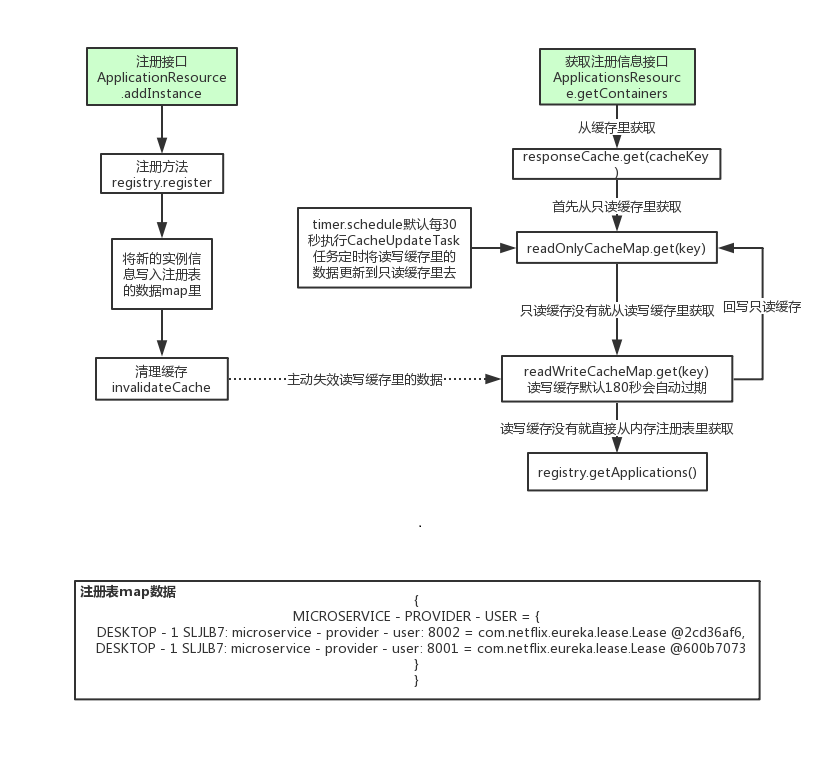
【1】服务端多级缓存设计思想:
1)在拉取注册表的时候:
(1)首先从ReadOnlyCacheMap里查缓存的注册表。
(2)若没有,就找ReadWriteCacheMap里缓存的注册表。
(3)如果还没有,就从内存中获取实际的注册表数据。
2)在注册表发生变更的时候:
(1)会在内存中更新变更的注册表数据,同时过期掉ReadWriteCacheMap。
(2)此过程不会影响ReadOnlyCacheMap提供人家查询注册表。
(3)默认每30秒Eureka Server会将ReadWriteCacheMap更新到ReadOnlyCacheMap里
(4)默认每180秒Eureka Server会将ReadWriteCacheMap里是数据失效
(5)下次有服务拉取注册表,又会从内存中获取最新的数据了,同时填充 各级缓存
3)多级缓存机制的优点:
(1)尽可能保证了内存注册表数据不会出现频繁的读写冲突问题。
(2)并且进一步保证对Eureka Server的大量请求,都是快速从纯内存走,性能极高(可以稍微估计下对于一线互联网公司,内部上千个eureka client实例,每分钟对eureka大几千次的访问,一天就是上千万次的访问)
【2】TimedSupervisorTask定时任务的设计:
1)从整体上看,TimedSupervisorTask是固定间隔的周期性任务,一旦遇到超时就会将下一个周期的间隔时间调大,如果连续超时,那么每次间隔时间都会增大一倍,一直到达外部参数设定的上限为止,一旦新任务不再超时,间隔时间又会自动恢复为初始值,另外还有CAS来控制多线程同步。
【3】增量更新中哈希码检验的设计:
//里面的一致性哈希码,本质上就是校验数据

//如:服务器上全量块存的是【ABCDEFG】,此时它的哈希码便是全量块存的数据的哈希值,增量块存的是【FG】,

//而我们客户端是【ABCD】,增量拉下来再合并,则为【ABCDFG】,得到的哈希值便会与全量哈希值不一致,代表了缺失一部分数据

//故检验不对就会全量拉取
【4】注册表的结构说明(这个仅是记录):
实例信息存放的map,这是个两层的ConcurrentHashMap<String, Map<String,Lease<InstanceInfo>>>,外层map的key是appName,也就是服务名,内层map的key是instanceId,也就是实例名

注册表map数据示例如下:

{

    MICROSERVICE - PROVIDER - USER = {

        DESKTOP - 1 SLJLB7: microservice - provider - user: 8002 = com.netflix.eureka.lease.Lease @2cd36af6,

        DESKTOP - 1 SLJLB7: microservice - provider - user: 8001 = com.netflix.eureka.lease.Lease @600b7073

    },

    MICROSERVICE - PROVIDER - ORDER = {

        DESKTOP - 1 SLJLB7: microservice - provider - order: 8002 = com.netflix.eureka.lease.Lease @2cd36af6,

        DESKTOP - 1 SLJLB7: microservice - provider - order: 8001 = com.netflix.eureka.lease.Lease @600b7073

    }

}
Eureka服务端源码分析
【1】分析注解@EnableEurekaServer是如何开启eurekaServer服务注册功能
@Target(ElementType.TYPE)

@Retention(RetentionPolicy.RUNTIME)

@Documented

@Import(EurekaServerMarkerConfiguration.class)

public @interface EnableEurekaServer {}

//注释有说:这个注解是为了激活Eureka相关的配置类EurekaServerAutoConfiguration类

//但是却是导入了EurekaServerMarkerConfiguration类
【2】分析导入的EurekaServerMarkerConfiguration类
//注释说明:采用Marker的bean去激活EurekaServerAutoConfiguration类

//但实际上并没有做什么,直接去EurekaServerAutoConfiguration类看他是怎么处理的

@Configuration(proxyBeanMethods = false)

public class EurekaServerMarkerConfiguration {

    @Bean

    public Marker eurekaServerMarkerBean() {

        return new Marker();

    }

    class Marker {}

}
【3】分析EurekaServerAutoConfiguration类
@Configuration(proxyBeanMethods = false)

@Import(EurekaServerInitializerConfiguration.class)

//当发现了这里,便明白了,这个配置类要生效是必须要有Marker类的存在

//而且EurekaServerAutoConfiguration类本身是基于SpringBoot的SPI机制,自动导入的

@ConditionalOnBean(EurekaServerMarkerConfiguration.Marker.class)

@EnableConfigurationProperties({ EurekaDashboardProperties.class,InstanceRegistryProperties.class })

@PropertySource("classpath:/eureka/server.properties")

public class EurekaServerAutoConfiguration implements WebMvcConfigurer {...}
【4】分析EurekaServerAutoConfiguration类中的方法
//初始化集群节点集合

@Bean

@ConditionalOnMissingBean

public PeerEurekaNodes peerEurekaNodes(PeerAwareInstanceRegistry registry, ServerCodecs serverCodecs, ReplicationClientAdditionalFilters replicationClientAdditionalFilters) {

    return new RefreshablePeerEurekaNodes(registry, this.eurekaServerConfig,

            this.eurekaClientConfig, serverCodecs, this.applicationInfoManager,

            replicationClientAdditionalFilters);

}

//初始化EurekaServer的相关配置

@Configuration(proxyBeanMethods = false)

protected static class EurekaServerConfigBeanConfiguration {

    @Bean

    @ConditionalOnMissingBean

    public EurekaServerConfig eurekaServerConfig(EurekaClientConfig clientConfig) {

        EurekaServerConfigBean server = new EurekaServerConfigBean();

        if (clientConfig.shouldRegisterWithEureka()) {

            // Set a sensible default if we are supposed to replicate

            server.setRegistrySyncRetries(5);

        }

        return server;

    }

}

//初始化一些接口,用于获取EurekaServer的信息

@Bean

@ConditionalOnProperty(prefix = "eureka.dashboard", name = "enabled", matchIfMissing = true)

public EurekaController eurekaController() {

    return new EurekaController(this.applicationInfoManager);

}

//基于EurekaServer的配置,注册表,集群节点集合,以及服务实例初始化EurekaServer上下文

@Bean

public EurekaServerContext eurekaServerContext(ServerCodecs serverCodecs, PeerAwareInstanceRegistry registry, PeerEurekaNodes peerEurekaNodes) {

    return new DefaultEurekaServerContext(this.eurekaServerConfig, serverCodecs, registry, peerEurekaNodes, this.applicationInfoManager);

}

//初始化经过包装的Eureka原生启动类

@Bean

public EurekaServerBootstrap eurekaServerBootstrap(PeerAwareInstanceRegistry registry, EurekaServerContext serverContext) {

    return new EurekaServerBootstrap(this.applicationInfoManager,

            this.eurekaClientConfig, this.eurekaServerConfig, registry,

            serverContext);

}

//初始化集群注册表

@Bean

public PeerAwareInstanceRegistry peerAwareInstanceRegistry(ServerCodecs serverCodecs) {

    this.eurekaClient.getApplications(); // force initialization

    return new InstanceRegistry(this.eurekaServerConfig, this.eurekaClientConfig,

            serverCodecs, this.eurekaClient,

            this.instanceRegistryProperties.getExpectedNumberOfClientsSendingRenews(),

            this.instanceRegistryProperties.getDefaultOpenForTrafficCount());

}
【5】分析EurekaServerAutoConfiguration类导入的EurekaServerInitializerConfiguration类
//因为实现了SmartLifecycle接口,会在初始化完成后根据isAutoStartup()的返回值确认是否调用start()方法

//故查看EurekaServerInitializerConfiguration类#start()方法

@Override

public void start() {

    new Thread(() -> {

        try {

            //初始化EurekaServer,同时启动Eureka Server

            eurekaServerBootstrap.contextInitialized(EurekaServerInitializerConfiguration.this.servletContext);

            log.info("Started Eureka Server");

            //发送Eureka注册事件

            publish(new EurekaRegistryAvailableEvent(getEurekaServerConfig()));

            // 设置启动的状态为true

            EurekaServerInitializerConfiguration.this.running = true;

            // 发送Eureka Start事件,其他还有各种事件,我们可以监听这种时间,然后做一些特定的业务需求

            publish(new EurekaServerStartedEvent(getEurekaServerConfig()));

        }

        catch (Exception ex) {...}

    }).start();

}

//初始化EurekaServer的运行环境和上下文

//EurekaServerBootstrap类#contextInitialized方法

public void contextInitialized(ServletContext context) {

    try {

        //初始化运行环境

        initEurekaEnvironment();

        //初始化上下文

        initEurekaServerContext();

        context.setAttribute(EurekaServerContext.class.getName(), this.serverContext);

    }

    catch (Throwable e) {

        throw new RuntimeException(...);

    }

}
【6】分析初始化上下文initEurekaServerContext方法做了什么【进行了服务同步,服务剔除的启动】
protected void initEurekaServerContext() throws Exception {

    // For backward compatibility

    JsonXStream.getInstance().registerConverter(new V1AwareInstanceInfoConverter(),

            XStream.PRIORITY_VERY_HIGH);

    XmlXStream.getInstance().registerConverter(new V1AwareInstanceInfoConverter(),

            XStream.PRIORITY_VERY_HIGH);

    if (isAws(this.applicationInfoManager.getInfo())) {

        this.awsBinder = new AwsBinderDelegate(this.eurekaServerConfig,

                this.eurekaClientConfig, this.registry, this.applicationInfoManager);

        this.awsBinder.start();

    }

    //初始化eureka server上下文

    EurekaServerContextHolder.initialize(this.serverContext);

    log.info("Initialized server context");

    // Copy registry from neighboring eureka node

    // 从相邻的eureka节点复制注册表

    int registryCount = this.registry.syncUp();

    // 默认每30秒发送心跳,1分钟就是2次

    // 修改eureka状态为up

    // 同时,这里面会开启一个定时任务,用于清理60秒没有心跳的客户端。自动下线

    // 根据属性值可知是PeerAwareInstanceRegistry类

    this.registry.openForTraffic(this.applicationInfoManager, registryCount);

    // Register all monitoring statistics.

    EurekaMonitors.registerAllStats();

}

//返回了一个EurekaServerContextHolder【其实就是将serverContext设置进入到里面当做属性值】

public static synchronized void initialize(EurekaServerContext serverContext) {

    holder = new EurekaServerContextHolder(serverContext);

}
【7】服务同步的逻辑
//进行服务同步

@Override

public int syncUp() {

    // Copy entire entry from neighboring DS node

    int count = 0;

    //从配置文件中拿到注册的节点

    for (int i = 0; ((i < serverConfig.getRegistrySyncRetries()) && (count == 0)); i++) {

        if (i > 0) {

            try {

                Thread.sleep(serverConfig.getRegistrySyncRetryWaitMs());

            } catch (InterruptedException e) { break; }

        }

        //调用节点的http请求获取所有的服务实例

        Applications apps = eurekaClient.getApplications();

        for (Application app : apps.getRegisteredApplications()) {

            for (InstanceInfo instance : app.getInstances()) {

                try {

                    if (isRegisterable(instance)) {

                        //将其他节点的实例注册到本节点

                        register(instance, instance.getLeaseInfo().getDurationInSecs(), true);

                        count++;

                    }

                } catch (Throwable t) {...}

            }

        }

    }

    return count;

}
【8】服务剔除的逻辑
//进行服务剔除

@Override

public void openForTraffic(ApplicationInfoManager applicationInfoManager, int count) {

    // Renewals happen every 30 seconds and for a minute it should be a factor of 2.

    // 计算每分钟最大续约数

    this.expectedNumberOfClientsSendingRenews = count;

    // 每分钟最小续约数

    updateRenewsPerMinThreshold();

    this.startupTime = System.currentTimeMillis();

    if (count > 0) {

        this.peerInstancesTransferEmptyOnStartup = false;

    }

    DataCenterInfo.Name selfName = applicationInfoManager.getInfo().getDataCenterInfo().getName();

    boolean isAws = Name.Amazon == selfName;

    if (isAws && serverConfig.shouldPrimeAwsReplicaConnections()) {

        primeAwsReplicas(applicationInfoManager);

    }

    logger.info("Changing status to UP");

    // 设置实例的状态为UP

    applicationInfoManager.setInstanceStatus(InstanceStatus.UP);

    // 开启定时任务,默认60秒执行一次,用于清理60秒之内没有续约的实例

    super.postInit();

}

protected void updateRenewsPerMinThreshold() {

    this.numberOfRenewsPerMinThreshold = (int) (this.expectedNumberOfClientsSendingRenews

            * (60.0 / serverConfig.getExpectedClientRenewalIntervalSeconds())

            * serverConfig.getRenewalPercentThreshold());

}

protected void postInit() {

    renewsLastMin.start();

    if (evictionTaskRef.get() != null) {

        evictionTaskRef.get().cancel();

    }

    evictionTaskRef.set(new EvictionTask());

    //服务剔除任务

    //evictionIntervalTimerInMs = 60 * 1000,即每60s执行一次,且延迟60s

    evictionTimer.schedule(evictionTaskRef.get(),

            serverConfig.getEvictionIntervalTimerInMs(),

            serverConfig.getEvictionIntervalTimerInMs());

}

//EvictionTask类#run方法

@Override

public void run() {

    try {

        long compensationTimeMs = getCompensationTimeMs();

        logger.info("Running the evict task with compensationTime {}ms", compensationTimeMs);

        evict(compensationTimeMs);

    } catch (Throwable e) {...}

}

//剔除逻辑

public void evict(long additionalLeaseMs) {

    logger.debug("Running the evict task");

    if (!isLeaseExpirationEnabled()) {

        logger.debug("DS: lease expiration is currently disabled.");

        return;

    }

    // We collect first all expired items, to evict them in random order. For large eviction sets,

    // if we do not that, we might wipe out whole apps before self preservation kicks in. By randomizing it,

    // the impact should be evenly distributed across all applications.

    List<Lease<InstanceInfo>> expiredLeases = new ArrayList<>();

    for (Entry<String, Map<String, Lease<InstanceInfo>>> groupEntry : registry.entrySet()) {

        Map<String, Lease<InstanceInfo>> leaseMap = groupEntry.getValue();

        if (leaseMap != null) {

            for (Entry<String, Lease<InstanceInfo>> leaseEntry : leaseMap.entrySet()) {

                Lease<InstanceInfo> lease = leaseEntry.getValue();

                if (lease.isExpired(additionalLeaseMs) && lease.getHolder() != null) {

                    expiredLeases.add(lease);

                }

            }

        }

    }

    // To compensate for GC pauses or drifting local time, we need to use current registry size as a base for

    // triggering self-preservation. Without that we would wipe out full registry.

    int registrySize = (int) getLocalRegistrySize();

    int registrySizeThreshold = (int) (registrySize * serverConfig.getRenewalPercentThreshold());

    int evictionLimit = registrySize - registrySizeThreshold;

    int toEvict = Math.min(expiredLeases.size(), evictionLimit);

    if (toEvict > 0) {

        logger.info("Evicting {} items (expired={}, evictionLimit={})", toEvict, expiredLeases.size(), evictionLimit);

        Random random = new Random(System.currentTimeMillis());

        for (int i = 0; i < toEvict; i++) {

            // Pick a random item (Knuth shuffle algorithm)

            int next = i + random.nextInt(expiredLeases.size() - i);

            Collections.swap(expiredLeases, i, next);

            Lease<InstanceInfo> lease = expiredLeases.get(i);

            String appName = lease.getHolder().getAppName();

            String id = lease.getHolder().getId();

            EXPIRED.increment();

            logger.warn("DS: Registry: expired lease for {}/{}", appName, id);

            internalCancel(appName, id, false);

        }

    }

}
Eureka客户端源码分析
【1】根据SpringBoot自动装配先找出所有会调用的类
org.springframework.boot.autoconfigure.EnableAutoConfiguration=\

org.springframework.cloud.netflix.eureka.config.EurekaClientConfigServerAutoConfiguration,\

org.springframework.cloud.netflix.eureka.config.EurekaDiscoveryClientConfigServiceAutoConfiguration,\

org.springframework.cloud.netflix.eureka.EurekaClientAutoConfiguration,\

org.springframework.cloud.netflix.ribbon.eureka.RibbonEurekaAutoConfiguration,\

org.springframework.cloud.netflix.eureka.EurekaDiscoveryClientConfiguration,\

org.springframework.cloud.netflix.eureka.reactive.EurekaReactiveDiscoveryClientConfiguration,\

org.springframework.cloud.netflix.eureka.loadbalancer.LoadBalancerEurekaAutoConfiguration

org.springframework.cloud.bootstrap.BootstrapConfiguration=\

org.springframework.cloud.netflix.eureka.config.EurekaDiscoveryClientConfigServiceBootstrapConfiguration
【2】找到对应的自动装配类EurekaClientAutoConfiguration类
@Configuration(proxyBeanMethods = false)

@EnableConfigurationProperties

@ConditionalOnClass(EurekaClientConfig.class)

@Import(DiscoveryClientOptionalArgsConfiguration.class)

@ConditionalOnProperty(value = "eureka.client.enabled", matchIfMissing = true)

@ConditionalOnDiscoveryEnabled

@AutoConfigureBefore({ NoopDiscoveryClientAutoConfiguration.class,

        CommonsClientAutoConfiguration.class, ServiceRegistryAutoConfiguration.class })

@AutoConfigureAfter(name = {

        "org.springframework.cloud.autoconfigure.RefreshAutoConfiguration",

        "org.springframework.cloud.netflix.eureka.EurekaDiscoveryClientConfiguration",

        "org.springframework.cloud.client.serviceregistry.AutoServiceRegistrationAutoConfiguration" })

public class EurekaClientAutoConfiguration {

    //初始化EurekaClient的相关配置

    @Bean

    @ConditionalOnMissingBean(value = EurekaClientConfig.class,

            search = SearchStrategy.CURRENT)

    public EurekaClientConfigBean eurekaClientConfigBean(ConfigurableEnvironment env) {

        EurekaClientConfigBean client = new EurekaClientConfigBean();

        if ("bootstrap".equals(this.env.getProperty("spring.config.name"))) {

            // We don't register during bootstrap by default, but there will be another

            // chance later.

            client.setRegisterWithEureka(false);

        }

        return client;

    }

    //Client启动时的自动注册Bean

    @Bean

    @ConditionalOnBean(AutoServiceRegistrationProperties.class)

    @ConditionalOnProperty(value = "spring.cloud.service-registry.auto-registration.enabled", matchIfMissing = true)

    public EurekaAutoServiceRegistration eurekaAutoServiceRegistration(

            ApplicationContext context, EurekaServiceRegistry registry,

            EurekaRegistration registration) {

        return new EurekaAutoServiceRegistration(context, registry, registration);

    }

    //EurekaClient配置类

    @Configuration(proxyBeanMethods = false)

    @ConditionalOnMissingRefreshScope

    protected static class EurekaClientConfiguration {

        @Autowired

        private ApplicationContext context;

        @Autowired

        private AbstractDiscoveryClientOptionalArgs<?> optionalArgs;

        @Bean(destroyMethod = "shutdown")

        @ConditionalOnMissingBean(value = EurekaClient.class,search = SearchStrategy.CURRENT)

        public EurekaClient eurekaClient(ApplicationInfoManager manager, EurekaClientConfig config) {

            return new CloudEurekaClient(manager, config, this.optionalArgs, this.context);

        }

        @Bean

        @ConditionalOnMissingBean(value = ApplicationInfoManager.class, search = SearchStrategy.CURRENT)

        public ApplicationInfoManager eurekaApplicationInfoManager(EurekaInstanceConfig config) {

            InstanceInfo instanceInfo = new InstanceInfoFactory().create(config);

            return new ApplicationInfoManager(config, instanceInfo);

        }

        @Bean

        @ConditionalOnBean(AutoServiceRegistrationProperties.class)

        @ConditionalOnProperty(value = "spring.cloud.service-registry.auto-registration.enabled", matchIfMissing = true)

        public EurekaRegistration eurekaRegistration(EurekaClient eurekaClient, CloudEurekaInstanceConfig instanceConfig, ApplicationInfoManager applicationInfoManager, @Autowired( required = false) ObjectProvider<HealthCheckHandler> healthCheckHandler) {

            return EurekaRegistration.builder(instanceConfig).with(applicationInfoManager)

                    .with(eurekaClient).with(healthCheckHandler).build();

        }

    }

....

}
【2.1】分析注解@AutoConfigureAfter导入的EurekaDiscoveryClientConfiguration类做了什么
@Configuration(proxyBeanMethods = false)

@EnableConfigurationProperties

@ConditionalOnClass(EurekaClientConfig.class)

@ConditionalOnProperty(value = "eureka.client.enabled", matchIfMissing = true)

@ConditionalOnDiscoveryEnabled

@ConditionalOnBlockingDiscoveryEnabled

public class EurekaDiscoveryClientConfiguration {

    //基于EurekaClientAutoConfiguration的启动标志

    @Deprecated

    @Bean

    public Marker eurekaDiscoverClientMarker() {

        return new Marker();

    }

    //将EurekaClient包装成EurekaDiscoveryClient

    @Bean

    @ConditionalOnMissingBean

    public EurekaDiscoveryClient discoveryClient(EurekaClient client,

            EurekaClientConfig clientConfig) {

        return new EurekaDiscoveryClient(client, clientConfig);

    }

    //心跳检测的处理配置

    @Configuration(proxyBeanMethods = false)

    @ConditionalOnProperty(value = "eureka.client.healthcheck.enabled",matchIfMissing = false)

    protected static class EurekaHealthCheckHandlerConfiguration {

        @Autowired(required = false)

        private StatusAggregator statusAggregator = new SimpleStatusAggregator();

        @Bean

        @ConditionalOnMissingBean(HealthCheckHandler.class)

        public EurekaHealthCheckHandler eurekaHealthCheckHandler() {

            return new EurekaHealthCheckHandler(this.statusAggregator);

        }

    }

    @Deprecated

    class Marker {

    }

    //定义了Client配置重刷的监听器

    @Configuration(proxyBeanMethods = false)

    @ConditionalOnClass(RefreshScopeRefreshedEvent.class)

    protected static class EurekaClientConfigurationRefresher implements ApplicationListener<RefreshScopeRefreshedEvent> {

        ....

    }

}

//看得出来包装也只是将配置和客户端放在了一起

public EurekaDiscoveryClient(EurekaClient eurekaClient,

        EurekaClientConfig clientConfig) {

    this.clientConfig = clientConfig;

    this.eurekaClient = eurekaClient;

}
【3】分析EurekaClient的相关配置EurekaClientConfigBean类
//仅列举了部分

@ConfigurationProperties(EurekaClientConfigBean.PREFIX)

public class EurekaClientConfigBean implements EurekaClientConfig, Ordered {

    //客户端配置前缀

    public static final String PREFIX = "eureka.client";

    //public static final String DEFAULT_PREFIX = "/eureka";

    //默认的注册地址

    public static final String DEFAULT_URL = "http://localhost:8761" + DEFAULT_PREFIX + "/";

    //默认域

    public static final String DEFAULT_ZONE = "defaultZone";

    private static final int MINUTES = 60;

    //多长时间从注册中心服务端拉取一次服务信息,单位秒;这个就是主动拉取注册中心上所有服务的实例信息

    private int registryFetchIntervalSeconds = 30;

    //多长时间复制实例变化到eureka服务端,单位秒;这个配置是复制实例信息到注册中心

    private int instanceInfoReplicationIntervalSeconds = 30;

    //实例初始化复制信息到eureka服务端的间隔时间,所以可以看到,其实实例的初始化阶段不是立即复制实例信息到注册中心的,单位秒

    private int initialInstanceInfoReplicationIntervalSeconds = 40;

    //eureka服务端的变化,多长时间,客户端会获取一次eureka服务的信息

    private int eurekaServiceUrlPollIntervalSeconds = 5 * MINUTES;

    //eureka server的代理端口

    private String proxyPort;

    //eureka server的代理host name

    private String proxyHost;

    //账号

    private String proxyUserName;

    //密码

    private String proxyPassword;

    //从server读取所需的超时时间

    private int eurekaServerReadTimeoutSeconds = 8;

    //连接server的超时时间

    private int eurekaServerConnectTimeoutSeconds = 5;

    //被允许连接到所有server host的总连接数

    private int eurekaServerTotalConnections = 200;

    // 被允许连接到每一个server host的总连接数

    private int eurekaServerTotalConnectionsPerHost = 50;

    //连接到server的http连接的空闲超时时间,超时会被清理掉

    private int eurekaConnectionIdleTimeoutSeconds = 30;

    //heartbeatExecutor 心跳的线程数

    private int heartbeatExecutorThreadPoolSize = 2;

    //客户端初始化阶段强制注册,默认关闭

    private boolean shouldEnforceRegistrationAtInit = false;

...

}
【4】分析EurekaClientConfiguration配置类里面生成的EurekaClient的Bean
//CloudEurekaClient类【继承DiscoveryClient类】#构造方法

public CloudEurekaClient(ApplicationInfoManager applicationInfoManager, EurekaClientConfig config, AbstractDiscoveryClientOptionalArgs<?> args, ApplicationEventPublisher publisher) {

    super(applicationInfoManager, config, args);

    this.applicationInfoManager = applicationInfoManager;

    this.publisher = publisher;

    this.eurekaTransportField = ReflectionUtils.findField(DiscoveryClient.class,

            "eurekaTransport");

    ReflectionUtils.makeAccessible(this.eurekaTransportField);

}

//DiscoveryClient类【继承EurekaClient(原生的EurekaClient)】#构造方法

public DiscoveryClient(ApplicationInfoManager applicationInfoManager, final EurekaClientConfig config, AbstractDiscoveryClientOptionalArgs args) {

    this(applicationInfoManager, config, args, ResolverUtils::randomize);

}

public DiscoveryClient(ApplicationInfoManager applicationInfoManager, final EurekaClientConfig config, AbstractDiscoveryClientOptionalArgs args, EndpointRandomizer randomizer) {

    //主要是这个this指向,毕竟里面的都是方法传参

    this(applicationInfoManager, config, args, new Provider<BackupRegistry>() {

        private volatile BackupRegistry backupRegistryInstance;

        @Override

        public synchronized BackupRegistry get() {

            if (backupRegistryInstance == null) {

                String backupRegistryClassName = config.getBackupRegistryImpl();

                if (null != backupRegistryClassName) {

                    try {

                        backupRegistryInstance = (BackupRegistry) Class.forName(backupRegistryClassName).newInstance();

                        logger.info("Enabled backup registry of type {}", backupRegistryInstance.getClass());

                    } catch (InstantiationException e) {..} catch (IllegalAccessException e) {..} catch (ClassNotFoundException e) {...}

                }

                if (backupRegistryInstance == null) {

                    logger.warn("Using default backup registry implementation which does not do anything.");

                    backupRegistryInstance = new NotImplementedRegistryImpl();

                }

            }

            return backupRegistryInstance;

        }

    }, randomizer);

}
【5】分析DiscoveryClient的构造方法
@Inject

DiscoveryClient(ApplicationInfoManager applicationInfoManager, EurekaClientConfig config, AbstractDiscoveryClientOptionalArgs args, Provider<BackupRegistry> backupRegistryProvider, EndpointRandomizer endpointRandomizer) {

    if (args != null) {

        this.healthCheckHandlerProvider = args.healthCheckHandlerProvider;

        this.healthCheckCallbackProvider = args.healthCheckCallbackProvider;

        this.eventListeners.addAll(args.getEventListeners());

        this.preRegistrationHandler = args.preRegistrationHandler;

    } else {

        this.healthCheckCallbackProvider = null;

        this.healthCheckHandlerProvider = null;

        this.preRegistrationHandler = null;

    }

    this.applicationInfoManager = applicationInfoManager;

    InstanceInfo myInfo = applicationInfoManager.getInfo();

    clientConfig = config;

    staticClientConfig = clientConfig;

    transportConfig = config.getTransportConfig();

    instanceInfo = myInfo;

    if (myInfo != null) {

        appPathIdentifier = instanceInfo.getAppName() + "/" + instanceInfo.getId();

    } else {...}

    this.backupRegistryProvider = backupRegistryProvider;

    this.endpointRandomizer = endpointRandomizer;

    this.urlRandomizer = new EndpointUtils.InstanceInfoBasedUrlRandomizer(instanceInfo);

    localRegionApps.set(new Applications());

    fetchRegistryGeneration = new AtomicLong(0);

    remoteRegionsToFetch = new AtomicReference<String>(clientConfig.fetchRegistryForRemoteRegions());

    remoteRegionsRef = new AtomicReference<>(remoteRegionsToFetch.get() == null ? null : remoteRegionsToFetch.get().split(","));

    if (config.shouldFetchRegistry()) {

        this.registryStalenessMonitor = new ThresholdLevelsMetric(this, METRIC_REGISTRY_PREFIX + "lastUpdateSec_", new long[]{15L, 30L, 60L, 120L, 240L, 480L});

    } else {

        this.registryStalenessMonitor = ThresholdLevelsMetric.NO_OP_METRIC;

    }

    if (config.shouldRegisterWithEureka()) {

        this.heartbeatStalenessMonitor = new ThresholdLevelsMetric(this, METRIC_REGISTRATION_PREFIX + "lastHeartbeatSec_", new long[]{15L, 30L, 60L, 120L, 240L, 480L});

    } else {

        this.heartbeatStalenessMonitor = ThresholdLevelsMetric.NO_OP_METRIC;

    }

    //从这里开始初始化Eureka Client

    if (!config.shouldRegisterWithEureka() && !config.shouldFetchRegistry()) {

        logger.info("Client configured to neither register nor query for data.");

        scheduler = null;

        heartbeatExecutor = null;

        cacheRefreshExecutor = null;

        eurekaTransport = null;

        instanceRegionChecker = new InstanceRegionChecker(new PropertyBasedAzToRegionMapper(config), clientConfig.getRegion());

        // This is a bit of hack to allow for existing code using DiscoveryManager.getInstance()

        // to work with DI'd DiscoveryClient

        DiscoveryManager.getInstance().setDiscoveryClient(this);

        DiscoveryManager.getInstance().setEurekaClientConfig(config);

        initTimestampMs = System.currentTimeMillis();

        logger.info("Discovery Client initialized at timestamp {} with initial instances count: {}",

                initTimestampMs, this.getApplications().size());

        return;  // no need to setup up an network tasks and we are done

    }

    try {

        // default size of 2 - 1 each for heartbeat and cacheRefresh

        scheduler = Executors.newScheduledThreadPool(2,

                new ThreadFactoryBuilder()

                        .setNameFormat("DiscoveryClient-%d")

                        .setDaemon(true)

                        .build());

        //心跳的线程池

        heartbeatExecutor = new ThreadPoolExecutor(

                1, clientConfig.getHeartbeatExecutorThreadPoolSize(), 0, TimeUnit.SECONDS,

                new SynchronousQueue<Runnable>(),

                new ThreadFactoryBuilder()

                        .setNameFormat("DiscoveryClient-HeartbeatExecutor-%d")

                        .setDaemon(true)

                        .build()

        );  // use direct handoff

        //缓存重刷的线程池

        cacheRefreshExecutor = new ThreadPoolExecutor(

                1, clientConfig.getCacheRefreshExecutorThreadPoolSize(), 0, TimeUnit.SECONDS,

                new SynchronousQueue<Runnable>(),

                new ThreadFactoryBuilder()

                        .setNameFormat("DiscoveryClient-CacheRefreshExecutor-%d")

                        .setDaemon(true)

                        .build()

        );  // use direct handoff

        eurekaTransport = new EurekaTransport();

        scheduleServerEndpointTask(eurekaTransport, args);

        AzToRegionMapper azToRegionMapper;

        if (clientConfig.shouldUseDnsForFetchingServiceUrls()) {

            azToRegionMapper = new DNSBasedAzToRegionMapper(clientConfig);

        } else {

            azToRegionMapper = new PropertyBasedAzToRegionMapper(clientConfig);

        }

        if (null != remoteRegionsToFetch.get()) {

            azToRegionMapper.setRegionsToFetch(remoteRegionsToFetch.get().split(","));

        }

        instanceRegionChecker = new InstanceRegionChecker(azToRegionMapper, clientConfig.getRegion());

    } catch (Throwable e) {

        throw new RuntimeException("Failed to initialize DiscoveryClient!", e);

    }

    if (clientConfig.shouldFetchRegistry() && !fetchRegistry(false)) {

        fetchRegistryFromBackup();

    }

    // call and execute the pre registration handler before all background tasks (inc registration) is started

    if (this.preRegistrationHandler != null) {

        this.preRegistrationHandler.beforeRegistration();

    }

    if (clientConfig.shouldRegisterWithEureka() && clientConfig.shouldEnforceRegistrationAtInit()) {

        try {

            if (!register() ) {

                throw new IllegalStateException("Registration error at startup. Invalid server response.");

            }

        } catch (Throwable th) {...}

    }

    // finally, init the schedule tasks (e.g. cluster resolvers, heartbeat, instanceInfo replicator, fetch

    //最核心代码,初始化定时任务

    initScheduledTasks();

    try {

        Monitors.registerObject(this);

    } catch (Throwable e) {...}

    DiscoveryManager.getInstance().setDiscoveryClient(this);

    DiscoveryManager.getInstance().setEurekaClientConfig(config);

    initTimestampMs = System.currentTimeMillis();

}
【6】核心逻辑initScheduledTasks初始化定时任务,是做了什么
/**

 * Initializes all scheduled tasks.

 */

private void initScheduledTasks() {

    //获取服务注册列表信息

    if (clientConfig.shouldFetchRegistry()) {

        //服务注册列表更新的周期时间

        //默认是30

        int registryFetchIntervalSeconds = clientConfig.getRegistryFetchIntervalSeconds();

        int expBackOffBound = clientConfig.getCacheRefreshExecutorExponentialBackOffBound();

        //定时更新服务注册列表

        //这里的延时任务明显是只调用一次,具体在分析他的任务的run方法

        scheduler.schedule(

                new TimedSupervisorTask(

                        "cacheRefresh",

                        scheduler,

                        cacheRefreshExecutor,

                        registryFetchIntervalSeconds,

                        TimeUnit.SECONDS,

                        expBackOffBound,

                        new CacheRefreshThread()   //该线程执行更新的具体逻辑

                ),

                registryFetchIntervalSeconds, TimeUnit.SECONDS);

    }

    if (clientConfig.shouldRegisterWithEureka()) {

        //服务续约的周期时间

        int renewalIntervalInSecs = instanceInfo.getLeaseInfo().getRenewalIntervalInSecs();

        int expBackOffBound = clientConfig.getHeartbeatExecutorExponentialBackOffBound();

        //应用启动可见此日志,内容是:Starting heartbeat executor: renew interval is: 30

        logger.info("Starting heartbeat executor: " + "renew interval is: {}", renewalIntervalInSecs);

        // Heartbeat timer

        // 服务定时续约

        scheduler.schedule(

                new TimedSupervisorTask(

                        "heartbeat",

                        scheduler,

                        heartbeatExecutor,

                        renewalIntervalInSecs,

                        TimeUnit.SECONDS,

                        expBackOffBound,

                        new HeartbeatThread()  //该线程执行续约的具体逻辑

                ),

                renewalIntervalInSecs, TimeUnit.SECONDS);

        //这个Runable中含有服务注册的逻辑

        instanceInfoReplicator = new InstanceInfoReplicator(

                this,

                instanceInfo,

                clientConfig.getInstanceInfoReplicationIntervalSeconds(),

                2); // burstSize

        statusChangeListener = new ApplicationInfoManager.StatusChangeListener() {

            @Override

            public String getId() {

                return "statusChangeListener";

            }

            @Override

            public void notify(StatusChangeEvent statusChangeEvent) {

                if (InstanceStatus.DOWN == statusChangeEvent.getStatus() || InstanceStatus.DOWN == statusChangeEvent.getPreviousStatus()) {

                    // log at warn level if DOWN was involved

                    logger.warn("Saw local status change event {}", statusChangeEvent);

                } else {

                    logger.info("Saw local status change event {}", statusChangeEvent);

                }

                instanceInfoReplicator.onDemandUpdate();

            }

        };

        if (clientConfig.shouldOnDemandUpdateStatusChange()) {

            applicationInfoManager.registerStatusChangeListener(statusChangeListener);

        }

        //服务注册

        instanceInfoReplicator.start(clientConfig.getInitialInstanceInfoReplicationIntervalSeconds());

    } else {

        logger.info("Not registering with Eureka server per configuration");

    }

}
【6.1】定时任务TimedSupervisorTask类的设计
//TimedSupervisorTask类#run方法

//这里存在一个设计的亮点

public class TimedSupervisorTask extends TimerTask {

    ...

    public TimedSupervisorTask(String name, ScheduledExecutorService scheduler, ThreadPoolExecutor executor,

                               int timeout, TimeUnit timeUnit, int expBackOffBound, Runnable task) {

        this.scheduler = scheduler;

        this.executor = executor;

        this.timeoutMillis = timeUnit.toMillis(timeout);

        this.task = task;  //可以看出任务还是需要根据传入来的

        this.delay = new AtomicLong(timeoutMillis);

        this.maxDelay = timeoutMillis * expBackOffBound;

        // Initialize the counters and register.

        successCounter = Monitors.newCounter("success");

        timeoutCounter = Monitors.newCounter("timeouts");

        rejectedCounter = Monitors.newCounter("rejectedExecutions");

        throwableCounter = Monitors.newCounter("throwables");

        threadPoolLevelGauge = new LongGauge(MonitorConfig.builder("threadPoolUsed").build());

        Monitors.registerObject(name, this);

    }

    @Override

    public void run() {

        Future<?> future = null;

        try {

            future = executor.submit(task);

            threadPoolLevelGauge.set((long) executor.getActiveCount());

            //设置了超时时间

            future.get(timeoutMillis, TimeUnit.MILLISECONDS);  // block until done or timeout

            //出现任务不超时的情况又会将延迟时间重置(这里主要是配合下面捕捉异常的超时翻倍情况)

            delay.set(timeoutMillis);

            threadPoolLevelGauge.set((long) executor.getActiveCount());

            successCounter.increment();

        } catch (TimeoutException e) {

            logger.warn("task supervisor timed out", e);

            //出现超时的记录

            timeoutCounter.increment();

            //将超时时间翻倍(在最大的任务时间内),主动延迟

            long currentDelay = delay.get();

            long newDelay = Math.min(maxDelay, currentDelay * 2);

            //设置为最新的值,考虑到多线程,所以用了CAS

            delay.compareAndSet(currentDelay, newDelay);

        } catch (RejectedExecutionException e) {

            //一旦线程池的阻塞队列中放满了待处理任务,触发了拒绝策略,就会将调度器停掉

            if (executor.isShutdown() || scheduler.isShutdown()) {

                logger.warn("task supervisor shutting down, reject the task", e);

            } else {

                logger.warn("task supervisor rejected the task", e);

            }

            //被拒绝的次数

            rejectedCounter.increment();

        } catch (Throwable e) {

            if (executor.isShutdown() || scheduler.isShutdown()) {

                logger.warn("task supervisor shutting down, can't accept the task");

            } else {

                logger.warn("task supervisor threw an exception", e);

            }

            throwableCounter.increment();

        } finally {

            if (future != null) {

                //这里任务要么执行完毕,要么发生异常,都用cancel方法来清理任务;

                future.cancel(true);

            }

            //只要调度器没有停止,就再指定等待时间之后在执行一次同样的任务

            //任务里面又塞入这个任务

            if (!scheduler.isShutdown()) {

                //假设外部调用时传入的超时时间为30秒(构造方法的入参timeout),最大间隔时间为50秒(构造方法的入参expBackOffBound)

                //如果最近一次任务没有超时,那么就在30秒后开始新任务,

                //如果最近一次任务超时了,那么就在50秒后开始新任务(异常处理中有个乘以二的操作,乘以二后的60秒超过了最大间隔50秒)

                scheduler.schedule(this, delay.get(), TimeUnit.MILLISECONDS);

            }

        }

    }

}
【6.2】分析更新服务注册列表任务 CacheRefreshThread【获取服务逻辑】
//DiscoveryClient类的内置类

class CacheRefreshThread implements Runnable {

    public void run() {

        refreshRegistry();

    }

}

//DiscoveryClient类#refreshRegistry方法

@VisibleForTesting

void refreshRegistry() {

    try {

        boolean isFetchingRemoteRegionRegistries = isFetchingRemoteRegionRegistries();

        boolean remoteRegionsModified = false;

        // This makes sure that a dynamic change to remote regions to fetch is honored.

        String latestRemoteRegions = clientConfig.fetchRegistryForRemoteRegions();

        //不做aws环境的配置这个if逻辑不会执行

        if (null != latestRemoteRegions) {

            String currentRemoteRegions = remoteRegionsToFetch.get();

            if (!latestRemoteRegions.equals(currentRemoteRegions)) {

                // Both remoteRegionsToFetch and AzToRegionMapper.regionsToFetch need to be in sync

                synchronized (instanceRegionChecker.getAzToRegionMapper()) {

                    if (remoteRegionsToFetch.compareAndSet(currentRemoteRegions, latestRemoteRegions)) {

                        String[] remoteRegions = latestRemoteRegions.split(",");

                        remoteRegionsRef.set(remoteRegions);

                        instanceRegionChecker.getAzToRegionMapper().setRegionsToFetch(remoteRegions);

                        remoteRegionsModified = true;

                    } else {....}

                }

            } else {

                // Just refresh mapping to reflect any DNS/Property change

                instanceRegionChecker.getAzToRegionMapper().refreshMapping();

            }

        }

        //获取注册信息方法

        boolean success = fetchRegistry(remoteRegionsModified);

        if (success) {

            registrySize = localRegionApps.get().size();

            lastSuccessfulRegistryFetchTimestamp = System.currentTimeMillis();

        }

        if (logger.isDebugEnabled()) {...省略日志内容...}

    } catch (Throwable e) {...}

}

private boolean fetchRegistry(boolean forceFullRegistryFetch) {

    Stopwatch tracer = FETCH_REGISTRY_TIMER.start();

    try {

        // 如果增量被禁用,或者是第一次,那么获取所有应用程序

        // 取出本地缓存之前获取的服务列表信息

        Applications applications = getApplications();

        //是否禁用增量更新

        if (clientConfig.shouldDisableDelta()

                || (!Strings.isNullOrEmpty(clientConfig.getRegistryRefreshSingleVipAddress()))

                || forceFullRegistryFetch

                //是否第一次拉取

                || (applications == null)

                || (applications.getRegisteredApplications().size() == 0)

                || (applications.getVersion() == -1)) //Client application does not have latest library supporting delta

        {

            //全量获取

            getAndStoreFullRegistry();

        } else {

            //增量获取

            getAndUpdateDelta(applications);

        }

        //更新本地缓存

        applications.setAppsHashCode(applications.getReconcileHashCode());

        logTotalInstances();

    } catch (Throwable e) {

        return false;

    } finally {

        if (tracer != null) {

            tracer.stop();

        }

    }

    // Notify about cache refresh before updating the instance remote status

    //将本地缓存更新的事件广播给所有已注册的监听器,注意该方法已被CloudEurekaClient类重写

    onCacheRefreshed();

    // Update remote status based on refreshed data held in the cache

    //检查刚刚更新的缓存中,有来自Eureka server的服务列表,其中包含了当前应用的状态,

    //当前实例的成员变量lastRemoteInstanceStatus,记录的是最后一次更新的当前应用状态,

    //上述两种状态在updateInstanceRemoteStatus方法中作比较 ,如果不一致,就更新lastRemoteInstanceStatus,并且广播对应的事件

    updateInstanceRemoteStatus();

    // registry was fetched successfully, so return true

    return true;

}

@Override

public Applications getApplications() {

    return localRegionApps.get();

}
【6.2.1】分析全量更新
private void getAndStoreFullRegistry() throws Throwable {

    long currentUpdateGeneration = fetchRegistryGeneration.get();

    Applications apps = null;

    //由于并没有配置特别关注的region信息,因此会调用eurekaTransport.queryClient.getApplications方法从服务端获取服务列表

    EurekaHttpResponse<Applications> httpResponse = clientConfig.getRegistryRefreshSingleVipAddress() == null

            ? eurekaTransport.queryClient.getApplications(remoteRegionsRef.get())

            : eurekaTransport.queryClient.getVip(clientConfig.getRegistryRefreshSingleVipAddress(), remoteRegionsRef.get());

    if (httpResponse.getStatusCode() == Status.OK.getStatusCode()) {

        //返回对象就是服务列表

        apps = httpResponse.getEntity();

    }

    logger.info("The response status is {}", httpResponse.getStatusCode());

    if (apps == null) {...}

    else if (fetchRegistryGeneration.compareAndSet(currentUpdateGeneration, currentUpdateGeneration + 1)) {

        //考虑到多线程同步,只有CAS成功的线程,才会把自己从Eureka server获取的数据来替换本地缓存

        localRegionApps.set(this.filterAndShuffle(apps));

    } else {...}

}

//EurekaHttpClientDecorator类#getApplications方法

@Override

public EurekaHttpResponse<Applications> getApplications(final String... regions) {

    //这里面涉及到配置是否重试

    return execute(new RequestExecutor<Applications>() {

        @Override

        public EurekaHttpResponse<Applications> execute(EurekaHttpClient delegate) {

            //调用AbstractJerseyEurekaHttpClient类

            return delegate.getApplications(regions);

        }

        @Override

        public RequestType getRequestType() {

            return RequestType.GetApplications;

        }

    });

}

@Override

public EurekaHttpResponse<Applications> getApplications(String... regions) {

    //取增量数据的path是"apps/delta"

    return getApplicationsInternal("apps/", regions);

}

//具体的请求响应处理都在此方法中

private EurekaHttpResponse<Applications> getApplicationsInternal(String urlPath, String[] regions) {

    ClientResponse response = null;

    String regionsParamValue = null;

    try {

        //jersey、resource这些关键词都预示着这是个restful请求

        WebResource webResource = jerseyClient.resource(serviceUrl).path(urlPath);

        if (regions != null && regions.length > 0) {

            regionsParamValue = StringUtil.join(regions);

            webResource = webResource.queryParam("regions", regionsParamValue);

        }

        Builder requestBuilder = webResource.getRequestBuilder();

        addExtraHeaders(requestBuilder);

        //发起网络请求,将响应封装成ClientResponse实例

        response = requestBuilder.accept(MediaType.APPLICATION_JSON_TYPE).get(ClientResponse.class);

        Applications applications = null;

        if (response.getStatus() == Status.OK.getStatusCode() && response.hasEntity()) {

            //取得全部应用信息

            applications = response.getEntity(Applications.class);

        }

        return anEurekaHttpResponse(response.getStatus(), Applications.class)

                .headers(headersOf(response))

                .entity(applications)

                .build();

    } finally {

        if (response != null) {

            response.close();

        }

    }

}

//总结:获取全量数据,是通过jersey-client库的API向Eureka server发起restful请求http://localhost:8761/eureka/apps实现的,并将响应的服务列表数据放在一个成员变量中作为本地缓存
【6.2.2】分析增量更新
//分析增量更新

//里面的一致性哈希码,本质上就是校验数据

//如:服务器上全量块存的是【ABCDEFG】,此时它的哈希码便是全量块存的数据的哈希值,增量块存的是【FG】,

//而我们客户端是【ABCD】,增量拉下来再合并,则为【ABCDFG】,得到的哈希值便会与全量哈希值不一致,代表了缺失一部分数据

//故检验不对就会全量拉取

private void getAndUpdateDelta(Applications applications) throws Throwable {

    long currentUpdateGeneration = fetchRegistryGeneration.get();

    Applications delta = null;

    //增量信息是通过eurekaTransport.queryClient.getDelta方法完成的

    EurekaHttpResponse<Applications> httpResponse = eurekaTransport.queryClient.getDelta(remoteRegionsRef.get());

    if (httpResponse.getStatusCode() == Status.OK.getStatusCode()) {

        //delta中保存了Eureka server返回的增量更新

        delta = httpResponse.getEntity();

    }

    //如果没有

    if (delta == null) {

        //如果增量信息为空,就直接发起一次全量更新

        getAndStoreFullRegistry();

    }

    //考虑到多线程同步问题,这里通过CAS来确保请求发起到现在是线程安全的,

    //如果这期间fetchRegistryGeneration变了,就表示其他线程也做了类似操作,因此放弃本次响应的数据

    else if (fetchRegistryGeneration.compareAndSet(currentUpdateGeneration, currentUpdateGeneration + 1)) {

        logger.debug("Got delta update with apps hashcode {}", delta.getAppsHashCode());

        String reconcileHashCode = "";

        if (fetchRegistryUpdateLock.tryLock()) {

            try {

                //用Eureka返回的增量数据和本地数据做合并操作

                updateDelta(delta);

                //用合并了增量数据之后的本地数据来生成一致性哈希码

                reconcileHashCode = getReconcileHashCode(applications);

            } finally {

                fetchRegistryUpdateLock.unlock();

            }

        } else {...}

        //Eureka server在返回增量更新数据时,也会返回服务端的一致性哈希码,

        //理论上每次本地缓存数据经历了多次增量更新后,计算出的一致性哈希码应该是和服务端一致的,

        //如果发现不一致,就证明本地缓存的服务列表信息和Eureka server不一致了,需要做一次全量更新

        if (!reconcileHashCode.equals(delta.getAppsHashCode()) || clientConfig.shouldLogDeltaDiff()) {

            //一致性哈希码不同,就在reconcileAndLogDifference方法中做全量更新

            reconcileAndLogDifference(delta, reconcileHashCode);  // this makes a remoteCall

        }

    } else {...}

}

//updateDelta方法将增量更新数据和本地数据做合并

private void updateDelta(Applications delta) {

    int deltaCount = 0;

    //遍历所有服务

    for (Application app : delta.getRegisteredApplications()) {

        //遍历当前服务的所有实例

        for (InstanceInfo instance : app.getInstances()) {

            //取出缓存的所有服务列表,用于合并

            Applications applications = getApplications();

            String instanceRegion = instanceRegionChecker.getInstanceRegion(instance);

            //判断正在处理的实例和当前应用是否在同一个region

            if (!instanceRegionChecker.isLocalRegion(instanceRegion)) {

                //如果不是同一个region,接下来合并的数据就换成专门为其他region准备的缓存

                Applications remoteApps = remoteRegionVsApps.get(instanceRegion);

                if (null == remoteApps) {

                    remoteApps = new Applications();

                    remoteRegionVsApps.put(instanceRegion, remoteApps);

                }

                applications = remoteApps;

            }

            ++deltaCount;

             //对新增的实例的处理

            if (ActionType.ADDED.equals(instance.getActionType())) {

                Application existingApp = applications.getRegisteredApplications(instance.getAppName());

                if (existingApp == null) {

                    applications.addApplication(app);

                }

                logger.debug("Added instance {} to the existing apps in region {}", instance.getId(), instanceRegion);

                applications.getRegisteredApplications(instance.getAppName()).addInstance(instance);

            }

             //对修改实例的处理

            else if (ActionType.MODIFIED.equals(instance.getActionType())) {

                Application existingApp = applications.getRegisteredApplications(instance.getAppName());

                if (existingApp == null) {

                    applications.addApplication(app);

                }

                logger.debug("Modified instance {} to the existing apps ", instance.getId());

                applications.getRegisteredApplications(instance.getAppName()).addInstance(instance);

            }

            //对删除实例的处理

            else if (ActionType.DELETED.equals(instance.getActionType())) {

                Application existingApp = applications.getRegisteredApplications(instance.getAppName());

                if (existingApp != null) {

                    logger.debug("Deleted instance {} to the existing apps ", instance.getId());

                    existingApp.removeInstance(instance);

                    /*

                     * We find all instance list from application(The status of instance status is not only the status is UP but also other status)

                     * if instance list is empty, we remove the application.

                     */

                    if (existingApp.getInstancesAsIsFromEureka().isEmpty()) {

                        applications.removeApplication(existingApp);

                    }

                }

            }

        }

    }

    logger.debug("The total number of instances fetched by the delta processor : {}", deltaCount);

    getApplications().setVersion(delta.getVersion());

    //整理数据,使得后续使用过程中,这些应用的实例总是以相同顺序返回

    getApplications().shuffleInstances(clientConfig.shouldFilterOnlyUpInstances());

    //和当前应用不在同一个region的应用,其实例数据也要整理

    for (Applications applications : remoteRegionVsApps.values()) {

        applications.setVersion(delta.getVersion());

        applications.shuffleInstances(clientConfig.shouldFilterOnlyUpInstances());

    }

}
【6.3】分析服务定时续约任务 HeartbeatThread(也就是心跳机制)
private class HeartbeatThread implements Runnable {

    public void run() {

        if (renew()) {

            lastSuccessfulHeartbeatTimestamp = System.currentTimeMillis();

        }

    }

}

boolean renew() {

    EurekaHttpResponse<InstanceInfo> httpResponse;

    try {

        //发送心跳请求

        httpResponse = eurekaTransport.registrationClient.sendHeartBeat(instanceInfo.getAppName(), instanceInfo.getId(), instanceInfo, null);

        logger.debug(PREFIX + "{} - Heartbeat status: {}", appPathIdentifier, httpResponse.getStatusCode());

        if (httpResponse.getStatusCode() == Status.NOT_FOUND.getStatusCode()) {

            REREGISTER_COUNTER.increment();

            logger.info(PREFIX + "{} - Re-registering apps/{}", appPathIdentifier, instanceInfo.getAppName());

            long timestamp = instanceInfo.setIsDirtyWithTime();

            boolean success = register();

            if (success) {

                instanceInfo.unsetIsDirty(timestamp);

            }

            return success;

        }

        return httpResponse.getStatusCode() == Status.OK.getStatusCode();

    } catch (Throwable e) {

        logger.error(PREFIX + "{} - was unable to send heartbeat!", appPathIdentifier, e);

        return false;

    }

}
【7】分析服务注册的instanceInfoReplicator.start方法
public void start(int initialDelayMs) {

    if (started.compareAndSet(false, true)) {

        instanceInfo.setIsDirty();  // for initial register

        Future next = scheduler.schedule(this, initialDelayMs, TimeUnit.SECONDS);

        scheduledPeriodicRef.set(next);

    }

}

//InstanceInfoReplicator类#run方法

public void run() {

    try {

        discoveryClient.refreshInstanceInfo();

        Long dirtyTimestamp = instanceInfo.isDirtyWithTime();

        if (dirtyTimestamp != null) {

            //服务注册

            discoveryClient.register();

            instanceInfo.unsetIsDirty(dirtyTimestamp);

        }

    } catch (Throwable t) {

        logger.warn("There was a problem with the instance info replicator", t);

    } finally {

        Future next = scheduler.schedule(this, replicationIntervalSeconds, TimeUnit.SECONDS);

        scheduledPeriodicRef.set(next);

    }

}

boolean register() throws Throwable {

    logger.info(PREFIX + "{}: registering service...", appPathIdentifier);

    EurekaHttpResponse<Void> httpResponse;

    try {

        //发起注册请求

        httpResponse = eurekaTransport.registrationClient.register(instanceInfo);

    } catch (Exception e) {

        logger.warn(PREFIX + "{} - registration failed {}", appPathIdentifier, e.getMessage(), e);

        throw e;

    }

    return httpResponse.getStatusCode() == Status.NO_CONTENT.getStatusCode();

}
【8】Eureka Server服务端Jersey接口部分分析
【8.1】服务端Jersey接口处理类ApplicationResource
@Produces({"application/xml", "application/json"})

public class ApplicationResource {

    ...

    //注册一个实例的信息

    @POST

    @Consumes({"application/json", "application/xml"})

    public Response addInstance(InstanceInfo info,

                                @HeaderParam(PeerEurekaNode.HEADER_REPLICATION) String isReplication) {

        logger.debug("Registering instance {} (replication={})", info.getId(), isReplication);

        // validate that the instanceinfo contains all the necessary required fields

        // 参数校验,不符合验证规则的,返回400状态码,

        if (isBlank(info.getId())) {

            return Response.status(400).entity("Missing instanceId").build();

        } else if (isBlank(info.getHostName())) {

            return Response.status(400).entity("Missing hostname").build();

        } else if (isBlank(info.getIPAddr())) {

            return Response.status(400).entity("Missing ip address").build();

        } else if (isBlank(info.getAppName())) {

            return Response.status(400).entity("Missing appName").build();

        } else if (!appName.equals(info.getAppName())) {

            return Response.status(400).entity("Mismatched appName, expecting " + appName + " but was " + info.getAppName()).build();

        } else if (info.getDataCenterInfo() == null) {

            return Response.status(400).entity("Missing dataCenterInfo").build();

        } else if (info.getDataCenterInfo().getName() == null) {

            return Response.status(400).entity("Missing dataCenterInfo Name").build();

        }

        // handle cases where clients may be registering with bad DataCenterInfo with missing data

        DataCenterInfo dataCenterInfo = info.getDataCenterInfo();

        if (dataCenterInfo instanceof UniqueIdentifier) {

            String dataCenterInfoId = ((UniqueIdentifier) dataCenterInfo).getId();

            if (isBlank(dataCenterInfoId)) {

                boolean experimental = "true".equalsIgnoreCase(serverConfig.getExperimental("registration.validation.dataCenterInfoId"));

                if (experimental) {

                    String entity = "DataCenterInfo of type " + dataCenterInfo.getClass() + " must contain a valid id";

                    return Response.status(400).entity(entity).build();

                } else if (dataCenterInfo instanceof AmazonInfo) {

                    AmazonInfo amazonInfo = (AmazonInfo) dataCenterInfo;

                    String effectiveId = amazonInfo.get(AmazonInfo.MetaDataKey.instanceId);

                    if (effectiveId == null) {

                        amazonInfo.getMetadata().put(AmazonInfo.MetaDataKey.instanceId.getName(), info.getId());

                    }

                } else {

                    logger.warn("Registering DataCenterInfo of type {} without an appropriate id", dataCenterInfo.getClass());

                }

            }

        }

        // 重点在这里,进行注册

        registry.register(info, "true".equals(isReplication));

        return Response.status(204).build();  // 204 to be backwards compatible

    }

}
【8.1.1】注册方法分析
@Override

public void register(final InstanceInfo info, final boolean isReplication) {

    int leaseDuration = Lease.DEFAULT_DURATION_IN_SECS;

    if (info.getLeaseInfo() != null && info.getLeaseInfo().getDurationInSecs() > 0) {

        leaseDuration = info.getLeaseInfo().getDurationInSecs();

    }

    super.register(info, leaseDuration, isReplication);

    replicateToPeers(Action.Register, info.getAppName(), info.getId(), info, null, isReplication);

}

//AbstractInstanceRegistry类#register方法

public void register(InstanceInfo registrant, int leaseDuration, boolean isReplication) {

    try {

        // 上只读锁

        read.lock();

        // 从本地MAP里面获取当前实例的信息

        //注册表的结构

        Map<String, Lease<InstanceInfo>> gMap = registry.get(registrant.getAppName());

        // 增加注册次数到监控信息里面去。

        REGISTER.increment(isReplication);

        if (gMap == null) {

            // 如果第一次进来,那么gMap为空,则创建一个ConcurrentHashMap放入到registry里面去

            final ConcurrentHashMap<String, Lease<InstanceInfo>> gNewMap = new ConcurrentHashMap<String, Lease<InstanceInfo>>();

            // putIfAbsent方法主要是在向ConcurrentHashMap中添加键—值对的时候,它会先判断该键值对是否已经存在。

            // 如果不存在(新的entry),那么会向map中添加该键值对,并返回null。

            // 如果已经存在,那么不会覆盖已有的值,直接返回已经存在的值。

            gMap = registry.putIfAbsent(registrant.getAppName(), gNewMap);

            if (gMap == null) {

                // 表明map中确实不存在,则设置gMap为最新创建的那个

                gMap = gNewMap;

            }

        }

        // 从MAP中查询已经存在的Lease信息 (比如第二次来)

        Lease<InstanceInfo> existingLease = gMap.get(registrant.getId());

        // 当Lease的对象不为空时。

        if (existingLease != null && (existingLease.getHolder() != null)) {

            // 当instance已经存在是,和客户端的instance的信息做比较,时间最新的那个,为有效instance信息

            Long existingLastDirtyTimestamp = existingLease.getHolder().getLastDirtyTimestamp();

            Long registrationLastDirtyTimestamp = registrant.getLastDirtyTimestamp();

            if (existingLastDirtyTimestamp > registrationLastDirtyTimestamp) {

                registrant = existingLease.getHolder();

            }

        } else {

            // 这里只有当existinglease不存在时,才会进来。 像那种恢复心跳,信息过期的,都不会进入这里。

            // Eureka‐Server的自我保护机制做的操作,为每分钟最大续约数+2 ,同时重新计算每分钟最小续约数

            synchronized (lock) {

                if (this.expectedNumberOfClientsSendingRenews > 0) {

                    // Since the client wants to register it, increase the number of clients sending renews

                    this.expectedNumberOfClientsSendingRenews = this.expectedNumberOfClientsSendingRenews + 1;

                    updateRenewsPerMinThreshold();

                }

            }

        }

        // 构建一个最新的Lease信息

        Lease<InstanceInfo> lease = new Lease<InstanceInfo>(registrant, leaseDuration);

        if (existingLease != null) {

            // 当原来存在Lease的信息时,设置他的serviceUpTimestamp, 保证服务开启的时间一直是第一次的那个

            lease.setServiceUpTimestamp(existingLease.getServiceUpTimestamp());

        }

        // 放入本地Map中

        gMap.put(registrant.getId(), lease);

        // 添加到最近的注册队列里面去,以时间戳作为Key, 名称作为value,主要是为了运维界面的统计数据。

        synchronized (recentRegisteredQueue) {

            recentRegisteredQueue.add(new Pair<Long, String>(

                    System.currentTimeMillis(),

                    registrant.getAppName() + "(" + registrant.getId() + ")"));

        }

        // 分析instanceStatus

        if (!InstanceStatus.UNKNOWN.equals(registrant.getOverriddenStatus())) {

            logger.debug("Found overridden status {} for instance {}. Checking to see if needs to be add to the "

                            + "overrides", registrant.getOverriddenStatus(), registrant.getId());

            if (!overriddenInstanceStatusMap.containsKey(registrant.getId())) {

                logger.info("Not found overridden id {} and hence adding it", registrant.getId());

                overriddenInstanceStatusMap.put(registrant.getId(), registrant.getOverriddenStatus());

            }

        }

        InstanceStatus overriddenStatusFromMap = overriddenInstanceStatusMap.get(registrant.getId());

        if (overriddenStatusFromMap != null) {

            logger.info("Storing overridden status {} from map", overriddenStatusFromMap);

            registrant.setOverriddenStatus(overriddenStatusFromMap);

        }

        // Set the status based on the overridden status rules

        InstanceStatus overriddenInstanceStatus = getOverriddenInstanceStatus(registrant, existingLease, isReplication);

        registrant.setStatusWithoutDirty(overriddenInstanceStatus);

        // 得到instanceStatus,判断是否是UP状态,

        if (InstanceStatus.UP.equals(registrant.getStatus())) {

            lease.serviceUp();

        }

        // 设置注册类型为添加

        registrant.setActionType(ActionType.ADDED);

        // 租约变更记录队列,记录了实例的每次变化, 用于注册信息的增量获取、

        recentlyChangedQueue.add(new RecentlyChangedItem(lease));

        registrant.setLastUpdatedTimestamp();

         // 清理缓存 ,传入的参数为key

        invalidateCache(registrant.getAppName(), registrant.getVIPAddress(), registrant.getSecureVipAddress());

    } finally {

        read.unlock();

    }

}
【8.1.1】分析Lease结构
public class Lease<T> {

    enum Action {

        Register, Cancel, Renew

    };

    //租约过期的时间常量,默认90秒,也就说90秒没有心跳过来,那么这边将会自动剔除该节点

    public static final int DEFAULT_DURATION_IN_SECS = 90;

    这个租约是属于谁的, 目前占用这个属性的是

    private T holder;

    //租约是啥时候过期的,当服务下线的时候,会过来更新这个时间戳registrationTimestamp : 租约的注册时间

    private long evictionTimestamp;

    private long registrationTimestamp;

    //服务启动时间 ,当客户端在注册的时候,instanceInfo的status 为UP的时候,则更新这个时间戳

    private long serviceUpTimestamp;

    //最后更新时间,每次续约的时候,都会更新这个时间戳,在判断实例是否过期时,需要用到这个属性。

    private volatile long lastUpdateTimestamp;

    //过期时间,毫秒单位

    private long duration;

    public Lease(T r, int durationInSecs) {

        holder = r;

        registrationTimestamp = System.currentTimeMillis();

        lastUpdateTimestamp = registrationTimestamp;

        duration = (durationInSecs * 1000);

    }

    //更新的时候设置过期时间为当前时间+90S

    public void renew() {

        lastUpdateTimestamp = System.currentTimeMillis() + duration;

    }

    public void cancel() {

        if (evictionTimestamp <= 0) {

            evictionTimestamp = System.currentTimeMillis();

        }

    }

    public void serviceUp() {

        if (serviceUpTimestamp == 0) {

            serviceUpTimestamp = System.currentTimeMillis();

        }

    }

    public void setServiceUpTimestamp(long serviceUpTimestamp) {

        this.serviceUpTimestamp = serviceUpTimestamp;

    }

    public boolean isExpired() {

        return isExpired(0l);

    }

    //这里面存在的问题是过期时间+90S

    //实际上也就是在更新时候的180s之后才算过期

    public boolean isExpired(long additionalLeaseMs) {

        return (evictionTimestamp > 0 || System.currentTimeMillis() > (lastUpdateTimestamp + duration + additionalLeaseMs));

    }

    public long getRegistrationTimestamp() {

        return registrationTimestamp;

    }

    public long getLastRenewalTimestamp() {

        return lastUpdateTimestamp;

    }

    public long getEvictionTimestamp() {

        return evictionTimestamp;

    }

    public long getServiceUpTimestamp() {

        return serviceUpTimestamp;

    }

    public T getHolder() {

        return holder;

    }

}
【8.2】客户端Jersey接口处理类ApplicationsResource
@Path("/{version}/apps")

@Produces({"application/xml", "application/json"})

public class ApplicationsResource {

    ...

    private final EurekaServerConfig serverConfig;

    private final PeerAwareInstanceRegistry registry;

    private final ResponseCache responseCache;

    @Inject

    ApplicationsResource(EurekaServerContext eurekaServer) {

        this.serverConfig = eurekaServer.getServerConfig();

        this.registry = eurekaServer.getRegistry();

        this.responseCache = registry.getResponseCache();

    }

    public ApplicationsResource() {

        this(EurekaServerContextHolder.getInstance().getServerContext());

    }

    //获取关于特定{@link com.netflix.discovery.shared.Application}的信息。

    @Path("{appId}")

    public ApplicationResource getApplicationResource(

            @PathParam("version") String version,

            @PathParam("appId") String appId) {

        CurrentRequestVersion.set(Version.toEnum(version));

        return new ApplicationResource(appId, serverConfig, registry);

    }

    //获取关于所有{@link com.netflix.discovery.shared.Applications}的信息。

    @GET

    public Response getContainers(@PathParam("version") String version,

                                  @HeaderParam(HEADER_ACCEPT) String acceptHeader,

                                  @HeaderParam(HEADER_ACCEPT_ENCODING) String acceptEncoding,

                                  @HeaderParam(EurekaAccept.HTTP_X_EUREKA_ACCEPT) String eurekaAccept,

                                  @Context UriInfo uriInfo,

                                  @Nullable @QueryParam("regions") String regionsStr) {

        boolean isRemoteRegionRequested = null != regionsStr && !regionsStr.isEmpty();

        String[] regions = null;

        if (!isRemoteRegionRequested) {

            EurekaMonitors.GET_ALL.increment();

        } else {

            regions = regionsStr.toLowerCase().split(",");

            Arrays.sort(regions); // So we don't have different caches for same regions queried in different order.

            EurekaMonitors.GET_ALL_WITH_REMOTE_REGIONS.increment();

        }

        // Check if the server allows the access to the registry. The server can

        // restrict access if it is not

        // ready to serve traffic depending on various reasons.

        if (!registry.shouldAllowAccess(isRemoteRegionRequested)) {

            return Response.status(Status.FORBIDDEN).build();

        }

        CurrentRequestVersion.set(Version.toEnum(version));

        KeyType keyType = Key.KeyType.JSON;

        String returnMediaType = MediaType.APPLICATION_JSON;

        if (acceptHeader == null || !acceptHeader.contains(HEADER_JSON_VALUE)) {

            keyType = Key.KeyType.XML;

            returnMediaType = MediaType.APPLICATION_XML;

        }

        //获取服务实例对应的缓存key

        Key cacheKey = new Key(Key.EntityType.Application,

                ResponseCacheImpl.ALL_APPS,

                keyType, CurrentRequestVersion.get(), EurekaAccept.fromString(eurekaAccept), regions

        );

        Response response;

        //是否压缩

        if (acceptEncoding != null && acceptEncoding.contains(HEADER_GZIP_VALUE)) {

            response = Response.ok(responseCache.getGZIP(cacheKey))

                    .header(HEADER_CONTENT_ENCODING, HEADER_GZIP_VALUE)

                    .header(HEADER_CONTENT_TYPE, returnMediaType)

                    .build();

        } else {

            //从缓存里获取服务实例注册信息

            response = Response.ok(responseCache.get(cacheKey))

                    .build();

        }

        return response;

    }

    //在{@link com.netflix.discovery.shared.Applications}中获取关于所有增量更改的信息。

    @Path("delta")

    @GET

    public Response getContainerDifferential(

            @PathParam("version") String version,

            @HeaderParam(HEADER_ACCEPT) String acceptHeader,

            @HeaderParam(HEADER_ACCEPT_ENCODING) String acceptEncoding,

            @HeaderParam(EurekaAccept.HTTP_X_EUREKA_ACCEPT) String eurekaAccept,

            @Context UriInfo uriInfo, @Nullable @QueryParam("regions") String regionsStr) {

        boolean isRemoteRegionRequested = null != regionsStr && !regionsStr.isEmpty();

        // If the delta flag is disabled in discovery or if the lease expiration

        // has been disabled, redirect clients to get all instances

        if ((serverConfig.shouldDisableDelta()) || (!registry.shouldAllowAccess(isRemoteRegionRequested))) {

            return Response.status(Status.FORBIDDEN).build();

        }

        String[] regions = null;

        if (!isRemoteRegionRequested) {

            EurekaMonitors.GET_ALL_DELTA.increment();

        } else {

            regions = regionsStr.toLowerCase().split(",");

            Arrays.sort(regions); // So we don't have different caches for same regions queried in different order.

            EurekaMonitors.GET_ALL_DELTA_WITH_REMOTE_REGIONS.increment();

        }

        CurrentRequestVersion.set(Version.toEnum(version));

        KeyType keyType = Key.KeyType.JSON;

        String returnMediaType = MediaType.APPLICATION_JSON;

        if (acceptHeader == null || !acceptHeader.contains(HEADER_JSON_VALUE)) {

            keyType = Key.KeyType.XML;

            returnMediaType = MediaType.APPLICATION_XML;

        }

        Key cacheKey = new Key(Key.EntityType.Application,

                ResponseCacheImpl.ALL_APPS_DELTA,

                keyType, CurrentRequestVersion.get(), EurekaAccept.fromString(eurekaAccept), regions

        );

        if (acceptEncoding != null

                && acceptEncoding.contains(HEADER_GZIP_VALUE)) {

            return Response.ok(responseCache.getGZIP(cacheKey))

                    .header(HEADER_CONTENT_ENCODING, HEADER_GZIP_VALUE)

                    .header(HEADER_CONTENT_TYPE, returnMediaType)

                    .build();

        } else {

            return Response.ok(responseCache.get(cacheKey))

                    .build();

        }

    }

}
【8.2.1】ApplicationsResource类的getContainers方法分析
//获取关于所有{@link com.netflix.discovery.shared.Applications}的信息。

@GET

public Response getContainers(@PathParam("version") String version, @HeaderParam(HEADER_ACCEPT) String acceptHeader,

                              @HeaderParam(HEADER_ACCEPT_ENCODING) String acceptEncoding, @HeaderParam(EurekaAccept.HTTP_X_EUREKA_ACCEPT) String eurekaAccept,

                              @Context UriInfo uriInfo, @Nullable @QueryParam("regions") String regionsStr) {

    boolean isRemoteRegionRequested = null != regionsStr && !regionsStr.isEmpty();

    String[] regions = null;

    if (!isRemoteRegionRequested) {

        EurekaMonitors.GET_ALL.increment();

    } else {

        regions = regionsStr.toLowerCase().split(",");

        Arrays.sort(regions); // So we don't have different caches for same regions queried in different order.

        EurekaMonitors.GET_ALL_WITH_REMOTE_REGIONS.increment();

    }

    // Check if the server allows the access to the registry. The server can

    // restrict access if it is not

    // ready to serve traffic depending on various reasons.

    if (!registry.shouldAllowAccess(isRemoteRegionRequested)) {

        return Response.status(Status.FORBIDDEN).build();

    }

    CurrentRequestVersion.set(Version.toEnum(version));

    KeyType keyType = Key.KeyType.JSON;

    String returnMediaType = MediaType.APPLICATION_JSON;

    if (acceptHeader == null || !acceptHeader.contains(HEADER_JSON_VALUE)) {

        keyType = Key.KeyType.XML;

        returnMediaType = MediaType.APPLICATION_XML;

    }

    //获取服务实例对应的缓存key

    Key cacheKey = new Key(Key.EntityType.Application,

            ResponseCacheImpl.ALL_APPS,

            keyType, CurrentRequestVersion.get(), EurekaAccept.fromString(eurekaAccept), regions

    );

    Response response;

    //是否压缩

    if (acceptEncoding != null && acceptEncoding.contains(HEADER_GZIP_VALUE)) {

        response = Response.ok(responseCache.getGZIP(cacheKey))

                .header(HEADER_CONTENT_ENCODING, HEADER_GZIP_VALUE)

                .header(HEADER_CONTENT_TYPE, returnMediaType)

                .build();

    } else {

        //从缓存里获取服务实例注册信息,从ResponseCacheImpl类中获取

        response = Response.ok(responseCache.get(cacheKey))

                .build();

    }

    return response;

}

//分析responseCache.get方法

//ResponseCacheImpl类#get方法

public String get(final Key key) {

    return get(key, shouldUseReadOnlyResponseCache);

}

@VisibleForTesting

String get(final Key key, boolean useReadOnlyCache) {

    Value payload = getValue(key, useReadOnlyCache);

    if (payload == null || payload.getPayload().equals(EMPTY_PAYLOAD)) {

        return null;

    } else {

        return payload.getPayload();

    }

}

//精髓设计的点,利用了读写分离,有种CopyOnWrite的思维

//private final ConcurrentMap<Key, Value> readOnlyCacheMap = new ConcurrentHashMap<Key, Value>();

//private final LoadingCache<Key, Value> readWriteCacheMap;

@VisibleForTesting

Value getValue(final Key key, boolean useReadOnlyCache) {

    Value payload = null;

    try {

        //只读缓存的开启

        if (useReadOnlyCache) {

            final Value currentPayload = readOnlyCacheMap.get(key);

            //只读缓存拿不到才去读写缓存里面拿

            if (currentPayload != null) {

                payload = currentPayload;

            } else {

                payload = readWriteCacheMap.get(key);

                readOnlyCacheMap.put(key, payload);

            }

        } else {

            payload = readWriteCacheMap.get(key);

        }

    } catch (Throwable t) {...}

    return payload;

}

//ResponseCacheImpl类#构造方法

ResponseCacheImpl(EurekaServerConfig serverConfig, ServerCodecs serverCodecs, AbstractInstanceRegistry registry) {

    this.serverConfig = serverConfig;

    this.serverCodecs = serverCodecs;

    this.shouldUseReadOnlyResponseCache = serverConfig.shouldUseReadOnlyResponseCache();

    this.registry = registry;

    long responseCacheUpdateIntervalMs = serverConfig.getResponseCacheUpdateIntervalMs();

    this.readWriteCacheMap =

            CacheBuilder.newBuilder().initialCapacity(serverConfig.getInitialCapacityOfResponseCache())

                    //读写缓存默认180秒会自动定时过期

                    .expireAfterWrite(serverConfig.getResponseCacheAutoExpirationInSeconds(), TimeUnit.SECONDS)

                    .removalListener(new RemovalListener<Key, Value>() {

                        @Override

                        public void onRemoval(RemovalNotification<Key, Value> notification) {

                            Key removedKey = notification.getKey();

                            if (removedKey.hasRegions()) {

                                Key cloneWithNoRegions = removedKey.cloneWithoutRegions();

                                regionSpecificKeys.remove(cloneWithNoRegions, removedKey);

                            }

                        }

                    })

                    .build(new CacheLoader<Key, Value>() {

                        @Override

                        public Value load(Key key) throws Exception {

                            if (key.hasRegions()) {

                                Key cloneWithNoRegions = key.cloneWithoutRegions();

                                regionSpecificKeys.put(cloneWithNoRegions, key);

                            }

                            //从内存注册表中获取

                            Value value = generatePayload(key);

                            return value;

                        }

                    });

    if (shouldUseReadOnlyResponseCache) {

        //默认30秒用读写缓存的数据更新只读缓存的数据

        timer.schedule(getCacheUpdateTask(),

                new Date(((System.currentTimeMillis() / responseCacheUpdateIntervalMs) * responseCacheUpdateIntervalMs)

                        + responseCacheUpdateIntervalMs),

                responseCacheUpdateIntervalMs);

    }

    try {

        Monitors.registerObject(this);

    } catch (Throwable e) {...}

}
Eureka服务端源码分析图

Eureka服务端Jersey接口分析图
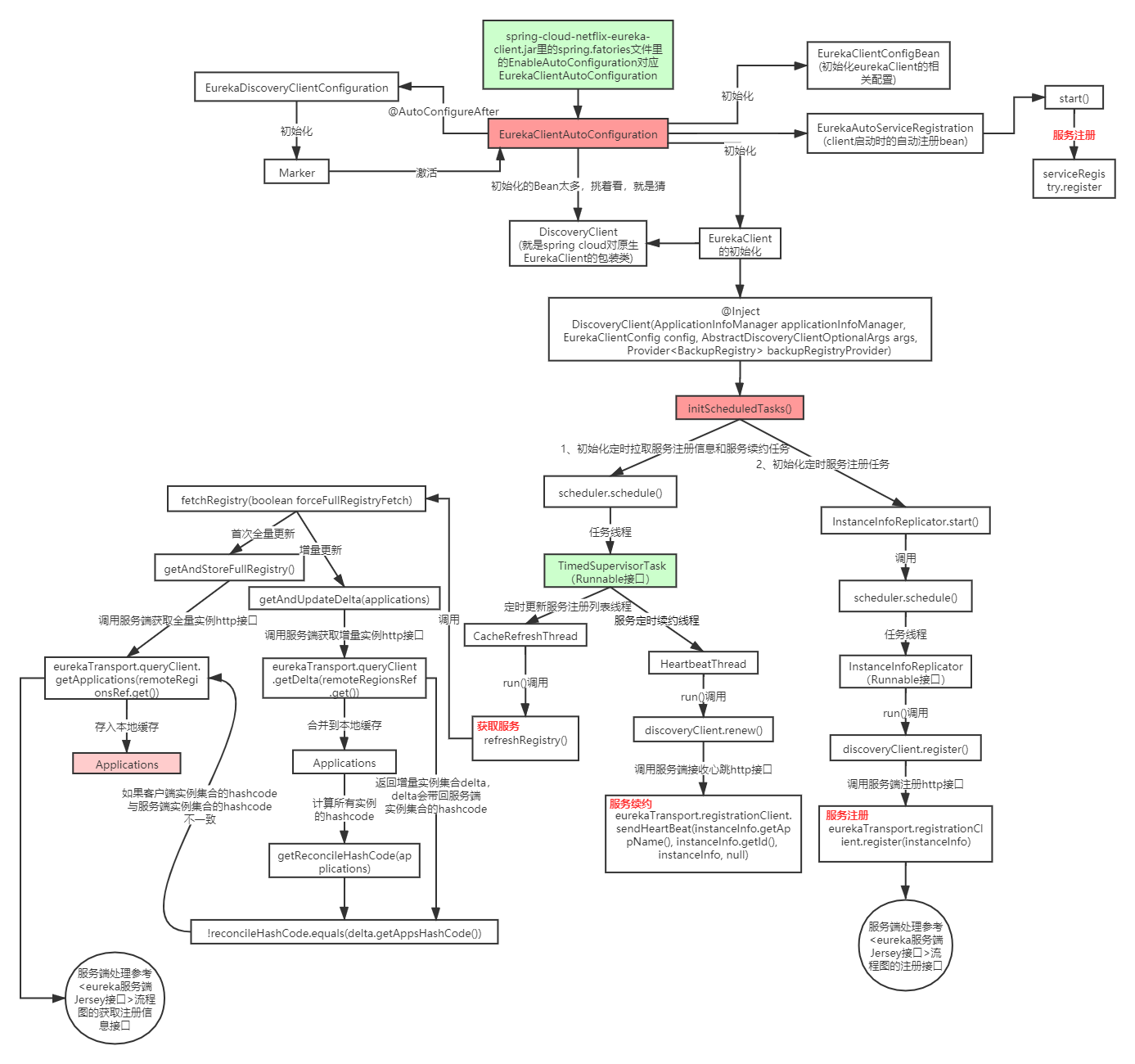
Eureka客户端源码分析图
微服务组件--注册中心Spring Cloud Eureka分析的更多相关文章
- spring cloud深入学习(二)-----服务注册中心spring cloud eureka
服务治理 主要用来实现各个微服务实例的自动化注册与发现,为啥需要这玩意呢?在一开始比如A系统调用B服务,可能通过手工维护B服务的实例,并且还得采用负载均衡等方式,这些全部都得需要手工维护,等后面系统越 ...
- 高可用注册中心 ->Spring Cloud Eureka
在微服务架构这样的分布式环境中,我们需要充分考虑发生故障的情况, 所以在生产 环境中必须对各个组件进行高可用部署, 对于微服务如此, 对于服务注册中心也一样. 但 是到本节为止,我们一直都在使用单节点 ...
- 【微服务】之二:从零开始,轻松搞定SpringCloud微服务系列--注册中心(一)
微服务体系,有效解决项目庞大.互相依赖的问题.目前SpringCloud体系有强大的一整套针对微服务的解决方案.本文中,重点对微服务体系中的服务发现注册中心进行详细说明.本篇中的注册中心,采用Netf ...
- Spring Cloud 微服务四:熔断器Spring cloud hystrix
前言:在微服务架构中,一般都是进程间通信,有可能调用链都比较长,当有底层某服务出现问题时,比如宕机,会导致调用方的服务失败,这样就会发生一连串的反映,造成系统资源被阻塞,最终可能造成雪崩.在sprin ...
- 第二个视频作品《[SpringCloudAlibaba]微服务之注册中心nacos》上线了
1.场景描述 第二个视频作品出炉了,<[SpringCloudAlibaba]微服务之注册中心nacos>上线了,有需要的朋友可以直接点击链接观看.(如需购买,请通过本文链接购买) 2. ...
- 小D课堂 - 新版本微服务springcloud+Docker教程_3-01 什么是微服务的注册中心
笔记 第三章 SpringCloud核心组件注册中心 1.什么是微服务的注册中心 简介:讲解什么是注册中心,常用的注册中心有哪些 (画图) 理解注册中心:服务 ...
- 服务治理框架:Spring Cloud Eureka
最近在学习Spring Cloud的知识,现将服务治理框架 Spring Cloud Eureka 的相关知识笔记整理如下.[采用 oneNote格式排版]
- 搭建高可用服务注册中心-Spring Cloud学习第一天(非原创)
文章大纲 一.Spring Cloud基础知识介绍二.创建单一的服务注册中心三.创建一个服务提供者四.搭建高可用服务注册中心五.项目源码与参考资料下载六.参考文章 一.Spring Cloud基础 ...
- 服务发现与消费 --> Spring Cloud Eureka
在上两篇文章中,我们已经搭建起微服务架构中的核心组件 服务注册 中心(包括单节点模式和高可用模式).同时, 还对上一章中实现的Spring Boot入门程序 做了改造. 通过简单的配置,使该程序注册到 ...
随机推荐
- Camera类定义和实现
类声明: #pragma once #ifndef __CAMERA_HEADER__ #define __CAMERA_HEADER__ #include "../utilities/ge ...
- Spring提供的API实现文件上传
Spring为我们提供了文件上传接口MultipartRequest及其实现类StandardMultipartFile StandardMultipartFile是StandardMultipart ...
- One---python的六种数据类型及数据转换
python的六种数据类型 python中数据类型分为不可变数据类型和可变数据类型 可变数据类型 可变数据类型包括:List(列表).Dictionary(字典).Set(集合) 不可变数据类型 不可 ...
- Web 前端模块出现的原因,以及 Node.js 中的模块
模块出现原因 简单概述 随着 Web 2.0 时代的到来,JavaScript 不再是以前的小脚本程序了,它在前端担任了更多的职责,也逐渐地被广泛运用在了更加复杂的应用开发的级别上. 但是 JavaS ...
- Vue 监听器和计算属性到底有什么不同?
各自的适用场景 计算属性临时快照 官方文档对于计算属性提到了一个重要的点子--"临时快照"(可能就是前面说的计算属性缓存),每当源状态发生变化时,就会创建一个新的快照. 有时候创建 ...
- 第九十篇:Vue 具名插槽
好家伙 1.什么是具名插槽? 来简单理解一下, 具有自己名字的插槽,就是具名插槽 我们来尝试使用一下具名插槽: 在Article.vue组件中: <template> <div cl ...
- MYSQL 安装及语法
Ubuntu 16.04 安装MySql 目录 一.安装MySql服务器和客户端 1.登录 2.创建数据库 3.选择数据库 4.查看数据库 5.创建数据表 6.查看数据表 7.更改数据表名字 8.更改 ...
- KingbaseES V8R6C5B041 sys_backup.sh单实例备份案例
数据库版本: test=# select version(); version ---------------------------------------------------------- ...
- 高阶 CSS 技巧在复杂动效中的应用
最近我在 CodePen 上看到了这样一个有意思的动画: 整个动画效果是在一个标签内,借助了 SVG PATH 实现.其核心在于对渐变(Gradient)的究极利用. 完整的代码你可以看看这里 -- ...
- DFS文件夹无法访问
最近DFS的文件服务器出现了部分文件和文件夹无法访问的情况.客户端直接访问DFS成员的共享文件夹时有是会出现Element not found的错误.有时打开文件的时候会出现文件不存在,或者你没有权限 ...