
【linux相识相知】sed命令
在之前的博客中我们介绍了文本三剑客中grep,本次博客就另外一名剑客——sed做出详细的描述,sed真的是一款强大的工具。下面让我们来一起看一下吧!
概述和工作机制
SED的英文全称为Stream EDitor,中文称流编辑器。默认情况下,它会一行一行的读取文件中的内容,在了解其工作原理之前,首先我们得先知道一下几个概念:
1.模式空间(pattern buffer):sed从文件中读取行首先会放到模式空间中进行执行和处理,定义的sed命令都是在这里执行的,默认情况下会逐行的读,逐行的处理,除非你做了行定界。
2.保持空间(hold buffer):在处理完模式空间的一些行的时候,我们有可能需要一个临时的地方去存放模式空间中的内容,这时候就可以将模式空间中的内容放到保持空间了。
初始情况下,模式空间和保持空间都是空的。
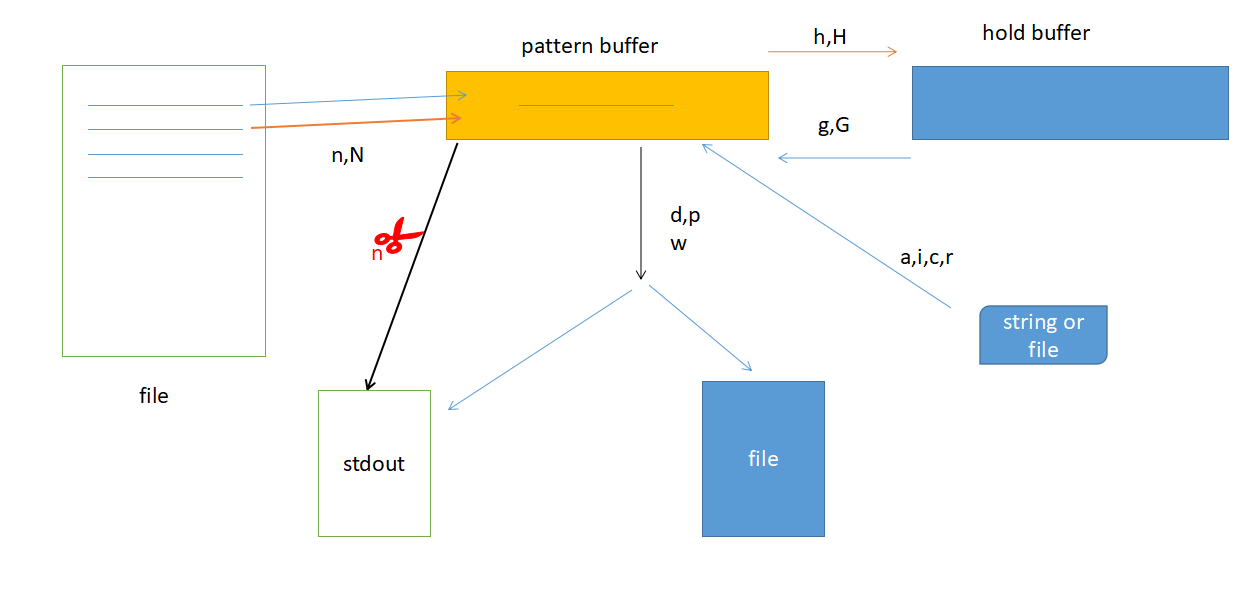
1.默认情况下,将从文件中逐行的读取内容至模式空间;
2.默认情况下,模式空间中的内容在处理完成后将会打印到标准输出;
3.sed命令在模式空间中的都是按顺序执行的,除非指定了行定界,否则将在所有的行上面执行;
4.修改后的行被送至标准输出的之后,模式空间将被清空。
基本选项
语法格式:
sed [OPTION]... {script-only-if-no-other-script} [input-file]...
-n:不输出模式空间中的内容至标准输出
#例子1

[root@localhost ~]# sed '' /etc/fstab

#

# /etc/fstab

# Created by anaconda on Wed Sep   ::

#

# Accessible filesystems, by reference, are maintained under '/dev/disk'

# See man pages fstab(), findfs(), mount() and/or blkid() for more info

#

/dev/mapper/cl-root     /                       xfs     defaults

UUID=0ab24855--4d3e-a61d-99ca54711c2c /boot                   xfs     defaults

/dev/mapper/cl-swap     swap                    swap    defaults

[root@localhost ~]#

#例子2

[root@localhost ~]# sed -n '' /etc/fstab

[root@localhost ~]#
默认情况下,sed命令会逐行的读取文件中每一行内容至模式空间,再执行执行单引号内的命令,如例子1,单引号内没有任何内容,所以不会对行内容作任何的处理,所以sed会逐行读取文件的内容,然后逐行的显示到标准输出,每打印一行到标准输出,模式空间就会被清空一次。在例子2中,加了-n的选项,会阻止输出到标准输出,所以就不会显示任何的内容。
-e script:指定多个命令
[root@localhost ~]# cat poetry

)Never give up,

)Never lose hope.

)Always have faith,

)It allows you to cope.

)Trying times will pass,

)As they always do.

)Just have patience,

)Your dreams will come true.

)So put on a smile,

)You'll live through your pain.

)Know it will pass,

)And strength you will gain

#例子3

[root@localhost ~]# sed -e '1d' -e '10d' poetry

)Never lose hope.

)Always have faith,

)It allows you to cope.

)Trying times will pass,

)As they always do.

)Just have patience,

)Your dreams will come true.

)So put on a smile,

)Know it will pass,

)And strength you will gain
使用-e选项,可以同时对行作出多个模式匹配,d的意思是删除。这里的例子3,文件poetry是输入,sed读取第一行的内容至模式1空间,然后判断是否是第一行,判断成功是第一行,则删除第一行(从模式空中清除,也不会打印至标准输出),读取第二行,先判断是否是第一行,不是,再判断是否是第十行,不是,然后打印至标准输出,所以在标准输出中只显示了不包含第一行和第十行的其他行的内容。注意:sed不会修改原文件的内容。
-f /path/to/script:把sed的编辑命令放在文件中,注意每一行一个命令:
#例子4

[root@localhost ~]# cat sed_script.txt    #编辑命令存放的文本文件

1d

10d

[root@localhost ~]# sed -f sed_script.txt poetry

)Never lose hope.

)Always have faith,

)It allows you to cope.

)Trying times will pass,

)As they always do.

)Just have patience,

)Your dreams will come true.

)So put on a smile,

)Know it will pass,

)And strength you will gain
我们可以看到例子4中sed使用-f选项指定编辑命令所在的文件,执行的是和例子3同样的操作,删除第一行和第十行,当我们得编辑命令有很多,把它放在文件也是一个不错的做法吧!
行定界
默认情况下不指定行的定界,会读取处理整个文件的每一行。如果指定了行,还是会读取每一行,但是在执行各种命令操作之后,会进行判断是不是定界的行,如果判断成功,则执行操作,如删除行,如果判断失败,则不做任何的处理然后打印至标准输出,下面来看一下几种常见的定界方法:
(1)定界为空,对全文的每一行进行处理
[root@localhost ~]# sed  '' poetry

)Never give up,

)Never lose hope.

)Always have faith,

)It allows you to cope.

)Trying times will pass,

)As they always do.

)Just have patience,

)Your dreams will come true.

)So put on a smile,

)You'll live through your pain.

)Know it will pass,

)And strength you will gain
[root@localhost ~]# sed  '2d' poetry  #当判断为第二行的时候,会删除第二行

)Never give up,

)Always have faith,

)It allows you to cope.

)Trying times will pass,

)As they always do.

)Just have patience,

)Your dreams will come true.

)So put on a smile,

)You'll live through your pain.

)Know it will pass,

)And strength you will gain
b./pattern/:被模式匹配到的行,默认可以是基本的正在表达式
[root@localhost ~]# sed  '/As/ d' poetry  #删除被模式匹配的行

)Never give up,

)Never lose hope.

)Always have faith,

)It allows you to cope.

)Trying times will pass,

)Just have patience,

)Your dreams will come true.

)So put on a smile,

)You'll live through your pain.

)Know it will pass,

)And strength you will gain
c.$最后一行
[root@localhost ~]# sed  '$ d' poetry  #删除最后一行

)Never give up,

)Never lose hope.

)Always have faith,

)It allows you to cope.

)Trying times will pass,

)As they always do.

)Just have patience,

)Your dreams will come true.

)So put on a smile,

)You'll live through your pain.

)Know it will pass,
(3)定界范围
a.x,y:x至y行
[root@localhost ~]# sed  '1,9 d' poetry  #删除了1-9行

)You'll live through your pain.

)Know it will pass,

)And strength you will gain
b.x,+y:x行到,x行往下数y个行
[root@localhost ~]# sed  '1,+3 d' poetry #删除第一行,和第一行往下的3行,也就是一直删除到第四行

)Trying times will pass,

)As they always do.

)Just have patience,

)Your dreams will come true.

)So put on a smile,

)You'll live through your pain.

)Know it will pass,

)And strength you will gain
c.x,/pattren/:x到被模式匹配的行
[root@localhost ~]# sed  '2,/smile/ d' poetry  #删除第二行至被smile匹配的行,smile被第九行匹配

)Never give up,

)You'll live through your pain.

)Know it will pass,

)And strength you will gain
d./pattren1/,/pattern2/:被模式1匹配的行开始到被模式2匹配的行
[root@localhost ~]# sed '/Always/,/put/ d' poetry

)Never give up,

)Never lose hope.

)You'll live through your pain.

)Know it will pass,

)And strength you will gain
[root@localhost ~]# sed '1~2 d' poetry  #显示偶数行

)Never lose hope.

)It allows you to cope.

)As they always do.

)Your dreams will come true.

)You'll live through your pain.

)And strength you will gain

[root@localhost ~]# sed '2~2 d' poetry   #显示奇数行

)Never give up,

)Always have faith,

)Trying times will pass,

)Just have patience,

)So put on a smile,

)Know it will pass,
编辑命令
下面我们来看一下编辑命令,如前面的d选项是删除行的意思,那么除了d选项,还有哪些呢?
p:显示模式空间的内容
#例5

[root@localhost ~]# sed   'p' poetry

)Never give up,

)Never give up,

)Never lose hope.

)Never lose hope.

)Always have faith,

)Always have faith,

)It allows you to cope.

)It allows you to cope.

)Trying times will pass,

)Trying times will pass,

)As they always do.

)As they always do.

)Just have patience,

)Just have patience,

)Your dreams will come true.

)Your dreams will come true.

)So put on a smile,

)So put on a smile,

)You'll live through your pain.

)You'll live through your pain.

)Know it will pass,

)Know it will pass,

)And strength you will gain

)And strength you will gain

#例6

[root@localhost ~]# sed -n  'p' poetry

)Never give up,

)Never lose hope.

)Always have faith,

)It allows you to cope.

)Trying times will pass,

)As they always do.

)Just have patience,

)Your dreams will come true.

)So put on a smile,

)You'll live through your pain.

)Know it will pass,

)And strength you will gain
在例5中,每一行都被打印了2次,原因是在模式空间的时候被打印了一次,然后处理完成之后,在标准输出又被打印了一次,所以自然会显示出两次。如果使用-n,则仅仅打印的模式空间的内容。
a test:在行后面追加文本"test",可以使用\n实现多行追加
[root@localhost ~]# sed '1 a hi i am here\nhey ' poetry

)Never give up,

hi i am here

hey

)Never lose hope.

)Always have faith,

)It allows you to cope.

)Trying times will pass,

)As they always do.

)Just have patience,

)Your dreams will come true.

)So put on a smile,

)You'll live through your pain.

)Know it will pass,

)And strength you will gain
i test:在 行前面插入文本test,支持使用\n实现多行插入
[root@localhost ~]# sed '2i  hi i am here\nhey ' poetry

)Never give up,

hi i am here

hey

)Never lose hope.

)Always have faith,

)It allows you to cope.

)Trying times will pass,

)As they always do.

)Just have patience,

)Your dreams will come true.

)So put on a smile,

)You'll live through your pain.

)Know it will pass,

)And strength you will gain
c test:把匹配到的行替换为此处指定的行
[root@localhost ~]# sed '2c  hi i am here ' poetry

)Never give up,

hi i am here

)Always have faith,

)It allows you to cope.

)Trying times will pass,

)As they always do.

)Just have patience,

)Your dreams will come true.

)So put on a smile,

)You'll live through your pain.

)Know it will pass,

)And strength you will gain
w /path/to/somefile:保存模式空间中匹配到的内容到指定的文件中
[root@localhost ~]# sed '/So/  w  /tmp/poetry' poetry

)Never give up,

)Never lose hope.

)Always have faith,

)It allows you to cope.

)Trying times will pass,

)As they always do.

)Just have patience,

)Your dreams will come true.

)So put on a smile,

)You'll live through your pain.

)Know it will pass,

)And strength you will gain

[root@localhost ~]#

[root@localhost ~]# cat /tmp/poetry

)So put on a smile,
r /path/from/somefile:读取指定文件的内容至当前文件中被模式匹配的行后面
[root@localhost ~]# cat poetry2.txt

)yes! I can!

[root@localhost ~]# sed '12 r poetry2.txt' poetry

)Never give up,

)Never lose hope.

)Always have faith,

)It allows you to cope.

)Trying times will pass,

)As they always do.

)Just have patience,

)Your dreams will come true.

)So put on a smile,

)You'll live through your pain.

)Know it will pass,

)And strength you will gain

)yes! I can!
=:为模式匹配到的行打印行号,打印在行的上面
[root@localhost ~]# sed '/Never/ =' poetry

)Never give up,

)Never lose hope.

)Always have faith,

)It allows you to cope.

)Trying times will pass,

)As they always do.

)Just have patience,

)Your dreams will come true.

)So put on a smile,

)You'll live through your pain.

)Know it will pass,

)And strength you will gain
!:条件取反
[root@localhost ~]# sed '/Never/ !d' poetry  #不删除被默认匹配的行

)Never give up,

)Never lose hope.
s///:查找替换,分割符可以自定义,比如使用s@@@flag或者s###flag,默认会替换被匹配的第一个位置,但是可以添加替换标记:
s///g:全局替换
[root@localhost ~]# cat poetry

)Never give up,

)Never lose hope.

)Always have faith,

)It allows you to cope.

)Trying times will pass,

)As they always do.

)Just have patience,

)Your dreams will come true.

)So put on a smile,

)You'll live through your pain.

)Know it will pass,

)And strength you will gain

[root@localhost ~]# sed 's/\<you\>/your/g' poetry

)Never give up,

)Never lose hope.

)Always have faith,

)It allows your to cope.

)Trying times will pass,

)As they always do.

)Just have patience,

)Your dreams will come true.

)So put on a smile,

)You'll live through your pain.

)Know it will pass,

)And strength your will gain
sed默认支持的基本的正则表达式,使用-r, --regexp-extended选项可以支持扩展的正则表达式。
练习1:删除/boot/grub2/grub.cfg文件中所有以空白字符开头的行的行首的所有空白字符
[root@localhost ~]# sed -r 's@^[[:space:]]+@@g' /boot/grub2/grub.cfg
练习2:删除/etc/fstab文件中所有以#开头的行的行首的#号及#后面的所有空白字符
[root@localhost ~]# sed 's/^#[[:space:]]*//g' /etc/fstab
练习3:输出一个目录给sed,取出其目录,类似于dirname
[root@localhost ~]# echo "/var/log/messages" | sed -r 's@[^/]+/?$@@'

/var/log/

[root@localhost ~]#

[root@localhost ~]# echo "/var/log/messages/" | sed -r 's@[^/]+/?$@@'

/var/log/
高级编辑命令
sed还有一些高级的命令,会用到之前说到的保持空间。
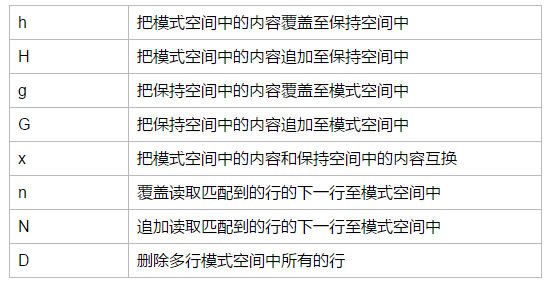
举一些例子来看一下吧!
[root@localhost ~]# cat poetry

)Never give up,

)Never lose hope.

)Always have faith,

)It allows you to cope.

)Trying times will pass,

)As they always do.

)Just have patience,

)Your dreams will come true.

)So put on a smile,

)You'll live through your pain.

)Know it will pass,

)And strength you will gain
可以自己先思考一下答案,再点开:
[root@localhost ~]# sed -n 'n;p' poetry  #只显示偶数行

)Never lose hope.

)It allows you to cope.

)As they always do.

)Your dreams will come true.

)You'll live through your pain.

)And strength you will gain
sed -n 'n;p' poetry
[root@localhost ~]# sed  '1!G;h;$!d'  poetry  #逆序显示

)And strength you will gain

)Know it will pass,

)You'll live through your pain.

)So put on a smile,

)Your dreams will come true.

)Just have patience,

)As they always do.

)Trying times will pass,

)It allows you to cope.

)Always have faith,

)Never lose hope.

)Never give up,
sed '1!G;h;$!d' poetry
[root@localhost ~]# sed  '$!d'  poetry  #只保留最后一行,类似tail -

)And strength you will gain
sed '$!d' poetry
[root@localhost ~]# sed  '$!N;$!D' poetry  #取出最后两行

)Know it will pass,

)And strength you will gain
sed '$!N;$!D' poetry
[root@localhost ~]# sed 'G' poetry  #在每一行的后面添加一个空白行

)Never give up,

)Never lose hope.

)Always have faith,

)It allows you to cope.

)Trying times will pass,

)As they always do.

)Just have patience,

)Your dreams will come true.

)So put on a smile,

)You'll live through your pain.

)Know it will pass,

)And strength you will gain
sed 'G' poetry
这些都是一些高级的用法,在工作中用的可能比较少,因为有的结果完全可以用其他简单的命令去实现。
循环和分支
sed最牛逼之处莫过于这个了,sed提供了一个循环和分支工来控制程序的执行流程。
循环
sed循环的工作原理类似于现代编程语言中的goto语句。
定义sed的标签:
:label
跳转到标签的位置,使用b命令后面跟着标签名即可,下面我们来看一个具体的实例:
[root@localhost ~]# cat teleplay

剧名:白夜追凶

评分:9.0

剧名:秘密深林

评分:9.3

剧名:权利的游戏第七季

评分:9.3

剧名:请回答1988

评分:9.6

[root@localhost ~]# sed -n '

h;n;H;x

s@\n@,@

/请回答/!b label

s@^@---@

:label

p' teleplay

剧名:白夜追凶,评分:9.0

剧名:秘密深林,评分:9.3

剧名:权利的游戏第七季,评分:9.3

---剧名:请回答1988,评分:9.6
分析:
由于命令很长,我们可以将命令分行来写,当然也可以写在一行里面:
1.h;n;H;x:将第一行内容读取到模式空间,执行h,将模式空间的内容覆盖至保持空间,执行n,从文件中读取第二行覆盖至模式空间,执行H,将模式空间的内容追加至保持空间,执行x,将保持空间的内容和模式空间调换;(这里得到的结果就是模式空间中存在两行);
2.s@\n@,@,将换行符替换为逗号;这样原来的两行就变成了一行;
3./请回答/!b label,判断这一行中是否有“请回答”三个字符,如果没有则直接跳到":label",然后执行打印"p",打印模式空间中的内容,如果有则执行"s@^@---@",将在行首添加字符"---"。
这样一来,只有"剧名:请回答1988,评分:9.6"被匹配,然后进行了行首的替换操作。
分支
可以使用t来创建分支。使用t命令跳转到指定的标签,一样我们来看一个例子:
[root@localhost ~]# sed -n '

> h;n;H;x

> s/\n/,/

> :loop

> /白夜追凶/s/^/-/

> /-----/!t loop

> p' teleplay

-----剧名:白夜追凶,评分:9.0

剧名:秘密深林,评分:9.3

剧名:权利的游戏第七季,评分:9.3

剧名:请回答1988,评分:9.6
分析:
由于命令很长,我们可以将命令分行来写,当然也可以写在一行里面:
1:h;n;H;x:将第一行内容读取到模式空间,执行h,将模式空间的内容覆盖至保持空间,执行n,从文件中读取第二行覆盖至模式空间,执行H,将模式空间的内容追加至保持空间,执行x,将保持空间的内容和模式空间调换;(这里得到的结果就是模式空间中存在两行);
2:s@\n@,@,将换行符替换为逗号;这样原来的两行就变成了一行;
3::loop:定义了一个loop标签;
4:/白夜追凶/s/^/-/:是否匹配模式,如果匹配则在其行首添加一个"-";如果不匹配,则直接打印;
5:/-----/!t loop:是否存在5个"-",如果不存在,则跳到标签loop处,继续执行第4步添加"-",直到满足5个"-",则跳出循环打印。
最后,我们之前的所有的操作,都是没有修改文件的本身的,可以使用 -i 选项来直接修改文件本身,慎用,建议在使用之前,先备份一下文件!
[root@localhost ~]# sed -i '1d' poetry

[root@localhost ~]#

[root@localhost ~]# cat poetry

)Never lose hope.

)Always have faith,

)It allows you to cope.

)Trying times will pass,

)As they always do.

)Just have patience,

)Your dreams will come true.

)So put on a smile,

)You'll live through your pain.

)Know it will pass,

)And strength you will gain
总结:sed的确是一个强大的文本处理工具,功能非常丰富,需要在今后的日常使用和工作中不断的熟悉和巩固。
参考链接:http://blog.jobbole.com/109088/ 《三分钟学会SED》写的非常好!
【linux相识相知】sed命令的更多相关文章
- Linux实战教学笔记12:linux三剑客之sed命令精讲
第十二节 linux三剑客之sed命令精讲 标签(空格分隔): Linux实战教学笔记-陈思齐 ---更多资料点我查看 1,前言 我们都知道,在Linux中一切皆文件,比如配置文件,日志文件,启动文件 ...
- Linux中使用sed命令或awk命令修改常规配置文件
一.方案: Linux中使用sed命令或awk命令修改常规配置文件 二.步骤: 1.假设有一个a.txt,内容如下: #!/bin/bash aa= bbb= ccc= #ddd= 2.如果想要把里面 ...
- day14 linux三剑客之sed命令
day14 linux三剑客之sed命令 sed命令 Sed 主要用来自动编辑一个或多个文件.简化对文件的反复操作.编写转换程序等. sed(流式编辑器) : sed主要用来修改文件. 1.sed命令 ...
- 【Linux相识相知】计算机的组成、linux发行版和哲学思想、基础命令和目录结构(FHS)
从今天开始,Frank将开始在博客上记录自己学习linux的点点滴滴,F初来乍到,还望各位大佬多多指教.本次博客的主要内容如下: 计算机基础:简要的描述了计算机的组成及其功能: linux初识:介绍了 ...
- linux shell 用sed命令在文本的行尾或行首添加字符
转自 http://www.cnblogs.com/aaronwxb/archive/2011/08/19/2145364.html 昨天写一个脚本花了一天的2/3的时间,而且大部分时间都耗在了sed ...
- linux三剑客之sed命令
一.前言 我们都知道,在Linux中一切皆文件,比如配置文件,日志文件,启动文件等等.如果我们相对这些文件进行一些编辑查询等操作时,我们可能会想到一些vi,vim,cat,more等命令.但是这些命令 ...
- 快速理解linux流编辑器sed命令
原创 杜亦舒性能与架构 之前介绍过 awk 命令,sed 命令同样是非常重要的文本处理工具,涉及到linux shell开发时,几乎是避不开这两大利器的 sed 是 stream editor 的简写 ...
- Linux Shell编程 sed命令
概述 sed 是一种几乎可以应用在所有 UNIX 平台(包括 Linux)上的轻量级流编辑器,体积小.所以,它可以对从如管道这样的标准输入中接收的数据进行编辑. sed 主要是用来将数据进行选取.替换 ...
- Linux学习之sed命令详解
概述 sed是stream editor的简称,也就是流编辑器.它一次处理一行内容,处理时,把当前处理的行存储在临时缓冲区中,称为“模式空间”(pattern space),接着用sed命令处理缓冲区 ...
随机推荐
- ubuntu14.04,安装Git(源代码管理工具)
在shell中执行:sudo apt-get install git-core
- 移动端复制粘贴clipboardjs
官方网址: https://clipboardjs.com/ 不能一打开就直接触发复制粘贴: 参考博客: http://blog.csdn.net/twoByte/article/details/52 ...
- 题解 P2863 【[USACO06JAN]牛的舞会The Cow Prom】
题目链接 赤裸裸的板子,就加一个特判就行.直接上代码 #include<stdio.h> #include<algorithm> #include<iostream> ...
- 【python】Python任务调度模块 – APScheduler
APScheduler是一个Python定时任务框架,使用起来十分方便.提供了基于日期.固定时间间隔以及crontab类型的任务,并且可以持久化任务.并以daemon方式运行应用.目前最新版本为3.0 ...
- 在Delphi中获取和修改文件的时间
转载自 http://www.cnblogs.com/jieke/archive/2013/01/11/2855782.html 本文介绍了在Delphi中利用系统函数和Windows API函数调用 ...
- SDUT OJ 图结构练习——最短路径 ( Floyed 算法 AND Dijkstra算法)
图结构练习——最短路径 Time Limit: 1000 ms Memory Limit: 65536 KiB Submit Statistic Discuss Problem ...
- pkg-config 切换opencv版本
查看当前版本 pkg-config --modversion opencv 在~/.bashrc最后添加如下内容: CMAKE_INSTALL_PREFIX=/usr/local/opencv3 ex ...
- redis中使用lua脚本
lua脚本 Lua是一个高效的轻量级脚本语言,用标准C语言编写并以源代码形式开放, 其设计目的是为了嵌入应用程序中,从而为应用程序提供灵活的扩展和定制功能 使用脚本的好处 1.减少网络开销,在Lua脚 ...
- Qt 学习之路 2(74):线程和 QObject
Home / Qt 学习之路 2 / Qt 学习之路 2(74):线程和 QObject Qt 学习之路 2(74):线程和 QObject 豆子 2013年12月3日 Qt 学习之路 2 2 ...
- C++_新特性2-RTTI运行阶段类型识别
这部分属于C++的新特性,感觉比较高阶的特性.我把它归于属于奇技淫巧的范畴.了解即可. RTTI是运行阶段类型识别(Runtime Type Identification)的简称. 这是添加到C++中 ...