
LINUX内核CPU负载均衡机制【转】
转自:http://oenhan.com/cpu-load-balance
还是神奇的进程调度问题引发的,参看Linux进程组调度机制分析,组调度机制是看清楚了,发现在重启过程中,很多内核调用栈阻塞在了double_rq_lock函数上,而double_rq_lock则是load_balance触发的,怀疑当时的核间调度出现了问题,在某个负责场景下产生了多核互锁,后面看了一下CPU负载平衡下的代码实现,写一下总结。
内核代码版本:kernel-3.0.13-0.27。
内核代码函数起自load_balance函数,从load_balance函数看引用它的函数可以一直找到schedule函数这里,便从这里开始往下看,在__schedule中有下面一句话。
|
1
2
|
if (unlikely(!rq->nr_running))
idle_balance(cpu, rq);
|
从上面可以看出什么时候内核会尝试进行CPU负载平衡:即当前CPU运行队列为NULL的时候。
CPU负载平衡有两种方式:pull和push,即空闲CPU从其他忙的CPU队列中拉一个进程到当前CPU队列;或者忙的CPU队列将一个进程推送到空闲的CPU队列中。idle_balance干的则是pull的事情,具体push下面会提到。
在idle_balance里面,有一个proc阀门控制当前CPU是否pull:
|
1
2
|
if (this_rq->avg_idle < sysctl_sched_migration_cost)
return;
|
sysctl_sched_migration_cost对应proc控制文件是/proc/sys/kernel/sched_migration_cost,开关代表如果CPU队列空闲了500us(sysctl_sched_migration_cost默认值)以上,则进行pull,否则则返回。
for_each_domain(this_cpu, sd) 则是遍历当前CPU所在的调度域,可以直观的理解成一个CPU组,类似task_group,核间平衡指组内的平衡。负载平衡有一个矛盾就是:负载平衡的频度和CPU cache的命中率是矛盾的,CPU调度域就是将各个CPU分成层次不同的组,低层次搞定的平衡就绝不上升到高层次处理,避免影响cache的命中率。
图例如下;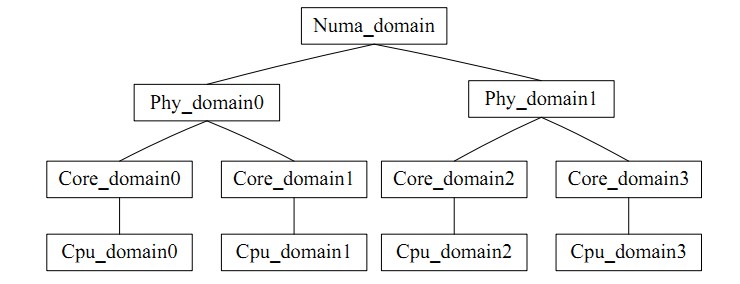
最终通过load_balance进入正题。
首先通过find_busiest_group获取当前调度域中的最忙的调度组,首先update_sd_lb_stats更新sd的状态,也就是遍历对应的sd,将sds里面的结构体数据填满,如下:
|
1
2
3
4
5
6
7
8
9
10
11
12
13
14
15
16
17
18
19
20
21
22
|
struct sd_lb_stats {
struct sched_group *busiest; /* Busiest group in this sd */
struct sched_group *this; /* Local group in this sd */
unsigned long total_load; /* Total load of all groups in sd */
unsigned long total_pwr; /* Total power of all groups in sd */
unsigned long avg_load; /* Average load across all groups in sd */
/** Statistics of this group */
unsigned long this_load; //当前调度组的负载
unsigned long this_load_per_task; //当前调度组的平均负载
unsigned long this_nr_running; //当前调度组内运行队列中进程的总数
unsigned long this_has_capacity;
unsigned int this_idle_cpus;
/* Statistics of the busiest group */
unsigned int busiest_idle_cpus;
unsigned long max_load; //最忙的组的负载量
unsigned long busiest_load_per_task; //最忙的组中平均每个任务的负载量
unsigned long busiest_nr_running; //最忙的组中所有运行队列中进程的个数
unsigned long busiest_group_capacity;
unsigned long busiest_has_capacity;
unsigned int busiest_group_weight;
|
|
1
2
3
4
5
6
7
8
9
10
11
12
13
14
15
16
17
18
19
20
21
22
23
24
25
26
|
do
{
local_group = cpumask_test_cpu(this_cpu, sched_group_cpus(sg));
if (local_group) {
//如果是当前CPU上的group,则进行赋值
sds->this_load = sgs.avg_load;
sds->this = sg;
sds->this_nr_running = sgs.sum_nr_running;
sds->this_load_per_task = sgs.sum_weighted_load;
sds->this_has_capacity = sgs.group_has_capacity;
sds->this_idle_cpus = sgs.idle_cpus;
} else if (update_sd_pick_busiest(sd, sds, sg, &sgs, this_cpu)) {
//在update_sd_pick_busiest判断当前sgs的是否超过了之前的最大值,如果是
//则将sgs值赋给sds
sds->max_load = sgs.avg_load;
sds->busiest = sg;
sds->busiest_nr_running = sgs.sum_nr_running;
sds->busiest_idle_cpus = sgs.idle_cpus;
sds->busiest_group_capacity = sgs.group_capacity;
sds->busiest_load_per_task = sgs.sum_weighted_load;
sds->busiest_has_capacity = sgs.group_has_capacity;
sds->busiest_group_weight = sgs.group_weight;
sds->group_imb = sgs.group_imb;
}
sg = sg->next;
} while (sg != sd->groups);
|
决定选择调度域中最忙的组的参照标准是该组内所有 CPU上负载(load) 的和, 找到组中找到忙的运行队列的参照标准是该CPU运行队列的长度, 即负载,并且 load 值越大就表示越忙。在平衡的过程中,通过比较当前队列与以前记录的busiest 的负载情况,及时更新这些变量,让 busiest 始终指向域内最忙的一组,以便于查找。
调度域的平均负载计算
|
1
2
3
|
sds.avg_load = (SCHED_POWER_SCALE * sds.total_load) / sds.total_pwr;
if (sds.this_load >= sds.avg_load)
goto out_balanced;
|
在比较负载大小的过程中, 当发现当前运行的CPU所在的组中busiest为空时,或者当前正在运行的 CPU队列就是最忙的时, 或者当前 CPU队列的负载不小于本组内的平均负载时,或者不平衡的额度不大时,都会返回 NULL 值,即组组之间不需要进行平衡;当最忙的组的负载小于该调度域的平均负载时,只需要进行小范围的负载平衡;当要转移的任务量小于每个进程的平均负载时,如此便拿到了最忙的调度组。
然后find_busiest_queue中找到最忙的调度队列,遍历该组中的所有 CPU 队列,经过依次比较各个队列的负载,找到最忙的那个队列。
|
1
2
3
4
5
6
7
8
9
10
11
12
13
14
15
16
17
18
19
20
21
22
23
24
25
26
27
28
29
30
31
|
for_each_cpu(i, sched_group_cpus(group)) {
/*rq->cpu_power表示所在处理器的计算能力,在函式sched_init初始化时,会把这值设定为SCHED_LOAD_SCALE (=Nice 0的Load Weight=1024).并可透过函式update_cpu_power (in kernel/sched_fair.c)更新这个值.*/
unsigned long power = power_of(i);
unsigned long capacity = DIV_ROUND_CLOSEST(power,SCHED_POWER_SCALE);
unsigned long wl;
if (!cpumask_test_cpu(i, cpus))
continue;
rq = cpu_rq(i);
/*获取队列负载cpu_rq(cpu)->load.weight;*/
wl = weighted_cpuload(i);
/*
* When comparing with imbalance, use weighted_cpuload()
* which is not scaled with the cpu power.
*/
if (capacity && rq->nr_running == 1 && wl > imbalance)
continue;
/*
* For the load comparisons with the other cpu's, consider
* the weighted_cpuload() scaled with the cpu power, so that
* the load can be moved away from the cpu that is potentially
* running at a lower capacity.
*/
wl = (wl * SCHED_POWER_SCALE) / power;
if (wl > max_load) {
max_load = wl;
busiest = rq;
}
|
通过上面的计算,便拿到了最忙队列。
当busiest->nr_running运行数大于1的时候,进行pull操作,pull前对move_tasks,先进行double_rq_lock加锁处理。
|
1
2
3
4
|
double_rq_lock(this_rq, busiest);
ld_moved = move_tasks(this_rq, this_cpu, busiest,
imbalance, sd, idle, &all_pinned);
double_rq_unlock(this_rq, busiest);
|
move_tasks进程pull task是允许失败的,即move_tasks->balance_tasks,在此处,有sysctl_sched_nr_migrate开关控制进程迁移个数,对应proc的是/proc/sys/kernel/sched_nr_migrate。
下面有can_migrate_task函数检查选定的进程是否可以进行迁移,迁移失败的原因有3个,1.迁移的进程处于运行状态;2.进程被绑核了,不能迁移到目标CPU上;3.进程的cache仍然是hot,此处也是为了保证cache命中率。
|
1
2
3
4
5
6
7
8
9
10
11
12
13
14
15
16
17
|
/*关于cache cold的情况下,如果迁移失败的个数太多,仍然进行迁移
* Aggressive migration if:
* 1) task is cache cold, or
* 2) too many balance attempts have failed.
*/
tsk_cache_hot = task_hot(p, rq->clock_task, sd);
if (!tsk_cache_hot ||
sd->nr_balance_failed > sd->cache_nice_tries) {
#ifdef CONFIG_SCHEDSTATS
if (tsk_cache_hot) {
schedstat_inc(sd, lb_hot_gained[idle]);
schedstat_inc(p, se.statistics.nr_forced_migrations);
}
#endif
return 1;
}
|
判断进程cache是否有效,判断条件,进程的运行的时间大于proc控制开关sysctl_sched_migration_cost,对应目录/proc/sys/kernel/sched_migration_cost_ns
|
1
2
3
4
5
6
7
|
static int
task_hot(struct task_struct *p, u64 now, struct sched_domain *sd)
{
s64 delta;
delta = now - p->se.exec_start;
return delta < (s64)sysctl_sched_migration_cost;
}
|
在load_balance中,move_tasks返回失败也就是ld_moved==0,其中sd->nr_balance_failed++对应can_migrate_task中的"too many balance attempts have failed",然后busiest->active_balance = 1设置,active_balance = 1。
|
1
2
3
4
5
|
if (active_balance)
//如果pull失败了,开始触发push操作
stop_one_cpu_nowait(cpu_of(busiest),
active_load_balance_cpu_stop, busiest,
&busiest->active_balance_work);
|
push整个触发操作代码机制比较绕,stop_one_cpu_nowait把active_load_balance_cpu_stop添加到cpu_stopper每CPU变量的任务队列里面,如下:
|
1
2
3
4
5
6
|
void stop_one_cpu_nowait(unsigned int cpu, cpu_stop_fn_t fn, void *arg,
struct cpu_stop_work *work_buf)
{
*work_buf = (struct cpu_stop_work){ .fn = fn, .arg = arg, };
cpu_stop_queue_work(&per_cpu(cpu_stopper, cpu), work_buf);
}
|
而cpu_stopper则是cpu_stop_init函数通过cpu_stop_cpu_callback创建的migration内核线程,触发任务队列调度。因为migration内核线程是绑定每个核心上的,进程迁移失败的1和3问题就可以通过push解决。active_load_balance_cpu_stop则调用move_one_task函数迁移指定的进程。
上面描述的则是整个pull和push的过程,需要补充的pull触发除了schedule后触发,还有scheduler_tick通过触发中断,调用run_rebalance_domains再调用rebalance_domains触发,不再细数。
|
1
2
3
4
|
void __init sched_init(void)
{
open_softirq(SCHED_SOFTIRQ, run_rebalance_domains);
}
|
链接为:http://oenhan.com/cpu-load-balance
LINUX内核CPU负载均衡机制【转】的更多相关文章
- octavia的实现与分析(一)·openstack负载均衡的现状与发展以及lvs,Nginx,Haproxy三种负载均衡机制的基本架构和对比
[负载均衡] 大量用户发起请求的情况下,服务器负载过高,导致部分请求无法被响应或者及时响应. 负载均衡根据一定的算法将请求分发到不同的后端,保证所有的请求都可以被正常的下发并返回. [主流实现-LVS ...
- openstack octavia的实现与分析(一)openstack负载均衡的现状与发展以及lvs,Nginx,Haproxy三种负载均衡机制的基本架构和对比
[负载均衡] 大量用户发起请求的情况下,服务器负载过高,导致部分请求无法被响应或者及时响应. 负载均衡根据一定的算法将请求分发到不同的后端,保证所有的请求都可以被正常的下发并返回. [主流实现-LVS ...
- LVS : Linux Virtual Server 负载均衡,集群,高并发,robust
1 LVS : Linux Virtual Server http://www.linuxvirtualserver.org/ http://www.linuxvirtualserver.org/zh ...
- LVS (Linux Virtual Server) 负载均衡
[大型网站技术实践]初级篇:借助LVS+Keepalived实现负载均衡 一.负载均衡:必不可少的基础手段 1.1 找更多的牛来拉车吧 当前大多数的互联网系统都使用了服务器集群技术,集群即将相同服 ...
- Azure的负载均衡机制
负载均衡一直是一个比较重要的议题,几乎所有的Azure案例或者场景都不可避免,鉴于经常有客户会问,所以笔者觉得有必要总结一下. Azure提供的负载均衡机制,按照功能,可以分为三种:Azure Loa ...
- nginx 健康检查和负载均衡机制分析
nginx 是优秀的反向代理服务器,这里主要讲它的健康检查和负载均衡机制,以及这种机制带来的问题.所谓健康检查,就是当后端出现问题(具体什么叫出现问题,依赖 于具体实现,各个实现定义不一样),不再往这 ...
- linux+nginx+tomcat负载均衡,实现session同步
linux+nginx+tomcat负载均衡,实现session同步 花了一个上午的时间研究nginx+tomcat的负载均衡测试,集群环境搭建比较顺利,但是session同步的问题折腾了几个小时才搞 ...
- 分析NGINX 健康检查和负载均衡机制
nginx 是优秀的反向代理服务器,这里主要讲它的健康检查和负载均衡机制,以及这种机制带来的问题.所谓健康检查,就是当后端出现问题(具体什么叫出现问题,依赖于具体实现,各个实现定义不一样),不再往这个 ...
- Ribbon 负载均衡机制
Ribbon 提供了几个负载均衡的组件,其目的就是让请求转给合适的服务器处理,因此,如何选择合适的服务器变成了负载均衡机制的核心,Ribbon 提供了如下负载均衡规则: RoundRobinRule: ...
随机推荐
- spark-shell 中rdd常用方法
centos 7.2 spark 2.3.3 scala 2.11.11 java 1.8.0_202-ea spark-shell中为scala语法格式 1.distinct ...
- 全网最新方法:win10下如何安装和配置64位JDK-13
1.下载JDK-13 下载链接:https://www.oracle.com/technetwork/java/javase/downloads/index.html 2.安装JDK-13 双击下图的 ...
- linux-zookeeper-kafka入门
公告:版权所有,违者必究 1.zookeeper安装 前提:先安装jdk,zookeeper运行依赖于java环境. (1.)下载安装包 http://mirror.bit.edu.cn/apache ...
- CSP-S 2019图论总结
CSP-S 2019图论总结 一.最短路问题 模板 Floyd算法 void floyd() { memset(map,0x3f,sizeof(map)); for(int i=1;i<=n;i ...
- angular和ionic4对过滤器pipe的使用
以下为自定义过滤器 import { Pipe, PipeTransform, Injectable } from '@angular/core'; import { DomSanitizer} fr ...
- ASP.NET开发实战——(九)ASP.NET MVC 与数据库之ORM
之前的文章中介绍了如何在ASP.NET中通过ADO.NET操作SQL Server和My SQL数据库,数据库的操作是通过SQL语句的执行来完成的,在ASP.NET中还有一个简便的方式来使用数据库,那 ...
- CF1178D Prime Graph
题目链接 题意 构造一张有\(n(3\le n\le 1000)\)个点的无向图(无重边和自环).满足: 边的总数为素数 所有点的度数均为素数 输出方案 solution 如果所有点的度数确定了.那么 ...
- 【转】ServletContext介绍及用法
1.1. 介绍 ServletContext官方叫servlet上下文.服务器会为每一个工程创建一个对象,这个对象就是ServletContext对象.这个对象全局唯一,而且工程内部的所有servl ...
- Linux 系统下安装JDK1.8的教程详解
一,安装前的清理工作 ? 1 2 3 rpm -qa | grep jdk rpm -qa | grep gcj yum -y remove java-xxx-xxx 二 , 在线下载JDK 命令: ...
- Paper | Xception: Deep Learning with Depthwise Separable Convolutions
目录 故事 Inception结构和思想 更进一步,以及现有的深度可分离卷积 Xception结构 实验 这篇论文写得很好.只要你知道卷积操作或公式,哪怕没看过Inception,也能看懂. 核心贡献 ...