
算法:图(Graph)的遍历、最小生成树和拓扑排序
背景
不同的数据结构有不同的用途,像:数组、链表、队列、栈多数是用来做为基本的工具使用,二叉树多用来作为已排序元素列表的存储,B 树用在存储中,本文介绍的 Graph 多数是为了解决现实问题(说到底,所有的数据结构都是这个目的),如:网络布局、任务安排等。
图的基本概念
示例
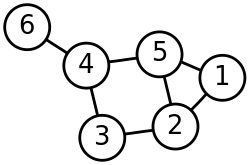
顶点(Vertex)
上图的 1、2、3、4、5、6 就是顶点。
邻接(Adjoin)
如果 A 和 B 通过定向边相连,且方向为 A -> B,则 B 为 A 的邻接,如果相连的边是没有方向的,则 A 和 B 互为邻接。
边(Edge)
顶点之间的连线就是边。
连通图(Connected Graph)
不考虑边的方向性,从任何一个节点都可以遍历到其它节点。本文的所有算法(除了拓扑排序)只适合连通图。
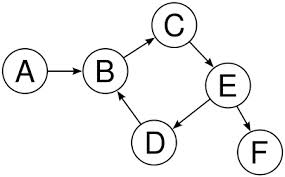
定向图(Directed Graph)
图中的所有边都带方向。
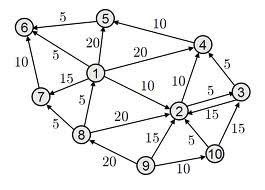
权重图(Weighted Graph)
图中的所有边都有权重。
图的程序表示
如果图 T 有 A、B、C 三个节点,有 A -> B,B -> C,C -> A 三个边(没有方向),如何在程序中表示 T 呢?
邻接矩阵
A B C
A 0 1 0
B 0 0 1
C 1 0 0
矩阵的行代表了定向边的起始顶点,矩阵的列代表了定向边的介绍顶点,矩阵中的值:1 代表了列是行的邻接,0 则反之。如果边没有方向,则矩阵是相对于正对角线是对称的。
邻接列表
A:[ B ]
B:[ C ]
C:[ A ]
这个就不多说了,多数书籍使用都是邻接矩阵。
代码
         class Vertex<T>

         {

             public T Value { get; set; }

             public bool WasVisited { get; set; }

         }

         class Graph<T>

         {

             #region 私有字段

             private int _maxSize;

             private Vertex<T>[] _vertexs;

             private bool[][] _edges;

             private int _vertexCount = ;

             #endregion

             #region 构造方法

             public Graph(int maxSize)

             {

                 _maxSize = maxSize;

                 _vertexs = new Vertex<T>[_maxSize];

                 _edges = new bool[_maxSize][];

                 for (var i = ; i < _maxSize; i++)

                 {

                     _edges[i] = new bool[_maxSize];

                 }

             }

             #endregion

             #region 添加顶点

             public Graph<T> AddVertex(T value)

             {

                 _vertexs[_vertexCount++] = new Vertex<T> { Value = value };

                 return this;

             }

             #endregion

             #region 添加边

             public Graph<T> AddUnDirectedEdge(T startItem, T endItem)

             {

                 var startIndex = this.GetVertexIndex(startItem);

                 var endIndex = this.GetVertexIndex(endItem);

                 _edges[startIndex][endIndex] = true;

                 _edges[endIndex][startIndex] = true;

                 return this;

             }

             public Graph<T> AddDirectedEdge(T startItem, T endItem)

             {

                 var startIndex = this.GetVertexIndex(startItem);

                 var endIndex = this.GetVertexIndex(endItem);

                 _edges[startIndex][endIndex] = true;

                 return this;

             }

             #endregion

         }
图的常见算法
遍历
本文的遍历算法只适合一般的无向图。
深度优先遍历
深度优先遍历的原则是:尽可能的离开始节点远,二叉树的三种遍历算法都属于这种算法。
示例
从 A 开始的遍历顺序为(邻接的遍历顺序为字母升序):ABCEDBF。
栈版本
             #region 深度优先遍历:栈版本

             public void DepthFirstSearch(T startItem, Action<T> action)

             {

                 var startIndex = this.GetVertexIndex(startItem);

                 var stack = new Stack<int>();

                 this.DepthFirstSearchVisit(stack, startIndex, action);

                 while (stack.Count > )

                 {

                     var adjoinVertexIndex = this.GetNextUnVisitedAdjoinVertexIndex(stack.Peek());

                     if (adjoinVertexIndex >= )

                     {

                         this.DepthFirstSearchVisit(stack, adjoinVertexIndex, action);

                     }

                     else

                     {

                         stack.Pop();

                     }

                 }

                 this.ResetVisited();

             }

             private void DepthFirstSearchVisit(Stack<int> stack, int index, Action<T> action)

             {

                 _vertexs[index].WasVisited = true;

                 action(_vertexs[index].Value);

                 stack.Push(index);

             }

             #endregion
递归版本
             #region 深度优先遍历:递归版本

             public void DepthFirstSearchRecursion(T startItem, Action<T> action)

             {

                 var startIndex = this.GetVertexIndex(startItem);

                 this.DepthFirstSearchRecursionVisit(startIndex, action);

                 this.ResetVisited();

             }

             private void DepthFirstSearchRecursionVisit(int index, Action<T> action)

             {

                 _vertexs[index].WasVisited = true;

                 action(_vertexs[index].Value);

                 var adjoinVertexIndex = this.GetNextUnVisitedAdjoinVertexIndex(index);

                 while (adjoinVertexIndex >= )

                 {

                     this.DepthFirstSearchRecursionVisit(adjoinVertexIndex, action);

                     adjoinVertexIndex = this.GetNextUnVisitedAdjoinVertexIndex(index);

                 }

             }

             #endregion
广度优先遍历
广度优先遍历的原则是:尽可能的离开始节点近。这个算法没有办法通过递归实现,多数都是使用的队列(终于发现了队列的又一个用处)。
示例
从 A 开始的遍历顺序为(邻接的遍历顺序为字母升序):ABCEDFB。
代码
             #region 广度优先遍历

             public void BreadthFirstSearch(T startItem, Action<T> action)

             {

                 var startIndex = this.GetVertexIndex(startItem);

                 var queue = new Queue<int>();

                 this.BreadthFirstSearchVisit(queue, startIndex, action);

                 while (queue.Count > )

                 {

                     var adjoinVertexIndexs = this.GetNextUnVisitedAdjoinVertexIndexs(queue.Dequeue());

                     foreach (var adjoinVertexIndex in adjoinVertexIndexs)

                     {

                         this.BreadthFirstSearchVisit(queue, adjoinVertexIndex, action);

                     }

                 }

                 this.ResetVisited();

             }

             private void BreadthFirstSearchVisit(Queue<int> queue, int index, Action<T> action)

             {

                 _vertexs[index].WasVisited = true;

                 action(_vertexs[index].Value);

                 queue.Enqueue(index);

             }

             #endregion
最小生成树
本文的最小生成树算法只适合一般的无向图。
将 N 个顶点连接起来的最小树叫:最小生成树。
给定一个颗有 N 个顶点的连通图,则最小生成树的边为:N - 1。
不同的遍历算法生成的最小生成树是不同的,下面使用广度优先遍历来生成最小树。
示例
从 A 开始的遍历顺序为(邻接的遍历顺序为字母升序):A->B、B->C、C->E、E->D、E->F、D->B。
代码
             #region 最小生成树

             public void DisplayMinimumSpanningTree(T startItem)

             {

                 var startIndex = this.GetVertexIndex(startItem);

                 var queue = new Queue<int>();

                 _vertexs[startIndex].WasVisited = true;

                 queue.Enqueue(startIndex);

                 while (queue.Count > )

                 {

                     var currentIndex = queue.Dequeue();

                     var adjoinVertexIndexs = this.GetNextUnVisitedAdjoinVertexIndexs(currentIndex);

                     foreach (var adjoinVertexIndex in adjoinVertexIndexs)

                     {

                         Console.WriteLine(_vertexs[currentIndex].Value + "->" + _vertexs[adjoinVertexIndex].Value);

                         _vertexs[adjoinVertexIndex].WasVisited = true;

                         queue.Enqueue(adjoinVertexIndex);

                     }

                 }

                 this.ResetVisited();

             }

             #endregion
拓扑排序
拓扑排序只适合定向图,且图中不存在循环结构。其算法非常简单,依次获取图中的没有邻接顶点的顶点,然后删除该顶点。
示例
上图出现了循环结构,假如没有顶点 C,拓扑排序的结果为(顶点的遍历顺序为字母升序):EFDAB。
算法
             #region 拓扑排序

             public List<T> TopologySort()

             {

                 var cloneVertexs = (Vertex<T>[])_vertexs.Clone();

                 var cloneEdges = (bool[][])_edges.Clone();

                 var cloneVertexCount = _vertexCount;

                 var results = new List<T>();

                 while (_vertexCount > )

                 {

                     var successor = this.NextSuccessor();

                     if (successor == -)

                     {

                         throw new InvalidOperationException("出现循环了!");

                     }

                     results.Insert(, _vertexs[successor].Value);

                     this.RemoveVertex(successor);

                     _vertexCount--;

                 }

                 _vertexs = cloneVertexs;

                 _edges = cloneEdges;

                 _vertexCount = cloneVertexCount;

                 return results;

             }

             private int NextSuccessor()

             {

                 for (var row = ; row < _vertexCount; row++)

                 {

                     if (_edges[row].Take(_vertexCount).All(x => !x))

                     {

                         return row;

                     }

                 }

                 return -;

             }

             private void RemoveVertex(int successor)

             {

                 for (int i = successor; i < _vertexCount - ; i++)

                 {

                     _vertexs[i] = _vertexs[i + ];

                 }

                 for (int row = successor; row < _vertexCount - ; row++)

                 {

                     for (int column = ; column < _vertexCount; column++)

                     {

                         _edges[row][column] = _edges[row + ][column];

                     }

                 }

                 for (int column = successor; column < _vertexCount - ; column++)

                 {

                     for (int row = ; row < _vertexCount; row++)

                     {

                         _edges[row][column] = _edges[row][column + ];

                     }

                 }

             }

             #endregion
完整代码
 using System;

 using System.Collections.Generic;

 using System.Collections.ObjectModel;

 using System.Linq;

 using System.Text;

 using System.Threading.Tasks;

 namespace DataStuctureStudy.Graphs

 {

     class GraphTest

     {

         public static void Test()

         {

             var graph = new Graph<String>();

             graph

                 .AddVertex("A")

                 .AddVertex("B")

                 .AddVertex("C")

                 .AddVertex("D")

                 .AddVertex("E")

                 .AddVertex("F")

                 .AddVertex("G")

                 .AddVertex("H")

                 .AddVertex("I");

             graph

                 .AddDirectedEdge("A", "B").AddDirectedEdge("A", "C").AddDirectedEdge("A", "D").AddDirectedEdge("A", "E")

                 .AddDirectedEdge("B", "F")

                 .AddDirectedEdge("D", "G")

                 .AddDirectedEdge("F", "H")

                 .AddDirectedEdge("G", "I");

             Console.WriteLine("深度遍历,栈版本:");

             graph.DepthFirstSearch("A", Console.Write);

             Console.WriteLine();

             Console.WriteLine();

             Console.WriteLine("深度遍历,递归版本:");

             graph.DepthFirstSearchRecursion("A", Console.Write);

             Console.WriteLine();

             Console.WriteLine();

             Console.WriteLine("广度遍历:");

             graph.BreadthFirstSearch("A", Console.Write);

             Console.WriteLine();

             Console.WriteLine();

             Console.WriteLine("最小生成树:");

             graph.DisplayMinimumSpanningTree("A");

             Console.WriteLine();

             Console.WriteLine();

             Console.WriteLine("拓扑排序:");

             var results = graph.TopologySort();

             Console.WriteLine(String.Join("->", results.ToArray()));

             Console.WriteLine();

         }

         class Vertex<T>

         {

             public T Value { get; set; }

             public bool WasVisited { get; set; }

         }

         class Graph<T>

         {

             #region 私有字段

             private int _maxSize;

             private Vertex<T>[] _vertexs;

             private bool[][] _edges;

             private int _vertexCount = ;

             #endregion

             #region 构造方法

             public Graph(int maxSize)

             {

                 _maxSize = maxSize;

                 _vertexs = new Vertex<T>[_maxSize];

                 _edges = new bool[_maxSize][];

                 for (var i = ; i < _maxSize; i++)

                 {

                     _edges[i] = new bool[_maxSize];

                 }

             }

             #endregion

             #region 添加顶点

             public Graph<T> AddVertex(T value)

             {

                 _vertexs[_vertexCount++] = new Vertex<T> { Value = value };

                 return this;

             }

             #endregion

             #region 添加边

             public Graph<T> AddUnDirectedEdge(T startItem, T endItem)

             {

                 var startIndex = this.GetVertexIndex(startItem);

                 var endIndex = this.GetVertexIndex(endItem);

                 _edges[startIndex][endIndex] = true;

                 _edges[endIndex][startIndex] = true;

                 return this;

             }

             public Graph<T> AddDirectedEdge(T startItem, T endItem)

             {

                 var startIndex = this.GetVertexIndex(startItem);

                 var endIndex = this.GetVertexIndex(endItem);

                 _edges[startIndex][endIndex] = true;

                 return this;

             }

             #endregion

             #region 深度优先遍历:栈版本

             public void DepthFirstSearch(T startItem, Action<T> action)

             {

                 var startIndex = this.GetVertexIndex(startItem);

                 var stack = new Stack<int>();

                 this.DepthFirstSearchVisit(stack, startIndex, action);

                 while (stack.Count > )

                 {

                     var adjoinVertexIndex = this.GetNextUnVisitedAdjoinVertexIndex(stack.Peek());

                     if (adjoinVertexIndex >= )

                     {

                         this.DepthFirstSearchVisit(stack, adjoinVertexIndex, action);

                     }

                     else

                     {

                         stack.Pop();

                     }

                 }

                 this.ResetVisited();

             }

             private void DepthFirstSearchVisit(Stack<int> stack, int index, Action<T> action)

             {

                 _vertexs[index].WasVisited = true;

                 action(_vertexs[index].Value);

                 stack.Push(index);

             }

             #endregion

             #region 深度优先遍历:递归版本

             public void DepthFirstSearchRecursion(T startItem, Action<T> action)

             {

                 var startIndex = this.GetVertexIndex(startItem);

                 this.DepthFirstSearchRecursionVisit(startIndex, action);

                 this.ResetVisited();

             }

             private void DepthFirstSearchRecursionVisit(int index, Action<T> action)

             {

                 _vertexs[index].WasVisited = true;

                 action(_vertexs[index].Value);

                 var adjoinVertexIndex = this.GetNextUnVisitedAdjoinVertexIndex(index);

                 while (adjoinVertexIndex >= )

                 {

                     this.DepthFirstSearchRecursionVisit(adjoinVertexIndex, action);

                     adjoinVertexIndex = this.GetNextUnVisitedAdjoinVertexIndex(index);

                 }

             }

             #endregion

             #region 广度优先遍历

             public void BreadthFirstSearch(T startItem, Action<T> action)

             {

                 var startIndex = this.GetVertexIndex(startItem);

                 var queue = new Queue<int>();

                 this.BreadthFirstSearchVisit(queue, startIndex, action);

                 while (queue.Count > )

                 {

                     var adjoinVertexIndexs = this.GetNextUnVisitedAdjoinVertexIndexs(queue.Dequeue());

                     foreach (var adjoinVertexIndex in adjoinVertexIndexs)

                     {

                         this.BreadthFirstSearchVisit(queue, adjoinVertexIndex, action);

                     }

                 }

                 this.ResetVisited();

             }

             private void BreadthFirstSearchVisit(Queue<int> queue, int index, Action<T> action)

             {

                 _vertexs[index].WasVisited = true;

                 action(_vertexs[index].Value);

                 queue.Enqueue(index);

             }

             #endregion

             #region 最小生成树

             public void DisplayMinimumSpanningTree(T startItem)

             {

                 var startIndex = this.GetVertexIndex(startItem);

                 var queue = new Queue<int>();

                 _vertexs[startIndex].WasVisited = true;

                 queue.Enqueue(startIndex);

                 while (queue.Count > )

                 {

                     var currentIndex = queue.Dequeue();

                     var adjoinVertexIndexs = this.GetNextUnVisitedAdjoinVertexIndexs(currentIndex);

                     foreach (var adjoinVertexIndex in adjoinVertexIndexs)

                     {

                         Console.WriteLine(_vertexs[currentIndex].Value + "->" + _vertexs[adjoinVertexIndex].Value);

                         _vertexs[adjoinVertexIndex].WasVisited = true;

                         queue.Enqueue(adjoinVertexIndex);

                     }

                 }

                 this.ResetVisited();

             }

             #endregion

             #region 拓扑排序

             public List<T> TopologySort()

             {

                 var cloneVertexs = (Vertex<T>[])_vertexs.Clone();

                 var cloneEdges = (bool[][])_edges.Clone();

                 var cloneVertexCount = _vertexCount;

                 var results = new List<T>();

                 while (_vertexCount > )

                 {

                     var successor = this.NextSuccessor();

                     if (successor == -)

                     {

                         throw new InvalidOperationException("出现循环了!");

                     }

                     results.Insert(, _vertexs[successor].Value);

                     this.RemoveVertex(successor);

                     _vertexCount--;

                 }

                 _vertexs = cloneVertexs;

                 _edges = cloneEdges;

                 _vertexCount = cloneVertexCount;

                 return results;

             }

             private int NextSuccessor()

             {

                 for (var row = ; row < _vertexCount; row++)

                 {

                     if (_edges[row].Take(_vertexCount).All(x => !x))

                     {

                         return row;

                     }

                 }

                 return -;

             }

             private void RemoveVertex(int successor)

             {

                 for (int i = successor; i < _vertexCount - ; i++)

                 {

                     _vertexs[i] = _vertexs[i + ];

                 }

                 for (int row = successor; row < _vertexCount - ; row++)

                 {

                     for (int column = ; column < _vertexCount; column++)

                     {

                         _edges[row][column] = _edges[row + ][column];

                     }

                 }

                 for (int column = successor; column < _vertexCount - ; column++)

                 {

                     for (int row = ; row < _vertexCount; row++)

                     {

                         _edges[row][column] = _edges[row][column + ];

                     }

                 }

             }

             #endregion

             #region 帮助方法

             private int GetVertexIndex(T item)

             {

                 for (var i = ; i < _vertexCount; i++)

                 {

                     if (_vertexs[i].Value.Equals(item))

                     {

                         return i;

                     }

                 }

                 return -;

             }

             private int GetNextUnVisitedAdjoinVertexIndex(int index)

             {

                 for (var i = ; i < _vertexCount; i++)

                 {

                     if (_edges[index][i] && _vertexs[i].WasVisited == false)

                     {

                         return i;

                     }

                 }

                 return -;

             }

             private List<int> GetNextUnVisitedAdjoinVertexIndexs(int index)

             {

                 var results = new List<int>();

                 for (var i = ; i < _vertexCount; i++)

                 {

                     if (_edges[index][i] && _vertexs[i].WasVisited == false)

                     {

                         results.Add(i);

                     }

                 }

                 return results;

             }

             private void ResetVisited()

             {

                 for (var i = ; i < _vertexCount; i++)

                 {

                     _vertexs[i].WasVisited = false;

                 }

             }

             #endregion

         }

     }

 }
备注
本文没有解释权重图,下篇再介绍。
算法:图(Graph)的遍历、最小生成树和拓扑排序的更多相关文章
- 算法与数据结构(七) AOV网的拓扑排序
今天博客的内容依然与图有关,今天博客的主题是关于拓扑排序的.拓扑排序是基于AOV网的,关于AOV网的概念,我想引用下方这句话来介绍: AOV网:在现代化管理中,人们常用有向图来描述和分析一项工程的计划 ...
- 算法与数据结构(七) AOV网的拓扑排序(Swift版)
今天博客的内容依然与图有关,今天博客的主题是关于拓扑排序的.拓扑排序是基于AOV网的,关于AOV网的概念,我想引用下方这句话来介绍: AOV网:在现代化管理中,人们常用有向图来描述和分析一项工程的计划 ...
- 关于最小生成树,拓扑排序、强连通分量、割点、2-SAT的一点笔记
关于最小生成树,拓扑排序.强连通分量.割点.2-SAT的一点笔记 前言:近期在复习这些东西,就xjb写一点吧.当然以前也写过,但这次偏重不太一样 MST 最小瓶颈路:u到v最大权值最小的路径.在最小生 ...
- 有向无环图的应用—AOV网 和 拓扑排序
有向无环图:无环的有向图,简称 DAG (Directed Acycline Graph) 图. 一个有向图的生成树是一个有向树,一个非连通有向图的若干强连通分量生成若干有向树,这些有向数形成生成森林 ...
- Almost Acyclic Graph CodeForces - 915D (思维+拓扑排序判环)
Almost Acyclic Graph CodeForces - 915D time limit per test 1 second memory limit per test 256 megaby ...
- NX二次开发-算法篇-冒泡排序(例子:遍历所有点并排序)
NX9+VS2012 #include <uf.h> #include <uf_ui.h> #include <uf_curve.h> #include <u ...
- 拓扑排序-有向无环图(DAG, Directed Acyclic Graph)
条件: 1.每个顶点出现且只出现一次. 2.若存在一条从顶点 A 到顶点 B 的路径,那么在序列中顶点 A 出现在顶点 B 的前面. 有向无环图(DAG)才有拓扑排序,非DAG图没有拓扑排序一说. 一 ...
- 拓扑排序---AOV图
对一个有向无环图(Directed Acyclic Graph简称DAG)G进行拓扑排序,是将G中全部顶点排成一个线性序列, 使得图中随意一对顶点u和v,若边(u,v)∈E(G),则u在线性序列中出如 ...
- BFS (1)算法模板 看是否需要分层 (2)拓扑排序——检测编译时的循环依赖 制定有依赖关系的任务的执行顺序 djkstra无非是将bfs模板中的deque修改为heapq
BFS模板,记住这5个: (1)针对树的BFS 1.1 无需分层遍历 from collections import deque def levelOrderTree(root): if not ro ...
随机推荐
- day6 hashlib模块
hashlib模块 用于加密相关的文件操作,3.X离代替了md5模块和sha模块,主要提供SHA1,SHA224,SHA256,SHA384,SHA512,MD5算法 __always_sup ...
- markdown 语法规则
markdown 语法规则 参考Markdown--入门指南 也可以参考这篇 Markdown: Basics (快速入门) 一级标题 二级标题 三级标题 列表 无序 1 2 3 有序 1 2 3 需 ...
- C++11线程池的实现
什么是线程池 处理大量并发任务,一个请求一个线程来处理请求任务,大量的线程创建和销毁将过多的消耗系统资源,还增加了线程上下文切换开销. 线程池通过在系统中预先创建一定数量的线程,当任务请求到来时从线程 ...
- 【POJ】2165.Gunman
题解 把直线的斜率分解成二维,也就是随着z的增加x的增量和y的增量 我们发现一条合法直线向上移一点一定能碰到一条横线 知道了这条横线可以算出y的斜率 我们旋转一下,让这条横线碰到两条竖线,就可以算出x ...
- java.lang.NoClassDefFoundError: javax/persistence/EntityListeners
在使用 Hibernate 进行数据库操作的时候,在启动 Tomcat 服务器后,Console 控制台可能会打印出这样的异常:java.lang.NoClassDefFoundError: java ...
- 基于 SSH 框架的 Criteria 和 DetachedCriteria 多条件查询
Hibernate 定义了 CriteriaSpecification 接口规范用来完成面向对象的条件查询,Criteria 和 DetachedCriteria 就是 CriteriaSpecifi ...
- bzoj 3676 后缀自动机+马拉车+树上倍增
思路:用马拉车把一个串中的回文串个数降到O(n)级别,然后每个串在后缀自动机上倍增找个数. #include<bits/stdc++.h> #define LL long long #de ...
- Ionic Js十七:侧栏菜单
一个容器元素包含侧边菜单和主要内容.通过把主要内容区域从一边拖动到另一边,来让左侧或右侧的侧栏菜单进行切换. 效果图如下所示:   用法 要使用侧栏菜单,添加一个父元素,一个中间内容 ,和一个或更 ...
- PHP 博客收集
https://lvwenhan.com/ www.chrisyue.com https://silex.symfony.com/ https://www.chrisyue.com/translati ...
- 基于spring-boot的应用程序的单元测试方案
概述 本文主要介绍如何对基于spring-boot的web应用编写单元测试.集成测试的代码. 此类应用的架构图一般如下所示: 我们项目的程序,对应到上图中的web应用部分.这部分一般分为Control ...