
数据结构 -- 链表(LinkedList)
链表是一种物理存储单元上非连续、非顺序的存储结构,数据元素的逻辑顺序是通过链表中的指针链接次序实现的。链表由一系列结点(链表中每一个元素称为结点)组成,结点可以在运行时动态生成。
每个结点包括两个部分:一个是存储数据元素的数据域,另一个是存储下一个结点地址的指针域。
相比于线性表顺序结构,操作复杂。由于不必须按顺序存储,链表在插入的时候可以达到O(1)的复杂度,比另一种线性表顺序表快得多,但是查找一个节点或者访问特定编号的节点则需要O(n)的时间,而线性表和顺序表相应的时间复杂度分别是O(logn)和O(1)。
二、链表种类
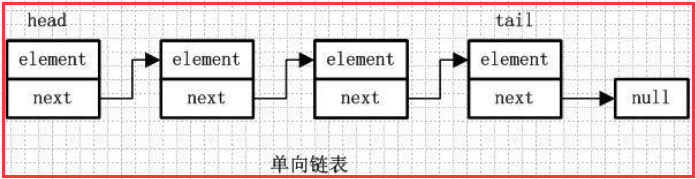
1.1)单向链表:
element:用来存放元素
next:用来指向下一个节点元素
通过每个结点的指针指向下一个结点从而链接起来的结构,最后一个节点的next指向null。
1.2)单向循环链表
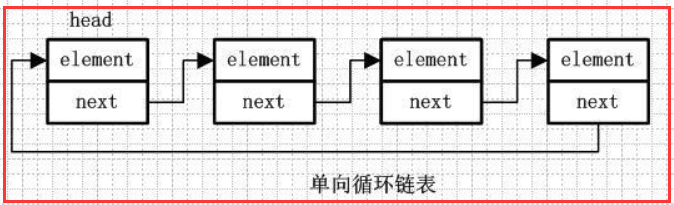
element、next 跟前面一样
在单向链表的最后一个节点的next会指向头节点,而不是指向null,这样存成一个环
1.3)双向链表
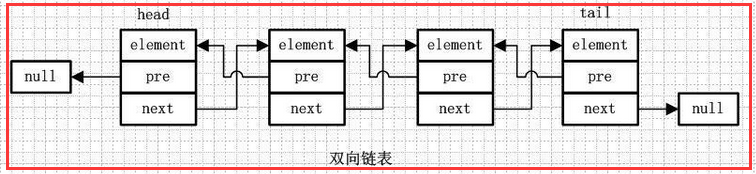
element:存放元素
pre:用来指向前一个元素
next:指向后一个元素
双向链表是包含两个指针的,pre指向前一个节点,next指向后一个节点,但是第一个节点head的pre指向null,最后一个节点的tail指向null。
1.4)双向循环链表
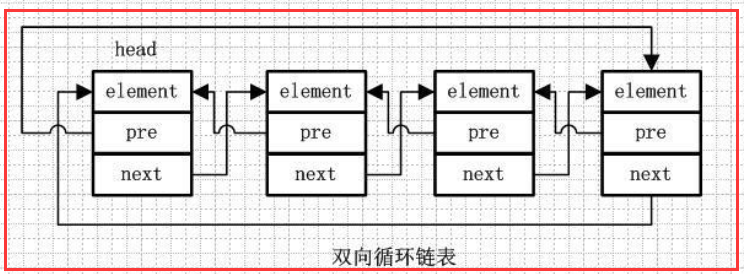
element、pre、next 跟前面的一样
第一个节点的pre指向最后一个节点,最后一个节点的next指向第一个节点,也形成一个“环”。
时间复杂度
(1)添加操作:O(n)
① addLast(e): O(n) ②addFirst(e): O(1) ③add(index, e): O(n/2)=O(n)
(2)删除操作:O(n)
① removeLast(e): O(n) ②removeFirst(e): O(1) ③remove(index, e): O(n/2)=O(n)
(3)查找操作:O(n)
① get(index): O(n) ②contains(e): O(n)
(4)修改操作:O(n)
① set(index,e): O(n)
三、代码实现
单链表的实现
图解如下:
插入
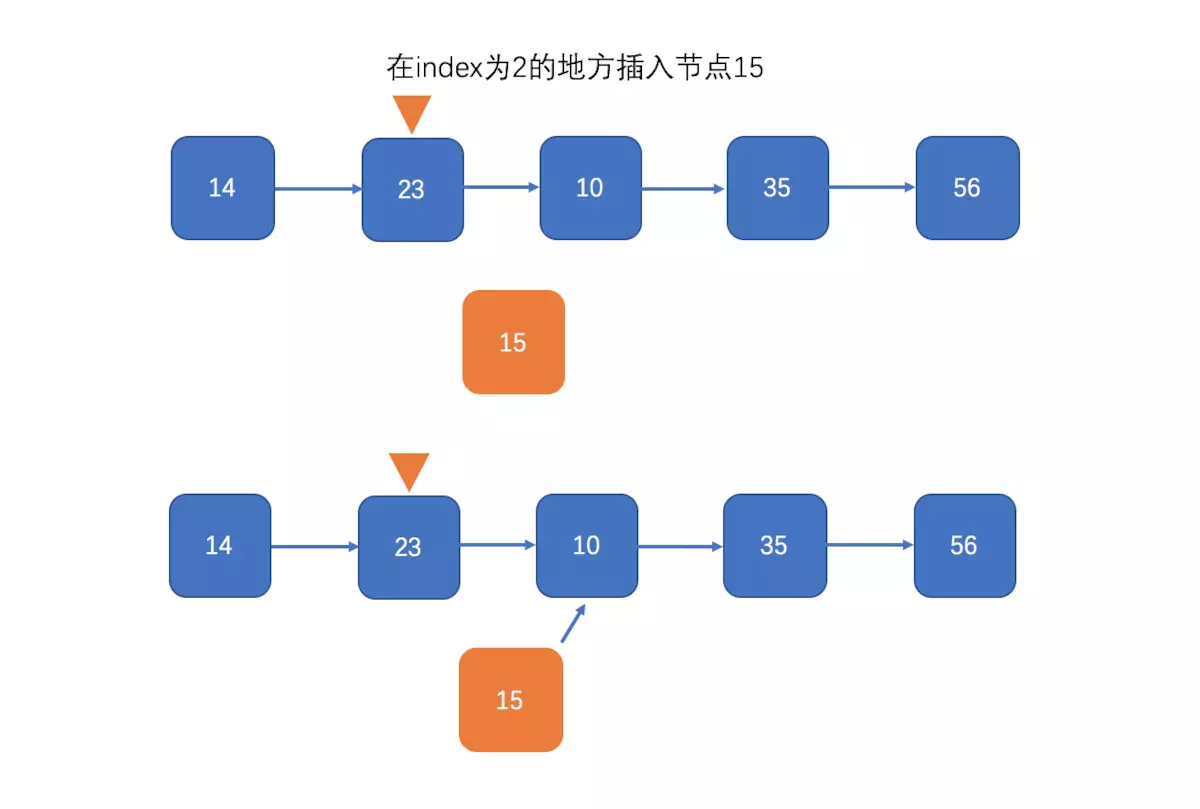
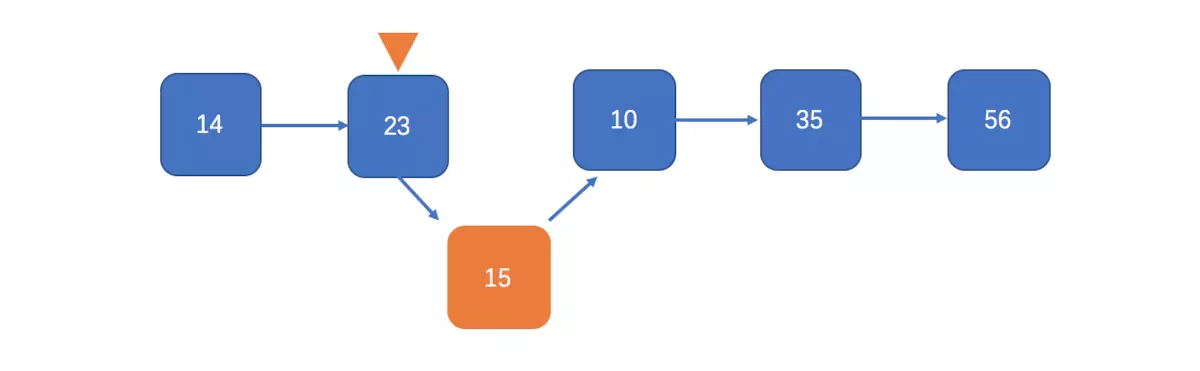
删除
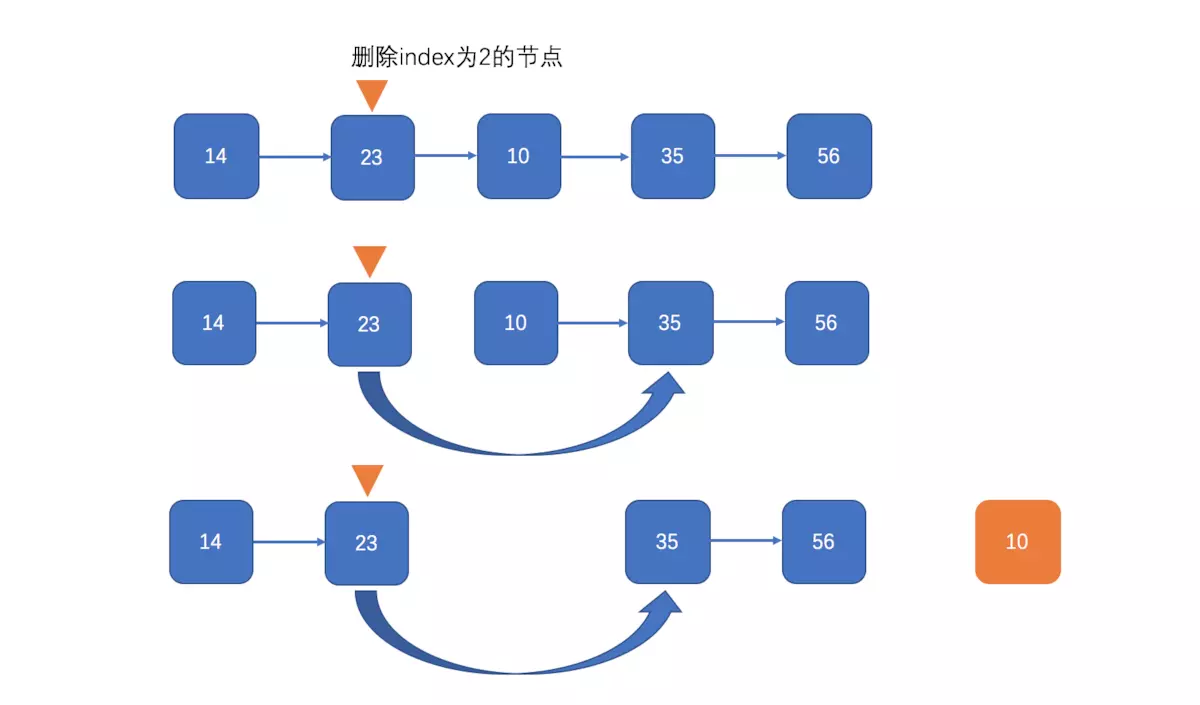
代码
public class LinkedList<E> {

    //链表节点,使用内部类

    private class Node{

        public E e; //当前节点内容

        public Node next; //指向下一个节点

        public Node(E e, Node next){

            this.e = e;

            this.next = next;

        }

        public Node(E e){

            this(e,null);

        }

        public Node(){

            this(null,null);

        }

        @Override

        public String toString(){

            return e.toString();

        }

    }

    private Node dummyHead; //虚拟头节点,位于第一位置的前一个位置

    private int size;//链表元素个数

    public LinkedList(){

        dummyHead = new Node();

        size = 0;

    }

    public int getSize(){

        return size;

    }

    //判断是否为空

    public boolean isEmpty(){

        return size == 0;

    }

    public void add(int index, E e){

        if(index < 0 || index > size){

            throw  new IllegalArgumentException("Add failed. Illegal index.");

        }

        Node prev = dummyHead;

        for (int i=0; i<index; i++){

            prev = prev.next;

        }

        prev.next = new Node(e,prev.next);

        size ++;

    }

    //在链表 表头添加新的元素e

    public void addFirst(E e){

        add(0,e);

    }

    //在链表 尾部添加新的元素e

    public void addList(E e){

        add(size,e);

    }

    //获得链表的第index位置的元素. 在链表中不是一个常用的操作,练习用

    public E get(int index){

        if(index < 0 || index >= size){

            throw  new IllegalArgumentException("index Illegal");

        }

        Node cur = dummyHead.next;

        for (int i =0; i<index; i++){

            cur = cur.next;

        }

        return cur.e;

    }

    public E getLast(){

        return get(size - 1);

    }

    public E getFirst(){

        return get(0);

    }

    public void set(int index,E e){

        if(index < 0 || index >= size){

            throw  new IllegalArgumentException("index Illegal");

        }

        Node cur = dummyHead.next;

        for (int i=0; i<index; i++){

            cur =cur.next;

        }

        cur.e = e;

    }

    //查找链表中是否包含元素e

    public boolean contains(E e){

        Node cur = dummyHead.next;

        while (cur != null){

            if (cur.e.equals(e))

                return true;

            cur = cur.next;

        }

        return false;

    }

    // 从链表中删除index(0-based)位置的元素, 返回删除的元素

    // 在链表中不是一个常用的操作,练习用:)

    public E remove(int index){

        if (index < 0 || index >= size){

            throw  new IllegalArgumentException("Remove failed. Index is illegal.");

        }

        Node prev = dummyHead;

        for (int i = 0; i < index; i++){

            prev = prev.next;

        }

        Node retNode = prev.next;

        prev.next = retNode.next;

        //删除retNode节点,则它的下一个节点指引就不需要了,设置null,让GC干活

        retNode.next = null;

        size --;

        return retNode.e;

    }

    public E removeFirst(){

        return remove(0);

    }

    public E removeLast(){

        return remove(size - 1);

    }

    public void removeElement(E e){

        Node prev = dummyHead;

        while (prev != null){

            if (prev.next.e.equals(e)){

                break;

            }

            prev = prev.next;

        }

        if (prev.next != null){

            Node delNode = prev.next;

            prev.next = delNode.next;

            delNode.next = null;

            size --;

        }

    }

    @Override

    public String toString(){

        StringBuilder stringBuilder = new StringBuilder();

        Node cur = dummyHead.next;

        while( cur != null){

            stringBuilder.append(cur + "- >");

            cur = cur.next;

        }

        stringBuilder.append("null");

        return  stringBuilder.toString();

    }

}
测试代码
public class LinkedListTest{

    public static void main(String[] args) {

        LinkedList linkedList = new LinkedList();

        for (int i=0; i< 10; i++){

            linkedList.add(i,i*10);

            System.out.println(linkedList);

        }

        linkedList.remove(1);

        System.out.println(linkedList);

        linkedList.removeElement(50);

        System.out.println(linkedList);

    }

}
//测试结果
0- >null

0- >10- >null

0- >10- >20- >null

0- >10- >20- >30- >null

0- >10- >20- >30- >40- >null

0- >10- >20- >30- >40- >50- >null

0- >10- >20- >30- >40- >50- >60- >null

0- >10- >20- >30- >40- >50- >60- >70- >null

0- >10- >20- >30- >40- >50- >60- >70- >80- >null

0- >10- >20- >30- >40- >50- >60- >70- >80- >90- >null

0- >20- >30- >40- >50- >60- >70- >80- >90- >null //删除第二个位置的10

0- >20- >30- >40- >60- >70- >80- >90- >null  //删除指定元素50
链表实现队列
import com.wj.queue.Queue; //Queue连接:https://www.cnblogs.com/FondWang/p/11808221.html

public class LinkedListQueue<E> implements Queue<E> {

    private class Node{

        public E e;

        public Node next;

        public Node(E e, Node next){

            this.e=e;

            this.next = next;

        }

        public Node(){

            this(null,null);

        }

        public Node(E e){

            this(e,null);

        }

        @Override

        public String toString() {

            return e.toString();

        }

    }

    private Node head, tail; //指针队首和队尾

    private int size; //数据个数

    public LinkedListQueue(){

        head = null;

        tail = null;

        size = 0;

    }

    @Override

    public int getSize() {

        return size;

    }

    @Override

    public boolean isEmpty() {

        return size == 0;

    }

    //入队

    @Override

    public void enqueue(Object o) {

        if (tail == null){

            tail = new Node((E) o);

            head = tail;

        }else {

            tail.next = new Node((E) o);

            tail = tail.next;

        }

        size++;

    }

    //出队

    @Override

    public E dequeue() {

        if (isEmpty()){

            throw new IllegalArgumentException("Cannot dequeue from an empty queue.");

        }

        Node retNode = head;

        head = head.next;

        retNode.next = null;

        if (head == null){

            tail = null;

        }

        size--;

        return retNode.e;

    }

    //返回队首元素

    @Override

    public E getFront() {

        if (isEmpty()){

            throw new IllegalArgumentException("Cannot dequeue from an empty queue.");

        }

        return head.e;

    }

    @Override

    public String toString() {

        StringBuilder stringBuilder = new StringBuilder();

        stringBuilder.append("Queue: front ");

        Node cur = head;

        while (cur != null){

            stringBuilder.append(cur + "- >");

            cur = cur.next;

        }

        stringBuilder.append("NULL tail");

        return stringBuilder.toString();

    }

}
测试类
public class LinkedListQueueTest{

     public static void main(String[] args) {

        LinkedListQueue linkedListQueue = new LinkedListQueue();

        for (int i=0; i<10; i++){

            linkedListQueue.enqueue(i);  //入队

            System.out.println(linkedListQueue);

            if (i % 3 ==0){

                linkedListQueue.dequeue();  //符合条件,出队

            }

        }

    }

}
//测试结果

Queue: front 0- >NULL tail

Queue: front 1- >NULL tail

Queue: front 1- >2- >NULL tail

Queue: front 1- >2- >3- >NULL tail

Queue: front 2- >3- >4- >NULL tail

Queue: front 2- >3- >4- >5- >NULL tail

Queue: front 2- >3- >4- >5- >6- >NULL tail

Queue: front 3- >4- >5- >6- >7- >NULL tail

Queue: front 3- >4- >5- >6- >7- >8- >NULL tail

Queue: front 3- >4- >5- >6- >7- >8- >9- >NULL tail
链表实现栈
import com.wj.stack.Stack; //详情连接:https://www.cnblogs.com/FondWang/p/11809042.html

public class LinkedListStack<E> implements Stack<E> {

    private LinkedList<E> linkedList;

    public LinkedListStack(){

        linkedList = new LinkedList<>();

    }

    @Override

    public int getSize() {

        return linkedList.getSize();

    }

    @Override

    public boolean isEmpty() {

        return linkedList.isEmpty();

    }

    //压入

    public void push(Object o) {

        linkedList.addFirst((E) o);

    }

    //移除

    @Override

    public E pop() {

        return linkedList.removeFirst();

    }

    //返回栈首元素

    @Override

    public E peek() {

        return linkedList.getFirst();

    }

    public String toString(){

        StringBuilder stringBuilder = new StringBuilder();

        stringBuilder.append("Stack: top ");

        stringBuilder.append(linkedList);

        return stringBuilder.toString();

    }

}
测试类
public class LinkedListStackTest{

        public static void main(String[] args) {

        LinkedListStack stack = new LinkedListStack();

        for (int i =0; i< 10; i++){

            stack.push(i); //压入

            System.out.println(stack);

        }

        System.out.println("=============");

        stack.pop(); //移除

        System.out.println(stack);

    }

}
//测试结果

Stack: top 0- >null

Stack: top 1- >0- >null

Stack: top 2- >1- >0- >null

Stack: top 3- >2- >1- >0- >null

Stack: top 4- >3- >2- >1- >0- >null

Stack: top 5- >4- >3- >2- >1- >0- >null

Stack: top 6- >5- >4- >3- >2- >1- >0- >null

Stack: top 7- >6- >5- >4- >3- >2- >1- >0- >null

Stack: top 8- >7- >6- >5- >4- >3- >2- >1- >0- >null

Stack: top 9- >8- >7- >6- >5- >4- >3- >2- >1- >0- >null //将第一个移除

=============

Stack: top 8- >7- >6- >5- >4- >3- >2- >1- >0- >null
四、效率对比
栈的对比
import com.wj.stack.ArrayStack; //详情连接:https://www.cnblogs.com/FondWang/p/11809042.html

import com.wj.stack.Stack;

import java.util.Random;

public class StackEfficiency {

    private static double testStack(Stack<Integer> stack, int opCount){

        long startTime = System.nanoTime();

        Random random = new Random();

        for (int i=0; i < opCount; i ++){

            stack.push(random.nextInt(Integer.MAX_VALUE));

        }

        for (int i=0; i < opCount; i ++){

            stack.pop();

        }

        long endTime = System.nanoTime();

        return (endTime - startTime) / 1000000000.0;

    }

    public static void main(String[] args) {

        int opCount = 100000;

        ArrayStack<Integer> arrayStack = new ArrayStack();

        double time1 = testStack(arrayStack,opCount);

        System.out.println("ArrayStack - time1: " + time1);

        LinkedListStack<Integer> linkedListStack = new LinkedListStack();

        double time2 = testStack(linkedListStack,opCount);

        System.out.println("LinkedListStack - time2: " + time2);

    }

}
//测试结果,添加和删除

ArrayStack - time1: 7.071363002

LinkedListStack - time2: 0.006395025
//说明数组的增删 效率要低于 链表。
//对于增删数组的时间复杂度是O(n),而链表是O(1)
队列的对比
import com.wj.queue.ArrayQueue;//详情:https://www.cnblogs.com/FondWang/p/11808221.html

import com.wj.queue.LoopQueue;

import com.wj.queue.Queue;

import java.util.Random;

public class MainQueue {

    private static double testStack(Queue<Integer> queue, int opCount){

        long startTime = System.nanoTime();

        Random random = new Random();

        for (int i=0; i < opCount; i ++){

            queue.enqueue(random.nextInt(Integer.MAX_VALUE));

        }

        for (int i=0; i < opCount; i ++){

            queue.dequeue();

        }

        long endTime = System.nanoTime();

        return (endTime - startTime) / 1000000000.0;

    }

    public static void main(String[] args) {

        int opCount = 1000000;


        ArrayQueue<Integer> arrayQueue = new ArrayQueue();

        double time1 = testStack(arrayQueue,opCount);

        System.out.println("ArrayStack - time1: " + time1);

        LinkedListQueue<Integer> linkedListQueue = new LinkedListQueue();

        double time2 = testStack(linkedListQueue,opCount);

        System.out.println("LinkedListStack - time2: " + time2);

        LoopQueue<Integer> loopQueue = new LoopQueue();

        double time3 = testStack(loopQueue,opCount);

        System.out.println("LoopQueue - time3: " + time3);

    }

}
//测试结果

ArrayQueue - time1: 368.014648575

LinkedListQueue - time2: 0.395344446

LoopQueue - time3: 0.045756219
//对于增删操作,数组(O(n))的时间复杂度高于链表队列和循环队列,所以数组最慢。
//链表和队列。队列增删只在队首和队尾,时间复杂度低于链表,所以循环队列要高于链表队列。
数据结构 -- 链表(LinkedList)的更多相关文章
- 模板 - 数据结构 - 链表/LinkedList
一个只供删除的双向链表,为了简单不再引入head节点,而且也不进行next的套娃操作.空间使用略微多了一些,但是无伤大雅. struct LinkedList { static const int M ...
- 数据结构之链表(LinkedList)(三)
数据结构之链表(LinkedList)(二) 环形链表 顾名思义 环形列表是一个首尾相连的环形链表 示意图 循环链表的特点是无须增加存储量,仅对表的链接方式稍作改变,即可使得表处理更加方便灵活. 看一 ...
- 数据结构之链表(LinkedList)(二)
数据结构之链表(LinkedList)(一) 双链表 上一篇讲述了单链表是通过next 指向下一个节点,那么双链表就是指不止可以顺序指向下一个节点,还可以通过prior域逆序指向上一个节点 示意图: ...
- 《数据结构与算法分析——C语言描述》ADT实现(NO.00) : 链表(Linked-List)
开始学习数据结构,使用的教材是机械工业出版社的<数据结构与算法分析——C语言描述>,计划将书中的ADT用C语言实现一遍,记录于此.下面是第一个最简单的结构——链表. 链表(Linked-L ...
- Python—数据结构——链表
数据结构——链表 一.简介 链表是一种物理存储上非连续,数据元素的逻辑顺序通过链表中的指针链接次序,实现的一种线性存储结构.由一系列节点组成的元素集合.每个节点包含两部分,数据域item和指向下一个节 ...
- (js描述的)数据结构[链表](4)
(js描述的)数据结构 [链表](4) 一.基本结构 二.想比于数组,链表的一些优点 1.内存空间不是必须连续的,可以充分利用计算机的内存,事项灵活的内存动态管理. 2.链表不必再创建时就确定大小,并 ...
- 数据结构和算法(Golang实现)(12)常见数据结构-链表
链表 讲数据结构就离不开讲链表.因为数据结构是用来组织数据的,如何将一个数据关联到另外一个数据呢?链表可以将数据和数据之间关联起来,从一个数据指向另外一个数据. 一.链表 定义: 链表由一个个数据节点 ...
- Redis数据结构—链表与字典的结构
目录 Redis数据结构-链表与字典的结构 链表 Redis链表节点的结构 Redis链表的表示 Redis链表用在哪 字典 Redis字典结构总览 Redis字典结构分解 Redis字典的使用 Re ...
- Redis数据结构—链表与字典
目录 Redis数据结构-链表与字典 链表 Redis链表节点的结构 Redis链表的表示 Redis链表用在哪 字典 Redis字典结构总览 Redis字典结构分解 哈希算法 解决键冲突 rehas ...
- 链表LinkedList、堆栈Stack、集合Set
链表LinkedList LinkedList 也像 ArrayList 一样实现了基本的 List 接口,但它在 List 中间执行插入和删除操作时比 ArrayList 更高效.然而,它在随机访问 ...
随机推荐
- P3144 [USACO16OPEN]关闭农场——离线,并查集
https://www.luogu.org/problem/P3144 每次关闭一个农场,农场之间有边相连,问每次关闭后开着的农场是否是一个连通块: 数据小,离线搞: 我们先记录删的顺序,然后倒着来, ...
- Spring Cloud Gateway(七):路由谓词工厂WeightRoutePredicateFactory
本文基于 spring cloud gateway 2.0.1 接上文 5.基于路由权重(weigth)的谓词工厂 Spring Cloud Gateway 提供了基于路由权重的断言工厂,配置时指定分 ...
- docker笔记--如何批量删掉已经停止的容器
(以下操作都是在root用户) 方法如下: (1)显示所有容器,过滤出状态为Exited的容器id,然后删除. # for i in `docker ps -a |grep Exited |awk ...
- Mac之Sublime Text使用Go
安装Golang build 包 点击 Preferences > Package control 菜单(MAC快捷键 shift + command + p) 在弹出的输入框输入 instal ...
- Pandas的Categorical Data
http://liao.cpython.org/pandas15/ Docs » Pandas的Categorical Data类型 15. Pandas的Categorical Data panda ...
- OpenJudge计算概论-人民币支付
/*========================================================== 人民币支付 总时间限制: 1000ms 内存限制: 65536kB 描述 从键 ...
- linux内核中设备树的维护者仓库地址
1. 仓库地址 git://git.kernel.org/pub/scm/linux/kernel/git/robh/linux.git https://kernel.googlesource.com ...
- angular 中数据循环 *ngFor
<!--The content below is only a placeholder and can be replaced.--> <div style="text-a ...
- springboot之freemarker 和thymeleaf模板web开发
Spring Boot 推荐使用Thymeleaf.FreeMarker.Velocity.Groovy.Mustache等模板引擎.不建议使用JSP. 一.Spring Boot 中使用Thymel ...
- CentOS7下搭建zabbix监控(三)——Zabbix监控服务配置
CentOS7下搭建zabbix监控(一)——Zabbix监控端配置 CentOS7下搭建zabbix监控(二)——Zabbix被监控端配置 (1).配置Zabbix监控Apache服务 主机名:yo ...