
TensorFlow笔记三:从Minist数据集出发 两种经典训练方法
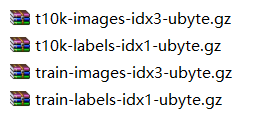
Minist数据集:MNIST_data 包含四个数据文件
一、方法一:经典方法 tf.matmul(X,w)+b
import tensorflow as tf

import numpy as np

import input_data

import time

#define paramaters

learning_rate=0.01

batch_size=128

n_epochs=900

# 1.read from data file

#using TF learn built in function to load MNIST data to the folder data

mnist=input_data.read_data_sets('MNIST_data/',one_hot=True)

# 2.creat placeholders for features and label

# each img in mnist data is 28*28 ,therefor need a 1*784 tensor

# 10 classes corresponding to 0-9

X=tf.placeholder(tf.float32,[batch_size,784],name='X_placeholder')

Y=tf.placeholder(tf.float32,[batch_size,10 ],name='Y_placeholder')

# 3.creat weight and bias ,w init to random variables with mean of 0 ;

# b init to 0 ,shape of b depends on Y ,shape of w depends on the dimension of X and Y_placeholder

w=tf.Variable(tf.random_normal(shape=[784,10],stddev=0.01),name='weights')

b=tf.Variable(tf.zeros([1,10]),name="bias")

# 4.build model to predict

# the model that returns the logits ,the logits will later passed through softmax layer

logits=tf.matmul(X,w)+b

# 5.define lose function

# use cross entropy of softmax of logits as the loss function

entropy=tf.nn.softmax_cross_entropy_with_logits(logits=logits, labels=Y,name='loss')

loss=tf.reduce_mean(entropy)

# 6.define training open

# using gradient descent with learning rate of 0.01 to minimize loss

optimizer=tf.train.GradientDescentOptimizer(learning_rate).minimize(loss)

with tf.Session() as sess:

    writer=tf.summary.FileWriter('./my_graph/logistic_reg',sess.graph)

    start_time= time.time()

    sess.run(tf.global_variables_initializer())

    n_batches=int(mnist.train.num_examples/batch_size)

    for i in range(n_epochs) :  #train n_epochs times

        total_loss=0

        for _ in range(n_batches):

            X_batch,Y_batch=mnist.train.next_batch(batch_size)

            _,loss_batch=sess.run([optimizer,loss],feed_dict={X:X_batch,Y:Y_batch})

            total_loss +=loss_batch

        if i%100==0:

            print('Average loss epoch {0} : {1}'.format(i,total_loss/n_batches))

    print('Total time: {0} seconds'.format(time.time()-start_time))

    print('Optimization Finished!')

# 7.test the model

    n_batches=int(mnist.test.num_examples/batch_size)

    total_correct_preds=0

    for i in range(n_batches):

        X_batch,Y_batch=mnist.test.next_batch(batch_size)

        _,loss_batch,logits_batch=sess.run([optimizer,loss,logits],feed_dict={X:X_batch,Y:Y_batch})

        preds=tf.nn.softmax(logits_batch)

        correct_preds=tf.equal(tf.argmax(preds,1),tf.argmax(Y_batch,1))

        accuracy=tf.reduce_sum(tf.cast(correct_preds,tf.float32))

        total_correct_preds+=sess.run(accuracy)

    print('Accuracy {0}'.format(total_correct_preds/mnist.test.num_examples))

    writer.close()
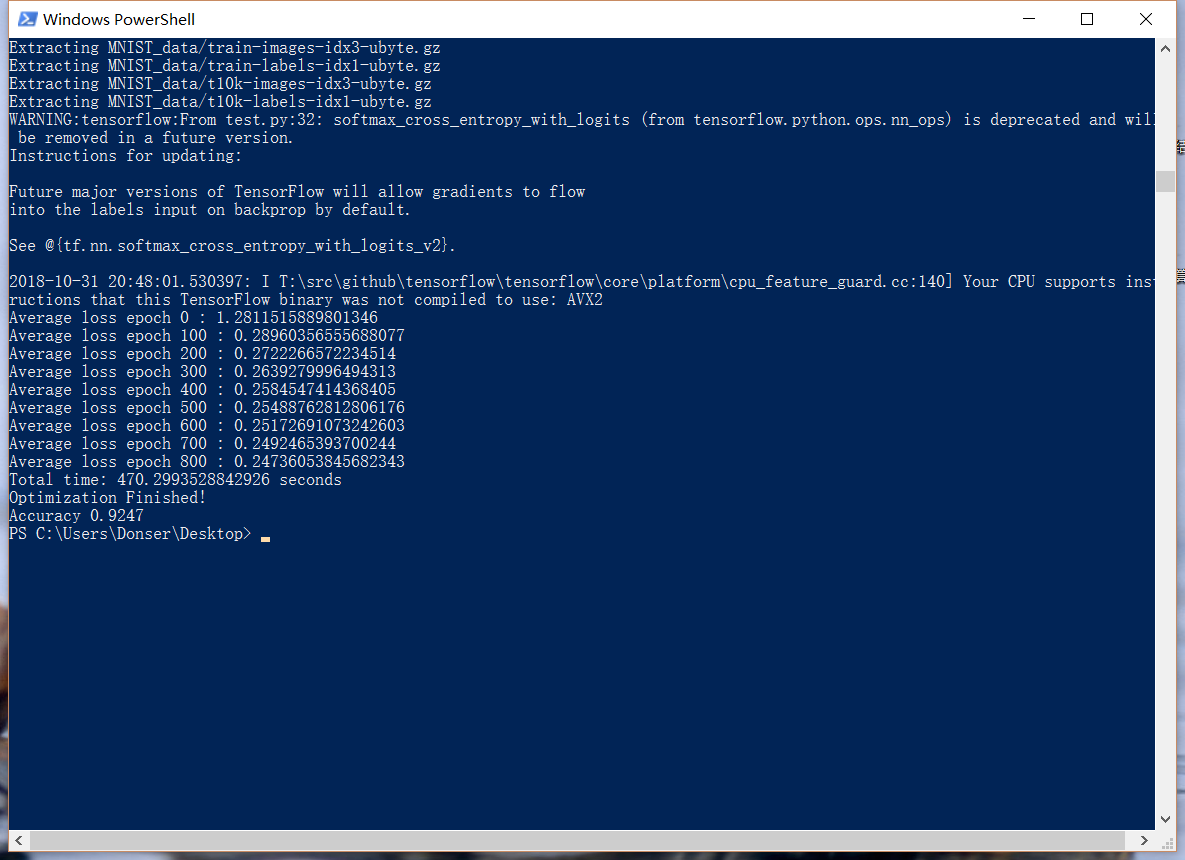
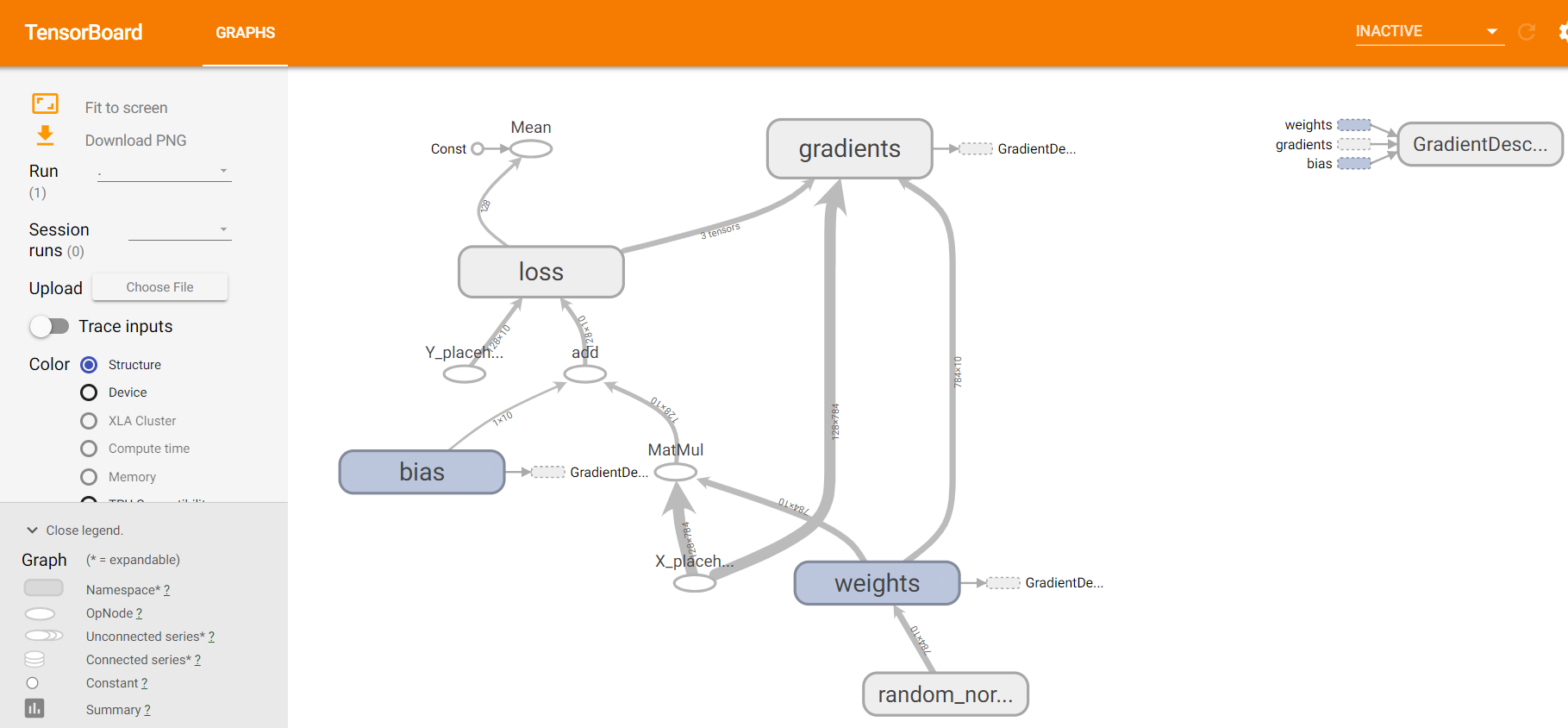
准确率大约是92%,TFboard:
二、方法二:deep learning 卷积神经网络
# load MNIST data

import input_data

mnist = input_data.read_data_sets("MNIST_data/", one_hot=True)

# start tensorflow interactiveSession

import tensorflow as tf

sess = tf.InteractiveSession()

# weight initialization

def weight_variable(shape):

    initial = tf.truncated_normal(shape, stddev=0.1)

    return tf.Variable(initial)

def bias_variable(shape):

    initial = tf.constant(0.1, shape = shape)

    return tf.Variable(initial)

# convolution

def conv2d(x, W):

    return tf.nn.conv2d(x, W, strides=[1, 1, 1, 1], padding='SAME')

# pooling

def max_pool_2x2(x):

    return tf.nn.max_pool(x, ksize=[1, 2, 2, 1], strides=[1, 2, 2, 1], padding='SAME')

# Create the model

# placeholder

x = tf.placeholder("float", [None, 784])

y_ = tf.placeholder("float", [None, 10])

# variables

W = tf.Variable(tf.zeros([784,10]))

b = tf.Variable(tf.zeros([10]))

y = tf.nn.softmax(tf.matmul(x,W) + b)

print (y)

# first convolutinal layer

w_conv1 = weight_variable([5, 5, 1, 32])

b_conv1 = bias_variable([32])

print (x)

x_image = tf.reshape(x, [-1, 28, 28, 1])

print (x_image)

h_conv1 = tf.nn.relu(conv2d(x_image, w_conv1) + b_conv1)

h_pool1 = max_pool_2x2(h_conv1)

print (h_conv1)

print (h_pool1)

# second convolutional layer

w_conv2 = weight_variable([5, 5, 32, 64])

b_conv2 = bias_variable([64])

h_conv2 = tf.nn.relu(conv2d(h_pool1, w_conv2) + b_conv2)

h_pool2 = max_pool_2x2(h_conv2)

print (h_conv2)

print (h_pool2)

# densely connected layer

w_fc1 = weight_variable([7*7*64, 1024])

b_fc1 = bias_variable([1024])

h_pool2_flat = tf.reshape(h_pool2, [-1, 7*7*64])

h_fc1 = tf.nn.relu(tf.matmul(h_pool2_flat, w_fc1) + b_fc1)

print (h_fc1)

# dropout

keep_prob = tf.placeholder("float")

h_fc1_drop = tf.nn.dropout(h_fc1, keep_prob)

print (h_fc1_drop)

# readout layer

w_fc2 = weight_variable([1024, 10])

b_fc2 = bias_variable([10])

y_conv = tf.nn.softmax(tf.matmul(h_fc1_drop, w_fc2) + b_fc2)

# train and evaluate the model

cross_entropy = -tf.reduce_sum(y_*tf.log(y_conv))

train_step = tf.train.GradientDescentOptimizer(1e-3).minimize(cross_entropy)

#train_step = tf.train.AdagradOptimizer(1e-4).minimize(cross_entropy)

correct_prediction = tf.equal(tf.argmax(y_conv, 1), tf.argmax(y_, 1))

accuracy = tf.reduce_mean(tf.cast(correct_prediction, "float"))

sess.run(tf.global_variables_initializer())

writer=tf.summary.FileWriter('./my_graph/mnist_deep',sess.graph)

# Train

tf.initialize_all_variables().run()

for i in range(1000):

    batch_xs, batch_ys = mnist.train.next_batch(100)

    #print (batch_xs.shape,batch_ys)

    if i % 100 == 0:

        train_accuracy = accuracy.eval(feed_dict={x: batch_xs, y_: batch_ys, keep_prob:0.5})

        print (("step %d, train accuracy %g" % (i, train_accuracy)))

    train_step.run({x: batch_xs, y_: batch_ys, keep_prob:0.5})

    #print(accuracy.eval({x: mnist.test.images, y_: mnist.test.labels}))

# Test trained model

print( ("python_base accuracy %g" % accuracy.eval(feed_dict={x:mnist.test.images[0:500], y_:mnist.test.labels[0:500], keep_prob:0.5})))

writer.close()
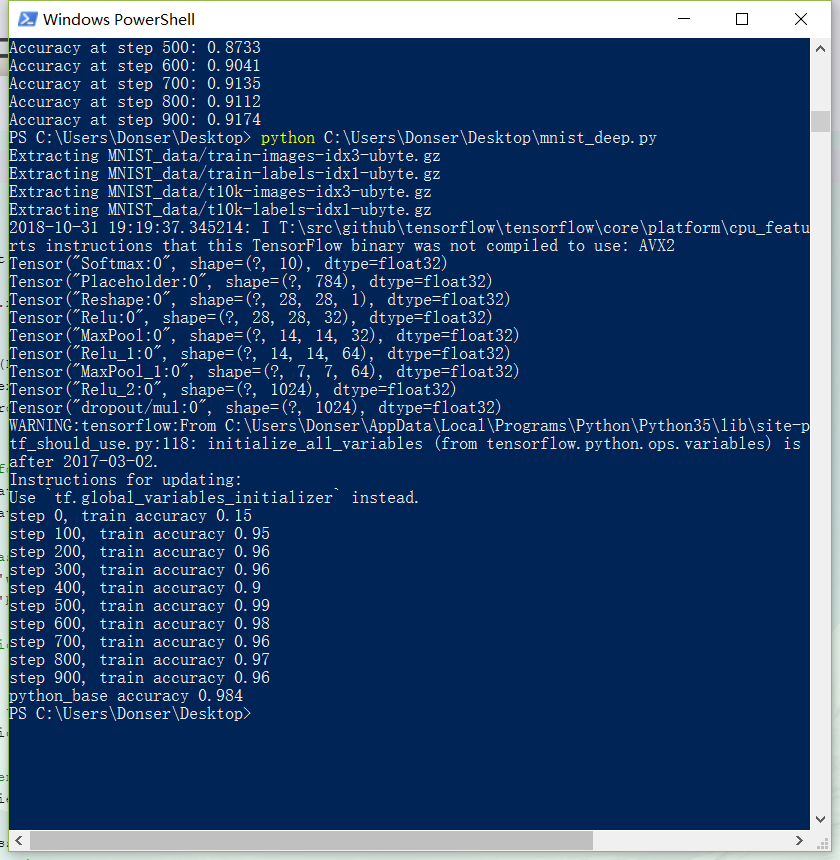
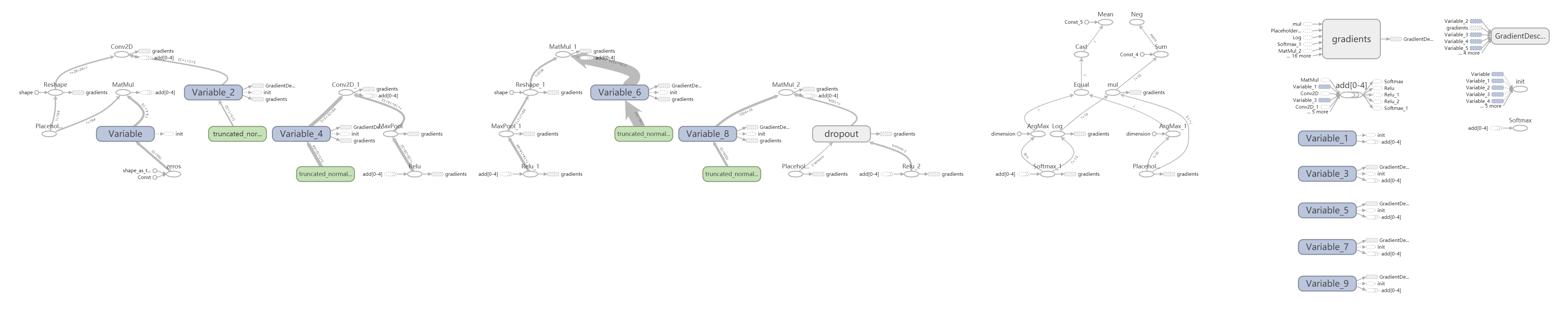
准确率达到98%,Board:
三、第三种 使用minist数据集做图像去噪
from keras.datasets import mnist

from keras.layers import Input, Dense

from keras.models import Model

from keras.layers import Input, Dense, Conv2D, MaxPooling2D, UpSampling2D

import numpy as np

from keras.callbacks import TensorBoard

import matplotlib.pyplot as plt

(x_train, _), (x_test, _) = mnist.load_data()

x_train = x_train.astype('float32') / 255.

x_test = x_test.astype('float32') / 255.

x_train = np.reshape(x_train, (len(x_train), 28, 28, 1))  # adapt this if using `channels_first` image data format

x_test = np.reshape(x_test, (len(x_test), 28, 28, 1))  # adapt this if using `channels_first` image data format

noise_factor = 0.5

x_train_noisy = x_train + noise_factor * np.random.normal(loc=0.0, scale=1.0, size=x_train.shape)

x_test_noisy = x_test + noise_factor * np.random.normal(loc=0.0, scale=1.0, size=x_test.shape)

x_train_noisy = np.clip(x_train_noisy, 0., 1.)

x_test_noisy = np.clip(x_test_noisy, 0., 1.)

x_train_noisy = x_train_noisy.astype(np.float)

x_test_noisy = x_test_noisy.astype(np.float)

input_img = Input(shape=(28, 28, 1))  # adapt this if using `channels_first` image data format

x = Conv2D(32, (3, 3), activation='relu', padding='same')(input_img)

x = MaxPooling2D((2, 2), padding='same')(x)

x = Conv2D(32, (3, 3), activation='relu', padding='same')(x)

encoded = MaxPooling2D((2, 2), padding='same')(x)

# at this point the representation is (7, 7, 32)

x = Conv2D(32, (3, 3), activation='relu', padding='same')(encoded)

x = UpSampling2D((2, 2))(x)

x = Conv2D(32, (3, 3), activation='relu', padding='same')(x)

x = UpSampling2D((2, 2))(x)

decoded = Conv2D(1, (3, 3), activation='sigmoid', padding='same')(x)

autoencoder = Model(input_img, decoded)

autoencoder.compile(optimizer='adadelta', loss='binary_crossentropy')

autoencoder.fit(x_train_noisy, x_train,

                epochs=100,

                batch_size=128,

                shuffle=True,

                validation_data=(x_test_noisy, x_test),

                callbacks=[TensorBoard(log_dir='/tmp/tb', histogram_freq=0, write_graph=True)])

n = 10

plt.figure(figsize=(20, 4))

for i in range(n):

#noisy data

    ax = plt.subplot(3, n, i+1)

    plt.imshow(x_test_noisy[i].reshape(28, 28))

    plt.gray()

    ax.get_xaxis().set_visible(False)

    ax.get_yaxis().set_visible(False)

#predict

    ax = plt.subplot(3, n, i+1+n)

    decoded_img = autoencoder.predict(x_test_noisy)

    plt.imshow(decoded_img[i].reshape(28, 28))

    plt.gray()

    ax.get_yaxis().set_visible(False)

    ax.get_xaxis().set_visible(False)

#original

    ax = plt.subplot(3, n, i+1+2*n)

    plt.imshow(x_test[i].reshape(28, 28))

    plt.gray()

    ax.get_yaxis().set_visible(False)

    ax.get_xaxis().set_visible(False)

plt.show()
使用了keras,见官网 https://blog.keras.io/building-autoencoders-in-keras.html
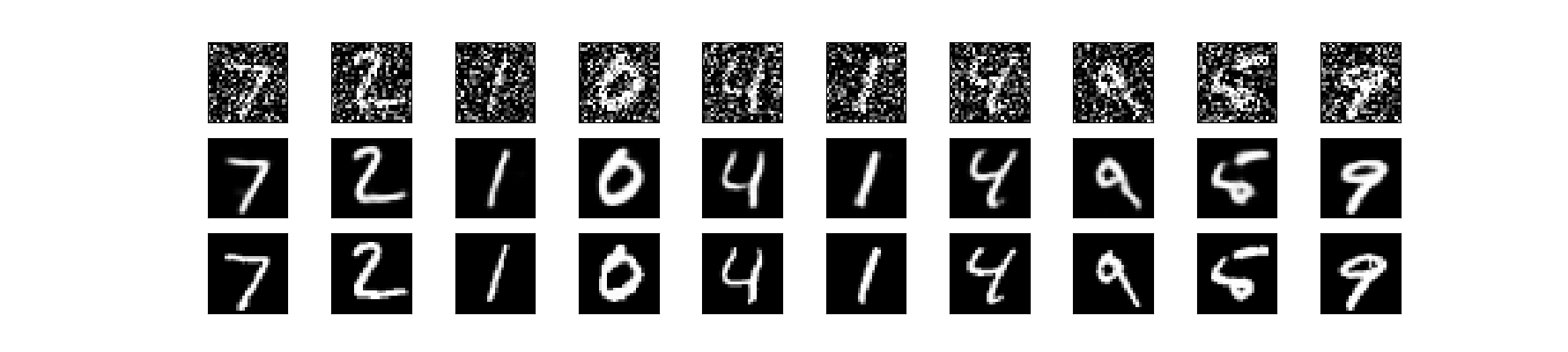
第一行是加了噪声的图,第二行是去噪以后的图,第三行是原图,回复效果较好
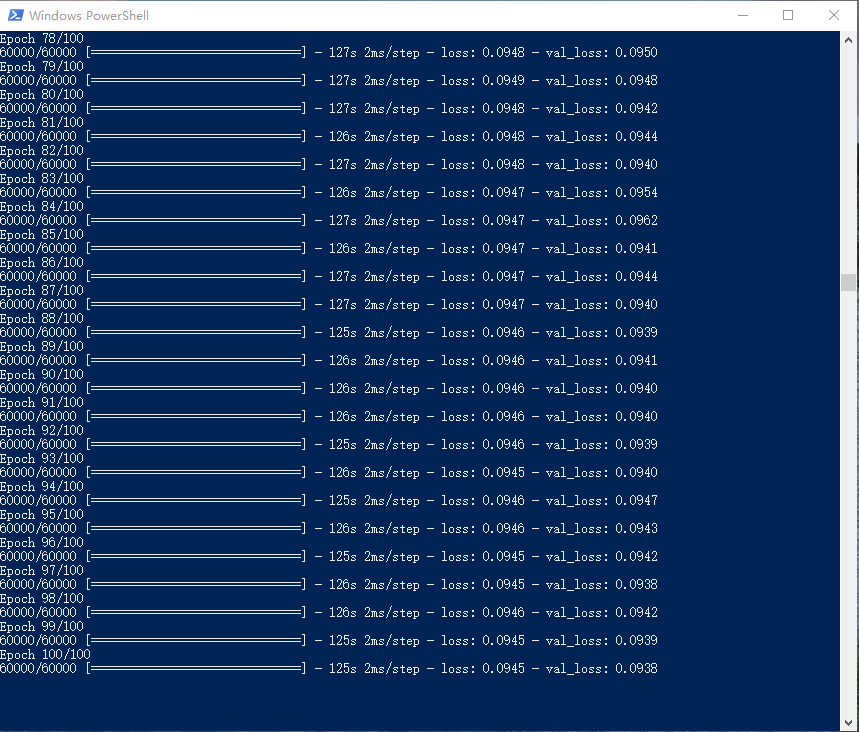
125s跑一个epoch,100组三个半小时搞定
tensorboard --logdir=/tmp/tb
TensorFlow笔记三:从Minist数据集出发 两种经典训练方法的更多相关文章
- angular学习笔记(三)-视图绑定数据的两种方式
绑定数据有两种方式: <!DOCTYPE html> <html ng-app> <head> <title>2.2显示文本</title> ...
- 单向LSTM笔记, LSTM做minist数据集分类
单向LSTM笔记, LSTM做minist数据集分类 先介绍下torch.nn.LSTM()这个API 1.input_size: 每一个时步(time_step)输入到lstm单元的维度.(实际输入 ...
- LWJGL3的内存管理,第三篇,剩下的两种策略
LWJGL3的内存管理,第三篇,剩下的两种策略 上一篇讨论的基于 MemoryStack 类的栈上分配方式,是效率最高的,但是有些情况下无法使用.比如需要分配的内存较大,又或许生命周期较长.这时候就可 ...
- 中间自适应,左右定宽的两种经典布局 ---- 圣杯布局 VS 双飞翼布局
一.引子 最近学了些js框架,小有充实感,又深知如此节奏的前提需得基础扎实,于是回头想将原生CSS和Javascript回顾总结一番,先从CSS起,能集中它的就在基础的布局上,便查阅了相关资料,将布局 ...
- Android(java)学习笔记147:textView 添加超链接(两种实现方式,,区别于WebView)
1.方式1: LinearLayout layout = new LinearLayout(this); LinearLayout.LayoutParams params = new LinearLa ...
- react学习笔记1之声明组件的两种方式
//定义组件有两种方式,函数和类 function Welcome(props) { return <h1>Hello, {props.name}</h1>; } class ...
- 三,memcached服务的两种访问方式
memcached有两种访问方式,分别是使用telnet访问和使用php访问. 1,使用telnet访问memcacehd 在命令提示行输入, (1)连接memcached指令:telnet 127. ...
- TQ2440学习笔记——Linux上I2C驱动的两种实现方法(1)
作者:彭东林 邮箱:pengdonglin137@163.com 内核版本:Linux-3.14 u-boot版本:U-Boot 2015.04 硬件:TQ2440 (NorFlash:2M Na ...
- Android(java)学习笔记90:TextView 添加超链接(两种实现方式)
1. TextView添加超链接: TextView添加超链接有两种方式,它们有区别于WebView: (1)方式1: LinearLayout layout = new LinearLayout(t ...
随机推荐
- git放弃修改&放弃增加文件
1. 本地修改了一堆文件(并没有使用git add到暂存区),想放弃修改. 单个文件/文件夹: git checkout -- filename 所有文件/文件夹: git checkout . 2. ...
- Codeforces 1062E 题解
给出一棵有根树,1为根结点,接下来q次询问,每次给出一个[l,r]区间,现在允许删掉[l,r]区间内任何一个点,使得所有点的最近公共祖先的深度尽可能大,问删掉的点是哪个点,深度最大是多少. 做法: 线 ...
- leetcode NO.171 Excel表列序号 (python实现)
来源 https://leetcode-cn.com/problems/excel-sheet-column-number/description/ 题目描述 给定一个Excel表格中的列名称,返回其 ...
- PAT1021
给定一个k位整数N = dk-1*10k-1 + ... + d1*101 + d0 (0<=di<=9, i=0,...,k-1, dk-1>0),请编写程序统计每种不同的个位数字 ...
- P3078 [USACO13MAR]扑克牌型Poker Hands
题目描述 Bessie and her friends are playing a unique version of poker involving a deck with N (1 <= N ...
- Bolzano-Weierstrass 定理
这个定理是从吴崇试老师的数学物理方法课里看到的,表述如下: 有界的无穷(复数)序列至少有一个聚点. 序列的聚点定义为 给定序列 $\{z_n\}$,若存在复数 $z$,对于任意给定的 $\vareps ...
- [luoguP2596] [ZJOI2006]书架(splay)
传送门 题目中的几个操作,直接splay搞一下即可: 把s旋转到根,左子树接到右子树 把s旋转到根,右子树接到左子树 交换s相邻的信息即可 把s旋转到根,左子树的大小即为答案 找第k大 没了 #inc ...
- 小程序红包开发跳坑记 微信小程序红包接口开发过程中遇到的问题 微信小程序红包开发
现在做小程序的越来越多,商家推广也是一个瓶颈,谁不发点红包,都很难找到人来用你的微信小程序了.于是不管你开发什么小程序功能,你或多或少都要用到小程序来发红包吧. 我们自己之前做公众号发红包,做了两三 ...
- jsp导出table数据excel表
<html> <head> <meta http-equiv="content-Type" content="text/html;chars ...
- [LeetCode] Search Insert Position 二分搜索
Given a sorted array and a target value, return the index if the target is found. If not, return the ...