
【极角排序、扫描线】UVa 1606 - Amphiphilic Carbon Molecules(两亲性分子)
Shanghai Hypercomputers, the world's largest computer chip manufacturer, has invented a new class of nanoparticles called Amphiphilic Carbon Molecules (ACMs). ACMs are semiconductors. It means that they can be either conductors or insulators of electrons, and thus possess a property that is very important for the computer chip industry. They are also amphiphilic molecules, which means parts of them are hydrophilic while other parts of them are hydrophobic. Hydrophilic ACMs are soluble in polar solvents (for example, water) but are insoluble in nonpolar solvents (for example, acetone). Hydrophobic ACMs, on the contrary, are soluble in acetone but insoluble in water. Semiconductor ACMs dissolved in either water or acetone can be used in the computer chip manufacturing process.
As a materials engineer at Shanghai Hypercomputers, your job is to prepare ACM solutions from ACM particles. You go to your factory everyday at 8 am and find a batch of ACM particles on your workbench. You prepare the ACM solutions by dripping some water, as well as some acetone, into those particles and watch the ACMs dissolve in the solvents. You always want to prepare unmixed solutions, so you first separate the ACM particles by placing an Insulating Carbon Partition Card (ICPC) perpendicular to your workbench. The ICPC is long enough to completely separate the particles. You then drip water on one side of the ICPC and acetone on the other side. The ICPC helps you obtain hydrophilic ACMs dissolved in water on one side and hydrophobic ACMs dissolved in acetone on the other side. If you happen to put the ICPC on top of some ACM particles, those ACMs will be right at the border between the water solution and the acetone solution, and they will be dissolved. Fig.1 shows your working situation.
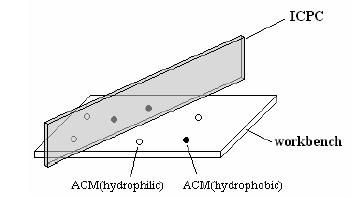
Your daily job is very easy and boring, so your supervisor makes it a little bit more challenging by asking you to dissolve as much ACMs into solution as possible. You know you have to be very careful about where to put the ICPC since hydrophilic ACMs on the acetone side, or hydrophobic ACMs on the water side, will not dissolve. As an experienced engineer, you also know that sometimes it can be very difficult to find the best position for the ICPC, so you decide to write a program to help you. You have asked your supervisor to buy a special digital camera and have it installed above your workbench, so that your program can obtain the exact positions and species (hydrophilic or hydrophobic) of each ACM particle in a 2D pictures taken by the camera. The ICPC you put on your workbench will appear as a line in the 2D pictures.
Input
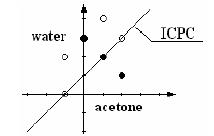
There will be no more than 10 test cases. Each case starts with a line containing an integer N, which is the number of ACM particles in the test case. N lines then follow. Each line contains three integers x, y, r, where (x, y) is the position of the ACM particle in the 2D picture and r can be 0 or 1, standing for the hydrophilic or hydrophobic type ACM respectively. The absolute value of x, y will be no larger than 10000. You may assume that N is no more than 1000. N = 0 signifies the end of the input and need not be processed. Fig.2 shows the positions of ACM particles and the best ICPC position for the last test case in the sample input.
Output
For each test case, output a line containing a single integer, which is the maximum number of dissolved ACM particles.
Sample Input
3

0 0 0

0 1 0

2 2 1

4

0 0 0

0 4 0

4 0 0

1 2 1

7

-1 0 0

1 2 1

2 3 0

2 1 1

0 3 1

1 4 0

-1 2 0

0

【题意】  给定平面上的n个点,分别为黑色和白色,现在需要放置一条隔板,使得隔板一侧的白点数目加上另一侧的黑点总数最大。隔板上的点可以看做是在任意一侧;

【分析】  贪心策略:假设隔板一定经过至少两个点;

      方法:①暴力枚举--先枚举两个点,然后输出两侧黑白点的个数。复杂度O(n^3).90%会TLE...;
         ②先找一个基准点,让隔板绕该点旋转。每当隔板扫过一个点就动态修改两侧的点数。在此之前,需对所有点相对于基准点(即将基准点看做(0,0))进行极角排序。复杂度O(n^2*logn);
【NOTE】  极角排序:通俗的说,就是根据坐标系内每一个点与x轴所成的角,逆时针比较,。按照角度从小到大的方式排序。用到的函数是atan2(y, x);
       扫描线:这个概念也比较好理解。注意动态维护的时候细节问题(代码中会有详解,当然只针对自己这种第一次接触看不懂人家代码的菜)。
       小技巧:因题目要求求两侧不同颜色的点数和,可以预处理将黑点做中心对称。这样原本位于两侧的黑白点的点就会分布在同一侧内了(真心巧妙。。。);
【代码】
 #include<iostream>

 #include<cstdio>

 #include<cstdlib>

 #include<cmath>

 #include<algorithm>

 using namespace std;

 const int maxn = ;

 struct Node

 {

     int x, y;

     double rad;

     int col;

     bool operator < (const Node& a) const

     {

         return rad < a.rad;

     }

 }node[maxn], tnode[maxn];

 int Cross(Node a, Node b)

 {

     return (a.x*b.y - b.x*a.y) >= ;

 }

 int main()

 {

     //freopen("out.txt", "w", stdout) ;

     int n, ans, cnt = ;

     while(scanf("%d", &n) && n)

     {

         ans = ;

         for(int i = ; i < n; i++)

         {

             scanf("%d%d%d", &node[i].x, &node[i].y, &node[i].col);

         }

         if(n <= ) {printf("%d\n", n); continue;}

         cnt = ;

         for(int basicp = ; basicp < n; basicp++) //基准点

         {

             for(int i = ; i < n; i++) //各点相对于基准点的坐标

             {

                 if(i == basicp) continue;

                 tnode[cnt].x = node[i].x-node[basicp].x;

                 tnode[cnt].y = node[i].y-node[basicp].y;

                 if(node[i].col) {tnode[cnt].x = -tnode[cnt].x; tnode[cnt].y = -tnode[cnt].y;} //对黑点中心对称

                 tnode[cnt].rad = atan2(tnode[cnt].y, tnode[cnt].x); //求极角

                 cnt++;

             }

             sort(tnode, tnode+cnt); //极角排序。几何意义为由x轴正半轴逆时针旋转;

             int l = , r = ; //l, r:求tnode[l~r]之间的点

             int sum = ; //注意这个sum = 2;

             while(l < cnt)

             {

                 if(r == l) //主要针对初始情况

                 {

                     r=(r+)%cnt;  sum++;

                 }

                 while(l != r&&Cross(tnode[l],tnode[r])) //Cross(tnode[l],tnode[r]) 叉积:若小于0则两点的夹角大于180度。跳出循环

                 {

                     r=(r+)%cnt;  sum++;

                 }

                 sum--;  //sum-1主要是为了在枚举新的起点时减去老的起点。而初始sum=2也是为了符合这一条件

                 l++; //枚举新的起点

                 ans=max(ans,sum);

             }

         }

         cout << ans << endl;

     }

     return ;

 }
【总结】 看代码很明显又是看了别人的。希望能长个教训吧,以后遇到类似的题自己能独立写出来、
【极角排序、扫描线】UVa 1606 - Amphiphilic Carbon Molecules(两亲性分子)的更多相关文章
- UVA 1606 Amphiphilic Carbon Molecules 两亲性分子 (极角排序或叉积,扫描法)
任意线可以贪心移动到两点上.直接枚举O(n^3),会TLE. 所以采取扫描法,选基准点,然后根据极角或者两两做叉积比较进行排排序,然后扫一遍就好了.旋转的时候在O(1)时间推出下一种情况,总复杂度为O ...
- uva 1606 amphiphilic carbon molecules【把缩写写出来,有惊喜】(滑动窗口)——yhx
Shanghai Hypercomputers, the world's largest computer chip manufacturer, has invented a new classof ...
- UVA - 1606 Amphiphilic Carbon Molecules 极角扫描法
题目:点击查看题目 思路:这道题的解决思路是极角扫描法.极角扫描法的思想主要是先选择一个点作为基准点,然后求出各点对于该点的相对坐标,同时求出该坐标系下的极角,按照极角对点进行排序.然后选取点与基准点 ...
- UVA - 1606 Amphiphilic Carbon Molecules (计算几何,扫描法)
平面上给你一些具有黑或白颜色的点,让你设置一个隔板,使得隔板一侧的黑点加上另一侧的白点数最多.隔板上的点可视作任意一侧. 易知一定存在一个隔板穿过两个点且最优,因此可以先固定以一个点为原点,将其他点中 ...
- UVa 1606 Amphiphilic Carbon Molecules (扫描法+极角排序)
题意:平面上有 n 个点,每个点不是黑的就是白的,现在要放一个隔板,把它们分成两部分,使得一侧的白点数加上另一侧的黑点数最多. 析:这个题很容易想到的就是暴力,不妨假设隔板至少经过两个点,即使不经过也 ...
- UVa 1606 - Amphiphilic Carbon Molecules
链接: https://uva.onlinejudge.org/index.php?option=com_onlinejudge&Itemid=8&page=show_problem& ...
- UVA - 1606 Amphiphilic Carbon Molecules(两亲性分子)(扫描法)
题意:平面上有n(n <= 1000)个点,每个点为白点或者黑点.现在需放置一条隔板,使得隔板一侧的白点数加上另一侧的黑点数总数最大.隔板上的点可以看做是在任意一侧. 分析:枚举每个基准点i,将 ...
- 【UVa】1606 Amphiphilic Carbon Molecules(计算几何)
题目 题目 分析 跟着lrj学的,理解了,然而不是很熟,还是发上来供以后复习 代码 #include <bits/stdc++.h> using namespace std; ; stru ...
- POJ 2280 Amphiphilic Carbon Molecules 极角排序 + 扫描线
从TLE的暴力枚举 到 13313MS的扫描线 再到 1297MS的简化后的扫描线,简直感觉要爽翻啦.然后满怀欣喜的去HDU交了一下,直接又回到了TLE.....泪流满面 虽说HDU的时限是2000 ...
随机推荐
- jxse2.6连接外网rdv一直连接不上,而相同的代码用jxse2.7却能连上
一直以为2.6中的bug会少一些,所以用2.6做开发:之前测试一直是在同一台 机器上,所以没啥问题:最近在外网设置了一个rdv,却一直连不上,困扰了n久,尝试各种方式都不起作用.最后想起以前开发的代码 ...
- Gradle – Spring 4 MVC Hello World Example
In this tutorial, we will show you a Gradle + Spring 4 MVC, Hello World Example (JSP view), XML conf ...
- 典型LoadRunner脚本
Action() { int rc = 0; int cmp_result = 0; char over_msg[] = "\"真遗憾,好心塞,手慢了一下,已经被人抢走了,再去看看 ...
- WinFrom界面框架之WeifenLuo.WinFormsUI.Docking + OutLookBar
本文转载:http://www.cnblogs.com/luomingui/p/3329763.html WeifenLuo.WinFormsUI.Docking + OutLookBar结合使用的效 ...
- javascript keycode大全【转载】
keycode 8 = BackSpace BackSpace keycode 9 = Tab Tabkeycode 12 = Clearkeycode 13 = Enterkey ...
- 【转】使用GDB调试Coredump文件
来自:http://blog.ddup.us/?p=176 写C/C++程序经常要直接和内存打交道,一不小心就会造成程序执行时产生Segment Fault而挂掉.一般这种情况都是因为数组越界访问,空 ...
- C++ struct与class
1.相对于C中struct,C++做了很大的扩充.基本上和class 差不多.只有一些细节上的差别. 2.对于成员的默认访问权限,class是private,struct是public.需要注意的是, ...
- 在WebClient中使用post[发送数据]
很多时候,我们需要使用C#中的WebClient 来收发数据,WebClient 类提供向 URI 标识的任何本地.Intranet 或 Internet 资源发送数据以及从这些资源接收数据的公共方法 ...
- Ogre分层渲染 (转)
Ogre分层渲染 转载请注明出处!http://www.cnblogs.com/pulas 在超大的场景中,如果既想看到近处的物体,又想看到很远的物体,则必须把相机的远近裁剪面距离设得很大.远近裁剪面 ...
- 怎样拷贝整个目录并且忽略部分文件及目录(包括windows)
http://www.dewen.org/q/2150 rsync -a --exclude dir1 --exclude dir2 ... source target