
17. Spring Boot 配置嵌入式Servlet容器
一、如何定制和修改Servlet容器的相关配置
1、配置文件(ServerProperties);
优先级最高
server.port=8081

server.context‐path=/crud

server.tomcat.uri‐encoding=UTF‐8

//通用的Servlet容器设置

server.xxx

//Tomcat的设置

server.tomcat.xxx
2、java代码
2.1 Spring Boot 1.5.10 版本
@Bean //一定要将这个定制器加入到容器中 嵌入式的Servlet容器定制器

public EmbeddedServletContainerCustomizer embeddedServletContainerCustomizer(){

  return new EmbeddedServletContainerCustomizer() {

    //定制嵌入式的Servlet容器相关的规则

    @Override

    public void customize(ConfigurableEmbeddedServletContainer container) {

      container.setPort(8083);

    }

  };

}
2.2 Spring Boot 2.1.0版本
2.2.1、 方式1 (优先级第二)
import org.springframework.boot.web.server.WebServerFactoryCustomizer;

import org.springframework.boot.web.servlet.server.ConfigurableServletWebServerFactory;

import org.springframework.stereotype.Component;

@Component

public class CustomizationBean implements WebServerFactoryCustomizer<ConfigurableServletWebServerFactory> {

    @Override

    public void customize(ConfigurableServletWebServerFactory server) {

        server.setPort(9000);

    }

}
2.2.2、方式2 (优先级最低)
@Bean

public ConfigurableServletWebServerFactory webServerFactory() {

    TomcatServletWebServerFactory factory = new TomcatServletWebServerFactory();

    factory.setPort(9000);

    // factory.setSessionTimeout(10, TimeUnit.MINUTES);  此方法没找到

    factory.addErrorPages(new ErrorPage(HttpStatus.NOT_FOUND, "/notfound.html"));

    return factory;

}
二、自定义Servlet容器
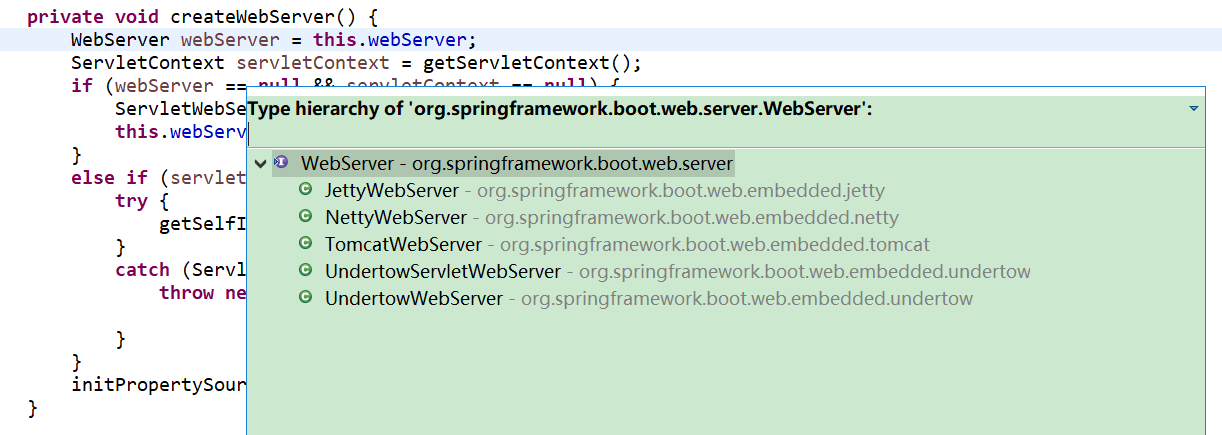
1、Spring Boot 支持的 Servlet容器类型

2、切换Tomcat容器为jetty容器
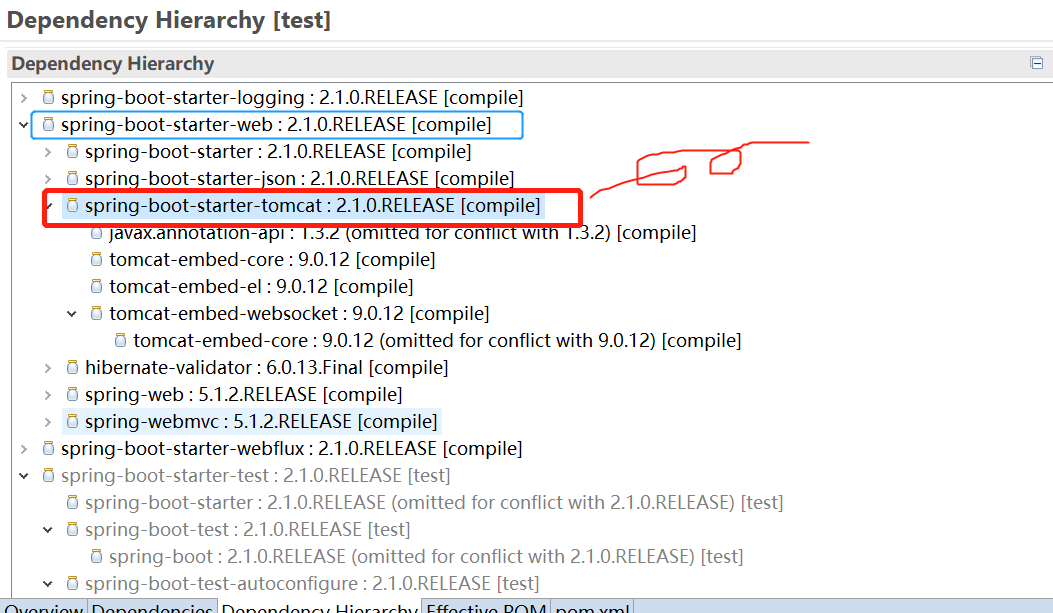
<dependency>

    <groupId>org.springframework.boot</groupId>

    <artifactId>spring-boot-starter-web</artifactId>

    <exclusions><!-- 排除掉默认的Tomcat web容器-->

        <exclusion>

            <groupId>org.springframework.boot</groupId>

            <artifactId>spring-boot-starter-tomcat</artifactId>

        </exclusion>

    </exclusions>

</dependency>

<!-- 引入jetty容器。jetty 适合长连接的场景-->

<dependency>

    <groupId>org.springframework.boot</groupId>

    <artifactId>spring-boot-starter-jetty</artifactId><!--  spring-boot-starter-undertow ,不支持JSP-->

</dependency>
undertow
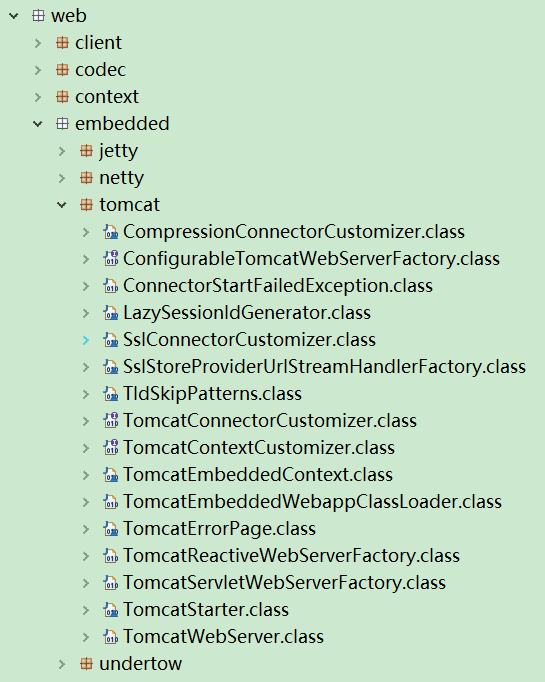
包下:spring-boot-autoconfigure-2.1.0.RELEASE.jar
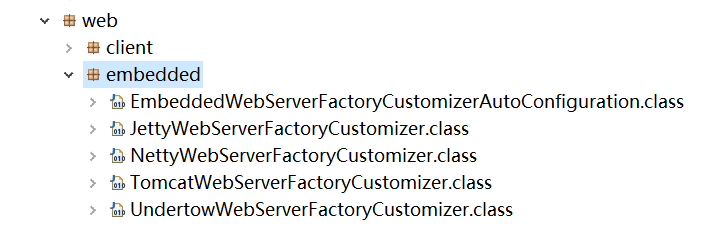
三、嵌入式Servlet容器自动配置原理Spring Boot 2.1.0版本示例: (注:1.5.10 和2.1.0版本有很大不同)
Servelt容器的自动配置类
@Configuration

@ConditionalOnWebApplication

@EnableConfigurationProperties(ServerProperties.class)

public class EmbeddedWebServerFactoryCustomizerAutoConfiguration {

    /**

     * Nested configuration if Tomcat is being used.

     */

    @Configuration

    @ConditionalOnClass({ Tomcat.class, UpgradeProtocol.class })

    public static class TomcatWebServerFactoryCustomizerConfiguration {

        @Bean

        public TomcatWebServerFactoryCustomizer tomcatWebServerFactoryCustomizer(

                Environment environment, ServerProperties serverProperties) {

            return new TomcatWebServerFactoryCustomizer(environment, serverProperties);

        }

    }

    /**

     * Nested configuration if Jetty is being used.

     */

    @Configuration

    @ConditionalOnClass({ Server.class, Loader.class, WebAppContext.class })

    public static class JettyWebServerFactoryCustomizerConfiguration {

        @Bean

        public JettyWebServerFactoryCustomizer jettyWebServerFactoryCustomizer(

                Environment environment, ServerProperties serverProperties) {

            return new JettyWebServerFactoryCustomizer(environment, serverProperties);

        }

    }

    /**

     * Nested configuration if Undertow is being used.

     */

    @Configuration

    @ConditionalOnClass({ Undertow.class, SslClientAuthMode.class })

    public static class UndertowWebServerFactoryCustomizerConfiguration {

        @Bean

        public UndertowWebServerFactoryCustomizer undertowWebServerFactoryCustomizer(

                Environment environment, ServerProperties serverProperties) {

            return new UndertowWebServerFactoryCustomizer(environment, serverProperties);

        }

    }

    /**

     * Nested configuration if Netty is being used.

     */

    @Configuration

    @ConditionalOnClass(HttpServer.class)

    public static class NettyWebServerFactoryCustomizerConfiguration {

        @Bean

        public NettyWebServerFactoryCustomizer nettyWebServerFactoryCustomizer(

                Environment environment, ServerProperties serverProperties) {

            return new NettyWebServerFactoryCustomizer(environment, serverProperties);

        }

    }

}
Tomcat 的Server的定制(Jetty、Netty、Undertow 类似)
public class TomcatWebServerFactoryCustomizer implements

        WebServerFactoryCustomizer<ConfigurableTomcatWebServerFactory>, Ordered {

    private final Environment environment;

    private final ServerProperties serverProperties;

    public TomcatWebServerFactoryCustomizer(Environment environment,

            ServerProperties serverProperties) {

        this.environment = environment;

        this.serverProperties = serverProperties;

    }

    @Override

    public int getOrder() {

        return ;

    }

    @Override

    public void customize(ConfigurableTomcatWebServerFactory factory) {

        ServerProperties properties = this.serverProperties;

        ServerProperties.Tomcat tomcatProperties = properties.getTomcat();

        PropertyMapper propertyMapper = PropertyMapper.get();

        propertyMapper.from(tomcatProperties::getBasedir).whenNonNull()

                .to(factory::setBaseDirectory);

        propertyMapper.from(tomcatProperties::getBackgroundProcessorDelay).whenNonNull()

                .as(Duration::getSeconds).as(Long::intValue)

                .to(factory::setBackgroundProcessorDelay);

        customizeRemoteIpValve(factory);

        propertyMapper.from(tomcatProperties::getMaxThreads).when(this::isPositive)

                .to((maxThreads) -> customizeMaxThreads(factory,

                        tomcatProperties.getMaxThreads()));

        propertyMapper.from(tomcatProperties::getMinSpareThreads).when(this::isPositive)

                .to((minSpareThreads) -> customizeMinThreads(factory, minSpareThreads));

        propertyMapper.from(this::determineMaxHttpHeaderSize).whenNonNull()

                .asInt(DataSize::toBytes).when(this::isPositive)

                .to((maxHttpHeaderSize) -> customizeMaxHttpHeaderSize(factory,

                        maxHttpHeaderSize));

        propertyMapper.from(tomcatProperties::getMaxSwallowSize).whenNonNull()

                .asInt(DataSize::toBytes)

                .to((maxSwallowSize) -> customizeMaxSwallowSize(factory, maxSwallowSize));

        propertyMapper.from(tomcatProperties::getMaxHttpPostSize).asInt(DataSize::toBytes)

                .when((maxHttpPostSize) -> maxHttpPostSize != )

                .to((maxHttpPostSize) -> customizeMaxHttpPostSize(factory,

                        maxHttpPostSize));

        propertyMapper.from(tomcatProperties::getAccesslog)

                .when(ServerProperties.Tomcat.Accesslog::isEnabled)

                .to((enabled) -> customizeAccessLog(factory));

        propertyMapper.from(tomcatProperties::getUriEncoding).whenNonNull()

                .to(factory::setUriEncoding);

        propertyMapper.from(properties::getConnectionTimeout).whenNonNull()

                .to((connectionTimeout) -> customizeConnectionTimeout(factory,

                        connectionTimeout));

        propertyMapper.from(tomcatProperties::getMaxConnections).when(this::isPositive)

                .to((maxConnections) -> customizeMaxConnections(factory, maxConnections));

        propertyMapper.from(tomcatProperties::getAcceptCount).when(this::isPositive)

                .to((acceptCount) -> customizeAcceptCount(factory, acceptCount));

        customizeStaticResources(factory);

        customizeErrorReportValve(properties.getError(), factory);

    }

。。。。。。

}
Spring Boot 2.1.0 版本的web容器启动流程 (Spring boot 1.5.10版本类似但不同)
1.Spring boot启动器
@SpringBootApplication

public class SpringBootDemo01Application {

    public static void main(String[] args) {

        SpringApplication.run(SpringBootDemo01Application.class, args);

    }

}
2.run方法启动过程源码分析
public class SpringApplication {

   //在createApplicationContext()中根据类型classforName()加载 不同类型的

    public static final String DEFAULT_CONTEXT_CLASS = "org.springframework.context."

            + "annotation.AnnotationConfigApplicationContext";

    public static final String DEFAULT_SERVLET_WEB_CONTEXT_CLASS = "org.springframework.boot."

            + "web.servlet.context.AnnotationConfigServletWebServerApplicationContext";

    public static final String DEFAULT_REACTIVE_WEB_CONTEXT_CLASS = "org.springframework."

            + "boot.web.reactive.context.AnnotationConfigReactiveWebServerApplicationContext";


   //run1调用run2

    public static ConfigurableApplicationContext run(Class<?> primarySource,String... args) {

        return run(new Class<?>[] { primarySource }, args);

    }

   //run2调用run3

    public static ConfigurableApplicationContext run(Class<?>[] primarySources,String[] args) {

        return new SpringApplication(primarySources).run(args);

    }


   //run3启动Web服务器

    public ConfigurableApplicationContext run(String... args) {

        StopWatch stopWatch = new StopWatch();

        stopWatch.start();

        ConfigurableApplicationContext context = null;

        Collection<SpringBootExceptionReporter> exceptionReporters = new ArrayList<>();

        configureHeadlessProperty();

        SpringApplicationRunListeners listeners = getRunListeners(args);

        listeners.starting();

        try {

            ApplicationArguments applicationArguments = new DefaultApplicationArguments(

                    args);

            ConfigurableEnvironment environment = prepareEnvironment(listeners,

                    applicationArguments);

            configureIgnoreBeanInfo(environment);

            Banner printedBanner = printBanner(environment);

            context = createApplicationContext();

            exceptionReporters = getSpringFactoriesInstances(

                    SpringBootExceptionReporter.class,

                    new Class[] { ConfigurableApplicationContext.class }, context);

            prepareContext(context, environment, listeners, applicationArguments,

                    printedBanner);

            refreshContext(context);

            afterRefresh(context, applicationArguments);

            stopWatch.stop();

            if (this.logStartupInfo) {

                new StartupInfoLogger(this.mainApplicationClass)

                        .logStarted(getApplicationLog(), stopWatch);

            }

            listeners.started(context);

            callRunners(context, applicationArguments);

        }

        catch (Throwable ex) {

            handleRunFailure(context, ex, exceptionReporters, listeners);

            throw new IllegalStateException(ex);

        }

        try {

            listeners.running(context);

        }

        catch (Throwable ex) {

            handleRunFailure(context, ex, exceptionReporters, null);

            throw new IllegalStateException(ex);

        }

        return context;

    }

    protected ConfigurableApplicationContext createApplicationContext() {

        Class<?> contextClass = this.applicationContextClass;

        if (contextClass == null) {

            try {

                switch (this.webApplicationType) {

                case SERVLET:

                    contextClass = Class.forName(DEFAULT_SERVLET_WEB_CONTEXT_CLASS);

                    break;

                case REACTIVE:

                    contextClass = Class.forName(DEFAULT_REACTIVE_WEB_CONTEXT_CLASS);

                    break;

                default:

                    contextClass = Class.forName(DEFAULT_CONTEXT_CLASS);

                }

            }

            catch (ClassNotFoundException ex) {

                throw new IllegalStateException(

                        "Unable create a default ApplicationContext, "

                                + "please specify an ApplicationContextClass",

                        ex);

            }

        }

        return (ConfigurableApplicationContext) BeanUtils.instantiateClass(contextClass);

    }

    private void refreshContext(ConfigurableApplicationContext context) {

        refresh(context);

        if (this.registerShutdownHook) {

            try {

                context.registerShutdownHook();

            }

            catch (AccessControlException ex) {

                // Not allowed in some environments.

            }

        }

    }

    protected void refresh(ApplicationContext applicationContext) {

        Assert.isInstanceOf(AbstractApplicationContext.class, applicationContext);

        ((AbstractApplicationContext) applicationContext).refresh();

    }

}
public abstract class AbstractApplicationContext extends DefaultResourceLoader

        implements ConfigurableApplicationContext {

            @Override

    public void refresh() throws BeansException, IllegalStateException {

        synchronized (this.startupShutdownMonitor) {

            // Prepare this context for refreshing.

            prepareRefresh();

            // Tell the subclass to refresh the internal bean factory.

            ConfigurableListableBeanFactory beanFactory = obtainFreshBeanFactory();

            // Prepare the bean factory for use in this context.

            prepareBeanFactory(beanFactory);

            try {

                // Allows post-processing of the bean factory in context subclasses.

                postProcessBeanFactory(beanFactory);

                // Invoke factory processors registered as beans in the context.

                invokeBeanFactoryPostProcessors(beanFactory);

                // Register bean processors that intercept bean creation.

                registerBeanPostProcessors(beanFactory);

                // Initialize message source for this context.

                initMessageSource();

                // Initialize event multicaster for this context.

                initApplicationEventMulticaster();

                // Initialize other special beans in specific context subclasses.

                onRefresh();

                // Check for listener beans and register them.

                registerListeners();

                // Instantiate all remaining (non-lazy-init) singletons.

                finishBeanFactoryInitialization(beanFactory);

                // Last step: publish corresponding event.

                finishRefresh();

            }

            catch (BeansException ex) {

                if (logger.isWarnEnabled()) {

                    logger.warn("Exception encountered during context initialization - " +

                            "cancelling refresh attempt: " + ex);

                }

                // Destroy already created singletons to avoid dangling resources.

                destroyBeans();

                // Reset 'active' flag.

                cancelRefresh(ex);

                // Propagate exception to caller.

                throw ex;

            }

            finally {

                // Reset common introspection caches in Spring's core, since we

                // might not ever need metadata for singleton beans anymore...

                resetCommonCaches();

            }

        }

    }

    protected void onRefresh() throws BeansException {

        // For subclasses: do nothing by default.

    }

}
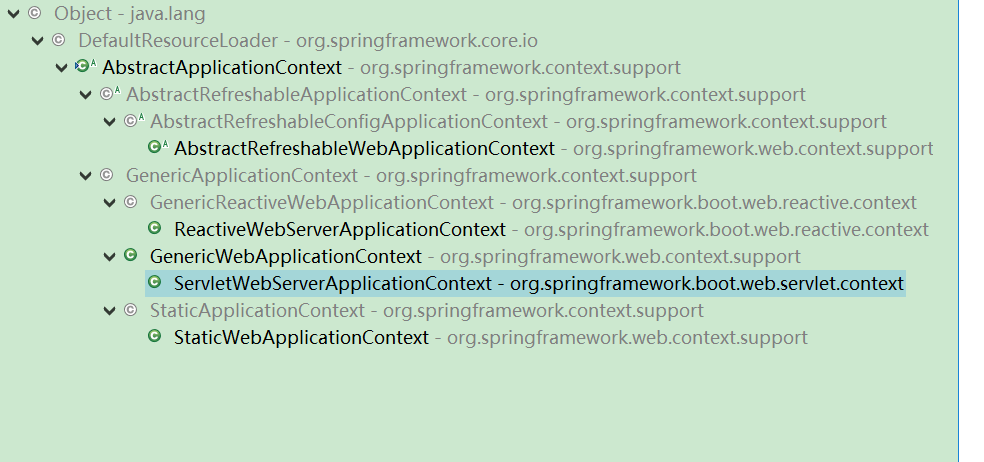
public class ServletWebServerApplicationContext extends GenericWebApplicationContext

        implements ConfigurableWebServerApplicationContext {

    @Override

    protected void onRefresh() {

        super.onRefresh();

        try {

            createWebServer();

        }

        catch (Throwable ex) {

            throw new ApplicationContextException("Unable to start web server", ex);

        }

    }

    private void createWebServer() {

        WebServer webServer = this.webServer;

        ServletContext servletContext = getServletContext();

        if (webServer == null && servletContext == null) {

            ServletWebServerFactory factory = getWebServerFactory();

            this.webServer = factory.getWebServer(getSelfInitializer());

        }

        else if (servletContext != null) {

            try {

                getSelfInitializer().onStartup(servletContext);

            }

            catch (ServletException ex) {

                throw new ApplicationContextException("Cannot initialize servlet context",

                        ex);

            }

        }

        initPropertySources();

    }

}
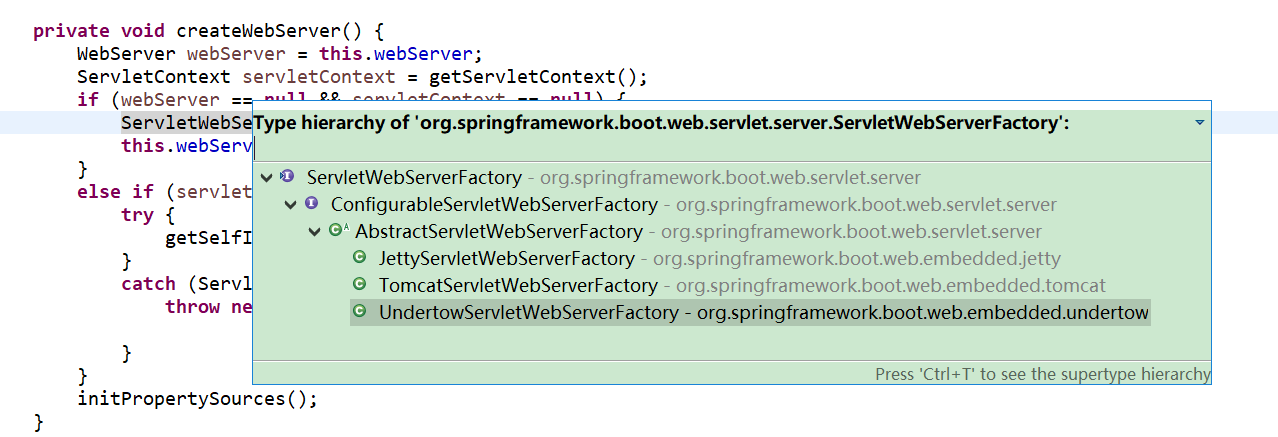
spring-boot-2.1.0.RELEASE.jar
17. Spring Boot 配置嵌入式Servlet容器的更多相关文章
- 【串线篇】spring boot配置嵌入式servlet容器
SpringBoot默认使用Tomcat作为嵌入式的Servlet容器 问题? 一.如何定制和修改Servlet容器的相关配置 1.方法1修改和server有关的配置(ServerProperties ...
- Spring boot 配置嵌入式Servlet容器
SpringBoot默认使用Tomcat作为嵌入式的Servlet容器 1.修改和server有关的配置(ServerProperties[也是EmbeddedServletContainerCust ...
- 17、配置嵌入式servlet容器(1)
SpringBoot默认使用Tomcat作为嵌入式的Servlet容器 1).如何定制和修改Servlet容器的相关配置 1.修改和server有关的配置 (Se ...
- (7)Spring Boot web开发 --- servlet容器
文章目录 配置嵌入式 Servlet 容器 注册 三大组件 使用其他 servlet 容器 使用外置的 `Servlet` 容器 配置嵌入式 Servlet 容器 Spirng Boot 默认使用自带 ...
- 18、配置嵌入式servlet容器(2)
使用其他Servlet容器 -Jetty(长连接) -Undertow(不支持jsp) 替换为其他嵌入式Servlet容器 默认支持: Tomcat(默认使用) Jetty: <depend ...
- SpringBoot配置嵌入式Servlet容器
1).如何定制和修改Servlet容器的相关配置: 1.修改和server有关的配置(ServerProperties[也是EmbeddedServletContainerCustomizer]): ...
- 配置嵌入式Servlet容器
SpringBoot默认是用的是Tomcat作为嵌入式的Servlet容器:问题?1).如何定制和修改Servlet容器的相关配置:1.修改和server有关的配置(ServerProperties) ...
- 19、配置嵌入式servlet容器(下)
使用外置的Servlet 嵌入式Servlet容器:应用打成可执行的j ar 优点:简单.便携: 缺点:默认不支持JSP.优化定制比较复杂 使用定制器[ServerProperti ...
- SpringBoot起飞系列-配置嵌入式Servlet容器(八)
一.前言 springboot中默认使用的是tomcat容器,也叫做嵌入式的servlet容器.因为它和我们平常使用的tomcat容器不一样,这个tomcat直接嵌入到的springboot,平常我们 ...
随机推荐
- 给定一个 hashMap 最终输出最大值的键
/** * * 类 描 述:机试题: 给定一个 hashMap 最终输出最大值的键 * 作 者: 赵 鹏 * 时 间:2017年7月4日 下午6:51:06 */ public class Test ...
- Oracle数据库导入导出 imp/exp备份还原
Oracle数据导入导出imp/exp Oracle数据导入导出imp/exp 在cmd的dos命令提示符下执行,而不是在sqlplus里面,但是格式一定要类似于: imp/exp 用户名/密 ...
- C/S架构引用Lodop 如何在C#调用web打印控件Lodop
lodop是web打印控件,引用安装目录下的ocx文件,可以在c/s架构中使用. 该文件所在路径:C:\Program Files (x86)\MountTaiSoftware\Lodop 有32位和 ...
- checkStyle 错误普及
1Type is missing a javadoc commentClass 缺少类型说明 2“{” should be on the previous line“{” 应该位于前一行.解决方法: ...
- tomcat 查看和修改内存
为了解决tomcat在大进行大并发请求时,出现内存溢出的问题,请修改tomcat的内存大小,其中分为以下两种方式: 一.使用 catalina.bat 等命令行方式运行的 tomcat 查看系统最大支 ...
- Python的数据类型和运算
一.Python数据类型 变量所指向的值是有自己独特的数据类型的,这些数据类型可能代表不同的数据,在Python中,主要有以下几种数据类型: 整形(int) 在计算机中,整数的位数其实是有范围的,并没 ...
- python 模块之-os
python os模块 import os os.getcwd() # python脚本所在工作目录的路径 os.chdir(r'/tmp') # 切换目录到tmp os. ...
- Hadoop HDFS命令
hadoop fs -mkdir 创建HDFS目录 # hadoop fs -mkdir /data Hadoop fs -ls 列出HDFS目录 # hadoop fs -ls /data ha ...
- docker的memory和cpu资源限制
这里仅针对docker本身,不涉及任何编排工具compose或者k8s等. 按照惯例,官文撸起来. 重要的部分是一些选项,用来限制资源大小. Memory Most of these options ...
- [poj3046][Ant counting数蚂蚁]
题目链接 http://noi.openjudge.cn/ch0206/9289/ 描述 Bessie was poking around the ant hill one day watching ...