
poj1222 EXTENDED LIGHTS OUT 高斯消元||枚举
| Time Limit: 1000MS | Memory Limit: 10000K | |
| Total Submissions: 8481 | Accepted: 5479 |
Description
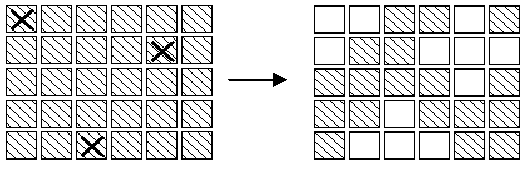
The aim of the game is, starting from any initial set of lights on in the display, to press buttons to get the display to a state where all lights are off. When adjacent buttons are pressed, the action of one button can undo the effect of another. For instance, in the display below, pressing buttons marked X in the left display results in the right display.Note that the buttons in row 2 column 3 and row 2 column 5 both change the state of the button in row 2 column 4,so that, in the end, its state is unchanged.
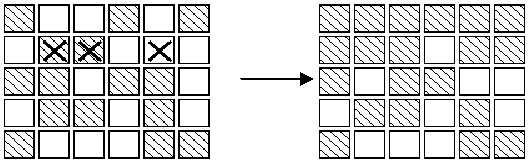
Note:
1. It does not matter what order the buttons are pressed.
2. If a button is pressed a second time, it exactly cancels the effect of the first press, so no button ever need be pressed more than once.
3. As illustrated in the second diagram, all the lights in the first row may be turned off, by pressing the corresponding buttons in the second row. By repeating this process in each row, all the lights in the first
four rows may be turned out. Similarly, by pressing buttons in columns 2, 3 ?, all lights in the first 5 columns may be turned off.
Write a program to solve the puzzle.
Input
Output
Sample Input
2

0 1 1 0 1 0

1 0 0 1 1 1

0 0 1 0 0 1

1 0 0 1 0 1

0 1 1 1 0 0

0 0 1 0 1 0

1 0 1 0 1 1

0 0 1 0 1 1

1 0 1 1 0 0

0 1 0 1 0 0
Sample Output
PUZZLE #1

1 0 1 0 0 1

1 1 0 1 0 1

0 0 1 0 1 1

1 0 0 1 0 0

0 1 0 0 0 0

PUZZLE #2

1 0 0 1 1 1

1 1 0 0 0 0

0 0 0 1 0 0

1 1 0 1 0 1

1 0 1 1 0 1
Source
#include <cstdio>

#include <algorithm>

#include <cstring>

using namespace std;

int a[][], rcd[][], ans[][];

int dir[][] = {{, }, {, }, {, -}, {-, }};

void push(int x, int y) {

    ans[x][y] = ;

    rcd[x][y] ^= ;

    for(int k = ; k < ; ++k) {

        int xx = x + dir[k][];

        int yy = y + dir[k][];

        if(xx <  || xx >=  || yy <  || yy > ) continue;

        rcd[xx][yy] ^= ;

    }

}

bool check(int cur) {

    for(int i = ; i < ; ++i) if(( << i) & cur) {

        push(, i);

    }

    for(int i = ; i < ; ++i) {

        for(int j = ; j < ; ++j)

            if(rcd[i - ][j]) push(i, j);

    }

    for(int i = ; i < ; ++i) if(rcd[][i]) return false;

    return true;

}

void solve() {

    for(int i = ; i < ( << ); ++i) {

        for(int r = ; r < ; ++r)

            for(int c = ; c < ; ++c)

            rcd[r][c] = a[r][c];

            memset(ans, , sizeof ans);

        if(check(i)) break;

    }

}

void out() {

    for(int i = ; i < ; ++i) {

        for(int j = ; j < ; ++j)

        if(j == ) printf("%d\n", ans[i][j]);

        else printf("%d ", ans[i][j]);

    }

}

int main() {

    int _, cas = ; scanf("%d", &_);

    while(_ --) {

        for(int i = ; i < ; ++i)

            for(int j = ; j < ; ++j)

            scanf("%d", &a[i][j]);

        printf("PUZZLE #%d\n", cas++);

        solve();

        out();

    }

}
学到了另一种做法是高斯消元,可以形成(行数*列数)个方程,未知数的个数也是(行数*列数),即按下(i,j),相当于原矩阵异或x*Aij,x取0或1(不按或按)
Aij是按下位置(i,j)时所影响的位置代表的矩阵,比如3*3的矩阵,按下(1,1),那么A11 = 0 1 0, 按下(0,1), A01 = 1 1 1
1 1 1 0 1 0
0 1 0 0 0 0
设原矩阵为M
对于每个位置(i,j),我们考虑按或不按,那么就有M ^ x(i,j)*Aij = O, O表示0矩阵,等式两边同时异或M,那么有x(i,j)*Aij = M,两个矩阵相等,即为每个每个位置的元素对应相等,那么就可以建立(i*j)个方程组
#include <cstdio>

#include <algorithm>

#include <cstring>

using namespace std;

const int MAXN = ;

int a[MAXN][MAXN], b[MAXN][MAXN], x[MAXN];

int equ, var;

void Gauss() {

    int i, j, k, col, maxr, temp;

    for(i = ; i <= var; ++i) x[i] = ;

    for(k = , col = ; k < equ && col < var; k++, col++) {

        maxr = k;

        for(int i = k + ; i < equ; ++i)

        if(abs(a[i][col]) > abs(a[maxr][col]))

        maxr = i;

        if(a[maxr][col] == ) { k--; continue; }

        if(k != maxr) {

            for(j = k; j < var + ; ++j)

            swap(a[k][j], a[maxr][j]);

        }

        for(i = k + ; i < equ; ++i) {

            if(a[i][col] != ) {

               // LCM = lcm(abs(a[i][col]), abs(a[k][col]));

               // ta = LCM / abs(a[i][col]);

               // tb = LCM / abs(a[k][col]);

               // if(a[i][col] * a[k][col] < 0) tb = -tb;

                for(j = col; j < var + ; ++j)

                a[i][j] = a[i][j] ^ a[k][j];

            }

        }

    }

    for(i = var - ; i >= ; --i) {

            temp = a[i][var];

            for(j = i + ; j < var; ++j)

            temp ^= (a[i][j] * x[j]);

            x[i] = temp;

    }

}

int vis[][];

int dir[][] = {{, }, {, }, {-, }, {, -} };

void get(int x, int y)

    memset(vis, , sizeof vis);

    vis[x][y] = ;

    for(int i = ; i < ; ++i) {

        int xx = x + dir[i][];

        int yy = y + dir[i][];

        if(xx <  || xx >=  || yy <  || yy > ) continue;

        vis[xx][yy] = ;

    }

    for(int i = ; i < ; ++i) {

        for(int j = ; j <= ; ++j) printf("%d ", vis[i][j]);

        puts("");

    }

    puts("");

void debug() {

    for(int i = ; i < ; ++i) {

        for(int j = ; j <= ; ++j)

        printf("%d ", a[i][j]);

        puts("");

    }

}

void init() {

    memset(a, , sizeof a);

    equ = var = ;

    int cur = ;

    for(int i = ; i < ; ++i)

    for(int j = ; j <= ; ++j)

    a[cur++][] = b[i][j];

   // debug();

    cur = ;

    for(int i = ; i < ; ++i) {

        for(int j = ; j <= ; ++j) {

            get(i, j);

        int k = ;

        for(int r = ; r < ; ++r)

            for(int c = ; c <= ; ++c)

            a[k++][cur] = vis[r][c];

            cur++;

        }

    }

   // debug();

}

void out() {

    for(int i = ; i < ; ++i) {

         if((i + ) %  == ) printf("%d\n", x[i]);

         else printf("%d ", x[i]);

    }

}

int main() {

    int _, cas = ; scanf("%d", &_);

    while(_ --) {

        for(int i = ; i < ; ++i)

            for(int j = ; j <= ; ++j)

            scanf("%d", &b[i][j]);

        init();

        printf("PUZZLE #%d\n", cas++);

        Gauss();

       // debug();

        out();

    }

}
poj1222 EXTENDED LIGHTS OUT 高斯消元||枚举的更多相关文章
- POJ1222 EXTENDED LIGHTS OUT 高斯消元 XOR方程组
http://poj.org/problem?id=1222 在学校oj用搜索写了一次,这次写高斯消元,haoi现场裸xor方程消元没写出来,真实zz. #include<iostream> ...
- [poj1222]EXTENDED LIGHTS OUT(高斯消元)
题意:每个灯开启会使自身和周围的灯反转,要使全图的灯灭掉,判断灯开的位置. 解题关键:二进制高斯消元模板题. 复杂度:$O({n^3})$ #include<cstdio> #includ ...
- POJ 1222 EXTENDED LIGHTS OUT (高斯消元)
题目链接 题意:5*6矩阵中有30个灯,操作一个灯,周围的上下左右四个灯会发生相应变化 即由灭变亮,由亮变灭,如何操作使灯全灭? 题解:这个问题是很经典的高斯消元问题.同一个按钮最多只能被按一次,因为 ...
- EXTENDED LIGHTS OUT (高斯消元)
In an extended version of the game Lights Out, is a puzzle with 5 rows of 6 buttons each (the actual ...
- POJ 1222 EXTENDED LIGHTS OUT [高斯消元XOR]
题意: $5*6$网格里有一些灯告诉你一开始开关状态,按一盏灯会改变它及其上下左右的状态,问最后全熄灭需要按那些灯,保证有解 经典问题 一盏灯最多会被按一次,并且有很明显的异或性质 一个灯作为一个方程 ...
- POJ 3185 The Water Bowls(高斯消元-枚举变元个数)
题目链接:http://poj.org/problem?id=3185 题意:20盏灯排成一排.操作第i盏灯的时候,i-1和i+1盏灯的状态均会改变.给定初始状态,问最少操作多少盏灯使得所有灯的状态最 ...
- BZOJ 1770: [Usaco2009 Nov]lights 燈( 高斯消元 )
高斯消元解xor方程组...暴搜自由元+最优性剪枝 -------------------------------------------------------------------------- ...
- POJ 1681 Painter's Problem(高斯消元+枚举自由变元)
http://poj.org/problem?id=1681 题意:有一块只有黄白颜色的n*n的板子,每次刷一块格子时,上下左右都会改变颜色,求最少刷几次可以使得全部变成黄色. 思路: 这道题目也就是 ...
- BZOJ1770:[USACO]lights 燈(高斯消元,DFS)
Description 貝希和她的閨密們在她們的牛棚中玩遊戲.但是天不從人願,突然,牛棚的電源跳閘了,所有的燈都被關閉了.貝希是一個很膽小的女生,在伸手不見拇指的無盡的黑暗中,她感到驚恐,痛苦與絕望. ...
随机推荐
- 【leetcode】3Sum (medium)
Given an array S of n integers, are there elements a, b, c in S such that a + b + c = 0? Find all un ...
- weblogic无需用户名密码启动Server
创建了Server-0. 但每次启动需要手工输入管理账户和密码. 并不方便. 现在要让它自动输入并启动.一. 新建security文件夹 # cd $WEBLOGIC_HOME/servers/Ser ...
- c_test
1.int a[][4]={0,0};与int a[3][4] = {0}; 元素不够的就以位模式初始化为0 a[第一维][第二维] 的大小,也就是最多存几个 int a[][3]={1,2,3,4, ...
- Swift - 文件目录路径获取及数据储存(Home目录,文档目录,缓存目录)
iOS应用程序只能在自己的目录下进行文件的操作,不可以访问其他的存储空间,此区域被称为沙盒. 应用沙盒结构分析 1.应用程序包:包含了所有的资源文件和可执行文件 2.Documents:保存应用运 ...
- WebService - 怎样提高WebService性能 大数据量网络传输处理
直接返回DataSet对象 返回DataSet对象用Binary序列化后的字节数组 返回DataSetSurrogate对象用Binary序列化后的字节数组 返回DataSetSurrogate对象用 ...
- jQuery – 6.选择器
1. 属性过滤选择器: 1. $("div[id]")选取有id属性的<div> 2. $("div[title=test]")选取title属性为 ...
- **PHP中替换换行符
PHP中替换换行符 php 不同系统的换行不同系统之间换行的实现是不一样的linux 与unix中用 \nMAC 用 \rwindow 为了体现与linux不同 则是 \r\n所以在不同平台上 实现方 ...
- jQuery Mobile学习之grid、等待显示的ajax效果、页面跳转、页面跳转传递参数等(二)
Index.cshtml <!-- Start of second page --> <section data-role="page" id="bar ...
- Sublime Text + CTags + Cscope (部分替代Source Insight)
CTags & cscope 下载: CTags+Cscope --- 我的百度云盘下载http://pan.baidu.com/s/1gfyPnuN ctags58.zip --- src ...
- Asyncio中的Task管理
#!/usr/bin/env python # -*- coding: utf-8 -*- import asyncio import datetime import time from random ...